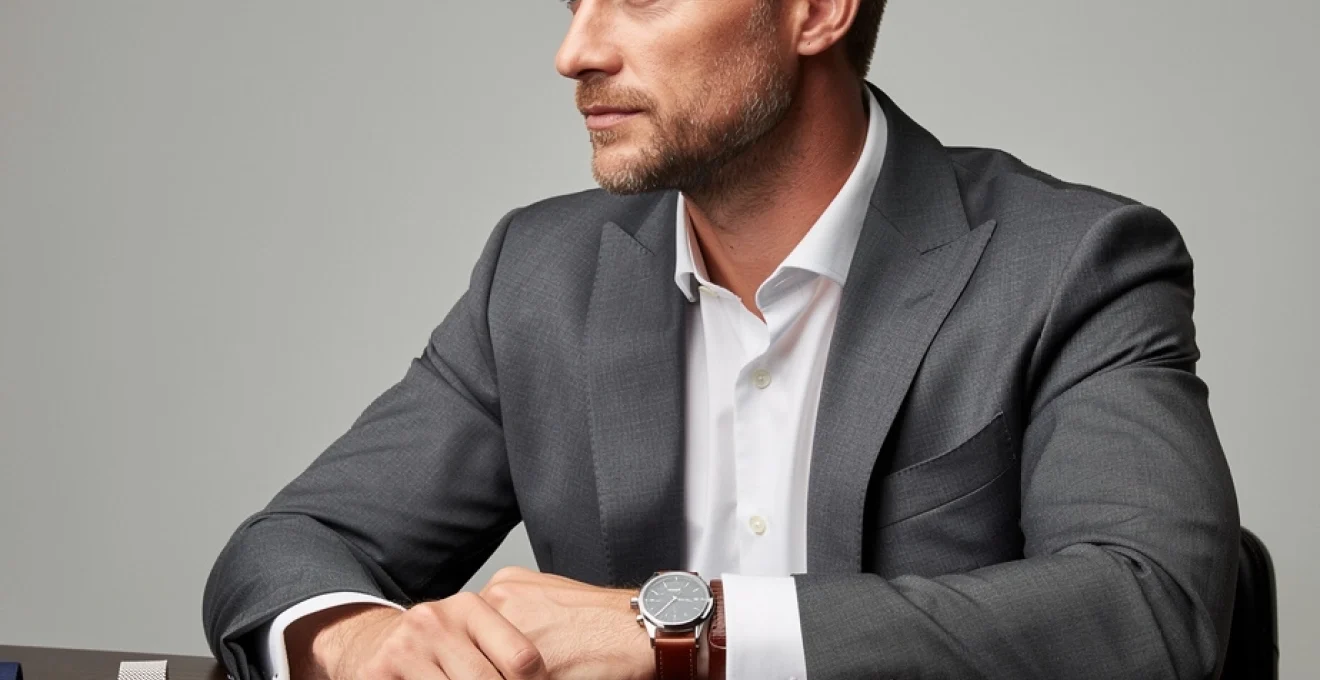
# Accessories that subtly enhance a masculine look
The distinction between a forgettable appearance and one that commands quiet respect often lies not in sweeping wardrobe overhauls, but in the deliberate selection of refined accessories. Modern masculine style has evolved beyond overt displays of wealth or status, gravitating instead toward understated quality and thoughtful detail. The accessories you choose communicate volumes about your understanding of craftsmanship, proportion, and restraint. When executed with precision, these finishing touches transform everyday attire into a cohesive statement of personal sophistication without requiring verbal explanation.
Contemporary gentlemen increasingly recognise that true elegance resides in subtlety rather than ostentation. The accessories discussed here represent not fleeting trends, but enduring principles of masculine refinement. From horological complications to leather patina development, each element serves both functional and aesthetic purposes. Understanding the technical specifications, material properties, and styling applications of these accessories enables you to curate a wardrobe that reflects both timelessness and personal authenticity.
Horological precision: selecting timepieces that amplify masculine sophistication
A wristwatch remains perhaps the most defining accessory in masculine style, transcending its utilitarian purpose to become a reflection of personal values and aesthetic sensibilities. The timepiece you choose communicates not merely punctuality, but your appreciation for engineering excellence, design philosophy, and material quality. In an era dominated by smartphones, the deliberate choice to wear a mechanical or automatic watch signals a connection to tradition and craftsmanship that digital alternatives cannot replicate. Your watch becomes an extension of your identity, visible during handshakes, presentations, and countless daily interactions.
The horological landscape offers extraordinary diversity, from minimalist three-hand designs to complex chronographs featuring multiple complications. Understanding the technical distinctions between movement types, case construction, and strap materials allows you to select a timepiece that genuinely complements your wrist architecture and lifestyle requirements. Quality horology represents an investment in enduring style, with properly maintained mechanical watches often appreciating in value whilst serving as heirlooms for future generations. The relationship between wearer and timepiece deepens over years, as the watch accumulates personal history alongside its mechanical precision.
Mechanical chronographs versus automatic movement complications
The choice between manual-wind mechanical movements and self-winding automatic calibres fundamentally shapes your relationship with your timepiece. Manual-wind movements require daily ritual—typically 20-40 crown rotations—that establishes a tactile connection between you and the mechanism. This daily engagement appeals to those who appreciate the meditative aspect of timepiece ownership, whilst the transparency of exhibition casebacks reveals the intricate ballet of gears, springs, and escapements. Automatic movements eliminate this requirement through rotor systems that harness kinetic energy from natural wrist motion, offering convenience without sacrificing mechanical purity.
Chronograph complications add functional layers through stopwatch capabilities, typically displayed via subdials measuring elapsed seconds, minutes, and hours. These complications increase movement complexity whilst enhancing visual interest across the dial surface. For those seeking horological depth without overwhelming aesthetics, consider date complications, power reserve indicators, or moon phase displays. Each complication reflects manufacturing expertise, with in-house movements commanding premium positioning within brand hierarchies compared to modified external calibres.
Case diameter proportions and Lug-to-Lug measurements for wrist architecture
Case diameter represents merely one dimension in determining proper watch proportionality; lug-to-lug measurement proves equally critical for ensuring harmonious wrist presence. A 40mm case diameter suits most wrist circumferences between 16-18cm, whilst larger 42-44mm cases complement more substantial wrists exceeding 18cm. However, extended lugs on a nominally smaller case can protrude beyond your wrist’s natural edges, creating visual imbalance. The lugs should never overhang your wrist’s perimeter, as this produces an oversized appearance regardless of case diameter specifications.
Case thickness similarly influences overall proportionality and wearing comfort. Dress watches traditionally measure between 7-10mm in height, allowing seamless integration beneath shirt cuffs, whilst sports chronographs may extend to 14-16mm to accommodate movement complications. Consider your wardrobe composition when selecting case dimensions; formal attire demands slimmer
ensembles and office environments, whereas dive watches and sports pieces accept greater thickness in exchange for water resistance and robustness. Pay attention as well to lug curvature and case ergonomics; downward-turned lugs and tapered profiles hug the wrist more naturally, creating a slimmer visual impression even on technically thicker cases. When in doubt, try the watch in profile view while wearing a shirt or jacket you commonly use; this reveals immediately whether the proportions enhance or disrupt your overall silhouette.
NATO straps, milanese mesh and horween leather band selection
The strap or bracelet you select fundamentally alters how masculine and refined a watch appears, often more dramatically than the dial itself. NATO straps, originally designed for military applications, introduce a utilitarian, field-ready character that pairs well with casual wardrobes and tool watches. Their nylon construction offers durability and comfort, whilst the multi-pass design adds security in the unlikely event of spring bar failure. Opt for muted, regimental stripes or solid earth tones to maintain subtlety rather than leaning into overly saturated colours.
Milanese mesh bracelets provide a different expression of masculine elegance, blending vintage aesthetics with contemporary minimalism. The fine interlocking metal loops conform closely to the wrist, distributing weight evenly and avoiding the visual bulk sometimes associated with solid-link bracelets. This style complements dress watches and slim automatic pieces particularly well, offering breathability in warmer climates and a refined sheen that works effortlessly with tailoring. For those who prefer traditional leather, Horween straps—especially in Chromexcel or Dublin—deliver remarkable comfort and patina potential.
Horween leather bands embody quiet luxury through their tactile richness and evolving character. Initially, they present a slightly glossy, refined surface, but over months of wear they develop creases, tonal variation and a soft lustre unique to your usage patterns. This patina narrates your daily life in the way only high-quality leather can, enhancing the watch’s masculine presence without shouting for attention. When pairing straps with outfits, match leather tones with your belt and shoes where possible, creating a cohesive axis that visually anchors your look from wrist to waist and down to your footwear.
Subdued dial aesthetics: matte finishes and monochromatic color theory
Dial design plays a decisive role in whether a timepiece reads as quietly authoritative or visually noisy. Matte finishes reduce reflections and glare, making dials easier to read in varied lighting whilst imparting a tool-like seriousness that many men find inherently masculine. A matte navy, charcoal, or deep forest green dial combined with simple baton indices communicates confidence and restraint, in contrast to high-gloss surfaces that can veer into ostentation. Subtle sunburst textures can be appropriate so long as they do not dominate the visual hierarchy.
Monochromatic colour theory further refines this understated approach. Restricting your dial, hands, and indices to a tight palette—such as black, silver, and white—creates harmony and reduces visual clutter, allowing proportion and form to speak louder than pigment. This is analogous to speaking in a low, controlled voice; you may not be the loudest presence in the room, but people notice the calm assurance. Consider as well the interplay between dial colour and case material: a silver case with a grey or black dial feels minimalist and modern, whereas warm champagne dials in steel cases introduce a subtle vintage elegance.
Well-judged lume application and restrained branding also contribute to a dial’s refined masculinity. Oversized logos, excessive text, and overcomplicated chapter rings fracture the dial’s visual coherence and can make even an expensive watch appear less sophisticated. Instead, look for balanced spacing, slim typefaces, and discreet complication layouts that preserve negative space. When you glance at your wrist, your eye should settle immediately on the time, not wander around deciphering unnecessary design flourishes; this clarity is the essence of a subtle yet impactful watch choice.
Minimalist leather goods: patina development and full-grain construction
Beyond timepieces, minimalist leather goods serve as daily companions that broadcast your priorities long before you speak. A wallet, belt or cardholder is handled dozens of times per day, and over years these objects accumulate marks, creases and colour shifts that chronicle your habits and routines. Choosing full-grain leather—where the original grain surface is preserved rather than sanded or corrected—ensures that this patina development feels organic rather than artificial. In masculine style, such quiet evidence of use and care often carries more weight than glossy, untouched perfection.
Full-grain constructions also offer superior durability compared to cheaper split leathers or synthetic composites commonly used in fast-fashion accessories. The dense fibre structure resists tearing and stretching, while high-quality stitching and edge finishing prevent premature failure at stress points. When you run your fingers along the edge of a well-made leather belt or wallet, the smooth burnished finish and uniform stitching distance reveal an attention to detail that mirrors the precision of a well-chosen watch. Over time, these pieces become personal artefacts rather than disposable utilities, subtly enhancing your masculine look through their enduring presence.
Vegetable-tanned italian leather versus chrome-tanned durability
Understanding tanning methods helps you select leather goods that age in a manner consistent with your style philosophy. Vegetable-tanned Italian leather, processed using tannins from tree bark and other natural sources, is renowned for its ability to develop a rich, nuanced patina. Initially, it may appear stiff and relatively pale, but exposure to sunlight, skin oils and friction gradually darkens and softens the material. The result is a wallet or belt that evolves from a blank canvas into a highly individual piece, much like a pair of raw denim jeans moulding to your body over time.
Chrome-tanned leather, by contrast, utilises chromium salts to accelerate the tanning process, typically within a day rather than weeks or months. This method produces softer, more supple leather from the outset and allows for a wide range of consistent colours. Chrome-tanned pieces resist water and stains better in many everyday situations, making them highly practical for men whose lifestyles demand resilience over romantic ageing. However, they seldom attain the same depth of patina as vegetable-tanned counterparts, trading long-term visual character for immediate comfort and uniformity.
Which tanning method better suits a masculine wardrobe that values understated refinement? If you appreciate accessories that visually record your experiences, vegetable-tanned Italian leather is often the superior choice. Its gradual darkening and subtle sheen exude a heritage quality aligned with classic menswear and traditional craftsmanship. If, however, you prioritise low maintenance and consistent appearance—perhaps because your environment is more unpredictable—high-grade chrome-tanned leather from reputable tanneries can still project sophistication. The key is avoiding heavily corrected or “painted” surfaces that disguise the natural grain, as these tend to crack rather than age gracefully.
Bifold wallet silhouettes and RFID-blocking technology integration
The classic bifold wallet remains a staple of masculine accessories, yet modern usage patterns and payment technologies invite a more thoughtful approach to its design. A streamlined bifold with carefully edited card slots and a slim note compartment avoids the unsightly “back-pocket bulge” that distorts trousers and jackets. Aim to carry no more than 6–8 cards and a few neatly folded notes; if your wallet resembles a filing cabinet, it is undermining both your posture and your appearance. A slender silhouette slips unobtrusively into an inside jacket pocket or front trouser pocket, preserving clean lines.
RFID-blocking technology has emerged as a practical response to contactless payment systems. Thin metallic or carbon-fibre layers integrated into the wallet lining can mitigate the risk of unauthorised scanning of your cards. While incidences of such digital theft remain statistically low, this feature offers inexpensive peace of mind, particularly for frequent travellers navigating crowded urban environments. Importantly, effective RFID shielding can be implemented without adding significant bulk, provided the manufacturer prioritises minimalism and material efficiency. You should not have to sacrifice a refined profile to gain technological protection.
When evaluating bifold wallet designs, pay close attention to internal organisation and ease of access. Overly complex layouts with flaps, coin pockets and transparent ID windows often create unnecessary thickness and visual clutter. A masculine, minimalist wallet instead emphasises clean card stacking, intuitive retrieval, and perhaps a discreet slip pocket for receipts. Think of it as the user interface of your daily finances: the simpler and more intuitive it is, the more confidently you interact with it. Over time, this efficiency reinforces a sense of calm control each time you reach for your wallet, subtly enhancing your composure in professional and social settings.
Belt width standards and stitching techniques for longevity
A belt might seem purely functional, yet it draws the eye precisely because it intersects shirt and trousers at the body’s midline. Proper width and construction therefore exert an outsized influence on how polished your outfit appears. For tailored trousers and formal wear, a belt width of approximately 28–32mm (1.1–1.25 inches) maintains visual proportion with slimmer belt loops and refined leather soles. Casual denim and chinos typically accommodate 35–38mm (1.4–1.5 inches) belts, whose broader presence balances chunkier footwear and more relaxed silhouettes. Wearing an overly wide belt with a suit, or an ultra-narrow belt with rugged jeans, creates subtle dissonance that attentive observers immediately register.
Stitching technique further distinguishes durable belts from disposable ones. Full-stitched edges—where a line of stitching runs the length of both sides—offer structural reinforcement and protect the leather core from stretching and separation. In contrast, cheaply glued constructions without stitching are prone to delamination, especially around the buckle holes, leading to premature failure and a tired appearance. High-quality thread, often bonded nylon or polyester, resists fraying and withstands repeated bending; even the spacing and straightness of these stitches communicate manufacturing care. Evaluating these details takes seconds in a shop yet can add years to a belt’s service life.
The buckle itself should complement the belt’s purpose and your broader accessory palette. For business and formal wear, lean towards simple, brushed or polished metal buckles in rectangular or slightly rounded forms, avoiding oversized logos or ornate engravings. Casual belts can accommodate more texture or patinated brass finishes, especially when paired with rugged boots. As a rule, match metal tones across your accessories—watch case, ring, cufflinks and belt buckle—so that nothing appears accidentally mismatched. This quiet consistency is one of the easiest ways to cultivate a cohesive masculine aesthetic without drawing conscious attention to any single item.
Cardholder minimalism: horween shell cordovan and pueblo leather options
For many modern professionals, a slim cardholder has supplanted the traditional wallet, particularly in urban environments where contactless and mobile payments dominate. A minimalist cardholder reduces bulk, encourages curation of essentials, and slips effortlessly into an inside pocket without disturbing the clean drape of tailored garments. When crafted from exceptional leathers such as Horween shell cordovan or Pueblo leather, these compact pieces become discreet statements of discernment. Shell cordovan, produced from horsehide’s fibrous membrane, is renowned for its dense structure, mirror-like polish, and remarkable resistance to creasing.
Unlike typical leathers that develop pronounced grain lines and wrinkles, shell cordovan ripples gently over time, maintaining a smooth, glassy surface that can be restored with minimal care. This makes it particularly well-suited to cardholders that endure constant insertion and removal from pockets. Its deep, lustrous colours—often oxblood, navy, or dark green—appear almost black in low light yet reveal complexity up close, much like a well-aged red wine. For men who appreciate accessories that whisper rather than shout, shell cordovan offers a near-perfect balance of subtle luxury and practical resilience.
Pueblo leather, tanned in Italy, presents a contrasting but equally compelling character. It begins with a slightly rough, almost suede-like surface created through light sanding, which gradually smooths and darkens with use. The transformation is dramatic; within months, a Pueblo cardholder shifts from understated matte to a rich, nuanced sheen that reflects your handling patterns. This makes it ideal for those who enjoy watching their everyday carry evolve visibly over time. Whichever leather you choose, prioritise simple, functional layouts—two to four card slots and perhaps a central pocket—over elaborate designs. The goal is a slim, unobtrusive silhouette that enhances, rather than interrupts, the lines of your clothing.
Eyewear architecture: frame geometry and lens technology for facial structure
Eyewear occupies a uniquely prominent position in masculine styling, framing the eyes and sitting at the intersection of form and function. Whether you wear prescription glasses daily or sunglasses occasionally, the frames you choose can sharpen jawlines, balance facial proportions and project specific stylistic narratives. Because they rest directly on your face, even subtle changes in frame geometry or lens tint dramatically alter first impressions. As with watches and leather goods, the objective is not conspicuous branding but considered selection that harmonises with your natural features.
Investing in well-constructed frames also yields tangible comfort benefits. Precise bridge fitting, appropriate temple length and balanced weight distribution prevent the pressure points and slippage that can undermine your confidence over a long day. Advanced lens technologies—such as polarisation, anti-reflective coatings and high-index materials—further refine both appearance and performance. When chosen thoughtfully, eyewear becomes one of the most efficient accessories for enhancing a masculine look: you gain functional clarity and subtle aesthetic refinement each time you put them on.
Acetate versus titanium frame materials and hypoallergenic properties
Frame material selection influences not only visual impact but also durability, weight and skin compatibility. Acetate, a plant-based plastic derived from cellulose, remains a favourite in men’s eyewear due to its depth of colour and sculptural possibilities. High-quality acetate can be polished to a rich, almost horn-like lustre and shaped into bold or understated silhouettes alike. Its relative thickness allows for strong lines that can visually broaden narrow faces or reinforce an assertive brow line. For everyday frames, acetate strikes an appealing balance between robustness and comfort, particularly when fitted with well-designed nose pads.
Titanium, on the other hand, excels where lightness and strength are paramount. It is significantly lighter than most metals and even many acetate constructions, making it ideal for men who wear glasses all day or experience discomfort from heavier frames. Titanium’s natural resistance to corrosion also ensures longevity, even in humid climates or for those with more acidic skin chemistry. From an aesthetic standpoint, brushed titanium finishes complement monochromatic wardrobes and minimalist styles, conveying technical sophistication without ostentation.
Hypoallergenic properties are a critical but often overlooked factor in choosing eyewear that supports rather than irritates your skin. Both high-grade acetate and titanium generally perform well for sensitive wearers, provided hardware such as nose pads and screws are nickel-free or encased. If you have experienced redness or itching from past frames, inquire specifically about nickel content and consider titanium or stainless-steel options marketed as hypoallergenic. A frame that looks impeccable yet leaves marks on your nose or temples by day’s end is working against your polished appearance; comfort and aesthetics must operate in tandem.
Aviator, wayfarer and browline styles for angular versus rounded face shapes
Frame shape selection is as much about counterbalancing facial geometry as it is about personal taste. Aviators, with their teardrop lenses and thin metal frames, were originally designed for pilots but have become a staple of masculine eyewear. Their downward sweep and broad width complement angular features by softening sharp jawlines and cheekbones, while the double bridge accentuates the brow area. On rounder faces, however, oversized aviators can sometimes exaggerate fullness, so proportion and lens size require careful consideration.
Wayfarers, characterised by their trapezoidal lenses and thicker frames, offer one of the most universally flattering options. Their subtle upward tilt at the outer edges provides a gentle lift to the face, which can be especially effective on round or oval shapes. For men with softer features, the structured lines of a Wayfarer-style frame introduce definition and a slight edge. Conversely, if your face is already strongly angular, a slightly rounded Wayfarer variant or softer corners can prevent the overall effect from becoming too severe.
Browline frames, where a thicker upper frame element visually emphasises the eyebrows while the lower rim remains lighter, occupy an elegant middle ground. They reinforce the natural masculine emphasis on the brow and eye area, often suiting men with balanced or heart-shaped faces particularly well. Think of them as a visual analogue to a well-shaped beard: they add structure and focus where it matters most. When deciding among aviator, Wayfarer and browline styles, examine how each interacts with your cheekbones, jaw and forehead in profile as well as head-on; the optimal frame should appear to belong to your face rather than simply sitting on it.
Polarised CR-39 lenses and UV400 protection standards
Lens technology directly influences visual comfort and eye health, making it an essential consideration rather than an afterthought. Polarised lenses reduce glare by filtering out horizontally reflected light, particularly useful when driving, near water or on bright urban pavements. CR-39, a lightweight plastic lens material, offers excellent optical clarity with lower weight compared to traditional glass lenses, making it a popular choice for quality sunglasses. When polarisation and CR-39 are combined, you gain sharp vision with reduced eye fatigue, especially during prolonged exposure to reflective environments.
UV400 protection indicates that lenses block wavelengths up to 400 nanometres, effectively filtering out both UVA and UVB rays. This standard is crucial for preserving long-term eye health, as cumulative UV exposure has been linked to cataracts and other ocular conditions. While most reputable eyewear brands now include UV400 protection as standard, it is worth verifying, particularly if a deal seems unusually inexpensive. A stylish pair of sunglasses that fails to shield your eyes adequately offers only the illusion of protection, much like a heavy-looking belt made of weak synthetic materials.
Tint colour and gradient also subtly affect your overall look. Grey tints maintain true colour perception and suit a wide range of outfits, while brown or amber tones enhance contrast and pair well with earth-toned wardrobes. Gradients—darker at the top, lighter at the bottom—can look refined when you move frequently between indoor and outdoor spaces, as your eyes remain visible yet shielded. Whatever you choose, prioritise high-quality coatings and scratch resistance; fine scratches across a lens catch light in distracting ways and can undermine the clean, composed impression you aim to project.
Bridge width measurements and temple length customisation
Precise fit is what transforms eyewear from a functional necessity into a seamless component of your masculine style. Bridge width—the distance between the lenses where the frame rests on your nose—determines how securely and comfortably glasses sit. A bridge that is too wide allows frames to slide down, disrupting your line of sight and compelling frequent adjustments, which can appear fidgety in professional contexts. Conversely, an overly narrow bridge pinches, leaving red marks and encouraging you to remove your glasses at the first opportunity. Ideally, the nose pads or bridge rest firmly yet comfortably, distributing weight evenly across the nasal area.
Temple length, measured from the hinge to the tip that curves around your ear, further refines fit. Temples that are too short pull the frame forward and create pressure behind the ears, while excessive length causes instability and constant readjustment. Many optical boutiques now offer subtle temple bending and fine-tuning, which can make a standard-size frame feel custom-made. This is a small but significant investment in comfort and appearance—comparable to tailoring trouser hems rather than accepting an off-the-rack length that “almost” works.
When trying on new frames, perform a simple test: look down, shake your head gently, and observe whether the glasses remain stable without gripping uncomfortably. If they pass, note the printed measurements on the inside of the temple (typically lens width–bridge width–temple length, such as 52–18–145). Keeping these numbers to hand allows you to evaluate online options more accurately in future. Over time, building an awareness of these dimensions equips you to select eyewear that aligns both with your facial architecture and your overall wardrobe, reinforcing a consistent, composed masculine aesthetic.
Neckwear textiles: weave patterns and knot structures for collar styles
Neckwear—whether traditional neckties or more casual knitted options—remains one of the most effective tools for modulating formality and expressing nuance within a masculine wardrobe. Because a tie intersects the vertical line of your shirt and suit, it naturally draws the eye toward your face, amplifying the impression you create in professional and ceremonial contexts. Subtle mastery of textiles and knots can elevate even a modest suit, whereas loud patterns and poorly executed knots can diminish the impact of expensive tailoring. The aim is to treat neckwear as an instrument of refinement rather than an opportunity for novelty alone.
Weave patterns significantly influence how a tie drapes, knots and reflects light. A classic satin weave yields a smooth, slightly lustrous surface suitable for evening events, but can appear overly glossy in harsh daylight or conservative workplaces. In contrast, grenadine ties—woven on old-style looms to create an open, textured pattern—offer visual depth without excessive shine, pairing beautifully with business and smart-casual ensembles alike. Their ability to hold a knot while remaining supple makes them a favourite among style-conscious men seeking versatility from a minimal tie rotation.
For colder seasons or more relaxed environments, knitted ties in silk, wool or cashmere introduce a softer, tactile element that pairs well with oxford shirts and unstructured blazers. Their square ends and granular texture project an approachable kind of sophistication, ideal for settings where a traditional silk tie might feel overly formal. Regardless of material, aim for tie widths that harmonise with your lapels—typically 7–8cm (2.75–3.15 inches) at the widest point for most modern suits. This proportional alignment reinforces a cohesive V-shaped torso line, subtly enhancing the perception of masculine strength.
Knot selection should respond to both collar style and tie thickness. The Four-in-Hand knot, slightly asymmetrical and compact, works exceptionally well with most standard point collars and the majority of tie fabrics. Its understated profile signals ease and confidence, akin to a relaxed but firm handshake. For spread or cutaway collars, a slightly larger knot such as the Half Windsor can fill the space more effectively, provided the tie material is not too bulky. Overly large, triangular knots often resemble visual shouting; they draw attention to technique rather than taste.
Collar height and stiffness also play a role in choosing the most flattering knot. A tall, structured collar can accommodate a more substantial knot, whereas softer, shorter collars benefit from smaller, more flexible configurations. When tying your knot, pay attention to dimple formation—an intentional crease just below the knot—which adds dimensionality and signals deliberate care. Like a well-chosen watch or perfectly fitted eyewear, a neatly knotted tie with a precise dimple communicates an attention to detail that many may not consciously register yet almost everyone intuitively respects.
Pocket square folding techniques and fabric weight considerations
Pocket squares occupy a unique niche among masculine accessories: entirely optional yet disproportionately impactful when executed with restraint. A small square of fabric peeking from your breast pocket can transform a sober navy suit into a personalised expression of taste. The key lies in balancing colour, pattern and fold style so that the pocket square appears as an effortless accent rather than a focal point competing with your face. Think of it as the visual equivalent of a well-chosen cologne—noticed only upon closer interaction.
Fabric weight and composition directly affect how different folds behave throughout the day. Lightweight silk, with its fluid drape and subtle sheen, suits puff folds and more relaxed configurations that benefit from movement. However, pure silk can be slippery, causing structured folds to collapse or shift. Linen and cotton, by contrast, possess greater body and crispness, making them ideal for straight folds such as the presidential fold, where sharp edges and clean lines are essential. Blended fabrics—silk-linen or silk-cotton—offer a compromise, combining lustre with stability.
In terms of folding techniques, simplicity often serves masculine style best. The presidential fold (a single visible line of white or colour along the pocket’s edge) works seamlessly with business suits and formal occasions, providing refinement without flair. For slightly more personality, a classic puff fold, where the centre of the square emerges softly from the pocket, introduces organic curves that contrast with the structured lines of a jacket. More intricate origami-like folds may showcase technical skill, but they risk drawing attention away from your face and can verge on costume in conservative settings.
Colour and pattern selection should complement, not duplicate, other elements of your look. Rather than precisely matching your tie, aim to echo one or two secondary tones in a more relaxed pattern scale. For example, if your tie features navy and burgundy stripes, a pocket square with a subtle burgundy micro-pattern or a predominantly white design with navy accents will harmonise without appearing overly coordinated. This layered approach to colour creates visual depth and suggests a more sophisticated understanding of menswear than rigid matching sets typically convey.
Finally, consider the context in which you wear pocket squares. In creative industries or social gatherings, bolder patterns and richer textures can feel entirely appropriate, provided they align with your personality. In conservative corporate environments, lean towards white, off-white or lightly patterned options that quietly elevate without challenging expectations. Whichever direction you choose, ensure that the square sits neatly within the pocket, with no visible lining or distorted edges. A well-chosen, well-folded pocket square completes a jacket in the same way a high-quality strap completes a watch: not immediately obvious, but clearly missed in its absence.
Cufflink mechanisms: whale-back closures and mother-of-pearl inlay craftsmanship
Cufflinks occupy a small but symbolically significant space within masculine accessories, serving as functional fasteners that also signal respect for formality and detail. In an era where many shirts default to button cuffs, choosing French cuffs and cufflinks becomes a deliberate statement rather than an obligation. The style-conscious man understands that these understated metal accents at the wrist echo his watch, belt buckle and rings, creating a coherent metallic narrative across his outfit. When selected with care, cufflinks enhance a masculine look not by shouting status but by reinforcing a refined visual rhythm.
Whale-back closures rank among the most practical and popular cufflink mechanisms. Named for their hinged, flipper-like backing piece, they consist of a flat head connected to a straight post, with the “whale tail” flipping perpendicular to secure the link through the shirt’s cuff holes. This design allows for easy one-handed operation—particularly valuable when dressing in a hurry—and provides reliable stability throughout the day. Compared to fixed-back or chain-link styles, whale-back mechanisms strike an appealing balance between convenience and durability, making them an excellent choice for men building their first serious cufflink collection.
Beyond the mechanism, material selection and surface treatment define how subtly or assertively cufflinks present themselves. Polished stainless steel or sterling silver links with minimal detailing harmonise with most watch cases and belt buckles, integrating seamlessly into both business and formal ensembles. Gold-toned cufflinks can project warmth and traditional elegance, especially on darker skin tones or against rich navy and charcoal suits. The key is to avoid overly large, heavily branded or novelty designs for occasions where you wish to be remembered for your presence and competence rather than your accessories alone.
Mother-of-pearl inlay offers a particularly refined avenue for introducing texture and luminosity without resorting to overt shine. Formed from the inner layer of certain shells, mother-of-pearl displays an iridescent play of colour that shifts subtly with movement and light. Set within a restrained metal frame—round, square or cushion-shaped—it creates a focal point that rewards closer inspection while remaining understated at conversational distance. This quality makes it ideal for weddings, formal dinners and high-level business engagements where you want your accessories to signal discernment rather than flamboyance.
The craftsmanship behind quality inlays extends beyond visual appeal. Well-executed mother-of-pearl is smoothly flush with its metal surround, with no rough edges or visible adhesive. The inlay should also be securely set, resistant to minor knocks and everyday wear. When you run a fingertip over the surface, the transition from metal to shell should feel almost seamless, mirroring the integration of all your accessories into a coherent whole. In this way, even something as small as a cufflink reflects your broader approach to style: thoughtful, precise and quietly confident.