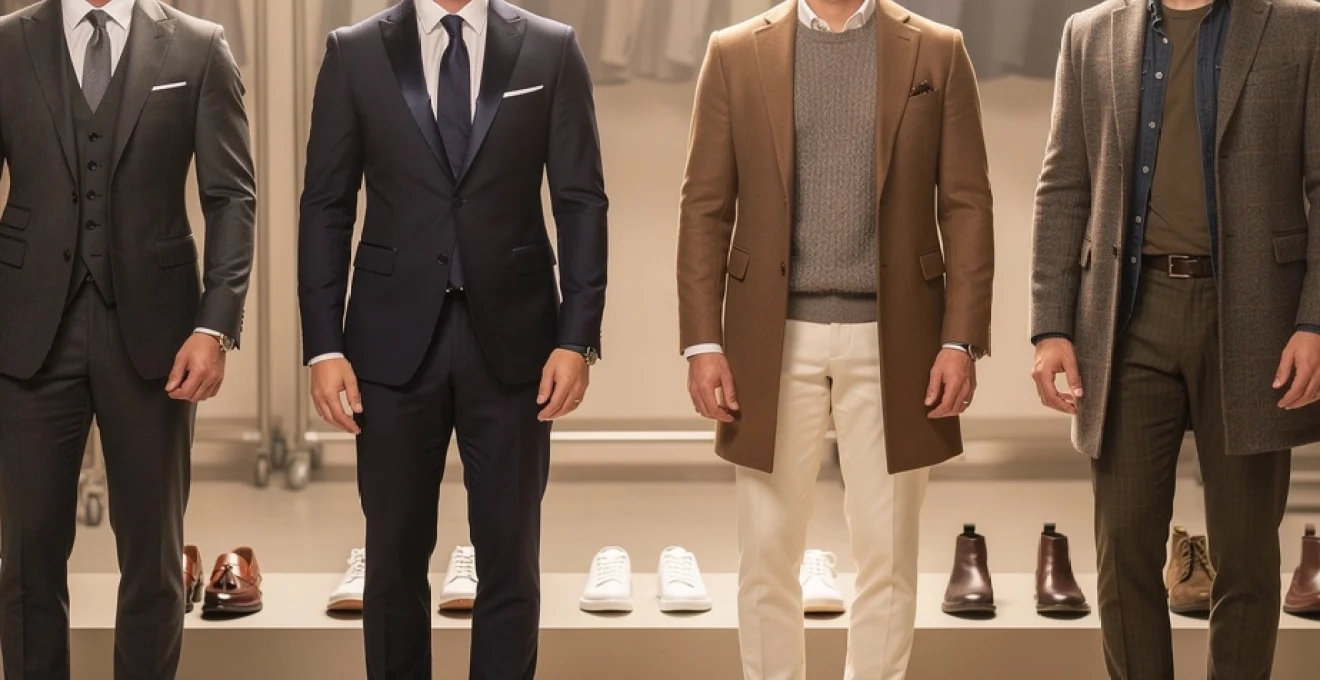
The foundation of exceptional menswear lies not in the most expensive suit or the finest fabrics, but in the careful selection and coordination of footwear that complements every aspect of your ensemble. Modern gentlemen often underestimate how profoundly their choice of shoes influences the overall perception of their style, yet it remains one of the most critical decisions in creating a cohesive and sophisticated appearance. Understanding the intricate relationship between different shoe styles and their corresponding outfit combinations enables you to build a wardrobe that seamlessly transitions between professional environments, social occasions, and casual settings whilst maintaining an air of refined confidence.
The evolution of men’s footwear has expanded far beyond the traditional black Oxford and brown brogue dichotomy, offering contemporary gentlemen an unprecedented range of options that can elevate or completely transform an outfit’s character. Each style of shoe carries its own formal register, aesthetic weight, and seasonal appropriateness, making the selection process both an art and a strategic consideration that requires thoughtful planning and expert knowledge.
Oxford brogue construction and formal ensemble coordination
The Oxford shoe represents the pinnacle of formal footwear craftsmanship, embodying centuries of British shoemaking tradition whilst serving as the cornerstone of any well-curated gentleman’s wardrobe. Distinguished by their closed lacing system where the eyelet tabs are sewn underneath the vamp, Oxfords create a sleek, streamlined silhouette that naturally complements formal attire. The construction method significantly impacts both the shoe’s aesthetic appeal and its ability to maintain shape over extended wear, making quality construction essential for achieving the desired sophisticated appearance.
The relationship between Oxford styling and formal ensemble coordination extends beyond mere colour matching to encompass considerations of proportion, texture, and occasion appropriateness. When selecting Oxfords for formal wear, the key lies in understanding how different leather finishes, toe shapes, and sole constructions interact with your suit’s fabric, cut, and overall formality level. A high-gloss black patent leather Oxford serves entirely different purposes than a matte burgundy calf leather version, each requiring distinct styling approaches to maximise their impact within your complete ensemble.
Goodyear welted oxfords with Three-Piece suits
The marriage between Goodyear welted Oxfords and three-piece suiting represents one of the most distinguished combinations in traditional menswear. This construction method, which involves stitching the upper to a leather welt before attaching the sole, creates exceptional durability whilst maintaining the sleek profile necessary for formal occasions. The slightly more substantial appearance of welted construction complements the weight and presence of three-piece suits, creating visual harmony between substantial tailoring and robust footwear craftsmanship.
When coordinating welted Oxfords with three-piece ensembles, consider how the additional layer of the waistcoat affects overall proportions. The structured formality of a three-piece suit demands Oxfords in darker leather tones, typically black or deep brown, with minimal decorative elements that might compete with the suit’s already commanding presence. The slight elevation provided by the welted sole construction also complements the heightened formality of waistcoat-enhanced silhouettes, ensuring your footwear maintains appropriate visual weight within the complete ensemble.
Cap-toe oxford styling for Black-Tie adjacent events
Cap-toe Oxfords occupy a unique position in formal footwear hierarchies, offering sufficient elegance for black-tie adjacent events whilst maintaining versatility for high-level business occasions. The horizontal seam across the toe box adds subtle visual interest without compromising the shoe’s formal credentials, making cap-toe styling particularly suitable for events where patent leather formal shoes might appear excessive. This styling approach allows gentlemen to maintain sophisticated appearance standards whilst avoiding the stark formality that traditional evening wear demands.
The selection of cap-toe Oxfords for black-tie adjacent events requires careful attention to leather finish and colour coordination. High-gloss black calf leather provides the necessary formality without crossing into patent leather territory, whilst ensuring compatibility with both dinner jackets and formal lounge suits. The cap-toe detail must remain subtle, executed in matching leather rather than contrasting materials, to preserve the sophisticated understatement that characterises exceptional formal footwear.
Whole-cut oxford integration with tailored trouser breaks</h3
Achieving this balance between shoe and trouser is largely a matter of proportion. A whole-cut Oxford with a sleek last and slightly elongated toe works best with a gentle, medium trouser break that just kisses the top of the shoe without collapsing over it. Excess fabric puddling over such a refined silhouette instantly undermines the elegance you are paying for. Conversely, a cropped or no-break hem that exposes too much sock can make even the most luxurious whole-cut feel abrupt rather than fluid.
Attention to hem width is equally important when you integrate whole-cut Oxfords into formal and business outfits. Slim, tapered trousers with a narrow opening of around 16–18 cm (measured flat) tend to frame the shoe cleanly, echoing its streamlined profile. If you prefer fuller-cut tailoring, a slightly rounder last or a subtly higher sole edge can help maintain balance so the shoe does not appear lost beneath the cloth. Think of the hem as a picture frame: its job is to showcase the shoe, not compete with it.
Colour and leather finish also influence how your tailored trouser break should interact with whole-cut designs. High-shine black calf leather reads more formal and therefore benefits from a neater, slightly shorter break that mirrors the shoe’s sharpness. By contrast, a soft, museum calf or subtle patina in dark brown or oxblood can accommodate a marginally softer break, particularly with flannel or textured suiting. Regardless of your preference, the consistent principle is to ensure a clean line from waistband to toe, allowing the uninterrupted upper of the whole-cut Oxford to remain the visual focal point.
Patent leather oxford applications in evening wear
Patent leather Oxfords remain the definitive choice for traditional black-tie and white-tie dress codes, where the expectation for polish and formality is at its highest. The mirror-like finish of patent leather reflects ambient light, visually sharpening the entire lower half of your outfit in a way that standard calf leather cannot replicate. When paired with a classic tuxedo and silk-faced lapels, patent Oxfords provide a cohesive sheen that signals you understand and respect evening-wear conventions.
The most authoritative variant for evening wear is the plain-toe or minimal cap-toe patent Oxford on a sleek, rounded last, avoiding heavy broguing or decorative seams. Because patent leather naturally draws attention, the rest of the shoe design should remain restrained, allowing the glossy surface to do the work. You will also want to keep the sole profile slim and discreet, ideally in leather or a fine rubber insert, so that the shoe maintains an elegant, almost glove-like appearance under the hem of your tuxedo trousers.
Practical considerations also come into play when integrating patent leather Oxfords into your formal wardrobe. Patent finishes are less forgiving of scuffs and creases than traditional calf, so they are best reserved for events where you are predominantly indoors and walking on smooth surfaces. To maximise longevity, rotate them exclusively for true evening occasions – black-tie galas, formal weddings, and opera nights – rather than pressing them into service for office wear. Treated this way, a well-made patent Oxford can remain a reliable part of your dress-shoe rotation for many years without losing its crisp, ceremonial character.
Derby shoe versatility across smart-casual dress codes
Where Oxfords dominate the upper tiers of formality, Derby shoes excel in the smart-casual and business-casual space, offering greater versatility without sacrificing refinement. Their open lacing system, with quarters sewn on top of the vamp, allows more room across the instep and a slightly more relaxed visual impression. This construction makes Derbies ideal for men who move between office settings, informal meetings, and weekend engagements while preferring one core footwear style.
The strength of the Derby shoe lies in its ability to adapt to various fabrics, silhouettes, and seasonal textures. A single pair can complement tailored wool trousers during the week, selvedge denim on Friday evenings, and cotton chinos on Sunday lunches. By understanding how small design choices—such as toe shape, sole thickness, and decorative perforations—affect perceived formality, you can use Derby shoes to anchor a wide spectrum of outfits with ease.
Plain-toe derby coordination with chinos and blazers
Plain-toe Derbies occupy the most streamlined end of the Derby spectrum, making them a natural partner for chinos and unstructured blazers. The absence of broguing or cap seams creates a clean upper that echoes the simplicity of modern tailoring, particularly in offices where full suiting is no longer required but sneakers still feel too casual. Opt for smooth calf leather in classic shades such as mid-brown, dark chocolate, or black to maintain a polished appearance.
When you coordinate plain-toe Derbies with chinos and blazers, pay attention to colour relationships across the outfit. Mid-beige or stone chinos work elegantly with dark brown Derbies and a navy blazer, while charcoal or navy chinos harmonise well with black or oxblood leather. A useful rule of thumb is to ensure your shoes are at least one shade darker than your trousers, which visually grounds the look and prevents the eye from being pulled downward by competing tones.
Sock and belt choices further refine this smart-casual combination. Matching your belt closely to the leather of your plain-toe Derbies creates a deliberate, coordinated effect, while socks that echo the colour of your chinos elongate the leg line. For men transitioning from trainers to smart-casual leather shoes, this simple Derby–chino–blazer formula offers a reliable, low-risk way to appear well put together in most daytime social and professional contexts.
Brogue derby detailing for weekend gentleman aesthetics
Brogue Derbies introduce decorative perforations and wingtip patterns that immediately relax the shoe’s formality, making them ideal for cultivating a “weekend gentleman” aesthetic. The additional detail adds visual interest when you are wearing simpler garments such as dark denim, flannel trousers, or chunky knitwear. Unlike heavily polished dress shoes, brogue Derbies can handle a slightly more lived-in patina, which often enhances their charm over time.
To harness this style effectively, consider brogue Derbies in rich tan, mid-brown, or whisky shades, combined with casual tailoring or heritage fabrics. A tweed sports jacket, indigo jeans, and brown brogue Derbies, for instance, create an ensemble that feels relaxed yet deliberate, perfect for weekend lunches or informal gatherings. The perforations themselves hark back to country footwear, subtly referencing outdoor pursuits even when you are firmly in the city.
Because brogue Derbies already contain substantial visual texture, pair them with outfits that are otherwise restrained in pattern. A simple oxford-cloth shirt, a merino crewneck, and straight-leg trousers allow the shoes to carry much of the stylistic weight. In this way, your footwear becomes the quiet focal point of the look, demonstrating that you have thought about more than just the basics without appearing overdressed.
Suede derby integration with knitwear and textured fabrics
Suede Derbies bridge the gap between polished leather shoes and fully casual footwear, particularly when integrated with knitwear and textured fabrics. The matte, tactile surface of suede softens the overall impression of a Derby, making it an ideal companion for cable-knit sweaters, shawl-collar cardigans, flannel trousers, and corduroy. If smooth calf leather is the visual equivalent of a crisp business shirt, suede feels more like a luxurious cashmere jumper—still refined, but distinctly more relaxed.
Colour plays a crucial role in maximising this synergy. Tobacco, snuff, and sand suede Derbies pair beautifully with autumnal palettes and rugged textures, while dark navy or charcoal suede can create unexpectedly sleek combinations with tonal knitwear. Because suede absorbs light rather than reflecting it, these shoes tend to read slightly less formal than their calf counterparts even in darker shades, which works to your advantage in smart-casual environments.
From a practical standpoint, modern suede treatments and protective sprays have made these shoes far more resilient than many men assume. When you rotate suede Derbies with smooth leather pairs and brush them regularly, they can withstand frequent wear throughout cooler months. Worn with a textured blazer, knitted tie, and tailored wool trousers, they offer a sophisticated alternative to both trainers and heavy boots, particularly for dinners and social events where you want to project ease without sacrificing elegance.
Norwegian split-toe derby applications in country attire
Norwegian split-toe Derbies, sometimes called NST Derbies, introduce a stitched apron and raised seam that runs along the toe, giving them a distinctly robust character. This construction, often associated with traditional Scandinavian and alpine footwear, lends itself naturally to country attire and outdoor-oriented ensembles. The more pronounced stitching and often chunkier soles communicate durability and informality, making these shoes an excellent choice when you need something that sits between a city Derby and a full country boot.
To integrate Norwegian split-toe Derbies into your wardrobe, combine them with heavier cloths and layered outfits that can visually support their sturdier profile. Think brushed cotton chinos, moleskin trousers, tweed jackets, waxed cotton coats, and wool overshirts. In rural settings or weekend escapes, such combinations feel both appropriate and comfortable, allowing you to traverse uneven paths or cobbled streets without worrying about delicate leather soles.
Many Norwegian split-toe designs feature rubber or commando-style soles, further enhancing their suitability for damp grass, gravel, or light trails. Rich brown, dark espresso, or even grain-leather finishes reinforce the country association and age attractively as they acquire scuffs and creases. If you frequently move between city and countryside, a single pair of robust NST Derbies can serve as your go-to footwear for travel days, pub lunches, and informal gatherings where traditional dress shoes would feel out of place but heavy boots would be excessive.
Loafer silhouettes and contemporary menswear integration
Loafers have evolved from Ivy League staple to global menswear essential, sitting at the intersection of comfort, ease, and understated elegance. Their slip-on nature introduces a relaxed sensibility even when crafted from fine leather, which explains their popularity in offices with flexible dress codes and in social settings where lace-ups can feel overly formal. Today’s loafer silhouettes—penny, tassel, bit, and Belgian among them—offer distinct personalities that can be leveraged to fine-tune an outfit’s overall tone.
For business-casual and smart-casual wardrobes, penny loafers in smooth calf or suede represent the most adaptable option. Worn with cotton chinos, lightweight wool trousers, or even softly tailored suits, they can replace Derbies in many situations while reinforcing a slightly more modern, international aesthetic. Tassel loafers, by contrast, add a touch of flourish and are particularly effective with pleated trousers, fine-gauge knitwear, and softly structured sports coats, lending your look a bookish, metropolitan charm.
Bit loafers, distinguished by their metal horsebit trim, skew a touch dressier and can act as an elegant alternative to Oxfords with summer suits or dressy evening separates. Because the hardware acts almost like built-in jewellery, it is wise to keep other accessories—watches, cufflinks, belt buckles—restrained and in the same metal tone. Meanwhile, slimmer Belgian-style loafers with their delicate bow detailing work best with narrow, tapered trousers and cropped hems, particularly in creative industries or dressy-casual environments where a fashion-forward edge is welcomed.
Sock strategy becomes crucial when you integrate loafers into contemporary outfits. Matching socks to your trousers elongates the leg line and keeps attention on the shoe’s shape, while tonal, fine-gauge socks can maintain formality in business contexts. For warm-weather wear or resort settings, going sockless—or more accurately, wearing invisible liner socks—creates a relaxed, Mediterranean-inspired look that pairs well with linen trousers, cuffed chinos, and even tailored shorts. The key is to ensure your loafers fit snugly at the heel to avoid slippage when worn this way.
Boot construction impact on seasonal outfit architecture
Boots introduce vertical structure and visual weight to a man’s outfit, making them powerful tools for navigating seasonal transitions and weather conditions. Compared with low-cut shoes, ankle boots and higher silhouettes anchor heavier outerwear, layered knitwear, and textured fabrics more convincingly, especially in autumn and winter. The type of construction—whether sleek Chelsea, versatile chukka, heritage brogue boot, or rugged combat style—significantly influences how your overall look is perceived.
From a practical perspective, boots with storm welts, lugged soles, or water-resistant treatments extend the wearability of tailored garments into harsher conditions. Rather than reserving your best suits and trousers for dry days only, you can pair them with appropriate boots that protect both your feet and your clothing investment. At the same time, refined boot designs in polished leather or fine suede can be integrated into smarter outfits without undermining formality, provided the proportions and finishes are thoughtfully chosen.
Chelsea boot ankle profiles with slim-fit tailoring
Chelsea boots, with their elastic side panels and close-fitting ankle profile, are uniquely well suited to slim-fit tailoring and narrow-legged trousers. Their clean, laceless vamp creates an uninterrupted line from trouser hem to toe, echoing the sleekness of a whole-cut Oxford while offering the additional coverage and practicality of a boot. When executed in smooth black or dark brown calf, a Chelsea boot can comfortably accompany slim suits to the office, evening restaurants, and even some semi-formal events.
To maximise harmony between Chelsea boots and slim-fit tailoring, ensure the boot shaft sits neatly under the trouser hem without causing unsightly bulging. This typically requires a moderately tapered leg and a hem opening that is just wide enough to drape over the boot without gripping it. A slight, clean break or even a minimal “kissing” hem can look particularly flattering, especially when the boot last is almond-shaped rather than aggressively pointed or square.
For more casual settings, suede Chelsea boots in tobacco, grey, or tan pair effortlessly with slim jeans, knitted polos, and lightweight bomber jackets. Here, the same close ankle fit that flatters tailored trousers also prevents your denim from bunching awkwardly around the boot. The result is an outfit that feels modern and intentional, whether you are heading to a weekend gallery visit or an informal evening engagement.
Chukka boot proportions in smart-casual layering
Chukka boots, traditionally characterised by two or three eyelets and a gently rounded toe, occupy a versatile middle ground between formal shoes and rugged boots. Their mid-height profile and usually softer construction make them ideal for smart-casual layering where you are pairing items like Oxford shirts, lightweight knitwear, and unstructured blazers. In many wardrobes, a single pair of suede chukkas can provide more day-to-day value than multiple pairs of highly formal shoes.
The proportions of chukka boots lend themselves particularly well to straight or slightly tapered trousers and jeans. Because the shaft height is modest, the hem can fall cleanly without creating excessive stacking, which keeps the overall look sharp and deliberate. Dark brown or snuff suede chukkas worn with indigo denim and a navy sport coat, for example, produce a reliable combination suitable for dinners, casual Fridays, and travel days where you want both comfort and polish.
When temperatures drop, chukkas also integrate seamlessly into layered outfits featuring overshirts, quilted gilets, and field jackets. Their softer silhouette prevents the lower half of your outfit from looking too heavy, even when your upper body is wrapped in multiple layers. For men building a minimal shoe wardrobe, investing in one high-quality chukka boot in a versatile neutral shade is often one of the most cost-effective ways to expand styling possibilities across the entire smart-casual spectrum.
Brogue boot heritage styling with tweed and corduroy
Brogue boots combine the decorative perforations of traditional brogues with the coverage and robustness of ankle boots, making them natural companions for heritage fabrics like tweed and corduroy. Their country origins are evident in the punched detailing and often chunkier soles, which visually balance the weight of heavy jackets, thick trousers, and substantial knitwear. If you appreciate classic English or Scottish country style, brogue boots are almost non-negotiable additions to your footwear rotation.
For authentic heritage styling, pair brown or tan brogue boots with tweed sports coats, brushed cotton or corduroy trousers, and layered flannel shirts. This ensemble works as well for city weekends as it does for countryside breaks, especially when topped with a waxed jacket or wool overcoat. The interplay between the textures—grain leather, punched broguing, hairy tweed, and ribbed knitwear—creates depth and interest without relying on bold colours or patterns.
Sole choice further refines how formal or rugged your brogue boots appear. Leather soles with a finesse edge can lean towards dressier territory when worn with tailored flannels, while Dainite or commando soles push the boot firmly into outdoor-ready territory. In either case, the brogue boot’s inherent character ensures your outfits feel considered and seasonally appropriate throughout autumn and winter, when lighter footwear can appear visually insubstantial.
Combat boot adaptation for modern workwear aesthetics
Combat boots draw from military heritage, offering high shafts, sturdy lacing systems, and thick soles designed originally for demanding conditions. In contemporary menswear, they serve as powerful anchors for modern workwear-inspired looks built around cargo trousers, chore jackets, flannel shirts, and technical outerwear. When styled thoughtfully, combat boots can bring controlled ruggedness to your wardrobe without tipping into costume territory.
The key to integrating combat boots lies in balancing their volume with your trouser silhouette. Straight or relaxed-fit jeans and work pants with slightly wider hems allow the fabric to drape naturally over the boot, avoiding the “ballooning calf” effect that can occur with ultra-skinny cuts. Earth tones and dark neutrals—black, charcoal, olive, and deep brown—work best, ensuring the boots recede into the outfit rather than dominating it.
For urban environments, polished or semi-matte leather combat boots can pair effectively with slim cargo trousers, heavy overshirts, and minimalist parkas, creating outfits that feel grounded yet contemporary. If you work in creative industries or simply enjoy a more directional aesthetic, you can even juxtapose combat boots with pared-back tailoring—think a softly structured navy blazer, black jeans, and black boots—for a deliberate high–low contrast that still reads cohesive when executed in a restricted colour palette.
Trainer technology integration in elevated casual wardrobes
Trainers have long transcended their athletic origins, becoming core components of elevated casual wardrobes for men across age groups and professions. Advances in cushioning, lightweight materials, and sole design mean modern sneakers can deliver all-day comfort while still aligning with a refined aesthetic. The challenge is no longer whether you can wear trainers with smarter outfits, but which types of trainers best complement the clothes you already own.
Minimalist leather trainers—typically in white, off-white, or subtle neutrals—offer the most straightforward route to sophisticated casual styling. Their clean lines and low branding make them easy to pair with slim jeans, chinos, and even soft tailoring, especially in offices that embrace business-casual or relaxed dress codes. Think of them as the sneaker equivalent of a white Oxford shirt: understated, versatile, and appropriate in more contexts than you might initially assume.
For men who prioritise comfort and technical performance, modern running-inspired trainers with advanced foam midsoles and mesh uppers can still be integrated into polished outfits, provided you manage colour and proportion. Neutral or tonal palettes—greys, charcoals, navies, and muted earth tones—tend to harmonise better with tailored outerwear and premium knitwear than loud, high-contrast performance colourways. When your trainers feature complex paneling or chunky soles, keeping the rest of your outfit streamlined and pattern-light prevents visual overload.
Retro runners and court-style sneakers add another dimension to elevated casual wardrobes. Suede and nylon combinations, gum soles, and vintage branding can inject character into otherwise simple outfits of jeans, T-shirts, and overshirts. By treating these trainers as you would a pair of casual Derbies—rotating them, cleaning them regularly, and coordinating colours with the rest of your wardrobe—you maintain a standard of dress that feels intentional even on your most relaxed days.
Seasonal footwear transitions and wardrobe cohesion strategies
Building a coherent footwear strategy across the year requires more than simply owning “summer shoes” and “winter boots.” The most effective wardrobes anticipate transitional periods—those weeks where temperatures shift unpredictably and dress codes fluctuate with the social calendar. By planning a considered sequence of footwear options, you can move through these phases smoothly while preserving a consistent personal style.
A useful approach is to think in terms of overlapping ranges rather than rigid seasonal categories. For example, minimalist leather trainers, suede Derbies, and chukka boots may all be wearable from early spring through late autumn, with socks, trouser fabrics, and outerwear adjusting as the climate changes. In high summer, loafers and lightweight trainers take precedence, often worn sockless or with invisible liners; in deep winter, leather-soled Oxfords may give way to rubber-soled brogue boots and Norwegian split-toe Derbies that can handle wet pavements.
Colour also plays a significant role in seasonal footwear transitions. Lighter shades—tan, sand, stone, and white—feel most at home in spring and summer, especially when paired with linen, cotton, and lighter-weight tailoring. As the year progresses, you can gradually pivot towards deeper tones: tobacco suede, mid-brown calf, oxblood, and black anchor heavier fabrics and darker outfits more convincingly. This gradual shift ensures your footwear always looks contextually appropriate without demanding a complete wardrobe overhaul each season.
Ultimately, the goal is cohesion: you want each pair of shoes, boots, or trainers to interact intelligently with multiple outfits across different months. When you evaluate a prospective purchase, ask yourself how it will pair with your primary suits, your most-worn jeans, and your go-to outerwear pieces. If a new pair of shoes can seamlessly connect at least three or four existing items in your wardrobe—across more than one season—it is far more likely to become a true staple rather than an occasional novelty. By approaching footwear decisions with this level of strategy, you ensure that every step you take reinforces a complete, considered men’s outfit.