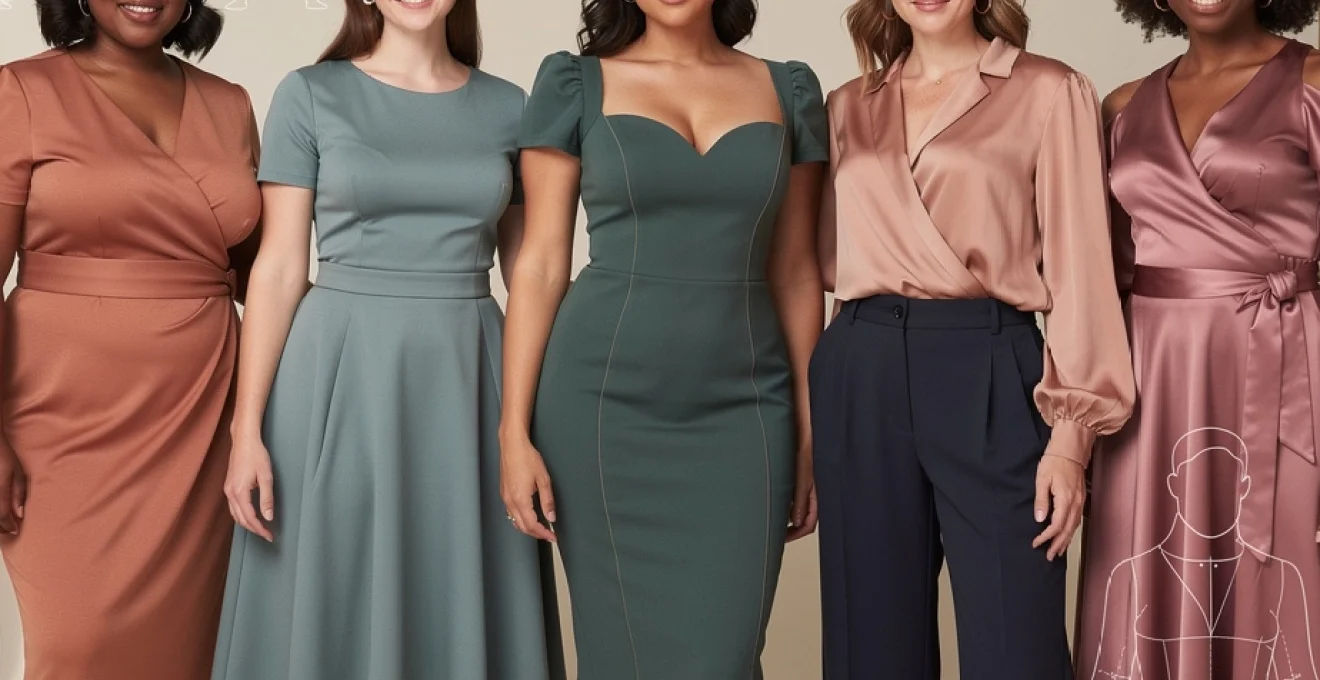
The art of flattering garment construction lies in understanding how fabric, seams, and silhouettes interact with the natural geometry of the human form. When designers master the principles of proportional dressing, they create pieces that enhance rather than compete with individual body characteristics. This sophisticated approach to fashion moves beyond temporary trends, focusing instead on timeless techniques that celebrate diverse physiques through thoughtful cut engineering and strategic design elements.
Modern fashion has evolved to embrace the concept that effective styling isn’t about concealing features but rather about creating visual harmony through intelligent garment selection. The relationship between clothing construction and body proportions forms the foundation of truly flattering fashion, where understanding replaces guesswork in both design studios and personal wardrobes.
Understanding body geometry and proportional analysis for garment selection
The science of body proportions serves as the cornerstone for creating flattering silhouettes across diverse physiques. Fashion designers and stylists rely on mathematical relationships between shoulder width, bust measurements, waist definition, and hip circumference to determine which cuts will create the most harmonious visual effects. This analytical approach transforms subjective styling choices into objective design decisions based on geometric principles.
Professional garment construction considers how visual weight distribution affects the overall appearance of an outfit. When clothing pieces align with natural body proportions, they create an effortless elegance that appears intentional rather than accidental. The key lies in recognizing that different body shapes require different approaches to achieve similar aesthetic goals of balance and proportion.
Apple body shape characteristics and measurement points
Apple-shaped figures typically carry their primary visual weight through the torso and midsection, with measurements that show a waist circumference equal to or larger than hip measurements. The shoulders often align with hip width, creating a relatively straight line from top to bottom. This body type frequently features fuller bust lines and carries weight primarily in the abdominal area, while maintaining proportionally slender arms and legs.
The strategic approach for apple shapes focuses on creating vertical lines that draw the eye away from the midsection whilst highlighting the naturally slender extremities. Empire waistlines positioned just below the bust create the illusion of a higher waistline, effectively lengthening the torso’s appearance. Designers often incorporate flowing fabrics and strategic draping to skim rather than cling to the midsection.
Pear body shape proportional guidelines and key areas
Pear-shaped silhouettes demonstrate the classic triangle proportion where hip measurements exceed bust measurements by a significant margin, typically creating a difference of 2-4 inches or more. The waistline remains clearly defined, often measuring 8-12 inches smaller than the hip circumference. This creates a naturally feminine silhouette that benefits from techniques designed to balance the upper and lower body proportions.
Successful styling for pear shapes emphasises the upper torso through strategic volume placement, detailed embellishments, and eye-catching necklines. The goal involves creating visual interest above the waistline to achieve proportional balance with the naturally fuller hip area. Structured shoulders and detailed sleeve treatments work particularly well for enhancing the upper body’s presence.
Hourglass silhouette definition and balanced proportions
The hourglass figure represents the mathematical ideal where bust and hip measurements align within 1-2 inches of each other, whilst the waist measures 8-12 inches smaller than both. This creates the classic curved silhouette that has influenced fashion design for centuries. The proportions naturally create an X-shaped outline that requires careful styling to maintain rather than disrupt the existing balance.
Hourglass figures benefit most from garments that follow their natural curves rather than adding unnecessary volume or structure. The styling philosophy centres on enhancement rather than alteration, using fitted silhouettes that showcase the natural waist definition whilst maintaining the balanced relationship between bust and hips.
Rectangle body type features and creating curves
Rectangle body types exhibit similar measurements across bust, waist, and hips, typically varying by no more than 2-3 inches between these key points. This creates a naturally athletic silhouette characterised by minimal waist definition and proportionally broader
shoulders and hips. Because the frame reads as visually linear, the design objective is to introduce implied curves through cut, seaming, and colour-blocking rather than relying on natural contour alone.
To create the illusion of a more defined waist on a rectangle body type, designers often employ princess seams, darted bodices, and strategically placed belts that nip in at the midsection. Peplum hems, wrap cuts, and fit-and-flare dresses can all simulate curvature by adding controlled volume at the hips while pulling fabric closer at the waist. For everyday dressing, even subtle choices—such as curved hemlines, softly bloused tops tucked into higher-rise bottoms, or contrast waistbands—can transform a straight outline into a more sculpted silhouette.
Inverted triangle shape analysis and softening techniques
The inverted triangle body shape is defined by broader shoulders or bust measurements that exceed hip circumference, often by 2-4 inches or more. Visually, this creates an upper-body emphasis that can feel top-heavy if not balanced correctly. The waistline may be moderately defined, but the hip area usually appears narrower in comparison to the shoulders, giving the overall impression of an upside-down V.
Garment selection for this body type centres on softening the shoulder line while building presence in the lower body. Designers typically avoid excessive shoulder padding, strong epaulettes, or high-contrast detailing at the neckline that exaggerates width across the upper torso. Instead, they introduce volume through A-line skirts, wide-leg trousers, and bias-cut dresses that gently widen from the hip downward. Gentle V-necklines, wrap fronts, and streamlined sleeve heads help visually narrow the shoulders, allowing the silhouette to appear more grounded and cohesive.
Strategic neckline engineering for different bust configurations
Necklines operate as critical control points in flattering garment construction because they dictate how the eye reads the bust, shoulders, and upper torso. The intersection of bust volume, shoulder width, and neck length determines whether a neckline will feel balanced or intrusive. When neckline design aligns with bust configuration, it can lengthen the torso, refine proportions, and create a focal point that feels both intentional and comfortable.
Rather than approaching neckline selection as a matter of trend, we can treat it as engineering for visual balance. The same dress pattern with a different neckline will behave differently on a fuller bust versus a smaller one. By choosing cuts that either diffuse or concentrate visual weight at the chest, you gain precise control over how structured or relaxed the overall silhouette appears. This is why understanding which necklines flatter a full bust and which enhance a smaller bust is a powerful styling tool.
V-neck and plunging necklines for fuller bust types
For fuller bust configurations, V-neck and plunging necklines function as natural lengthening devices. By creating a vertical corridor of exposed skin, they guide the viewer’s gaze down the centre line of the body rather than across the width of the chest. This reduces the impression of heaviness and helps integrate the bust into the overall silhouette, particularly when the garment also defines the waist.
The depth of the V should be proportional to both bust size and comfort level. Moderate V-necks that end between the collarbone and the top of the bust line are ideal for professional contexts, whereas deeper plunges can work in eveningwear where drama is welcome. When combined with supportive construction—such as cup seaming, wide straps, or internal structure—V-necklines allow fuller-busted individuals to enjoy fitted garments without unnecessary bulk. Think of the V-neck as a visual “arrow” that redirects focus from width to length.
High necklines and mock turtlenecks for smaller bust enhancement
Smaller bust types often benefit from high necklines and mock turtlenecks because these designs visually “fill in” the upper torso. By covering more surface area, they create a smooth, uninterrupted plane that can make the chest appear subtly fuller. Ribbed knits, soft jerseys, and structured woven fabrics all respond well to this approach, especially when combined with thoughtful detailing such as gathers, pleats, or embellishment at the neckline.
Mock turtlenecks and crew necks work particularly well when the goal is to highlight the shoulders or frame the face. They provide a clean canvas for statement jewellery while maintaining a streamlined, modern profile. For individuals who prefer a minimalist aesthetic but still want to enhance the upper body, pairing a high neckline with slightly padded shoulders or cap sleeves can create a refined yet powerful silhouette. The effect is similar to adding a sculptural collar to a building: it crowns the structure and draws the eye upward.
Off-shoulder and boat neck designs for broader shoulder balance
Off-shoulder and boat necklines must be handled carefully on broader shoulders because, by design, they emphasise the horizontal line across the clavicle. However, when engineered correctly, they can soften rather than exaggerate width. The key lies in how far the neckline extends and what happens below the shoulder line. Slightly curved boat necks that sit just inside the shoulder point, paired with fluid fabrics, can create a graceful frame around the neck without adding bulk.
Off-shoulder designs that dip slightly rather than stretching in a rigid straight line can also be flattering, especially when combined with a defined waist and an A-line or fit-and-flare skirt. This combination redistributes visual weight from the shoulders to the midsection and hips, creating a more balanced overall impression. For inverted triangle shapes, choosing off-shoulder styles with minimal sleeve volume and soft drape is often more effective than stiff, structured versions that amplify the shoulder span.
Scoop neck and sweetheart cuts for décolletage emphasis
Scoop necklines and sweetheart cuts are particularly effective when the goal is to highlight the décolletage while maintaining a soft, approachable aesthetic. The curved geometry of these necklines mirrors the natural contours of the body, creating a gentle frame that flatters both moderate and fuller busts. Because they open up the upper chest area without creating sharp angles, they can be more forgiving than deep plunges in both casual and formal contexts.
Sweetheart necklines are especially useful in structured garments such as dresses and tailored tops because they allow for precise bust shaping through seaming. When combined with boning or internal support, they can sculpt the torso in a way that enhances the natural hourglass effect. Scoop necks, on the other hand, work beautifully in knitwear and everyday tops, providing an easy, versatile option that layers well under blazers and jackets. In both cases, the emphasis on the décolletage can draw attention upward and away from areas you may prefer to downplay, such as the midsection or hips.
Waist definition techniques through cut and seaming
Waist definition is one of the most powerful tools in flattering garment design because it shapes the body’s visual “centre of gravity.” Whether a waist is naturally pronounced or more subtle, clever cut and seaming can either emphasise it, shift it, or soften it according to personal preference. Rather than relying solely on belts, modern pattern-making uses darts, paneling, and directional seams to sculpt the torso in three dimensions.
Princess seams, which run from the shoulder or armhole down through the bust and into the waist, are particularly effective for creating a smooth, contoured fit without tightness. Diagonal seaming, wrap constructions, and side-panel colour-blocking can all carve out the suggestion of a narrower waist, even on rectangle or apple body shapes. For pear and hourglass silhouettes, slightly curved side seams and contoured waistbands support existing definition without compressing or distorting natural curves. In practice, think of waist-focused design as architectural tailoring: subtle shifts in line placement can dramatically change how the structure is perceived.
Hip and lower body silhouette optimisation methods
Optimising the hip and lower body silhouette involves managing volume, line, and movement from the waist down. Because hips, thighs, and legs carry a significant portion of the body’s visual weight, the cut of skirts, dresses, and trousers plays a critical role in overall balance. Strategic choices here can either spotlight curves, diffuse width, or introduce shape where it is naturally minimal.
Designers examine how hemlines intersect with the fullest parts of the hips and thighs, how fabric drapes over curves, and where seams or pleats are placed. A well-cut skirt or trouser acts like a well-designed foundation in architecture: when the base is proportionally aligned, the entire structure looks more intentional. Whether you are working with a pear-shaped figure, a straighter rectangle frame, or an inverted triangle, lower-body cuts can recalibrate the silhouette with surprising precision.
A-line and fit-and-flare cuts for pear-shaped figures
A-line and fit-and-flare cuts are foundational for pear-shaped figures because they respect the natural fullness of the hips while providing a gentle, controlled release of fabric. By skimming rather than clinging to the widest points, these silhouettes avoid creating unnecessary tension lines or horizontal breaks across the hip area. The flare that begins at or slightly above the hip allows movement and comfort without adding bulk where it is least desired.
For dresses and skirts, an A-line cut that starts its flare from the natural waist can be particularly effective when paired with a more structured or detailed bodice. This combination draws attention to the upper body and waist, creating a harmonious proportion with the fuller lower half. Fit-and-flare dresses extend this principle further, often using seaming or paneling to contour the torso before transitioning into a graceful skirt. On a practical level, these shapes also offer versatility, working equally well with flats for daytime or heels for more formal settings.
Straight-leg and wide-leg trouser cuts for hip balance
Straight-leg and wide-leg trouser cuts serve as balancing tools across multiple body shapes, particularly for pears, apples, and inverted triangles. A straight-leg trouser that falls from the hip in a clean vertical line can visually streamline the lower body, preventing the eye from fixating on any single area. This is especially useful when you want to minimise contrast between hips and ankles or create a continuous column of colour to lengthen the legs.
Wide-leg and palazzo styles, when fitted correctly at the waist and high hip, can redistribute visual weight more evenly from waist to hem. For inverted triangle shapes, this added volume at the lower body helps counterbalance broader shoulders. For apple shapes, a high-rise wide-leg cut paired with a softly draped top can create an elegant, elongated look. The critical factor is scale: the width of the leg should be proportional to your height and frame so that the trousers enhance, rather than overwhelm, the overall silhouette.
Empire waist and high-rise designs for torso lengthening
Empire waist and high-rise designs are particularly useful when the aim is to lengthen the torso or legs through strategic optical illusions. Empire waists, set just below the bust, shift the apparent waistline upward, which can be advantageous for apple and petite body types. By allowing fabric to fall smoothly over the midsection without clinging, these cuts create a continuous vertical flow that visually elongates the body.
High-rise skirts and trousers work in a complementary way by raising the starting point of the leg line. When paired with tucked-in or cropped tops, they create the impression of longer legs and a more defined waist. This technique is especially effective for rectangle and pear shapes, where the additional rise can help anchor the waist and refine proportions. As with any lengthening strategy, consistency is key: maintaining similar colour values from waist to hem enhances the vertical effect.
Wrap styles and side-slit dresses for curvy hip areas
Wrap styles and side-slit dresses offer dynamic solutions for curvy hip areas because they introduce movement and adjustable shaping. A wrap skirt or dress allows you to control how closely the fabric follows the hip line, making it adaptable to fluctuations in size or comfort preferences. The diagonal lines created by the wrap closure naturally guide the eye across the body rather than straight around it, which can be more flattering on fuller hips.
Side slits, whether subtle or dramatic, serve both functional and aesthetic purposes. They provide ease of movement in more fitted skirts and dresses while creating glimpses of the leg that break up solid blocks of fabric. For curvy figures, a well-placed slit—usually starting above the knee but below mid-thigh—can add lightness to heavier fabrics and reduce the sense of volume. Combined with a defined waist and thoughtful neckline, wrap and slit details can turn a simple silhouette into a highly flattering, body-conscious design without feeling restrictive.
Sleeve architecture and arm flattering construction
Sleeve design is often underestimated, yet it significantly influences how the arms, shoulders, and upper torso are perceived. The length, volume, and construction of a sleeve can either sharpen the shoulder line, soften the upper arm, or add architectural interest that shifts visual focus. In many ways, sleeves function like support beams in a building—subtle changes in their angle or thickness can dramatically alter the overall structure.
Three-quarter sleeves, subtly flared cuffs, and gently gathered sleeve heads are among the most universally flattering options because they create movement without excess bulk. For those who prefer to downplay the upper arms, sleeves that taper slightly toward the wrist and avoid tight bands at the fullest part of the arm tend to be more comfortable and visually forgiving. Cap sleeves or strong shoulder details can work beautifully on rectangle and pear shapes seeking more upper-body presence, while softer raglan or kimono sleeves often suit inverted triangles and apples by diffusing shoulder width.
Fabric drape and textile selection for body enhancement
Fabric choice is the final, crucial layer in constructing flattering cuts because it dictates how every seam and silhouette behaves in motion. Two garments with identical patterns can look entirely different depending on whether they are cut in a crisp cotton, a fluid viscose, or a structured ponte knit. The drape of a textile—how it falls and folds around the body—either amplifies or softens underlying shapes.
For curvier figures or areas where you prefer a smoother line, medium-weight fabrics with a soft, controlled drape—such as crepe, matte jersey, or high-quality knits—tend to be the most forgiving. They skim rather than cling, allowing the eye to register overall silhouette rather than every contour. Straighter body types often benefit from fabrics that hold their shape slightly more, like twill, denim, or tailored wool blends, which can build in the illusion of structure and curve. When in doubt, think of fabric as the “personality” of the garment: choose calm, fluid textiles where you want subtlety, and more assertive, structured weaves where you want definition and presence.