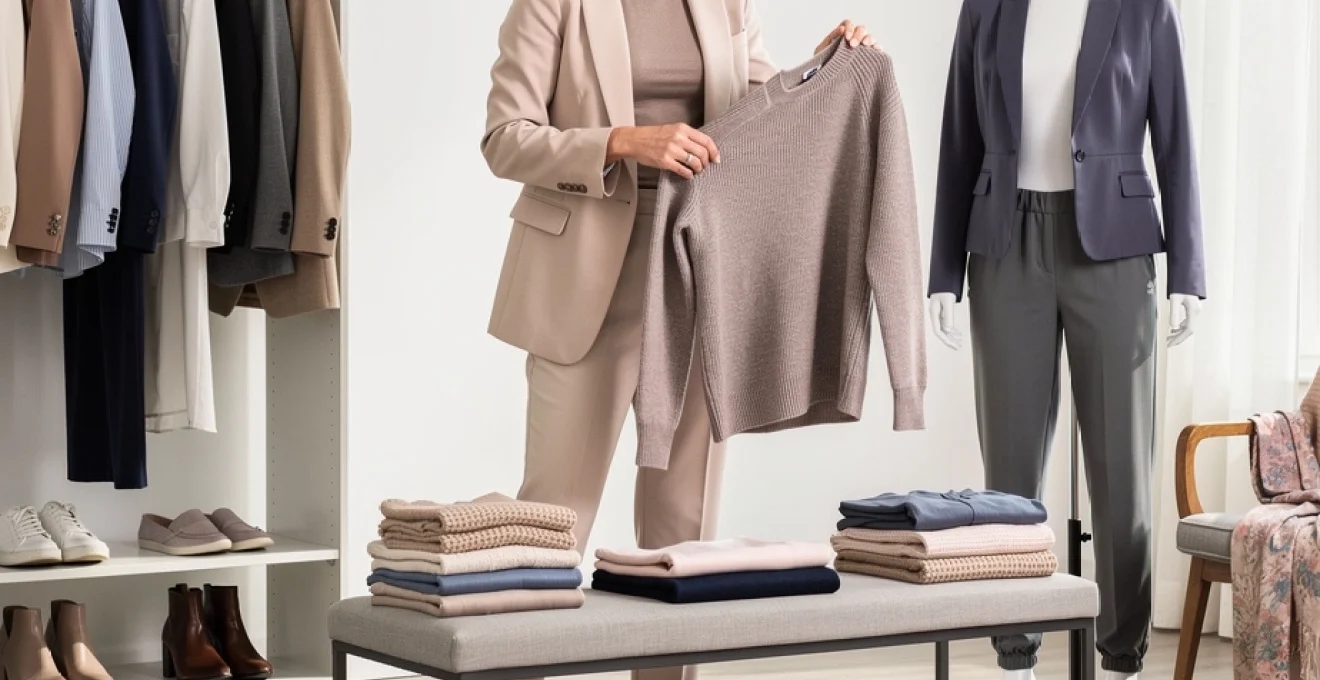
The modern woman’s wardrobe has evolved far beyond the restrictive « beauty is pain » mentality that once dominated fashion. Today’s sophisticated approach to dressing prioritises both comfort and elegance, creating a harmonious balance that allows you to navigate your daily life with confidence and ease. This shift represents more than just a trend—it’s a fundamental reimagining of how clothing should function in contemporary life.
Fashion industry research indicates that 78% of women now prioritise comfort when making clothing purchases, whilst simultaneously seeking pieces that maintain professional polish and personal style. This demand has sparked innovation across the textile industry, leading to advanced fabric technologies and design philosophies that eliminate the false choice between looking good and feeling comfortable. The result is a new paradigm where elegance emerges from thoughtful construction, quality materials, and intelligent design rather than restrictive silhouettes or uncomfortable fabrics.
Fabric selection and textile properties for Comfort-Forward styling
The foundation of any comfortable yet elegant wardrobe lies in understanding textile properties and how different fibres perform throughout the day. Modern fabric technology has revolutionised the way we think about luxury materials, with innovations that enhance both comfort and aesthetic appeal without compromising durability or appearance.
Natural fibre breathability: merino wool and pima cotton characteristics
Merino wool stands as the gold standard for natural fibre comfort, offering exceptional temperature regulation properties that make it suitable for year-round wear. Unlike traditional wool, merino fibres are incredibly fine—measuring just 18-24 microns in diameter—which eliminates the scratchy sensation often associated with wool garments. This natural fibre actively wicks moisture away from the skin whilst maintaining its insulating properties, making it perfect for layering pieces and base garments.
Pima cotton, cultivated primarily in Peru and the southwestern United States, provides another excellent foundation for comfortable luxury clothing. The extra-long staple fibres create fabrics that are simultaneously soft, durable, and resistant to pilling. Pima cotton garments typically last 50% longer than regular cotton pieces whilst maintaining their shape and colour saturation through numerous wash cycles.
Stretch technology integration: elastane and modal blend percentages
The integration of stretch technology into luxury fabrics has transformed the comfort landscape without sacrificing visual appeal. Elastane, when blended at percentages between 2-5%, provides four-way stretch that moves with your body whilst maintaining the fabric’s structural integrity. Higher percentages can create an overly synthetic feel, whilst lower percentages provide insufficient flexibility for active lifestyles.
Modal blends offer a different approach to comfort enhancement. This semi-synthetic fibre, derived from beech trees, adds exceptional drape and softness to fabric blends. Modal-enhanced fabrics retain their softness even after multiple wash cycles, making them ideal for pieces that receive frequent wear. The optimal modal percentage for everyday wear ranges from 10-30%, depending on the desired level of structure versus fluidity.
Moisture-wicking synthetic alternatives: tencel and bamboo viscose applications
Tencel, produced from sustainably sourced eucalyptus trees, represents the pinnacle of eco-friendly comfort technology. This innovative fibre naturally inhibits bacterial growth whilst providing superior moisture management. Tencel fabrics feel silk-like against the skin but offer the practical benefits of easy care and wrinkle resistance. The fibre’s ability to absorb 50% more moisture than cotton makes it exceptional for summer garments and activewear-inspired pieces.
Bamboo viscose brings natural antimicrobial properties to everyday garments, making it particularly suitable for undergarments and close-to-skin pieces. However, the quality of bamboo viscose varies significantly between manufacturers. Premium bamboo fabrics undergo minimal chemical processing and retain more of the fibre’s natural beneficial properties. High-quality bamboo viscose fabrics offer UV protection whilst maintaining breathability, making them excellent choices for outdoor activities and travel wear.
Wrinkle-resistant fabric technologies for Travel-Ready garments
Modern wrinkle-resistant treatments have evolved beyond the stiff, unnatural finishes of the past.
Today, many brands use advanced resin finishes, fibre blends, and mechanical processes (such as air-texturing) to create wrinkle-resistant fabrics that still feel soft and fluid. High-twist yarns in wool, polyester blends with 2-4% elastane, and treated cotton poplins hold their shape even after hours of wear or time spent folded in a suitcase. For everyday outfits where you need to move from the office to dinner, these technology-enhanced textiles keep your look polished with minimal maintenance. When shopping, look for labels mentioning « non-iron », « travel suiting », or « crease-resistant » to identify garments designed to withstand a long day without losing their elegance.
For frequent travellers and busy professionals, building a core of wrinkle-resistant pieces can radically simplify morning decisions. A stretch wool blazer, a pair of technical crepe trousers, and a couple of easy-care shirt dresses can form the backbone of a comfortable yet elegant travel wardrobe. These garments recover quickly from being packed and require less steaming or pressing, helping you stay refined on the move. Over time, investing in such pieces reduces dry-cleaning costs and supports more sustainable dressing habits because well-made, low-maintenance clothing tends to stay in rotation longer.
Capsule wardrobe architecture using the french wardrobe method
The French wardrobe method offers a strategic framework for combining comfort and elegance in everyday outfits without overflowing your closet. Instead of constant impulse purchases, you curate a small, high-quality base wardrobe and add a few thoughtful pieces each season. This approach works particularly well when you care about ease of movement but still want a refined, cohesive aesthetic. By limiting quantity and focusing on cut, fabric, and fit, you create a capsule wardrobe where almost every item works with everything else.
At its core, the French wardrobe method encourages you to distinguish between permanent staples and seasonal « accent » pieces. Your staples—such as perfectly fitted jeans, a neutral blazer, and versatile knitwear—tend to be more classic and are worth investing in. Seasonal items can introduce colour, print, or texture while still respecting your overall style direction. The result is a collection that feels intentional and elegant, yet practical enough to dress you comfortably for work, errands, and evenings out.
Foundation pieces: investment blazers and structured separates
Foundation pieces are the architectural pillars of your everyday wardrobe. A well-cut blazer in stretch wool or ponte jersey, for example, instantly elevates a simple T-shirt and jeans while remaining surprisingly comfortable. Look for details like slightly padded shoulders for structure, a gentle nip at the waist, and a bit of elastane in the fabric to allow you to move freely. Such investment blazers act like armour for busy days, giving you a polished silhouette without feeling restrictive.
Structured separates—tailored trousers, pencil or A-line skirts, and refined jogger-style pants—complete this base. The aim is to choose shapes that skim rather than squeeze your body, allowing for airflow and flexibility. For trousers, mid- to high-rise cuts with a soft waistband and a hint of stretch tend to be the most wearable for long days. When you find a cut that works, consider buying it in two or three neutral shades so you can rotate them. This simple tactic makes getting dressed easier and ensures your everyday outfits feel intentional instead of improvised.
Colour palette coordination through seasonal analysis principles
Coordinated colour choices are one of the most efficient ways to make your clothes work harder for you. Seasonal colour analysis—grouping shades into « spring », « summer », « autumn », and « winter » palettes—can be a useful starting point, even if you do not follow it rigidly. The idea is to focus on a limited range of tones that flatter your complexion and harmonise with each other, so almost everything in your wardrobe can be mixed and matched. This is particularly helpful when you want to build elegant outfits quickly without sacrificing comfort.
For a work-to-weekend wardrobe, you might select three to four core neutrals (for example, navy, soft white, camel, and charcoal) and two to three accent colours that suit your seasonal profile. Warm-toned individuals may gravitate towards terracotta, olive, and mustard, while cool-toned individuals might prefer burgundy, teal, and powder blue. By staying within your chosen palette, even your most casual pieces—like T-shirts and knitwear—will naturally complement your dressier items. This makes creating a « comfortable but chic » look as straightforward as combining building blocks that were designed to fit together.
Versatile layering systems: cardigan and scarf integration techniques
Layering is where comfort and elegance truly meet, especially in transitional weather or office environments with unpredictable air conditioning. A lightweight cardigan in merino wool or a fine cotton blend can be draped over dresses, paired with tailored trousers, or layered under a blazer for extra warmth. The key is choosing streamlined silhouettes that follow your body without bulk, so you can add or remove layers without disrupting the overall line of your outfit. Think of these pieces as adjustable climate control for your wardrobe.
Scarves, meanwhile, function almost like wearable tools. A large, soft scarf in cashmere or modal can serve as a wrap on a chilly train, a neck accessory over a blazer, or even a shawl over an evening dress. To keep the look elegant rather than overwhelming, pay attention to proportion: petite frames may prefer narrower or lighter scarves, while taller individuals can embrace oversized styles. Simple draping techniques—such as the loop-through, the loose wrap, or a relaxed shoulder throw—can transform a basic outfit in seconds. When coordinated with your colour palette, scarves and cardigans turn practical layering into a signature style element.
Shoe wardrobe hierarchy: from loafers to block heel classifications
Footwear often determines whether an outfit feels wearable all day or becomes a source of discomfort by noon. Building a small shoe hierarchy helps you balance comfort and elegance across different settings. At the base, you might have supportive trainers and sleek leather loafers for commuting and casual days. These provide cushioning and stability while still looking refined enough to pair with tailored trousers or midi skirts. Choosing neutral colours—black, tan, or white—maximises their versatility.
Above this base level, introduce block heels, heeled ankle boots, and low wedges for situations where you want extra height without sacrificing comfort. Block heels distribute weight more evenly than stilettos, making them ideal for events where you’ll be standing or walking. For dressier occasions, consider heels between 4-6 cm with padded insoles and ankle support. Finally, reserve your highest or narrowest heels for short-duration wear or special events, treating them like statement jewellery rather than everyday tools. By organising your shoe wardrobe in this way, you can select footwear that aligns with both your schedule and your style.
Silhouette engineering and proportional dressing techniques
Silhouette engineering is essentially the art of shaping how the eye reads your outfit. Instead of relying on tight, uncomfortable garments to create « flattery », you use proportion, line, and balance. A simple rule is to pair fitted pieces with looser ones: slim trousers with a relaxed blouse, or a pencil skirt with a slightly oversized knit. This approach maintains elegance while giving you physical ease. It also ensures your outfits look deliberate, not accidental.
Proportional dressing begins with understanding your own vertical and horizontal balance points. For example, if you have a shorter torso and longer legs, mid-rise trousers and slightly cropped tops can create a harmonious line. If you are more evenly balanced, high-rise bottoms with tucked-in shirts might be more flattering. Think of your clothes as architecture around your body: seams, waistbands, and hemlines act like visual beams and columns. Placing them strategically—at your natural waist, just above the ankle, or just below the knee—can create an elongated, graceful effect without any physical constriction.
One practical technique is the « thirds rule », where you divide your body visually into one-third and two-thirds rather than halves. For instance, a tucked blouse with high-waisted trousers makes the upper body appear as one-third and the lower body as two-thirds, which many people find lengthening and elegant. Another is to use vertical elements—long cardigans, open blazers, vertical seams, or a column of colour—to draw the eye up and down. This is especially useful when building comfortable outfits with wider trousers, maxi skirts, or relaxed dresses, because it prevents the overall look from appearing shapeless.
Accessories can also support silhouette engineering. A belt, even a soft elastic one, can gently define the waist over a flowy dress without feeling tight. Longer necklaces or scarves worn in a column can visually slim the torso, while structured bags add definition to softer outfits. By experimenting with these proportional tools, you can create everyday looks that feel balanced and elegant yet remain completely wearable for long hours.
Luxury athleisure integration and technical sportswear crossover
Luxury athleisure has transformed the way we interpret casual clothing, making it easier than ever to combine comfort and elegance in everyday outfits. Instead of reserving sportswear for the gym, we now see technical leggings styled with longline blazers, performance hoodies layered under trench coats, and sleek trainers paired with midi skirts. The secret lies in fabric quality, cut, and styling. When athletic pieces feature refined materials, clean lines, and minimal branding, they can blend seamlessly into a polished wardrobe.
Technical sportswear fabrics—think moisture-wicking polyamide, four-way-stretch nylon, or bonded jersey—offer significant comfort advantages. They regulate temperature, move with you, and resist creasing, much like a second skin. When reimagined in elevated silhouettes such as tailored joggers, structured bomber jackets, or minimalist zip-up tops, these pieces provide the ease of loungewear with the look of smart casual clothing. This fusion is particularly helpful if your day includes commuting, walking meetings, or errands after work.
How do you integrate athleisure without looking underdressed? One approach is to follow a simple ratio: limit explicitly sporty items to one or two per outfit. For example, you might wear technical leggings with a long, structured blazer and leather loafers, or pair a performance T-shirt with fluid tailored trousers and a trench coat. In each case, at least one element—like the blazer or the coat—anchors the look in classic elegance. Neutral or tonal colour choices also help; black, navy, cream, and muted earth tones read more refined than neon gym shades.
Footwear is another powerful crossover point. Many luxury and heritage brands now offer hybrid sneakers with leather uppers, streamlined profiles, and discreet soles that work in business-casual contexts. Styling them with midi dresses, cigarette trousers, or monochrome knit sets allows you to walk all day without sacrificing poise. In practice, luxury athleisure is less about logos and more about how you feel: supported, unrestricted, and ready to move, while still appearing deliberate and well put together.
Accessory alchemy: jewellery and hardware coordination strategies
Accessories act as the finishing layer that turns simple, comfortable clothes into elegant outfits. Jewellery, belts, hardware on bags, and even metal details on shoes can either harmonise or clash, depending on how you combine them. A cohesive strategy makes your everyday styling faster and more intentional. One way to achieve this is to choose a dominant metal—gold, silver, or rose gold—that suits your skin tone and appears most frequently in your wardrobe. This becomes your visual « signature » and ensures that new purchases integrate smoothly.
Once you have a primary metal, you can build small accessory capsules: a pair of everyday hoops or studs, a minimalist necklace, a watch, and perhaps one statement piece. These items should work with both your most casual and your more refined outfits. For example, a slim gold chain can elevate a simple T-shirt and cardigan as easily as a silk blouse. If you enjoy mixing metals, keep the ratio intentional—such as 70% gold and 30% silver—so the overall look feels curated rather than chaotic. Think of accessories as the punctuation marks of your outfit; a few well-placed commas are more effective than a paragraph full of exclamation points.
Bags and belts also play an important role in balancing comfort and elegance. A structured crossbody bag keeps your hands free while maintaining a sophisticated line, especially when worn with relaxed trousers or knit dresses. Belts can gently define shape without compromising comfort if you opt for soft leather, elastic inserts, or adjustable styles. Matching the hardware on your belt and bag to your jewellery—silver buckle with silver earrings, for instance—creates visual continuity. Over time, this coordination becomes almost automatic, helping you put together chic looks in minutes.
Finally, consider the « scale » of your accessories in relation to your silhouette and outfit. Delicate jewellery and slim belts pair well with lightweight fabrics and narrow cuts, while chunkier pieces suit heavier knits and oversized outerwear. If your clothes are simple and comfortable, a single statement accessory—like bold earrings or a sculptural cuff—can provide all the drama you need. This approach keeps you physically at ease while ensuring your style still feels expressive and refined.
Seasonal transition styling: climate-responsive wardrobe adaptation
Seasonal transitions are often when comfort suffers most: mornings are chilly, afternoons are warm, and office air conditioning seems to follow its own rules. A climate-responsive wardrobe anticipates these shifts so you can stay comfortable and elegant all day. The key is modular dressing—wearing multiple light layers instead of a single heavy one. A breathable base layer, a mid-weight knit, and a packable outer layer can be combined or removed as temperatures fluctuate, much like adjusting the settings on a thermostat.
In spring and early autumn, focus on trans-seasonal fabrics like lightweight merino wool, cotton-modal blends, and Tencel twill. These materials manage moisture and temperature effectively, making them ideal for unpredictable weather. Trench coats, unlined blazers, and shirt dresses worn with tights or bare legs serve as flexible anchors for many outfits. As conditions change, you can swap footwear—ankle boots for cooler days, loafers or trainers for milder ones—without overhauling your entire look. This strategy keeps your style consistent while responding intelligently to the climate.
Winter-to-spring and summer-to-autumn transitions also benefit from strategic colour and texture choices. Lighter neutrals and soft pastels can make heavier fabrics feel seasonally appropriate in early spring, while richer tones and tactile textures—like corduroy or brushed knitwear—ease you gently into autumn. Rather than buying a completely new wardrobe every season, you repurpose core pieces with different supporting acts: a linen dress gains new life with a turtleneck layered underneath, or a summer blouse becomes autumn-ready when worn under a cardigan with a scarf.
Ultimately, climate-responsive styling is about planning instead of reacting. By considering your local weather patterns, commute, and daily environment, you can assemble a small set of transitional pieces that work hard for you year after year. When your wardrobe supports you in this way, combining comfort and elegance in everyday outfits stops being a challenge and becomes your default.