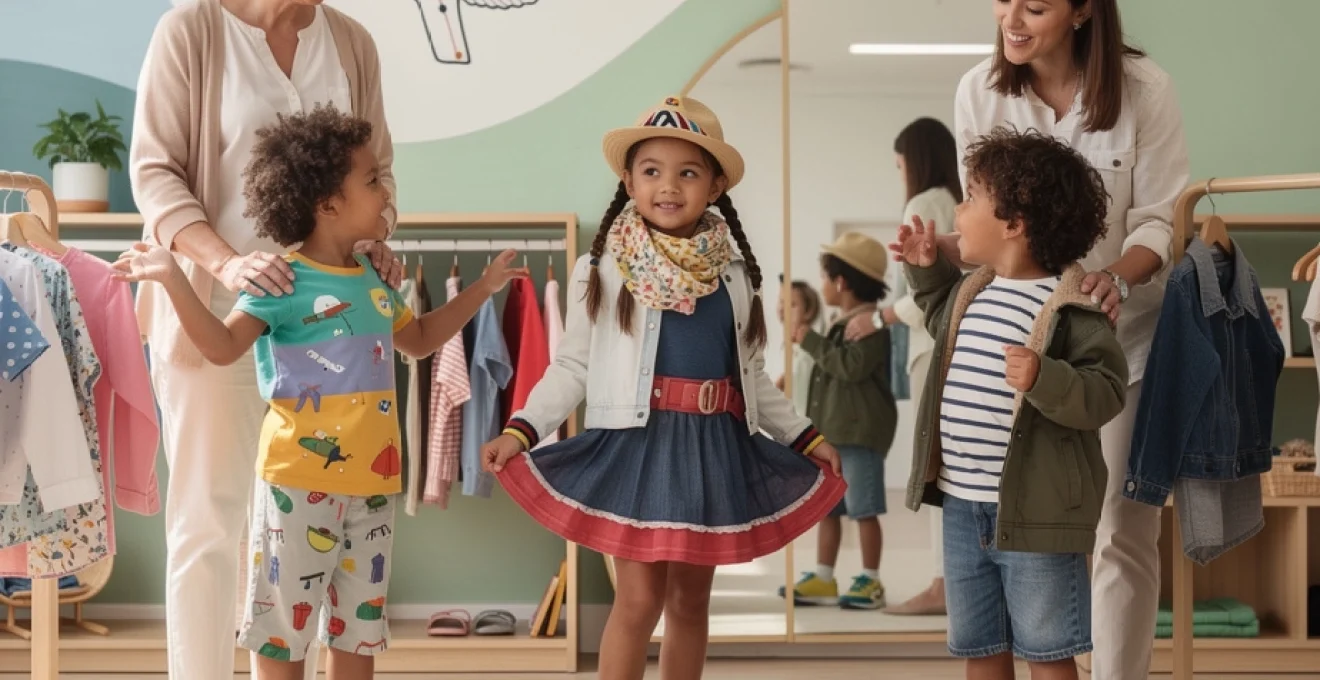
The clothes children wear serve as far more than mere protection from the elements or societal requirements. From the moment young minds begin to express preferences, clothing choices become powerful vehicles for identity formation, creative exploration, and psychological development. Research consistently demonstrates that children who enjoy autonomy in their wardrobe selections develop stronger self-confidence, enhanced decision-making abilities, and more robust emotional intelligence than their peers who experience restrictive clothing environments.
Understanding the profound impact of early fashion choices requires examining the intricate relationship between cognitive development, cultural influences, and practical implementation strategies. When children feel empowered to express their emerging personalities through clothing, they develop crucial life skills that extend far beyond aesthetic preferences into realms of self-advocacy, creative thinking, and social interaction.
Developmental psychology foundations of childhood Self-Expression through fashion choices
The psychological underpinnings of childhood clothing preferences reveal fascinating insights into human development patterns. Children’s relationship with clothing evolves alongside their cognitive abilities, emotional maturity, and social awareness, creating a dynamic interplay between personal expression and developmental milestones.
Erik erikson’s identity formation theory applied to early clothing preferences
Erikson’s renowned stages of psychosocial development provide compelling frameworks for understanding children’s clothing behaviours. During the autonomy versus shame and doubt stage (ages 2-3), toddlers who successfully negotiate clothing choices develop confidence in their decision-making abilities. This seemingly simple act of selecting a favourite shirt or refusing certain colours represents crucial identity formation work that influences personality development throughout life.
The initiative versus guilt stage (ages 3-5) demonstrates children’s growing capacity for self-directed behaviour through fashion experimentation. When young people feel supported in exploring different clothing combinations, they develop initiative and leadership qualities that translate into academic and social success. Research indicates that children encouraged to express clothing preferences during this critical period show increased creativity scores and enhanced problem-solving abilities in later childhood assessments.
Cognitive development stages and aesthetic Decision-Making capabilities
Jean Piaget’s cognitive development theory illuminates how children’s aesthetic reasoning abilities evolve alongside their general intellectual growth. During the preoperational stage (ages 2-7), children begin developing symbolic thinking that allows them to understand clothing as representations of identity rather than merely functional items. This cognitive shift enables sophisticated fashion decision-making that reflects emerging personality traits and social awareness.
The concrete operational stage (ages 7-11) brings enhanced logical thinking that transforms children’s approach to clothing selection. Young people begin understanding complex concepts like colour coordination, appropriateness for different occasions, and peer group dynamics. Their fashion choices become increasingly intentional and reflective of their developing sense of self within broader social contexts.
Maria montessori’s Self-Directed learning principles in wardrobe selection
Montessori’s emphasis on child-led learning translates beautifully into clothing autonomy practices. When children engage in self-directed wardrobe selection, they develop concentration, independence, and practical life skills that form foundations for academic success. The prepared environment concept suggests that children thrive when given appropriate choices within structured parameters—a principle that applies perfectly to clothing selection scenarios.
Montessori’s observation that children naturally gravitate towards activities that support their developmental needs explains why young people often display strong clothing preferences. These preferences represent intrinsic motivation to explore identity, practise decision-making, and develop aesthetic sensibilities. Parents and educators who honour these natural inclinations create environments where children flourish emotionally and intellectually.
Attachment theory influence on Risk-Taking behaviour in personal style exploration
John Bowlby’s attachment theory reveals how secure relationships enable children to take healthy risks in fashion experimentation. Children with secure attachments feel safe exploring unusual clothing combinations, expressing unique style preferences, and weathering potential peer criticism because they possess internal confidence derived from consistent caregiver support. This emotional security translates into enhanced creativity and resilience across multiple life domains.
Conversely, children experiencing attachment insecurity may either avoid fashion experimentation altogether or engage in attention-seeking clothing behaviours. Understanding these patterns helps parents and educators provide appropriate support for healthy self-expression while addressing underlying emotional needs that influence clothing choices.
Neurobiological mechanisms behind early aesthetic preferences and style development
Recent advances
in developmental neuroscience show that even very young children display consistent aesthetic preferences shaped by brain maturation, sensory processing, and reward systems. Understanding these neurobiological mechanisms helps parents and educators support self-expression through clothing in ways that align with how children’s brains naturally grow and learn.
Prefrontal cortex development and complex fashion decision-making processes
The prefrontal cortex, responsible for planning, impulse control, and weighing options, develops gradually from early childhood through adolescence. In toddlers, this area is still immature, which is why early clothing choices are often impulsive, emotionally driven, and focused on immediate comfort or favourite characters. Rather than seeing this as “stubbornness,” we can recognise it as the brain’s first attempts at making independent decisions.
By middle childhood, growing prefrontal connectivity allows children to juggle several factors at once when they get dressed: school rules, weather, social expectations, and personal taste. Asking a seven-year-old to choose an outfit “that is warm enough, comfy, and still feels like you” activates this developing circuitry much like a gentle workout strengthens a muscle. Over time, repeated wardrobe decision-making supports the same executive skills they need for homework planning, conflict resolution, and long-term goal setting.
Mirror neuron system activation during peer style observation and imitation
The mirror neuron system—brain cells that fire both when we act and when we observe others acting—plays a central role in how children learn social norms, including fashion norms. When a child watches a friend wear a bold hoodie or colourful leggings, their mirror system helps them simulate what it might feel like to inhabit that style. This neural mirroring explains why children often gravitate toward the looks of slightly older peers or admired adults.
Rather than dismissing imitation as mere “copying,” it is useful to see it as a developmental bridge between external influence and internal preference. As children’s self-concept solidifies, they begin to selectively imitate only those elements that resonate with their emerging identity. Parents can harness this by serving as positive role models—talking aloud about why they like certain clothes or how they handle feeling different—so children’s mirror systems receive healthy, confidence-building patterns to emulate.
Dopamine pathway response to novel clothing combinations and creative expression
The brain’s dopamine pathways, which govern motivation and reward, respond strongly to novelty and successful self-expression. For many children, trying a new colour palette or unexpected clothing combination produces a small but meaningful dopamine “spark” when the outfit feels right. This pleasant neurochemical feedback encourages them to keep experimenting, much like the satisfaction of solving a puzzle encourages further learning.
When adults always override or criticise children’s experimental outfits, they can unintentionally dampen this healthy reward cycle. In contrast, acknowledging the creativity behind a choice—even if you negotiate certain practical adjustments—helps maintain the association between self-expression and positive emotion. Over time, children learn that personal style is not about chasing external approval but about that internal click of “this feels like me,” a sensation anchored in their own reward circuitry.
Executive function development through daily wardrobe decision-making tasks
Executive functions—planning, organisation, working memory, and cognitive flexibility—are strengthened through repeated, low-stakes practice. Daily wardrobe selection is an ideal training ground because it requires children to anticipate needs (PE days, weather shifts), manage constraints (school dress codes), and adapt quickly when something is in the wash. Much like a daily brain exercise, these tasks help children develop self-management skills that generalise to schoolwork and relationships.
One simple strategy is to invite children to plan their outfit the night before. This practice encourages forward thinking and reduces morning stress, which in turn helps maintain a positive association between clothing and calm self-expression. You might ask: “What do you have tomorrow, and how could your clothes help you feel ready for it?” Questions like this nudge children to connect fashion decisions with emotional readiness and practical demands, integrating style with self-regulation.
Cultural anthropology perspectives on children’s clothing as identity markers
From a cultural anthropology perspective, children’s clothing functions as a visible language that communicates identity, belonging, and values. Across societies, garments and accessories signal age, gender expectations, social class, religious affiliation, and even regional pride. When we look closely at what children wear—uniforms, sports jerseys, festival outfits, everyday play clothes—we see a tapestry of cultural messages woven into fabric.
In many communities, traditional dress for holidays or rites of passage allows children to experience clothing as a bridge between generations. Wearing a grandparent’s woven shawl or a culturally significant pattern can foster pride and a sense of rootedness. At the same time, globalisation and social media expose young people to a vast array of styles from other cultures, which can inspire rich hybrid identities but also raise questions about cultural appropriation and respect. Guiding children to appreciate, rather than simply consume, other cultural aesthetics teaches them that fashion is not just personal—it is deeply relational.
Anthropologists also note how children use clothing to navigate subcultures and micro-communities, such as skate crews, gaming groups, or performing arts clubs. A particular sneaker brand or graphic tee can signal membership, but children who feel empowered often remix these symbols to soften rigid group boundaries. By encouraging kids to see clothing as both a cultural marker and a personal canvas, we help them hold a flexible sense of identity: confident in where they come from, curious about others, and willing to experiment at the edges.
Practical implementation strategies for parents and educational institutions
Translating theory into everyday practice requires thoughtful systems at home and in schools. How can we encourage self-expression through clothing at a young age while still respecting safety, budgets, and community norms? The following strategies offer concrete ways to balance autonomy, structure, and creativity, ensuring that fashion becomes a healthy arena for growth rather than a source of stress or conflict.
Capsule wardrobe creation techniques for age-appropriate autonomy building
A capsule wardrobe—a curated collection of mix-and-match items—can be a powerful tool for supporting children’s independence without overwhelming them. Instead of overflowing drawers, they encounter a smaller selection of well-fitting, comfortable pieces that almost always work together. This reduces decision fatigue while still allowing meaningful choice, especially for younger children whose cognitive load is easily exceeded.
To build a child-friendly capsule wardrobe, involve them in selecting a few core colours, favourite textures, and must-have items (for example, “soft joggers,” “spinny skirts,” or “graphic tees”). Aim for versatile layers that can adapt to changing weather and activities, and store them at child height to encourage self-dressing. You might ask: “Which clothes make you feel most like yourself?” and prioritise those pieces. Over time, children learn that a small, intentional wardrobe can offer more expressive freedom than a chaotic closet full of seldom-worn items.
Collaborative shopping methodologies using child-led selection criteria
Shopping trips offer rich opportunities to practise decision-making, budgeting, and media literacy. Rather than presenting clothing purchases as adult-only business, treat them as collaborative projects where your child’s voice carries real weight within agreed boundaries. Before you enter a store or browse online, co-create simple criteria such as “must be comfortable for movement,” “fits school guidelines,” and “you really love it, not just like it.”
During shopping, invite children to articulate why they are drawn to certain pieces: “What do you like about this colour?” or “How would you feel wearing this to school?” These questions encourage reflection rather than impulse buying. If an item is impractical or beyond budget, explain your reasoning transparently and then work together to find alternatives that still honour their style. This collaborative approach teaches persuasion, negotiation, and self-advocacy—skills that matter far beyond the clothing rack.
Seasonal transition planning systems for maintaining creative control
Each seasonal shift—into colder months, holidays, or summer break—can either disrupt a child’s sense of style or refresh it. Intentional transition planning helps maintain creative control. At the start of each season, set aside time to review existing clothes together: what still fits, what no longer feels like “you,” and what gaps need filling. This practice turns an often stressful chore into a joint design session.
Creating a simple “seasonal style board” with colours, themes, or favourite outfits can guide new purchases or hand-me-down choices. For example, a child might decide that this autumn they feel drawn to “forest colours and comfy layers” or “bright socks and graphic hoodies.” Documenting these preferences—even with quick sketches or photos—signals that their evolving identity is taken seriously. Schools can support this by communicating dress expectations early and clearly, leaving room wherever possible for individuality within guidelines.
Budget-conscious approaches to supporting experimental fashion choices
Encouraging self-expression through clothing does not require a large budget. In fact, constraints can spark creativity. Thrift stores, clothing swaps, and upcycling projects allow children to experiment with new styles at low cost while learning about sustainability. You might set a fixed amount for “experimental pieces” each season, making it clear that wild-card choices are welcome within that limit.
At home, older T-shirts can become crop tops or tote bags, plain hoodies can be customised with fabric paint or patches, and too-short trousers can transform into shorts. These activities teach children that style is not solely about consumption—it is also about transformation and resourcefulness. Discussing price, quality, and longevity openly helps them understand why some items are worth investing in and others are better sourced second-hand, nurturing financial literacy alongside fashion autonomy.
Long-term psychological outcomes of early fashion autonomy on adult confidence
The choices children make about what they wear might seem trivial in the moment, but over years they accumulate into powerful messages about agency, worth, and belonging. Adults who recall being trusted with wardrobe decisions in childhood often describe feeling more at ease in their own skin, less dependent on external approval, and more willing to take creative risks. Early fashion autonomy acts like a rehearsal space where they practise showing up as themselves and surviving—even flourishing—when their style does not mirror everyone else’s.
Research on self-determination and identity development suggests that autonomy-supportive environments in childhood correlate with higher self-esteem, better mental health, and stronger resilience in adulthood. When clothing is one of the arenas where autonomy is honoured, individuals tend to carry that internalised message into work, relationships, and life transitions: “My preferences matter, and I can express them respectfully.” They are more likely to view their appearance as a flexible tool for communication rather than a rigid standard they must meet.
Conversely, adults who experienced chronic criticism or rigid control over their appearance as children may struggle with body image concerns, perfectionism, or fear of standing out. They might either cling to conformity or swing toward rebellion, both rooted in unresolved tension around self-expression. Recognising this pattern can be the first step toward healing—and toward offering something different to the next generation. By encouraging self-expression through clothing at a young age, we help children build a stable inner compass that guides them through a world full of trends, expectations, and comparisons, allowing them to dress not just to impress others but to honour who they truly are.