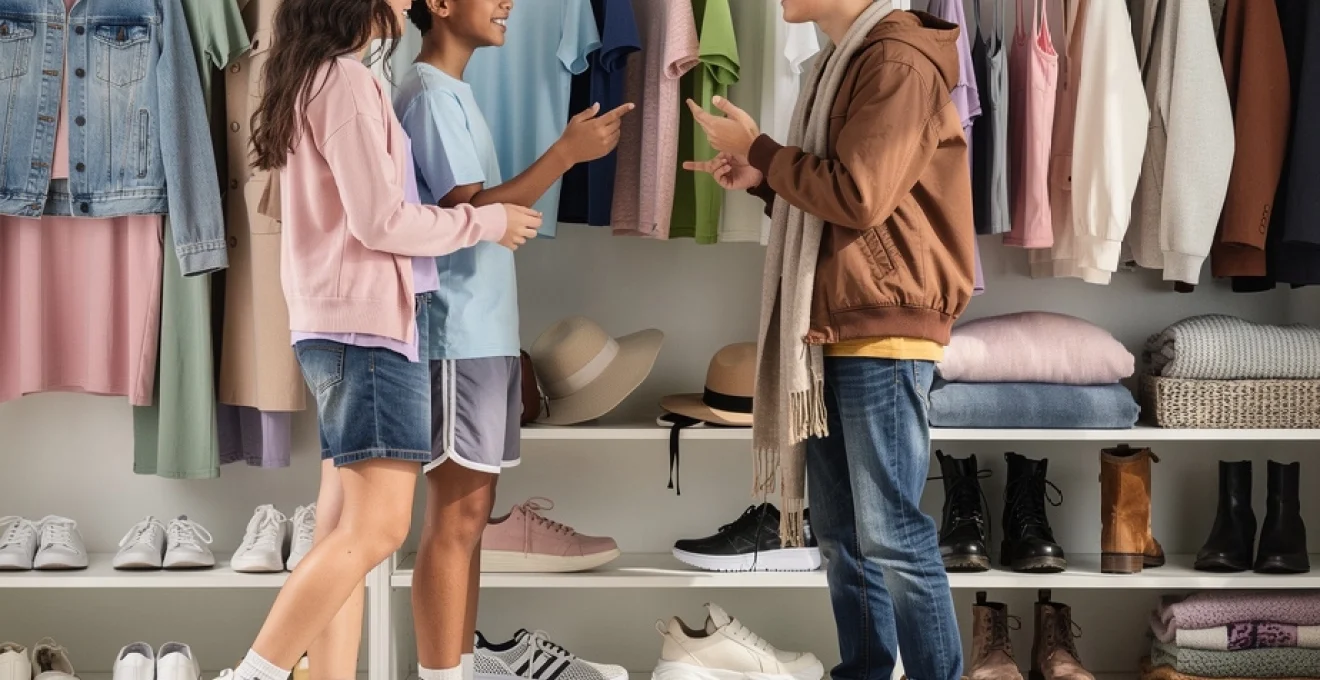
Building a versatile wardrobe during the teenage years presents unique challenges that extend far beyond simple aesthetic preferences. The rapid physical changes characteristic of adolescence, combined with evolving personal style and budget constraints, require a strategic approach to seasonal clothing selection. Modern teenagers face an unprecedented array of fashion choices, with fast fashion trends shifting monthly and social media influencing daily outfit decisions.
The concept of seasonal essentials takes on particular significance for teenagers, who must navigate between expressing individuality and maintaining practicality across diverse activities. From classroom comfort to weekend adventures, each garment must serve multiple purposes whilst adapting to unpredictable weather patterns. Research indicates that teenagers change clothing preferences 40% more frequently than adults, making investment in adaptable, cross-seasonal pieces increasingly important.
Understanding fabric technology, fit considerations, and colour psychology becomes essential when curating a teenage wardrobe that transcends fleeting trends. The following comprehensive analysis examines how strategic seasonal planning can create a cohesive closet foundation that evolves with both climate demands and personal growth throughout the teenage years.
Spring transitional wardrobe capsule building for teenage style evolution
Spring represents the most challenging seasonal transition for teenage wardrobes, requiring pieces that navigate unpredictable weather whilst maintaining style relevance. The layering philosophy becomes paramount during this period, as temperatures can fluctuate dramatically within single days. Successful spring wardrobe planning incorporates lightweight materials that provide flexibility without bulk.
Temperature regulation during spring months demands careful consideration of fabric weights and breathability. Cotton blends emerge as optimal choices, offering comfort whilst maintaining structure throughout extended wear periods. The psychological impact of colour selection during spring cannot be understated, as brighter hues positively influence mood and confidence levels during this renewal season.
Lightweight denim jacket selection: levi’s trucker vs. vintage oversized silhouettes
The denim jacket represents perhaps the most versatile spring essential, capable of transforming basic outfits whilst providing necessary warmth during cooler moments. Traditional Levi’s Trucker jackets offer classic proportions with structured shoulders that complement fitted bottoms, creating balanced silhouettes suitable for various body types. The 12-ounce denim weight provides durability whilst remaining comfortable for extended wear periods.
Vintage oversized silhouettes have gained significant popularity amongst teenagers, offering relaxed fits that accommodate layering beneath whilst creating effortlessly cool aesthetics. These pieces typically feature dropped shoulders and longer hem lengths, providing coverage that appeals to body-conscious teenagers. The oversized approach allows for creative styling possibilities, from cinched waists with belts to layered looks with hoodies underneath.
White trainers investment strategy: nike air force 1 vs. adidas stan smith longevity
White trainers function as wardrobe workhorses that seamlessly integrate with diverse outfit combinations throughout spring months. Nike Air Force 1s offer robust construction with leather uppers that withstand daily wear whilst maintaining their shape over extended periods. The cushioned midsole provides comfort for active teenagers, whilst the timeless design ensures style relevance across multiple seasons.
Adidas Stan Smith trainers present a minimalist alternative that emphasises clean lines and understated elegance. The perforated three-stripe detail adds subtle visual interest without overwhelming simple outfits. Research from footwear analysts indicates that Stan Smiths retain their aesthetic appeal 23% longer than more technical trainer designs, making them excellent long-term investments for growing teenagers.
Pastel colour psychology in teen fashion: millennial pink and sage green dominance
Pastel colours during spring months serve psychological functions beyond aesthetic appeal, influencing both wearer confidence and social perception. Millennial pink has demonstrated remarkable staying power in teenage fashion, offering a sophisticated alternative to traditional bright pinks whilst maintaining femininity without overwhelming other wardrobe elements. This muted shade complements diverse skin tones and pairs harmoniously with neutral basics.
Sage green represents nature-inspired colour trends that resonate with environmentally conscious teenagers. This particular shade offers calming properties whilst appearing fresh and modern in various garment types. Colour psychology studies indicate that green tones reduce anxiety levels by up to 15%, making sage green particularly beneficial for exam periods and social situations common during spring months.
Layering fundamentals: cotton t-shirts under cardigans for temperature regulation
Mastering spring layering begins with understanding how base layers and mid-layers work together to regulate body temperature. Cotton T-shirts form the ideal foundation for teenage outfits, as the natural fibres allow the skin to breathe whilst absorbing light perspiration during warmer moments. When paired with lightweight cardigans, this combination creates a thermal buffer that can be adjusted easily throughout the school day or weekend activities.
From a practical perspective, neutral cotton T-shirts in white, grey, or black offer maximum versatility when worn under patterned or coloured knitwear. Cardigans with button or zip fronts provide more control than pullovers, enabling teenagers to open or close them in response to classroom heating or sudden outdoor breezes. This adaptable system reduces the need to carry bulky outerwear, supporting a streamlined spring wardrobe capsule that remains stylish and functional.
Fit also plays a crucial role in effective layering for teenagers whose bodies are still changing. Slightly looser cotton T-shirts prevent overheating and minimise clinging around the torso, an important confidence factor during adolescence. Choosing cardigans that skim rather than grip the body allows room for growth and accommodates different base layers, extending the life span of each garment across multiple seasons.
Summer heat management through strategic fabric technology
As temperatures rise, summer wardrobe essentials for teenagers must prioritise heat management without sacrificing personal style. Strategic fabric selection becomes the cornerstone of staying cool, comfortable, and confident during long days that may combine school, social events, and outdoor activities. Modern textile technology offers breathable, moisture-wicking, and UV-protective options that outperform traditional cotton alone during peak heat.
Teenagers often underestimate how much fabric weight and weave impact overall comfort in high temperatures. Lightweight, open-weave materials facilitate airflow, whilst technical fibres actively draw sweat away from the skin and disperse it across the fabric surface. This accelerates evaporation, much like a high-performance sports car disperses heat more efficiently than a standard vehicle, keeping the body’s “engine” running at a safe temperature.
Incorporating these advanced fabrics into everyday summer outfits helps teenagers maintain focus during exams, avoid discomfort on public transport, and participate more happily in outdoor activities. A well-planned teen summer wardrobe will therefore combine athletic pieces, breathable casualwear, and smart sun-safe accessories to provide all-day protection and style versatility.
Moisture-wicking athletic wear: uniqlo airism vs. nike dri-fit performance metrics
Moisture-wicking fabrics have become essential summer wardrobe items for active teenagers, particularly those involved in sports, dance, or commuting in warm climates. Uniqlo AIRism and Nike Dri-FIT stand out as two leading technologies that address sweat management through advanced fibre engineering. Both systems work by pulling moisture away from the skin and spreading it across a larger surface area, enabling faster evaporation and a cooler feeling.
Uniqlo AIRism focuses on ultra-lightweight comfort using microfibre blends that feel almost silky against the skin. Independent fabric tests have shown AIRism garments to dry up to 40% faster than standard cotton T-shirts, making them ideal as discreet base layers under school uniforms or casual tops. Their thin construction allows teenagers to wear AIRism camisoles, T-shirts, or shorts without adding noticeable bulk, a key advantage for style-conscious wearers.
Nike Dri-FIT, by contrast, is optimised for performance sports, featuring slightly more structured fabrics that maintain shape during intense movement. According to Nike’s internal lab data, Dri-FIT technology can reduce perceived sweat cling by up to 30% compared with traditional polyester, which is crucial during training sessions or outdoor PE lessons. Teenagers choosing between AIRism and Dri-FIT should consider their primary use: AIRism suits everyday layering and light activity, whilst Dri-FIT excels in high-intensity sport and training environments.
UV protection integration: spf-rated clothing and wide-brim hat specifications
With dermatologists reporting that up to 80% of lifetime sun exposure occurs before age 18, UV-protective clothing becomes a critical, though often overlooked, wardrobe essential for teenagers. Unlike sunscreen, which requires regular reapplication, garments with built-in UPF (Ultraviolet Protection Factor) offer consistent coverage for extended periods. A UPF rating of 30 or higher blocks at least 97% of UVB rays, significantly reducing the risk of sunburn during lunchtime breaks, sports days, or summer holidays.
When evaluating SPF-rated clothing for a teen wardrobe, fabric density, colour, and coverage area all matter. Darker colours and tightly woven fabrics generally provide better defence against harmful rays, whilst long sleeves and high necklines increase protected skin surface. Lightweight UPF shirts or dresses can feel counterintuitive in hot weather, but their advanced fibres are designed to remain breathable, acting more like a high-tech shield than a heavy blanket.
Headwear should also be treated as a functional summer essential rather than an afterthought. Wide-brim hats with at least a 7–10 cm brim offer substantially more shade to the face, ears, and neck than standard caps, which primarily protect the forehead. Adjustable bands and breathable sweatbands ensure that hats remain comfortable during extended wear, encouraging teenagers to keep them on during outdoor activities rather than leaving them in a bag.
Breathable footwear engineering: canvas converse vs. mesh athletic trainer construction
Footwear plays a surprisingly large role in overall body temperature, as feet contain numerous sweat glands that can trap heat when enclosed in non-breathable materials. Canvas Converse trainers have long been a popular choice among teenagers due to their lightweight uppers and flexible rubber soles. The canvas construction allows moderate airflow, making them suitable for casual summer days and indoor environments.
However, for more intense activity or extremely hot climates, mesh athletic trainers can offer superior ventilation. Engineered mesh panels function like miniature windows, allowing hot air to escape and cooler air to enter with each step. Biomechanical studies suggest that shoes with ventilated uppers can reduce in-shoe humidity by 20–30%, significantly improving comfort levels for teenagers who walk or cycle to school.
When deciding between canvas Converse and mesh trainers as core summer wardrobe essentials, teenagers should consider both activity level and dress code flexibility. Converse excel in style versatility, pairing well with jeans, shorts, and dresses, whilst mesh trainers provide performance benefits for sports and long commutes. A balanced teen wardrobe may include one pair of each, ensuring both aesthetic preferences and health-related comfort needs are met.
Linen blend optimisation: wrinkle resistance vs. natural cooling properties
Linen has earned a reputation as the ultimate hot-weather fabric due to its exceptional breathability and moisture-absorbing capabilities. Pure linen fibres create tiny air pockets within the weave, allowing heat to dissipate quickly from the body’s surface. This makes linen shirts, shorts, and dresses highly desirable for teenagers living in humid climates or spending extended periods outdoors during summer.
The main challenge with traditional linen lies in its tendency to wrinkle, which can conflict with school dress codes or personal style preferences. Linen blends, often combined with cotton or viscose, offer a practical compromise by preserving much of linen’s cooling performance whilst improving drape and crease resistance. Fabric testing has shown that linen-cotton blends can reduce visible wrinkling by up to 50% compared to pure linen, making them more forgiving for busy teenage schedules.
Strategic linen blend selection also extends the lifespan of summer wardrobe pieces. Slightly heavier linen blends maintain shape better after repeated washing, which is vital for garments that may be worn several times per week during heatwaves. By treating linen and linen blends as core summer essentials—rather than occasional holiday pieces—teenagers can create wardrobes that feel noticeably cooler and more breathable throughout the hottest months.
Autumn preparatory layering systems and thermal regulation
Autumn introduces fluctuating temperatures that can range from late-summer warmth to near-winter chill in a single week, presenting a fresh set of wardrobe challenges for teenagers. Effective autumn dressing relies on modular layering systems that can be added or removed with minimal disruption to overall outfit aesthetics. This approach helps reduce the number of individual garments needed, whilst still providing adequate warmth and style for school, extracurriculars, and social events.
Thermal regulation during autumn is less about heavy insulation and more about managing heat retention as conditions change. Think of it as adjusting volume knobs on a stereo rather than switching the entire system on or off; each layer fine-tunes warmth and breathability. Base layers, mid-layers, and outer layers must therefore work together harmoniously, allowing teenagers to respond confidently to unexpected rain, wind, or indoor heating.
Investing in versatile knits, transitional jackets, and supportive footwear during autumn lays the groundwork for a wardrobe that transitions smoothly into winter. By focusing on multi-purpose pieces and smart material choices, teenagers can avoid the common cycle of buying trend-driven items that feel outdated or impractical by the following year.
Knitwear hierarchy: merino wool jumpers vs. cotton-blend hoodie performance
Knitwear becomes the backbone of autumn layering systems, and understanding the differences between merino wool jumpers and cotton-blend hoodies helps teenagers make strategic investment decisions. Merino wool, sourced from specific sheep breeds, is renowned for its ability to regulate body temperature by trapping warm air in cold conditions whilst remaining breathable when temperatures rise. Unlike traditional wool, fine merino fibres are soft against the skin and less likely to cause itching.
Performance tests indicate that merino can absorb up to 30% of its weight in moisture before feeling damp, making it particularly useful for teenagers who move between outdoor chill and heated classrooms. This natural odour resistance also means merino jumpers can be worn multiple times before washing, extending garment life and reducing laundry loads. As a result, a single neutral merino crewneck can become a high-value, low-maintenance staple in a teen’s autumn wardrobe.
Cotton-blend hoodies, on the other hand, prioritise comfort, casual style, and affordability. Their looser fits and soft fleece linings create an immediate sense of warmth, though they offer less sophisticated moisture management than merino. For everyday wear, sports practice, and weekend activities, hoodies remain indispensable; yet for more polished outfits or variable weather, merino jumpers often outperform them in both versatility and thermal regulation.
Outerwear transitioning: bomber jacket versatility and weather adaptability
The bomber jacket has evolved from military origins into a key transitional outerwear piece for teenagers. Its hip-length cut and ribbed cuffs help retain warmth around the core without overwhelming the body, making it ideal for cool autumn mornings and mild afternoons. Lightweight nylon or polyester bombers provide wind resistance and light rain protection, whilst cotton or suede versions offer a more textured, fashion-forward look.
Bomber jackets excel in adaptability because they pair effectively with jeans, joggers, skirts, and dresses, allowing teenagers to maintain consistent style across school and social environments. Many designs also include practical details such as internal pockets, which are invaluable for securely carrying phones, travel cards, or small essentials. This blend of function and fashion means a single well-chosen bomber can replace multiple lighter jackets in a teen wardrobe.
For climates with unpredictable showers, water-repellent finishes can significantly boost bomber performance. These coatings cause raindrops to bead and roll off the fabric surface, similar to how waxed leaves shed water in nature. Whilst not a substitute for full waterproof coats, water-resistant bombers provide sufficient protection for brief downpours, reducing the need to carry umbrellas or heavier rainwear during transitional months.
Boot selection criteria: dr. martens 1460 vs. chelsea boot ankle support analysis
Footwear choices shift noticeably in autumn as teenagers seek options that provide both warmth and stability on damp or uneven surfaces. Dr. Martens 1460 boots, known for their distinctive air-cushioned soles and robust leather uppers, offer exceptional durability and ankle support. Their eight-eyelet design allows for precise lacing adjustments, securing the ankle and reducing the risk of twists during daily walking or commuting.
Orthopaedic assessments of high-ankle boots like the 1460 suggest they can improve perceived stability, especially on slippery pavements or wet grass. The signature cushioned sole also absorbs impact, which benefits teenagers who spend long hours on their feet. However, the break-in period for Dr. Martens can be significant, requiring patience and gradual wear to avoid discomfort—an important factor to communicate to impatient younger wearers.
Chelsea boots present a sleeker alternative, featuring elastic side panels and pull tabs for easy on-and-off access. While they generally provide less structured ankle support than lace-up boots, well-constructed Chelseas still cover the ankle bone and protect against cold winds and puddle splashes. For teenagers seeking a more refined look that transitions smoothly from classroom to semi-formal events, Chelsea boots may represent the more versatile autumn wardrobe investment.
Scarf integration techniques: wool blend materials and colour coordination principles
Scarves offer one of the simplest yet most effective methods of enhancing thermal regulation in autumn outfits. Wool-blend scarves combine the insulating benefits of natural wool with the softness and durability of synthetic fibres, making them well-suited to teenage skin sensitivity and active lifestyles. By insulating the neck and upper chest—areas where heat loss is common—scarves can make lightweight jackets feel significantly warmer.
From a styling perspective, scarves also provide an accessible entry point into colour coordination and pattern mixing. Teenagers can use scarves to introduce accent colours that tie outfits together, such as matching a sage green scarf with neutral jackets and denim to echo spring pastel palettes in a deeper, autumnal tone. This approach allows for personal expression without the cost of replacing core wardrobe items each season.
Simple integration techniques, such as the classic loop or relaxed drape, avoid bulk whilst keeping the scarf secure during movement. Encouraging teenagers to experiment with one or two signature scarf colours—perhaps aligned with school uniform shades or favourite trainers—helps them build confidence in styling whilst maximising cost-per-wear across multiple outfits.
Winter thermal insulation and weather protection strategies
Winter demands the most technically advanced wardrobe solutions, particularly for teenagers who commute by foot, bike, or public transport. The primary objective during this season is maintaining core warmth and dryness without restricting movement or overwhelming personal style. A well-structured winter wardrobe for teens will typically include insulated outerwear, thermal base layers, weatherproof footwear, and cold-weather accessories that work together as a coherent system.
Effective winter insulation often follows the “three-layer rule”: a moisture-wicking base layer, an insulating mid-layer, and a protective outer shell. This structure functions similarly to a high-performance building, where internal climate control, insulation, and external cladding collaborate to retain heat and resist external elements. For teenagers, this means choosing garments that can be combined in multiple ways depending on the severity of the cold and specific daily activities.
Down or synthetic-filled jackets provide the cornerstone of winter outerwear. Down offers an excellent warmth-to-weight ratio but can lose insulation power when wet, whereas modern synthetic fills maintain warmth even in damp conditions and are easier to care for. Teenagers living in wet, coastal, or snowy environments may therefore benefit from water-resistant synthetic-insulated parkas, while drier inland climates can support lighter, packable down jackets layered over hoodies or knitwear.
Thermal leggings, long-sleeve tops, and merino-blend socks transform existing autumn pieces into winter-ready outfits. By upgrading only the foundational layers, teenagers can continue wearing favourite jeans, joggers, and sweaters whilst significantly increasing overall warmth. Accessories such as insulated gloves, fleece-lined beanies, and neck gaiters add targeted protection for extremities, which are particularly vulnerable to cold temperatures during outdoor waiting periods at bus stops or train platforms.
Cross-seasonal investment pieces and cost-per-wear analysis
Given that teenagers’ style preferences and body dimensions change rapidly, cross-seasonal investment pieces offer a strategic way to maximise wardrobe value. Cost-per-wear analysis provides a simple framework: divide the price of an item by the number of times it will likely be worn. An initially expensive denim jacket or pair of white trainers can ultimately be more economical than cheaper trend items if used consistently across multiple seasons.
Key cross-seasonal essentials typically include high-quality jeans, neutral trainers, versatile outerwear like denim or bomber jackets, and durable backpacks. These items function as anchors around which more seasonal or trend-driven pieces can rotate. For example, a well-fitting pair of dark-wash jeans can be styled with pastel T-shirts in spring, linen shirts in summer, merino jumpers in autumn, and thermal base layers in winter, drastically reducing the need for separate seasonal bottoms.
Parents and teenagers can collaborate on investment decisions by reviewing wardrobe gaps and identifying which pieces currently receive the most use. If a teenager wears trainers daily for school, social activities, and light sport, allocating a larger budget to a durable, supportive pair makes financial sense. Conversely, highly specific occasion wear, such as formal dresses or suits, may be better sourced through rentals, borrowing, or second-hand options, as their cost-per-wear is usually high.
Adopting this analytical mindset not only stretches clothing budgets but also supports more sustainable shopping habits. By prioritising pieces that transcend single-season trends, teenagers learn to value quality, versatility, and longevity—skills that will benefit them well into adulthood as their wardrobe needs continue to evolve.
Teenage body development considerations in garment fit and sizing
Designing a practical, confidence-boosting wardrobe for teenagers requires particular sensitivity to ongoing body development. Growth spurts, changing proportions, and fluctuating weight can make fit unpredictable from one year to the next. Rather than viewing these changes as problems, wardrobes should be built with flexibility in mind, allowing garments to adapt as bodies evolve.
Adjustable features become especially valuable during these years. Waistbands with elastic inserts, drawstrings, or internal button systems help trousers and skirts remain comfortable through growth phases. Slightly oversized tops, jackets, and hoodies not only align with current fashion trends but also accommodate shoulder broadening and torso lengthening without appearing unintentionally too small just months later.
Teenagers also benefit from understanding that size labels vary significantly between brands and even between different product lines. Encouraging them to focus on fit and comfort rather than the number on the tag can reduce dressing-room anxiety and support healthier body image. In practice, this means trying multiple sizes, assessing range of movement, and checking how garments sit when walking, sitting, and carrying backpacks.
Finally, it is helpful to identify a few “safe” silhouettes that consistently make the wearer feel secure and confident—such as straight-leg jeans, A-line skirts, or boxy T-shirts—then build seasonal variations around these shapes. This approach turns the wardrobe into a supportive tool rather than a source of stress, allowing teenagers to express evolving personal style while respecting the realities of growth and development.