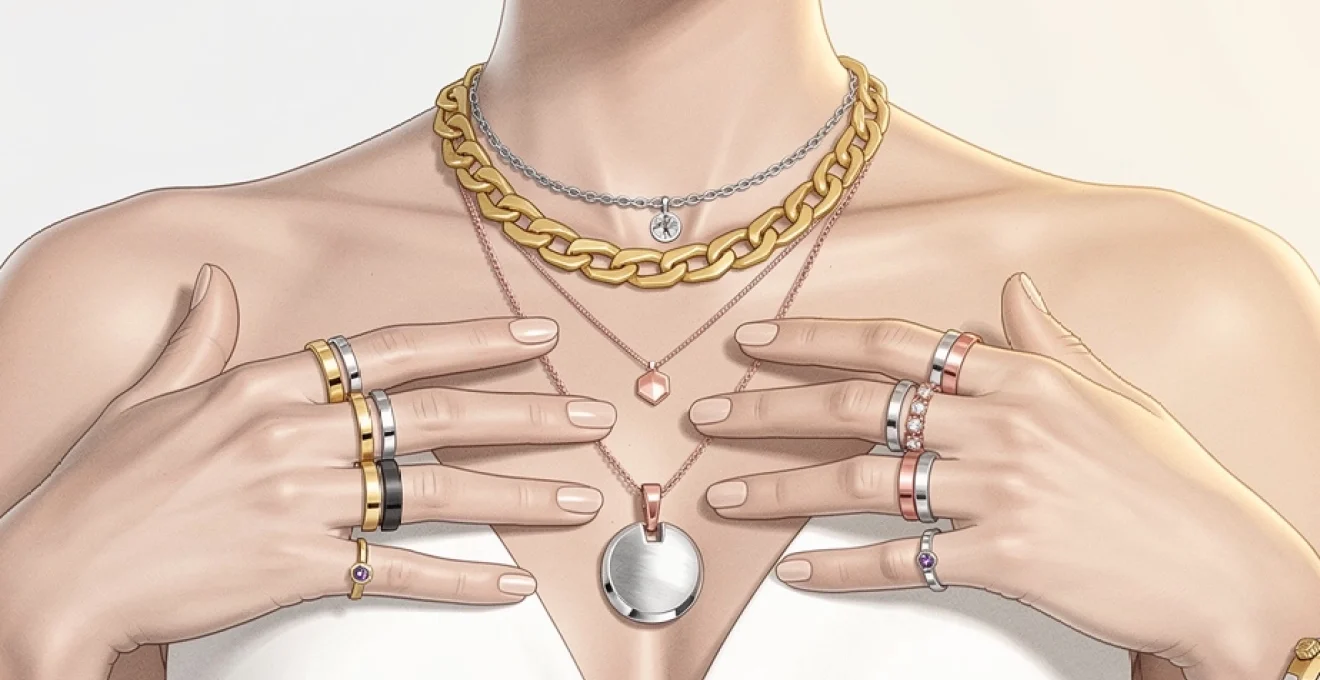
The fashion landscape has undergone a significant transformation in recent years, dismantling long-standing rules that once governed personal style. Among the most liberating shifts is the acceptance—and indeed, celebration—of mixing gold and silver jewellery. Once considered a cardinal sin in accessorising, this contemporary approach now represents sophisticated styling and confident self-expression. Modern jewellery enthusiasts understand that the interplay between warm gold tones and cool silver hues creates visual depth, textural interest, and styling versatility that single-metal outfits simply cannot achieve. Whether layering delicate chains, stacking statement rings, or coordinating wrist accessories, the art of combining these precious metals requires understanding fundamental design principles, proportion dynamics, and aesthetic balance.
Understanding metal temperature theory: why gold and silver harmonise in contemporary jewellery design
The concept of metal temperature refers to the visual warmth or coolness that different finishes project. Gold, particularly yellow gold, emanates warmth with its rich, sun-kissed appearance, while silver delivers a crisp, moonlit coolness. This inherent contrast forms the foundation of successful mixed-metal styling. Rather than clashing, these opposing temperatures create a dynamic tension that draws the eye and adds dimensional complexity to your overall appearance. The key lies in recognising that this temperature difference serves as a feature, not a flaw.
Contemporary jewellery design increasingly embraces this duality, with luxury houses and independent artisans alike creating pieces that intentionally combine both metals. This trend reflects a broader movement towards personalised styling that prioritises individual expression over rigid fashion dictates. Research indicates that approximately 73% of jewellery purchasers now own pieces in multiple metal finishes, demonstrating the widespread acceptance of this styling approach. The harmonisation occurs through deliberate placement, thoughtful proportion, and consistent design language across pieces.
Understanding your skin’s undertone enhances the effectiveness of mixed-metal styling. Those with warm undertones (peachy, golden, or yellow hues) may find gold naturally flattering, while cool undertones (pink, red, or bluish tones) often complement silver beautifully. However, mixing both metals creates a universally flattering effect that transcends these limitations, working with virtually any skin tone. This versatility explains why mixed-metal jewellery has become a staple for those seeking effortless elegance across various occasions and outfits.
Mastering proportion and scale when layering Mixed-Metal necklaces
Necklace layering represents one of the most visually impactful applications of mixed-metal styling. The vertical expanse of the neckline provides ample canvas for creative expression, yet this same prominence demands careful attention to proportional balance. Successful layering considers chain weight, pendant size, and spatial distribution to create a cohesive composition rather than a haphazard collection of disparate pieces.
Balancing chunky gold chains with delicate silver pendants
The juxtaposition of substantial gold chains with refined silver pendants creates striking visual interest through contrast. When selecting a chunky gold chain as your foundation piece, position it as the lowest layer in your necklace arrangement, allowing its weight and presence to anchor the entire composition. Above this, layer progressively lighter silver chains adorned with delicate pendants. This hierarchical arrangement prevents visual confusion and creates a natural focal progression from bold to subtle. The substantial gold chain grounds the look, while the lighter silver elements add ethereal dimension without competing for attention.
Consider chain thickness ratios when building these combinations. A chunky gold chain measuring 8-10mm in width pairs beautifully with silver chains ranging from 1-3mm, creating approximately a 3:1 or 4:1 thickness ratio. This mathematical proportion ensures the gold remains dominant without overwhelming the silver accents. When incorporating pendants, select silver pieces with meaningful design details—geometric shapes, symbolic motifs, or small gemstone settings—that reward closer inspection while the gold chain commands initial attention from a distance.
Creating visual weight distribution across multiple chain lengths
Visual weight distribution follows principles borrowed from classical composition theory. When layering three or more necklaces in mixed metals, aim for a graduated length progression that typically spans 4-6 inches from shortest to longest
between each piece. For instance, you might choose a 14-inch choker, an 18-inch mid-length chain, and a 20–22-inch longer pendant necklace. Distribute metal types across these lengths so that no single area appears overloaded with one tone. A silver choker, gold mid-length chain, and silver long pendant, for example, create a balanced “metal gradient” down the neckline. Visual weight should feel like a gentle cascade, not a sudden drop, ensuring that the eye travels smoothly from collarbone to décolletage.
Pay attention to where your clothing neckline intersects with your mixed-metal necklaces. A crew neck or high neckline benefits from heavier, shorter chains in gold or mixed metal at the base of the neck, with lighter silver pieces extending below. V-shaped and scoop necklines, by contrast, work particularly well with a longer silver pendant drawing the eye downward, anchored by a mid-length gold chain. Think of each chain length as a layer in a well-designed interior: each has its own function, but together they create a cohesive environment.
Integrating statement pieces with minimalist accent chains
When incorporating a statement necklace into your mixed-metal styling, treat it as the visual protagonist while everything else plays a supporting role. A bold silver collar or an architectural gold pendant should occupy the central position, both literally and figuratively. Surround this focal piece with minimalist accent chains in the contrasting metal, using finer gauges and smaller details so they frame rather than compete with the statement. This approach works particularly well when you want to highlight a signature piece for an evening event or formal occasion.
To avoid overcomplicating the look, limit yourself to one true statement necklace within any single arrangement. If your hero piece is predominantly gold, choose two to three slim silver chains in adjacent lengths and place them either above, below, or both, depending on your neckline and outfit. The result is akin to a gallery spotlight: the supporting mixed-metal jewellery acts like discrete lighting and framing, directing attention to your central piece while still contributing to the overall aesthetic. This method also makes it easy to adapt your look from day to night by simply removing or adding one or two accent chains.
Applying the rule of thirds to mixed-metal neckline compositions
The rule of thirds, widely used in photography and graphic design, applies surprisingly well to layered necklaces. Imagine your neckline space divided into three horizontal zones: high (close to the collarbone), mid (centre of the chest), and low (towards the bust line). Aim to place key necklace focal points—pendants, charms, or textured sections of chain—within or near these imaginary lines. A high-positioned silver choker, a mid-level gold pendant, and a lower slim silver chain, for example, create a pleasing rhythm that feels intentional.
In mixed-metal terms, try to ensure that no single third is dominated by one metal unless this is a deliberate styling choice. If your mid-zone features a substantial gold medallion, consider placing silver or mixed-metal pieces in the upper and lower zones to rebalance the composition. You can also apply the rule of thirds vertically along a single chain by positioning pendants off-centre, which adds subtle asymmetry while still feeling composed. This structured approach helps you avoid the common mistake of stacking random chains with no clear focal strategy, ensuring your mixed gold and silver jewellery always appears curated rather than accidental.
Strategic ring stacking techniques for gold and silver combinations
Ring stacking offers one of the most personal and expressive ways to mix gold and silver jewellery, as your hands are constantly in motion and frequently in view. Because rings often carry sentimental value—wedding bands, heirloom pieces, or travel mementos—learning to integrate different metals allows you to wear more of your story at once. Strategic stacking is less about strict rules and more about creating coherent patterns across fingers, knuckles, and hands. By considering placement, proportion, and repetition, you can combine multiple metals without creating visual chaos.
Think of your hands as two complementary canvases. You might choose to make one hand slightly more dominant in gold and the other in silver, tying them together with one or two mixed-metal or two-tone pieces. Alternatively, you can distribute metals evenly across both hands, using a consistent stacking formula to maintain harmony. The goal is to achieve a sense of rhythm when you look at your hands from a distance, with your gold and silver rings appearing coordinated rather than competing.
Positioning yellow gold bands between sterling silver rings on single fingers
One of the most reliable techniques for mixed-metal ring styling is to “sandwich” metals on a single finger. Place a yellow gold band between two sterling silver rings, or reverse the order with a silver band framed by gold rings. This creates a clear, repeating pattern that the eye can easily understand, much like alternating tiles in a mosaic. The contrast between the warm gold and cool silver becomes a deliberate design feature rather than a potential clash.
For best results, select rings with compatible widths and profiles so they sit comfortably together without excessive gapping. A slim 2mm yellow gold band between two 2–3mm silver rings, for instance, offers subtle contrast while still reading as a unified stack. If your central ring carries particular significance—such as a wedding band—using silver rings as “guards” on either side not only protects it physically but also frames it visually. This method allows you to honour important yellow gold pieces while still embracing the modern appeal of silver.
Coordinating rose gold accents with oxidised silver textures
For those who enjoy more adventurous styling, combining rose gold with oxidised silver introduces an elevated, editorial feel. The soft blush of rose gold pairs beautifully with the darker, slightly rugged character of oxidised silver, creating a romantic yet contemporary contrast. To prevent this combination from feeling disjointed, treat rose gold as a luminous highlight against the matte depth of oxidised bands. Place a rose gold ring at either the top or centre of an oxidised stack, allowing it to function as a visual “spark” within the darker composition.
Because both rose gold and oxidised silver can appear quite distinctive, moderation becomes essential. Limit yourself to one or two rose gold rings on each hand, supported by a foundation of darker silver textures. Hammered finishes, engraved patterns, or blackened details in the silver echo the softness of rose gold without competing for attention. Think of this pairing like pairing a silk camisole with a leather jacket: the interplay of soft and strong textures creates intrigue, but only if both elements are considered and intentional.
Spacing gemstone settings across mixed-metal ring arrangements
Gemstones add another layer of complexity—and opportunity—to mixed-metal ring styling. Rather than clustering all gemstone rings on a single finger or hand, space them strategically across your arrangement to create visual balance. For example, you might wear a gold band with a sapphire solitaire on your right ring finger, a silver band with pavé diamonds on your left middle finger, and a delicate mixed-metal eternity ring on your index finger. This distribution ensures that sparkle appears in multiple sightlines without overwhelming any one area.
When combining gemstones with gold and silver, consider using colour as the unifying thread. Repeating the same stone—such as emerald, garnet, or blue topaz—across both metals helps tie the stack together, even if the settings differ. If you prefer a more minimalist aesthetic, restrict gemstones to one “hero” ring and keep the surrounding bands plain in alternating metals. The gem then becomes the focal point, while the mixed-metal bands act almost like a frame around a painting, enhancing rather than distracting from the central artwork.
Creating symmetrical patterns with alternating metal finishes
Symmetry is a powerful tool when you are mixing gold and silver rings, particularly if you worry about the overall look appearing too eclectic. One straightforward technique is to alternate metals across your fingers in a mirrored pattern. For instance, you could wear a gold band on the index fingers of both hands, silver on both middle fingers, and a mixed-metal or two-tone ring on one or both ring fingers. This repeated structure creates subconscious order, even if individual designs vary.
You can also achieve symmetry within a single hand. Stack gold-silver-gold on one finger and silver-gold-silver on the neighbouring finger, echoing the finishes while shifting their sequence. Matte and polished surfaces can be alternated in a similar way, adding further sophistication. When viewed together, these intentional patterns prevent your ring styling from feeling random, reinforcing the idea that mixing metals is a deliberate aesthetic decision rather than an afterthought.
Coordinating watch metals with bracelet and bangle combinations
Your watch often functions as the anchor of your wrist styling, making it a natural starting point for planning mixed-metal combinations. Because watches typically feature larger surface areas of metal than bracelets or bangles, their tone and finish strongly influence the overall impression. Rather than trying to match every surrounding piece exactly to the watch, aim to create a complementary ecosystem of metals around it. This approach mirrors interior design principles, where a dominant feature—such as a fireplace or large artwork—is supported by carefully chosen accessories.
Begin by identifying the primary metal of your watch: stainless steel, yellow gold, rose gold, or a two-tone combination. Next, decide whether you want your bracelets and bangles to echo that metal or intentionally introduce contrast. A cool-toned steel watch, for instance, can look striking paired with a sleek yellow gold bangle, especially if you repeat the silver tone elsewhere on the wrist. By treating the watch as your visual “centre of gravity,” you can build out a layered wrist stack that integrates gold and silver in a cohesive, modern way.
Matching rolex oystersteel cases with gold tennis bracelets
Rolex Oystersteel watches, and comparable high-grade stainless-steel timepieces, provide a refined yet neutral base for mixed-metal styling. Their cool, understated sheen pairs particularly well with the understated luxury of a gold tennis bracelet. Placing a slim yellow gold or rose gold tennis bracelet directly adjacent to the steel case creates an elegant juxtaposition: the linear sparkle of gemstones offsets the solid expanse of the watch, while the metal contrast feels intentional and sophisticated.
To keep the look balanced, avoid stacking multiple heavy bracelets on the same wrist as a large watch case. Instead, opt for one gold tennis bracelet and perhaps one additional ultra-fine silver or white gold chain bracelet on the outer side. This restrained approach maintains comfort and wearability for daily use while still showcasing mixed metals. If you prefer bolder styling, you can echo the gold tennis bracelet on the opposite wrist with a complementary gold bangle, creating a subtle dialogue between both sides of your body.
Pairing cartier love bracelets in yellow gold with silver cuffs
Iconic pieces like the Cartier Love bracelet in yellow gold can become the hero of any wrist stack. When introducing silver cuffs or bangles alongside such a recognisable design, the goal is to respect the bracelet’s visual impact while still embracing mixed-metal freedom. A streamlined sterling silver cuff placed either above or below the Love bracelet on the forearm creates an intentional contrast that feels curated rather than competitive. The key is to choose silver pieces with a similarly minimal, architectural aesthetic so the overall look feels coherent.
Thickness and fit play crucial roles here. Because the Love bracelet has a substantial presence, neighbouring silver cuffs should be slightly slimmer or open-ended to avoid a bulky, constricted sensation. Consider leaving a small gap between the gold and silver pieces so each has space to “breathe” on the wrist. If you prefer a stacked effect, alternate gold and silver across both wrists rather than overcrowding one side. This distribution prevents the mixed metals from feeling heavy or cluttered, particularly during extended wear.
Balancing two-tone watch bezels with monochromatic wrist stacks
Two-tone watches—often combining gold and steel in the bezel, bracelet, or dial details—offer an immediate shortcut to harmonious mixed-metal styling. Because the timepiece already integrates both metals, you can choose whether to emphasise one tone or mirror the duality across your wrist accessories. One effective strategy is to keep your bracelet stack monochromatic, allowing the watch to serve as the only mixed-metal element. For instance, you might pair a steel-and-gold watch with an all-silver bracelet stack for a cooler, more understated effect.
Alternatively, you can echo the watch’s two-tone character by wearing a single gold bangle and a single silver chain bracelet, maintaining minimalism while reinforcing the metal interplay. When deciding which route to take, consider the overall mood of your outfit. Formal or professional settings often benefit from simpler, monochromatic stacks, whereas weekend or evening looks can accommodate bolder, more experimental combinations. In both cases, the watch acts as a unifying focal point, ensuring your gold and silver jewellery appears integrated and cohesive.
Earring selection principles for cohesive mixed-metal styling
Earrings frame the face, making them one of the most impactful aspects of mixed-metal jewellery styling. Because they sit close to your skin tone, hair colour, and makeup choices, even subtle shifts in metal can influence your overall appearance. When mixing gold and silver earrings, the objective is to complement your facial features while supporting, rather than distracting from, other accessories such as necklaces and glasses. Strategic choices around scale, placement, and repetition ensure your ear styling feels polished from every angle.
Curated ear stacks have become increasingly popular, with multiple piercings offering more opportunities to experiment with metal combinations. If you have several lobe and cartilage piercings, you can create a gentle gradient of metals from front to back or bottom to top. If you only have a single piercing in each ear, you can still embrace mixed metals through asymmetric pairs, two-tone designs, or by coordinating earrings with other jewellery zones like rings and bracelets.
Coordinating gold hoops with silver ear cuffs and climbers
Classic gold hoops provide an excellent foundation for mixed-metal ear styling due to their timeless shape and flattering warmth. To introduce silver without overwhelming your look, add silver ear cuffs or climbers along the outer edge of the ear. These pieces sit slightly apart from the main lobe piercing, creating a layered effect reminiscent of necklace stacking but on a smaller scale. The separation between metals makes the combination feel deliberate, while the shared organic curve of hoops and cuffs maintains aesthetic harmony.
When selecting sizes, consider the overall balance of your ear profile. Medium-sized gold hoops paired with one or two delicate silver cuffs usually achieve a pleasing proportion, offering enough contrast to be noticed without appearing chaotic. If you have multiple lobe piercings, you might choose a gold hoop in the first piercing, a small silver huggie in the second, and a silver climber along the cartilage. This progression guides the eye upward, using mixed metals to create visual movement around the ear.
Creating asymmetrical earring pairs using contrasting metals
Asymmetry has become a hallmark of contemporary jewellery design, and mixed-metal styling offers a natural avenue for exploring this trend. Instead of wearing identical earrings in both ears, you might choose a gold hoop on one side and a silver drop earring on the other. The key to success lies in maintaining some shared characteristic—such as size, motif, or texture—so the pair looks curated rather than mismatched. For example, two different metal earrings that both feature pearls or geometric shapes will still feel related.
Asymmetrical mixed-metal styling works particularly well when you keep other jewellery zones relatively minimal. If your ears already present a strong visual statement, consider simplifying your necklace or opting for a fine mixed-metal chain that quietly supports the look. Ask yourself: from arm’s length, do my earrings tell a coherent style story? If the answer is yes, then the interplay between gold and silver, symmetry and asymmetry, is likely working in your favour.
Matching earring metals to neckline focal points
Because earrings and necklaces occupy the same visual field, coordinating metals between these two zones is essential for cohesive styling. One effective strategy is to match your earring metal to the primary focal point of your neckline. If you are wearing a dominant gold pendant or chunky gold chain, for instance, gold earrings—perhaps accented with small silver details—will echo this emphasis and create continuity. Conversely, if your hero necklace is predominantly silver, silver or mixed-metal earrings will help frame the face without competing for attention.
You do not need to duplicate metals perfectly to achieve balance. Subtle repetition is often enough. A pair of gold hoops with a silver inlay, worn with a silver chain that features a small gold charm, creates a dialogue between face and neckline. When in doubt, step back from the mirror and blur your eyes slightly: if your earrings and necklace feel like part of the same visual “set,” even with differing metals, you have likely struck the right balance between coordination and contrast.
Selecting two-tone designs from tiffany & co. and pandora collections
Two-tone earrings from established brands such as Tiffany & Co. and Pandora can simplify mixed-metal styling by combining gold and silver within a single design. Pieces that integrate 18k gold details with sterling silver bases, for example, automatically bridge the gap between both metals in your broader jewellery look. Because these designs are specifically engineered for harmony, they serve as reliable anchors for more experimental combinations elsewhere, such as bold silver necklaces or stacked gold rings.
Branded two-tone pieces also tend to maintain consistent quality across alloys and finishes, helping you avoid noticeable discrepancies in colour or sheen. When investing in such earrings, consider versatile silhouettes—studs, small hoops, or modest drops—that you can wear with both casual and formal outfits. These designs function almost like “universal adaptors” in your jewellery wardrobe, enabling you to switch between dominant gold and dominant silver outfits without needing a completely different set of earrings.
Avoiding common pitfalls: metal clash prevention and finishing compatibility
While mixing gold and silver jewellery opens up exciting styling possibilities, a few common missteps can undermine the overall effect. Metal clash often happens not because the tones themselves are incompatible, but because finishes, proportions, or undertones fight with one another. By understanding surface treatments, alloy behaviour, and how metals interact with your skin tone, you can sidestep these issues and ensure your mixed-metal looks remain polished over time.
Think of this stage as quality control for your personal styling. Just as a designer reviews fabric swatches under different lighting before finalising a collection, you can take a moment to assess how your gold and silver pieces behave together in daylight, indoor lighting, and photography. This small habit helps you spot potential clashes, tarnish issues, or colour imbalances before they detract from your overall appearance.
Distinguishing between polished, brushed, and hammered surface finishes
Surface finish can dramatically influence how mixed metals interact. Highly polished gold and silver surfaces reflect light sharply, creating a sleek, modern impression, whereas brushed or satin finishes diffuse light for a softer, more understated effect. Hammered textures introduce micro-reflections and subtle irregularities that can bridge the gap between high-shine and matte surfaces. When combining finishes, aim for deliberate contrast rather than accidental mismatch. For instance, pairing a polished gold bangle with a brushed silver cuff can look intentional if the shapes and proportions are aligned.
If your mixed-metal look feels disjointed, check whether clashing finishes are to blame. Too many different textures—high polish, heavy brushing, intricate hammering—within a single styling zone can create visual noise. Instead, limit yourself to two primary finishes per area, such as polished gold with hammered silver on the wrist, or brushed silver with polished gold around the neck. This approach is similar to curating fabrics in an outfit: combining denim, silk, and leather can be chic, but adding sequins and heavy lace at the same time might be a step too far.
Preventing tarnish transfer between silver and gold alloys
From a practical standpoint, protecting your jewellery from tarnish and discolouration is just as important as styling it well. Sterling silver, in particular, is prone to tarnishing when exposed to moisture, sulphur compounds, and certain cosmetic products. When worn in close contact with gold pieces—especially white gold containing certain alloys—this tarnish can sometimes transfer, dulling the appearance of both metals. To minimise this risk, ensure that frequently stacked items, such as mixed-metal rings and bracelets, are cleaned regularly with appropriate products for each alloy.
Storing your jewellery correctly also reduces tarnish transfer. Keep silver pieces in anti-tarnish pouches or lined boxes, and avoid storing them in direct contact with softer gold items, which can be more easily scratched. Removing mixed-metal stacks before swimming, exercising, or applying lotions helps preserve both colour and structural integrity. With basic maintenance, you can keep your gold and silver jewellery looking crisp and luminous, reinforcing the premium feel of your mixed-metal styling.
Managing skin tone undertones with warm and cool metal selections
While modern style philosophy encourages breaking old rules about matching metals to skin tone, understanding undertones still helps you make informed choices. Warm undertones—those with golden, peach, or olive hues—tend to harmonise naturally with yellow and rose gold, while cool undertones with pink or bluish notes often pair effortlessly with silver, platinum, and white gold. When you mix metals, you effectively create a built-in balancing act, allowing both warm and cool tones to coexist. This can be especially flattering if your undertone is neutral or if your skin tone shifts slightly between seasons.
To avoid subtle clashes, let your undertone guide your choice of dominant metal while using the other as an accent. For example, if gold usually flatters you more, build your look around gold pieces and introduce silver in smaller, strategic doses—perhaps in earrings or a single ring. If you are unsure of your undertone, observe how your skin looks against pure silver and rich yellow gold in natural light; whichever makes your complexion appear brighter and more even is likely closer to your comfort zone. Mixed-metal styling then becomes a tool to enhance that natural harmony rather than fight against it, ensuring your jewellery not only looks stylish but also feels authentically “you.”