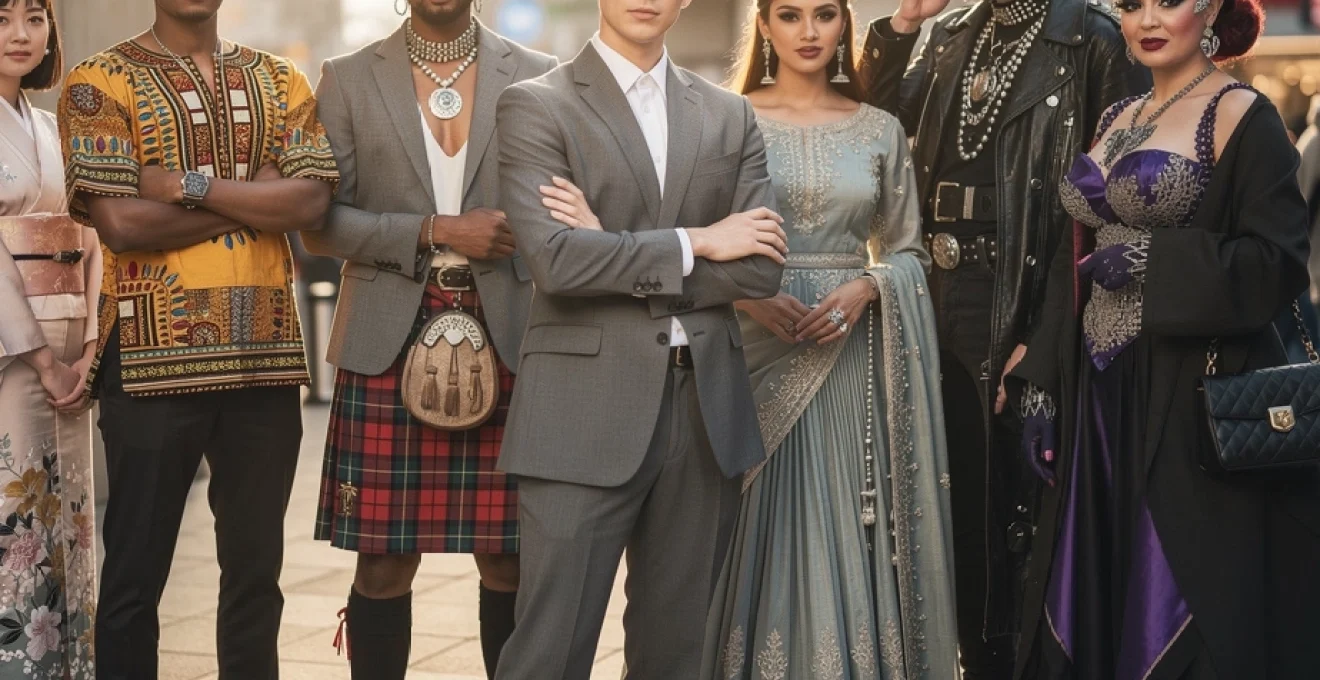
Fashion serves as far more than mere aesthetic decoration; it functions as a sophisticated communication system that reveals the deepest aspects of human identity. From the boardroom executive carefully selecting a power suit to the teenager experimenting with vintage band t-shirts, clothing choices reflect complex psychological processes that shape how individuals perceive themselves and navigate social interactions. This intricate relationship between sartorial expression and personal identity has become increasingly significant in contemporary society, where visual communication often precedes verbal introduction.
The psychology of dress encompasses multiple layers of meaning-making, from unconscious behavioural modifications triggered by specific garments to deliberate cultural signalling through traditional or subcultural attire. Research indicates that individuals make judgements about others within the first seven seconds of visual contact, with clothing serving as a primary information source for these assessments. Understanding these mechanisms reveals how fashion operates as both mirror and constructor of identity, simultaneously reflecting existing self-concepts whilst actively shaping future self-perception.
Psychological frameworks behind sartorial Self-Expression
Contemporary psychological research has identified several key frameworks that explain how clothing influences both individual behaviour and social perception. These theoretical foundations provide crucial insights into the mechanisms through which fabric, colour, and style translate into meaningful identity communication. The intersection of cognitive psychology and fashion studies has revealed that clothing functions as an extension of the embodied self, influencing neural pathways and behavioural patterns in measurable ways.
Enclothed cognition theory and behavioural modification through dress
Enclothed cognition represents one of the most significant breakthroughs in understanding the fashion-identity connection. This psychological phenomenon demonstrates that wearing specific garments can alter cognitive performance and emotional states through the symbolic associations attached to particular clothing items. Research conducted by Northwestern University revealed that participants wearing lab coats associated with doctors showed enhanced attention and careful thinking compared to those wearing identical coats described as painters’ smocks.
The theory operates through two primary mechanisms: the symbolic meaning of the clothing and the physical experience of wearing it. When you don a tailored blazer for an important presentation, the garment’s associations with professionalism and authority can enhance confidence and improve performance. This process extends beyond individual psychology to influence interpersonal dynamics, as others respond to the visual cues provided by your clothing choices, creating feedback loops that reinforce behavioural changes.
Social identity theory applications in fashion psychology
Social identity theory explains how individuals use fashion to establish membership within desired groups whilst differentiating themselves from others. This framework reveals why certain subcultures develop distinct aesthetic codes and how mainstream fashion often appropriates elements from these communities. The process involves three key stages: social categorisation, social identification, and social comparison, each playing a crucial role in fashion-mediated identity formation.
The theory illuminates why luxury brands maintain such powerful appeal despite their accessibility limitations. Wearing recognisable designer pieces signals membership in an aspirational social category, whilst the exclusivity of these items reinforces group boundaries. This mechanism explains the psychological satisfaction derived from acquiring coveted fashion pieces, which extends far beyond their functional utility to encompass social positioning and identity validation.
Maslow’s hierarchy integration with aesthetic Self-Actualisation
Fashion engagement can be understood through Maslow’s hierarchy of needs, with different clothing choices serving various psychological functions across the need spectrum. Basic safety needs manifest in protective clothing and modest dress codes, whilst belonging needs drive fashion conformity within peer groups. Esteem needs motivate luxury consumption and status signalling, while self-actualisation manifests through creative personal style expression.
This framework explains why fashion priorities shift throughout life stages and circumstances. During periods of financial stress, clothing choices typically focus on practical needs and group belonging, whilst periods of stability and success often coincide with increased experimentation and personal style development. Understanding these motivational underpinnings helps explain seemingly contradictory fashion behaviours and the emotional investment individuals place in their wardrobes.
Symbolic interactionism and clothing as communication medium
Symbolic interactionism positions fashion as a non-verbal communication system where meaning emerges through social interaction and shared cultural understanding. This perspective recognises that clothing meanings are not fixed but evolve through collective interpretation and contextual usage. A simple white t-shirt can signify minimalism, rebellion, or sophistication depending on styling, context, and cultural moment.
The framework emphas
ises the co-creation of identity: we do not simply “put on” a ready-made meaning when we get dressed; instead, we negotiate that meaning in real time with the people around us. A leather jacket might read as rebellious in a corporate setting but feel almost conservative at a rock concert. Through these shifting interpretations, clothing becomes a living language, allowing individuals to test roles, adjust self-presentation, and receive feedback that gradually shapes their sense of self.
From this standpoint, fashion is an ongoing conversation rather than a fixed statement. You choose garments based on the identity you wish to project, but others “reply” through their reactions, which can validate or challenge your sartorial choices. Over time, these interactions encourage refinement of personal style, reinforcing outfits that feel congruent with your internal narrative and discarding those that generate dissonance. In this way, symbolic interactionism helps explain why some clothes feel like an authentic second skin while others never truly “belong” in your wardrobe.
Cultural identity construction through traditional and contemporary dress codes
Beyond individual psychology, fashion plays a central role in how cultural identity is preserved, negotiated, and modernised. Traditional garments and textile practices often carry centuries of symbolism related to community history, social roles, and spiritual beliefs. As globalisation and migration accelerate cultural exchange, these dress codes are being reinterpreted, creating hybrid styles that allow people to honour their roots while engaging with contemporary aesthetics.
For many, wearing culturally significant fashion is not only an act of personal style but also a political statement. It can resist assimilation pressures, challenge stereotypes, and assert visibility in spaces where certain cultures have been marginalised. At the same time, the global popularity of heritage garments raises questions around cultural appropriation, authenticity, and commercialisation, making cultural fashion identity a site of both pride and contestation.
Kimono revival movement and modern japanese identity formation
The kimono offers a compelling example of how traditional garments can be reimagined to support modern identity. Once everyday attire in Japan, the kimono gradually became reserved for ceremonies as Western clothing dominated daily life. In recent years, however, there has been a “kimono revival” led by young designers, rental boutiques, and social media communities who style kimonos with sneakers, denim, and streetwear accessories.
This movement allows younger generations to renegotiate what it means to be Japanese in a globalised world. By pairing kimono with contemporary fashion, wearers signal respect for heritage without being confined to nostalgic or tourist-oriented imagery. For many urban Japanese youth, sharing kimono outfits on Instagram or at local festivals becomes a form of cultural storytelling, affirming a multifaceted identity that is at once traditional, experimental, and globally connected.
Dashiki and ankara patterns in afrocentric fashion identity
Across the African continent and the diaspora, dashiki tops and Ankara prints function as powerful Afrocentric identity markers. Historically associated with West African communities, these bold, wax-resist textiles have been adopted globally as symbols of Black pride, cultural continuity, and resistance to Eurocentric beauty standards. During the civil rights and Black Power movements, the dashiki in particular became an emblem of political solidarity and pan-African consciousness.
Today, designers in Lagos, Accra, London, and New York integrate Ankara patterns into tailored suits, sneakers, and couture gowns, blending local craftsmanship with global fashion trends. For many wearers, choosing Ankara or dashiki garments is a way to “wear their heritage on their sleeve”, asserting visibility in societies where African identities have historically been misrepresented or erased. At the same time, debates arise when non-Black consumers adopt these pieces without understanding their socio-political context, highlighting the ethical tensions between cultural appreciation and appropriation.
Tartan clan systems and scottish heritage expression
Tartan is a classic illustration of how fabric can encode lineage and regional identity. Traditionally, specific tartan patterns were associated with Scottish clans, functioning almost like visual surnames woven into cloth. Wearing a particular tartan signals affiliation with a family history, geographic origin, and—by extension—a set of stories and values tied to that heritage.
In contemporary contexts, tartan has travelled far beyond the Highlands, appearing in punk subculture, luxury fashion, and school uniforms worldwide. Yet for many Scots and members of the diaspora, donning a kilt or tartan scarf at weddings, national holidays, or sporting events remains a potent act of cultural affirmation. This dual life of tartan—as both global fashion motif and intimate heritage marker—shows how a single pattern can support layered identities, from local patriotism to participation in global style cycles.
Bollywood fashion influence on south asian diaspora identity
For the South Asian diaspora, Bollywood fashion operates as a powerful cultural bridge. Costume design in Hindi cinema, from chiffon saris of the 1990s to today’s heavily embellished lehengas and Indo-Western fusion looks, shapes how many in the diaspora imagine “authentic” Indian, Pakistani, or Bangladeshi style. Wedding wardrobes, festival outfits, and even casual ethnic wear often echo silhouettes and colour palettes popularised on screen.
At the same time, diaspora communities remix Bollywood-inspired garments with Western pieces to navigate hybrid identities. A sequinned blouse might be worn with jeans, or a sherwani jacket paired with trainers, creating ensembles that feel at home in both London and Lahore. This fusion fashion allows second- and third-generation South Asians to negotiate questions like, “How do I honour my heritage while feeling true to the culture I grew up in?” Fashion becomes a flexible toolkit for expressing that in-between space.
Subcultural fashion movements as identity markers
Subcultural styles—from punk and goth to skater, hip-hop, and Lolita fashion—illustrate how clothing can crystallise shared values, musical tastes, and social attitudes. These movements develop distinct dress codes that function as visual passwords: studded leather jackets, safety pins, and ripped denim for punk; black lace, corsetry, and dramatic makeup for goth; oversized hoodies and sneakers for streetwear communities. Adopting these styles signals affiliation with a particular “tribe” and often a rejection of mainstream norms.
Subcultural fashion also offers a space for experimentation and resistance, especially for young people seeking autonomy from parental or institutional expectations. Wearing subcultural dress can be a way of testing new identities—more rebellious, more vulnerable, more flamboyant—within a supportive peer network. While elements of these styles are frequently absorbed into commercial fashion, the core communities continue to use dress as a means of boundary-setting, signalling who is “inside” and who is merely borrowing the aesthetic without sharing the underlying ethos.
Gender expression through fashion: non-binary and fluid identity representation
As understandings of gender expand beyond the traditional binary, fashion has become a crucial domain for exploring and asserting non-binary and fluid identities. Clothing, hair, and accessories allow people to visualise internal experiences of gender that language sometimes struggles to capture. Instead of being constrained by “menswear” and “womenswear” labels, many individuals now curate wardrobes that move freely across this divide, selecting pieces based on how they affirm or play with their sense of self on a given day.
The fashion industry is gradually responding, with more brands introducing gender-neutral collections and casting trans and non-binary models in campaigns. Yet the most transformative work is often done at street level, where individuals remix thrifted garments, DIY alterations, and small independent labels to create looks that feel authentic. In this context, what you wear can be both a shield against misgendering and a beacon inviting recognition from others who share similar experiences.
Androgynous silhouettes in contemporary gender-neutral design
Androgynous fashion deliberately blurs conventional markers of masculinity and femininity, using shape, fabric, and styling to create garments that feel open to multiple interpretations. Boxy blazers, straight-leg trousers, oversized shirts, and minimalist knitwear dominate many gender-neutral collections, offering “blank canvas” pieces that focus more on proportion and comfort than on gender coding. For some wearers, this aesthetic offers welcome relief from the pressure to perform traditional femininity or masculinity.
From a psychological perspective, androgynous silhouettes support what some researchers call “gender euphoria”—the positive emotional state that arises when external appearance aligns with internal gender experience. When you no longer have to filter every purchase through the question “Is this meant for my gender?”, you gain cognitive and emotional space to ask a more meaningful one: “Does this feel like me?” For many non-binary and gender-questioning individuals, that shift can be profoundly liberating.
Drag culture influence on mainstream gender expression
Drag culture has played a pivotal role in expanding mainstream ideas about what gender can look like. Through exaggerated silhouettes, theatrical makeup, and hyper-stylised performances, drag artists expose the constructed nature of gender norms, showing that “masculine” and “feminine” are costumes we learn to wear rather than fixed biological destinies. Television shows, social media, and global tours have brought drag aesthetics into everyday wardrobes, inspiring bolder colour choices, experimental makeup, and playful proportions.
Even if you never step on a stage, you may have felt drag’s impact in the rising popularity of contouring, statement wigs, or sequinned streetwear. This influence encourages people of all genders to treat fashion as a performance space where they can dial aspects of their identity up or down. In doing so, drag culture helps normalise fluid gender expression, making it easier for individuals to step outside rigid norms without feeling alone.
Pronoun fashion and visibility through clothing choices
One of the clearest examples of fashion intersecting with gender politics is the rise of pronoun-focused garments. Pins, badges, lanyards, and t-shirts displaying “she/her”, “he/him”, “they/them”, or neopronouns operate as micro-billboards of identity and invitation. By wearing pronoun fashion, individuals both assert their own gender identity and encourage others to normalise sharing and respecting pronouns in social and professional settings.
These items may seem small, but their psychological impact can be substantial. For trans and non-binary people who frequently experience misgendering, a simple pronoun pin can reduce anxiety in new environments and pre-empt uncomfortable conversations. For allies, wearing pronoun markers signals a willingness to engage in inclusive communication. In both cases, clothing becomes an accessible tool for shaping social norms around gender respect and visibility.
Socioeconomic status communication through luxury brand semiotics
Fashion has long been a vehicle for signalling socioeconomic status, and luxury branding remains one of its most visible tools. Logos, monograms, and signature design elements—from distinctive quilting to instantly recognisable colour combinations—function as semiotic codes that communicate wealth, taste, and access to exclusive networks. Psychologists studying consumer behaviour note that people often derive a sense of self-worth and social positioning from owning such items, especially in societies where material success is highly valued.
However, the meaning of luxury fashion is evolving. On one hand, “quiet luxury” or “stealth wealth” trends prioritise subtle craftsmanship over overt logos, suggesting confidence that does not require obvious status signalling. On the other, accessible luxury and high-end collaborations with fast-fashion brands have blurred class boundaries, allowing more consumers to participate in aspirational style. This creates complex identity dynamics: is a logo bag a genuine indicator of affluence, a carefully budgeted treat, or a rented accessory for social media content? As resale platforms and rental services grow, ownership itself becomes less central than the ability to appear in luxury fashion at key moments.
For individuals, navigating luxury brand semiotics involves balancing authenticity, financial reality, and desired self-presentation. You might choose one investment piece that aligns with your values and pair it with affordable basics, rather than chasing every trend. Others may reject conspicuous luxury altogether, adopting normcore or minimalist uniforms to signal that their identity is rooted in creativity, intellect, or ethics rather than consumption. In each case, the presence—or pointed absence—of luxury fashion helps script a narrative about who you are and where you see yourself positioned in the social hierarchy.
Digital age identity formation: instagram fashion and virtual self-curation
The rise of social media has transformed fashion from an occasional mode of self-presentation into a continuous, highly visible performance. Platforms such as Instagram, TikTok, and Pinterest encourage users to construct cohesive visual narratives—“grids” and “feeds”—that communicate personal identity through outfits, settings, and editing styles. In this digital environment, fashion is both content and currency, influencing not only how we see ourselves but also how algorithms categorise and promote us.
Curating an online fashion identity can be empowering. You can experiment with aesthetics, receive instant feedback, and find communities that celebrate styles ignored by mainstream media. For marginalised groups, hashtags like #fatfashion, #hijabistyle, or #nonbinaryfashion create visibility and solidarity, proving that there are many ways to be stylish beyond narrow stereotypes. At the same time, the pressure to be constantly “camera-ready” can fuel comparison, perfectionism, and compulsive shopping, especially when every scroll reveals new micro-trends and influencer partnerships.
Balancing these forces requires intentional digital habits. You might choose to follow creators who promote sustainable fashion, body neutrality, or outfit repeating, countering the implicit message that identity must be endlessly reinvented through new purchases. Capturing your looks in photos can still be a powerful tool for self-discovery—much like a visual diary—if you treat it as a space to explore what feels authentic rather than chasing external validation. In the digital age, as in the physical world, fashion’s deepest connection to personal identity lies not in constant novelty, but in the ongoing process of aligning what you wear with who you are becoming.