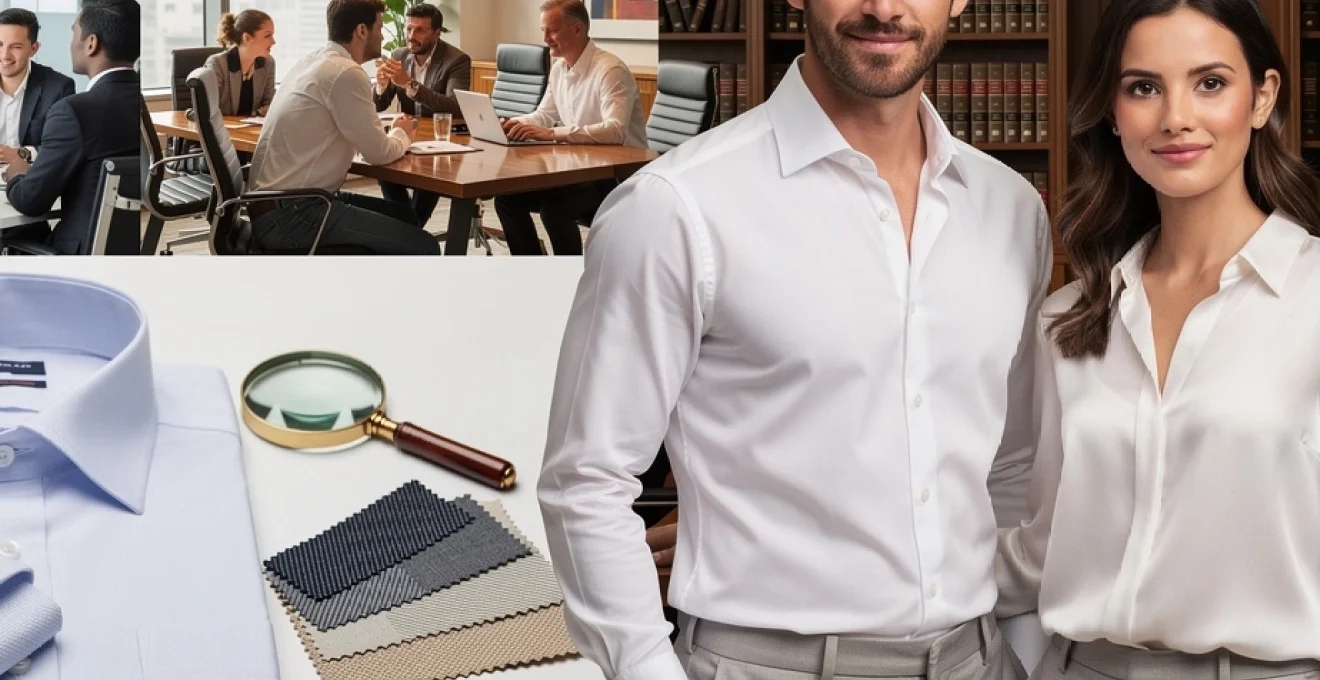
The white shirt stands as an undisputed cornerstone of modern wardrobes, transcending gender, age, and cultural boundaries to establish itself as perhaps the most versatile garment ever created. This seemingly simple piece of clothing represents far more than just fabric and buttons; it embodies a philosophy of timeless elegance, practical sophistication, and adaptable style that has remained relevant for over a century. From boardrooms to casual brunches, from red carpet events to everyday errands, the white shirt continues to prove its worth as an investment piece that delivers exceptional value through its remarkable versatility and enduring appeal.
Understanding why the white shirt maintains such prominence in contemporary fashion requires examining multiple dimensions: its technical construction, professional applications, cultural significance, and economic value. This garment’s ability to seamlessly transition between contexts whilst maintaining its inherent sophistication makes it an essential foundation for any thoughtfully curated wardrobe.
Fabric construction and material properties of premium white shirts
The foundation of any exceptional white shirt lies in its fabric construction and material properties. Modern textile manufacturing has evolved to produce white shirts that balance durability, comfort, and aesthetic appeal through sophisticated weaving techniques and carefully selected fibres. The choice of fabric directly impacts how a white shirt drapes, breathes, and maintains its appearance over time, making this knowledge crucial for anyone seeking to invest in quality pieces.
Premium white shirts typically feature fabrics engineered for specific performance characteristics. The weight of the fabric, measured in grams per square metre, determines the shirt’s opacity, drape, and seasonal appropriatability. Lightweight fabrics between 80-100 GSM offer excellent breathability for warmer climates, whilst medium-weight fabrics ranging from 100-140 GSM provide the ideal balance of structure and comfort for year-round wear.
Cotton weave variations: oxford, poplin, and twill technical analysis
The three primary cotton weaves used in premium white shirt construction each offer distinct characteristics that serve different style preferences and functional requirements. Oxford cloth, recognizable by its basket weave pattern, creates a textured surface that provides excellent breathability and a relaxed aesthetic. This weave traditionally uses coloured warp threads with white weft threads, though pure white oxford maintains the same structural benefits whilst offering versatility in formal settings.
Poplin represents the most formal option among cotton weaves, featuring a tight plain weave that creates a smooth, crisp surface ideal for business environments. The high thread count typical of poplin construction results in a fabric that holds its shape exceptionally well and provides the sharp, professional appearance expected in corporate settings. Poplin’s fine weave structure also allows for precise tailoring details that enhance the shirt’s overall silhouette.
Twill weave creates diagonal lines across the fabric surface, offering superior wrinkle resistance compared to both oxford and poplin. This characteristic makes twill white shirts particularly valuable for frequent travellers or individuals with demanding schedules. The weave’s inherent flexibility provides enhanced comfort during extended wear whilst maintaining a polished appearance throughout the day.
Thread count impact on durability and aesthetic appeal
Thread count significantly influences both the longevity and visual appeal of white shirts. Higher thread counts, typically ranging from 120 to 300 threads per square inch, create finer, smoother fabrics with enhanced lustre. However, the relationship between thread count and quality isn’t linear; excessive thread counts can actually compromise breathability and increase manufacturing costs without proportional benefits.
The optimal thread count for premium white shirts falls between 140-200, providing an excellent balance of durability, comfort, and aesthetic appeal. Fabrics within this range offer sufficient density to prevent transparency issues common with lower-quality white shirts whilst maintaining the breathability essential for comfortable daily wear. This sweet spot in thread count engineering explains why many luxury shirt manufacturers target this specific range for their flagship white shirt collections.
Natural fibre blends: Cotton-Linen and Cotton-Silk performance metrics
Natural fibre blends expand the performance capabilities of white shirts beyond pure cotton’s limitations. Cotton-linen blends, typically featuring 70% cotton and 30% linen, combine cotton’s structural stability with linen’s superior breathability and natural texture. These blends
excel in warm weather and casual environments, offering a subtly rumpled, lived-in elegance that many find more interesting than perfectly crisp cotton. Cotton-silk blends, by contrast, are engineered for drape and sheen. A modest silk content (often 10–20%) lends a gentle lustre and a fluid, luxurious hand-feel without sacrificing the structure and breathability of cotton. These blends are particularly well-suited to evening wear and occasions where you want a white shirt that feels a step above everyday office poplin.
From a performance standpoint, natural fibre blends can also improve temperature regulation and moisture management. Linen fibres wick moisture efficiently and dry quickly, making cotton-linen white shirts ideal for humid climates or travel wardrobes. Silk, with its natural thermoregulating properties, helps a shirt feel cool in summer and comfortably warm in transitional seasons. When evaluating a blended white shirt, pay attention not only to the percentage split but also to how the fabric behaves in motion—does it crease, cling, or billow? The right blend should enhance comfort, durability, and the refined appearance you expect from a premium white shirt.
Wrinkle resistance technologies in modern white shirt manufacturing
Wrinkle resistance has become a critical factor in modern white shirt manufacturing, particularly for professionals who require a consistently polished appearance with minimal maintenance. Contemporary wrinkle-resistant and non-iron treatments typically involve curing the cotton fibres with resins that help them retain their shape after washing. This process reduces creasing and allows shirts to be worn straight from the dryer with only light steaming, if any. For frequent travellers or those in client-facing roles, this technology can significantly extend the usable life of a white shirt between presses and reduce overall care time.
However, not all wrinkle-free finishes are created equal. Lower-quality treatments can leave fabrics feeling stiff or less breathable, and some older formulations relied on chemicals that consumers now seek to avoid. Many premium shirtmakers have responded by developing high-performance non-iron white shirts that maintain a soft hand-feel and excellent airflow while complying with stricter safety and sustainability standards. When assessing wrinkle-resistant white shirts, look for brands that clearly communicate their finishing processes, and consider performing a simple test: scrunch a shirt sleeve in your hand for a few seconds and observe how quickly the fabric recovers. An ideal modern white shirt will balance easy-care convenience with comfort and long-term fabric integrity.
Versatility across professional dress codes and industry standards
One of the primary reasons the white shirt is a key piece in every wardrobe is its ability to navigate diverse professional dress codes with ease. While fashion trends and workplace norms evolve, the white shirt remains a constant reference point in corporate style guidelines across sectors. Whether your environment leans towards conservative tailoring, business casual, or creative-smart dress, a well-chosen white shirt can be adapted to meet expectations without sacrificing personal style. Understanding how different industries interpret the white shirt helps you build a wardrobe that feels both appropriate and authentically you.
This versatility becomes especially valuable for professionals who move between sectors or frequently attend cross-industry events. Instead of maintaining entirely separate wardrobes, you can rely on a core rotation of premium white shirts, adjusted with changes in tailoring, footwear, and accessories. In many ways, the white shirt acts as a visual anchor: it signals reliability and competence while allowing the rest of your outfit to communicate nuance about your role, seniority, and creative outlook.
Banking sector requirements: goldman sachs and JP morgan style guidelines
In traditional banking and investment environments, the white shirt is more than a staple; it is often the default uniform. Institutions such as Goldman Sachs and JP Morgan have historically maintained conservative dress codes in which a crisp white shirt, dark suit, and understated tie form the baseline expectation for client-facing staff. While some banks have relaxed policies in recent years—particularly for back-office and tech teams—the classic white dress shirt remains central to how professionalism is visually communicated on trading floors and in meeting rooms.
Within this context, details matter. Fabric choice typically leans towards fine poplin or high-thread-count twill to achieve a smooth, immaculate finish that pairs seamlessly with structured suiting. Collars are usually semi-spread or spread to accommodate a full Windsor or half-Windsor knot, and French cuffs with discrete cufflinks are common at senior levels or on high-stakes days such as pitch meetings and roadshows. For anyone operating in or adjacent to the banking sector, investing in several high-quality, city-appropriate white shirts—all but identical at a glance, but varied in weight and collar style—ensures you can move through long, demanding days with your appearance consistently on point.
Creative industries adaptation: silicon valley tech company interpretations
In contrast, creative and technology sectors have embraced a much more relaxed approach to professional dress, yet the white shirt still plays a strategic role. In Silicon Valley, where T-shirts and hoodies dominate, a well-fitted white shirt can instantly differentiate you in a room full of casual attire without feeling overdressed. Start-up founders often deploy the white shirt as a subtle signal of seriousness when meeting investors or presenting at conferences, pairing it with dark denim, minimalist sneakers, or unstructured blazers instead of traditional suiting.
The key in these environments is ease. Oxford or lightweight twill is often preferred over rigid poplin, and soft collars without heavy interfacing help maintain a more relaxed, approachable aesthetic. You might roll sleeves for brainstorming sessions and then button up and add a blazer for stakeholder updates, using the same shirt as a flexible base. For creative directors, designers, and product leads, the white shirt and black jeans combination has become a modern uniform: simple, graphic, and functional, allowing ideas rather than outfits to take centre stage while still conveying intent and attention to detail.
Legal profession standards: chambers and city firm expectations
In the legal profession, particularly within chambers and City law firms, dress codes remain among the most formal outside of finance. Here, the white shirt is closely associated with credibility, discretion, and respect for institutional tradition. Barristers and solicitors frequently rely on a rotation of nearly identical white dress shirts worn with dark suits and conservative ties, creating a consistent visual language of authority in both court and client meetings.
Fit and opacity are especially critical in this field, where undergarment visibility or excessive sheen can undermine the desired impression of gravitas. Medium-weight poplin or pinpoint oxford, often with a semi-cutaway collar, is common, providing enough structure to sit neatly under robes or tailored jackets. For long days that move from desk work to court to networking events, non-iron treatments and high armhole construction can significantly improve comfort and maintain a sharp silhouette. If you work in law or a similarly formal profession, viewing the white shirt as professional equipment—rather than a fashion afterthought—will help you prioritise build quality, consistency, and ease of maintenance.
Medical field applications: clinical and administrative environment protocols
In the medical field, the white shirt occupies a more nuanced space, bridging clinical practicality and administrative professionalism. While scrubs and lab coats dominate in direct patient care environments, doctors, consultants, and senior administrators often wear white shirts beneath coats or when working in non-sterile office settings. In private practice or hospital leadership roles, a clean white shirt paired with tailored trousers and a simple tie can reinforce patient trust and convey meticulousness.
Functionally, medical professionals benefit from white shirts made with breathable, easy-care fabrics that can withstand frequent laundering at higher temperatures. Blends that incorporate a small percentage of elastane can improve mobility during long shifts, while wrinkle-resistant finishes help shirts recover quickly after being layered under coats or PPE. For clinical environments, avoiding overly delicate weaves or high-sheen finishes is wise; instead, opt for robust cotton or cotton-rich fabrics that balance hygiene, durability, and a consistently reassuring appearance.
Style foundation principles in contemporary menswear theory
Beyond specific industry norms, the white shirt occupies a central role in contemporary menswear theory as a foundational piece around which entire wardrobes are built. Modern style frameworks—whether minimalist capsule wardrobes or more expansive collections—typically position the white shirt alongside dark denim, navy tailoring, and quality footwear as one of a handful of items that define a man’s visual identity. Why? Because a well-cut white shirt interacts harmoniously with almost every other garment, much like a neutral backdrop enhances artwork in a gallery.
From a practical perspective, starting outfits with a white shirt simplifies decision-making. You can think of it as a “style algorithm”: once you know the shirt works with everything, your attention shifts to proportion, texture, and colour in the layers you add. This is why many stylists recommend investing first in two or three exceptional white shirts before branching into bolder patterns or colours. When collar height complements your face shape, sleeve length breaks correctly at the wrist, and the body follows your lines without pulling, your overall look appears intentional—even when the rest of the outfit is casual.
White shirts also serve as a key tool for managing contrast and formality. Pairing a crisp white shirt with a dark jacket creates strong visual contrast that reads as more formal and authoritative, whereas combining it with lighter chinos or knitwear softens the effect for relaxed settings. In this way, the white shirt is not just another item in your wardrobe; it is a calibration device for your personal style, allowing you to dial outfits up or down with precision.
Historical evolution and cultural significance in fashion heritage
The enduring importance of the white shirt becomes even clearer when viewed through the lens of fashion history. Over the past two centuries, this garment has transitioned from an invisible underlayer reserved for elites to a democratic symbol of modernity, equality, and understated luxury. Each era has reinterpreted the white shirt, layering new meanings onto its clean surface—status, rebellion, gender fluidity, and minimalist sophistication—without ever diminishing its core appeal.
Understanding this evolution not only adds depth to your wardrobe choices but also highlights why the white shirt continues to feel relevant, even as trends shift. When you button a white shirt today, you are participating in a long narrative that spans Victorian drawing rooms, Parisian ateliers, Hollywood sets, and contemporary runways.
Victorian era origins and industrial revolution manufacturing
In the Victorian era, the white shirt was primarily a signifier of class and cleanliness. At a time when laundering was labour-intensive and access to clean water limited, only the wealthy could afford to keep white garments pristine. Shirts were worn beneath waistcoats and jackets, with only the cuffs and collars visible—hence the development of detachable collars and cuffs that could be laundered more frequently than the body of the shirt. A spotless white collar became shorthand for respectability, contrasting with the soiled workwear of manual labourers.
The Industrial Revolution transformed this dynamic. Advances in textile production, mechanised looms, and later the widespread adoption of domestic washing machines dramatically reduced the cost and difficulty of owning white shirts. Mass manufacturing meant that what was once a luxury item gradually became accessible to the growing middle class. By the late 19th and early 20th centuries, the white shirt had become standard office wear for clerks, managers, and professionals, cementing its association with the emerging “white-collar” workforce.
Coco chanel’s revolutionary women’s white shirt introduction
The early 20th century brought a radical shift in the way women engaged with the white shirt, largely driven by designers like Coco Chanel. At a time when women’s fashion was dominated by corsetry and elaborate ornamentation, Chanel introduced elements of menswear—white shirts, tailored jackets, and simple lines—into women’s wardrobes. Her approach treated the white shirt not as a borrowed novelty but as an instrument of liberation, offering women practical, elegant clothing suited to modern life.
By pairing white shirts with wide-leg trousers, pearls, and relaxed knitwear, Chanel reframed the garment as a symbol of ease and quiet confidence rather than restriction. This move paved the way for later designers to explore androgynous dressing, and it remains visible today whenever a woman chooses a crisp white shirt over a more traditionally feminine blouse. In this sense, the white shirt stands at the intersection of fashion and social change, representing a shift towards autonomy and functional elegance in women’s style.
Post-war casualisation movement and american ivy league influence
Following the Second World War, dress codes began to relax, and the white shirt found new life in more casual contexts. American Ivy League universities played a crucial role in this transition. Students at institutions like Harvard and Princeton adopted button-down oxford shirts—often in white or pale blue—as part of a relaxed yet polished campus uniform, worn with chinos, loafers, and sports jackets. This look, championed by brands such as Brooks Brothers, bridged the gap between formal suiting and casual wear, making the white shirt an everyday staple rather than purely office attire.
The post-war boom also saw the rise of cultural icons who used the white shirt as a symbol of youthful rebellion and effortless cool. Think of James Dean in a white T-shirt and jeans or Marlon Brando’s rugged, pared-back style. While these are knit garments rather than woven shirts, they share the same visual language: clean, bright, and unadorned. Together, Ivy League preppiness and Hollywood nonchalance helped cement the white shirt—and its T-shirt cousin—as central to the emerging idea of casual sophistication.
Contemporary luxury interpretations: tom ford and brunello cucinelli approaches
In contemporary luxury fashion, designers like Tom Ford and Brunello Cucinelli have elevated the white shirt to an object of near-obsessive refinement. Tom Ford is renowned for razor-sharp tailoring and structured, high-contrast looks in which a pristine white shirt serves as the visual anchor beneath richly textured suits and evening jackets. His approach emphasises drama and precision: high armholes, strong collars, and fabrics with just enough sheen to catch the light under flash photography.
Brunello Cucinelli, by contrast, embodies a softer, more relaxed interpretation of luxury. His white shirts often feature washed cottons, subtle texture, and slightly eased fits designed to be worn open-necked with cashmere knits and unstructured blazers. Where Ford’s white shirt projects power, Cucinelli’s suggests ease and quiet wealth. Both interpretations, however, underscore the same point: at the highest levels of menswear, the white shirt is treated not as a basic commodity but as a core expression of brand philosophy and lifestyle.
Colour psychology and visual perception dynamics in wardrobe coordination
From a psychological and visual standpoint, the white shirt holds a unique position in wardrobe coordination. White is often associated with cleanliness, clarity, and neutrality, which is why it appears so frequently in environments where trust and competence need to be communicated quickly—hospitals, courtrooms, and corporate offices. When you wear a white shirt, you benefit from these associations, often appearing more organised and reliable before you say a word.
Visually, white acts like a reflector, bouncing light onto the face and brightening your overall appearance. This can be especially helpful in low-light environments or on long days when you want to look alert and engaged. However, because white creates strong contrast, it also amplifies the effects of other colours and textures in your outfit. Pairing a white shirt with a navy suit produces a striking, authoritative combination, while layering it under softer tones—camel, olive, or grey—reduces the intensity for more approachable looks. Understanding this dynamic allows you to use the white shirt as a deliberate tool in shaping how you are perceived in different contexts.
Another important aspect of colour psychology is how white interacts with skin tone. While a pure, optic white can look sharp and modern, it may appear harsh against very warm or very cool complexions. In these cases, an off-white, ivory, or slightly blue-based white shirt can soften the contrast while retaining all the versatility you need. Much like choosing the right shade of white paint for a room, selecting the most flattering white for your shirts can transform how every outfit built around them feels.
Investment value analysis and cost-per-wear economics
Finally, considering the white shirt through the lens of investment and cost-per-wear explains why it consistently ranks among the most valuable pieces in any wardrobe. Unlike highly distinctive items that may only be worn a few times per season, a well-made white shirt can be rotated into outfits multiple times each week across a wide range of occasions. When you divide the initial purchase price by the number of wears over several years, the result is often far lower than for trend-led garments that quickly date or fall out of favour.
To maximise this economic advantage, it is worth applying a more analytical approach to white shirt purchases. Evaluate fabric quality, construction details (such as single-needle stitching, reinforced seams, and high-grade buttons), and fit accuracy. While a premium shirt might cost more upfront, it will typically maintain its shape and colour longer, resist pilling and seam failure, and require fewer replacements. From a sustainability standpoint, this is equally beneficial: owning three or four exceptional white shirts you wear constantly is far less wasteful than cycling through a drawer full of cheaper options that fail after a season.
When you adopt a cost-per-wear mindset, the white shirt emerges as a strategic cornerstone rather than a mere basic. It supports your professional image, simplifies daily outfit decisions, adapts to evolving dress codes, and connects you to a long heritage of style. For many people, the most worn item in their closet is a favourite white shirt—precisely because it performs so reliably, in so many scenarios, and for so many years.