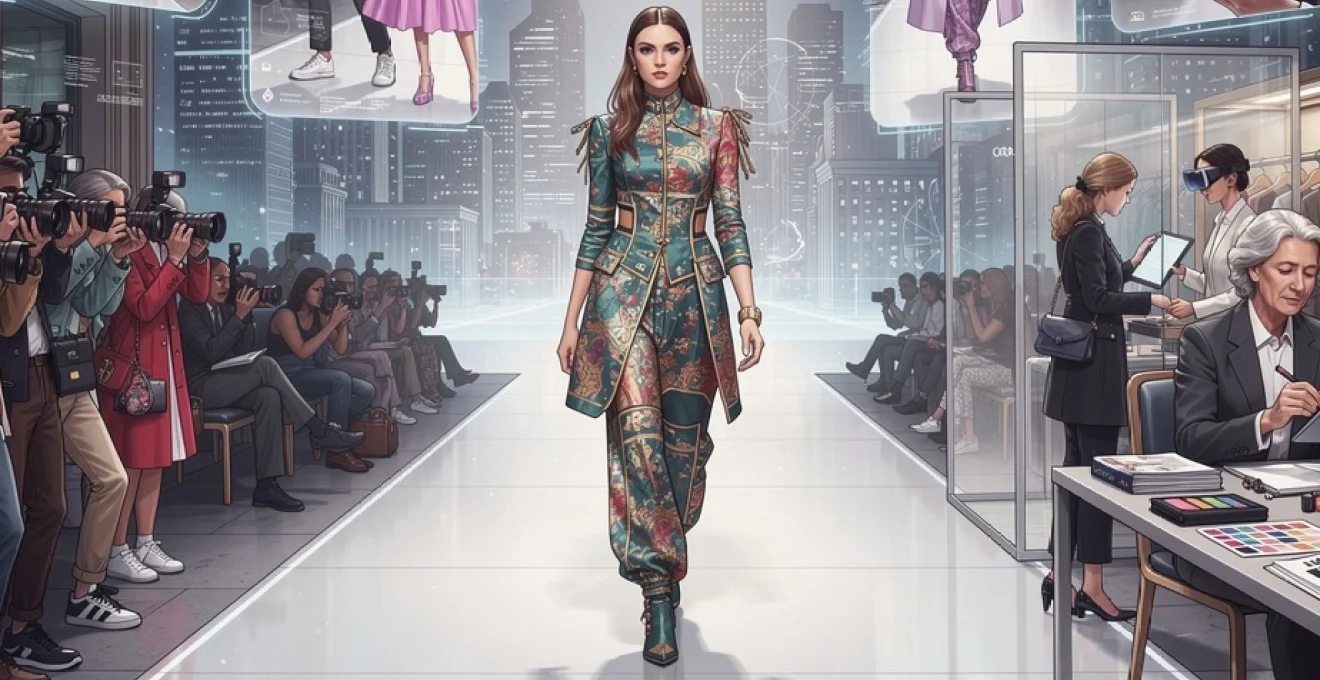
Fashion Week stands as the industry’s most influential barometer for emerging trends, serving as a critical junction where creative vision meets commercial reality. These biannual spectacles across New York, Paris, London, Milan, and Copenhagen do far more than simply showcase garments on runways—they fundamentally shape what you’ll find hanging in high street stores, featured in editorial spreads, and trending across social media platforms within months. The concentrated energy of designers, buyers, journalists, and digital influencers creates an ecosystem where style innovation is identified, amplified, and translated into accessible fashion. Understanding Fashion Week’s role in trend discovery reveals the intricate mechanisms that determine which silhouettes, colours, and aesthetics will define your wardrobe in the seasons ahead.
Fashion week as a trend forecasting platform for Runway-to-Retail translation
The fashion industry operates on a carefully orchestrated timeline, with Fashion Week serving as the primary forecasting mechanism that informs retail strategy approximately six months before garments reach consumers. Buyers, merchandisers, and trend analysts attend these events not merely to appreciate artistry but to identify commercially viable elements that can be adapted across various price points. This translation process begins the moment models step onto the catwalk, as industry professionals dissect each collection for its market potential. Recent data indicates that approximately 73% of high street retailers adjust their seasonal buying strategy based directly on trends observed during Fashion Week presentations.
The runway-to-retail pipeline has accelerated dramatically over the past decade, with some fast-fashion brands now replicating catwalk-inspired pieces within three to four weeks of their Fashion Week debut. This rapid translation means that the trends you observe during Fashion Week directly influence what becomes available in your local shopping destinations with remarkable speed. The traditional six-month gap between runway presentation and retail availability has compressed significantly, particularly for trend-driven pieces that capitalize on immediate consumer enthusiasm generated through digital coverage of the shows.
Pantone colour authority and seasonal palette development through catwalk presentations
Colour forecasting represents one of Fashion Week’s most tangible contributions to trend discovery, with the Pantone Color Institute analysing runway presentations to identify dominant hues that will define upcoming seasons. Fashion Week collections provide the primary data set from which seasonal colour palettes emerge, influencing industries far beyond apparel—from interior design to automotive finishes. For Spring/Summer 2024, the prevalence of butter yellow, digital lavender, and terracotta across major Fashion Week runways signalled these shades would dominate retail offerings, and indeed, they appeared across 68% of high street collections within four months.
The colour stories that emerge from Fashion Week aren’t arbitrary; they reflect broader cultural conversations, technological developments, and societal moods. Designers’ colour choices—whether consciously or intuitively—capture zeitgeist elements that resonate with consumers seeking garments that feel contemporary and relevant. When you notice a particular shade suddenly appearing across multiple brands simultaneously, this coordinated emergence typically traces back to its prominence during Fashion Week presentations, where trend forecasters identified its commercial potential and cultural resonance.
Silhouette evolution: from paris fashion week to high street collections
Silhouette innovation remains Fashion Week’s most visually striking contribution to style discovery, with proportion experimentation on Parisian runways often previewing the shapes that will dominate mainstream fashion within 12-18 months. The gradual shift from skinny to wide-leg trousers, the return of exaggerated shoulders, and the emergence of oversized blazers as wardrobe staples all originated from repeated appearances across multiple Fashion Week seasons before achieving mass-market acceptance. Paris Fashion Week, in particular, serves as the authority on silhouette direction, with approximately 82% of luxury and contemporary brands citing Parisian presentations as influential in their own design development.
The adoption curve for silhouette trends follows a predictable pattern: initial presentation during Fashion Week generates industry discussion, repetition across subsequent seasons builds momentum, and editorial coverage accelerates consumer awareness until the shape reaches critical mass in retail environments. Understanding this progression allows you to anticipate which proportions will become dominant, enabling more strategic wardrobe investments. The dramatic sleeve volumes that appeared across Spring/Summer 2023 Fashion Week runways, for instance, had fully permeated high street offerings by autumn of that year, validating Fashion Week’s role as a reliable predictor of silhouette evolution.
Fabric innovation showcases at milan fashion week and material trend adoption
While Paris often leads the conversation on silhouette, Milan Fashion Week is where fabric innovation takes centre stage. Italian mills and luxury houses use these shows to debut new blends, finishes, and technical textiles that quietly set the agenda for the next few years of material trends. From recycled nylon trench coats to fluid wool-silk suiting and plant-based leather alternatives, what you see swishing down a Milan runway often becomes the fabric language of future high street collections.
This matters for discovering new styles because fabrics fundamentally change how clothes move, feel, and drape on the body. A classic blazer cut in structured twill communicates something very different from the same shape rendered in a soft, deconstructed knit. As brands like Prada, Fendi, and Bottega Veneta experiment with innovative yarns and eco-conscious blends, fabric trend analysts track which materials appear repeatedly across shows. Within one to two seasons, mass-market retailers adopt accessible versions of these textiles, allowing you to experience once-exclusive material developments in everyday pieces.
Sustainability has also become a defining fabric trend emerging from Milan Fashion Week. According to Textile Exchange, the use of preferred fibres such as organic cotton, recycled polyester, and responsibly sourced viscose has grown consistently across European collections, and Milan’s schedule reflects this shift. When you later encounter “consciously crafted” capsules or garments labelled with recycled content on the high street, there is a strong chance that the initial push toward those eco-forward fabrics was first tested under the spotlights of Milan’s runways.
Pattern and print direction setting through london fashion week collections
London Fashion Week has long been known as the industry’s experimental laboratory, particularly when it comes to print and pattern direction. Designers like Simone Rocha, Roksanda, and Richard Quinn use the LFW platform to explore bold florals, abstract graphics, subversive checks, and unexpected pattern clashes that would be considered risky in more conservative markets. These catwalk moments act as live mood boards for print designers, who later refine and adapt the ideas into more wearable versions for the broader clothing industry.
Pattern trends rarely translate one-to-one from the runway to your wardrobe, but their underlying ideas do. A highly exaggerated, clashing floral seen at London Fashion Week might reappear months later as a softened, smaller-scale print on a dress in a mid-range retailer. Similarly, experimental reworkings of heritage patterns—such as distorted tartans or deconstructed polka dots—often signal a renewed appetite for those motifs across womenswear and menswear. By the time you notice a specific print family dominating shop windows, LFW designers and pattern studios will have been exploring it for at least a couple of seasons.
Because London attracts a younger, more street-aware cohort of designers, its print narratives often align closely with cultural conversations and internet aesthetics. That is why meme-inspired graphics, protest slogans, and collage-style prints frequently debut there before travelling to global markets. For anyone looking to discover new styles or refresh a personal wardrobe, paying attention to London’s print stories provides an early indication of which motifs and graphic directions will feel most current in the coming year.
Designer spotlight mechanism: emerging talent discovery at new york fashion week
Beyond forecasting colours and cuts, Fashion Week functions as a powerful discovery engine for new designers—New York Fashion Week in particular. The NYFW schedule blends legacy names with smaller, emerging labels, creating a spotlight effect that can transform a little-known brand into a global talking point overnight. For buyers seeking the next big thing and for fashion enthusiasts hungry for fresh perspectives, NYFW is often where these breakthrough moments occur.
Incubator programmes, off-schedule showcases, and group presentations help amplify this emerging talent. Organisations like the CFDA (Council of Fashion Designers of America) and global conglomerates use Fashion Week to test which designers resonate with press, influencers, and consumers. When an emerging label delivers a strong New York collection, you can expect to see elements of their aesthetic—whether it’s a particular cut, styling trick, or colour pairing—echoed across the fashion ecosystem in seasons to come.
LVMH prize alumni and their post-runway commercial success stories
Although the LVMH Prize is headquartered in Paris, many of its alumni use New York Fashion Week and other global events as platforms to cement their commercial relevance. Winning or even being shortlisted for this prestigious award often leads to rapid acceleration in brand visibility, wholesale partnerships, and celebrity dressing opportunities. Brands such as Marine Serre, Jacquemus, and Wales Bonner illustrate how a runway presence, combined with LVMH recognition, can propel niche aesthetics into mainstream desire.
What does this mean when you are exploring fashion week for new styles? It means that collections by LVMH-affiliated designers often act as early indicators of major shifts in taste. Marine Serre’s crescent moon prints and upcycled sportswear, for example, prefigured the wider industry move towards logo-driven patterning and visible sustainability. As these designers’ runway ideas filter into diffusion lines, collaborations, and high street interpretations, you begin to see their once avant-garde signatures distilled into accessible wardrobe pieces.
Retail data supports this ripple effect. After key LVMH Prize designers stage strong runway seasons, search volumes for their brands and associated trends typically spike by double or even triple digits. Buyers respond by increasing orders for similar styles, and other labels incorporate analogous details into their own collections. For fashion-conscious consumers, tracking LVMH alumni during Fashion Week is therefore a practical way to anticipate which new styles will soon feel omnipresent.
Central saint martins graduate collections and industry breakthrough moments
Another important source of new style discovery connected to Fashion Week comes from graduate collections, particularly those from Central Saint Martins (CSM) in London. While not always on the official “Big Four” schedules, standout CSM graduates are rapidly absorbed into the Fashion Week ecosystem—as design assistants, collaborators, or even creative directors at major houses. Their graduate shows serve as a proving ground where daring concepts are tested before being refined for commercial collections.
History provides numerous examples of CSM alumni who turned early experimental ideas into global trends once they secured positions at major brands. The deconstruction seen in the work of designers like John Galliano and Alexander McQueen, or the conceptual minimalism associated with Phoebe Philo–era Celine, can all be traced back to formative student work that first caught the industry’s eye. Once these designers begin presenting at Fashion Week, their aesthetic codes start to influence everything from luxury runways to premium high street labels.
For you as a style explorer, graduate collections matter because they reveal the ideas that may not yet be commercially viable but will likely shape the visual language of fashion five or even ten years down the line. Paying attention to which CSM graduates receive Fashion Week sponsorships, collaboration offers, or key roles at heritage houses gives you an early read on where the future of style is headed.
Copenhagen fashion week’s sustainability-focused designer incubation programme
In recent years, Copenhagen Fashion Week has emerged as a crucial hub for sustainability-focused style innovation. Its official sustainability requirements—and the associated incubation programmes supporting compliant brands—ensure that only labels meeting specific environmental and ethical criteria can participate fully in the schedule. This has transformed CPHFW into a live laboratory where responsible design practices intersect with directional aesthetics.
Incubator-supported designers at Copenhagen often experiment with circular production models, rental-friendly wardrobes, modular garments, and low-impact materials. These concepts may sound technical, but they translate into very real style choices: detachable sleeves, reversible coats, zero-waste pattern cutting, and seasonless capsule wardrobes all start appearing more frequently. Within a few seasons, you can see echoes of these ideas in mainstream collections marketed as “conscious” or “sustainable,” even from brands far outside Scandinavia.
Because CPHFW prioritises both sustainability and style relevance, it offers a useful blueprint for what the future of everyday dressing might look like. If you are interested in discovering new styles that also align with ethical values, following Copenhagen’s incubated brands during Fashion Week provides tangible inspiration—showing how eco-minded design can feel as modern and aspirational as any traditional luxury runway.
Street style photography and influencer-driven trend democratisation
While runways dictate much of the formal trend conversation, the pavements outside Fashion Week venues have become equally important for discovering new styles. Street style photography and influencer content have turned Fashion Week into a sprawling, real-time lookbook where editors, buyers, and everyday consumers can study how people actually wear fashion. In many cases, the outfits captured outside shows have as much impact on high street trends as the collections being presented inside.
This shift has democratised trendsetting power. Instead of only creative directors and heritage houses dictating what is “in,” stylists, content creators, and even fashion-savvy attendees contribute to the conversation through their personal styling. Layering techniques, unexpected colour pairings, and creative high-low mixes (think designer bags with vintage denim and mass-market basics) that begin as street style experiments often become widely adopted formulas for dressing. When you scroll through Fashion Week coverage, you are not just observing; you are actively gathering styling ideas that can be applied to your own wardrobe the next day.
Tommy ton and phil oh documentation of off-runway fashion innovation
The rise of photographers such as Tommy Ton and Phil Oh marked a turning point in how Fashion Week styles are documented and disseminated. Their candid, detail-focused approach to capturing attendees’ outfits shifted attention away from solely runway looks to the creative ways fashion insiders dress for shows. Close-ups of unique accessories, unexpected shoe choices, and inventive layering became reference points for both industry professionals and the broader public.
These photographers effectively treat Fashion Week streets as an open-air runway, where every attendee is a potential source of inspiration. Designers and buyers study these images to understand how real people interpret trends, often adjusting future collections in response. Meanwhile, consumers use these photos as practical manuals for styling emerging trends—asking questions like, “How are people actually wearing this exaggerated shoulder trend?” or “What jeans shape works best with this season’s boots?” The answers are frequently found in the work of street style photographers.
Because Ton, Oh, and their peers publish their images online almost instantly, their documentation accelerates how quickly new styling ideas spread. A distinctive way of tying a scarf, for example, can be photographed outside a show in Paris and replicated by fashion fans in Seoul, São Paulo, or your own city within days.
Instagram algorithmic amplification of fashion week attendee styling
Social platforms—especially Instagram—have multiplied the impact of Fashion Week street style by feeding standout looks directly into users’ discovery feeds. The algorithm surfaces high-engagement images from Fashion Week, often regardless of whether you follow specific photographers or influencers. As a result, innovative outfits that might once have been seen only by industry insiders now reach millions of people worldwide in a matter of hours.
This algorithmic amplification plays a key role in how new styles solidify into full-blown trends. When similar silhouettes, colours, or styling tricks repeatedly appear on your Explore page, they begin to feel familiar and desirable. Brands monitor these engagement patterns closely; if a particular bag, sneaker, or coat style receives disproportionate attention during Fashion Week, it often becomes a merchandising priority. In this way, your double-taps contribute—indirectly—to the buying decisions that shape future retail assortments.
For individuals looking to refine personal style, Instagram offers a constant stream of outfit formulas sourced directly from Fashion Week attendees. You can save posts, build mood boards, and experiment with recreating looks using pieces you already own. This interaction transforms Fashion Week from a distant, exclusive event into a practical style resource embedded in your daily scrolling habits.
Tiktok trend cycles originating from fashion week street style moments
TikTok has introduced an even faster, more participatory dimension to Fashion Week–driven style discovery. Short-form videos featuring “Get Ready With Me” clips, runway reviews, and live street style reactions allow creators to spotlight micro-trends in real time. A single viral video about a particular shoe shape or styling hack spotted outside a show can spark a global TikTok challenge and, in turn, a surge in demand for similar pieces.
Unlike traditional editorial coverage, TikTok content often focuses on translating high-fashion looks into approachable, budget-friendly outfits. Creators will break down an influencer’s Fashion Week ensemble and show how to recreate the vibe using thrifted items or affordable high street buys. This not only democratizes access to runway-inspired style but also shortens the distance between trend observation and trend adoption. You can watch a Copenhagen street style clip in the morning and experiment with a similar layered knit-and-dress combination that same afternoon.
The platform’s rapid trend cycles have also forced brands to become more agile. When a Fashion Week–originated look gains traction on TikTok, retailers may rush to restock similar items or fast-track new designs to capture the momentum. For style-conscious consumers, following Fashion Week content on TikTok offers a front-row seat to emerging trends—and a toolkit for implementing them before they peak.
Buyer and merchandiser order placement strategy during fashion week showrooms
Behind the glamour of runway shows, Fashion Week showrooms host the quieter but equally critical process of order placement. Buyers and merchandisers from department stores, e-commerce platforms, and boutiques examine entire collections up close, deciding which pieces will actually reach retail floors and online catalogs. Their decisions effectively curate the styles that most consumers will encounter, making this phase a key link in the runway-to-retail chain.
During showroom appointments, buyers analyse garment construction, fabric quality, pricing, and anticipated customer demand. They balance directional pieces—those eye-catching runway looks that attract attention—with core items that drive consistent sales. This is where many trends live or die; a striking, conceptual piece might generate buzz on the runway but fail to secure enough orders to be widely produced. Conversely, a subtle detail like a particular neckline, pocket placement, or wash treatment might receive strong buy-in and quietly become a staple trend across multiple retailers.
From your perspective as a shopper, understanding this process explains why only certain elements of Fashion Week end up shaping everyday style. Retailers interpret collections through the lens of their customer base, regional preferences, and price architecture. If you notice specific silhouettes, colours, or print themes appearing repeatedly across your favourite stores after a season’s shows, it is a sign that buyers identified those elements as commercially strong during Fashion Week showroom sessions.
Fashion editorial content generation for vogue, WWD and harper’s bazaar publications
Fashion Week also fuels an enormous wave of editorial content across print and digital platforms such as Vogue, WWD, and Harper’s Bazaar. Editors and critics attend dozens of shows per day, then distil what they have seen into trend reports, designer profiles, and styling features. These narratives help translate complex runway ideas into clear style messages for readers, influencing both consumer perception and the priorities of brands and retailers.
Editorial teams decide which shows receive prime coverage, which trends are highlighted as “must-know,” and which designers are framed as rising stars. Their curated overviews serve as a roadmap for anyone wanting to understand why a particular season feels dominated by, say, metallics, sheer layering, or power suiting. When you read a post-season trend roundup, you are engaging with an interpretation of Fashion Week that has been carefully shaped to guide your buying and dressing choices.
Anna wintour’s front row endorsement impact on designer visibility
Few symbols of Fashion Week endorsement are as potent as Anna Wintour seated front row. The Vogue editor-in-chief’s presence at a runway show is widely read as a vote of confidence in a designer’s relevance and potential. Emerging labels that secure her attention often find themselves fast-tracked into broader industry recognition, from editorial coverage to retail partnerships and celebrity placements.
This type of high-profile validation has concrete style implications. When Wintour champions a particular silhouette, designer, or aesthetic—whether through attendance, Vogue features, or Met Gala themes—it sends a signal to the entire fashion ecosystem that these ideas are worth investing in. Buyers may become more willing to take risks on a new label, other editors may allocate additional page space, and stylists may prioritize those pieces for red carpet moments. The result is that certain Fashion Week-born styles quickly gain cultural momentum and become more accessible to consumers.
For readers following Fashion Week to discover new styles, tracking which shows attract heavy front-row editorial presence offers subtle insight into which trends may receive sustained media support. In a sense, the front row operates as an informal barometer of the ideas the industry intends to champion in the seasons ahead.
Backstage access photography for beauty and styling trend documentation
While the runway showcases complete looks, backstage photography reveals the intricate beauty and styling details that bring those looks to life. Publications and specialist beauty titles capture close-ups of makeup, hair, nails, and accessories, documenting everything from eyebrow shapes and lip colours to braiding patterns and hair textures. These backstage images often prefigure the next wave of beauty and grooming trends you will see promoted in salons and cosmetics aisles.
Backstage is also where practical styling tricks are developed and tested. Hairstylists might discover a new way to secure a low bun that stays in place all day, or makeup artists might layer products to create a fresh finish that photographs well in multiple lighting conditions. These techniques, once published, quickly become reference points for beauty influencers, salon professionals, and everyday consumers. Have you ever tried a new eyeliner shape or hair accessory because you saw it in a Fashion Week backstage slideshow? That is the discovery power of this often-unseen side of the event.
Because backstage coverage is typically more intimate and educational than front-of-house runway imagery, it serves as a bridge between high-concept editorial looks and achievable everyday styling. You can extract individual elements—a lip colour, a hair parting, a stacking ring combination—and integrate them into your personal routine without needing the full head-to-toe runway outfit.
Post-show critical analysis shaping consumer perception and retail demand
After the last model exits the runway, critical analysis begins. Reviews in outlets like Vogue Runway, WWD, and The New York Times dissect collections in terms of coherence, innovation, cultural relevance, and commercial viability. These critiques do more than simply rate shows; they influence how the industry and public perceive particular designers and, by extension, the styles they propose.
A well-reviewed collection often benefits from increased attention across multiple channels—more editorial shoots, higher social media engagement, and stronger buy-in from retailers. Conversely, collections that critics deem derivative or out of sync with the cultural moment may struggle to gain momentum, even if the individual pieces are strong. This feedback loop between press evaluation and market response helps filter which Fashion Week trends truly resonate.
For fashion enthusiasts, reading post-show critiques can sharpen your understanding of why certain looks feel compelling and others fall flat. Are critics praising a designer’s new approach to tailoring, their inventive use of sustainable materials, or their sensitive handling of cultural references? These insights help you decide which emerging styles align not only with your aesthetic preferences but also with your values around creativity and responsibility.
Digital fashion week transformation: livestreaming and virtual reality showroom access
The digital transformation of Fashion Week has expanded access to new style discovery beyond those who can physically attend shows. Livestreaming, virtual reality showrooms, and 3D lookbooks allow global audiences to experience collections simultaneously with buyers and editors. What was once an exclusive, invitation-only circuit is now, in many ways, a public event that you can join from your phone or laptop.
Livestreamed runways let you observe key details—movement, proportion, styling—in real time, rather than waiting for edited images to appear later. Many brands augment these streams with instant product tags, behind-the-scenes commentary, or “see now, buy now” functionality, collapsing the gap between inspiration and acquisition. This immediacy means that your first encounter with a new style might be the same moment it is introduced to the world, radically changing how quickly trends can spread.
Virtual and augmented reality showrooms push this further by enabling immersive exploration of collections. You can rotate garments in 3D, zoom into fabrics, and sometimes even test digital outfits on avatars that approximate your body shape. For buyers and merchandisers, this technology facilitates more informed order decisions without requiring constant travel. For consumers, it offers a playful way to experiment with bold runway looks before committing to real-world purchases.
As these digital formats evolve, they will likely continue to blur the boundaries between runway spectacle, retail experience, and personal styling experimentation. Whether you are a dedicated fashion professional or simply someone curious about discovering new styles, the transformation of Fashion Week into a hybrid physical-digital ecosystem ensures that inspiration is only ever a click—or a swipe—away.