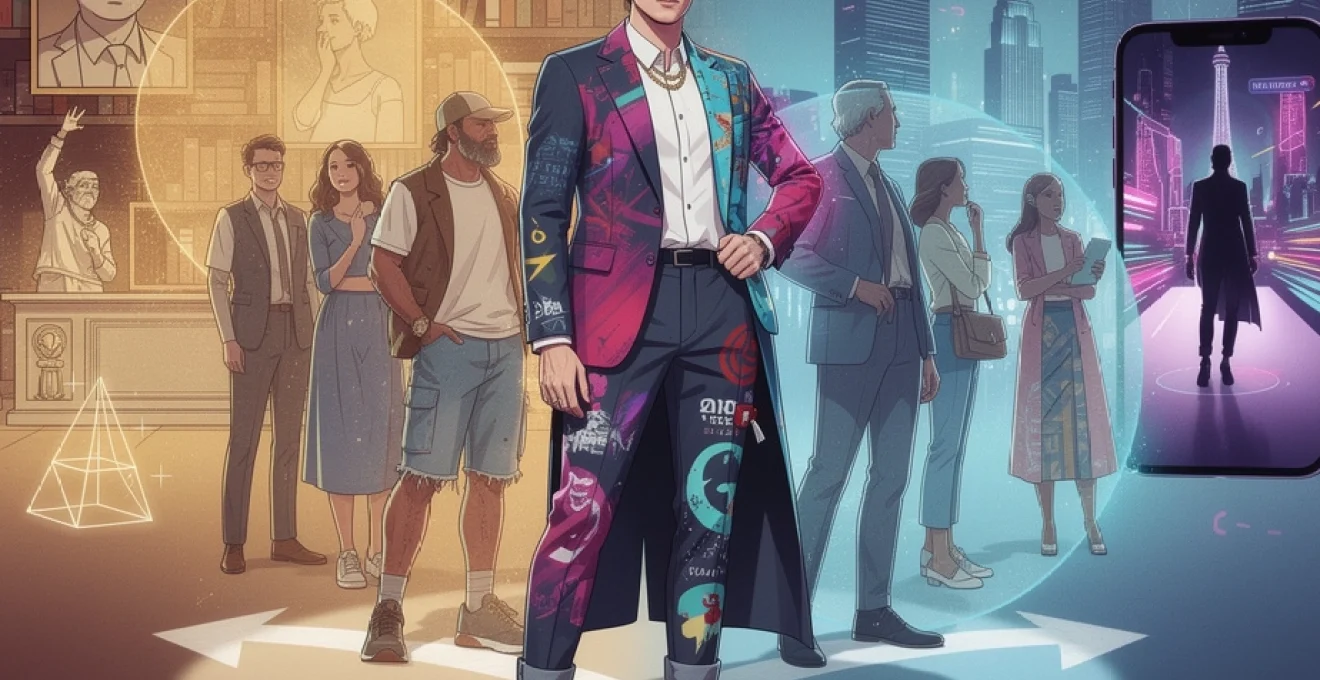
The intricate dance between style, fashion, and taste forms one of the most fascinating aspects of contemporary culture studies. These three concepts, while often used interchangeably in casual conversation, represent distinct yet interconnected phenomena that shape how individuals express identity and navigate social hierarchies. Fashion operates as the collective zeitgeist, reflecting broader cultural movements and industry-driven trends that sweep across societies. Style emerges as the personal interpretation of these broader movements, serving as an individual’s unique signature in the world of aesthetic expression. Taste functions as the underlying aesthetic compass that guides both fashion adoption and style development, rooted in cultural capital and sophisticated judgement.
Understanding these relationships becomes increasingly crucial in our digital age, where social media algorithms accelerate trend cycles and democratise fashion influence. The traditional gatekeepers of taste—fashion magazines, luxury brands, and cultural elites—now compete with Instagram influencers, TikTok creators, and street style photographers for cultural authority. This shift has fundamentally altered how taste develops, how style expresses individuality, and how fashion movements gain momentum across global markets.
Defining style, fashion and taste: theoretical frameworks in contemporary culture studies
The academic study of style, fashion, and taste draws from multiple theoretical frameworks that illuminate the complex social functions these phenomena serve. Contemporary scholars build upon foundational theories to understand how aesthetic choices operate within modern consumer culture, where digitalisation has accelerated traditional processes of taste formation and style development.
Pierre bourdieu’s cultural capital theory and aesthetic dispositions
Pierre Bourdieu’s groundbreaking work on cultural capital provides essential insights into how taste functions as a marker of social distinction. His theory reveals that aesthetic preferences aren’t merely personal choices but reflect deeply ingrained habitus—unconscious dispositions shaped by class background, education, and social experiences. Bourdieu demonstrated that taste serves as a powerful mechanism for social reproduction, where those with accumulated cultural capital can distinguish themselves from others through refined aesthetic judgements.
In contemporary fashion contexts, Bourdieu’s framework helps explain why certain brands, styles, or aesthetic choices carry different social weights. The ability to appreciate minimalist Scandinavian design, recognise emerging designers before they achieve mainstream success, or understand the cultural significance of particular fashion movements represents forms of cultural capital that signal sophistication and insider knowledge. This creates what Bourdieu termed « distinction »—the process by which taste preferences establish and maintain social hierarchies.
Georg simmel’s Trickle-Down theory and social differentiation mechanisms
Georg Simmel’s influential analysis of fashion provides a foundational understanding of how trends move through social structures. His trickle-down theory suggests that fashion innovations typically emerge among social elites before filtering down through various social strata, eventually reaching mass markets where they lose their exclusivity and prompt elite groups to adopt new distinguishing practices.
Simmel’s work reveals fashion’s dual nature: it simultaneously satisfies human needs for both social belonging and individual distinction. This paradox explains why fashion operates as what Simmel called a « societal formation, » combining opposing forces of conformity and differentiation. Modern applications of Simmel’s theory must account for how digital platforms have complicated traditional trickle-down patterns, enabling trends to emerge from various social levels and spread through networked communities rather than hierarchical structures.
Fashion helps solve the central problem of modern life: how a person can be a homogeneous part of a social mass without losing individuality, teaching us how to maintain private taste while expecting others to share recognisable aesthetic sensibilities.
Roland barthes’ semiotics of fashion and cultural signification systems
Roland Barthes’ semiotic analysis of fashion reveals how clothing and style choices function as complex communication systems. His work demonstrates that fashion operates on multiple levels of meaning, from basic denotative functions (protection from elements) to sophisticated connotative messages (social status, personal identity, cultural affiliations). Barthes showed how fashion magazines, advertising, and cultural discourse create mythologies around particular aesthetic choices.
Contemporary digital culture has amplified Barthes’ insights about fashion as language. Social media platforms function as vast semiotic landscapes where outfit posts, style hashtags, and fashion imagery create intricate webs of cultural meaning. Understanding these signification systems becomes crucial for brands, influencers, and individuals
now producing and decoding fashion meanings in real time. A single image can compress signals about class, subculture, politics, and personal narrative, and its reception—likes, comments, shares—feeds back into how taste, fashion, and style evolve together. Barthes’ emphasis on codes and mythologies remains central for understanding why, for instance, the same pair of sneakers can signify luxury on one body and rebellion on another.
Thorstein veblen’s conspicuous consumption and status symbol analysis
Thorstein Veblen’s theory of conspicuous consumption adds an explicit economic and status-oriented layer to the relationship between fashion and taste. Writing at the end of the nineteenth century, Veblen argued that elites display wealth through visible, often wasteful consumption that signals leisure and economic power. In fashion terms, this translates into garments and accessories whose value lies less in their functional qualities and more in what they communicate about the wearer’s position in social hierarchies.
Contemporary fashion culture offers countless examples of Veblen’s logic at work: logo-heavy luxury items, limited-edition drops, and high-priced collaborations that function as portable status symbols. Yet conspicuous consumption has become more complex in an age of “stealth wealth” and normcore, where understated luxury and deliberate plainness can themselves signal insider knowledge and refined taste. Here, taste, style, and fashion intersect in subtle ways: the ability to recognise the cut of a The Row coat or the stitching of a Hermès bag becomes a coded language accessible only to those with sufficient cultural capital.
At the same time, Veblen’s insights help us see how fast fashion and accessible luxury allow broader audiences to participate in status signalling, even if temporarily. We can think of the high–low mix outfits popular on Instagram—designer shoes paired with mass-market denim—as a negotiation between economic constraints, aspirational identity, and the desire for recognition. Fashion, in this sense, is not just about what you wear but about how visibly your choices can be read as belonging to particular symbolic economies.
Personal style development: individual expression versus collective fashion movements
Personal style development sits at the crossroads of individual creativity and collective fashion movements. On the one hand, style feels deeply intimate: it is the way you decide to combine silhouettes, colours, and textures into a look that “feels like you.” On the other hand, no wardrobe exists in a vacuum. Our style vocabularies are built from fashion images, peer influences, and cultural references that circulate through media, subcultures, and retail spaces. The relationship between style, fashion, and taste is therefore dynamic: style is where personal taste meets shared fashion codes.
From a sociological perspective, we can see style as an ongoing project of self-fashioning. Individuals experiment with looks, assess the feedback from their social environments, and gradually refine a set of aesthetic choices that communicate their desired identity. This process can involve aligning with certain fashion movements—such as minimalism, gorpcore, or Y2K revival—or consciously rejecting them. Taste acts as the internal filter in this process, helping you decide which elements of circulating fashion resonate with your values, body, and lifestyle, and which feel inauthentic.
Importantly, personal style is rarely static; it shifts as life stages, social circles, and cultural contexts change. Someone may move from streetwear-heavy ensembles in their twenties to more tailored, quiet luxury in their thirties, not simply because trends have changed, but because their sense of self and social role has evolved. Collective fashion movements provide the raw materials and reference points, while taste and experience help individuals curate and recombine those materials into coherent style narratives. In this way, we all become, to borrow from Dick Hebdige, everyday bricoleurs of style.
Fashion industry dynamics: how trend forecasting agencies shape consumer taste
Behind the visible world of runway shows and influencer posts lies a complex infrastructure dedicated to anticipating and directing taste. Trend forecasting agencies, data analysts, and creative consultancies work together to map out what colours, silhouettes, and cultural themes are likely to resonate in future seasons. These organisations do not simply predict fashion; they participate in creating it. By circulating reports, mood boards, and analytics to brands and retailers, they influence which possibilities become commercially viable and widely available.
This industrial machinery has a direct impact on the relationship between fashion, style, and taste. When brands across market segments subscribe to the same forecasts, consumers encounter convergent aesthetic options in shops and online. Over time, repeated exposure can normalise certain looks, making them appear more “tasteful” or “current.” At the same time, the proliferation of niche reports and micro-forecasts enables fragmentation: specific subcultures or geographic markets receive tailored guidance, encouraging multiple parallel fashion currents rather than a single dominant trend.
WGSN and trend union’s predictive analytics in global fashion cycles
Two of the most influential actors in this landscape are WGSN and Trend Union. WGSN, founded in 1998, leverages big data, social media analysis, and on-the-ground research to forecast trends up to two years in advance. Its clients include major fast fashion players as well as luxury houses, meaning that its colour forecasts or key-item predictions can ripple through the entire fashion ecosystem. When you see a sudden wave of sage green outerwear or wide-leg trousers across high street and high-end stores, you are likely witnessing WGSN’s predictive analytics in action.
Trend Union, led by renowned trend forecaster Li Edelkoort, takes a more qualitative and philosophical approach. Its forecasts are often presented as tactile books and lectures, weaving together macro-cultural shifts, art, architecture, and craft traditions into coherent narratives. Whereas WGSN emphasises real-time data and quantifiable signals, Trend Union emphasises intuition, slowness, and long-term cultural undercurrents. Nonetheless, both agencies ultimately contribute to shaping the pool of aesthetic options from which consumers will choose, thereby subtly influencing personal taste and style trajectories.
For consumers, being aware of this infrastructure can be empowering. Recognising that your “sudden” attraction to a particular shade or silhouette may be partly orchestrated invites a more reflective approach to shopping. We can ask: am I drawn to this because it aligns with my enduring taste, or because it has been heavily promoted across visual channels? Developing a critical awareness of forecasting mechanisms allows individuals to participate in fashion without being fully determined by it.
Fashion week influence: milan, paris, and new york’s cultural hegemony
Fashion Weeks in Milan, Paris, New York, and London still function as powerful stages where the global fashion narrative is set. Although their hegemony has been challenged by emerging fashion capitals and digital presentations, the “Big Four” continue to shape what is considered aspirational, directional, and worthy of attention. Editors, buyers, influencers, and celebrities converge to witness collections that will filter down, in some form, to department stores, fast fashion chains, and independent boutiques over the following seasons.
This top-down influence reinforces particular taste hierarchies. A silhouette endorsed on a Paris runway is more likely to be framed as sophisticated or avant-garde than a similar innovation emerging from a small regional scene, even if the latter is more experimentally daring. At the same time, the global visibility of Fashion Weeks allows for greater cross-pollination: street style photographers capture attendees whose outfits often blend high fashion pieces with vintage or streetwear, showcasing how personal style can remix elite fashion codes.
Digital livestreams and social media coverage have partially democratised access to these events, allowing wider audiences to participate in the evaluation of what is “good” or “bad” taste. Still, gatekeeping persists through accreditation systems, exclusive after-parties, and the economic barriers to producing runway collections. The cultural hegemony of Milan, Paris, and New York thus illustrates how institutional power and media visibility continue to frame the boundaries of legitimate fashion, even as alternative style communities gain ground online.
Social media algorithms and micro-trend acceleration patterns
On platforms such as Instagram, TikTok, and Pinterest, algorithms curate personalised streams of fashion imagery tailored to each user’s engagement patterns. When you pause on a video about “clean girl aesthetic” or like a post featuring vintage denim, the algorithm takes note and serves you more of the same. This feedback loop can quickly transform scattered individual preferences into visible micro-trends, such as balletcore, tomato girl summer, or blokecore, that surge and fade within weeks.
From the perspective of taste formation, algorithmic curation compresses the time it takes for a look to travel from fringe to mainstream. What might once have been a niche style within a specific subculture can now reach millions overnight, precisely because algorithms prioritise content that generates rapid engagement. For style-conscious individuals, this can feel both exhilarating and exhausting: there is always a new aesthetic identity to consider, always another “must-have” item circulating on For You Pages.
These patterns of micro-trend acceleration challenge the stability traditionally associated with taste. If your feed constantly shifts, how do you distinguish between fleeting curiosity and deeper aesthetic resonance? One practical strategy is to treat social media inspiration as a testing ground rather than a directive: save images, revisit them after a few weeks, and see which aesthetics still appeal. By building this delay into your decision-making, you reintroduce reflection into a system optimised for immediacy.
Fast fashion’s impact on traditional taste formation processes
Fast fashion retailers translate trend forecasts and social media signals into physical garments at unprecedented speed and scale. This rapid turnover encourages consumers to view clothing as disposable, making it easy to experiment with new looks but harder to cultivate a stable sense of style. When a T-shirt can be purchased for the price of a coffee and replaced within a month, the long-term evaluation of quality, fit, and coherence with personal taste can feel less urgent.
Historically, taste formation involved slower cycles: garments were fewer, more expensive relative to income, and often repaired or altered over time. This encouraged deeper engagement with materials, construction, and personal fit. Fast fashion, by contrast, prioritises novelty and volume over durability. The result is often a wardrobe full of items that reflect past micro-trends rather than a curated expression of current style. Many consumers report the paradox of “having nothing to wear” despite overstuffed closets—a symptom of misalignment between purchases driven by trend-chasing and enduring taste.
At the same time, fast fashion has democratised access to certain aesthetics previously reserved for higher income groups. The challenge is to harness this accessibility without falling into purely reactive consumption. One way forward is to integrate principles of slow fashion into your decision-making, even when shopping fast fashion: focusing on pieces that suit your body and lifestyle, choosing versatile colours and shapes, and committing to wearing items at least thirty times. In doing so, you reposition taste as a long-term guide rather than a response to momentary hype.
Cultural capital and taste hierarchies: distinguishing high fashion from street style
The distinction between high fashion and street style is often framed as a simple opposition between elite and popular culture. In reality, the relationship is far more entangled. High fashion routinely draws inspiration from streetwear, workwear, and subcultural dress, elevating everyday garments onto runways and into luxury boutiques. Street style, in turn, adopts and recontextualises elements of high fashion, mixing them with thrifted pieces, local labels, or DIY customisations. What differentiates these spheres is less the intrinsic quality of garments and more the cultural capital and institutional validation backing them.
Pierre Bourdieu’s concept of cultural capital helps explain why certain looks are perceived as chic while others are dismissed as tasteless, even when they share visual similarities. Knowing which sneakers are part of a coveted collaboration, or being able to reference the archival collection that inspired a current silhouette, signals a form of expertise that carries social weight in fashion circles. High fashion spaces—luxury boutiques, fashion magazines, museum exhibitions—confer legitimacy on particular aesthetics, transforming them into benchmarks of good taste.
Street style operates through different but equally powerful forms of capital: local knowledge, community credibility, and the ability to innovate within material constraints. The inventive layering seen in Tokyo’s Harajuku district or the distinctive casual elegance of Parisian sidewalks exemplify how style communities can set global trends from outside traditional institutions. Digital photography and social media have intensified this process, enabling street style images to circulate widely and influence designers, editors, and consumers around the world.
As high fashion and street style continue to converge, taste hierarchies are both reinforced and challenged. A luxury house releasing a sneaker inspired by a grassroots subculture can legitimise that aesthetic in some eyes while diluting its original meaning in others. For individuals navigating this landscape, the key is to cultivate an awareness of these power dynamics while prioritising authenticity. Rather than asking whether a look is “high” or “low,” we can ask: does this combination of pieces genuinely reflect my style and values, regardless of its position in traditional hierarchies?
Psychological mechanisms behind fashion adoption and personal style choices
Beyond sociology and cultural theory, psychology offers crucial insights into why we adopt certain fashions and develop particular styles. Clothing choices are not purely rational; they are shaped by emotions, cognitive biases, and social needs that often operate below conscious awareness. Understanding these mechanisms can help us become more intentional about how taste guides our fashion decisions, reducing impulsive purchases that don’t align with our long-term style identity.
Researchers have identified several psychological processes relevant to fashion consumption, including cognitive dissonance, social identity, self-concept, and mimicry. Each of these mechanisms illuminates a different facet of the relationship between style, fashion, and taste. Together, they show that what we wear is both a personal statement and a negotiation with the expectations and perceptions of others. By recognising these dynamics, we can make aesthetic choices that feel both expressive and psychologically coherent.
Cognitive dissonance theory in fashion purchase decisions
Cognitive dissonance refers to the discomfort we feel when our behaviours conflict with our beliefs or self-image. In fashion, this often arises when a purchase doesn’t quite fit our idea of our own style or values. You might buy a highly trendy piece because it is everywhere on social media, only to feel uneasy when you wear it, sensing that it clashes with your deeper taste. To reduce this dissonance, people may either rationalise the purchase (“everyone is wearing this, so it must be stylish”) or quietly stop wearing the item, letting it languish at the back of the wardrobe.
From a style development perspective, cognitive dissonance can actually be constructive. Moments of discomfort force us to clarify our boundaries: which silhouettes make us feel powerful, which colours drain our energy, which brands’ ethics align or conflict with our values. If we treat each regretted purchase as data rather than failure, we refine our aesthetic compass. Over time, this leads to a wardrobe that produces less psychological friction and more everyday ease.
Practical strategies to minimise dissonance include implementing a “cooling-off” period before buying high-impact items, trying to style potential purchases with at least three existing pieces, and asking whether a garment fits your long-term style narrative rather than just a current micro-trend. These small checks help ensure that fashion adoption is guided by stable taste rather than momentary pressure.
Social identity theory and group conformity in style selection
Social identity theory suggests that we derive part of our self-concept from the groups to which we belong—whether defined by profession, subculture, gender, or hobby. Fashion is one of the most visible ways we signal these affiliations. Office dress codes, club uniforms, and subcultural styles (from skatewear to goth to cottagecore) all provide visual shorthand for belonging. Conforming to these norms can satisfy deep psychological needs for connection and recognition, even when elements of the aesthetic don’t fully match our private tastes.
This dynamic explains why people often adopt looks when entering new social environments, such as starting university or a new job. Adapting to the “style language” of a group reduces social friction and helps others categorise us quickly. At the same time, excessive conformity can feel constraining, particularly when our internal taste pulls in a different direction. The tension between blending in and standing out is a core driver of fashion change and personal style evolution.
One useful analogy is to think of group style norms as a grammar rather than a script. Grammar provides rules that make communication intelligible, but within those rules, we can form an infinite number of sentences. Similarly, you can respect the broad expectations of a group—formal versus casual, colourful versus muted—while introducing personal twists through accessories, cuts, or subtle colour choices. In doing so, you honour both your social identities and your individual taste.
Self-concept enhancement through aesthetic choices
Clothing functions as a tool for self-concept enhancement, helping us bring ideal versions of ourselves closer to reality. Psychologists distinguish between our actual self (how we see ourselves now) and our ideal or ought self (how we would like to be, or think we should be). Fashion and style choices often bridge this gap. A carefully chosen blazer can make us feel more competent before a presentation; a favourite pair of boots can bolster our sense of confidence on a first date.
Research on “enclothed cognition” suggests that what we wear can influence cognitive performance and behaviour when we associate certain garments with specific qualities. For example, participants wearing lab coats described as “doctor’s coats” have been shown to perform better on attention-related tasks than those who wear the same coat framed as a “painter’s coat.” In everyday life, this effect translates into the subtle psychological boost we experience from outfits that align with our aspirational identity.
To leverage this mechanism in developing personal style, it can be helpful to define a few adjectives you want your wardrobe to express—such as “creative,” “grounded,” or “elegant”—and assess potential purchases against them. When style, fashion, and taste cohere around a clear self-concept, your wardrobe becomes a supportive environment rather than a source of doubt. You are less likely to chase every new aesthetic and more likely to invest in pieces that reinforce who you are becoming.
Mirror neuron activation and fashion mimicry behaviours
Neuroscientific research on mirror neurons—brain cells that activate both when we perform an action and when we observe others performing it—offers a biological basis for fashion mimicry. When we see someone wearing an outfit that resonates with us, especially if we admire them, our brains simulate the experience of wearing that outfit ourselves. This can generate a desire to reproduce the look, whether by copying it directly or integrating elements into our own style.
Social media intensifies this process by providing endless streams of aspirational bodies, lifestyles, and outfits. Each scroll presents new candidates for mimicry, from celebrities to micro-influencers to stylish acquaintances. While this can be a rich source of inspiration, it also raises the risk of losing sight of our own taste in the flood of visual suggestions. We may find ourselves dressing more like our Explore page than like ourselves.
Awareness is the first step in moderating mimicry. When you feel a sudden urge to buy an item you have just seen, pause and ask: am I responding to the garment itself, or to the person wearing it and the life it symbolises? By separating the fantasy from the fabric, we can decide more clearly whether a trend aligns with our style or simply reflects the activation of our mirror neurons. In this way, neuroscience underscores a point that fashion theorists have long made: imitation is inevitable, but thoughtful adaptation is where taste and style truly emerge.
Digital age transformations: instagram aesthetics and TikTok’s influence on contemporary taste
The digital age has radically transformed how style, fashion, and taste circulate, intersect, and evolve. Platforms like Instagram and TikTok function as vast, participatory archives of looks, tutorials, and trend narratives, where every user can be both audience and creator. Instead of waiting for monthly magazines or seasonal runway shows, we encounter new aesthetics daily—sometimes hourly—through short-form videos, outfit grids, and influencer content. This constant exposure expands our visual vocabulary but also places new pressures on how quickly we update our style.
Instagram, with its curated grids and emphasis on cohesive feeds, has promoted a particular kind of visual discipline. Influencers often build recognisable personal brands around consistent colour palettes, backdrops, and styling choices, encouraging followers to aspire to similarly “aesthetic” lives. TikTok, by contrast, thrives on speed, humour, and trend cycles that can rise and fall within days. Hashtags like #OOTD, #GRWM (“get ready with me”), or #TikTokMadeMeBuyIt showcase fashion in motion, turning the act of getting dressed into shareable content and collective experimentation.
These platforms have democratised fashion commentary, allowing users far from traditional fashion capitals to shape global taste. Viral moments—such as the resurgence of low-rise jeans or the spread of “coastal grandmother” and “blokette” aesthetics—often originate from ordinary users rather than established brands. Yet algorithmic visibility also creates new hierarchies, privileging those who master platform-specific codes over those whose style may be compelling but less optimised for engagement. The result is a digital taste ecology where popularity, novelty, and authenticity are constantly negotiated.
For individuals navigating this landscape, the key challenge is to harness digital inspiration without surrendering to algorithm-driven sameness. One useful analogy is to treat social platforms as mood boards rather than rulebooks: spaces to collect ideas, notice recurring patterns in what you like, and then translate those patterns into outfits that work in your offline life. By periodically stepping back from the scroll to reflect on what genuinely resonates, you allow your style and taste to develop with depth, even amid the noise of fast-moving fashion content.