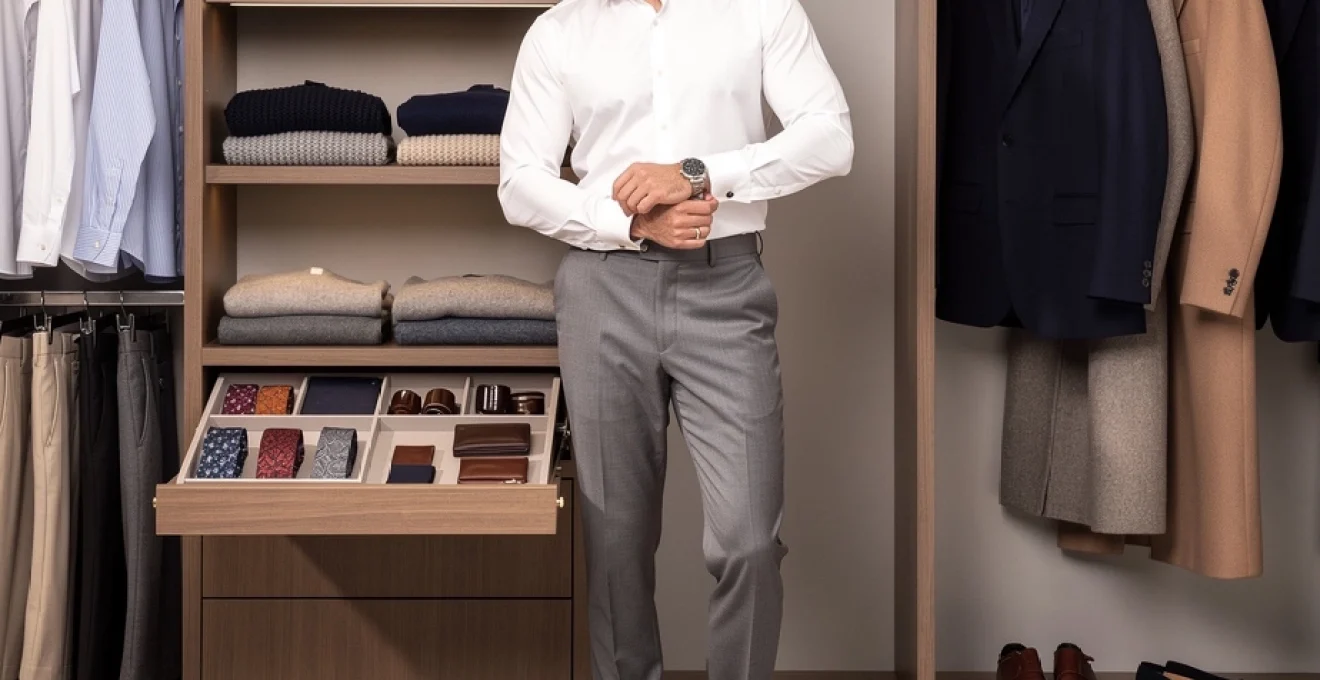
The foundation of exceptional personal style rests upon carefully chosen garments that demonstrate both quality and versatility. Modern gentlemen understand that building a refined wardrobe transcends fleeting fashion trends, requiring instead a strategic investment in timeless pieces that offer enduring sophistication. The pursuit of sartorial excellence begins with understanding the fundamental components that form the backbone of masculine elegance.
Quality menswear essentials serve as building blocks for countless outfit combinations, ensuring that every ensemble projects confidence and refinement. From the boardroom to weekend gatherings, these carefully selected pieces adapt seamlessly to diverse occasions whilst maintaining their inherent character. The discerning individual recognises that true style emerges from the harmonious integration of exceptional craftsmanship, thoughtful design, and personal expression.
Foundation garments: premium cotton dress shirts and tailored trousers
The cornerstone of any distinguished wardrobe lies in the selection of premium foundation garments that provide both comfort and visual appeal. Quality dress shirts and well-tailored trousers form the essential framework upon which sophisticated styling builds. These fundamental pieces require careful consideration of construction techniques, fabric specifications, and fit parameters to ensure they perform admirably across diverse professional and social contexts.
Thomas pink and turnbull & asser spread collar construction techniques
Premium shirtmaking demands meticulous attention to collar construction, where the spread collar represents the pinnacle of versatile design. Thomas Pink employs seven-fold construction techniques that create natural roll and structure without excessive stiffness. The collar’s foundation utilises canvas interlining that maintains shape whilst allowing natural movement, ensuring the collar sits properly against the neck throughout extended wear.
Turnbull & Asser’s approach to spread collar construction incorporates traditional hand-padding techniques that create subtle volume and presence. Their methodology employs graduated interlining weights, with heavier canvas at the collar points transitioning to lighter materials along the neckband. This technique ensures the collar maintains its intended silhouette whilst preventing the harsh, artificial appearance common in machine-made alternatives.
Savile row trouser fit analysis: flat front versus pleated silhouettes
Contemporary trouser design centres on the fundamental choice between flat front and pleated configurations, each offering distinct advantages for different body types and styling preferences. Flat front trousers present a cleaner, more streamlined silhouette that complements modern tailoring aesthetics. This configuration works particularly well for individuals with slimmer builds, as it avoids additional fabric volume around the waistline.
Pleated trouser designs, traditionally featuring single or double pleats, provide enhanced comfort and freedom of movement whilst creating a more relaxed silhouette. Single pleats offer subtle volume enhancement suitable for most occasions, whilst double pleats create more dramatic drape favoured in traditional English tailoring. The choice between these configurations depends largely on personal preference, body type, and intended formality level.
Fabric weight specifications: 120s-180s thread count cotton shirting
Understanding cotton shirting thread counts proves essential for selecting garments that balance durability with comfort and appearance. The 120s thread count represents the baseline for quality dress shirting, offering excellent durability and wrinkle resistance suitable for daily business wear. These fabrics typically weigh between 4.5-5.5 ounces per square yard, providing substantial feel without excessive bulk.
Higher thread counts, ranging from 140s to 180s, offer increasingly refined hand feel and lustrous appearance. However, these finer fabrics require more careful handling and may show wear more readily with frequent use. The optimal choice balances personal preferences for texture and appearance against practical considerations of maintenance and longevity.
Anderson & sheppard trouser break classifications and hemming methods
Proper trouser length directly impacts the overall sophistication of tailored ensembles, with Anderson & Sheppard’s classification system providing clear guidance for achieving optimal proportions. The quarter break creates a subtle horizontal crease where the trouser leg meets the shoe, offering contemporary elegance without appearing overly casual. This length works exceptionally well with modern
tailoring, particularly when paired with slimmer leg openings and contemporary footwear. A half break, by contrast, introduces a more pronounced crease that covers part of the shoe lacing, lending itself to classic business attire and slightly fuller cuts. Full break hems, which create deeper folds on the vamp, suit traditional or vintage-inspired wardrobes but can appear heavy if combined with narrow trousers or lightweight fabrics.
Anderson & Sheppard typically favour hand-finished hemming methods, including blind stitching that conceals threadwork from the exterior. This approach preserves the clean line of the trouser while allowing future alterations should your preferred hem height change. Cuff options, usually 4-5 cm in depth, add visual weight to flannel or heavier worsted wool trousers and help them drape more cleanly. For a truly versatile menswear wardrobe, many gentlemen maintain at least one pair of cuffed trousers for winter and one uncuffed pair for streamlined, formal looks.
Outerwear investment pieces: blazers, overcoats and technical weather protection
Once you have refined your foundation garments, the next step in building a versatile menswear wardrobe is selecting outerwear that bridges multiple dress codes and seasons. Investment pieces such as navy blazers, wool overcoats, and technical weatherproof jackets serve as functional armour against the elements while reinforcing a polished aesthetic. Thoughtful choices in construction, fabric technology, and weight gradation ensure that each garment earns its place through frequent, comfortable wear.
High-quality outerwear acts much like architecture in a cityscape: it frames everything around it and often forms the first impression. A carefully tailored blazer can transform denim and a polo into a business-casual uniform, while a structured overcoat lends gravitas to even the simplest knitwear. Technical outerwear, conversely, allows you to navigate inclement weather without sacrificing style, proving that performance fabrics and refined menswear can coexist in a single, coherent wardrobe.
Navy blazer construction: unstructured versus half-canvas techniques
The navy blazer remains the quintessential menswear essential, prized for its ability to move effortlessly from office settings to social engagements. When selecting a blazer for a refined wardrobe, understanding the difference between unstructured and half-canvas construction is crucial. Unstructured blazers dispense with heavy padding and internal canvassing, resulting in a softer, more relaxed silhouette ideally suited to smart-casual environments and travel.
Half-canvas construction, by contrast, incorporates a layer of horsehair or similar canvas running from the shoulder through the chest, providing structure where it matters most while leaving the lower half of the jacket lighter. This hybrid method delivers superior drape and lapel roll compared with fused jackets, yet remains more breathable and flexible than fully canvassed tailoring. For many modern professionals, a half-canvas navy blazer in a mid-weight wool or wool-cashmere blend represents the optimal balance between formality, durability, and comfort.
Which construction should you prioritise if you are building your wardrobe from scratch? If your lifestyle leans heavily toward business environments, a half-canvas blazer offers the sharper line and longevity you require. If, however, you dress predominantly in smart-casual attire and value comfort above all, an unstructured blazer in hopsack or high-twist wool will integrate more naturally with chinos, knitwear, and premium denim. In practice, many refined wardrobes eventually include one of each, allowing you to calibrate your level of formality with ease.
Crombie and private white v.c. overcoat fabric technologies
A well-chosen overcoat serves as the crowning layer of a sophisticated winter wardrobe, concealing and protecting your tailored garments while projecting composed elegance. Heritage makers such as Crombie and Private White V.C. have refined overcoat fabric technologies over decades, combining robust wool coatings with weather-resistant treatments and thoughtful linings. The result is outerwear that withstands harsh conditions yet remains comfortable during daily commutes and formal events alike.
Crombie traditionally favours dense, tightly woven wool and wool-cashmere blends in the 16-20 oz range, engineered to block wind and retain warmth without bulk. These fabrics often incorporate milled finishes that create a soft hand feel while increasing resistance to light rainfall. Private White V.C., drawing on its Manchester manufacturing heritage, integrates contemporary cloth innovations such as showerproof wool melton and recycled cashmere blends, often paired with technical linings that enhance breathability and temperature regulation.
From a practical perspective, your first overcoat should ideally be cut in a versatile colour such as navy, charcoal, or camel and designed to fit comfortably over a suit jacket. Pay attention to armhole height, sleeve width, and back vent configuration; higher armholes and a single or centre vent typically offer better mobility in urban environments. By investing in one exceptional overcoat rather than several mediocre options, you not only reduce wardrobe clutter but also ensure that your cold-weather uniform always communicates refinement.
Barbour waxed cotton engineering and dwr treatment applications
While wool overcoats handle formal duties, a refined yet practical menswear wardrobe also benefits from a technical weatherproof jacket for casual and outdoor use. Barbour’s iconic waxed cotton designs illustrate how engineering and finishing treatments can transform traditional fabrics into high-performance outerwear. The brand’s signature thornproof waxed cotton combines densely woven cotton with a paraffin-based wax coating, creating a barrier that repels rain and wind while remaining repairable over time.
Modern technical outerwear often supplements traditional wax finishes with DWR (Durable Water Repellent) treatments applied at the fibre level. These chemical coatings cause water to bead and roll off the surface, improving resistance to saturation without the heavy, oily feel of older waxes. Barbour and comparable makers now blend classic waxing techniques with DWR applications on performance linings or reinforcement panels, striking a balance between heritage aesthetics and contemporary comfort.
When evaluating technical jackets for your wardrobe, consider how often you will wear them in truly severe weather versus light showers. Frequent exposure to heavy rain may justify a more robust waxed cotton or membrane-lined shell, while urban commuters often benefit from lighter DWR-treated fabrics that breathe more effectively. Remember that, unlike fast-fashion raincoats, quality waxed pieces can be reproofed and repaired, making them long-term companions rather than disposable purchases.
Seasonal weight gradation: 12oz-16oz wool coating specifications
To ensure your outerwear remains comfortable and functional throughout the year, it is useful to think in terms of seasonal weight gradation. Wool coatings in the 12-16 oz range generally offer the best compromise between insulation and wearability for temperate climates. At approximately 12 oz, you will find lighter topcoats and car coats suited to autumn and early spring, often unlined or half-lined for improved breathability.
As you move toward 14-16 oz fabrics, typically used in classic Chesterfield or guards coats, warmth and wind resistance increase significantly. These weights pair particularly well with suiting and heavier knitwear during winter, maintaining structure without excessive stiffness. For most metropolitan professionals, one mid-weight overcoat around 14 oz, complemented by a lighter 10-12 oz blazer or mac, will address the majority of seasonal outerwear needs.
How can you apply these specifications in practice? When trying on coats, note not only the immediate warmth but also how the fabric behaves as you walk, sit, and climb stairs. An overly heavy cloth may feel reassuring in the shop yet become fatiguing during long commutes, while a coat that is too light may require excessive layering. By calibrating fabric weight to your climate and daily routine, you ensure your outerwear supports rather than hinders your refined wardrobe.
Footwear architecture: goodyear welted oxfords and derby construction
No discussion of a versatile menswear wardrobe is complete without addressing footwear, the literal foundation upon which every outfit rests. High-quality shoes not only elevate the visual impact of your ensembles but also deliver superior comfort and longevity when constructed correctly. Goodyear welted Oxfords and Derbies remain the gold standard for refined footwear architecture, offering resoleable designs that can easily exceed a decade of service with proper care.
In Goodyear welt construction, a strip of leather (the welt) is stitched to both the upper and a rib on the insole, creating a cavity that is filled with cork before the outsole is attached. This method provides excellent water resistance, structural integrity, and the ability to replace worn soles without disturbing the upper. Oxfords, characterised by closed lacing, present the most formal and streamlined profile, ideal for suits and business attire. Derbies, with their open lacing system, offer slightly more volume over the instep and pair well with chinos, flannels, and smart denim.
When building a minimal yet refined shoe rotation, many experts recommend starting with three pairs: a black cap-toe Oxford for formal and conservative business settings, a dark brown Derby or Oxford for smart-casual versatility, and a pair of high-quality leather or suede boots for inclement weather. Each pair should feature full-grain leather uppers, leather linings, and robust leather or Dainite-style rubber soles. By prioritising fit and construction quality over trend-led design, you avoid the trap of disposable footwear and establish a coherent foundation for every season.
Knitwear layering systems: merino wool and cashmere blend technologies
Effective layering is central to a versatile menswear wardrobe, allowing you to adapt seamlessly to changing temperatures and levels of formality. Premium knitwear, particularly pieces crafted from merino wool and cashmere blends, provides lightweight warmth, breathability, and a refined visual texture that complements tailoring. A well-curated knitwear system functions rather like a set of precision tools: each piece serves a specific purpose while remaining compatible with the others.
Merino wool, renowned for its fine fibres and natural elasticity, excels in mid-layer garments such as crewneck and V-neck sweaters, quarter-zip pullovers, and knitted polos. Its thermoregulatory properties help maintain a comfortable microclimate next to the skin, wicking moisture and resisting odours more effectively than synthetic alternatives. Cashmere, with its exceptional softness and insulating power, is often blended with merino (for example, in 70/30 or 80/20 ratios) to create knits that feel luxurious yet retain structure and resilience.
Which knitwear silhouettes offer the greatest versatility for a refined wardrobe? Many men find that a trio comprising a fine-gauge crewneck, a V-neck, and a cardigan in neutral tones (navy, charcoal, and mid-grey) covers most needs. The crewneck pairs effortlessly with dress shirts and blazers, the V-neck accommodates ties for business environments, and the cardigan acts as an adjustable layer over T-shirts or poplin shirts on casual days. By selecting consistent yarn weights—typically 12-16 gauge for office-friendly knits—you ensure that each piece can be layered without bulk.
Accessory integration: silk neckwear, leather goods and timepiece coordination
Accessories are the finishing touches that transform solid wardrobe foundations into distinctive personal style. Thoughtfully chosen silk ties, leather belts and wallets, and well-coordinated timepieces add nuance and depth to even the simplest combination of shirt and trousers. The key is restraint: in a refined wardrobe, each accessory should enhance the ensemble rather than compete for attention, much like carefully placed punctuation in a well-crafted sentence.
When integrating accessories into your daily outfits, consider them as part of a coherent visual language. Repeating or echoing elements—such as matching leather tones between shoes and belt, or complementing tie colours with pocket squares—creates harmony without appearing overly contrived. Over time, you may develop a small yet highly effective rotation of favourite pieces that reflect your personality while remaining appropriate for professional environments.
Hermès and drake’s silk weaving patterns for professional environments
Silk neckwear remains one of the most immediate ways to express individuality within the constraints of a business dress code. Houses such as Hermès and Drake’s have elevated tie-making to an art form, combining meticulous silk weaving techniques with distinctive patterns that remain suitable for professional settings. Hermès is renowned for its intricate jacquard and print designs, often featuring geometric motifs or understated re-interpretations of equestrian themes, all rendered in precisely calibrated colour palettes.
Drake’s, born from the British tradition of printed scarves and ties, favours slightly more textured silks and designs that bridge formal and casual worlds. Their ancient madder, repp stripes, and small foulard patterns sit comfortably with navy suits yet can also be dressed down with tweed jackets and flannel trousers. In both cases, the weaving and printing processes prioritise depth of colour, soft hand feel, and knot stability, ensuring that the tie drapes attractively and resists creasing throughout the day.
How many ties does a modern professional truly need? For a refined, versatile wardrobe, a core selection of six to eight ties—incorporating solids, subtle patterns, and one or two seasonal designs—often suffices. Focus on navy, burgundy, forest green, and muted earth tones, avoiding overly glossy finishes or loud motifs. Remember that, as with all quality menswear essentials, fewer exceptional pieces worn frequently deliver far more value than an overflowing rack of seldom-used options.
Horween shell cordovan belt and wallet patina development
Leather goods, particularly belts and wallets, play a quiet yet significant role in your overall appearance. Investing in high-quality leather such as Horween shell cordovan provides not only durability but also the pleasure of observing patina development over time. Unlike standard calfskin, shell cordovan is cut from a dense membrane beneath the hide, resulting in a uniquely smooth, glassy surface that creases minimally and ages with remarkable character.
When used for belts and small leather goods, shell cordovan gradually develops depth of colour and subtle rippling rather than the pronounced wrinkling seen in other leathers. A deep burgundy or dark brown cordovan belt paired with matching shoes anchors tailored outfits and smart-casual looks alike, while a slim cordovan wallet resists deformation even after years of daily use. Much like a well-loved watch strap, these items become visual diaries of your daily life, acquiring unique markings that mass-produced synthetic accessories can never replicate.
To maintain and enhance this patina, apply a small amount of neutral or colour-matched cream polish periodically, buffing with a soft cloth to restore lustre. Avoid over-conditioning, which can saturate the leather unnecessarily, and allow pieces to rest between wears. By treating belts and wallets with the same respect as your shoes, you extend their lifespan and reinforce the cohesive, considered nature of your refined wardrobe.
Swiss automatic movement integration with business dress codes
A well-chosen wristwatch remains one of the most powerful expressions of personal style within a professional context. Swiss automatic movements—mechanical calibres that wind themselves via the motion of your wrist—embody the same emphasis on craftsmanship and longevity that underpins a refined menswear wardrobe. Whether housed in a minimalist dress watch or a versatile sports model, an automatic timepiece signals an appreciation for engineering and tradition.
How do you integrate such a watch with various business dress codes? For formal and conservative environments, a slim stainless steel or precious metal watch on a leather strap, with a clean dial and minimal complications, pairs effortlessly with suits and French cuff shirts. In more relaxed offices, a steel sports watch or integrated-bracelet design can bridge the gap between tailoring and business-casual outfits, particularly when its proportions are kept modest (typically 38-40 mm in diameter).
Coordinating metal tones and strap colours with your other accessories helps maintain visual harmony. For example, a brown leather strap complements brown shoes and belts, while a black strap aligns more naturally with eveningwear and monochrome palettes. Rather than amassing a large collection, most men will find that two or three thoughtfully selected Swiss automatic watches—perhaps a dress piece, a water-resistant everyday model, and a more robust weekend watch—offer all the versatility they require.
Wardrobe mathematics: cost-per-wear analysis and seasonal rotation strategies
Building a refined wardrobe with versatile menswear essentials is as much a financial strategy as it is an aesthetic one. To ensure that your investments deliver genuine value, it is helpful to adopt a cost-per-wear mindset. Instead of fixating on the upfront price of a garment, consider how many times you realistically expect to wear it and divide the purchase cost by that number. A pair of Goodyear welted shoes worn twice a week for five years may ultimately prove far less expensive per wear than a cheaper alternative that fails within a single season.
For example, imagine two blazers: one purchased for a modest sum that loses its shape after a year, and another from a reputable maker that costs twice as much but remains sharp for a decade. If the first blazer is worn 50 times before retirement, its effective cost-per-wear is relatively high. The second, worn 300 times over ten years, may actually represent the more economical choice despite the higher initial outlay. By applying this simple calculation across suits, shirts, outerwear, and footwear, you gain clarity on where to allocate your budget for maximum long-term benefit.
Seasonal rotation strategies further extend the lifespan of your garments while keeping your wardrobe feeling fresh. Rather than subjecting the same pieces to constant wear, organise your clothes into capsule clusters by season—spring/summer and autumn/winter—storing off-season items in breathable garment bags or boxes. This not only reduces daily decision fatigue but also allows fabrics time to rest and recover, particularly in the case of tailored wool and leather shoes that benefit from intermittent use.
How can you implement rotation without overcomplicating your routine? One effective approach is to create a simple table or list outlining your core categories and ideal quantities for each season:
| Category | Spring/Summer | Autumn/Winter |
|---|---|---|
| Dress Shirts | 6–8 lightweight cotton | 6–8 medium-weight cotton |
| Trousers | 2 chinos, 1 lightweight wool | 2 flannel, 1 heavier wool |
| Outerwear | 1 unstructured blazer, 1 technical jacket | 1 overcoat, 1 quilted or waxed jacket |
| Footwear | 1 leather sneaker, 1 brown Derby | 1 Oxford, 1 boot |
By reviewing this framework at the start of each season, you can identify gaps, prioritise repairs or alterations, and avoid redundant purchases. Over time, the combination of cost-per-wear analysis and deliberate rotation transforms your wardrobe from a collection of impulse buys into a curated system of reliable, hard-working garments. The result is not only a more sustainable and economical approach to dressing but also the quiet confidence that comes from knowing every piece you own has been chosen with intention and purpose.