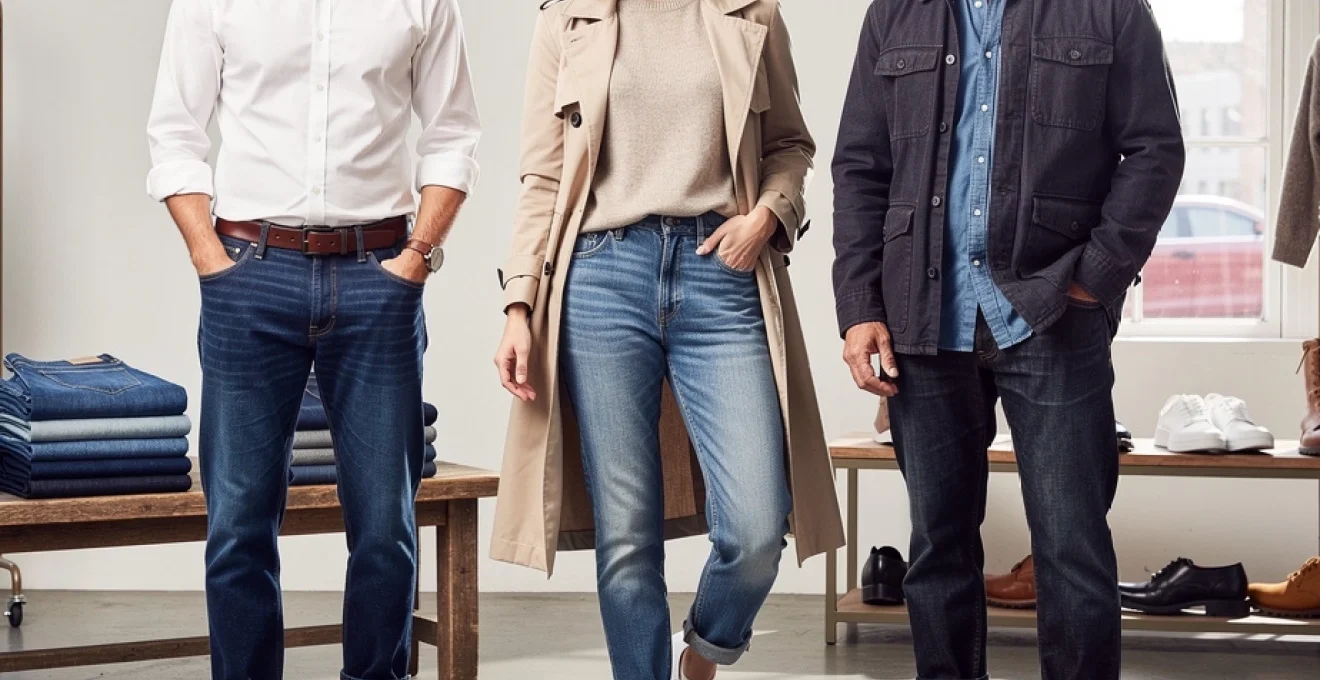
Raw and lightly faded denim represents the pinnacle of authentic style, offering endless possibilities for creating sophisticated yet relaxed looks. These versatile pieces have evolved from workwear essentials to fashion staples, demanding a nuanced understanding of their unique characteristics and styling potential. The art of wearing untreated denim lies in balancing its inherent ruggedness with contemporary fashion sensibilities, creating outfits that feel both timeless and current. Whether you’re drawn to the crisp structure of unwashed selvedge or the lived-in comfort of naturally faded pairs, mastering these styling fundamentals will elevate your wardrobe and personal aesthetic.
Understanding raw denim characteristics and selvedge construction
Raw denim’s appeal stems from its untreated nature, retaining the stiffness and deep indigo saturation that characterises quality selvedge construction. This premium fabric maintains its original weight and structure, creating distinctive fading patterns that develop uniquely based on individual wear patterns. The term « selvedge » refers to the self-finished edges produced on vintage shuttle looms, creating a tighter weave that prevents fraying whilst displaying the characteristic coloured thread along the outseam.
The construction process significantly influences how these jeans will age and style over time. High-quality raw denim typically features heavyweight cotton ranging from 13-21 ounces per square yard, with heavier weights providing more dramatic fading potential but requiring longer break-in periods. The rope-dyed indigo yarns create depth and richness that becomes more pronounced as the surface fibres wear away, revealing the white cotton core underneath.
Sanforized vs unsanforized denim shrinkage patterns
Understanding shrinkage characteristics proves essential for proper sizing and styling decisions. Sanforized denim undergoes pre-shrinking treatment, minimising dimensional changes after washing to approximately 3-5% shrinkage. This stability makes sanforized options ideal for those seeking consistent fit and styling predictability. The controlled shrinkage allows for more precise tailoring and reduces the risk of unexpected size changes that could affect your carefully planned outfits.
Unsanforized denim, conversely, can shrink significantly—often 8-12% in length and 3-6% in width—creating dramatic changes in fit and silhouette after first wash. This characteristic requires careful consideration when selecting initial size, as the post-shrink dimensions will determine long-term styling possibilities. Many enthusiasts prefer unsanforized options for their superior fading potential and authentic vintage characteristics, despite the sizing complexity.
Identifying cone mills and kuroki mills fabric weight specifications
Premium denim mills produce fabrics with distinct characteristics that influence styling approaches. Cone Mills, historically America’s premier denim producer, created fabrics known for their consistent weave and moderate slub patterns, making them excellent for versatile styling across casual and semi-formal contexts. Their 12-15 ounce weights offer optimal balance between structure and comfort, adapting well to various seasonal styling requirements.
Kuroki Mills represents Japanese craftsmanship at its finest, producing heavily textured fabrics with pronounced irregularities that create exceptional fading potential. Their heavier constructions, often exceeding 18 ounces, demand specific styling considerations but reward patient wearers with unparalleled character development. These fabrics work particularly well in heritage-inspired outfits where the denim’s substantial presence complements robust accessories and footwear.
Recognising authentic selvedge ID markers from red wing heritage to pure blue japan
Selvedge identification threads serve both functional and aesthetic purposes, helping you identify fabric origins whilst adding subtle colour accents to cuffed styling. Red Wing Heritage collaborations typically feature brown or tan ID threads that complement their leather goods naturally, making them excellent choices for cohesive workwear-inspired outfits. The warm tones pair beautifully with earth-toned accessories and traditional Americana styling elements.
Pure Blue Japan’s distinctive blue and white striped selvedge creates striking visual contrast when cuffed, adding sophisticated detail to minimalist outfits. Their unique dyeing processes produce fabrics that fade to electric blue tones rather than traditional indigo progression, requiring careful colour coordination with complementary
neutrals like grey, white, and navy. When you cuff Pure Blue Japan jeans to show off that selvedge ID, keep the rest of your outfit streamlined—think plain tees, simple knitwear, and clean sneakers—so the denim remains the focal point rather than competing with loud graphics or clashing colours.
Evaluating indigo rope-dyeing fade potential in kaihara and white oak fabrics
Indigo rope-dyeing is at the heart of how raw denim fades, and different mills approach the process in subtly distinct ways. Kaihara, one of Japan’s most respected mills, is known for meticulous rope-dyeing with multiple dip cycles, creating deep indigo yarns with a slightly slower, more nuanced fade. This means your raw or slightly faded Kaihara jeans will develop smooth gradients and soft contrasts, ideal if you prefer a refined, vintage-inspired patina rather than ultra-high-contrast lines. Because the dye penetrates a bit more deeply, you can style these jeans in smarter casual outfits for longer before they look overly distressed.
White Oak (Cone Mills’ iconic plant, now closed but still widely worn on the second-hand and deadstock markets) produced rope-dyed denim with a distinctive balance between surface saturation and core whiteness. The result is often faster-emerging whiskers and honeycombs, with pronounced contrast after a few months of regular wear. For styling, this makes White Oak denim perfect for rugged, Americana looks where you want visible character even in relatively young jeans. If you’re choosing between Kaihara and White Oak fabrics, ask yourself: do you want jeans that stay dark and versatile for office-adjacent outfits, or do you prefer quicker, bolder fades that lean into casual, worn-in authenticity?
From a technical standpoint, you can think of rope-dyeing like glazing a ceramic mug: multiple thin coats sit on the surface rather than soaking all the way through. The thinner and more superficial those coats, the faster they chip and reveal the “clay” beneath—in denim, that’s the white cotton core. Mills like Kaihara and White Oak adjust dip counts, dwell times, and oxidation intervals to fine-tune this balance, which is why two pairs of raw jeans can age in radically different ways under identical wear patterns. Understanding these differences helps you choose the right raw or slightly faded jeans for how you actually live and dress day to day.
Essential styling techniques for untreated and lightly faded denim
Once you understand how your raw or slightly faded jeans are built, the next step is learning how to style them so they look intentional rather than random. Untreated denim has a stiffness and visual weight that can overwhelm an outfit if you’re not careful, while lightly faded jeans introduce a more relaxed, casual energy. The goal is to let the denim’s character shine without creating imbalance in your silhouette or colour palette. By mastering a few core techniques—cuffing, proportion, colour coordination, and layering—you can wear the same pair of jeans across vastly different contexts with ease.
Think of raw denim as the foundation of a building: if the base is heavy and solid, everything you stack on top needs to feel structurally coherent. A flimsy, ultra-light shirt with heavyweight jeans can look top-light, just as bulky outerwear with thin, pale denim can make you appear bottom-light. You don’t need a huge wardrobe to get this right; you just need to understand how each piece interacts with the density, colour, and texture of your jeans. From there, dressing becomes less about strict rules and more about subtle adjustments to achieve balance.
Cuffing methods: single turn vs double roll for selvedge display
Cuffing is one of the simplest ways to style raw or slightly faded jeans, but it has a noticeable impact on the overall look. A clean single turn cuff—one wide fold of 2–3 cm—works best when you want a minimal break at the ankle and a discreet flash of selvedge ID. This approach suits smarter casual outfits with Chelsea boots, slim sneakers, or loafers where you want a sharp, uninterrupted leg line. It also works well with slightly faded denim, allowing the fade to remain the star while the cuff adds just enough detail.
A double roll creates a more pronounced, rugged effect and is ideal when you really want to show off the selvedge edge. Rolling the hem twice (each roll around 2–3 cm) introduces a visible band of contrast at the ankle, drawing the eye toward your footwear. This method pairs particularly well with work boots, moc-toes, or chunky trainers and leans into a more heritage-inspired or streetwear-driven aesthetic. The trade-off is that the leg can appear slightly shorter, so double cuffs tend to flatter medium to taller heights or those wearing higher-rise jeans.
When deciding between single and double cuffs, consider both your inseam and the weight of the denim. Heavier raw denim holds a crisp cuff like folded cardboard, which can look sharp in a single turn but blocky if rolled several times. Lighter weight or more broken-in jeans accept multiple rolls more gracefully, creating a softer, more relaxed profile. If you’re unsure, start with a single turn for smarter outfits and reserve the double roll for weekends or more casual looks; over time, you’ll instinctively know which cuff echoes the mood you’re aiming for.
Proportional balancing with slim fit vs relaxed tapered silhouettes
Fit is arguably the most critical styling variable when working with raw or slightly faded denim. Slim fits—close through the thigh with a gentle taper to the ankle—offer the most versatility for everyday outfits and transition seamlessly between office, date night, and casual settings. They work especially well with structured pieces like blazers, oxford shirts, and slim knitwear, creating a clean vertical line that flatters most average builds. If you’re wearing heavier raw denim, a slim cut also helps prevent the jeans from feeling bulky or overpowering.
Relaxed tapered silhouettes, on the other hand, deliver a more contemporary, comfort-forward look: more room through the seat and thigh, narrowing below the knee. This shape is perfect if you prefer oversized hoodies, boxy tees, or chore jackets, as it keeps the overall silhouette coherent and modern. The key is balance—pairing baggy tops with ultra-wide jeans can make you look swallowed by fabric, while tight tops with very loose jeans exaggerate the lower body. A relaxed tapered pair bridges that gap, giving you ease and movement without sacrificing shape.
When choosing between slim and relaxed tapered for raw denim, think about your footwear and your lifestyle. Do you mostly wear sleek sneakers or dress shoes? A slim fit will likely integrate more discretely with those proportions. Do you lean toward boots, chunky sneakers, and layered streetwear? A relaxed taper will feel more natural. Like adjusting the camera angle in a photograph, small changes in fit can radically transform how your body appears in clothes, so it’s worth investing time to find the silhouette that works best for you.
Colour coordination strategies for deep indigo and vintage wash tones
Raw and slightly faded jeans sit at different points on the colour spectrum, and each requires a distinct approach to outfit coordination. Deep indigo raw denim behaves almost like a neutral navy trouser, pairing easily with white, grey, black, camel, olive, and muted earth tones. Because the colour is saturated, it anchors brighter or lighter pieces above the waist, allowing you to experiment with bolder shirts or outerwear without the outfit feeling chaotic. This makes raw jeans especially effective in smart casual looks where you want polish without abandoning denim entirely.
Slightly faded or “vintage wash” jeans introduce a softer, more relaxed mood that naturally complements light neutrals and pastels. Think off-white tees, pale blue oxfords, oatmeal sweaters, and light grey hoodies—tones that echo the faded indigo without matching it exactly. If you want to create a cohesive, elevated look, limit your palette to three main colours and one accent; for example, light blue jeans, white tee, navy overshirt, and tan boots. This restrained approach keeps the eye moving smoothly across the outfit rather than getting stuck on competing hues.
It can help to think of deep indigo as an evening sky and vintage fades as early-morning light. With the “night” of deep indigo, stars (your shirts, knits, and jackets) need to shine a bit brighter or more crisply to stand out: stripes, textures, and structured jackets work beautifully. With vintage wash tones, everything softens; subtle textures and tonal combinations feel more at home than stark contrasts. Ask yourself what message you want your jeans to send—structured and refined or easy and approachable—and then let your colour choices amplify that message.
Layering fundamentals with raw denim stiffness considerations
Raw denim’s stiffness is both a blessing and a challenge when it comes to layering. On the plus side, the rigid fabric creates sharp lines and a strong silhouette that can support more substantial outerwear like leather jackets, wool overcoats, and denim or canvas truckers. The downside is that pairing very stiff jeans with tight, rigid tops can restrict movement and feel uncomfortable, especially in transitional seasons. To avoid this, balance the density of your jeans with slightly softer layers above—think mid-weight sweatshirts, flannels, or merino knits that drape without clinging.
With slightly faded jeans that have already softened, you have more freedom to experiment with lighter layers and casual combinations. A chambray shirt over a tee, a cardigan under a field jacket, or a hoodie beneath a chore coat all sit happily on top of broken-in denim. The key is to keep the visual weight proportional: a heavy parka with ultra-light jeans can look top-heavy, whereas a medium-weight bomber or coach jacket often hits the sweet spot. When in doubt, mirror the approximate weight of the denim in your mid-layer or outer layer so the outfit feels cohesive.
Layering with raw denim is a bit like building a sandwich: if the bread is very crusty, the filling needs to be soft enough to bite through comfortably. Similarly, if your jeans are new, stiff, and heavyweight, look for tops with some give and texture—French terry, brushed cotton, or wool blends—to make the outfit wearable for longer stretches. Over time, as the denim breaks in and becomes more flexible, you can gradually introduce sharper, more structured pieces without sacrificing comfort.
Strategic footwear pairing for raw and faded denim aesthetics
Footwear can completely transform how raw or slightly faded jeans read in an outfit, often more than any other single element. Heavy, structured boots reinforce the rugged character of raw denim, while clean sneakers or loafers can dress it up or pull it into a more contemporary space. With slightly faded jeans, shoe choice determines whether the look leans vintage, sporty, or quietly refined. Because jeans sit at the intersection of your upper and lower halves, the transition at the ankle is where the whole look either comes together or falls apart.
For raw, deep indigo denim, heritage boots—such as 6-inch moc-toes, cap-toe work boots, or engineer boots—create a classic, Americana-inspired aesthetic. These pairings emphasise the jeans’ weight and structure, making them ideal for colder seasons or outfits that lean into flannels, trucker jackets, and heavier knits. If you want the same jeans to feel more polished, switch to slim leather sneakers, minimal white trainers, or suede chukka boots. The crisp contrast of white sneakers against dark denim, in particular, remains a timeless combination that suits everything from simple tees to unstructured blazers.
Slightly faded or vintage wash jeans invite a broader range of footwear options. Retro running sneakers, canvas high-tops, espadrilles, and loafers all feel at home with softer indigo tones. For a subtle, elevated casual look, try pairing light fades with brown or tan loafers and a tucked-in oxford shirt—the lighter denim keeps the outfit relaxed, while the leather shoes and tuck sharpen the overall impression. On the other hand, pairing faded jeans with beat-up sneakers and oversized hoodies will push the look firmly into streetwear territory, which might be exactly what you want on off-duty days.
One simple rule helps tie everything together: the more contrast and structure your footwear has, the more structured the rest of your outfit should be. Chunky boots with a slim tee and nothing else can look visually unbalanced, just as ultra-minimal sneakers can feel underwhelming with heavily layered workwear. Use your shoes to echo the mood of your jeans—rugged with raw, relaxed with fades—and then reinforce that message with your choice of tops and outerwear.
Seasonal styling adaptations for heavyweight and lightweight denim
Denim weight plays a significant role in how comfortable and stylish you’ll feel across different seasons. Raw and slightly faded jeans can range from breezy 10–12 oz fabrics to dense 21 oz+ heavyweight constructions, and each weight class lends itself to specific styling strategies. Rather than forcing one pair of jeans to work year-round, it often makes sense to rotate between lighter and heavier pairs as the weather shifts. This not only improves comfort but also allows your raw denim to rest, extending its lifespan and creating more even fade patterns over time.
When planning your seasonal wardrobe around raw or slightly faded jeans, think in terms of fabric weight, breathability, and how easily layers can slide over or under the denim. Heavyweight jeans resist wind and hold their shape, making them ideal for cooler months but potentially stifling in summer. Lightweight and mid-weight pairs, especially those made from open-weave selvedge or chambray blends, excel in spring and summer when airflow is crucial. By aligning denim weight with climate, you avoid the common mistake of wearing beautiful jeans that are simply too hot or too cold for the moment.
Spring styling with 12-14oz denim weight classifications
Spring is where mid-weight denim—typically in the 12–14 oz range—really shines. These fabrics offer enough structure to hold crisp lines and develop satisfying fades, while remaining flexible and breathable as temperatures fluctuate. Raw jeans in this weight class pair effortlessly with lightweight knits, overshirts, and unlined jackets, allowing you to adapt quickly to chilly mornings and warmer afternoons. Slightly faded versions of the same weight will feel even more comfortable and relaxed, ideal for casual weekend outfits.
Styling mid-weight raw denim in spring is largely about smart layering. A white or ecru tee under a chambray or Oxford shirt, topped with a light bomber or Harrington jacket, gives you multiple options as the day warms up. Footwear can range from leather sneakers and low-profile boots to loafers without feeling seasonally out of place. Because 12–14 oz denim has a moderate visual weight, it pairs equally well with heavier textures (like knitwear) and lighter materials (like cotton twill), making it one of the most versatile choices for this transitional season.
If your mid-weight jeans are only slightly faded, they can help bridge the gap between winter’s darker palette and summer’s lighter tones. Pair them with pastel or muted-colour shirts—sage green, dusty pink, or light blue—to nod to spring without veering into overly bright territory. The balance of medium-weight fabric and softly shifting colours creates outfits that feel intentional and seasonally appropriate without requiring a completely new wardrobe.
Summer approaches using chambray and lightweight selvedge options
In summer, comfort becomes the priority, and that’s where chambray and lightweight selvedge denim come into their own. Fabrics in the 9–12 oz range, especially those woven with a looser structure or blended with softer cotton varieties, allow for better air circulation and easier movement. Raw versions in this weight can still develop pleasing fades, but they won’t feel like wearing armour on a hot day. Slightly faded lightweight jeans, in particular, capture that sun-bleached, laid-back look that pairs so well with simple tees and minimal footwear.
When styling lightweight raw or faded jeans in summer, keep the rest of your outfit equally breezy. Opt for short-sleeve button-ups, linen or cotton tees, and unlined overshirts rather than heavy flannels or jackets. Footwear should follow suit: canvas sneakers, espadrilles, sandals, and suede loafers all complement the airy feel of lighter denim. If you still want to cuff your jeans to show selvedge, consider a small, single turn to avoid trapping heat around the ankle.
Chambray, while technically a different weave from denim, offers a similar indigo aesthetic in a much lighter package and can be styled almost interchangeably with very light denim. Wearing a chambray shirt with slightly faded jeans creates a tonal, double-denim effect that’s softer and more relaxed than pairing two heavy denim pieces. Think of summer styling as turning down both the physical and visual “temperature” of your wardrobe: lighter weights, lighter colours, and simpler layers will help your raw or slightly faded jeans feel effortless rather than oppressive.
Autumn layering with 21oz+ heavyweight constructions
Autumn is heavyweight raw denim’s natural habitat. Fabrics in the 18–21 oz+ range provide insulation, structure, and dramatic fading potential, but they also demand thoughtful styling to avoid feeling rigid or bulky. As temperatures drop, that stiffness becomes an asset, giving your jeans a sculptural presence that pairs beautifully with wool coats, leather jackets, and hefty knitwear. Slightly faded heavyweights, meanwhile, showcase rich, high-contrast patterns that look particularly striking under the softer, diffused light of autumn.
To style heavyweight denim effectively in autumn, build your outfits from the bottom up. Start with robust footwear—work boots, service boots, or substantial derbies—and then layer up with dense fabrics that can stand up to the jeans’ weight: flannels, shawl-collar cardigans, and waxed cotton or canvas jackets. A higher rise and fuller thigh can improve comfort with stiff fabrics, especially when you’re sitting for extended periods. Cuffing is optional but often looks excellent with heavyweight denim, as the thicker fabric holds a structured roll that frames your boots.
Because heavy raw denim can feel like “armour,” counterbalancing it with softer textures near the face helps keep the look approachable. A brushed wool beanie, scarf, or textured knit adds warmth and tactile contrast, making the outfit feel intentional rather than severe. If your heavyweight jeans are only lightly faded, they’re also an excellent choice for dressier autumn looks: pair them with a tweed blazer, oxford shirt, and leather boots for a smart-casual ensemble that reads both rugged and refined.
Accessory integration and hardware coordination principles
Accessories and hardware might seem secondary, but they play a crucial role in styling raw and slightly faded jeans. Belts, watches, bags, and even jacket buttons all interact with the denim’s texture, colour, and overall mood. When chosen thoughtfully, these details create visual continuity from head to toe, making your outfit feel cohesive rather than pieced together. Because raw denim is so material-driven, pairing it with equally considered accessories can elevate even the simplest combination of jeans and a tee.
A leather belt is often the first accessory to coordinate with raw or faded denim. For deep indigo jeans, mid- to dark-brown leather complements the blue tones and echoes traditional workwear aesthetics, especially when matched to boots or shoes in a similar shade. Lightly faded jeans can handle a broader range of leathers—from tan and natural veg-tan to darker browns—depending on whether you want to push the look toward vintage, rugged, or refined. In general, aim to match belt and shoe colour families for tucked-in looks, while being more flexible when shirts are worn untucked.
Metal hardware is another subtle but important consideration. The rivets and buttons on your jeans might be copper, brass, or nickel, and aligning your watch, jewellery, and bag hardware with these tones can create a quiet sense of harmony. For example, brass buckles and a brass watch complement copper or brass rivets, while silver-toned hardware pairs better with nickel buttons. You don’t need to match everything perfectly, but intentionally repeating one metal colour two or three times in an outfit helps pull the look together.
Bags and outer accessories, such as caps or scarves, should also be chosen with the denim’s character in mind. A canvas tote or waxed-cotton backpack feels natural with raw selvedge and workwear boots, whereas a slim leather briefcase or minimal backpack aligns better with cleaner, smart-casual outfits. With slightly faded jeans, textured accessories like wool caps, knit scarves, and vintage-inspired watches fit the relaxed mood. Think of accessories as the “punctuation” of your outfit: they might be small, but they change how the whole sentence reads.
Maintenance protocols for preserving fade development and fabric integrity
How you care for raw and slightly faded jeans has a direct impact on both their appearance and their lifespan. Maintenance is less about strict rules and more about understanding the trade-offs between crisp fades and long-term fabric integrity. Wearing your raw jeans for several months before the first wash can intensify contrast in the whiskers and honeycombs, but waiting too long can allow dirt and oils to weaken fibres, especially around stress points. The sweet spot for many people is to wear raw denim regularly for 3–6 months, then wash gently when the jeans start to feel grimy rather than following a rigid calendar.
When you do wash, turn the jeans inside out, use cold water, and choose a mild detergent formulated for dark fabrics to minimise indigo loss. Hand-washing in a bathtub or using a delicate machine cycle helps reduce abrasion, preserving both the surface dye and the selvedge edge. Avoid fabric softeners, as they can coat fibres and affect how the denim creases and fades over time. After washing, hang your jeans to air dry—preferably flat or hung from the waistband—to maintain their shape and prevent excessive shrinkage.
Spot cleaning and airing out between washes can significantly extend the interval between full washes without compromising hygiene. A soft brush can remove surface dust, while a damp cloth with a tiny amount of detergent can tackle local stains. Hanging your jeans in a well-ventilated area, or even outside in the shade, helps eliminate odours naturally. Remember that denim behaves a bit like leather: it moulds to your body and tells the story of your habits, so aggressive cleaning can erase some of that history.
Repair and reinforcement are also key to maintaining both aesthetics and structural integrity. If you notice thinning at high-stress areas like the crotch, knees, or back pockets, consider having them reinforced by a skilled denim repair service before holes appear. Darning or patching from the inside can preserve the outer surface and fade patterns while extending the life of the jeans by years. Ultimately, the most stylish raw or slightly faded jeans are the ones you wear often and care for intentionally—because the more you invest in their upkeep, the more unique and personal they become.