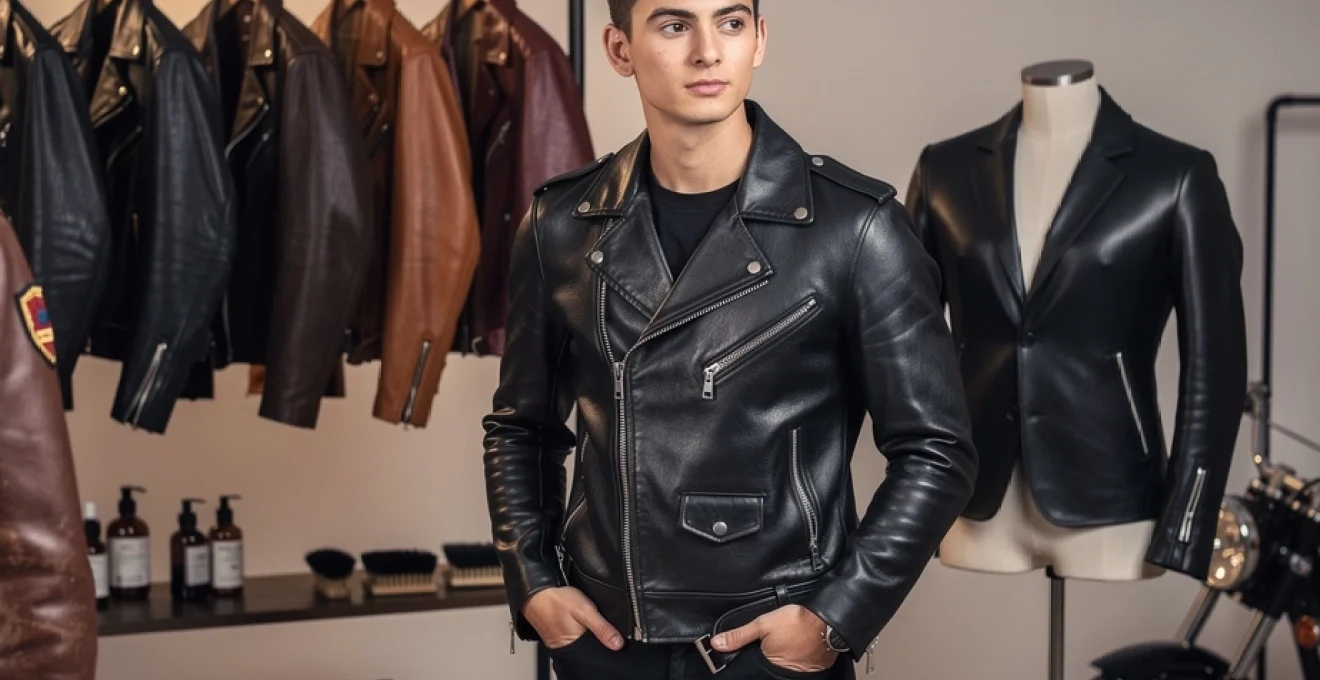
The leather jacket stands as one of fashion’s most enduring icons, transcending decades, cultures, and style movements with remarkable consistency. While countless trends have risen and fallen, this singular garment has maintained its relevance across generations, evolving from functional military wear to a symbol of rebellion, sophistication, and personal expression. The leather jacket’s journey through fashion history reveals a unique combination of practical design, cultural significance, and aesthetic appeal that continues to resonate with contemporary consumers. Its ability to adapt to changing tastes whilst retaining its core identity makes it an essential investment piece that defies the ephemeral nature of modern fashion cycles.
Historical evolution and cultural significance of leather jacket design
The transformation of leather jackets from utilitarian military gear to fashion staples represents one of the most fascinating evolutionary paths in clothing history. This progression demonstrates how functional design can transcend its original purpose to become a powerful cultural symbol.
Military origins: from aviator flight jackets to civilian fashion
The leather jacket’s origins trace back to World War I, when aviators required protective outerwear capable of withstanding harsh conditions at high altitudes. The A-2 flight jacket, introduced by the U.S. Army Air Corps in 1931, established many design elements that remain standard today: fitted sleeves, secure closures, and durable construction. These early garments prioritised functionality over fashion, utilising thick horsehide leather and minimal ornamentation. However, their streamlined silhouette and practical details inadvertently created an aesthetic template that would prove timelessly appealing. The transition from military to civilian wear began as servicemen returned home, bringing their flight jackets into everyday wardrobes where they represented adventure, courage, and technical sophistication.
Hollywood’s transformation: marlon brando’s « the wild one » cultural impact
The 1953 film « The Wild One » marked a pivotal moment in leather jacket history, with Marlon Brando’s portrayal of motorcycle gang leader Johnny Strabler elevating the garment from functional wear to rebellious symbol. Brando’s Schott Perfecto jacket, with its asymmetrical zipper and belted waist, became an instant cultural phenomenon that redefined masculine style. The film’s impact extended far beyond cinema, influencing youth culture and establishing the leather jacket as a uniform of non-conformity. This Hollywood transformation demonstrated how a single cultural moment could permanently alter a garment’s perception, shifting it from military practicality to civilian rebellion. The psychological power of this association continues to influence how leather jackets are perceived and marketed today.
Rock and roll revolution: the ramones and punk subculture adoption
The punk movement of the 1970s further cemented the leather jacket’s countercultural status, with bands like The Ramones making it their unofficial uniform. The Schott NYC Perfecto became synonymous with punk aesthetics, representing authenticity and rejection of mainstream fashion norms. This adoption wasn’t merely stylistic; it was ideological, with the leather jacket serving as armour against societal expectations. Punk’s embrace of the garment influenced subsequent subcultures, from heavy metal to alternative rock, each adding their own modifications whilst preserving the jacket’s rebellious essence. The punk era also established the practice of personalising leather jackets with patches, studs, and artwork, transforming them into individual statements of identity and allegiance.
High fashion integration: yves saint laurent’s 1960s luxury positioning
The 1960s witnessed luxury fashion houses recognising the leather jacket’s potential beyond subcultural movements. Yves Saint Laurent’s incorporation of leather jackets into high-fashion collections legitimised the garment within elite fashion circles, proving that rebellion could coexist with sophistication. This integration required careful balance: maintaining the jacket’s edgy appeal whilst elevating construction quality and design refinement. Saint Laurent’s approach involved using premium materials, improving tailoring techniques, and creating silhouettes that complemented formal wear. This luxury repositioning established a template for contemporary designer brands, demonstrating how traditional workwear could be transformed into coveted fashion statements without losing its authentic character.
Technical construction and material science behind leather jacket durability
The enduring appeal of leather jackets stems not only from their
The enduring appeal of leather jackets stems not only from their cultural symbolism but also from the science and engineering that underpin their construction. When we look closely at how a quality leather jacket is made, it becomes clear why this garment can outlast countless fabric coats and still look better with age. Understanding the materials, tanning processes, hardware, and linings that go into a premium leather jacket helps explain why it remains a timeless fashion must-have rather than a disposable trend.
Full-grain vs top-grain leather: structural integrity analysis
At the heart of every durable leather jacket is the quality of the hide itself. Full-grain leather retains the entire grain layer of the animal hide, including its natural markings and dense fibre structure. Because this top layer is left intact, full-grain leather offers superior tensile strength, abrasion resistance, and the ability to develop a rich patina over time. In practical terms, this means a full-grain leather jacket can withstand years of wear, creasing, and exposure yet remain structurally sound.
Top-grain leather, by contrast, has the outermost surface lightly sanded or buffed to remove imperfections, resulting in a more uniform appearance and slightly softer hand from the outset. While still highly durable, the sanding process removes some of the strongest fibres, making top-grain marginally less resilient than full-grain. For many consumers, the trade-off is worthwhile: top-grain leather often feels more immediately comfortable and carries a lower price point, while still offering long-term performance that far exceeds synthetic alternatives.
From a structural perspective, the difference between full-grain and top-grain leather can be compared to solid hardwood versus engineered wood flooring. Both can look beautiful, but the material that retains its original, dense structure is more capable of withstanding decades of use. When you are choosing a leather jacket as a long-term investment, understanding these distinctions allows you to match your purchase to your expectations for longevity, appearance, and budget.
Chrome tanning vs vegetable tanning: chemical processing impact
Beyond the type of leather, the tanning method has a profound effect on how a jacket feels, ages, and performs in daily life. Chrome tanning, developed in the mid-19th century, uses chromium salts to stabilize the collagen fibres in the hide. This process is fast, efficient, and produces leather that is supple, relatively lightweight, and more resistant to water and staining. The majority of modern fashion leather jackets are chrome-tanned because the resulting material drapes well, accepts vibrant dyes, and is cost-effective to produce at scale.
Vegetable tanning, on the other hand, relies on natural tannins derived from bark, leaves, and other plant sources. This traditional method can take several weeks, but it creates leather with a firmer hand, exceptional structural integrity, and a capacity to develop dramatic patina and color depth over time. Vegetable-tanned leather jackets often start out stiffer and lighter in tone, slowly darkening and softening as they respond to the wearer’s body heat, movement, and environment. For enthusiasts who appreciate garments that “tell a story” with wear, vegetable-tanned leather offers an almost heirloom-like quality.
From a material science perspective, chrome-tanned leather behaves more like a high-performance synthetic in terms of flexibility and water resistance, whereas vegetable-tanned leather resembles a natural, evolving surface—more akin to untreated wood that absorbs life’s marks. Environmentally, modern tanneries are investing in closed-loop systems and safer chrome management, while vegetable tanning is often seen as the more traditional and biodegradable option. When considering whether a leather jacket truly qualifies as a timeless fashion must-have for you, it is worth asking: do you value immediate softness and convenience, or are you drawn to the slow transformation that characterises vegetable-tanned pieces?
Hardware components: YKK zippers and metal fastening systems
The longevity of a leather jacket is not determined by leather alone; its hardware plays an equally crucial role. Zippers, snaps, and buckles are the mechanical components that experience the highest frequency of movement and stress. A beautifully constructed jacket made from premium hides can feel compromised if it is fitted with poor-quality fasteners that snag, corrode, or fail prematurely. This is why experienced makers frequently specify branded hardware such as YKK zippers, renowned for their smooth operation and precise engineering tolerances.
High-grade metal zippers use alloy compositions and finishing processes that resist oxidation and wear, even when exposed to moisture and fluctuating temperatures. Reinforced zipper tapes, bar-tack stitching at stress points, and double-stitched zipper installations ensure that the fastening system remains secure over years of use. Similarly, solid metal snaps and belt buckles—often made from brass, nickel, or stainless steel—provide structural reliability that plastic components simply cannot match. In many ways, these elements function like the hinges and locks of a well-made door: largely unnoticed when they work, but essential to the overall performance.
From a user perspective, you can quickly assess a jacket’s likely lifespan by testing its hardware. Does the zipper glide effortlessly without catching? Do the snaps close with a firm, satisfying click? Are the buckles substantial rather than hollow and flimsy? Because replacing hardware on a leather jacket can be complex and costly, choosing a piece that incorporates robust fastening systems from the beginning is key to ensuring your investment piece remains functional and stylish for decades.
Lining technologies: quilted insulation and moisture-wicking properties
While the exterior leather defines the jacket’s character, the lining largely determines its comfort and seasonal versatility. Traditional leather jackets used simple cotton or rayon linings, which provided basic coverage but limited insulation and moisture management. Contemporary designs, however, increasingly incorporate quilted insulation and moisture-wicking fabrics to enhance performance. Lightweight synthetic batting, strategically quilted through the lining, can significantly increase warmth without adding bulk, making a leather jacket viable in cooler climates.
Moisture-wicking linings—often blends of polyester, viscose, or technical fibres—pull perspiration away from the skin, allowing it to evaporate more quickly. This prevents the clammy feeling that can sometimes occur when you wear heavy outerwear in transitional weather or heated indoor spaces. Some high-end jackets also feature mesh ventilation panels or partial linings to balance breathability with structure. The result is a leather jacket that feels more like a well-engineered piece of outerwear than a simple fashion layer.
For those who want a leather jacket that works across as many months of the year as possible, lining technology is critical. A lightly lined jacket in supple lambskin may be ideal for spring and autumn, whereas a fully quilted, wool-blend lined piece transforms into a practical winter companion. When you are evaluating whether a leather jacket merits its reputation as a timeless must-have, consider how cleverly its lining has been designed to support real-world wear rather than just showroom appeal.
Iconic leather jacket styles and their defining characteristics
Part of what makes leather jackets so enduring is the way a few core silhouettes have become instantly recognisable. These iconic designs act almost like archetypes in the fashion world: familiar enough to feel timeless, yet flexible enough to be reinterpreted by each generation. Understanding the defining characteristics of these styles helps you identify which jacket best aligns with your personal aesthetic and lifestyle.
The biker or moto jacket, popularised by the Schott Perfecto, is perhaps the most iconic. Its asymmetrical front zip, wide lapels, and belted waist were originally engineered to keep wind out and prevent the jacket from riding up on a motorcycle. Today, these same features convey attitude and edge, making the biker jacket a favourite for those who want a statement piece that still feels functional. By contrast, the bomber jacket—descended from military flight jackets—features a straight zip, ribbed cuffs and hem, and a more relaxed body, offering a slightly softer and more versatile look suitable for both men and women.
The café racer or racer jacket strips the design down even further, replacing wide lapels and belts with a minimal stand collar and clean front. This streamlined silhouette pairs effortlessly with both casual and smart-casual outfits, making it a popular option for those who want a leather jacket that blends rather than dominates. For more tailored wardrobes, leather blazers and trench-inspired coats offer elongated lines and structured shoulders, aligning seamlessly with office attire and evening wear. Here, the emphasis shifts from rebellion to refinement, demonstrating just how broad the leather jacket spectrum can be.
What unites all these styles is a careful balance between visual impact and practicality. Each has design cues rooted in a specific function—whether riding, flying, or commuting—which helps explain why they continue to feel relevant. When you choose a style that resonates with how you actually live and dress, you increase the likelihood that your leather jacket will be worn repeatedly, justifying its status as a wardrobe cornerstone rather than an occasional statement piece.
Versatility across fashion seasons and styling applications
A key reason leather jackets remain timeless fashion must-haves is their exceptional versatility. Few garments transition as smoothly between seasons, dress codes, and personal aesthetics. In spring and autumn, a mid-weight leather jacket functions as an ideal outer layer, providing wind resistance and moderate insulation without the bulk of a heavy coat. During cooler summer evenings, a lighter lambskin or unlined style can be thrown over a T-shirt or dress, adding instant polish without feeling overdone.
Styling flexibility is equally impressive. For casual wear, pairing a biker or bomber jacket with denim, knitwear, and sneakers creates an effortless uniform that feels considered but not contrived. Swap the jeans for tailored trousers and the sneakers for loafers or ankle boots, and the same jacket can work for creative workplaces or smart-casual dinners. For women, combining a leather jacket with dresses—whether floral midis or sleek slip silhouettes—creates a high-contrast balance between soft and structured, making outfits feel modern and intentional.
Leather jackets also excel as layering pieces in winter. Worn under an oversized wool coat or over a chunky knit, they introduce an additional insulating barrier while adding depth to the overall look. This “jacket under coat” approach is particularly effective with slim-cut café racers or minimalist blazers, which fit neatly beneath heavier outerwear. The result is a wardrobe strategy where your leather jacket is not confined to a single season but instead acts as a modular component of your style throughout the year.
From a practical standpoint, this multi-season versatility supports the idea of owning fewer, better garments. Instead of buying separate outerwear for each temperature range and occasion, you can rely on a well-chosen leather jacket to cover diverse scenarios. This aligns closely with contemporary interest in capsule wardrobes and sustainable consumption, where we look for pieces that justify their place in our closets by how often and how easily they can be worn.
Investment value and long-term wardrobe economics
Beyond aesthetics and versatility, leather jackets also stand out for their compelling economics over time. While the upfront cost of a high-quality jacket can be significant compared to fast fashion alternatives, the long-term value often proves far superior. When a garment can be worn for a decade or more, maintain its structural integrity, and even look better with age, the initial price begins to look more like an investment than an expense. Evaluating this through a cost-per-wear lens, and considering factors such as resale value and maintenance, clarifies why leather jackets continue to be recommended as essential wardrobe investments.
Cost-per-wear analysis: premium brands vs fast fashion alternatives
Cost-per-wear is a simple yet powerful way to compare the real value of clothing over time. Imagine purchasing a premium leather jacket for $600 and wearing it twice a week during eight months of the year. Over five years, that equates to roughly 320 wears, bringing the effective cost-per-wear down to under $2. If you continue wearing it for a decade—as many leather owners do—the cost-per-wear can drop below $1, all while you enjoy the comfort, fit, and evolving patina of a well-made piece.
Now compare this with a $150 faux leather jacket from a fast fashion brand that begins to crack, peel, or lose shape after two seasons. If you wear it at a similar frequency for only 18 months before it becomes unpresentable, you may end up with fewer than 100 wears and a higher cost-per-wear than the premium alternative. In addition, you will likely need to replace it, multiplying both financial and environmental costs. This is how seemingly “affordable” options can become more expensive in the long run, especially for items like outerwear that are intended to be used frequently.
When we view leather jackets through this lens, their status as timeless fashion must-haves becomes easier to justify. A single, well-chosen jacket can replace multiple inferior purchases, simplify decision-making, and provide consistent satisfaction every time you put it on. The initial investment is offset by durability, versatility, and emotional attachment—factors that are difficult to quantify but impossible to ignore once you have experienced a truly great leather jacket.
Resale market performance: vintage schott NYC and belstaff valuations
The strength of the resale market offers further evidence of leather jackets’ enduring value. Brands such as Schott NYC and Belstaff, which have been producing leather outerwear for decades, routinely see their vintage pieces fetching impressive prices on second-hand platforms and at specialist auctions. Well-preserved Schott Perfecto jackets from the 1970s and 1980s, for example, can sell for several hundred dollars, sometimes approaching or even surpassing their original retail prices when adjusted for inflation.
This robust resale performance is driven by several factors: the scarcity of certain models, the desirability of authentic vintage patina, and the ongoing relevance of heritage designs. In effect, a premium leather jacket behaves more like a durable good than a consumable fashion item, retaining a significant portion of its value even after years of wear. For consumers mindful of both sustainability and financial prudence, the ability to resell a jacket later—should their size or style preferences change—reduces the risk associated with investing in quality.
Importantly, you do not need to buy the most expensive designer brands to benefit from this phenomenon. Mid-tier labels that prioritise full-grain or high-quality top-grain leather, reputable hardware, and timeless silhouettes often hold their value well in the secondary market. By focusing on construction quality and classic design over aggressive branding, you increase the likelihood that your jacket will appeal to future owners, further reinforcing its position as a savvy long-term purchase.
Maintenance requirements: professional conditioning and storage protocols
For a leather jacket to deliver on its investment potential, proper maintenance is essential. Fortunately, the care routine is less demanding than many people assume. Regularly wiping the surface with a soft, slightly damp cloth to remove dust and pollutants, followed by occasional conditioning with a dedicated leather cream, is usually sufficient for most jackets. Conditioning replenishes the natural oils within the hide, preventing dryness and cracking while maintaining suppleness and depth of colour.
Storage practices also play a major role in preserving a jacket’s shape and finish. Using a wide, padded hanger prevents shoulder distortion, while allowing the jacket to hang in a cool, dry, well-ventilated space helps avoid mould and mildew. It is wise to avoid plastic garment bags, which can trap moisture, and instead opt for breathable cotton covers if long-term storage is required. Keeping the jacket away from direct sunlight and heat sources minimises fading and excessive drying of the leather fibres.
For more intensive tasks—such as stain removal, major repairs, or deep cleaning—professional leather specialists are invaluable. While their services come at a cost, they can often extend the life of a jacket by many years, making occasional professional care a prudent part of the total ownership strategy. With this straightforward maintenance regimen in place, your leather jacket can easily outlive several cycles of trend-driven outerwear, reinforcing its reputation as a truly timeless wardrobe asset.
Contemporary designer interpretations and innovation
As fashion evolves, so too does the leather jacket. Contemporary designers continue to revisit this classic piece, experimenting with cuts, colours, textures, and technologies while preserving its iconic DNA. We now see minimalist, almost architectural silhouettes alongside exaggerated, oversized styles that nod to streetwear; subtle tonal embossing next to bold panelled constructions; and traditional black biker jackets sharing runway space with cream, burgundy, and even pastel options. This ongoing reinterpretation ensures the leather jacket remains firmly embedded in today’s style conversation rather than relegated to nostalgia.
Innovation is not limited to aesthetics. Designers and manufacturers are increasingly exploring more responsible sourcing and production methods in response to consumer demand for ethical fashion. This includes traceable supply chains, more efficient tanning processes with reduced environmental impact, and the development of alternative materials such as plant-based or lab-grown leathers. While these next-generation materials are still evolving in terms of durability and patina, they indicate that the concept of the leather jacket—structured outerwear with attitude and longevity—will likely persist even as the material landscape changes.
On the technical front, some contemporary leather jackets incorporate performance features once reserved for outdoor gear. Think removable insulated liners, water-repellent finishes, stretch panels for enhanced mobility, and integrated pockets designed for modern devices. These innovations reflect the way we live now: constantly moving between climates, environments, and activities. By combining timeless silhouettes with thoughtful functionality, designers ensure that leather jackets remain not just visually iconic but genuinely useful.
Ultimately, what makes leather jackets a timeless fashion must-have is their unique ability to bridge past and present. They carry the weight of history—from military cockpits to rock stages—while continuously adapting to new cultural contexts and technological advances. Whether you prefer a classic black moto, a refined leather blazer, or a contemporary, eco-conscious reinterpretation, the leather jacket offers a rare combination of durability, versatility, and emotional resonance. It is this blend of form, function, and story that secures its place in our wardrobes—and our collective imagination—for generations to come.