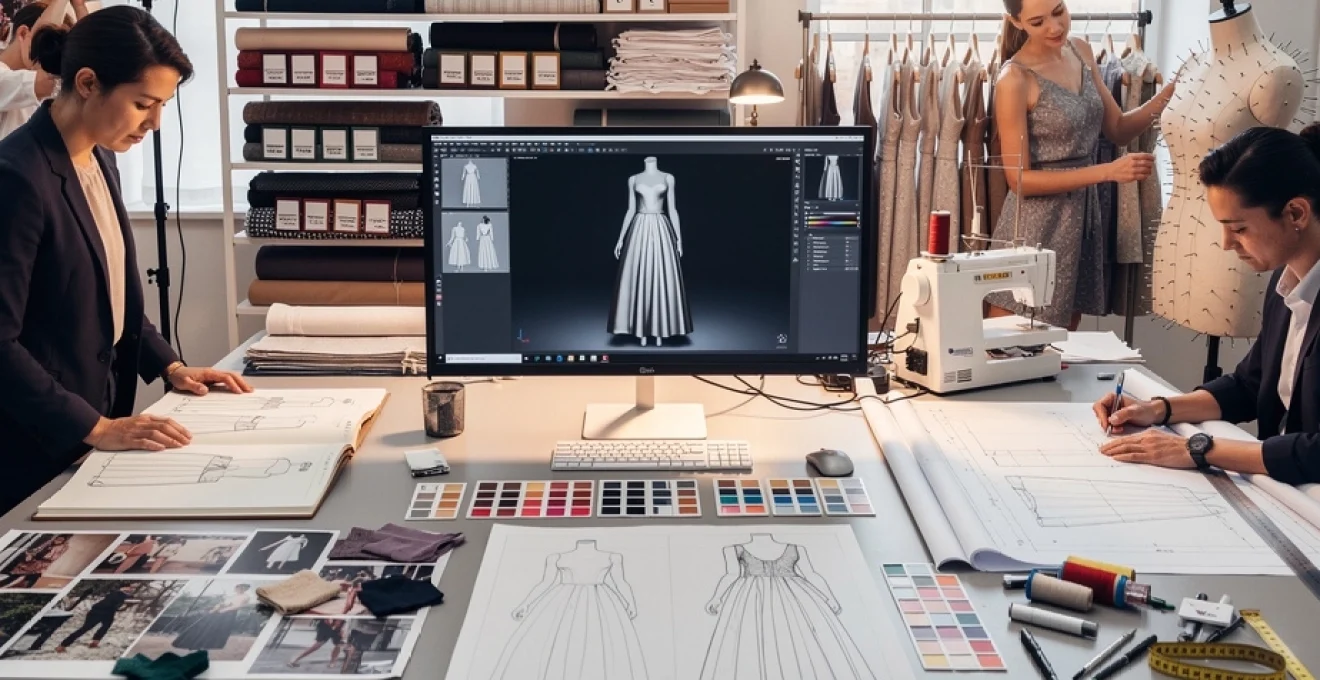
The fashion industry operates on a carefully orchestrated timeline where creativity meets commercial viability, and artistic vision transforms into wearable reality. Behind every garment hanging in your wardrobe lies an intricate journey spanning months of meticulous planning, design development, and production coordination. Fashion collections emerge from a complex ecosystem of trend forecasters, designers, pattern makers, and manufacturers working in synchronised harmony to deliver seasonal stories that resonate with consumers worldwide.
Understanding this process reveals the sophisticated machinery that drives one of the world’s most influential industries. From the initial spark of inspiration captured in mood boards to the final moment when garments reach retail floors, fashion collections undergo numerous transformations that balance artistic expression with market demands. The modern fashion calendar operates at an increasingly accelerated pace, requiring industry professionals to master both creative and technical skills whilst navigating global supply chains and evolving consumer expectations.
Concept development and design brief creation in fashion collections
The genesis of any fashion collection begins with comprehensive concept development, where designers and creative teams establish the foundational narrative that will guide every subsequent decision. This initial phase involves identifying the target demographic, determining price points, and establishing the collection’s unique selling proposition within an increasingly competitive marketplace. Creative directors must balance artistic vision with commercial viability, ensuring that conceptual ideas translate into saleable garments that align with brand identity and market positioning.
Market research methodologies for trend forecasting and consumer analysis
Contemporary fashion brands rely heavily on data-driven insights to inform their creative decisions, employing sophisticated market research methodologies that extend far beyond traditional trend forecasting. Consumer behaviour analysis has become increasingly complex, incorporating social media sentiment analysis, purchase pattern recognition, and demographic segmentation studies that provide granular insights into target market preferences. Fashion companies invest significantly in subscription services from agencies like WGSN and Trend Union, which analyse global cultural movements, political climates, and technological developments to predict style directions years in advance.
The integration of artificial intelligence and machine learning algorithms has revolutionised trend forecasting accuracy, enabling brands to process vast quantities of visual data from social media platforms, runway shows, and street style photography. These tools identify emerging patterns in colour preferences, silhouette popularity, and fabric choices with unprecedented precision, allowing design teams to make informed decisions about collection direction whilst maintaining creative authenticity.
Mood board construction using digital platforms like adobe creative suite
Digital mood board creation has transformed the way design teams communicate conceptual ideas, with Adobe Creative Suite serving as the industry standard for visual storytelling and concept development. Professional designers utilise Photoshop, Illustrator, and InDesign to construct layered narratives that capture the emotional essence of their collections, combining imagery, typography, colour palettes, and texture samples into cohesive visual presentations. Modern mood boards function as living documents that evolve throughout the design process, incorporating feedback from stakeholders and adapting to market research findings.
The digital format enables seamless collaboration across global design teams, allowing multiple contributors to add elements, suggest modifications, and provide real-time feedback through cloud-based platforms. Advanced mood boarding incorporates interactive elements, video content, and augmented reality components that provide immersive experiences for internal teams and external presentations to buyers and investors.
Colour palette development through pantone matching systems
Colour selection represents one of the most critical aspects of collection development, with the Pantone Matching System providing standardised colour communication across the global supply chain. Fashion brands typically develop their seasonal colour stories 18-24 months in advance, aligning with Pantone’s seasonal forecasts whilst incorporating brand-specific preferences and market positioning requirements. Colour psychology plays a crucial role in consumer purchasing decisions, with studies indicating that colour influences up to 90% of snap judgements about products.
The technical precision of Pantone matching ensures colour consistency across different materials, manufacturing facilities, and production runs. Design teams work closely with textile suppliers to achieve accurate colour reproduction, considering factors such as fabric composition, dyeing techniques, and environmental lighting conditions that may affect colour perception in retail environments.
Silhouette evolution from initial sketches to technical flats
The transformation of initial design sketches into technical flat drawings represents a critical translation point where artistic vision meets manufacturing reality. Fashion illustrators and technical
designers collaborate to refine proportions, construction lines, and garment balance. Initial sketches are often expressive and gestural, capturing mood rather than measurement. Technical flats, by contrast, are precise, scale-accurate drawings that show every seam, stitch, and fastening from multiple views. This evolution ensures that factories can interpret the creative intent without ambiguity, reducing costly errors and miscommunications during sample development.
In many studios, creative and technical designers work side by side to iterate silhouettes, testing how design lines will affect movement, drape, and grading across sizes. Details such as armhole depth, neckline shape, and ease allowance are scrutinised, as even a few millimetres can dramatically change comfort and perceived quality. By the time silhouettes are locked into technical flats, each garment in the fashion collection has a clearly defined identity, supported by consistent construction logic that can be reproduced at scale.
Technical design process from sketch to sample development
Once the concept, colour story, and silhouettes are defined, the technical design process translates creative ideas into production-ready garments. This stage bridges the gap between design and manufacturing, using digital tools and engineering-focused methodologies to minimise risk and maximise efficiency. For modern fashion brands, investing in robust technical design workflows is essential to keep lead times competitive while maintaining fit, quality, and cost targets.
Computer-aided design implementation with CLO 3D and browzwear VStitcher
Computer-aided design (CAD) platforms such as CLO 3D and Browzwear VStitcher have transformed how collections are prototyped and visualised. Instead of relying solely on physical toiles, design and product development teams build 3D garments on digital avatars that reflect target body measurements and posture. These virtual samples simulate fabric behaviour, allowing you to assess drape, tension, and movement before cutting a single metre of cloth.
By integrating digital pattern blocks, seam details, and trims into CLO 3D or VStitcher, brands can quickly test multiple design variations and adjust fit in real time. This virtual sampling not only reduces material waste and sample shipping costs, it also accelerates decision-making when deadlines are tight. Many global fashion companies now use 3D renders in internal line reviews, and even in early-stage buyer presentations, giving stakeholders a realistic view of how the fashion collection will look on different body types and in various colourways.
Pattern making techniques using gerber AccuMark software
Behind every successful garment lies a well-engineered pattern. Software such as Gerber AccuMark supports pattern makers in converting creative designs into precise, production-ready pattern pieces. Starting from basic blocks tailored to the brand’s size standards, pattern technologists apply style lines, adjust ease, and refine key points like shoulder slope and crotch curve to create a consistent fit across the entire collection. This is where the artistry of pattern cutting meets the rigour of digital engineering.
AccuMark’s tools allow pattern teams to run accuracy checks, nest pattern pieces for optimal fabric utilisation, and simulate how alterations will impact adjacent seams. When working with complex garments such as tailored coats or eveningwear, pattern makers use the software to manage intricate dart manipulations and panelled constructions that would be difficult to track manually. The result is a pattern library that can be updated season by season, supporting both new developments and carry-over styles within the fashion collection.
Fabric selection criteria including fibre composition and performance testing
Choosing the right fabric is as strategic as choosing the right silhouette. Fibre composition, yarn structure, and finishing processes all influence how a garment will perform in real life. Technical teams evaluate fabrics based on handfeel, weight, stretch, colourfastness, and care requirements, ensuring that they align with the design brief and target retail price. For performance categories such as activewear or outerwear, considerations like moisture management, breathability, and abrasion resistance become critical selection criteria.
Before a fabric is approved for bulk production, it typically undergoes a series of laboratory tests, often in accordance with ISO or ASTM standards. These tests might include shrinkage, pilling, seam slippage, and colourfastness to washing, rubbing, and light. You can think of this stage as a stress-test for the fashion collection: if fabrics fail here, the risk of customer returns and brand damage later is significantly reduced. Increasingly, sustainability metrics—such as recycled content, chemical compliance, and lifecycle impact—are also built into fabric selection frameworks.
First sample production and fit model assessment protocols
When patterns and fabrics are approved, the first physical samples—often called prototypes or proto samples—are produced. These initial garments are constructed either in-house or by partner factories to validate fit, construction, and proportion. Fit sessions are conducted on professional fit models who represent the brand’s core size; they provide invaluable feedback on comfort, mobility, and how the garment behaves during everyday movements like sitting, reaching, or walking.
During fit reviews, technical designers document every adjustment required, from raising a hem to rebalancing a sleeve head. These notes are captured in digital fit reports and circulated to pattern makers and factories, who then revise patterns and create second or salesman samples as needed. Robust fit model assessment protocols—often including video capture and 360° photography—help ensure that once a style is graded, the fashion collection maintains consistent fit standards across all sizes and regions.
Production planning and manufacturing coordination
With approved samples and finalised specifications, attention shifts from development to execution. Production planning and manufacturing coordination determine whether a fashion collection will arrive on time, in full, and at the required quality level. This stage involves aligning internal calendars with supplier capacity, managing raw material lead times, and monitoring critical path milestones to prevent bottlenecks.
Tech pack development with detailed construction specifications
The tech pack functions as the master blueprint for each style in the collection. Compiled by technical designers and product developers, it includes graded measurement charts, construction details, stitching diagrams, artwork placement, and bill of materials covering fabrics, linings, trims, labels, and packaging. A well-constructed tech pack leaves little room for interpretation, acting as a shared language between brand and factory regardless of geographic or linguistic differences.
In practice, tech packs often evolve through several versions as feedback from sampling and costing rounds is incorporated. High-performing teams treat them as living documents, updating information in PLM (Product Lifecycle Management) systems to keep all stakeholders aligned. When tech packs are clear and complete, factories can quote more accurately, minimise rework, and maintain consistent quality across large production runs—a crucial advantage for any fashion collection operating to tight seasonal windows.
Supplier sourcing and quality control standards implementation
Selecting the right manufacturing partners is as important as designing the right product. Brands assess suppliers based on specialties (for example, denim, tailoring, or knitwear), capacity, lead times, and compliance with ethical and environmental standards. Factory audits, often conducted by third-party organisations, review labour practices, health and safety procedures, and environmental management systems to ensure alignment with brand values and regulatory requirements.
Once suppliers are onboarded, quality control standards are implemented through agreed AQL (Acceptable Quality Limit) levels, inline inspections, and final random inspections before shipment. Some brands place quality controllers on-site during peak production periods to monitor workmanship and resolve issues in real time. This partnership-based approach helps maintain consistency across the fashion collection, reducing the risk of defective goods reaching retail and protecting long-term brand reputation.
Grading and size run optimisation for target demographics
After base size patterns are approved, grading rules are applied to create the full size range. Grading is not a simple exercise in adding or subtracting centimetres; it requires a nuanced understanding of body proportion changes across sizes. Pattern technologists develop grading increments that reflect regional body data and the brand’s customer profile, ensuring that garments remain flattering and functional from the smallest to the largest size in the run.
Size run optimisation also plays a major role in inventory planning. By analysing historic sell-through data and return rates, planning teams determine which sizes should be produced in higher or lower quantities for different markets. For example, a UK-based brand may allocate more mid-range sizes to its domestic stores while adjusting the curve for overseas markets based on local anthropometric data. When executed carefully, optimised size runs reduce markdowns and improve full-price sell-through across the collection.
Production timeline management from proto to bulk manufacturing
Coordinating the journey from prototype to bulk production is akin to conducting an orchestra: every section must play in time. Production planners build critical path timelines that map key milestones such as proto approval, salesman sample delivery, purchase order placement, fabric in-house dates, pre-production sample (PPS) approval, and shipment deadlines. Any delay at one point can cascade through the schedule, so proactive risk management is essential.
To keep fashion collections on track, many brands hold weekly production meetings, reviewing supplier status reports and flagging potential bottlenecks. Digital dashboards and PLM systems allow teams to track styles at a glance, making it easier to re-prioritise or re-route orders if an issue arises. In some cases, brands may split production across multiple factories or regions to hedge against geopolitical risks, weather events, or capacity constraints, ensuring that critical styles hit stores in time for key selling moments.
Fashion show preparation and collection presentation strategies
Once manufacturing is underway, focus turns to how the fashion collection will be presented to buyers, press, and consumers. Whether through a runway show, showroom appointments, digital lookbooks, or immersive films, presentation strategies shape how the story of the collection is perceived. This stage merges creative direction with logistical precision, bringing together casting, styling, set design, music, and choreography.
For runway presentations, casting directors select models whose look and walk complement the collection’s aesthetic and target market. Stylists refine outfits, balancing hero pieces with commercial looks to communicate both creative ambition and wearability. Backstage teams orchestrate hair and makeup that reinforce the season’s narrative, while set designers and lighting technicians craft an environment—minimalist, theatrical, or experimental—that frames the garments to maximum effect. Even the running order of looks is carefully planned to build visual rhythm and emotional impact.
Not every brand opts for a physical catwalk. Many labels, particularly emerging designers and sustainability-focused brands, lean into digital formats such as fashion films, interactive websites, or augmented reality showrooms. These alternatives can extend the lifespan of the collection, allowing global buyers and consumers to engage with the work long after the initial reveal. High-quality imagery and video become crucial sales tools for wholesale appointments, e-commerce product pages, and social media campaigns, ensuring that the visual identity of the collection remains consistent across all channels.
Retail distribution and commercial merchandising analysis
The final chapter in the life of a fashion collection unfolds at retail, where design decisions meet real-world purchasing behaviour. Distribution strategies determine where and how garments are made available—through flagship stores, wholesale partners, online platforms, or a blend of all three. Each channel has its own expectations around delivery windows, assortment depth, and replenishment agility, so effective coordination between sales, logistics, and merchandising teams is vital.
In-store and online merchandising translate the collection’s creative narrative into commercial storytelling. Visual merchandisers build product stories around key looks, grouping pieces by colour palette, silhouette, or lifestyle to help customers envision complete outfits. Meanwhile, e-commerce teams curate product recommendations, optimise imagery, and refine product descriptions to improve conversion rates. As the season progresses, performance data—from sell-through rates to basket analysis and return reasons—feeds back into weekly trading meetings.
This commercial analysis closes the loop of the fashion collection lifecycle. Styles that overperform may be earmarked for never-out-of-stock programmes or reimagined in future seasons, while underperforming pieces prompt questions about pricing, fit, or trend relevance. By combining quantitative metrics with qualitative feedback from store teams and customer reviews, brands refine their future design briefs and assortment plans. In this way, every collection, whether wildly successful or more modest in impact, becomes a learning tool that informs the next cycle of concept development, design, and production.