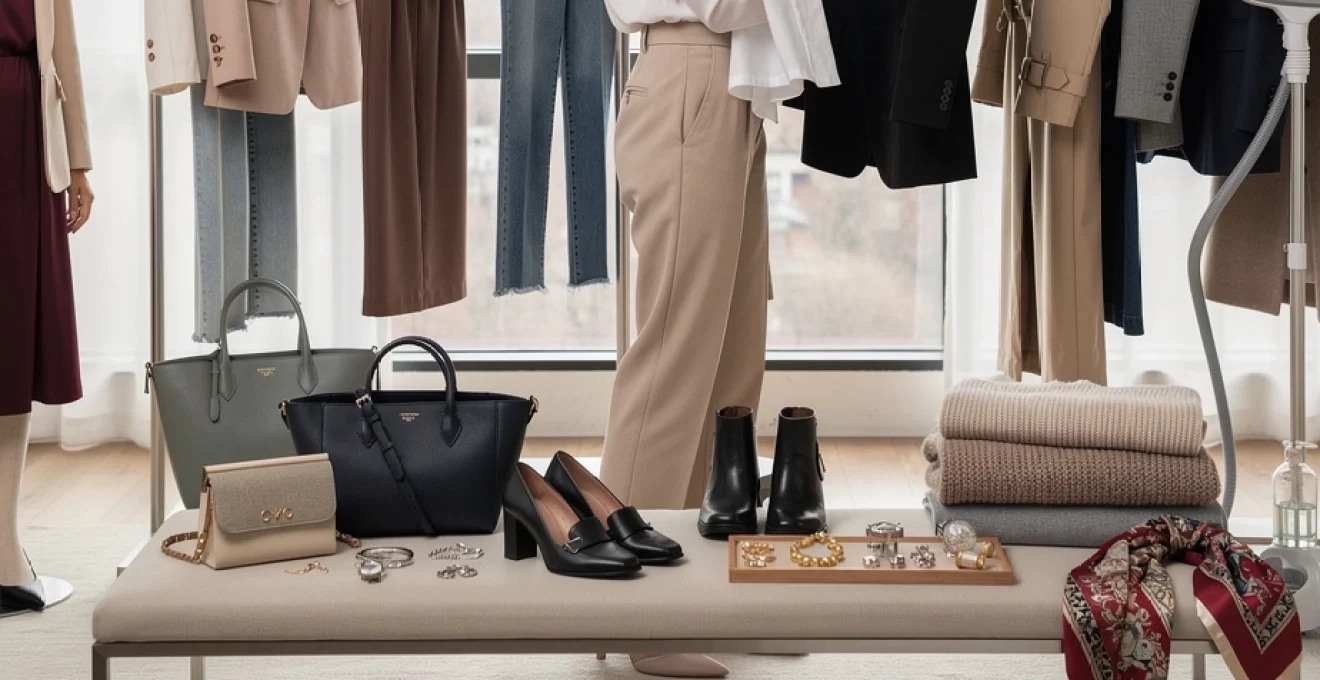
The modern woman’s wardrobe faces an unprecedented challenge: how to maintain style, versatility, and sophistication whilst navigating an ever-expanding array of professional commitments, social obligations, and lifestyle demands. A strategically constructed capsule wardrobe emerges as the ultimate solution, offering a curated collection of garments that seamlessly transition between contexts without sacrificing personal expression or professional credibility.
Creating a capsule wardrobe that truly adapts to every occasion requires more than simply reducing the number of items in your closet. It demands a sophisticated understanding of garment construction, colour theory, and styling techniques that maximise the potential of each piece. This approach transforms your wardrobe from a collection of individual items into a cohesive system where every garment works harmoniously with others, creating exponentially more outfit possibilities than the sum of its parts.
The investment in building such a wardrobe pays dividends far beyond the initial financial commitment. Research indicates that the average person wears only 20% of their wardrobe regularly, suggesting that most closets contain significant waste. A well-designed capsule wardrobe inverts this statistic, ensuring that every piece earns its place through consistent use and versatile application across multiple occasions and seasons.
Essential wardrobe architecture: the 5-4-3-2-1 formula for capsule foundation
The foundation of an effective capsule wardrobe rests upon a mathematical principle that ensures balance and versatility whilst preventing redundancy. The 5-4-3-2-1 formula provides a structural framework: five foundational pieces, four versatile separates, three statement pieces, two seasonal items, and one investment showstopper. This ratio creates the optimal balance between functionality and variety, ensuring you possess sufficient options without overwhelming your decision-making process.
Core neutral base layer strategy using timeless silhouettes
The neutral base layer forms the backbone of capsule wardrobe functionality, serving as the canvas upon which all other elements build. Classic silhouettes in neutral tones—navy, charcoal, cream, and black—provide the versatility needed for seamless transitions between professional and personal environments. A perfectly fitted white button-down shirt, for instance, serves equally well beneath a boardroom blazer or knotted casually over weekend trousers.
Timeless silhouettes transcend seasonal trends and maintain their relevance across decades. The A-line skirt, straight-leg trouser, and crew-neck jumper represent archetypal forms that have proven their enduring appeal. These shapes flatter a wide range of body types whilst providing the structural foundation necessary for successful layering and accessorising strategies.
Investment piece selection criteria: Cost-Per-Wear analysis
Intelligent investment piece selection requires a sophisticated cost-per-wear analysis that considers both initial expenditure and projected usage frequency. A £300 blazer worn twice weekly for two years delivers a cost-per-wear of approximately £1.44, representing exceptional value compared to multiple cheaper alternatives that may require replacement within the same timeframe.
Quality garments often feature superior construction details—hand-finished seams, mother-of-pearl buttons, and natural linings—that enhance both durability and wearing experience whilst maintaining their aesthetic appeal through repeated use and professional cleaning cycles.
The selection criteria should prioritise versatility alongside quality, favouring pieces that adapt to multiple styling scenarios. A well-constructed trench coat, for example, functions as professional outerwear, casual weekend coverage, and elegant evening layer, justifying its investment status through multifunctional application rather than singular purpose.
Colour palette coordination using the 60-30-10 design rule
Professional colour palette coordination employs the 60-30-10 design principle, borrowed from interior design, to create visual harmony and maximize outfit combinations. Sixty percent of your wardrobe should comprise neutral base colours, thirty percent should feature your chosen secondary palette, and ten percent should consist of accent colours that provide personality and visual interest.
This mathematical approach ensures that any two pieces selected randomly from your wardrobe will coordinate harmoniously, eliminating the guesswork from daily outfit selection. The neutral base might include navy, grey, and cream, whilst the secondary palette could introduce camel or
camel, soft white, and muted olive depending on your undertone. Accent colours might then include a rich burgundy, cobalt blue, or emerald green—tones that inject character whilst still harmonising with your base and secondary shades.
When applied consistently, the 60-30-10 rule turns your capsule wardrobe into a modular system. You could, for instance, anchor an outfit with a navy trouser (60%), add a camel knit (30%), and finish with a burgundy handbag or lipstick (10%). This balance avoids the visual clutter that comes from too many competing colours whilst ensuring your looks never feel flat or monotonous. Over time, you will notice that your shopping choices naturally align with this structure, further increasing cohesion and outfit potential.
Fabric quality assessment: natural fibres vs performance blends
Fabric selection is a decisive factor in whether your capsule wardrobe genuinely adapts to every occasion. Natural fibres such as cotton, wool, silk, and linen offer breathability, superior drape, and a luxurious hand-feel that improves with age. Performance blends, meanwhile, introduce stretch, crease-resistance, and moisture-wicking properties that suit demanding schedules and frequent travel.
The optimal capsule rarely chooses one over the other; instead, it deploys each where they perform best. A wool-silk blazer, for instance, maintains structure and elegance, while a cotton-modal T-shirt offers comfort and easy care. When assessing quality, examine fibre composition, fabric weight, and density, as well as how the textile recovers after being gently crushed in your hand. High-quality fabrics revert quickly and resist visible wrinkling, signalling that they will maintain their appearance through long working days and repeated laundering.
As you build a wardrobe that works hard across seasons and occasions, consider the climate you live in and how often you travel. Linen blends may be indispensable for a hot, humid environment, whereas merino wool base layers become essential in colder regions. By understanding the strengths of both natural fibres and performance blends, you can curate a capsule that is comfortable, polished, and practical in equal measure.
Multi-functional garment selection: transitional pieces for day-to-night versatility
A capsule wardrobe that adapts to every occasion relies on garments that perform multiple roles with minimal adjustment. Transitional pieces bridge day-to-night dressing, weekday-to-weekend styling, and even cross-season wear. Rather than packing an extra outfit for post-work plans, you strategically select core garments that shift mood and formality through layering and accessories.
Think of these multi-functional items as the “multi-tools” of your wardrobe: a blazer that sharpens a casual jean, a slip dress that layers seamlessly under knits, or tailored trousers that accept both trainers and heels. When you prioritise versatility at the purchase stage, you dramatically reduce decision fatigue later. The question becomes not “What can I wear?” but “Which version of this piece do I want today?”
Blazer styling techniques: from boardroom to cocktail hour
The blazer is arguably the most powerful single garment in a capsule wardrobe that adapts to every occasion. During office hours, a structured blazer in navy, charcoal, or black signals professionalism when paired with tailored trousers and a silk blouse. For client meetings or presentations, ensure the fit allows for easy movement whilst maintaining clean lines at the shoulder and waist.
Transitioning the same blazer into evening settings is largely a matter of what you wear beneath and around it. Swap the button-up shirt for a camisole with a subtle sheen, trade loafers for block heels, and introduce bolder jewellery. Rolling or pushing up the sleeves instantly relaxes the silhouette, revealing bracelets or a watch and softening the overall look. A blazer over a minimalist slip dress can carry you from cocktail hour to a semi-formal dinner with minimal effort.
For weekend wear, consider styling your blazer with straight-leg jeans, a striped tee, and white trainers. This balance of structure and ease embodies modern smart-casual, proving that one excellent blazer can take you far beyond the boardroom. If you commute, a wrinkle-resistant wool blend or technical fabric ensures your blazer retains its shape and polish throughout the day.
Dress layering systems for four-season adaptability
A well-chosen dress can serve as the most hard-working item in your capsule wardrobe when you employ strategic layering. In summer, a cotton shirt dress or sleeveless midi worn with sandals stands alone as an effortless outfit. As temperatures drop, that same dress can be transformed with tights, ankle boots, and a fine-knit polo layered underneath for added warmth.
For spring and autumn, think of your dress as the middle layer in a styling “sandwich.” A thin base layer—such as a merino roll-neck—sits under a sleeveless or strappy dress, while a trench coat or leather jacket tops the look. In winter, you can add a longline wool coat and a scarf, creating a visually rich, temperature-appropriate ensemble without abandoning your favourite garments until the next warm season.
Fabric and silhouette play a crucial role here. A simple column, A-line, or wrap dress in a neutral tone offers maximum styling potential, whereas overly ornate designs may feel locked to specific events. When you evaluate dresses for your capsule, ask yourself: can this piece work with at least three different layering combinations and across at least two seasons? If the answer is yes, it earns valuable wardrobe real estate.
Trouser silhouette optimisation: wide-leg vs tailored fits
Trousers form a structural pillar of any professional capsule wardrobe, and understanding silhouette options helps you dress appropriately for different occasions. Tailored, straight-leg or slim-fit trousers in a mid-weight wool blend are ideal for corporate environments. They align neatly with blazers, blouses, and smart shoes, creating clean lines that signal competence and polish.
Wide-leg trousers, by contrast, introduce fluidity and modern ease. In a high-waisted cut with a sharp crease, they remain suitable for formal settings whilst feeling more contemporary. Paired with a fitted top and structured blazer, they elongate the leg and create an elegant column of colour. The same pair can skew relaxed when worn with a simple T-shirt and loafers or trainers for creative industries or weekend wear.
Optimising your trouser selection within a capsule wardrobe that adapts to every occasion means having at least one of each key silhouette. Consider your footwear preferences too: ankle-skimming tailored trousers showcase loafers and block heels, while full-length wide-leg styles skim over boots and elongate the frame. Pay attention to fabric drape and recovery; a quality pair should hold its shape throughout the day without excessive creasing, ensuring you remain polished from morning meetings to evening engagements.
Knitwear integration: merino wool and cashmere investment pieces
Integrating high-quality knitwear into your capsule wardrobe adds both comfort and refinement. Merino wool and cashmere are stand-out fibres thanks to their warmth-to-weight ratio, breathability, and ability to resist odour. A finely knit merino crew-neck in a neutral shade layers effortlessly over shirts, under blazers, and with skirts or trousers, making it invaluable for transitional weather.
Cashmere, whilst often more expensive, offers exceptional softness and drape that elevates even the simplest outfit. A cashmere V-neck can be styled with tailored trousers for the office or with dark denim and ankle boots for dinner. When assessing investment knits, look for tight, even stitching, a smooth surface with minimal fuzz, and clear care instructions. With correct maintenance, these pieces can last for many years, reducing the need for frequent replacement.
To avoid bulk and maximise versatility, focus on mid-gauge knits that can be layered easily. Extremely chunky pieces, though cosy, are often less adaptable and harder to wear under structured outerwear. By curating a small selection of merino and cashmere basics in your chosen colour palette, you create a soft yet sophisticated layer that supports both professional and casual capsule outfits.
Accessory multiplication strategy: transforming basic outfits with statement pieces
Accessories act as the alchemy that transforms foundational outfits into occasion-appropriate looks. In a capsule wardrobe that adapts to every occasion, accessories extend the life and variety of your clothes without adding significant bulk to your closet. Think of them as filters on a camera lens: the underlying image remains the same, but the mood, intensity, and focus change dramatically.
By curating a deliberate selection of handbags, shoes, jewellery, and scarves, you multiply the outfit combinations available from a limited clothing base. A simple white shirt and black trousers, for instance, can read as corporate, creative, or evening-ready depending on the accessories you pair with them. This is where personal style becomes most visible, allowing you to express individuality while maintaining a streamlined wardrobe.
Handbag portfolio: from structured totes to evening clutches
A considered handbag portfolio supports your daily life whilst aligning with your capsule wardrobe aesthetic. At minimum, most women benefit from three core styles: a structured tote for work, a medium crossbody for off-duty wear, and an elegant clutch for evening occasions. Choosing all three within your defined colour palette ensures each bag works seamlessly with the majority of your outfits.
The structured tote should comfortably fit a laptop or documents, with internal organisation that prevents chaotic rummaging. Opt for leather or high-quality vegan leather with reinforced handles so it can withstand daily use. Your crossbody can skew slightly more relaxed—think softer silhouettes or subtle hardware—yet still polished enough to accompany you to smart-casual meetings or weekend brunch.
For evening, a compact clutch or small shoulder bag with a detachable chain offers maximum versatility. Metallic finishes in gold or silver often function as neutrals, pairing with a wide spectrum of colours and elevating simple looks. When you invest thoughtfully in these few handbag categories, you avoid accumulating numerous similar bags that only serve a single outfit or trend.
Footwear foundation: block heels, loafers, and ankle boot essentials
Footwear quite literally underpins the success of a capsule wardrobe that adapts to every occasion. The goal is a small, robust collection that balances comfort with style. Block heels provide stability and height for long workdays or events, making them more practical than stilettos for most modern schedules. Choose a heel height that you can comfortably walk in for several hours; shoes that hurt remain unworn, regardless of how beautiful they are.
Loafers have evolved from classic menswear into a staple of chic, gender-neutral dressing. In polished leather or suede, they complement tailored trousers, dresses, and even denim. For industries with business-casual dress codes, a sleek loafer can often replace a traditional court shoe, lending an updated, authoritative look.
Ankle boots bridge multiple seasons and outfit formulas. A pointed or almond toe style in black or brown leather pairs with everything from midi dresses to cropped trousers, offering weather protection and sophistication. When assessing footwear for your capsule wardrobe, focus on fit, quality of materials, and sole construction; a well-made shoe distributes pressure evenly and can often be resoled, extending its life considerably.
Jewellery layering techniques: mixing metals and textures
Jewellery offers one of the most efficient ways to personalise a streamlined capsule wardrobe. Layering creates visual interest without overwhelming your look, especially when you mix chain weights, textures, and even metals. The old rule of never mixing silver and gold has softened; contemporary styling often embraces a deliberate blend, which can also make your pieces more versatile across different handbags and hardware.
Begin with one focal point—such as a pendant necklace or statement earring—and build around it with subtler companions. For daytime, layered fine chains and small hoops or studs maintain professionalism while adding polish. In the evening, you might swap for bolder earrings and reduce other pieces to avoid competing focal points. The aim is cohesion, not excess.
Bracelets and rings also play a role in your jewellery capsule. A watch with a clean face and simple strap, worn daily, anchors your wrist, while one or two stacking rings can be combined or worn alone depending on the occasion. By curating a small, high-quality selection, you can reach instinctively for combinations that feel like an extension of your personal style.
Scarf styling methods: french knots and parisian draping
Scarves are often underestimated in their ability to shift an outfit’s function and feel. A silk square tied in a French knot at the neck lends instant sophistication to a shirt and blazer combination, echoing the polish of a tie without its formality. For creative workplaces, a patterned scarf can introduce colour and personality while keeping the overall silhouette streamlined.
For cooler climates, larger wool or cashmere scarves become both accessory and functional layer. The classic “Parisian drape”—folding the scarf in half, placing it around the neck, and pulling the ends through the loop—creates a secure, voluminous frame around the face. Alternatively, simply draping a long scarf over your shoulders under a coat adds vertical lines that elongate the body.
When incorporating scarves into your capsule wardrobe, choose prints and colours that echo your established palette so they work with multiple outfits. A single leopard-print scarf, for example, can animate an all-black ensemble, soften a trench coat, or complement denim and a white tee on the weekend.
Seasonal adaptation techniques: climate-responsive wardrobe management
Even the most thoughtfully constructed capsule wardrobe must respond to the realities of changing weather. Seasonal adaptation is less about rebuilding your closet four times a year and more about rotating emphasis. Core items—trousers, shirts, blazers—remain in play whilst outerwear, knitwear, and accessories cycle in and out of prominence according to temperature and daylight.
A practical strategy is to build a year-round core of trans-seasonal pieces in mid-weight fabrics, then supplement them with a small set of dedicated high-summer and deep-winter items. For example, a trench coat, merino knit, and ankle boots can serve both spring and autumn, whereas a lightweight linen dress is reserved for peak heat and a down-filled parka for severe cold. Storing off-season items in breathable garment bags or labelled boxes keeps your active wardrobe visually calm and easier to navigate.
Consider also how layering can extend the usability of favourite pieces. A short-sleeved dress gains extra months of wear when combined with tights, boots, and a roll-neck; a silk blouse that feels too light in winter can function as a base layer under a cashmere jumper. By planning for these combinations in advance, you ensure that your capsule remains both climate-responsive and cost-effective.
Professional capsule configuration: corporate dress codes and industry standards
Adapting a capsule wardrobe to professional environments requires an understanding of both explicit and unspoken dress codes. Traditional corporate settings—such as finance or law—often expect darker neutrals, structured tailoring, and closed-toe shoes. Creative industries, by contrast, typically allow more relaxed silhouettes, denim, and bolder use of colour or pattern.
To configure a professional capsule wardrobe that adapts to every occasion, begin by identifying the baseline expectations of your sector. Then, build a toolkit of interchangeable outfits that sit at different points on the formality spectrum. A navy suit, for instance, can be worn as a full set for high-stakes meetings, or broken apart—blazer with jeans, trousers with knitwear—for less formal days.
Adding subtle variations through shirts, blouses, and accessories prevents repetition from feeling dull. For example, a white, light blue, and striped shirt rotate under the same blazer, each creating a slightly different impression. If your role also involves evening functions or conferences, ensure that at least one dress and one pair of heels or elevated flats can move fluidly between office and event environments with minimal adjustment.
Maintenance and longevity protocols: garment care for investment pieces
Finally, a capsule wardrobe that adapts to every occasion is only as effective as the care you invest in its components. High-quality garments are designed to last, but they still require thoughtful maintenance to preserve fabric integrity, colour, and shape. Simple habits—such as allowing shoes to rest between wears, brushing wool coats, and using wooden hangers for tailoring—prolong the lifespan of your investment pieces significantly.
Always follow care labels, but pair this with a basic understanding of fibre behaviour. Wool and cashmere benefit from gentle handwashing or specialist cleaning rather than frequent dry-cleaning, which can dehydrate fibres over time. Denim lasts longer and retains its shape when washed less frequently and air-dried. Steaming rather than ironing delicate fabrics reduces the risk of shine marks or scorching.
Regular wardrobe audits also form part of your longevity protocol. Seasonal reviews allow you to identify pieces that need mending, resoling, or professional cleaning before minor issues become irreparable. By treating your clothes as assets rather than disposables, you reinforce the core principle of a capsule wardrobe: fewer, better items that support you confidently across every occasion in your life.