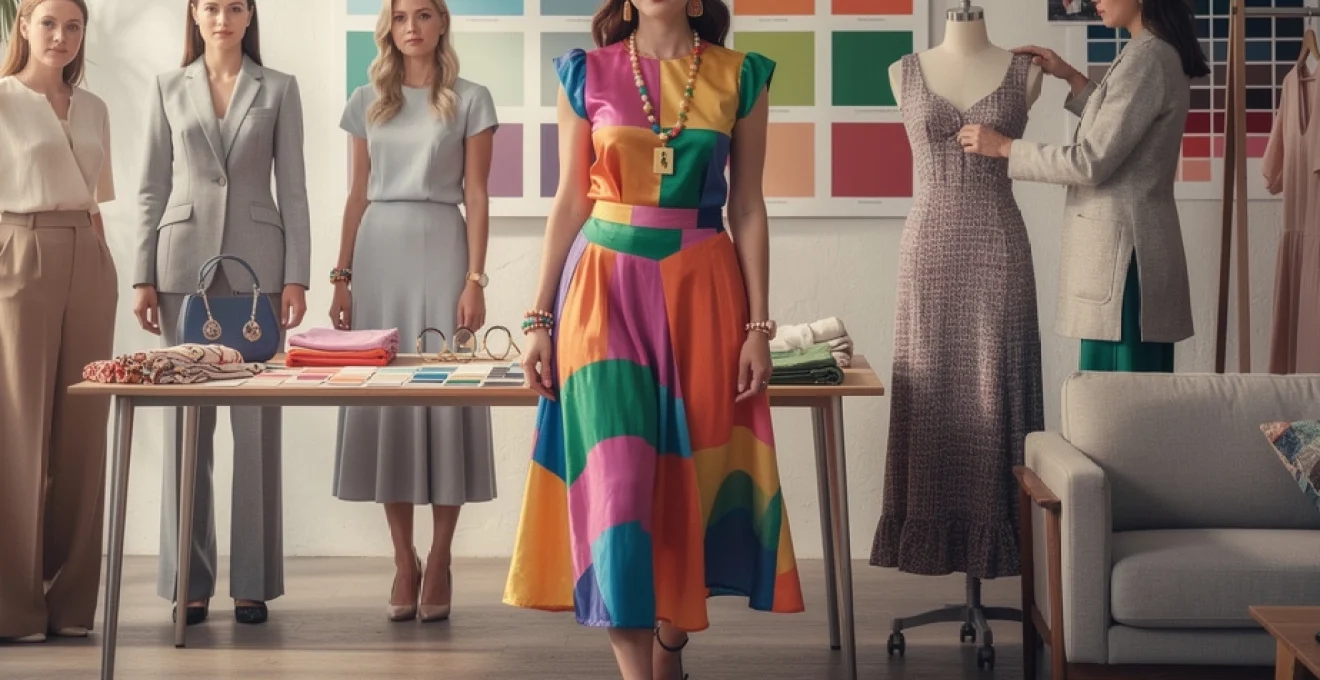
Fashion represents one of the most immediate and powerful forms of self-expression available to women today. Through carefully curated clothing choices, accessories, and styling decisions, women communicate their personalities, values, and aspirations without uttering a single word. The modern fashion landscape offers unprecedented opportunities for personal expression, from sustainable ethical choices to digital style curation platforms that amplify individual voices across global networks.
Contemporary women navigate an increasingly complex fashion ecosystem where traditional style rules have dissolved, creating space for authentic self-expression. The democratisation of fashion through social media platforms has shifted power from traditional gatekeepers to individual style creators, enabling women to craft unique visual narratives that reflect their multifaceted identities. This transformation has coincided with growing awareness of fashion’s psychological impact, where colour psychology, silhouette architecture, and textile innovation serve as sophisticated tools for identity communication.
The relationship between fashion and individuality extends beyond aesthetic preferences to encompass deeper questions of cultural identity, professional positioning, and personal empowerment. Modern women utilise fashion alongside comprehensive lifestyle optimization strategies for navigating professional environments, challenging societal expectations, and building personal brands that authentically represent their values and ambitions.
Colour psychology and personal style manifestation through wardrobe choices
The strategic application of colour psychology in fashion enables women to communicate complex emotional states and personality traits through their wardrobe selections. Chromatic choices function as a sophisticated visual language that operates below the threshold of conscious awareness, influencing both the wearer’s psychological state and observers’ perceptions. Research indicates that specific colour combinations can enhance confidence levels by up to 35%, demonstrating the tangible impact of thoughtful colour curation in personal styling.
Understanding colour’s psychological mechanisms empowers women to make intentional fashion decisions that align with their emotional objectives and social contexts. The neurological response to colour occurs within milliseconds of visual processing, making colour choice a particularly potent tool for first impressions and sustained personal branding efforts.
Dopamine dressing techniques for mood enhancement and Self-Expression
Dopamine dressing represents a scientifically-informed approach to wardrobe curation that prioritises psychological wellbeing through strategic colour and texture selection. This methodology leverages the brain’s reward system to create positive associations with specific garments, effectively programming mood enhancement through fashion choices. Bright, saturated colours particularly coral, emerald, and golden yellow trigger dopamine release more effectively than muted tones, creating measurable improvements in self-perception and energy levels.
The practice extends beyond simple colour selection to encompass texture variety, pattern mixing, and unexpected detail incorporation. Women implementing dopamine dressing techniques report increased creativity, improved social confidence, and enhanced problem-solving abilities throughout their daily activities. The key lies in selecting pieces that generate genuine excitement during the selection process, creating positive anticipation that extends throughout the wearing experience.
Chromatic personality mapping through pantone seasonal palettes
Pantone’s seasonal colour forecasting provides a sophisticated framework for understanding how contemporary colour preferences reflect broader cultural movements and individual psychological trends. Women can utilise these professionally curated palettes as starting points for personal colour exploration while maintaining relevance to current aesthetic conversations. The 2024 palette’s emphasis on optimistic earth tones reflects a collective desire for grounding and stability, offering women opportunities to express both contemporary awareness and personal authenticity.
Successful chromatic personality mapping involves identifying which seasonal colours resonate with individual energy patterns and lifestyle requirements. This process creates a personalised colour vocabulary that can be applied across wardrobe categories, from professional attire to weekend casual wear, ensuring consistency in personal brand expression while allowing for contextual adaptation.
Cultural colour symbolism integration in contemporary fashion styling
The integration of cultural colour symbolism adds depth and meaning to personal style expression while honouring diverse heritage backgrounds. Understanding how different cultures interpret colour enables women to make informed choices about when to embrace or subvert traditional associations for maximum expressive impact. Red’s significance varies dramatically across cultures, representing prosperity in Chinese traditions, passion in Western contexts, and spiritual power in many African cultures.
Contemporary fashion allows for sophisticated cultural colour play that respects traditional meanings while creating new personal interpretations. This approach enables women to express multiple aspects of their identity simultaneously, whether celebrating heritage
Contemporary fashion allows for sophisticated cultural colour play that respects traditional meanings while creating new personal interpretations. This approach enables women to express multiple aspects of their identity simultaneously, whether celebrating heritage at a festival, asserting professional credibility in a global workplace, or signalling solidarity with social movements through specific hues. By consciously integrating cultural colour symbolism into everyday outfits, women transform simple wardrobe choices into nuanced statements about belonging, resistance, and pride.
Monochromatic versus polychromatic approaches to identity communication
Monochromatic and polychromatic wardrobes represent distinct strategies for communicating personal identity through colour. A monochromatic approach—built around varying shades of a single hue—often signals coherence, discipline, and a strong sense of internal alignment. Women who favour tonal dressing in navy, charcoal, or cream frequently project an image of calm authority and refined minimalism, ideal for professional environments or personal brands built on clarity and focus.
By contrast, a polychromatic wardrobe that embraces multiple saturated colours can express dynamism, creativity, and emotional openness. Strategic colour-blocking, complementary pairings, and print mixing allow women to signal complexity and spontaneity, positioning fashion as an accessible form of visual storytelling. Neither strategy is inherently superior; the key is intentionality—choosing whether a streamlined chromatic identity or a more eclectic palette best reflects one’s evolving personality and lifestyle.
Many women benefit from developing a hybrid model that combines a core monochromatic base with polychromatic accent pieces. This structure ensures day-to-day ease and cohesion while preserving space for mood-based experimentation and seasonal updates. Treating colour strategy as a flexible toolkit rather than a rigid rulebook allows fashion to support, rather than constrain, authentic individuality.
Silhouette architecture and body language expression in contemporary fashion
Silhouette architecture functions as the three-dimensional framework through which women communicate body language and personal boundaries before speaking. Lines, volumes, and proportions influence how movement is perceived, how much space a woman occupies, and how approachable or authoritative she appears. In a fashion landscape that now celebrates size inclusivity and diverse body shapes, thoughtful silhouette selection becomes a powerful means of aligning outer presentation with inner identity.
Psychological studies on non-verbal communication suggest that expansive postures are often read as confident and dominant, while compact shapes can signal introspection or softness. Clothing silhouettes amplify or soften these cues, making choices around structure, drape, and fit central to self-expression. When women view silhouettes as architectural tools—similar to how an architect manipulates space and form—they can design wardrobes that support both comfort and intentional image-making.
Power dressing through structured blazers and geometric cuts
Power dressing has evolved far beyond the rigid suits of the 1980s, yet its core principle remains: strategically designed structure enhances perceived competence and authority. Structured blazers, sharp lapels, and geometric cuts create clear lines that visually stabilise the body, signalling focus and direction. Recent workplace surveys show that more than 60% of professionals still associate tailored outerwear with leadership readiness and reliability.
For women, updated power dressing no longer requires sacrificing individuality for conformity. Colour, texture, and unexpected details—contrast stitching, asymmetrical hems, or architectural shoulders—allow a blazer or tailored dress to reflect personal style while retaining professional impact. Pairing a precise blazer with wide-leg trousers, a pleated skirt, or even premium denim enables seamless transitions from boardroom to creative spaces without diluting authority.
Power silhouettes can also be calibrated to different comfort thresholds. Some women feel most aligned in sharply tailored, double-breasted jackets; others prefer softly structured blazers with fluid fabrics that move with the body. The unifying factor is intentional geometry: using angles, seams, and proportions to create a visual narrative of competence, self-possession, and purpose.
Minimalist scandinavian aesthetics for understated confidence
Minimalist Scandinavian aesthetics offer an alternative pathway to self-expression for women who equate confidence with quiet precision rather than overt drama. Characterised by clean lines, neutral palettes, and functional details, this style language conveys composure and thoughtfulness. The absence of visual noise shifts attention to fabric quality, fit, and subtle design features, making each item a deliberate choice rather than a passing trend.
Understated silhouettes—straight-leg trousers, column skirts, cocoon coats, and boxy shirts—create a calm visual rhythm that can be deeply empowering for those who feel overwhelmed by maximalist fashion. In professional contexts, this approach signals reliability and considered judgment; in personal life, it often reflects values of sustainability, simplicity, and mental clarity. The minimalist wardrobe can be likened to a well-edited paragraph: every element earns its place and enhances the overall meaning.
Women exploring this aesthetic can start by refining a small set of core silhouettes that flatter their natural proportions, then repeating them across seasons with slight variations in fabric and detail. This repetition builds a strong visual signature, making even simple outfits instantly recognisable as part of a cohesive, authentic style identity.
Avant-garde deconstruction techniques inspired by comme des garçons
At the opposite end of the spectrum, avant-garde deconstruction offers a radical vocabulary for women who use fashion to question norms and explore unconventional identities. Inspired by designers like Comme des Garçons, deconstructed garments disrupt traditional ideas of fit, symmetry, and beauty. Raw edges, displaced seams, asymmetric hems, and exaggerated volumes transform clothing into wearable critique, challenging expectations about femininity and polish.
For many women, embracing deconstruction is akin to adopting a visual manifesto: “I refuse to be easily categorised.” These pieces invite conversation and sometimes discomfort, which can be precisely the point when expressing non-conformist viewpoints or complex inner worlds. Layered tulle over tailored pieces, sculptural skirts, or jackets that warp familiar lines signal a willingness to inhabit ambiguity and fluidity.
In everyday life, avant-garde elements can be integrated in measured doses, balancing wearability with provocation. A single deconstructed blazer worn over a simple slip dress, or an asymmetric skirt paired with a classic knit, allows women to weave conceptual fashion into their routine without sacrificing practicality. This approach positions fashion as both armour and art, enabling deeply personal narratives to unfold through silhouette experimentation.
Vintage revival styling through decades-specific silhouette recreation
Vintage revival enables women to mine historical silhouettes for elements that resonate with their present-day identities. Each decade offers a distinct sculptural language: the nipped waists and full skirts of the 1950s, the androgynous tailoring of the 1970s, the power shoulders of the 1980s, or the slip dresses and bias cuts of the 1990s. Recreating or reinterpreting these forms allows women to align themselves with specific cultural moments, values, and aesthetics.
Beyond nostalgia, decades-specific styling can offer psychological anchoring. A woman drawn to 1940s tailoring might appreciate its resilience-under-pressure narrative; another who favours 1970s bohemian shapes may be signalling a commitment to freedom and artistic exploration. Incorporating authentic vintage pieces or modern reproductions also supports sustainability, extending the lifecycle of garments and challenging the disposability of fast fashion.
Effective vintage revival balances historical reference with contemporary relevance. Pairing a 1950s circle skirt with minimalist sneakers, or styling a 1980s blazer over a streamlined jumpsuit, prevents looks from feeling like costumes. In this way, women can curate a temporal collage—borrowing silhouettes from multiple eras to articulate a unique, time-fluid fashion identity.
Textile innovation and fabric choice as identity markers
Fabric selection operates as a subtle yet powerful layer of identity communication in women’s fashion. Textiles carry tactile, visual, and even ethical messages that shape how garments feel to wear and how they are perceived by others. Choosing between crisp cotton, fluid silk, recycled polyester, organic denim, or technical performance fabrics is not merely a comfort decision; it reflects priorities around tradition, innovation, sustainability, and lifestyle.
Advances in textile technology have expanded expressive possibilities dramatically. Performance blends that regulate temperature, wrinkle-resistant natural fibres, and bio-based materials like mushroom leather or seaweed fibre allow women to align their wardrobes with eco-conscious or tech-forward identities. Those who identify as early adopters may gravitate toward experimental textiles, signalling curiosity and openness to future-oriented solutions.
Conversely, women who feel grounded in heritage and craft may prefer handwoven fabrics, artisanal embroideries, or region-specific weaves such as Ikat, tweed, or Kente. These choices often embody stories of community and continuity, turning garments into portable narratives of origin and belonging. When combined thoughtfully, traditional and innovative textiles can express multi-layered identities that respect the past while engaging with the future.
Texture also plays a key role in perceived approachability and emotional tone. Soft knits, brushed wools, and washed linens project warmth and accessibility, while sleek satins, patent finishes, and tightly woven suiting fabrics convey formality and distance. By tuning into these tactile signals, women can construct wardrobes that support specific relationship dynamics—choosing plush textures for nurturing roles, or precise, smooth fabrics for situations where clear professional boundaries are essential.
Sustainable fashion philosophy and ethical style expression
Sustainable fashion offers women a direct channel to align style expression with deeper ethical and environmental values. As awareness of fashion’s ecological footprint grows—responsible for an estimated 8–10% of global carbon emissions—more women are using their wardrobes to communicate commitment to conscious consumption. Choosing organic fibres, fair-trade production, second-hand shopping, and slow-fashion brands transforms clothing from passive purchase into active advocacy.
Ethical style expression often begins with reframing the wardrobe as a long-term ecosystem rather than a rapidly rotating inventory. Investing in high-quality pieces, repairing rather than replacing, and favouring timeless silhouettes over micro-trends all signal a philosophy of care and intentionality. This approach not only reduces waste but also creates a more stable, coherent style identity, as signature pieces remain in rotation for years.
Practical strategies for integrating sustainability with individuality include building a small capsule wardrobe anchored in versatile staples, then adding character through vintage accessories, artisan-made jewellery, or upcycled garments. Renting occasion wear, swapping clothes with friends, and supporting local designers further diversify expression without increasing environmental impact. Each of these choices communicates values such as community orientation, resourcefulness, and long-term thinking.
Importantly, sustainable fashion does not require aesthetic compromise. Eco-conscious brands are increasingly competitive in design innovation, offering bold prints, inclusive sizing, and culturally sensitive collections. When women treat sustainability as an integral design parameter—rather than an afterthought—they demonstrate that ethical commitments can coexist with, and even enhance, distinctive personal style. The result is a wardrobe that feels not only visually aligned but also morally congruent, reinforcing confidence from the inside out.
Digital fashion platforms and virtual style curation for personal branding
Digital platforms have transformed women’s fashion from a private, mirror-centered experience into a public, networked practice of visual storytelling. Social media, style apps, and virtual wardrobe tools enable women to experiment with self-presentation, document style evolution, and build cohesive personal brands that extend beyond physical spaces. In this context, fashion functions like a curated feed: each outfit becomes a post in an ongoing narrative of identity.
The rise of digital fashion also lowers barriers to participation in global style conversations. Women can draw inspiration from diverse cultures, subcultures, and body types, then adapt those influences to their realities. This ecosystem rewards originality and consistency rather than mere trend replication, giving women unprecedented agency in shaping how they are seen. When approached consciously, digital style curation becomes less about comparison and more about authorship.
Instagram aesthetic development through outfit grid photography
Instagram remains a central stage for visual identity construction, and outfit grid photography offers a structured method for articulating personal style. By arranging garments, shoes, and accessories on a flat surface and photographing them from above, women can evaluate colour harmony, silhouette balance, and thematic cohesion without the pressure of posing. Over time, these grids reveal patterns: preferred palettes, recurring textures, or signature accessories that define a unique fashion blueprint.
Developing a consistent Instagram aesthetic—whether minimal, vivid, vintage-inspired, or streetwear-focused—helps communicate individuality at a glance. Cohesive backgrounds, recurring editing styles, and thoughtful captions further reinforce the narrative. Rather than chasing algorithm-driven virality, women can treat their grid as a visual diary of self-discovery, using metrics like saves and comments as feedback on what feels most authentic and resonant.
For those building professional or creative personal brands, curated outfit content can function as an informal portfolio. Prospective collaborators, clients, or employers gain an immediate sense of taste level, attention to detail, and cultural fluency. In this way, Instagram becomes more than entertainment; it evolves into a dynamic, self-authored lookbook of personal and professional identity.
Pinterest mood board creation for style direction planning
Pinterest operates as a powerful backstage tool for women developing or refining their style identities. Mood boards allow users to collect images of outfits, fabrics, interiors, artworks, and even typography that resonate on an intuitive level. Viewed together, these pins reveal underlying themes—colour stories, silhouette preferences, or emotional tones—that might be hard to articulate verbally but clear in visual form.
Creating separate boards for “everyday uniforms,” “workwear,” “evening style,” or “future self” helps translate abstract aspirations into concrete wardrobe directions. For example, a board filled with relaxed tailoring, loafers, and structured bags might suggest a desire for a polished yet low-effort look. Another dominated by bold prints and statement jewellery could indicate an untapped appetite for dramatic self-expression. By revisiting and editing these boards periodically, women can track how their fashion identity evolves with life stages and shifting priorities.
Pinterest planning also supports more sustainable shopping habits. Before purchasing, women can compare prospective items against their boards, asking: “Does this piece align with my long-term style narrative?” This simple question reduces impulse buys and ensures that new additions strengthen, rather than dilute, the wardrobe’s overall identity coherence.
Virtual wardrobe applications like stylebook for capsule collection design
Virtual wardrobe applications, such as Stylebook and similar platforms, bring a data-informed dimension to fashion individuality. By cataloguing existing garments with photos and tags, women gain a clear overview of their wardrobes: which colours dominate, which silhouettes they actually wear, and which items remain untouched. This transparency often reveals hidden style truths, like an unconscious preference for certain necklines or a gap in practical footwear.
These apps facilitate capsule collection design by enabling users to create digital outfits, track frequency of wear, and calculate cost per wear. Over time, patterns emerge that inform smarter, more authentic purchases: investing in silhouettes that are repeatedly worn, phasing out pieces that no longer fit the desired identity, and spotting opportunities for high-impact additions. In essence, virtual wardrobes function like personal stylists with perfect memory, supporting both creativity and discipline.
For women navigating busy lives, virtual tools also reduce decision fatigue. Pre-planned outfit combinations tailored to different scenarios—presentations, travel days, creative work, or social events—ensure that daily dressing aligns with both practical needs and long-term style goals. As digital and physical wardrobes converge, fashion becomes a consciously designed system rather than a chaotic collection of clothes, allowing individuality to shine through with clarity and confidence.