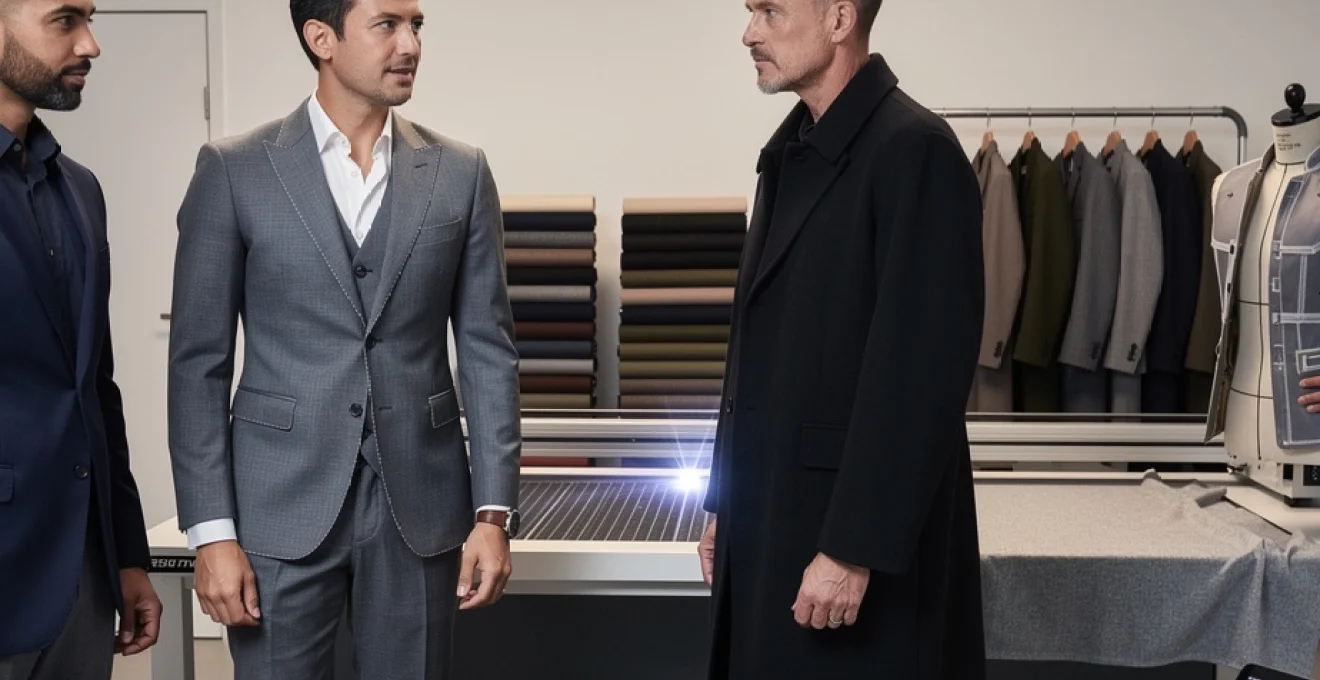
The contemporary menswear landscape has undergone a profound transformation, where traditional Savile Row craftsmanship meets cutting-edge technology to create garments that redefine what tailoring means in the 21st century. This evolution extends far beyond mere aesthetic changes, fundamentally altering how men approach their daily wardrobes and challenging the conventional boundaries between formal and casual attire. The integration of advanced manufacturing techniques, innovative fabric technologies, and digital precision tools has democratised access to high-quality tailoring while maintaining the artisanal standards that have defined exceptional menswear for centuries.
Modern tailoring now encompasses a spectrum of innovations that address contemporary lifestyle demands, from moisture-wicking properties for urban commuters to wrinkle-resistant technologies for frequent travellers. The industry has recognised that today’s men require versatility without compromising on style, leading to revolutionary approaches in garment construction, fit methodology, and fabric selection that serve multiple occasions and environments.
Sartorial construction techniques revolutionising contemporary menswear
The foundation of modern tailoring rests upon innovative construction methodologies that challenge traditional approaches whilst preserving essential quality standards. Contemporary garment construction has evolved to accommodate changing lifestyle demands, incorporating techniques that prioritise comfort, durability, and adaptability. These advancements represent a paradigm shift from rigid, structure-heavy garments towards pieces that move naturally with the wearer whilst maintaining their sophisticated appearance throughout extended wear.
Canvas-free tailoring methods and unconstructed jacket architecture
Unconstructed jackets have emerged as a cornerstone of modern menswear, eliminating the traditional canvas interlining that once defined formal suiting. This approach reduces weight by approximately 30-40% whilst maintaining shape integrity through strategic panel placement and innovative seaming techniques. The absence of canvas allows for greater flexibility and breathability, making these garments suitable for extended wear in various climates and situations.
Advanced fusing techniques now replace traditional canvas construction in many contemporary pieces, utilising heat-activated adhesives that bond directly to fabric fibres. This method provides structure where needed whilst allowing natural drape in areas requiring movement. Modern fusing materials incorporate memory properties that help garments return to their original shape after stretching or movement, ensuring longevity without the bulk associated with traditional construction methods.
Laser-cut precision in pattern making and fabric preparation
Laser cutting technology has revolutionised pattern precision, achieving accuracy levels impossible through traditional cutting methods. This technology enables complex geometric patterns and intricate details whilst eliminating human error in cutting processes. Laser systems can achieve tolerances of ±0.1mm, ensuring consistent fit across production runs and enabling more efficient fabric utilisation with minimal waste.
The integration of computer-controlled cutting systems allows for real-time adjustments based on fabric characteristics, compensating for material variations that previously required manual intervention. This precision approach extends to buttonhole placement, pocket positioning, and seam allowances, creating garments with unprecedented consistency and quality standards.
3D body scanning integration with traditional fitting protocols
Contemporary fitting processes combine traditional measurement techniques with 3D body scanning technology to create comprehensive fit profiles. These systems capture over 300 body measurements in seconds, including postural characteristics and asymmetries that manual measurement might miss. The data enables pattern adjustments that account for individual movement patterns and body dynamics, resulting in garments that fit naturally in all positions.
Advanced scanning systems now incorporate motion capture technology, analysing how bodies move and flex during typical daily activities. This information informs construction decisions regarding stretch panel placement, ease distribution, and seam positioning, ensuring optimal comfort during extended wear periods.
Hybrid construction combining savile row techniques with industrial innovation
Modern hybrid construction techniques preserve essential hand-finishing elements whilst incorporating industrial efficiency where appropriate. Critical areas such as collar attachment, lapel rolling, and button stance continue to benefit from hand-tailoring expertise, whilst seam construction and panel assembly utilise precision machinery for consistency and speed. This approach maintains the artisanal quality that defines exceptional tailoring whilst achieving cost efficiency necessary for broader market accessibility.
The integration of traditional pad-stitching techniques with modern interfacing materials creates lapels that roll
with a natural curve while remaining light and responsive. In practical terms, this means a modern tailored jacket can deliver the same elegant line as a traditional Savile Row piece, yet feel closer to a cardigan when worn throughout the day. For everyday menswear, this hybrid construction makes tailored jackets viable for commuting, office work, and evening socialising without the feeling of armour-like rigidity.
Advanced fabric technology and performance textiles in modern suiting
Alongside construction, fabric innovation has had a profound impact on modern tailoring and everyday menswear. Performance textiles once reserved for outdoor gear or sportswear now appear discreetly in suiting, blazers, and tailored trousers. The result is a new generation of menswear that combines classical aesthetics with properties such as water repellency, stretch, and temperature regulation, all while retaining a refined, sartorial appearance.
Nano-coating applications for stain resistance and water repellency
Nano-coating technologies apply microscopic particles to textile fibres, creating a hydrophobic barrier that repels liquids and resists stains. Unlike older, heavy chemical treatments, these nano-finishes are virtually invisible to the naked eye and do not significantly alter the hand feel of the cloth. A tailored blazer treated with nano-coating can withstand coffee splashes or unexpected rain showers, allowing men to maintain a polished look in unpredictable urban environments.
From a technical standpoint, nano-coatings create a surface tension effect where liquids bead and roll off rather than penetrating the fibre structure. This extends garment lifespan by reducing the frequency of dry cleaning and spot treatment, which can otherwise degrade fine fabrics over time. For the modern commuter or frequent traveller, nano-treated suiting offers a practical solution: the elegance of wool suiting with the resilience of performance outerwear.
Temperature-regulating fibres and moisture-wicking wool blends
Contemporary tailoring increasingly leverages temperature-regulating fibres such as CoolMax and phase-change materials originally developed for aerospace applications. When blended with fine merino wool, these fibres help regulate body temperature by absorbing, storing, and releasing heat as conditions change. This makes tailored garments more comfortable across a wider range of climates, from air-conditioned offices to warm outdoor settings.
Moisture-wicking wool blends further enhance comfort by drawing perspiration away from the skin and promoting rapid evaporation. Unlike synthetic-only solutions, wool-based performance tailoring maintains a natural drape and subtle lustre, ensuring the garment still reads as classic menswear rather than activewear. For everyday use, temperature-regulating suits and tailored separates reduce the need for frequent outfit changes, supporting a more streamlined, versatile wardrobe.
Memory fabric technology and wrinkle-recovery properties
Memory fabrics and wrinkle-recovery technologies address one of the most persistent challenges in menswear: maintaining a sharp appearance after hours of wear. By incorporating elastomeric fibres and engineered weaves, modern suiting fabrics can stretch with the wearer and then return to their original shape, much like a spring returning to its resting position. This prevents permanent creasing at the elbows, knees, and seat, which are common stress points in traditional tailoring.
For professionals who travel frequently or spend long periods seated, memory fabrics in jackets and trousers significantly reduce the need for pressing and steaming. A suit cut from a wool-elastane or wool-polyamide blend, for example, can be unpacked from a suitcase and regain its structure within minutes of being hung. In everyday menswear, this means tailored pieces can realistically compete with casual garments for comfort and practicality while still offering a more defined, architectural silhouette.
Sustainable fabric innovation from ermenegildo zegna and loro piana
Luxury mills such as Ermenegildo Zegna and Loro Piana have become leading voices in sustainable fabric innovation for modern tailoring. Zegna’s Oasi Cashmere and Techmerino programmes, for instance, emphasise traceability and responsible sourcing while integrating performance properties like breathability and elasticity. Loro Piana’s research into regenerative agriculture and low-impact finishing processes has produced suiting cloths that deliver exceptional softness and drape with a reduced environmental footprint.
These innovations trickle down into everyday menswear via both bespoke tailors and premium ready-to-wear brands that source fabrics from these mills. A casual blazer cut from Loro Piana’s storm-system wool, for example, can function as a lightweight rain jacket without sacrificing sartorial refinement. As consumers become more conscious of sustainability, such fabrics allow men to invest in fewer, higher-quality tailored pieces that align with both environmental and aesthetic priorities.
Digital pattern engineering and computer-aided design implementation
Digital pattern engineering has transformed how tailoring patterns are created, tested, and refined. Computer-aided design (CAD) systems enable pattern makers to visualise complex garment structures in two or three dimensions, making it easier to anticipate how seams, darts, and panels will interact on the body. This reduces the trial-and-error traditionally associated with pattern development and results in more consistent sizing across different styles and collections.
For modern menswear, CAD allows designers to experiment with new proportions—cropped jackets, extended shoulders, or tapered trousers—without compromising fit integrity. Digital grading, the process of scaling a base pattern into multiple sizes, becomes more accurate when powered by CAD algorithms informed by large datasets of body measurements. As a result, men with diverse body types benefit from off-the-rack tailoring that feels closer to made-to-measure, with fewer alterations required to achieve an everyday-appropriate fit.
Contemporary fit evolution from classic silhouettes to modern proportions
The evolution of fit in modern tailoring has perhaps had the most visible impact on everyday menswear. Classic silhouettes—structured shoulders, full-cut trousers, and longer jacket lengths—have been reinterpreted through varied proportions that better reflect contemporary lifestyles and aesthetics. Instead of a single “correct” fit, we now see a spectrum ranging from sharp, slim tailoring to relaxed, oversized silhouettes, each influencing how men incorporate tailored pieces into their daily wardrobes.
Thom browne’s cropped trouser revolution and high-water hemlines
Thom Browne’s adoption of cropped trousers and high-water hemlines in the early 2000s marked a decisive departure from traditional menswear conventions. By deliberately exposing the ankle—and often pairing this with sleek footwear and visible socks—Browne reframed tailored trousers as a design statement rather than a purely functional garment. This proportion shift has since filtered into mainstream menswear, with many brands offering ankle-length suit trousers as standard.
From a practical perspective, cropped tailoring can make a formal outfit feel lighter and more dynamic, especially when paired with unstructured jackets. For everyday use, high-water hemlines also reduce concerns about fabric dragging or pooling, particularly in urban settings. However, this style demands precise tailoring: the break, or lack thereof, at the hem must be intentional. When executed correctly, cropped trousers act like a visual underline, drawing attention to footwear and subtly modernising even a classic navy suit.
Slim-fit adaptation techniques for various body morphologies
The slim-fit suit, once narrowly associated with a specific body type, has evolved thanks to more sophisticated pattern engineering. Modern slim tailoring employs techniques such as dart manipulation, articulated knees, and contoured waistbands to create a clean line without excessive compression. Rather than simply reducing circumference measurements, pattern makers strategically redistribute ease to accommodate muscular thighs, rounded shoulders, or fuller mid-sections.
For men with diverse body morphologies, this means that a slim-fit silhouette can now be tailored to enhance rather than restrict. Key adaptation strategies include slightly higher armholes for improved mobility, subtle back shaping to prevent fabric pooling, and graded tapering through the leg to balance calves and thighs. In day-to-day terms, a well-executed slim-fit suit allows you to move naturally—climbing stairs, commuting, or working at a desk—while maintaining a sharp, streamlined profile.
Oversized tailoring influence from japanese designers and yohji yamamoto
At the other end of the spectrum, oversized tailoring—strongly influenced by Japanese designers such as Yohji Yamamoto and Issey Miyake—has redefined what relaxed elegance can look like. These designers championed generous volumes, dropped shoulders, and elongated lengths that prioritise movement and drape over close-to-body shaping. The result is a silhouette that feels almost sculptural, using excess fabric as a design tool rather than a sign of poor fit.
In contemporary everyday menswear, this influence manifests in wide-leg trousers, boxy blazers, and softly structured coats that still retain considered proportions. The key distinction is that oversized tailoring is intentional; balance is achieved through careful control of shoulder width, hem length, and fabric weight. For men seeking comfort without resorting to purely casualwear, an oversized blazer or relaxed suit offers a way to appear polished while enjoying the ease typically associated with loungewear or streetwear.
Bespoke technology integration in high-street and ready-to-wear collections
One of the most significant developments in modern tailoring is the trickle-down of bespoke techniques and technologies into high-street and ready-to-wear collections. Brands increasingly use 3D body data, digital fitting simulations, and modular pattern systems to approximate the personalised fit once exclusive to bespoke ateliers. This democratisation allows a broader audience to experience tailoring that responds more precisely to their body shape and daily needs.
Many retailers now offer hybrid services—such as made-to-measure programmes built on digital base patterns or in-store body scanning for size recommendation—that blur the line between bespoke and off-the-rack. You might select a standard jacket model, for example, then adjust sleeve length, trouser rise, and waist suppression based on digital fit analysis rather than guesswork. For everyday menswear, this integration means that a man can walk into a high-street store and leave with tailoring that feels distinctly personal, both in fit and in small customisation options such as lining choice or button style.
Digital communication has further supported this shift. Online configurators allow customers to visualise lapel widths, pocket styles, and fabric options before committing to a purchase, much as they would discuss details with a bespoke cutter. While these systems cannot fully replace the intuition of an experienced tailor, they provide a more informed starting point, reducing the likelihood of unsuitable choices and enhancing satisfaction with the final garment.
Cost-effective manufacturing processes maintaining artisanal quality standards
The final piece of the modern tailoring puzzle lies in manufacturing: how can brands deliver garments that reflect artisanal attention to detail while remaining accessible in price? The answer has emerged through selective automation, lean production methods, and globalised yet specialised supply chains. Routine operations—such as straight seams, pocket bag assembly, or buttonhole stitching—are handled by precision machinery, freeing skilled workers to focus on complex tasks like collar setting, hand pressing, and quality control.
In practice, this division of labour mirrors a well-run kitchen: machines handle repetitive “prep” work, while experienced craftspeople perform the final plating. Many manufacturers adopt modular production lines where small teams are responsible for specific garment sections, improving accountability and allowing subtle hand adjustments when necessary. This structure helps maintain consistency while preserving the human judgment that defines high-quality tailoring.
Cost-effective modern tailoring also relies on strategic fabric sourcing and batch production. By committing to high volumes of core fabrics—navy serge, charcoal flannel, cotton twill—brands secure better pricing from mills without compromising on quality. These savings can then be reinvested in details that elevate everyday menswear: horn buttons instead of plastic, hand-finished bar tacks at stress points, or more time spent on pressing and shaping. For the wearer, the result is a jacket or trouser that feels significantly more luxurious than its price might suggest, encouraging a shift away from disposable fashion and towards a curated, long-lasting wardrobe.