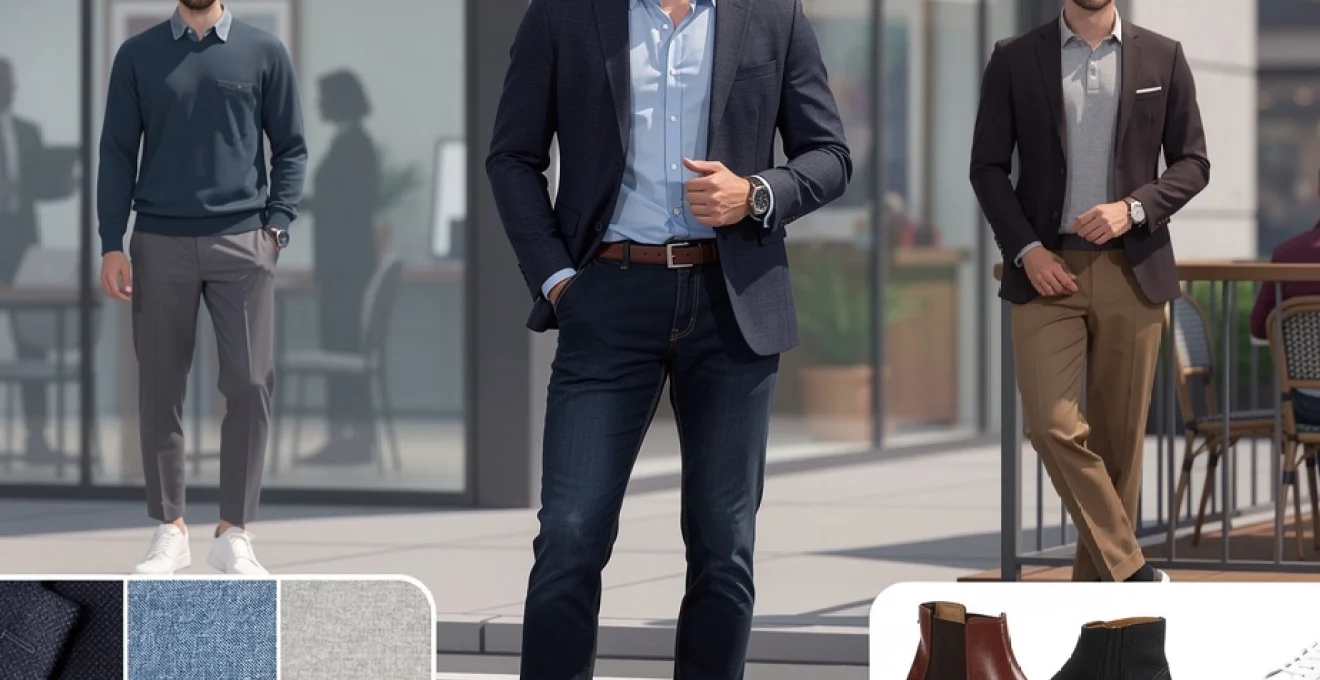
Modern menswear has evolved beyond rigid dress codes and compartmentalized wardrobes. Today’s sophisticated dresser navigates a nuanced landscape where formality exists on a spectrum rather than in distinct categories. The ability to harmoniously blend casual comfort with formal refinement represents one of the most valuable skills in contemporary style, enabling you to move seamlessly through varied professional and social contexts without the burden of maintaining separate wardrobes for each occasion.
This approach to dressing reflects broader cultural shifts toward flexibility and authenticity in professional environments. As creative industries redefine workplace expectations and traditional corporate settings embrace more relaxed standards, the man who masters mixed-formality dressing gains a distinct advantage. You’ll project confidence and adaptability while maintaining the visual authority that well-considered attire provides. Understanding how to calibrate formality through strategic garment selection, fabric choices, and thoughtful accessorizing transforms your wardrobe from a collection of individual pieces into a versatile system of style possibilities.
Deconstructing smart casual: the foundation of Mixed-Formality dressing
Smart casual occupies the territory between business formal and weekend leisure wear, functioning as the conceptual framework for all mixed-formality styling. This dress code originated in the technology and creative sectors before spreading across industries, reflecting changing attitudes toward professionalism and personal expression. Rather than viewing smart casual as a lowering of standards, consider it an elevation of casual elements through careful curation and refined execution.
Defining the spectrum between business formal and weekend wear
The formality spectrum encompasses five distinct levels, each characterized by specific garment types and styling conventions. At the apex sits business formal, comprising matching suits in worsted wool, crisp dress shirts, structured ties, and polished Oxford shoes. One step down, business casual introduces separated tailoring—blazers worn with dress trousers in non-matching fabrics—alongside button-collar shirts and loafers. Smart casual, positioned at the spectrum’s midpoint, permits quality denim, polo shirts, and unstructured jackets paired with leather trainers or suede footwear. Casual wear incorporates comfortable knits, chinos, and athletic-inspired pieces, while active or outdoor leisure represents the spectrum’s most relaxed expression.
Your success in mixing formality levels depends on understanding these distinctions and strategically combining elements from adjacent categories. Pairing a formal blazer with casual jeans works because these items occupy neighbouring positions on the spectrum. However, combining business formal elements like pinstripe suit trousers with casual weekend pieces like graphic tees typically creates visual discord. The key principle: mix items from adjacent formality levels rather than attempting to bridge the spectrum’s extremes in a single outfit.
Key garment categories that bridge dress codes
Certain garment archetypes possess inherent versatility, functioning effectively across multiple formality contexts. The unstructured blazer exemplifies this category—lacking the canvas interlining and shoulder padding of business jackets, it drapes naturally and pairs equally well with tailored trousers or quality denim. Dark denim in refined washes without distressing represents another transitional piece, sophisticated enough for creative professional environments yet comfortable for social occasions.
Oxford cloth button-down shirts occupy similar territory, their casual button collars and textured weave softening the formality of traditional dress shirts whilst maintaining polish. Knitted polo shirts in merino wool or cotton-silk blends offer collar structure without the rigidity of woven dress shirts. Chelsea boots bridge the gap between formal leather dress shoes and casual footwear, their sleek silhouette and quality construction elevating casual outfits whilst avoiding the stuffiness of laced Oxfords or Derbies.
The most versatile wardrobe investments are garments that can shift formality contexts through strategic styling rather than pieces locked into single-use scenarios.
Texture and fabric weight as formality indicators
Fabric selection communicates formality as clearly as garment type. Smooth, tightly woven textiles with lustrous finishes—worsted wool, gabardine, poplin—read as formal regardless of garment construction. Conversely, textured fabrics with visible weaves or napped surfaces—flannel, tweed, oxford cloth, jersey knit
—tend to read as more casual. Heavier fabric weights also feel more relaxed and robust, whereas lightweight, fine-gauge materials communicate delicacy and formality. When you combine garments across the casual–formal spectrum, pay close attention to how these surface qualities interact. A textured tweed blazer over raw denim, for instance, feels coherent because both pieces share a rugged tactility, while a glossy worsted jacket over distressed jeans will often look jarring.
Think of texture as the “volume control” of formality in an outfit: the smoother and shinier the fabric, the more formally it speaks. You can dial down a dressed-up piece—like a crisp poplin shirt—by pairing it with matte, slubby fabrics such as brushed cotton chinos. Conversely, you can elevate casual clothes by choosing them in more refined cloth, like merino wool instead of heavy fleece. As you refine your eye, you will start to notice that the most successful mixed-formality outfits rely on subtle texture contrasts rather than loud colour or pattern clashes.
The role of tailoring in elevating casual pieces
Silhouette and fit are as influential as fabric when you are balancing casual and formal elements in one outfit. A garment cut close to the body with clean lines and sharp seams will always look smarter than the same piece in a baggy, collapsed shape. This is why slim-straight jeans, tapered chinos, and trim knitwear form the backbone of effective smart casual outfits. They preserve ease of movement while maintaining a polished outline.
Tailoring also encompasses subtle details such as higher armholes on jackets, slightly nipped waists, and properly hemmed trouser lengths that break once over the shoe. Even inherently casual pieces—like chore jackets or field coats—can be elevated if they are well-fitted through the shoulders and sleeves. When in doubt, prioritize fit over trend: having your most-worn casual trousers or jeans tailored for length and taper can instantly make them compatible with dressier shirts, blazers, and refined footwear.
Mastering the blazer-jeans combination: a study in contrast balancing
The blazer-and-jeans pairing has become the emblematic smart casual outfit because it visibly merges two ends of the formality spectrum. Done well, it projects ease, confidence, and modern professionalism; done poorly, it can look confused or dated. The secret lies in treating both components as peers rather than opposites—your denim must be elevated enough to meet your blazer halfway, and your jacket relaxed enough not to overpower the jeans.
Begin by defining the context in which you plan to wear this combination. For creative industry offices or client meetings in relaxed sectors, you will need a slightly dressier take than for weekend dinners or informal events. From there, you can calibrate fabric, wash, cut, and accessories to ensure the contrasts between blazer and denim feel intentional rather than accidental. Think of the pairing as a dialogue between sharp structure and relaxed ease, with each piece echoing something in the other.
Selecting raw denim versus refined dark wash for professional contexts
When you are choosing jeans to wear with a blazer, colour and wash are non-negotiable. Deep indigo or dark charcoal washes without distressing create a sleek foundation suitable for many professional smart casual settings. Refined dark wash denim—slightly broken-in but still uniform in tone—often represents the safest choice for offices and business lunches because it mimics the visual solidity of dress trousers while retaining casual comfort.
Raw denim, by contrast, offers a more textured, rugged appearance that can still be appropriate in creative or tech environments, provided the cut is clean and the rest of the outfit is sharply executed. Ask yourself: would these jeans look at home with a leather belt and polished boots? If the answer is yes, they are likely formal enough to anchor a blazer. Avoid heavily whiskered, faded, or ripped styles in professional contexts; these high-contrast washes draw attention away from your face and undermine the elevated intent of the look.
Unconstructed blazers and jersey knit jackets as transitional outerwear
On the jacket side of the blazer–jeans equation, construction is your primary lever. Unconstructed blazers—those without heavy padding or internal canvassing—naturally align with denim because they share an ease of movement and lack of rigidity. Soft shoulders, patch pockets, and breathable fabrics like cotton twill, hopsack wool, or linen blends keep the jacket from feeling like leftover office tailoring forced into a casual scenario.
Jersey knit blazers and structured cardigan jackets push this concept further into the casual realm. Crafted from sweatshirt-like or double-knit fabrics but cut in the shape of a blazer, they act as sophisticated substitutes for hoodies or bomber jackets. These pieces are ideal when you want the outline of tailoring without its full formal weight—remote workdays, co-working spaces, or informal networking events where a traditional suit jacket would feel excessive. By selecting these transitional outerwear options, you soften the gap between your top half and your jeans, achieving a coherent smart casual outfit.
Proportional harmony between fitted jackets and relaxed denim silhouettes
Getting the proportions right is just as important as selecting suitable garments. A trim, high-armhole blazer paired with extremely loose, pooled jeans will usually look top-heavy and disjointed. Aim instead for proportional harmony: if your blazer is sharply tailored, choose slim or straight-leg denim that follows the natural line of your leg without clinging. If you prefer a more relaxed jean—such as a gently tapered, roomier cut—consider a slightly softer, longer blazer that echoes this ease without becoming oversized.
A helpful analogy is to think of your outfit as a well-composed photograph: your jacket represents the frame, and your trousers the negative space that balances it. Cropped or shorter blazers tend to work best with mid-rise, clean-hem jeans that sit just on the shoe, maintaining leg length and visual balance. If you are experimenting with higher-waisted denim, try tucking in your shirt and allowing the blazer to cover only part of the waistband, subtly defining the waist without chopping your torso in half.
Footwear choices: chelsea boots and minimalist trainers as middle-ground options
Footwear anchors the blazer–jeans outfit and often determines how formal the overall look appears. Chelsea boots in smooth leather or refined suede strike an ideal middle ground: their sleek, laceless profile echoes dress shoes, yet their origins in workwear and rock culture lend casual credibility. In dark brown, black, or deep tan, they complement both dark denim and cotton chinos, making them a smart investment if you frequently navigate smart casual dress codes.
Minimalist trainers offer a more relaxed alternative while still keeping the outfit intentional. Look for low-profile designs in leather or high-quality canvas with clean lines and minimal branding. When paired with a soft blazer and dark jeans, these shoes create a modern, urban aesthetic suited to creative offices, gallery openings, or weekend dinners. Avoid overly chunky running shoes or athletic styles with bright contrast panels when you are aiming for polished smart casual; they will pull the outfit back toward pure leisurewear.
Fabric mixing techniques for sophisticated casualwear
Beyond single outfits like the blazer–jeans combination, mastering fabric mixing allows you to construct an entire wardrobe that moves fluidly between casual and formal contexts. The more deliberately you combine technical, traditional, and luxurious materials, the more distinctive and adaptable your style becomes. Fabric mixing, in this sense, functions like blending different musical instruments in a song: each material contributes its own tone, and your job is to orchestrate them into harmony.
In mixed-formality dressing, fabric choices can either reinforce or counterbalance the inherent formality of a garment. A hoodie in a dense merino knit feels far more elevated than the same silhouette in polyester fleece, while a tailored jacket cut from soft jersey reads more relaxed than one in crisp serge. By learning which materials signal refinement and which communicate ease, you can choose combinations that hit the precise note you need for any given occasion.
Pairing merino wool knitwear with technical performance fabrics
Merino wool occupies a unique space in menswear because it combines natural refinement with genuine performance characteristics. Fine-gauge merino sweaters, zip-neck pullovers, and knitted polos can all serve as smart substitutes for traditional office knitwear while offering moisture management and temperature regulation. When you pair these pieces with technical performance fabrics—stretch-nylon joggers, water-resistant shell jackets, or bonded cotton trousers—you create a hybrid look that feels both contemporary and functional.
The key is to let merino provide the polished element while the technical fabrics bring a subtle sporty edge. A navy merino crewneck worn over an Oxford shirt and combined with streamlined, tapered tech trousers offers a sophisticated casualwear option for travel days or hybrid work environments. Ask yourself: would this outfit feel appropriate in both an airport lounge and a casual client meeting? If the answer is yes, you have likely achieved a successful balance between comfort and formality.
Chambray and oxford cloth as versatile shirting alternatives to poplin
Traditional poplin dress shirts, with their flat, tightly woven surfaces, lean decisively toward the formal end of the spectrum. For a wardrobe built around balancing casual and formal elements in one outfit, versatile shirting fabrics such as chambray and Oxford cloth are often more useful. Both materials introduce texture and depth without appearing sloppy, allowing them to work under blazers, with knitwear, or on their own with denim and chinos.
Chambray, with its subtle two-tone weave, resembles a refined version of denim and therefore pairs naturally with both casual and tailored pieces. Oxford cloth, especially in button-down form, has long been a staple of Ivy League style precisely because it bridges dress codes so effectively. Wearing an Oxford shirt under an unstructured blazer with dark jeans, for example, maintains enough structure for a smart casual office while still feeling relaxed enough for after-work socialising.
Incorporating cashmere and silk blends into athleisure foundations
Athleisure forms a significant part of many modern wardrobes, but pure performance synthetics often appear too casual for mixed-formality environments. Introducing luxurious fibers like cashmere and silk into these silhouettes dramatically changes their character. Think of joggers in a cashmere blend, hoodies in cotton–cashmere fleece, or T-shirts in cotton–silk jersey—each retains the comfort and ease of sportswear while gaining visual richness and drape.
This approach works particularly well for home–office days, informal client catch-ups, or weekend city breaks where you want to look put-together without sacrificing comfort. For instance, pairing cashmere joggers with a merino polo and minimalist sneakers creates an elevated loungewear look that can handle a quick café meeting. The analogy here is upgrading the chassis of a familiar car with a luxury interior: the shape remains casual, but the experience—and visual impression—is much more refined.
Accessorising strategies for formality calibration
Accessories function as precision tools for fine-tuning the overall formality of your outfit. A change of belt, watch strap, or bag can shift a look from relaxed to business-ready in seconds without requiring a complete wardrobe overhaul. This is particularly useful when your day spans multiple environments with varying expectations, such as moving from a casual workspace to a client dinner.
Leather accessories in smooth, matte finishes generally read more formal than those in suede, canvas, or textured grains. A slim leather belt, a minimal briefcase, and a classic watch on a leather strap collectively elevate a smart casual outfit, while swapping to a braided belt, canvas tote, or nylon backpack will relax the same base clothes. Use metal and shine sparingly: polished cufflinks, collar pins, or high-gloss dress watches can easily overpower casual fabrics, so reserve them for when your overall look is leaning more toward the formal side.
Colour theory applications in mixed-formality wardrobes
Colour selection plays a decisive role in how formal or casual your outfits appear. Neutrals—navy, grey, black, white, and beige—form the backbone of a balanced wardrobe because they adapt easily to both business and leisure contexts. When you build your outfits around these tones and then introduce controlled accents, you create cohesion even when mixing very different garment types. For example, a navy unstructured blazer with charcoal jeans and a white T-shirt feels considered and modern, whereas the same pieces in clashing primary colours would skew more playful and less professional.
Repeating colours within an outfit is a simple way to make mixed-formality combinations feel intentional. If your trainers feature a tan leather accent, echo that tone in your belt or watch strap; if your blazer has a subtle burgundy check, pick up the shade in your pocket square or knitwear. Monochrome or low-contrast outfits typically appear more formal because they streamline the silhouette and reduce visual noise. Higher contrast combinations—light top with dark bottom, or vice versa—tend to feel more casual and dynamic, which can be advantageous for creative environments where you want to project energy and individuality.
Occasion-specific formula: from creative industry offices to smart-casual events
Translating these principles into daily life becomes much easier when you rely on tested outfit formulas tailored to specific occasions. Rather than starting from scratch every morning, you can adapt a few core combinations by adjusting colour, texture, and accessories. This approach not only saves time but also reduces decision fatigue, allowing you to focus on your work and relationships while still presenting a deliberate, polished image.
For creative industry offices, a reliable formula might involve dark, slim jeans, an Oxford or chambray shirt, and an unstructured blazer, finished with Chelsea boots or minimalist trainers. Swap the shirt for a fine merino polo on more casual days, or introduce a patterned scarf in cooler weather to inject personality without compromising professionalism. For evening smart casual events—dinners, gallery openings, informal networking—consider refined dark denim or tapered chinos with a knitted blazer or jersey jacket, a tonal shirt or elevated T-shirt, and sleek leather sneakers. By keeping your wardrobe anchored in versatile, well-tailored pieces and adjusting the dials of texture, colour, and accessories, you can confidently navigate the full spectrum of modern menswear formality with ease.