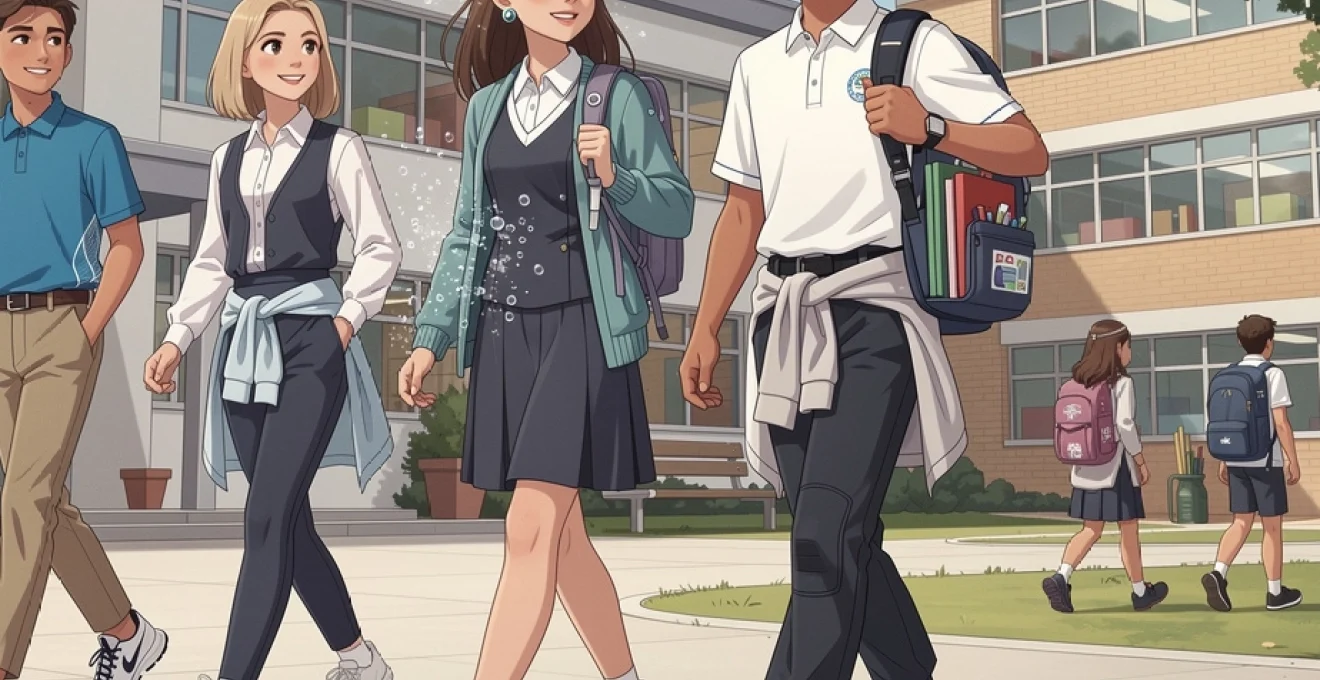
The transition back to school represents more than just a change in routine; it marks the beginning of a period where young people spend the majority of their waking hours in educational environments that demand both comfort and appropriate presentation. Modern school attire has evolved far beyond basic uniforms or casual wear, incorporating advanced textile technologies and design principles that address the unique challenges students face throughout their academic day. From moisture management during physical education to temperature regulation in varying classroom conditions, today’s school clothing must perform across multiple scenarios whilst maintaining an appearance that meets institutional standards and personal style preferences.
The intersection of functionality and aesthetics in school wardrobes reflects broader trends in performance apparel, where technical innovations once reserved for athletic wear now find applications in everyday educational settings. This evolution recognises that students are active individuals whose clothing needs extend well beyond simple coverage, requiring garments that can withstand the rigours of extended wear whilst supporting comfort and confidence throughout diverse academic activities.
Essential fabric technologies for school uniform durability
Contemporary school uniform fabrics incorporate sophisticated textile engineering that addresses the demanding requirements of educational environments. These technological advances ensure garments maintain their appearance and performance characteristics despite daily wear, frequent washing, and the varied activities students encounter throughout their academic schedule. Understanding these fabric innovations helps parents and students make informed decisions when investing in school wardrobes that must balance durability with comfort and regulatory compliance.
Moisture-wicking polyester blends for active students
Advanced polyester compositions form the backbone of modern school uniform moisture management systems. These engineered fibres feature microscopic channels that transport perspiration away from the skin through capillary action, ensuring students remain comfortable during physically demanding activities such as sports, playground activities, or simply navigating between classroom buildings. The integration of hydrophobic polyester cores with hydrophilic surface treatments creates a dual-action system that pulls moisture from the body whilst facilitating rapid evaporation from the fabric surface.
Modern polyester blends specifically designed for school uniforms typically incorporate 15-25% natural fibres such as cotton to maintain breathability and skin comfort whilst retaining the performance characteristics of synthetic materials. This combination addresses concerns about synthetic fabrics feeling artificial against the skin whilst preserving the durability and easy-care properties that busy families require. The result is clothing that maintains its shape, colour, and performance characteristics even after hundreds of wash cycles.
Wrinkle-resistant Cotton-Synthetic compositions
The challenge of maintaining crisp, professional appearances throughout busy school days has driven significant innovation in wrinkle-resistant fabric technologies. Contemporary cotton-synthetic blends utilise crosslinking agents at the molecular level to create memory properties within the fibre structure, allowing garments to return to their original smooth appearance even after being compressed in school bags or subjected to the normal movements of active students.
These formulations typically combine 60-70% cotton with synthetic fibres treated with resin finishes that create permanent press characteristics. The cotton component ensures breathability and natural comfort, whilst the synthetic elements provide shape retention and easy-care properties. Advanced treatments can reduce ironing requirements by up to 80%, representing significant time savings for busy families whilst ensuring students maintain appropriate appearances throughout their school day.
Stain-guard coating applications for High-Wear garments
School environments present numerous opportunities for staining, from art supplies and cafeteria spills to outdoor activities and everyday mishaps. Modern stain-guard technologies employ fluorine-free treatments that create microscopic barriers on fabric surfaces, causing liquids to bead rather than absorb into the fibre structure. These treatments maintain the fabric’s breathability whilst providing protection against both water-based and oil-based stains that commonly occur in educational settings.
Contemporary stain-resistant finishes demonstrate remarkable durability, maintaining their protective properties through 50+ wash cycles whilst remaining completely invisible to the wearer. The integration of these technologies into school uniform fabrics means that minor spills and stains can often be removed with simple blotting, reducing the need for immediate clothing changes or intensive cleaning treatments that can degrade fabric quality over time.
Stretch-recovery elastane integration in school trousers
The incorporation of elastane fibres in school trousers represents a significant advancement in garment comfort and durability. Strategic placement of 2-5% elastane content
allows the fabric to stretch with movement and then return to its original shape, minimising bagging at the knees and seat. Unlike older, rigid twill weaves, these modern compositions support natural motion during sitting, running and bending, while preserving a sharp, tailored silhouette that aligns with school dress codes. For students who spend long days moving between lessons, labs and outdoor spaces, this improved stretch-recovery profile translates directly into greater comfort and fewer split seams or worn areas across the school year.
From a cost-efficiency perspective, school trousers incorporating elastane often outlast their purely cotton counterparts, as the enhanced resilience reduces stress points and fabric distortion. Parents may notice that knees remain intact for longer and hems are less prone to fraying, even after repeated washing and daily wear. When combined with reinforced stitching in high-stress zones and fade-resistant dyes, elastane-blend trousers provide a robust foundation for back-to-school outfits that combine style, durability and all-day performance.
Strategic layering systems for variable classroom environments
School buildings frequently present challenging thermal conditions, with students moving between warm classrooms, cooler corridors and outdoor spaces throughout the day. A strategic layering system ensures that back-to-school outfits can adapt seamlessly to these fluctuating temperatures without compromising comfort or appearance. Rather than relying on one heavy garment, modern school wardrobes are increasingly built around technical base layers, adaptable mid-layers and protective outer shells that work together as an integrated clothing system.
By thinking in terms of layers, parents and students can reduce the number of separate items required while increasing overall versatility. Each layer serves a distinct function: regulating moisture next to the skin, trapping or releasing heat as needed, and shielding against wind and rain. This approach mirrors the performance clothing strategies used in outdoor and athletic industries, but is carefully adapted for the everyday realities of school life, including strict uniform policies and the need for garments that look smart and coordinate well.
Base layer thermal regulation with merino wool blends
Base layers form the foundation of any effective school layering system, sitting directly against the skin and managing both moisture and temperature. Merino wool blends have emerged as a particularly valuable option in this context, offering natural temperature regulation that keeps students warm in cool classrooms and comfortable during more active periods. Unlike traditional wool, fine-gauge Merino fibres are soft, non-itchy and highly breathable, making them suitable even for children with sensitive skin when used in well-constructed garments.
When combined with synthetic filaments such as polyester or nylon, Merino base layers gain additional durability and faster drying times, essential characteristics for school uniforms that must withstand frequent laundering. These blends can absorb up to 30% of their weight in moisture vapour before feeling damp, helping to reduce the clammy sensation that often occurs after playground activity or a brisk walk to school. For families building functional back-to-school outfits, investing in one or two high-quality Merino-blend base layers can significantly reduce the need for bulky jumpers or constant jacket changes.
Practical options for school use include long-sleeve undershirts, lightweight leggings worn beneath trousers or skirts, and thin vests that remain invisible under standard uniform blouses. Because Merino fibres are naturally odour-resistant, they stay fresher for longer, reducing washing frequency and extending garment life. This makes Merino-blend base layers an efficient choice in cost-per-wear terms, particularly in climates where mornings and afternoons can feel markedly different in temperature.
Mid-layer versatility through cardigan and jumper selection
The mid-layer is responsible for providing adjustable insulation, and in school settings this role is typically fulfilled by cardigans, jumpers and sleeveless vests. Selecting the right mid-layer pieces is crucial for creating back-to-school outfits that move easily from chilled classrooms to warmer, crowded spaces. Fine-knit cotton-acrylic blends are a strong choice here, as they combine the breathability of natural fibres with the shape retention and colourfastness of synthetics, ensuring that cardigans and jumpers maintain a neat appearance over time.
Button-front cardigans offer superior versatility compared with pullovers, as students can quickly open or remove them without disturbing collars, ties or hair. This is particularly helpful during exams or presentations, when minor adjustments can make a significant difference to comfort and concentration. Sleeveless knit vests provide another adaptable option, adding core warmth without restricting arm movement or creating excess bulk under blazers and coats.
From a style perspective, mid-layers also play an important role in refining the overall look of a school uniform. Thoughtful detailing—such as ribbed cuffs that stay in place, subtle contrast tipping that aligns with school colours, and reinforced elbows to resist desk wear—ensures that garments remain presentable throughout the academic year. By choosing mid-layers that layer cleanly over shirts and under blazers, families can build a compact yet flexible wardrobe that supports both formal occasions and everyday learning.
Outer shell weather protection with breathable membranes
Outer layers must balance protection from the elements with the need to prevent overheating during commutes and outdoor breaks. Modern school coats and jackets increasingly incorporate breathable membrane technologies—similar to those used in technical outdoor gear—to achieve this balance. These membranes feature microscopic pores that are small enough to block liquid water from rain, yet large enough to allow water vapour from perspiration to escape, helping students stay dry from both external moisture and internal humidity.
For back-to-school outfits in rainy or windy climates, look for outer shells rated with clear hydrostatic head and breathability figures, indicating their level of waterproofing and vapour transfer. Taped seams, storm flaps over zips and adjustable cuffs further enhance weather resistance, while mesh or lightweight knit linings improve comfort against the skin. When combined with reflective detailing and secure, zippered pockets, these engineered features support both safety and practicality during early-morning commutes and after-school activities.
Parents often find that investing in a single high-performance jacket with a breathable membrane reduces the need for multiple seasonal coats. A shell that is fully waterproof yet light enough for layering can be paired with different mid-layers throughout the year, from a simple polo shirt in September to a thick jumper in January. This modular approach ensures that students remain comfortably protected in diverse weather conditions without carrying excessive bulk or compromising on the smart, coordinated look expected of school outerwear.
Transitional pieces for indoor-outdoor temperature fluctuations
Between formal mid-layers and technical outer shells sits a category of transitional pieces designed specifically for rapid adaptation to changing environments. Lightweight gilets, softshell jackets and unlined blazers function as flexible components in a back-to-school wardrobe, providing just enough warmth and wind resistance to bridge the gap between classroom and playground. Their primary value lies in ease of removal and storage, allowing students to react quickly as temperatures shift without disrupting their schedule.
Softshell fabrics, which typically combine a stretch-woven outer face with a brushed inner surface, offer particular advantages in this role. They provide moderate weather protection, excellent mobility and a sleeker profile than traditional fleeces, making them suitable for schools with stricter dress codes. Gilets, or sleeveless bodywarmers, focus insulation on the core while leaving arms free, enhancing comfort for activities such as science labs, art classes or outdoor sports coaching.
From a practical perspective, choosing transitional garments with minimal bulk and integrated storage solutions—such as internal pockets and packable hoods—helps students manage their own comfort independently. When selecting these pieces, it is helpful to consider locker space, bag capacity and any uniform colour requirements to ensure that items integrate smoothly into the daily routine. Well-chosen transitional layers can significantly reduce complaints about being “too hot” or “too cold” and support steady concentration throughout the school day.
Footwear engineering for extended school day performance
Footwear is often the most overlooked component of back-to-school outfits, yet it has a profound impact on comfort, posture and long-term musculoskeletal health. Students routinely spend six to eight hours a day on their feet, walking between classrooms, standing during assemblies and participating in sports or extracurricular activities. Modern school shoes increasingly draw on performance footwear engineering to provide targeted cushioning, arch support and stability within designs that remain compliant with uniform regulations.
Key technologies include multi-density midsoles that distribute pressure more evenly across the foot, reducing fatigue during prolonged standing or walking. Anatomically shaped footbeds with built-in arch contours help maintain proper alignment, which can be particularly important during growth spurts when ligaments and tendons are under extra strain. Some school shoes now incorporate removable insoles to accommodate orthotic inserts, allowing customised support without sacrificing the smart, polished appearance required in many educational settings.
Outsole design also plays a critical role in extended school day performance. Non-marking rubber compounds with carefully engineered tread patterns provide reliable traction on a variety of surfaces, from polished corridors to wet playgrounds. Flex grooves positioned in line with natural foot movement enable the sole to bend where it should, reducing resistance and improving walking efficiency. Reinforced toe caps and abrasion-resistant heel counters further extend the lifespan of school shoes, ensuring that they remain structurally sound even after months of daily wear.
When selecting back-to-school footwear, it can be helpful to assess shoes using similar criteria applied to athletic trainers: does the shoe offer adequate cushioning, support and flexibility for the intended level of activity? Parents may wish to prioritise features such as padded collars to prevent rubbing, breathable linings to manage moisture and secure fastening systems—whether laces, Velcro straps or buckles—that keep the foot firmly in place. An initial investment in well-engineered school shoes often pays dividends in reduced complaints of sore feet, greater participation in physical activities and fewer mid-year replacements.
Ergonomic bag design and weight distribution principles
School bags function as mobile storage systems, carrying textbooks, laptops, sports kits and personal items throughout the day. Poorly designed bags or incorrect use can lead to excessive strain on developing backs and shoulders, making ergonomic design a critical factor in back-to-school outfitting. Current guidelines from paediatric health organisations suggest that a loaded school bag should not exceed 10–15% of a child’s body weight, yet studies frequently report higher loads, particularly in secondary and tertiary education environments.
Ergonomically engineered backpacks address these challenges through a combination of structural support and smart weight distribution. Padded, adjustable shoulder straps with a contoured shape help spread pressure evenly and prevent them from digging into the shoulders. A padded back panel, ideally with ventilation channels, improves comfort against the spine and reduces heat build-up during longer walks or commutes. Sternum straps and, in some designs, hip belts stabilise the load and transfer a portion of the weight from the shoulders to the torso and pelvis, promoting a more natural posture.
Internal organisation is another key element of ergonomic bag design. Heavier items such as laptops and textbooks should be positioned close to the back, reducing the leverage effect that can cause slouching or backward pulling. Multiple compartments and elasticated pockets keep contents from shifting and make it easier for students to access what they need without emptying the entire bag. From a style perspective, contemporary school backpacks blend these functional features with clean lines and neutral colourways that complement a wide range of back-to-school outfits.
For families, establishing simple usage habits can significantly enhance the benefits of an ergonomic bag. Encouraging students to declutter their backpacks weekly, use both shoulder straps rather than slinging the bag over one shoulder, and adjust strap length so the bag sits high on the back can all reduce strain. When combined with carefully planned footwear and layered clothing, a well-designed school bag completes a holistic approach to student comfort and health across the academic year.
Colour psychology and pattern integration in educational settings
Beyond fabric technologies and construction, the visual aspects of back-to-school outfits—particularly colour and pattern—can subtly influence mood, behaviour and even perceived competence. Colour psychology, while not an exact science, offers useful insights for selecting school clothing that supports focus and confidence. Cool, muted tones such as navy, charcoal and forest green are commonly favoured for core uniform pieces because they project calm authority, conceal minor marks and coordinate easily with a range of accent colours.
Warmer accent hues, used sparingly in ties, trims or accessories, can introduce energy and individuality without overwhelming the overall look. For example, a touch of red may convey dynamism and determination, while a soft yellow stripe can add warmth and approachability. Patterns such as subtle checks, pinstripes or small-scale plaids provide visual interest while remaining compatible with formal dress codes, especially when confined to skirts, ties or lining details. The key is to balance personality with cohesion, ensuring that individual clothing choices still reflect the shared identity of the school community.
For younger students, carefully chosen colours and patterns can also support emotional regulation and engagement. Softer shades and playful yet orderly prints—such as narrow stripes or evenly spaced motifs—may feel more approachable than stark, high-contrast combinations. In older age groups, classic patterns associated with academic or “Ivy League” style, like houndstooth or tartan, can subtly signal seriousness of purpose while still feeling contemporary when paired with modern cuts and technical fabrics.
Parents and students may find it helpful to think of colour and pattern as the “finishing layer” of back-to-school outfits, much like a well-designed user interface sits on top of complex software. Once functional requirements—such as durability, comfort and weather protection—are met, strategic use of colour allows for self-expression and confidence-building. Accessories including hairbands, socks, scarves and stationery can provide low-commitment ways to integrate preferred colours into an otherwise standard uniform, supporting a sense of individuality within institutional guidelines.
Cost-per-wear analysis for budget-conscious school wardrobes
While the initial outlay for back-to-school outfits can feel substantial, a cost-per-wear perspective often reveals that investing in higher-quality, technically advanced garments offers better long-term value. Cost-per-wear is calculated by dividing the purchase price of an item by the number of times it is worn; a more expensive blazer that lasts three years and is worn 150 times per year can ultimately be more economical than a cheaper alternative that needs replacing annually. This analytical approach helps parents distinguish between headline price and genuine affordability over the lifespan of a school wardrobe.
Fabric technologies discussed earlier—such as moisture-wicking blends, stain-guard coatings and stretch-recovery elastane—directly influence cost-per-wear by extending the functional life of garments. Shirts that resist wrinkles and staining reduce both replacement frequency and ancillary costs such as ironing time and specialist cleaning. Trousers that retain their shape and colour after repeated washes remain acceptable within school dress codes for longer, delaying the need for new purchases. Similarly, well-engineered school shoes and ergonomic backpacks, though sometimes higher in upfront cost, can serve multiple academic years with minimal performance degradation.
To make cost-per-wear analysis practical, families can identify a core set of essential items—such as two to three pairs of trousers or skirts, several shirts or blouses, a blazer and one high-quality coat—and prioritise investment in these pieces. Supplementary items like fashion-led accessories or trend-driven layers can then be sourced more economically, including from second-hand or uniform exchange schemes, without compromising the reliability of the overall wardrobe. This strategy mirrors capsule wardrobe principles, where a smaller number of versatile, durable items form the backbone of daily outfits.
Adopting a cost-per-wear mindset also encourages more sustainable consumption habits. By choosing garments that last longer and maintaining them carefully—through appropriate washing temperatures, prompt stain treatment and periodic checks for minor repairs—families reduce textile waste and the environmental footprint associated with frequent replacements. In this way, back-to-school outfits that combine style and functionality do more than support individual students; they contribute to a broader culture of thoughtful, responsible uniform purchasing that benefits households, schools and the wider environment alike.