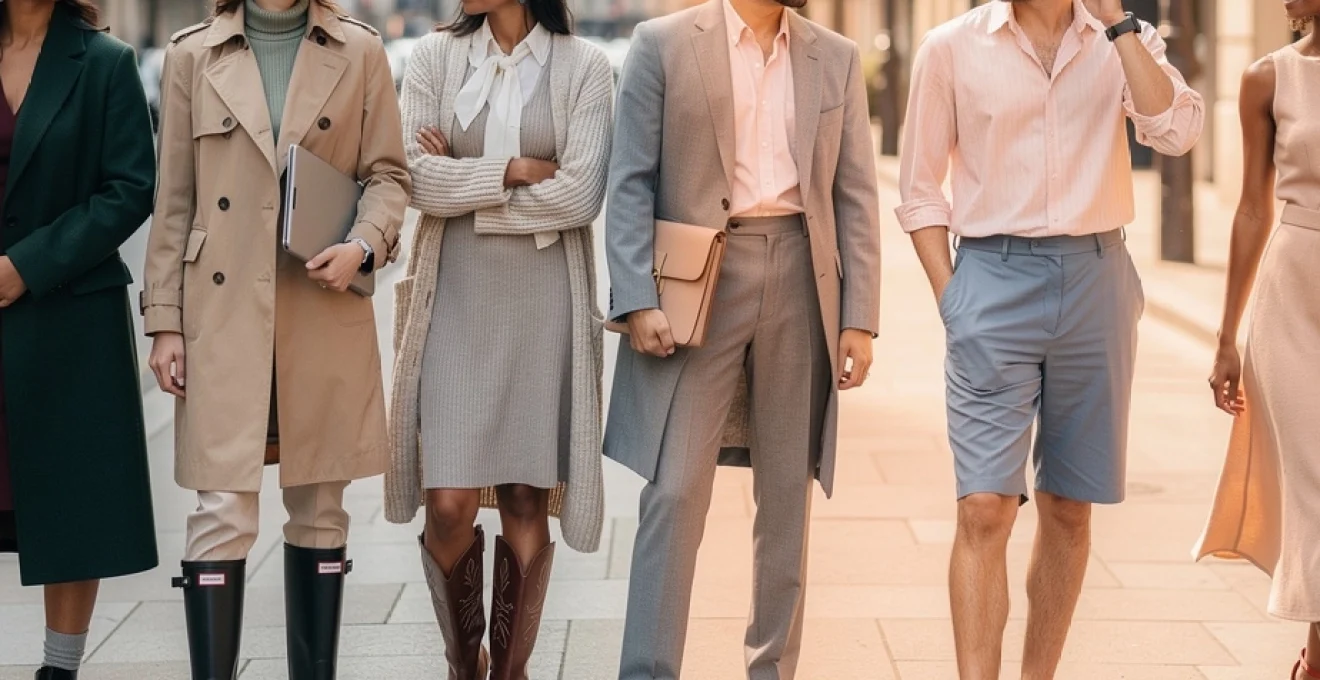
The footwear landscape continues to evolve at breakneck speed, with designers pushing boundaries while simultaneously drawing inspiration from decades past. From the polished runways of Paris Fashion Week to the bustling streets of London and New York, seasonal shoe trends emerge as powerful style statements that can transform an entire wardrobe. Understanding how to navigate these shifting trends whilst maintaining personal style requires both fashion awareness and practical wisdom.
Modern consumers face an unprecedented array of footwear choices, from minimalist ballet pumps that channel Parisian chic to bold platform sneakers that make architectural statements. The challenge lies not in identifying trending styles, but in seamlessly integrating them into daily wardrobes across different seasons and occasions. Strategic footwear selection can elevate casual ensembles, provide comfort during long working days, and transition effortlessly from professional environments to social gatherings.
Autumn/winter 2024-25 footwear collections: runway analysis and market predictions
The autumn/winter collections have delivered compelling narratives around comfort, craftsmanship, and creative expression. Leading fashion houses have embraced a philosophy that prioritises both aesthetic appeal and practical functionality, recognising that contemporary consumers demand versatility from their footwear investments. This season’s standout trends reflect broader cultural shifts towards sustainability, comfort-conscious dressing, and individual expression through carefully curated accessories.
Market analysts predict that consumers will gravitate towards shoes that offer longevity and adaptability, moving away from fast fashion towards considered purchases. The emphasis on quality construction techniques and premium materials suggests a maturation in consumer attitudes towards footwear, with investment pieces taking precedence over disposable trends. This shift creates opportunities for brands that prioritise craftsmanship and timeless design principles.
Prada’s chunky platform revival and styling applications
Prada’s reimagined platform designs have captured attention through their architectural approach to proportion and silhouette. These substantial soles provide both visual impact and practical comfort, featuring advanced cushioning technology wrapped in luxurious leather finishes. The brand’s signature minimalist aesthetic translates beautifully onto chunky platforms, creating shoes that feel both futuristic and timelessly elegant.
Styling these statement platforms requires careful attention to proportion and balance. Cropped trousers work exceptionally well, allowing the full silhouette of the shoe to emerge whilst maintaining clean lines. Wide-leg jeans create dramatic contrast against the structured sole, whilst midi skirts provide feminine counterpoint to the shoe’s bold presence. The key lies in allowing the platform to serve as the outfit’s focal point whilst keeping other elements relatively understated.
Bottega veneta’s puddle boot phenomenon in street style integration
The iconic puddle boot has transcended its initial novelty status to become a legitimate wardrobe staple. Its distinctive oversized silhouette challenges traditional notions of proportion whilst delivering unexpected versatility across styling contexts. The boot’s sculptural quality transforms ordinary outfits into fashion-forward statements, making it particularly appealing to style-conscious consumers seeking distinctive pieces.
Successful integration of puddle boots requires embracing their inherent drama rather than attempting to minimise their presence. Tucking slim-fit trousers into the boot creates sleek, streamlined silhouettes that emphasise the leg line. Alternatively, wearing wide-leg trousers over the boot creates intriguing layered textures and proportions. The boot’s neutral colourways ensure compatibility with diverse wardrobe palettes, from monochromatic schemes to bold colour combinations.
The row’s minimalist loafer evolution for professional wardrobes
The Row’s approach to loafer design epitomises sophisticated minimalism, featuring clean lines and impeccable construction techniques. These shoes represent the perfect intersection of professional appropriateness and contemporary style sensibility. The brand’s commitment to quality materials and precise craftsmanship ensures longevity, making these loafers exceptional investment pieces for career-focused wardrobes.
Professional styling of minimalist loafers centres on their ability to bridge formal and casual aesthetics seamlessly. Paired with tailored trousers and crisp shirts, they provide polished alternatives to traditional oxford shoes. The loafers also excel in smart-casual contexts, elevating weekend
Professional styling of minimalist loafers centres on their ability to bridge formal and casual aesthetics seamlessly. Paired with tailored trousers and crisp shirts, they provide polished alternatives to traditional oxford shoes. The loafers also excel in smart-casual contexts, elevating weekend denim, knitted co-ords, and minimalist dresses without appearing overdressed. For maximum wearability, many stylists recommend investing in neutral colourways such as black, chocolate, or deep tan, which pair effortlessly with existing capsule wardrobes. Adding subtle texture through brushed leather or suede can also soften sharply tailored silhouettes, creating balance in professional outfits.
Ganni’s western boot silhouettes and contemporary styling methods
Ganni’s take on the western boot for autumn/winter 2024-25 sits firmly in the “fashion-forward yet wearable” category. Instead of leaning into costume, the brand refines cowboy motifs through tapered toes, mid-height block heels, and graphic panel detailing in monochrome or muted colour contrasts. These boots are engineered for urban living: supportive soles, stable heels, and durable leather uppers designed to withstand real-world commutes, not just runway appearances. As searches for “western-inspired ankle boots” continue to climb season-on-season, it’s clear that this silhouette is moving from niche trend to recurring wardrobe staple.
To wear western boots without veering into rodeo territory, balance is essential. Ganni’s styling playbook often pairs them with oversized blazers and mini skirts, or relaxed denim and sharp shirting, which tempers the boot’s character with clean, modern lines. For office environments, a sleek black western ankle boot worn with a midi slip skirt and fine-knit roll-neck reads subtly directional rather than theme-driven. On weekends, you can dial up the attitude with straight-leg jeans, a white T-shirt, and a tailored coat, allowing the boots to add just the right amount of personality.
Spring/summer 2025 emerging silhouettes: technical construction and wearability
As we look ahead to spring/summer 2025, footwear design pivots towards lightweight construction, technical innovation, and warm-weather practicality. Brands are investing in breathable textiles, ergonomic insoles, and modular elements that adapt to different contexts throughout the day. Consumers increasingly expect their seasonal shoes to work across commutes, office hours, and evening plans, prompting designers to merge performance features with refined aesthetics. The result is a set of silhouettes that feel futuristic yet surprisingly easy to integrate into everyday wardrobes.
The key to navigating spring/summer 2025 shoe trends lies in scrutinising how each style is built as much as how it looks. Mesh panels, padded straps, and engineered footbeds all influence long-term comfort, especially in warmer climates. At the same time, brands are reinterpreting classic summer shapes—sandals, espadrilles, mules—through subtle architectural tweaks and updated materials. By understanding the technical aspects behind these designs, you can invest in pieces that feel current now and remain wearable for several seasons.
Mesh athletic hybrids: balenciaga’s technical innovation approach
Balenciaga’s mesh athletic hybrids epitomise the fusion of high fashion and performance technology that defines the new season. These shoes typically feature multi-layer mesh uppers, reinforced overlays, and exaggerated soles that reference both trail runners and skate sneakers. Despite their bold appearance, key engineering details—breathable panels, lightweight EVA midsoles, and shock-absorbing footbeds—are all geared towards daily wear. For consumers who favour a “one-sneaker-does-it-all” approach, this hybrid category offers a compelling solution.
Styling mesh athletic hybrids effectively means treating them as the anchor of your outfit. Pair them with tailored shorts and a linen shirt for a high-low city look, or with relaxed suiting to soften formality while keeping a sharp edge. If you prefer minimalist clothing, these trainers can function as your sole statement piece; stick to a neutral palette in your garments and let the shoe’s sculptural lines and colour accents provide visual interest. Wondering if such a technical design works beyond off-duty dressing? The answer is yes—when combined with pared-back separates, they read contemporary rather than overly sporty.
Strappy sandal architecture: hermès oran alternatives and styling versatility
The Hermès Oran sandal has become a summer icon, prompting a wave of alternatives that mimic its clean, architectural straps and flat, comfortable sole. For spring/summer 2025, many brands reinterpret this “cut-out slide” blueprint using cushioned leather insoles, subtly squared toes, and reinforced stitching for durability. The appeal is obvious: these sandals feel elevated enough for city wear yet relaxed enough for resort settings. When evaluating Oran-inspired designs, pay attention to leather quality, heel padding, and sole flexibility to ensure all-day comfort.
In terms of styling, strappy flat sandals are some of the most adaptable shoes in a warm-weather wardrobe. They pair seamlessly with wide-leg linen trousers, shirt dresses, and structured shorts, offering an easy route to “quiet luxury” summer outfits. For office-appropriate looks, opt for deeper tones—tan, espresso, or black—and combine them with a midi dress and lightweight blazer. On holiday, lighter hues and metallic finishes work beautifully with kaftans, cotton co-ords, and swimsuits layered under open shirts. Think of these sandals as the refined alternative to flip-flops: just as easy to wear, but instantly more polished.
Platform espadrille engineering: castañer collaboration techniques
Platform espadrilles are evolving beyond simple rope soles, with brands like Castañer experimenting with layered jute, rubber inserts, and reinforced arches. Collaborative collections for 2025 showcase clever engineering: staggered platform heights for better weight distribution, padded heel cups to prevent rubbing, and anti-slip outsoles suited to both cobblestones and beachfront promenades. This technical refinement transforms the espadrille from a holiday-only shoe into a viable option for city summers.
When styling platform espadrilles, proportional awareness is key. Because they visually “ground” the lower half of the body, they pair particularly well with floaty midi dresses, wide-leg trousers, and tiered skirts, where they counterbalance volume above. You can also use them to add subtle height under cropped jeans or tailored culottes, maintaining comfort while elongating the leg line. If you typically avoid heels but want a little lift for garden parties or summer weddings, a well-made platform espadrille offers a stable, walkable alternative to stilettos.
Pointed-toe mule construction: mansur gavriel design philosophy
Mansur Gavriel’s pointed-toe mules capture the ongoing demand for shoes that transition smoothly from desk to dinner. Their design philosophy centres on slim, elongated toes balanced by cushioned insoles, low to mid block heels, and soft nappa or suede uppers that mould to the foot. Unlike sharply structured pumps, these mules prioritise flexibility and ease of wear—you simply slip them on, yet the pointed silhouette instantly refines the entire outfit. It’s a subtle reminder that construction can be as transformative as colour or embellishment.
To wear pointed mules effortlessly, use them as a modern replacement for classic pumps. For daytime, pair them with ankle-grazing tailored trousers and a tucked-in shirt for a streamlined, professional silhouette. In the evening, they work beautifully with slip skirts, bias-cut dresses, or even straight-leg jeans and a camisole, adding elegance without sacrificing comfort. If you’re concerned about pointed shoes feeling too formal, choose softer shades—cream, blush, or dove grey—and look for slightly wider vamps that show less of the toes, creating a more relaxed impression.
Colour psychology in seasonal footwear: pantone influence and coordination strategies
Colour plays a powerful role in how we perceive footwear trends, and seasonal palettes are increasingly guided by Pantone forecasts. For autumn/winter 2024-25, rich burgundies, forest greens, and deep blues align with a broader shift towards grounding, stabilising tones. By contrast, spring/summer 2025 introduces optimistic pastels, sunlit yellows, and aquatic blues that speak to escapism and renewal. Understanding these cues can help you choose shoe colours that not only feel current, but also support the mood you want your outfits to convey.
From a coordination standpoint, it often helps to think of shoes as either anchors or accents. Anchor shades—black, brown, navy, taupe—create coherence across a wardrobe and rarely date, making them ideal for investment pairs. Accent tones, such as Pantone-led seasonal brights or metallics, function more like jewellery: they draw the eye and can transform simple outfits with minimal effort. Ask yourself: do you want this pair to disappear into your outfit, or be the first thing people notice? Your answer will guide whether you choose understated neutrals or statement hues.
Transitional styling methodologies: cross-seasonal wardrobe integration techniques
One of the most practical approaches to footwear today is choosing styles that “bridge” seasons instead of serving a single weather window. With climate patterns becoming increasingly unpredictable, cross-seasonal shoes—loafers, ankle boots, technical trainers—offer valuable continuity. The goal is to build a rotation where each pair can adapt through layering tactics: socks, tights, trouser lengths, and fabric weights. When done well, this approach maximises cost-per-wear and reduces the need for constant seasonal overhauls.
Transitional styling is less about owning more shoes and more about wearing what you have in smarter ways. Slight tweaks—switching from bare ankles to ribbed socks, or from floaty dresses to structured denim—allow the same footwear to feel appropriate in shifting temperatures. Think of your shoes as constant “hardware” and your clothing layers as interchangeable “software” that updates the look. The following techniques, inspired by leading brands, demonstrate how to apply this mindset in everyday dressing.
Layered sock styling with statement boots: ganni and acne studios methods
Layered sock styling has emerged as a subtle yet effective way to extend the wear of statement boots across seasons. Ganni and Acne Studios often showcase bold ankle and mid-calf boots anchored by visible socks in contrasting colours or textures. This combination serves both functional and aesthetic purposes: it adds warmth on cooler days while framing the boot and drawing attention to its design details. As a result, boots that might otherwise feel “too heavy” for early autumn or spring become more adaptable through clever styling.
To replicate this technique, start with a statement boot—perhaps a coloured western style, chunky Chelsea, or graphic rubber design—and pair it with mid-weight ribbed or textured socks. Let the sock edge peek out by two to four centimetres above the boot, creating a deliberate visual break between footwear and trouser or skirt hemline. Worried about appearing overly styled? Keep the rest of your outfit minimal: straight jeans, a simple knit, and an oversized coat will allow the boot-and-sock combination to remain the focal point without overwhelming the look.
Ankle boot proportioning with midi hemlines: the frankie shop approach
The Frankie Shop has become known for its mastery of proportions, and its approach to pairing ankle boots with midi hemlines offers a useful template. The key insight: the gap between the top of the boot and the hem of the skirt or dress has a significant effect on how balanced the outfit appears. Too large a gap can visually “cut” the leg, while too little can make the look feel heavy. Carefully calibrating this space creates an elongated, streamlined silhouette that works across seasons.
For most body types, a midi length that hits mid-calf paired with an ankle boot that finishes just above the ankle bone creates a flattering ratio. The Frankie Shop often combines structured boots with fluid skirts or dresses, allowing movement in the fabric to offset the solidity of the shoe. You can apply the same principle using what you already own: experiment in front of a mirror with different skirt lengths and boot heights, noting which combinations feel the most cohesive. In transitional months, add sheer tights and a tailored blazer for extra warmth without sacrificing balance.
Trainer integration in smart-casual ensembles: veja and golden goose applications
Trainers have firmly established themselves as smart-casual essentials, with brands like Veja and Golden Goose leading the charge. Their designs balance clean, minimalist lines with distinctive branding and considered colour palettes, making them easy to pair with tailored pieces as well as denim. For many professionals navigating hybrid work patterns, a polished trainer now fills the gap between formal shoes and purely athletic sneakers. The emphasis is on premium materials—leather, suede, recycled textiles—that age well and justify repeated wear.
To integrate trainers into smart-casual outfits, treat them with the same respect you would a leather loafer. Keep them clean, choose streamlined silhouettes, and coordinate colours with your overall palette. A crisp white Veja worn with tailored trousers, a fine knit, and a trench coat reads intentional rather than casual. Distressed Golden Goose styles, meanwhile, work best when balanced by elevated garments such as structured blazers or well-cut jeans, ensuring the overall look remains refined. Ask yourself: does the trainer elevate the outfit, or does the outfit feel built around the trainer? The former is usually more successful for professional contexts.
Heel height progression: day-to-evening transition strategies
Navigating heel heights throughout the day is both a comfort question and a styling strategy. Many brands now propose a “heel progression” approach: starting with flats or low block heels for daytime activities and switching to mid-height mules or pumps for evening plans. This doesn’t necessarily require multiple pairs in your bag; instead, it encourages choosing versatile shoes that sit in the 4–6 cm range—high enough to refine posture, low enough for genuine walkability. As more of us favour spontaneous after-work socialising, such transitional pairs become increasingly valuable.
Practically, you can structure your wardrobe around two or three key heel heights: flat (0–2 cm) for commuting and errands, mid (4–6 cm) for all-day wear, and higher (7+ cm) reserved for special occasions. When planning day-to-night looks, build outfits that work with both a flat and a mid heel—think ankle-length trousers, wrap dresses, or straight-leg jeans—so that a shoe change subtly shifts the mood without requiring a full outfit swap. A pointed mid-heel mule or sleek kitten heel sandal can instantly transform a blazer-and-denim combination, taking you from desk to dinner with minimal effort.
Investment piece selection: cost-per-wear analysis and longevity factors
With footwear prices continuing to rise, selecting investment pieces strategically is more important than ever. Cost-per-wear analysis offers a simple yet powerful framework: divide the price of a pair by the number of times you realistically expect to wear it. A £400 loafer worn three times a week for two years can, in practice, be better value than a £90 trend-led sandal that’s only worn on a handful of occasions. This mindset encourages you to prioritise durability, versatility, and comfort over fleeting novelty.
When assessing a potential investment shoe, examine several longevity factors. Construction matters: Goodyear-welted or Blake-stitched soles are generally more repairable than glued alternatives. Material quality is equally crucial; full-grain leather and robust suedes tend to age gracefully, while very soft, untreated leathers may mark easily. Timelessness of design should also be considered—classic loafers, ankle boots, and minimal trainers historically outlast highly specific trends. Finally, ask yourself whether the shoe harmonises with your existing wardrobe colour palette and lifestyle; the most sustainable and cost-effective pair is the one you genuinely reach for week after week.
Digital styling tools: virtual try-on technology and social media integration
The rise of digital styling tools is reshaping how we discover and evaluate seasonal shoe trends. Virtual try-on technology—available through many brand apps and retailer platforms—allows you to see how a style might look on your feet or with your outfit before committing. While not perfect, these tools can help you assess proportions, colours, and overall vibe, reducing the risk of costly mistakes. For those who shop primarily online, this feels a bit like having a digital fitting room at your fingertips.
Social media, meanwhile, functions as a real-time barometer for which footwear styles are gaining traction. Hashtags, saved collections, and creator content offer endless examples of how to wear specific shoes across different body types, climates, and dress codes. Instead of treating every viral trend as a must-buy, use these platforms as research tools: observe how often a shoe appears styled in practical, repeatable ways versus purely editorial settings. By combining virtual try-on features with curated social inspiration, you can make more informed, confident decisions—building a footwear wardrobe that feels both current and deeply aligned with your personal style.