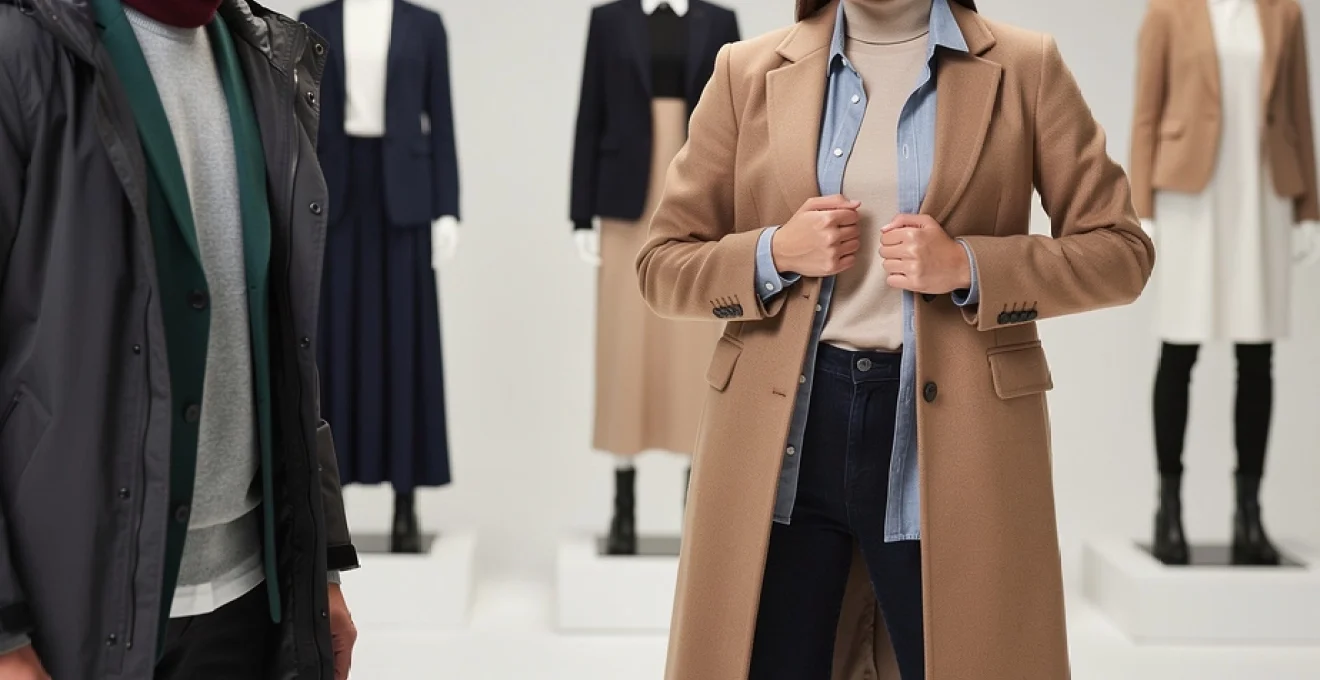
Layering has evolved from a simple cold-weather necessity into a sophisticated sartorial technique that defines contemporary fashion. The art of combining multiple garments isn’t merely about staying warm—it’s about creating visual interest, expressing personal style, and adapting seamlessly to fluctuating temperatures throughout the day. From the runways of New York Fashion Week to the streets of London, thoughtful layering has become the hallmark of the well-dressed individual who understands that true style lies in the details. Whether you’re navigating the unpredictable British weather or simply looking to elevate your everyday wardrobe, mastering the principles of strategic layering will transform how you approach getting dressed each morning.
Understanding fabric weight and texture combinations for optimal layering
The foundation of successful layering begins with understanding how different fabric weights interact with one another. The key principle is simple yet often overlooked: start thin and build progressively thicker. This approach prevents unnecessary bulk whilst maintaining freedom of movement throughout your day. When you understand fabric properties, you can create outfits that provide both thermal regulation and visual sophistication without appearing overwhelmed by clothing.
Lightweight base layers: merino wool, silk, and synthetic microfibre foundations
Your base layer serves as the invisible architecture of any layered outfit. Merino wool stands out as an exceptional choice due to its natural temperature-regulating properties—it keeps you warm when temperatures drop yet remains breathable when you’re indoors. Unlike traditional wool, merino fibres are incredibly fine, measuring less than 24 microns in diameter, which eliminates the scratchy sensation often associated with woollen garments. This makes it comfortable enough to wear directly against your skin throughout the day.
Silk presents another luxurious option for base layers, offering a smooth texture that allows subsequent layers to glide over it effortlessly. The natural protein structure of silk provides excellent insulation relative to its weight, making it particularly valuable when you need warmth without bulk. For those seeking more budget-friendly alternatives, modern synthetic microfibres have advanced significantly, with many technical fabrics now offering moisture-wicking properties that keep you dry during transitional moments between outdoor and indoor environments.
Mid-weight transitional pieces: cotton poplin, jersey knits, and chambray applications
The middle layer is where you begin to introduce personality and texture into your outfit. Cotton poplin shirts serve as versatile transitional pieces that bridge the gap between your base layer and outer garments. The tight weave of poplin creates a crisp appearance whilst maintaining enough body to hold its shape when layered beneath heavier pieces. Jersey knits, whether in cotton or wool blends, offer comfortable stretch that moves with you without creating restrictive bunching.
Chambray deserves particular attention as a mid-weight fabric that closely resembles denim but with significantly less bulk. Its plain weave construction using coloured warp and white weft threads creates visual interest without the weight penalty of traditional denim. When you’re building a layered outfit, chambray shirts can be worn buttoned as a standalone middle layer or left open as a transitional piece between a fitted base and a structured outer garment. The fabric’s inherent casual elegance makes it appropriate for environments ranging from creative offices to weekend outings.
Heavy outer layers: wool blends, cashmere, and technical outerwear fabrics
Your outer layer serves dual purposes: it must protect you from the elements whilst framing the entire composition of your outfit. Wool blends, particularly those combining wool with synthetic fibres like polyester or nylon, offer durability and weather resistance without sacrificing the natural breathability of pure wool. These blends typically maintain their shape better over time and resist pilling—that frustrating formation of small fabric balls that can make garments appear worn.
Cashmere represents the pinnacle of luxury in outer layering, derived from the soft undercoat of cashmere goats. A high-quality cashmere coat or cardigan provides exceptional warmth relative to its weight, though it requires more careful maintenance than wool blends. For those facing genuinely harsh weather conditions, technical outerwear fabrics incorporating membrane technologies offer waterproofing and windproofing capabilities.
Many of these modern coats and parkas feature breathable laminates and taped seams, allowing perspiration to escape whilst shielding you from rain, sleet, and biting winds. When pairing technical outerwear with more traditional fabrics, pay attention to the overall finish—matte shells tend to harmonise better with wool, denim, and knitwear than ultra-shiny options. You can also use details like contrasting zips, quilting, and subtle colour blocking to echo textures found elsewhere in your layered outfit. This ensures that even highly functional pieces still feel integrated into your wider wardrobe rather than appearing purely utilitarian.
Texture contrast techniques: pairing smooth silks with chunky cable knits
Texture is to layering what seasoning is to cooking: the right combination can elevate even the simplest ingredients. One of the most reliable texture tricks is to pair sleek fabrics such as silk, viscose, or fine cotton with more rugged weaves like cable knits, bouclé, or brushed wool. The contrast draws the eye and prevents a heavy winter outfit from looking flat. For example, a silk camisole under a chunky cardigan or a satin shirt beneath a textured wool blazer creates an intentional, fashion-forward feel.
When mixing textures, think in terms of scale. Larger, more pronounced textures—like fisherman knits or teddy coats—work best when grounded by smoother surfaces so that the outfit doesn’t feel visually noisy. Conversely, an all-smooth ensemble (say, a jersey tee, cotton blazer, and twill trousers) may benefit from a single tactile element like a ribbed scarf or a suede boot. Ask yourself: does each layer add something new—whether shine, softness, or structure—or is it simply repeating what’s already there?
Texture contrast is also a clever way to make layering more flattering. Shiny or smooth fabrics tend to reflect light, drawing attention, while matte and fuzzy textures absorb it. If you would rather downplay certain areas, place your chunkier, more matte fabrics there and keep lustrous textures where you want the eye to linger. Over time, you will start to treat your wardrobe like a toolkit, selecting textures as carefully as colours to build a cohesive, fashionable layered outfit.
Mastering the rule of three: strategic garment stacking methods
Whilst there are no rigid rules in fashion, the “rule of three” is an invaluable guideline when you are learning how to master layering for a fashionable outfit. At its core, this rule suggests building most looks around three visible clothing layers on your upper body: a foundation, a middle layer, and an outer layer. This structure creates enough depth to look intentional without tipping into bulk. You can still play with additional elements—like scarves or gilets—but anchoring your outfit in these three tiers keeps everything coherent.
Think of the rule of three as the architectural framework of your outfit. Once you have a reliable formula, you can experiment with colours, prints, and proportions much more confidently. A fitted T-shirt, a cotton shirt, and a blazer; or a thin turtleneck, a crewneck jumper, and a longline coat—these combinations are timeless for a reason. From there, you can rebuild the same structure for different seasons simply by swapping fabrics and weights.
Foundation layer selection: fitted t-shirts, camisoles, and thermal underlayers
The foundation layer in a layered outfit should be comfortable, breathable, and relatively close-fitting. This is where pieces like ribbed camisoles, slim T-shirts, lightweight roll-necks, and technical thermals earn their keep. A snug base layer traps a thin layer of air close to the body, which acts as natural insulation, whilst also ensuring that subsequent layers slide on smoothly. If the base is too bulky or too loose, you will quickly find sleeves bunching and hems riding up throughout the day.
Material choice again plays a critical role. In cooler climates, fine merino or heat-retaining synthetic blends work particularly well as invisible thermal underlayers beneath shirts and jumpers. In milder weather, cotton or modal jersey provides enough softness and breathability without adding warmth. Consider neckline, too: a scoop-neck camisole will disappear under low-cut tops, while a slim turtleneck can become a visible, graphic element under V-neck jumpers and dresses.
If you are unsure where to start, build a small rotation of neutral base layers in black, white, and skin-adjacent tones. These pieces should feel almost like a second skin—you barely notice them once they are on, but they make every layered outfit more comfortable and polished. Over time, you can introduce more fashion-led options like striped long-sleeve tops or lace-trimmed camisoles that double as subtle focal points when peeking out from under other garments.
Middle layer styling: button-down shirts, lightweight jumpers, and waistcoats
The middle layer is where you can begin to showcase more of your personal style. Classic button-down shirts in cotton poplin or chambray remain perennial favourites, as they can be worn fully buttoned for a crisp effect or left partially open for a relaxed feel. Lightweight jumpers—such as fine-gauge crewnecks or V-necks—add warmth without excessive bulk and look especially refined over slim base layers. Waistcoats, whether in tailored suiting fabric or knitted yarns, are enjoying a resurgence as a chic way to build structure at the core of your outfit.
When styling this layer, think about how much of it you want to be visible. Do you prefer the clean line of a closed jumper over a hidden base, or do you like the visual rhythm of a shirt collar, cuff, and hem peeking out? Consider rolling shirt sleeves over the cuff of a jumper or letting a longer shirt tail extend beneath a cropped knit to create deliberate lines. These subtle styling decisions can make a simple pairing look editorial rather than accidental.
It is also worth playing with prints and colours in your middle layer, as this is often the piece that sits closest to eye level. A striped Breton top under a blazer, a floral blouse beneath a solid cardigan, or a jewel-toned waistcoat over a monochrome foundation can all become central talking points. The trick is to keep either the base or outer layer relatively restrained, so that the middle does not have to compete for attention.
Statement outer layer: blazers, cardigans, and structured coats
Your outer layer is the frame of your entire look and often the first element people notice. A well-cut blazer instantly sharpens a layered outfit, whether thrown over denim and a T-shirt or paired with a silk blouse and tailored trousers. Longline cardigans bring softness and movement, making them ideal for those who prefer a more relaxed aesthetic. Structured coats—think trench coats, wool overcoats, and tailored wrap coats—offer both warmth and architectural lines that elongate the body.
When choosing a statement outer layer, consider both function and frequency of wear. A neutral blazer in black, navy, or camel can be rotated across the workweek and dressed down at weekends, maximising cost per wear. Meanwhile, a bold-coloured or patterned coat (leopard print, houndstooth, or plaid) can transform even the simplest jeans-and-jumper combination into a fashion statement. Ask yourself: does this outer layer work with at least three outfits you already own? If the answer is yes, it is likely a smart layering investment.
Fit is crucial here; you should comfortably be able to wear your preferred base and mid layers underneath without feeling restricted across the shoulders or upper arms. When shopping, try on coats and blazers over a jumper rather than a single thin top to ensure realistic ease. This extra consideration will allow you to build layered outfits that feel as good as they look, even when temperatures drop.
Breaking convention: four and five-layer advanced techniques for winter dressing
Once you are confident with the rule of three, you can begin to experiment with four- and even five-layer combinations for deep winter or particularly fashion-forward looks. Think of these advanced techniques as modular dressing: instead of relying on one bulky coat, you stack several lighter layers that can be added or removed as your environment changes. For instance, a thermal top, a shirt, a fine knit, a blazer, and a wool overcoat together offer serious warmth, yet each piece can function independently when you move from frosty streets to heated interiors.
The key to multi-layer outfits that still look sleek is to vary both fabric weight and silhouette as you move outward. Start with fitted, stretchy layers closest to the skin, then gradually introduce slightly more volume. Avoid putting two very thick, stiff pieces directly on top of each other, as this can create a boxy, restrictive shape. Instead, pair a thin roll-neck with a mid-weight jumper, then add a structured blazer and finish with a roomy, softly tailored coat.
Accessories can act as “micro-layers” in these outfits, adding warmth and interest without overwhelming the frame. A scarf looped over a blazer but under a coat, a thin gilet worn between jumper and outerwear, or arm warmers peeking from under a coat sleeve all contribute to a sense of considered complexity. If you ever feel unsure whether you have gone too far, perform a simple mirror test: remove one layer and see if the outfit still feels balanced. Often, the most successful advanced layering looks are the ones where every item earns its place.
Colour theory and tonal layering strategies
Colour is one of the most powerful tools you have when learning how to master layering for a fashionable outfit. While fabric and fit determine comfort, colour choices shape the overall mood and sophistication of your look. Thoughtful colour combinations can make a multi-layered ensemble feel harmonious, whereas clashing tones can create visual clutter. By understanding a few core principles from colour theory—monochrome, complementary contrast, and the role of neutrals—you can build outfits that feel both intentional and expressive.
One helpful way to think about colour in layering is to imagine your outfit as a vertical gradient. The hues you place near your face have the greatest impact, so it is wise to choose shades that flatter your complexion there. Deeper or darker tones can then be used further down the body for grounding. Whether you gravitate toward cool navies and greys, warm camels and browns, or vibrant jewel tones, the same rules apply: repeat a colour at least once, and let one tone take the lead while others support.
Monochromatic layering: creating depth with varying shades of navy, grey, and beige
Monochromatic layering—building an outfit around different shades of the same colour family—is one of the easiest ways to look polished with minimal effort. By sticking to, say, a navy palette, you allow texture and silhouette to take centre stage while maintaining overall cohesion. Picture a midnight-blue wool coat over a slate-blue jumper and ink-blue denim; the subtle variations in shade prevent the outfit from feeling flat, yet everything reads as a single, sophisticated story.
Grey and beige are particularly effective for monochrome layered looks because they transition seamlessly across seasons. In winter, you might combine a charcoal turtleneck, mid-grey blazer, and pale grey coat for a sleek, city-ready ensemble. In spring, swap the heavier pieces for a dove-grey T-shirt, light cardigan, and soft trench. You can treat monochromatic dressing almost like working in black-and-white photography—the interest comes from light and shadow rather than bold splashes of colour.
To avoid a monochrome outfit feeling dull, pay special attention to fabric variety. A wool coat, cashmere jumper, cotton shirt, and leather bag all reflect light differently even when they share a similar hue. This interplay of matte and sheen, smoothness and texture, tricks the eye into perceiving greater dimension. If you crave a tiny bit of contrast, introduce a single accent—a white T-shirt at the neckline, a metallic necklace, or a coloured lip—whilst keeping the primary colour palette intact.
Complementary colour blocking: burgundy with forest green and camel combinations
For those who enjoy bolder statements, complementary colour blocking within layered outfits can be both striking and chic. Complementary colours sit opposite each other on the traditional colour wheel—think green and red, blue and orange, purple and yellow. In fashion, we typically soften these pure hues into more wearable versions, such as pairing forest green with burgundy rather than bright green with true red. The slight contrast adds energy without veering into festive costume territory.
Burgundy and forest green, in particular, shine in autumn and winter layering. Imagine a deep green coat layered over a burgundy roll-neck and finished with dark denim; the palette feels rich and seasonal, yet still refined. Camel, another wardrobe staple, pairs beautifully with both cool and warm accents. A camel coat over navy and rust, or over cream and olive, creates a balanced, high-end impression reminiscent of luxury editorials.
When working with complementary or triadic colour schemes, keep the rule of proportions in mind: let one colour dominate, one support, and one simply accent. For example, your main colour might be camel, your secondary hue burgundy, and a small pop of forest green appears in a scarf or bag. This hierarchy ensures that your layered outfit feels deliberate, not chaotic, even when you are playing with multiple tones.
Neutral base palette development: black, white, and earth tone foundations
A strong neutral base palette makes layering infinitely easier because it allows you to mix and match without constant second-guessing. Black, white, grey, navy, and earth tones like camel, olive, and chocolate brown form the backbone of many stylish wardrobes. When most of your key layering pieces fall into these categories—think black roll-necks, white shirts, beige cardigans—you can add more expressive colours and prints on top without worrying about clashes.
Building this foundation does not mean your outfits must be boring. Rather, it gives you a reliable canvas onto which you can introduce seasonal accents, statement accessories, or on-trend silhouettes. A white T-shirt, khaki utility jacket, and black wool coat, for instance, provide a neutral framework that can be instantly enlivened by a colourful scarf or bold lipstick. Similarly, an all-earth-tone look—tan trousers, cream knit, and a rust coat—can feel every bit as modern as brights.
If you are unsure which neutrals to prioritise, pay attention to your undertones. Those with cooler complexions often gravitate towards black, charcoal, and navy, while warmer undertones tend to suit camel, beige, and brown. Ultimately, though, the most practical neutral base is the one that matches your lifestyle; if you commute by public transport or have a hands-on job, mid-tone neutrals that hide daily wear may serve you better than optic white.
Seasonal accent integration: incorporating jewel tones and pastels strategically
Once your neutral base is in place, seasonal accent colours become the fun part of mastering layered dressing. In autumn and winter, rich jewel tones—emerald, sapphire, ruby, and amethyst—add drama and depth to otherwise muted outfits. These hues work beautifully as middle or outer layers, such as an emerald cardigan under a camel coat or a ruby scarf against a charcoal jacket. Because they are inherently saturated, you often only need one jewel-toned piece to make a strong impact.
As temperatures rise, many people naturally shift towards softer pastels and lighter shades. Pastel layering can be more nuanced than it appears; pairing blush pink with dove grey, or ice blue with white and sand, creates a fresh, airy look that still feels grown-up. The trick is to temper saccharine tones with more grounded neutrals or sharper silhouettes. A lilac knit under a structured beige trench, for example, looks far more modern than head-to-toe sugary shades.
Seasonal accents also offer an easy way to nod to trends without overhauling your wardrobe. Perhaps one year cobalt blue is on every runway; the next, it is pistachio green. Instead of replacing core pieces, you can introduce these colours in scarves, knitwear, or mid-weight jackets. This approach allows your layered outfits to evolve with the fashion cycle while maintaining a timeless backbone.
Proportions and silhouette balance in multi-layer outfits
Even the most beautiful fabrics and colours can fall flat if the proportions of your layered outfit are off. Proportion is about how lengths, volumes, and shapes interact on your body, and it is especially crucial when you add multiple garments. A well-balanced silhouette draws the eye along the body in a smooth, intentional way, while a poorly balanced one can make you feel swamped or truncated. Fortunately, a few simple guidelines—like pairing fitted with loose and varying garment lengths—can help you navigate this with ease.
Think of your overall silhouette first: do you want a long, column-like line, a defined waist, or a deliberately oversized, cocoon shape? Once you have that in mind, you can choose each layer to support that goal. By alternating slim and voluminous pieces, and by using techniques like half-tucking or cuff-rolling, you can refine even casual outfits into something editorially sharp.
Fitted-to-loose progression: skinny jeans with oversized knitwear techniques
One of the most reliable strategies for flattering layering is the fitted-to-loose progression. This means keeping one element of your outfit relatively close to the body while allowing another to be more relaxed. Skinny or straight-leg jeans with an oversized jumper is the classic example: the streamlined lower half balances the volume on top, preventing you from disappearing into your knitwear. The same principle works in reverse with wide-leg trousers and a more tailored upper body.
When styling oversized pieces, pay close attention to where they end on your body. A chunky jumper that falls to the widest part of your hips may feel less flattering than one that hits slightly above or below. Simple tweaks like a French tuck—tucking just the front of your knit into the waistband—can instantly restore shape and create the suggestion of a waist, even in otherwise slouchy layers.
You can also play with sleeve volume and length. Pushing or rolling sleeves to reveal a slimmer layer underneath—a shirt cuff or a fitted base top—breaks up expanses of fabric and adds rhythm to the outfit. These micro-adjustments might seem small, but collectively they transform “big jumper and jeans” into a calculated, fashion-conscious look.
Length variation principles: cropped jackets over longline shirts and tunic styling
Length variation is another essential tool for achieving visual balance in layered outfits. Combining different hemlines—cropped, hip-length, mid-thigh, and full-length—creates vertical interest and can subtly reshape your proportions. A cropped jacket over a longline shirt, for instance, emphasises the waist and elongates the legs, even when worn with simple straight-leg trousers. The eye reads the shorter top layer as the “end” of your torso, effectively lengthening everything below.
Tunics and long shirts can also be powerful layering allies, particularly when styled under shorter knits or jackets. Letting a shirt hem or dress edge peek out beneath a jumper adds dimension without extra weight. In cooler months, you might wear a midi slip dress over a base layer and under a cropped cardigan and coat, creating a flowing, column-like line with a defined top.
When varying lengths, aim for deliberate, not accidental, overlap. If two layers end at almost exactly the same point, the result can look bulky or indecisive. Instead, create a clear hierarchy: one piece short, one mid, one long. Over time, you will develop a sense of which lengths feel most flattering for your height and body shape, and you can adjust accordingly.
Avoiding bulk: tailored cutting and strategic tucking methods
A common concern with layering is the risk of feeling bulky or constrained. The solution lies in both garment choice and simple styling techniques. Seek out pieces with tailored or semi-tailored cuts—princess seams, darts, and subtle shaping seams all help garments follow the lines of your body rather than sitting like rigid boxes. Fabrics with a bit of drape, such as viscose blends or soft wools, also mould more gracefully over multiple layers.
Strategic tucking is an under-appreciated skill in layered dressing. A full tuck can streamline the waist and create a clean base for adding jackets or cardigans on top. A half or French tuck adds nonchalant structure, particularly effective with wider trousers or skirts. Even simply tucking in the front corner of a long jumper can change the entire balance of your silhouette, making legs appear longer and proportions more harmonious.
If you find that layers are bunching around the hips or under your coat, reassess where your thickest fabrics sit. You might swap a chunky jumper for a thinner knit under your blazer and reserve the heaviest piece for your outer coat. In essence, you are redistributing volume so that no single area becomes overloaded. This thoughtful approach ensures your layered outfit looks sleek, not stuffed.
Neckline layering techniques and collar coordination
Necklines and collars often determine whether a layered outfit feels crisp and deliberate or messy and improvised. Because this area is so close to your face, even small adjustments can have a big impact. Effective neckline layering involves stacking different shapes—crew, V-neck, turtleneck, scoop, and shirt collars—in a way that highlights each one rather than allowing them to compete. The goal is to frame your face and create clear lines instead of a tangle of fabric.
One timeless combination is the shirt-under-jumper pairing. A pointed collar peeking neatly over a crewneck, with the shirt cuffs visible at the wrists, conveys instant polish. To keep the look sharp, choose a relatively fine jumper so the collar does not bulge, and ensure the shirt fits well through the shoulders. If you prefer a softer effect, consider a silk blouse with a fluid collar under a V-neck knit, letting just a suggestion of fabric show at the neckline.
Turtlenecks and roll-necks are perhaps the most versatile layering tools. They sit smoothly under dresses, shirts, and blazers, adding both warmth and a chic, graphic element. A black roll-neck under a slip dress transforms it from eveningwear to daytime staple; a coloured turtleneck beneath a neutral blazer brings a subtle pop of interest close to the face. When combining higher necklines, such as a roll-neck under a crew, make sure one is markedly finer so the effect remains streamlined.
Collar coordination also extends to outerwear. Wide lapels on a coat pair beautifully with simpler inner layers, such as a crewneck knit or a slim turtleneck, whereas a minimalist, collarless jacket can be the ideal canvas for a statement shirt or scarf. If you are ever in doubt, remember the “one hero, one support” guideline at the neckline: let either the inner collar or the outer lapel be the main feature, and keep the other clean and understated.
Seasonal adaptability: transitioning layered looks from autumn to spring
One of the greatest advantages of mastering layering is the ability to stretch your wardrobe across seasons with minimal effort. Instead of boxing away half your clothes when temperatures change, you can reconfigure existing pieces for autumn, winter, and spring by adjusting fabric weights and combinations. The same dress that you wear with bare legs and sandals in late summer can be reimagined with tights, boots, and a roll-neck underneath when the air turns crisp. In this way, layering becomes a sustainability tool as much as a style strategy.
Transitioning from autumn to winter typically involves increasing insulation while preserving the core silhouette of an outfit. You might start with a base T-shirt, a cardigan, and a trench in October, then swap the T-shirt for a thermal roll-neck and the trench for a wool coat as December approaches. Accessories like scarves, hats, and gloves act as flexible add-ons, letting you dial warmth up or down without changing your entire look. Think of it as adjusting the thermostat of your outfit rather than rebuilding the house.
As winter gives way to early spring, the process reverses. Rather than abandoning your favourite knits entirely, you can lighten the layers around them. A chunky jumper that once sat under a heavy coat might now be worn over a silk camisole and paired with a lighter, unlined trench. Dark, saturated winter colours can gradually give way to lighter neutrals and soft pastels, often simply by changing one layer—swapping a black coat for a beige one or a burgundy scarf for a blush version.
Fabric choice again becomes crucial in shoulder seasons. Breathable materials like cotton, linen blends, and lightweight wool allow you to navigate days that swing between chilly mornings and mild afternoons. Consider building “hybrid” outfits: a base and mid layer suitable for room-temperature interiors, plus an outer layer you can easily carry or drape over your shoulders when stepping outside. Over time, you will find that with a handful of adaptable pieces and a clear understanding of layering principles, you can move smoothly through the seasons without ever feeling underdressed—or overwhelmed—by your clothes.