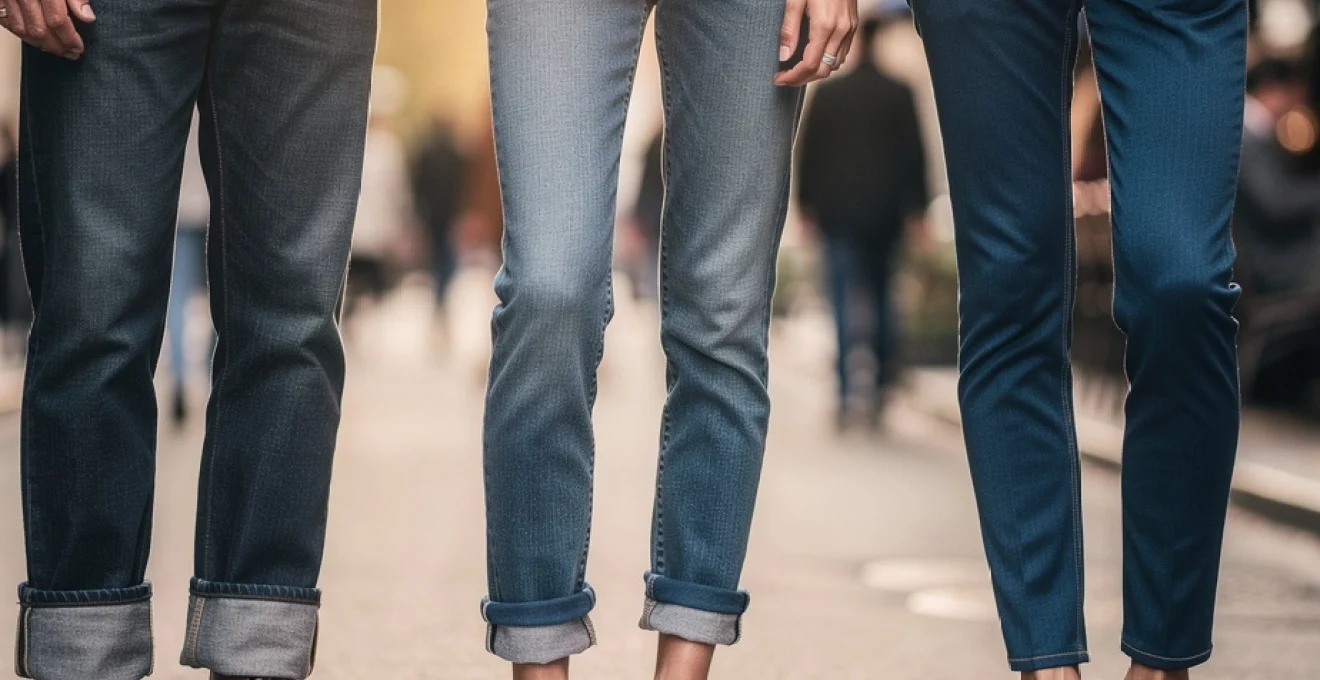
The simple act of rolling up your jeans transforms an ordinary outfit into something effortlessly stylish. This seemingly minor adjustment has captivated fashion enthusiasts for decades, creating an instant upgrade that speaks to both practicality and aesthetic sophistication. From the dusty streets of 1940s America to today’s bustling fashion capitals, cuffed denim continues to signal a unique blend of rebellion, authenticity, and intentional nonchalance.
The enduring appeal of rolled denim transcends generational boundaries, appearing on everyone from vintage Hollywood icons to contemporary street style mavens. This styling technique taps into deep psychological triggers related to proportion, rebellion, and sophisticated casualness. Understanding why this simple fold creates such visual impact reveals fascinating insights into fashion psychology and the subtle ways we communicate through clothing choices.
Historical evolution of cuffed denim: from functional necessity to fashion statement
The story of cuffed jeans begins in 1873 when Levi Strauss & Co. introduced the first blue jeans, crafted from denim woven at the Amoskeag Manufacturing Company in Manchester, New Hampshire. During this era, pre-shrunk fabrics didn’t exist, making every pair of jeans a « shrink-to-fit » garment. Workers and cowboys understood that their cotton denim would shrink approximately 10% after washing, requiring them to purchase jeans with extra length in anticipation of this inevitable reduction.
This practical necessity birthed an iconic aesthetic that would endure for generations. Early denim wearers routinely bought their jeans three inches longer than needed, rolling up the excess fabric until the inevitable shrinkage occurred. Cowboys discovered an additional benefit to this cuffing practice – the folded fabric created convenient storage pockets for tobacco pouches, coins, or other small essentials that were easier to access than saddlebags during long rides.
The 1950s marked a pivotal transformation in cuffed denim’s cultural significance. As jeans transitioned from workwear to fashion statements, the rolled hem evolved from mere practicality into a symbol of rebellion and youth culture. Icons like James Dean and Marlon Brando elevated cuffed jeans into the realm of aspirational style, associating the look with effortless masculinity and anti-establishment attitudes. This period established the psychological foundation that continues to make rolled denim feel inherently cool.
The turn-up represents everything fashion lovers believe in: quality, longevity, and individuality. It’s a reminder that even the smallest details can connect history with the present and make your outfit unmistakably yours.
When pre-shrunk jeans emerged in the 1960s, cuffing temporarily disappeared as skinnier fits dominated fashion. However, the 1990s vintage revival, spurred partly by Levi’s Vintage Clothing line in 1996, reintroduced cuffed denim to a new generation. This renaissance revealed the authentic selvedge edge of quality denim, creating the signature look that remains highly coveted today. The cyclical nature of this trend demonstrates how deeply embedded cuffed denim has become in our collective fashion consciousness.
Psychology of rolled hem styling: cognitive perception and social signalling
The psychological impact of cuffed denim operates on multiple levels, influencing both the wearer’s self-perception and observers’ impressions. This styling choice triggers specific cognitive responses related to attention to detail, fashion awareness, and subcultural affiliation. Understanding these psychological mechanisms explains why such a simple adjustment can dramatically alter an outfit’s perceived sophistication level.
Visual proportion theory: how cuffed jeans alter silhouette dynamics
Rolling up jeans fundamentally changes the visual proportions of your lower body, creating a more balanced and intentional silhouette. The exposed ankle area draws the eye downward, creating a visual break that can make legs appear longer and the overall frame more proportionate. This effect works particularly well for individuals seeking to balance broader torsos or create the illusion of increased height.
The folded fabric at the hem also adds visual weight to the bottom of the outfit, anchoring the look and preventing it from appearing top-heavy. This principle explains why cuffed jeans work exceptionally well with oversized tops or layered
pieces, subtly signalling that the rolled hem is a considered style decision rather than an accident. In styling terms, that extra band of fabric functions like a frame on a photograph: it defines the boundary of the image and makes everything inside it look more intentional. By slightly shortening the leg visually, cuffed jeans also showcase your footwear more clearly, which is one reason this look pairs so well with statement shoes. When you understand how this visual proportion theory works, you can use cuff height strategically to balance your body shape, highlight your favourite shoes, or make relaxed outfits feel sharper.
Ankle exposure psychology: the appeal of strategic skin revelation
Rolled jeans introduce another subtle but powerful element: selective skin exposure. Showing just a sliver of ankle creates a visual contrast between heavy denim and bare skin, which our brains read as both relaxed and slightly playful. Unlike overtly revealing clothing, this small gap feels approachable and unforced, making cuffed denim particularly effective in smart-casual or business-casual environments where you want to look polished but not stiff.
Psychologists often note that small areas of exposed skin, especially around the wrists and ankles, can make a person appear more trustworthy and open. We intuitively associate covered wrists and ankles with formality and protection, while exposed ones suggest ease and comfort. Cuffed jeans sit right in the middle of this spectrum: you are covered enough to look appropriate in most settings, but the visible ankle hints that you are off-duty, creative, or quietly confident. It is a bit like loosening a tie at the end of the day—still put together, just more human.
This strategic ankle exposure also connects to how we read seasonality in outfits. A rolled hem with low-cut sneakers or sandals signals warm weather and laid-back moods, even if the rest of the look is structured. In cooler months, a slight cuff that reveals textured socks or leather boots can feel equally intentional, playing up layers rather than bare skin. Either way, the psychological impact is the same: you are signalling that you understand the unspoken dress codes of your environment and know how to bend them without breaking them.
Casual sophistication theory: balancing effortlessness with intentional styling
One of the main reasons rolling up your jeans looks so cool is that it embodies what many stylists call casual sophistication. The best outfits often strike a balance between ease and precision—too perfect can look stiff, while too relaxed risks seeming careless. A rolled hem sits directly at this intersection: it is technically casual, but the act of folding your jeans just so communicates a level of fashion awareness that observers register immediately.
Think of cuffed denim as the clothing equivalent of a styled “messy bun” or artfully rumpled bed linen in interior design. We know it did not happen by accident, yet it carries an air of spontaneity that feels modern and approachable. When you cuff your jeans, you are subtly telling the world: “I care about how I look, but I am not trying too hard.” That understated message is a cornerstone of contemporary style, from Scandinavian minimalism to Parisian “je ne sais quoi.”
This balance is reinforced by how rolled hems interact with the rest of your outfit. Pair cuffed jeans with a crisp white shirt or tailored blazer, and you instantly soften any formality. Wear them with a basic T-shirt and trainers, and the look feels elevated rather than overly casual. Because the cuff is such a small detail, it allows you to adjust the overall tone of your outfit without making drastic changes—ideal for days when you move between different social or professional contexts.
Social identity markers: cuffed denim as subcultural communication
Beyond individual psychology, rolled jeans also function as social identity markers. Throughout the 20th and 21st centuries, different subcultures have used cuffed denim to signal belonging—from greasers and rockabilly fans in the 1950s to skaters, indie kids, and heritage workwear enthusiasts in more recent decades. The way you cuff your jeans—high and sharp, low and loose, pin-rolled and tapered—quietly communicates which aesthetic codes you are referencing.
Fashion historians often highlight denim as a canvas for personal and collective narratives, and cuffs are one of the most legible details on that canvas. A wide, stiff turn-up on heavy selvedge denim evokes vintage Americana and Japanese raw denim culture, suggesting an appreciation for craftsmanship and authenticity. A messy, irregular roll on distressed jeans leans more towards grunge or skate style, implying a laid-back, anti-establishment attitude. Even if you are not consciously choosing a subculture, others may recognise and interpret these cues.
In social settings, these micro-signals can act like a visual handshake. We instinctively look for people who “dress like us” as a shorthand for shared values, tastes, or lifestyles. Cuffed jeans, especially when paired with specific footwear or outerwear, help others place you within a broad style tribe—creative professional, vintage lover, minimalist dresser, or streetwear fan. Understanding this social signalling allows you to use rolled denim more deliberately, aligning your external presentation with the identity you want to project.
Technical execution methods: professional cuffing techniques for different denim weights
Knowing why cuffed jeans look good is only half the story; how you roll them matters just as much. The right cuffing technique depends on denim weight, fabric composition, and the overall silhouette you are aiming for. Much like tailoring a blazer or hemming a dress, thoughtful cuffing is a small technical detail that has an outsized impact on the final result. When executed correctly, it can make affordable jeans look premium and ensure your rolled hems stay neat all day.
Before you start experimenting, pay attention to three key factors: fabric thickness, leg opening, and shoe choice. Heavyweight selvedge denim behaves very differently from lightweight stretch blends, and a wide straight leg will roll unlike a slim tapered cut. Ideally, you want your jeans rolled enough to look intentional but not so high that they distort the leg line or cut your calf at an awkward point. With a few professional techniques in your toolkit, you can adapt your cuff style to almost any pair in your wardrobe.
Single-fold technique: optimal execution for heavyweight selvedge denim
The single-fold cuff is the most classic method, especially suited to heavy or raw selvedge denim. Because these fabrics are thick and structured, doubling them over multiple times can create bulky, uncomfortable bands around the ankle. A single, clean turn-up of 2–4 centimetres (about 1–1.5 inches) showcases the selvedge edge, preserves the straight leg line, and feels true to the workwear heritage of the fabric. This style is particularly effective if you want your jeans to evoke that vintage 1950s look without feeling costume-like.
To execute a single-fold cuff professionally, start by putting on your jeans with the shoes you plan to wear. Standing straight, gently pull the hem outward and fold it up once to the desired height, ensuring the fold is parallel to the floor and consistent all around the leg. Smooth the fabric with your fingers to remove any twisting, and check that the selvedge line (if present) is visible and straight. Because heavyweight denim tends to hold shape, this simple cuff will usually stay in place throughout the day; if not, a light steam press can help set the fold without permanently creasing the fabric.
This technique works best with straight-leg or slightly tapered fits and chunky footwear such as boots, brogues, or sturdy sneakers. The added visual weight at the hem balances the heft of the shoe and reinforces the rugged, authentic vibe of raw denim. If you prefer a more contemporary twist, you can slightly narrow the cuff at the back of the leg, creating a subtle taper that keeps the silhouette clean from all angles.
Double-roll method: managing medium-weight cotton blends
For most everyday jeans—think medium-weight cotton or cotton-blend denim—the double-roll method offers structure without bulk. This technique involves folding the hem twice in smaller increments, typically 2–3 centimetres per roll. The result is a compact, even cuff that works well on slim and straight fits alike, giving you that “I just rolled these up” feel while remaining stable as you move. It is one of the most versatile options and suits both men’s and women’s jeans effortlessly.
To create a clean double roll, start with the first fold at your ideal final height, then roll the new hem up again, matching the thickness of the first fold. The key is consistency: uneven widths or diagonal lines can make the roll look sloppy rather than stylish. Run your fingers along the edge of each cuff to flatten any bumps, and compare left and right legs in a mirror to ensure they sit symmetrically. If your denim has a slight stretch, avoid over-tightening the roll, as this can cause the fabric to twist or dig into your ankles during the day.
The double-roll method pairs especially well with low-profile shoes like loafers, minimalist sneakers, ballet flats, or sandals. By shortening the leg length slightly more than a single fold, it creates a relaxed, summery feel that is perfect for weekend outfits or casual office environments. If you tend to fluctuate between footwear heights, this is an easy cuff to adjust on the go—simply unroll to full length for boots or roll a touch higher to highlight a statement shoe.
Pin-roll precision: advanced tapered ankle styling for skinny fits
If you prefer skinny or slim-tapered jeans and want a super neat ankle finish, the pin-roll technique offers an advanced solution. Unlike basic cuffing, pin-rolling narrows the leg opening first, then locks it in with a folded roll. The result is a snug, tapered ankle that sits neatly above your shoe without excess fabric bunching. Originating in streetwear and sneaker culture, this method is ideal when you want to showcase high-top trainers or sleek loafers with precision.
To pin-roll, start by grabbing the inside seam of your jeans at the ankle and pinching about 1–2 centimetres of fabric to tighten the opening. Fold this pinched section towards the back of your leg, creating a diagonal crease that slims the circumference. While holding this fold in place, roll the hem up once or twice over it, securing the narrowed shape. Adjust as needed to keep the roll comfortable and ensure it sits just above your footwear, not cutting into your ankle bone.
Because pin-rolling alters the original cut of the jeans, it works best on slimmer fits with some stretch, rather than rigid, wide-leg styles. It gives your silhouette a sharper, more athletic line, echoing the ankle-tapered look of tailored joggers or carrot-fit trousers. Used sparingly—perhaps with your favourite sneakers or when you want a more directional fashion edge—pin-rolling can make even basic denim feel current and highly curated.
French seam cuffing: maintaining clean lines with raw denim
French seam cuffing is a less common but very polished approach, ideal if you favour minimalist styling or work with stiff raw denim that creases easily. The goal is to create a perfectly smooth, almost architectural cuff where the outer edge aligns crisply with the leg seam. It takes a little more time than a casual roll, but the payoff is a refined, almost tailored finish that complements structured outfits and sharp footwear.
To achieve this look, start by ironing or steaming the bottom 10–15 centimetres of the jeans so the fabric is flat and cooperative. Fold the hem up to your desired height, using the side seams as guides to keep the cuff level all around. Press the fold lightly with an iron to set a crisp edge, then, if needed, secure the inner corners with very discreet hand stitches (which can later be removed). The result is a cuff that behaves more like an intentional design detail than a temporary styling trick, maintaining its shape through wear.
French seam cuffing pairs beautifully with raw or dark-wash denim, leather boots, and smart casual pieces like blazers or structured coats. Think of it as the denim equivalent of a French tuck shirt styling: a slight tweak that instantly elevates the whole look. Because this method creates a strong horizontal line, it is particularly effective on taller frames or when you want to visually “ground” an outfit with a clear, strong base.
Celebrity influence and street style documentation: from james dean to contemporary fashion icons
While the mechanics of cuffing matter, cultural influence is equally responsible for why rolled jeans read as cool. From the moment James Dean stepped onto the screen in Rebel Without a Cause, his slightly slouched stance, white T-shirt, and cuffed denim set a template for rebellious youth style that still echoes today. Marlon Brando, too, frequently wore turned-up jeans, embedding the look within a visual language of rugged masculinity and quiet defiance. These early Hollywood images were reproduced in magazines, posters, and later online archives, cementing cuffed jeans as an icon of nonchalant charisma.
Fast-forward to the 1990s and 2000s, and you see another wave of influence as paparazzi culture and early celebrity street style coverage exploded. Jennifer Aniston’s relaxed cuffed jeans with flip-flops or platform sandals became a reference point for off-duty, LA-casual dressing. In more recent years, stars like Kendall Jenner, Miley Cyrus, and countless K-pop idols have reinterpreted rolled denim in line with contemporary aesthetics—pairing it with ballet flats, Mary-Janes, mesh pumps, and oversized blazers. Each generation of celebrities adds its own twist, but the core appeal remains the same: cuffed jeans look like you know what you are doing, without looking like you are trying too hard.
Street style photography, especially around major fashion weeks, has also played a huge role in normalising and globalising the cuffed denim trend. Editors, influencers, and stylists are repeatedly snapped in variations of rolled jeans—from ultra-wide 1990s-style cuffs to tiny, sharp turn-ups on tailored denim suits. These images circulate on social media, Pinterest boards, and digital mood boards, giving everyday wearers a rich vocabulary of ideas to copy and adapt. When you cuff your jeans today, you are not just echoing James Dean; you are tapping into a century of evolving visual references that our collective fashion memory instantly recognises.
Seasonal styling applications: temperature-responsive cuff height adjustments
Another reason rolling up your jeans adds a cool touch is its inherent adaptability. Unlike permanent hems, cuffs can be raised or lowered in seconds, making them a clever tool for responding to changing temperatures and environments. On a practical level, this flexibility lets you fine-tune ventilation and layering; on a style level, it allows you to shift the mood of your outfit from cosy to breezy just by altering a few centimetres of fabric. Think of it as a built-in climate control system for your wardrobe.
In warmer months, higher cuffs create airflow around the ankles and lower legs, making heavy denim feel more breathable. Rolling your jeans to just above the ankle bone can instantly “summerise” a pair you normally reserve for cooler weather, especially when paired with sandals or canvas sneakers. This approach is particularly useful in transitional seasons like late spring or early autumn, when temperatures fluctuate throughout the day—simply adjust your cuff height as the sun comes out or goes in. By contrast, keeping cuffs lower and closer to full length in cooler conditions helps retain warmth without having to switch to completely different trousers.
Seasonal cuffing is also about how your jeans interact with other wardrobe elements like socks, boots, and outerwear. In winter, a low, subtle cuff that reveals a hint of thick wool sock above leather boots can add texture and interest to layered outfits. In rainy weather, rolling slightly higher can keep hems from soaking up water and dragging on the pavement, preserving both your jeans and your comfort. Have you ever regretted not cuffing your jeans before stepping into a sudden downpour? Once you experience the difference, you quickly see rolled hems as both a style choice and a practical habit.
Footwear compatibility matrix: optimising cuffed denim with specific shoe styles
The final element that makes rolled jeans so visually compelling is how they frame and enhance footwear. Cuffs act as a border between your trousers and your shoes, creating a defined transition that can either showcase or soften what you are wearing on your feet. When you understand which cuff styles best suit different shoe types, you can build outfits that look harmonised from top to toe. The goal is not rigid rules, but a flexible “compatibility matrix” you can use as a guide.
Broadly speaking, chunky shoes—such as work boots, high-top sneakers, or platform sandals—work best with slightly wider or higher cuffs that balance their visual weight. Slimmer, more delicate shoes—like loafers, ballet flats, and low-profile trainers—tend to pair well with smaller, neater rolls that keep the ankle line clean. Heeled shoes introduce another dimension: a mid-height cuff that ends just above the narrowest part of your ankle can emphasise the curve of the heel and create a flattering, elongated leg line. Ask yourself what you want to highlight: the shoe, the ankle, or the denim itself?
| Shoe style | Recommended cuff type | Style effect |
|---|---|---|
| Chunky boots / workwear boots | Single fold or wide double roll | Balances weight, emphasises rugged heritage feel |
| Low-profile sneakers / trainers | Medium double roll or pin-roll | Keeps silhouette streamlined, showcases shoe design |
| Loafers, brogues, oxfords | Neat double roll or French-style cuff | Adds smart-casual polish, ideal for office or evening |
| Ballet flats, Mary-Janes | Small, precise roll just above ankle | Highlights ankle, creates light, feminine profile |
| Sandals and flip-flops | Higher relaxed roll (summer cuff) | Signals warm-weather ease, shows more skin and strap detail |
Using these pairings as a starting point, you can experiment to find combinations that feel authentic to your style. For example, if you love vintage-inspired looks, matching wide cuffs with classic brogues and a tucked-in shirt can channel mid-century charm without feeling dated. If your wardrobe leans more streetwear, pin-rolled hems with statement sneakers and an oversized hoodie can push the cuffed denim effect towards a bolder, more urban direction. In every case, the interaction between cuff and shoe is what transforms rolled jeans from a purely functional adjustment into a deliberate, cool-looking style signature.