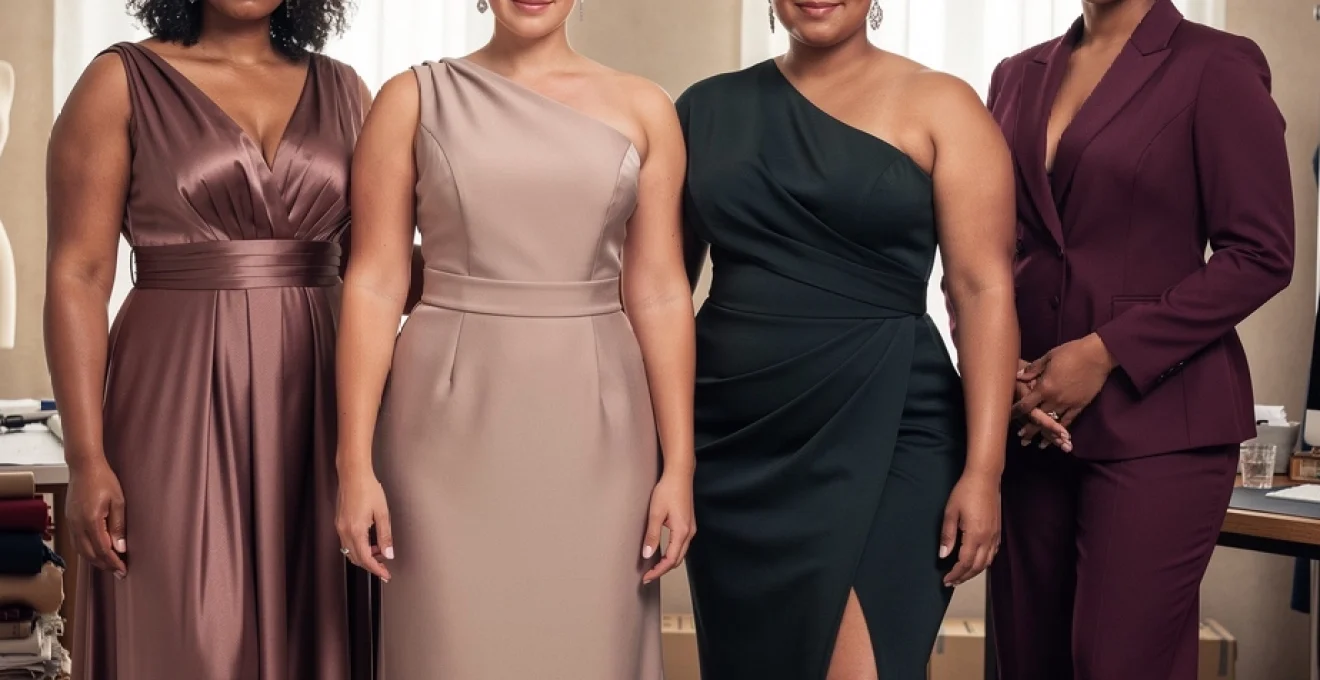
The luxury fashion industry has undergone a revolutionary transformation, challenging decades-old assumptions about elegance and sophistication. XXL luxury fashion represents far more than simply scaling up existing designs – it demands a complete reimagining of construction techniques, fabric technologies, and aesthetic principles. This paradigm shift acknowledges that true elegance transcends size limitations, creating garments that celebrate every curve while maintaining the impeccable standards expected from premium fashion houses.
Contemporary designers are discovering that inclusive luxury design requires sophisticated engineering solutions and innovative approaches to traditional couture methods. The challenge lies not merely in accommodating larger sizes, but in creating pieces that enhance natural beauty through expert craftsmanship and thoughtful design philosophy. This evolution reflects a broader cultural recognition that luxury should be accessible to all body types without compromising on quality or aesthetic appeal.
Architectural pattern design principles for Plus-Size luxury fashion
The foundation of exceptional XXL luxury fashion begins with revolutionary pattern-making techniques that abandon traditional grading methods. Unlike conventional approaches that simply increase measurements proportionally, architectural pattern design considers the unique geometry of different body types. Master pattern makers now employ advanced mathematical calculations to ensure that garments maintain their intended silhouette across all size ranges.
Strategic draping techniques using natural fabric flow
Strategic draping represents one of the most sophisticated techniques in plus-size luxury construction. Rather than fighting against natural body contours, expert designers utilise gravity and fabric weight to create flattering movement. This approach requires extensive knowledge of how different textiles behave across various body shapes, ensuring that each garment moves gracefully regardless of the wearer’s size.
The art of strategic draping involves understanding fabric bias and how diagonal grain lines can create the most flattering angles. Designers manipulate seam placement to guide the eye naturally, using principles borrowed from architectural design to create visual harmony. This technique proves particularly effective in evening wear, where flowing silhouettes can transform any figure into a statement of elegance.
Empire waist construction methods in couture silhouettes
Empire waistlines offer exceptional versatility in XXL luxury design, but their execution requires precise technical knowledge. The construction must account for varying bust proportions while maintaining the classic high-waisted aesthetic that defines this timeless silhouette. Advanced pattern makers create multiple dart configurations to ensure proper fit without visible construction lines.
Modern empire waist techniques incorporate hidden support systems that provide structure without bulk. These garments often feature internal corsetry elements strategically placed to enhance natural curves while providing comfortable support throughout extended wear. The key lies in balancing structural integrity with the flowing, ethereal quality that makes empire waistlines so universally flattering.
Asymmetrical design elements for enhanced body proportioning
Asymmetrical design elements serve as powerful tools for creating visual interest while enhancing natural proportions. These techniques involve strategically placed seams, colour blocking, and decorative details that draw attention to the wearer’s most flattering features. The psychology of asymmetry creates dynamic movement that prevents the eye from focusing on any single area.
Contemporary designers employ proportional mathematics when implementing asymmetrical elements, ensuring that each design choice serves both aesthetic and functional purposes. This might involve varying hemline lengths, diagonal seaming patterns, or strategically placed embellishments that create the illusion of an hourglass silhouette regardless of natural body shape.
Tailored fit engineering through advanced pattern grading
Advanced pattern grading goes beyond simple size scaling to incorporate sophisticated fit engineering principles. This process requires detailed analysis of how fabric behaves across different body measurements, accounting for varying proportions between bust, waist, and hip measurements. The result is garments that fit as if they were individually tailored for each wearer.
Modern grading techniques utilise computer-aided design software to model how patterns will translate across size ranges. This technology allows designers to predict and correct potential fit issues before production begins, significantly reducing the need for extensive alterations. The investment in advanced grading pays dividends in customer satisfaction and brand reputation.
Premium fabric selection technologies for enhanced comfort and structure
The selection of appropriate fabrics forms the
The selection of appropriate fabrics forms the technical backbone of XXL luxury fashion, directly influencing comfort, drape, and long-term durability. Premium houses now combine traditional textile knowledge with modern fibre science, testing yarn composition, knit density, and recovery rates specifically on extended size ranges rather than extrapolating from a size 8 sample. This data-driven approach ensures that a gown in a size 24 reacts to movement, temperature, and wear in the same refined way as its straight-size counterpart. In other words, fabric is no longer an afterthought scaled up – it is engineered from the outset for inclusive luxury.
Four-way stretch luxury textiles with shape retention properties
Four-way stretch materials have become essential in plus-size luxury fashion because they adapt to the body’s micro-movements without distorting the design line. Unlike basic stretch fabrics, high-end four-way textiles are woven or knitted with premium fibres such as elastane blended with viscose, wool, or recycled polyamide, ensuring both comfort and a refined hand-feel. The goal is to deliver support and contouring while preserving breathability and avoiding the “compression wear” look that many luxury customers want to avoid in day-to-day garments.
To guarantee shape retention over time, luxury brands subject these textiles to repeated wash, wear, and stretch tests, simulating months of use in a controlled environment. This is particularly important for XXL luxury trousers, fitted blazers, and body-skimming dresses, where bagging at the knees or seat would instantly undermine the perception of quality. When four-way stretch is combined with intelligent panel placement and engineered seams, you get garments that move with your body rather than resisting or surrendering to it.
Ponte roma and scuba knit applications in high-end garments
Ponte Roma and scuba knits have emerged as hero fabrics in inclusive luxury because they occupy the sweet spot between structure and flexibility. Ponte offers a dense, double-knit construction that smooths the body without feeling restrictive, making it ideal for tailored dresses, pencil skirts, and structured tops in extended sizes. Its weight helps garments skim rather than cling, eliminating the need for excessive lining or heavy shapewear underneath.
Scuba knit, often associated with activewear, has been elevated by luxury designers through refined fibre blends and sophisticated surface finishes. When cut with couture-level precision, scuba can create sculptural silhouettes that hold their form on a size 24 body just as well as on a size 4. Think of it as the architectural steel frame hidden inside a building; it supports dramatic shapes, sharp pleats, and clean lines while remaining soft against the skin. Used judiciously in panels or bodices, scuba provides subtle reinforcement without adding visual bulk.
Breathable silk blends with moisture-wicking technology
Silk has long symbolised luxury, but traditional silk can be challenging for plus-size wearers in warmer climates or high-pressure environments. To address this, textile innovators have developed silk blends that integrate moisture-wicking fibres such as Tencel, bamboo viscose, or high-tech microfibres. These blends help regulate body temperature, disperse perspiration, and reduce cling – all crucial for comfort in XXL luxury eveningwear and occasion pieces.
Breathable silk blends are often woven with a slight mechanical stretch, allowing bias-cut gowns and blouses to accommodate fuller busts, upper arms, and midsections without straining seams. The result is a fabric that feels as indulgent as traditional silk but performs like a technical textile. For the wearer, this means you can enjoy the liquid drape and luminous surface of silk while still feeling cool, supported, and confident under bright lights or during long events.
Structured undergarment integration for seamless support
One of the most overlooked innovations in XXL luxury design is the discreet integration of structured undergarments into the garments themselves. Rather than expecting customers to solve fit and support issues with separate shapewear, leading houses now engineer built-in inner structures using powermesh, soft boning, and zoned lining panels. This approach not only improves comfort but also ensures that the outer silhouette remains clean and undistorted.
These internal architectures are carefully mapped to real plus-size bodies, providing lift at the bust, anchoring at the waist, and gentle smoothing through the hip without compressing the torso into discomfort. When executed correctly, the wearer experiences the ease of slipping into a single piece that already “knows” where support is required. For brands, this integrated approach is a powerful differentiator in the plus-size luxury market, signalling both technical mastery and genuine empathy for the customer’s needs.
Leading XXL luxury designers revolutionising inclusive fashion
The transformation of XXL luxury from afterthought to innovation hub is being driven by a new generation of designers and brands. These leaders prove that inclusive fashion can be commercially successful, critically acclaimed, and technically advanced. They also demonstrate that designing for more body types does not dilute a luxury identity; instead, it deepens brand relevance and cultural credibility.
Christian siriano’s adaptive couture methodology
Christian Siriano has become synonymous with red-carpet inclusivity, dressing celebrities across the size spectrum in equally dramatic couture. His adaptive methodology starts with the assumption that every silhouette must work on multiple body types, not just a single sample size. Rather than creating a main look and then “making it work” for larger clients later, his atelier designs patterns from the outset with adaptable seam allowances, modular panels, and robust internal structures.
Siriano’s team often prototypes key gowns on mannequins representing several size ranges to test proportion and drape before committing to a final pattern. This process mirrors inclusive product design in tech: you don’t retrofit accessibility; you bake it into the blueprint. For plus-size luxury clients, this means they receive the same level of drama, precision, and experimentation typically reserved for runway samples, reinforcing the idea that elegance is not size-specific.
Marina rinaldi’s italian craftsmanship approach
Marina Rinaldi, part of the Max Mara Group, is one of the earliest proof points that plus-size luxury can embody old-world craftsmanship. The brand applies traditional Italian tailoring methods – hand-finished seams, precisely eased sleeves, carefully balanced linings – to sizes often ignored by mainstream luxury houses. Each collection is developed with dedicated plus-size pattern blocks, rather than scaling up from a single base size, ensuring that proportions feel intentional and harmonious.
This craftsmanship-first philosophy means that coats hang correctly from the shoulders, trousers maintain a clean leg line, and dresses offer structure without stiffness, even in larger sizes. Marina Rinaldi also invests heavily in fabric development, working with mills to create exclusive textiles that maintain their integrity when cut for fuller figures. The result is a wardrobe that feels as considered and enduring as any heritage brand, but explicitly centred on women who wear sizes 14 and above.
Eloquii’s contemporary technical design innovations
Eloquii operates at the intersection of contemporary fashion and technical design, leveraging data and customer feedback to refine fits continuously. While positioned at a more accessible price point than traditional couture, its approach to plus-size pattern engineering rivals many luxury houses. The brand routinely tests garments on fit models across a wide size range and iterates based on real-world wear reports, not just sample-room assumptions.
From a design perspective, Eloquii treats plus-size style as a creative playground rather than a constraint. You’ll find on-trend tailoring, directional prints, and statement silhouettes executed with reinforced seams, stretch linings, and carefully placed darts. This commitment to technical excellence within a fashion-forward aesthetic has helped shift consumer expectations: many shoppers now demand that their XXL luxury pieces match the comfort and reliability they experience from brands like Eloquii in their everyday wardrobes.
Universal standard’s size-inclusive manufacturing processes
Universal Standard has redefined what “size-inclusive” means operationally by offering one of the broadest size runs in the industry, often from US 00 to 40. This scale demands a fundamentally different manufacturing philosophy. Instead of a single base pattern, the brand uses multiple “core” fit blocks across the range, each calibrated to the realities of different body shapes at different sizes. This is not just a grading exercise; it is a structural rethinking of how a garment behaves on the body.
On the production side, Universal Standard works closely with factories trained to handle extended size specifications, from reinforced stitching to consistent fabric cutting across wider pattern pieces. The brand’s experimentation with “fit liberty” – allowing customers to exchange garments if their size changes – also signals a radical empathy: the clothes adapt to the human, not the other way around. For the future of XXL luxury, this approach sets an important precedent in both manufacturing integrity and customer respect.
Colour theory and visual proportioning techniques in XXL luxury
Colour in XXL luxury is no longer limited to the old rulebook of “dark colours only.” Instead, designers now use advanced colour theory to sculpt, highlight, and balance proportions in sophisticated ways. The objective is not to hide the body but to guide the eye and create visual rhythm, much like a lighting designer shapes a stage. When applied thoughtfully, colour and print placement can be as powerful as tailoring in redefining elegance for all body types.
One of the most effective tools is strategic colour blocking, where darker shades anchor areas that benefit from subtle minimising, while brighter or lighter tones draw focus to the face, shoulders, or waist. For example, a gown might feature deep navy side panels with a jewel-toned centre front, instantly creating the perception of an elongated, hourglass shape. This technique works particularly well in XXL luxury eveningwear, where designers can play with high-contrast palettes and luxurious textures.
Print scaling is another crucial consideration often mishandled in plus-size fashion. Luxury designers now resize motifs so that florals, geometrics, or abstract patterns sit proportionally on larger canvases, avoiding the “mini-print on a maxi-body” effect that can feel visually noisy. By adjusting repeat size and placement, a dress in a size 26 can look as balanced and intentional as the same style in a size 6. Have you ever tried on a bold print only to feel overwhelmed by it? Thoughtful print engineering is how XXL luxury solves that problem.
Finally, tonal dressing – building an outfit from variations of a single hue – has become a refined strategy for creating length and cohesion. Layering multiple shades of camel, ivory, or deep burgundy can elongate the figure while still feeling rich and expressive. For clients, this offers an accessible styling trick: by investing in a small capsule of tonal XXL luxury pieces, you can mix and match endlessly while maintaining a polished, proportion-enhancing effect.
Sustainable manufacturing practices in plus-size luxury production
Sustainability in XXL luxury carries unique challenges and responsibilities. Larger garments require more fabric, which, if sourced irresponsibly, can increase environmental impact. However, leading brands are demonstrating that inclusive sizing and sustainable production are not mutually exclusive – they are, in fact, complementary goals. When you respect the wearer, you are more likely to respect the planet as well.
Many inclusive luxury labels are turning to certified organic fibres, recycled yarns, and low-impact dyes, ensuring that extended-size garments share the same eco-credentials as smaller ones. Some houses partner directly with mills to develop custom fabrics that balance sustainability with performance, such as recycled polyamide blends that still offer excellent stretch and recovery for plus-size tailoring. By specifying minimum recovery rates and durability standards, brands can reduce returns and extend each garment’s life cycle – a key factor in sustainable fashion.
Waste reduction is another crucial focus area. Because plus-size patterns often involve larger and sometimes more complex pieces, smart layout planning on the cutting table becomes essential. Advanced nesting software helps factories minimise offcuts, while some brands repurpose leftover yardage into accessories or limited-edition capsule pieces. You can think of this like a chef using every part of an ingredient; nothing is discarded without consideration.
Social sustainability is equally significant. Inclusive luxury production requires skilled machinists who understand how to sew larger garments without stretching or distorting seams. Brands that invest in training and fair labour practices not only improve product quality but also contribute to more resilient supply chains. For the conscious XXL luxury consumer, asking how and where a garment was made becomes as important as how it looks – and forward-thinking brands are increasingly prepared to answer that question transparently.
Market positioning strategies for XXL luxury brand development
Positioning an XXL luxury brand today means moving beyond tokenism and firmly embedding inclusivity into the brand’s DNA. Consumers are acutely aware when extended sizing feels like an afterthought or a short-lived marketing tactic. To build long-term loyalty, brands must communicate that plus-size offerings are permanent, thoughtfully designed, and equal in status to their straight-size collections. This involves everything from runway casting to in-store visual merchandising.
One effective strategy is to treat inclusive sizing as a core value proposition rather than a niche extension. Brands that lead with phrases like “luxury for every body” and consistently show diverse body types in campaigns send a clear message about who they serve. But messaging alone is not enough. Pricing, fabric quality, and design innovation must remain consistent across the size range; if XXL customers notice cheaper materials or reduced detail in their sizes, trust erodes quickly.
Digital channels play a pivotal role in XXL luxury market development. Detailed fit information, 360-degree imagery, and size-diverse models help reduce the uncertainty that many plus-size shoppers feel when buying online. Some brands are experimenting with virtual try-on tools or size recommendation algorithms calibrated specifically for fuller figures, making the experience smoother and more personalised. In a space where returns can be high due to inconsistent sizing, these technologies provide both customer confidence and operational savings.
Finally, community-building is emerging as a powerful differentiator. Brands that collaborate with plus-size influencers, host fit clinics, or offer private styling appointments demonstrate a willingness to listen and learn. Rather than dictating trends from a distant creative tower, they co-create with their audience, refining fits and styles based on real feedback. In an era where luxury consumers are increasingly sceptical of hype, this grounded, dialogue-driven approach may be the most valuable asset an XXL luxury brand can cultivate.