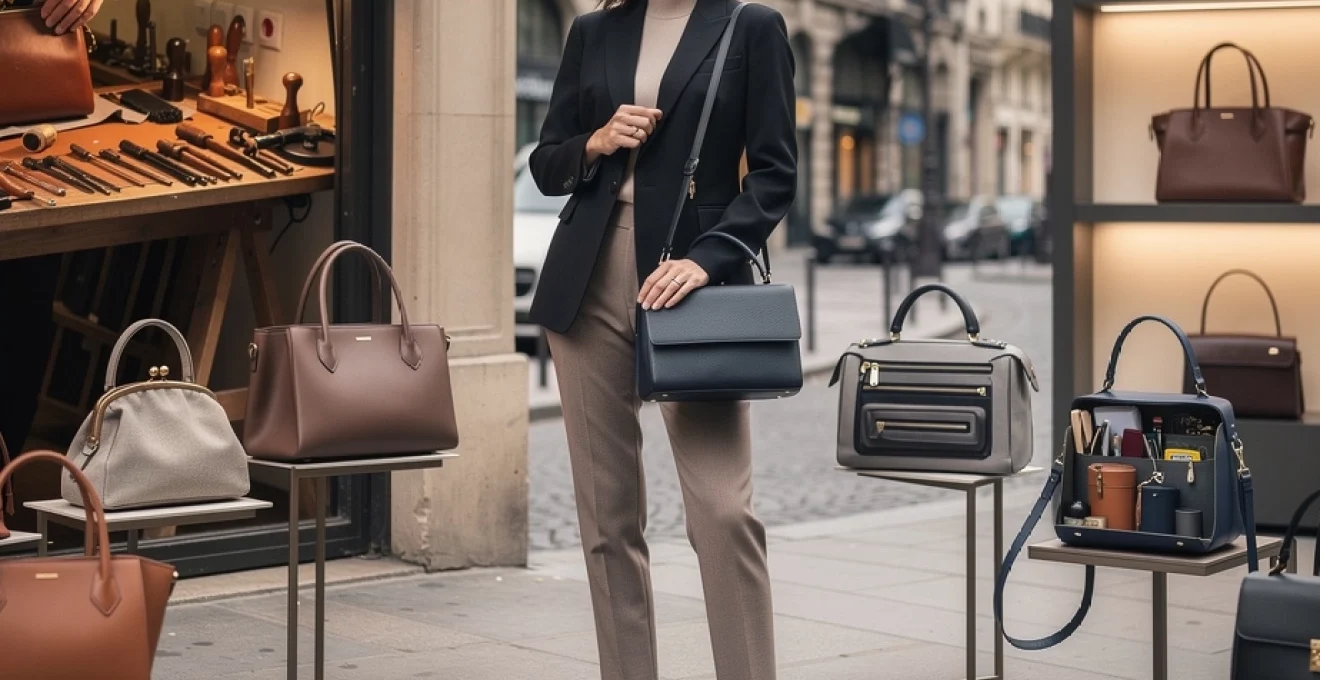
The handbag occupies a unique position in the hierarchy of fashion accessories, transcending its utilitarian origins to become a symbol of personal identity, social status, and aesthetic sensibility. From the earliest medieval pouches to today’s investment-grade luxury pieces, handbags have evolved into indispensable companions that serve dual purposes: carrying essential items while simultaneously projecting carefully curated images of who we are. This evolution reflects broader cultural shifts in women’s roles, fashion democratisation, and the increasing sophistication of luxury goods markets. Understanding why handbags have achieved this essential status requires examining their historical trajectory, functional innovations, psychological resonance, and craftsmanship excellence.
Historical evolution of the handbag from medieval pouches to modern luxury icons
The trajectory of handbag development mirrors fundamental changes in women’s social participation and sartorial expression. During the medieval period, both men and women utilised simple pouches attached to belts, primarily for carrying coins and small valuables. These practical accessories bore little resemblance to today’s fashion-forward designs, serving purely functional purposes without consideration for aesthetic appeal or brand differentiation.
The 18th century introduced a significant shift with the emergence of detachable pockets—fabric pouches tied around the waist beneath voluminous skirts. Women enjoyed considerable storage capacity during this era, accommodating everything from sewing implements to personal correspondence. However, the subsequent transition toward slimmer Empire-line silhouettes in the early 19th century rendered these bulky pockets incompatible with fashionable dress, creating a practical dilemma that catalysed the rise of external carrying solutions.
This pivotal moment gave birth to the reticule, a small drawstring bag that women carried visibly as an accessory. Initially viewed with some disdain—contemporaries mockingly referred to them as « ridicules »—these bags quickly became socially acceptable and eventually indispensable. The Industrial Revolution’s manufacturing innovations enabled more sophisticated construction techniques, incorporating metal frames, decorative clasps, and luxurious materials that elevated handbags from mere necessity to fashion statement.
Transitional designs: from reticules to the hermès kelly and chanel 2.55
The late Victorian and Edwardian periods witnessed exponential diversification in handbag styles, driven by increased female mobility and participation in public life. Women attending theatre performances carried ornate opera bags with compartments for fans, opera glasses, dance cards, and calling cards. Travellers required more substantial luggage pieces, prompting established leather goods manufacturers like Hermès and Louis Vuitton to develop sophisticated trunk systems and travel accessories.
The 1920s flapper era represented a watershed moment when handbags transitioned definitively from practical accessories to fashion declarations. Smaller, decorative bags complemented the decade’s shorter hemlines and liberated silhouettes, often featuring elaborate beadwork, embroidery, and Art Deco motifs. This period established handbags as vehicles for self-expression, with designs reflecting the wearer’s personality, social aspirations, and cultural affiliations.
Post-World War II prosperity fueled unprecedented growth in designer handbag production. Hermès introduced the Kelly bag in 1935 (originally called the « Sac à dépêches »), which gained iconic status after Grace Kelly used it to shield her pregnancy from paparazzi photographers in 1956. Similarly, Coco Chanel revolutionised handbag design with her 2.55 bag in February 1955, incorporating practical innovations like the chain shoulder strap that liberated women’s hands—a feminist gesture disguised as fashion refinement.
Post-war fashion revolution: christian dior’s lady dior and structured silhouettes
The mid-20th century established handbags as essential components of coordinated wardrobes, with designers creating comprehensive collections that included matching bags, shoes, and accessories. Christian Dior epitomised this approach with meticulously structured designs that complemented his revolutionary New Look silhouette. The Lady Dior bag, introduced in 1995 and beloved by Princess Diana, demonstrated how architectural precision in handbag construction could command attention and convey sophistication.
This era also witnessed the emergence of distinct han
distinct handbag archetypes for different moments of the day: boxy top-handle bags for formal occasions, compact shoulder bags for cocktail hour, and softly structured day bags for business and travel. These designs reflected a broader post-war fashion revolution in which the handbag became a visual anchor to Dior’s cinched waists, full skirts, and impeccably tailored suits. As women re-entered the workforce and navigated increasingly public lives, a structured handbag signalled polish, stability, and a renewed sense of feminine power.
Lady Dior itself, with its quilted cannage stitching, rigid silhouette, and dangling metallic charms, illustrates how a handbag can encapsulate a brand’s entire aesthetic philosophy. Its architectural form mirrors Dior’s sculptural garments, while its discreet yet recognisable design demonstrates the shift toward emblematic signature pieces. By the late 20th century, owning such a bag meant participating in a global visual language of luxury—one that elevated the handbag from accessory to cultural icon.
Contemporary designer innovation: balenciaga city bag and minimalist aesthetics
By the early 2000s, a new wave of handbag design disrupted the dominance of rigid, ladylike silhouettes. Nicolas Ghesquière’s Balenciaga City bag, introduced in 2001, exemplified this shift. Slouchy, lightweight, and deliberately unstructured, it contrasted sharply with boxy top-handle bags, offering a rock-chic alternative that resonated with a younger, more urban audience. Its soft lambskin, oversized zips, and motorcycle-inspired hardware embodied a casual luxury that felt lived-in rather than pristine.
This period also saw the rise of minimalist aesthetics in handbag design, echoing broader trends in ready-to-wear fashion. Brands such as Celine under Phoebe Philo, The Row, and Mansur Gavriel popularised clean lines, muted colour palettes, and logo-free exteriors. Instead of monograms, these bags relied on proportion, material quality, and subtle details to communicate sophistication. For the modern consumer seeking a versatile wardrobe, minimalist handbags became the equivalent of a well-cut blazer: a foundational piece that quietly elevates every look.
Contemporary innovation extends beyond form to function. Designers now integrate lightweight composites, responsibly sourced leathers, and smart internal layouts to accommodate laptops, tablets, and chargers. The modern luxury handbag is not just a statement piece—it is a mobile workstation, evening companion, and travel ally in one. As our lifestyles evolve, so too do the silhouettes, proving that handbag design remains one of the most dynamic fields within fashion.
Cultural significance of iconic models: birkin, speedy, and jackie o hobo
Some handbags transcend trends to become cultural shorthand. Hermès’ Birkin, for instance, is less a bag than a symbol of ultimate exclusivity. Created in the 1980s for Jane Birkin after a chance encounter on a flight, its hand-stitched construction, limited availability, and five-figure price tags have made it synonymous with status and wealth. Waiting lists and secondary market premiums reinforce its aura, turning ownership into a form of social proof.
Louis Vuitton’s Speedy tells a different story of modernity and mobility. Originally introduced as a smaller version of the Keepall travel bag, the Speedy captured the spirit of an increasingly fast-paced century. Lightweight, durable, and relatively accessible compared with haute couture pieces, it became a gateway into the world of luxury for a broader audience. Its enduring popularity across decades demonstrates how a well-designed handbag can bridge practicality and aspiration.
Gucci’s Jackie O hobo bag, associated with Jacqueline Kennedy Onassis, highlights the power of celebrity endorsement in cementing a bag’s place in fashion history. Its relaxed, crescent shape and elegant hardware struck a balance between casual ease and refined glamour, mirroring Jackie’s personal style. When Gucci reissued and reinterpreted the bag for contemporary audiences, it underscored a key truth: iconic handbags function as cultural archives, carrying the memories and myths of the women who wore them.
Functional design architecture: compartmentalisation and ergonomic engineering
While symbolism and aesthetics matter, the handbag’s essential status also rests on its engineering. A well-designed handbag is a small feat of architecture, balancing weight distribution, structural integrity, and intuitive organisation. Unlike purely decorative accessories, handbags must withstand daily use: commuting, travel, social events, and everything in between. The best examples feel almost invisible in use, supporting the wearer’s lifestyle rather than demanding constant adjustment or compromise.
Designers and product engineers now approach handbag creation with the same rigour that goes into performance footwear or technical outerwear. They analyse how the bag will sit against the body, how easily items can be retrieved, and how the structure will age over years of wear. When you instinctively reach into your bag and find your keys without looking, you are experiencing the quiet success of thoughtful ergonomic design.
Internal organisation systems: zippered pockets, rfid-blocking technology, and modular inserts
Inside a handbag, every pocket and seam is an opportunity to enhance usability. Zippered pockets secure valuables like passports and jewellery, while slip pockets keep phones, cards, and lip balms accessible. Many contemporary designs incorporate padded laptop sleeves, bottle holders, and pen loops, turning a single bag into a portable office. This internal architecture is particularly important for tote bags and work satchels, where an unstructured interior can quickly become chaotic.
As digital payments and contactless cards have proliferated, security considerations have entered the design conversation. RFID-blocking compartments—often discreetly lined with specialised materials—protect credit cards and IDs from unauthorised scanning. For frequent travellers, this feature can be as essential as a good zipper, providing peace of mind in crowded airports and public transport.
Modular inserts and removable organisers add another layer of flexibility. These systems allow you to transfer all your essentials from one handbag to another in seconds, without forgetting key items. They also help maintain the bag’s shape by distributing weight evenly. In many ways, internal organisation turns a handbag into a personalised command centre—a compact, mobile version of your desk or dressing table.
Material science and durability: full-grain leather, saffiano texture, and vegan alternatives
The longevity and appearance of a handbag depend heavily on its materials. Full-grain leather, cut from the outermost layer of the hide, is prized for its strength and natural grain. Over time, it develops a patina—a soft sheen and slight darkening—reflecting the owner’s habits and environment. This ageing process is one reason many people view leather handbags as long-term investments rather than disposable accessories.
Saffiano leather, originally developed by Prada, uses a heat-pressed crosshatch pattern and a wax treatment to create a scratch-resistant, water-repellent surface. This technical finish makes saffiano bags ideal for daily use, commuting, and travel, where exposure to the elements is unavoidable. Similarly, coated canvases and nylon blends offer impressive durability at lower weights, which is crucial for larger totes and travel bags.
At the same time, consumer interest in sustainability and animal welfare has accelerated the development of high-quality vegan alternatives. Materials like cactus leather, apple leather, and mushroom-based mycelium composites offer reduced environmental impact compared with traditional PVC “pleather.” Although still evolving, these innovations point toward a future where eco-conscious choices and luxury aesthetics are no longer mutually exclusive. The modern essential handbag is increasingly judged not only by how it looks and performs, but also by how responsibly it was made.
Hardware components: ykk zippers, magnetic closures, and adjustable chain straps
Hardware is to a handbag what joints and hinges are to architecture: small components that determine overall stability and user experience. High-quality zippers, such as those produced by YKK, glide smoothly and resist snagging, which is essential for daily reliability. Inferior hardware may tarnish, break, or deform under stress, compromising both functionality and appearance.
Closures also influence how we interact with a bag. Magnetic snaps offer quick, one-handed access, making them ideal for shoppers, parents, and commuters who often have their hands full. Turn-locks, buckles, and push-locks provide added security and a satisfying tactile experience, reinforcing the sense of craftsmanship every time you open and close your bag.
Straps—whether leather, fabric, or chain—affect comfort and styling versatility. Adjustable chain straps allow a bag to transition from shoulder to crossbody length, adapting to different outfits and occasions. Wider leather straps distribute weight more evenly, reducing strain on the shoulder, especially for work bags carrying laptops or documents. In essence, well-considered hardware ensures that a handbag feels as good to use as it looks to wear.
Size calibration for daily utility: tote, crossbbody, and micro bag dimensions
The question of size is central to handbag design: how much can you carry without sacrificing comfort or elegance? Totes are the workhorses of the handbag world, designed to accommodate laptops, documents, gym clothes, and more. Ideally, a work tote’s dimensions align with standard paper and device sizes—for example, 13–15 inch laptop compatibility—ensuring items fit flat without distorting the bag’s silhouette.
Crossbody bags occupy the middle ground between capacity and mobility. Their hands-free design makes them ideal for travel, errands, and city life. When proportioned correctly, a crossbody bag should sit comfortably at hip level, with enough depth to hold essentials—phone, wallet, keys, sunglasses—without becoming bulky. Here, internal organisation often matters more than raw volume, as efficient layouts maximise usable space.
Micro bags, though sometimes dismissed as purely decorative, fulfil both styling and psychological roles. They encourage a minimalist approach to daily carry and act as visual focal points in an outfit, much like a piece of jewellery. In practice, many people rotate between these size categories depending on their schedule. A truly essential handbag wardrobe is less about owning dozens of pieces and more about curating a few well-calibrated options for different needs.
Psychological impact and status signalling through handbag ownership
Beyond function and form, handbags occupy a unique psychological space. They are both public and intimate: visible to the world yet containing some of our most personal items. Carrying a particular bag can alter how others perceive us—and how we perceive ourselves. Much like a tailored suit or a signature fragrance, the right handbag can boost confidence, convey professionalism, or project creativity.
In social settings, handbags often act as conversation starters and subtle status symbols. Whether through recognisable shapes, discreet hardware, or conspicuous logos, they communicate belonging to certain taste communities. At the same time, many people develop deep emotional attachments to specific bags, associating them with milestones such as promotions, graduations, or major life changes. In this sense, a handbag is less an object and more a companion on our personal journey.
Brand recognition and logo visibility: monogram canvas versus quiet luxury
One of the most visible aspects of handbag psychology is the choice between logo-heavy designs and “quiet luxury.” Monogram canvases from houses like Louis Vuitton or Gucci broadcast brand identity from a distance, acting almost like wearable billboards. For some, this overt signalling is part of the appeal: it clearly communicates participation in a global luxury culture and can influence how others respond in professional or social contexts.
Conversely, the rise of quiet luxury reflects a shift toward subtlety. Brands such as Bottega Veneta, The Row, and Celine often eschew visible logos in favour of distinctive silhouettes, materials, or weaving techniques. To insiders, these cues are immediately recognisable; to others, they simply read as refined and understated. This dynamic raises an interesting question: do we carry handbags to be recognised by everyone, or only by those “in the know”?
In practice, many wardrobes contain both extremes. A monogrammed tote may feel empowering in a corporate setting where visible success is valued, while a logo-free crossbody might suit low-key weekends. Understanding your own comfort level with visibility helps you choose handbags that support, rather than conflict with, your self-presentation goals.
Investment value and resale markets: rebag, vestiaire collective, and authentication services
Handbags occupy a rare intersection of fashion and finance. Certain models—from the Hermès Birkin to the Chanel Classic Flap—have historically appreciated in value, sometimes outperforming traditional asset classes over specific periods. This has fuelled a robust resale ecosystem, with platforms like Rebag and Vestiaire Collective offering authenticated pre-owned pieces to global audiences.
For consumers, this secondary market changes the calculus of a purchase. A high initial price may be offset by strong resale value, making a luxury handbag closer to an asset than an expense. Many platforms now publish transparency reports and pricing indices, allowing buyers to track how specific models perform over time. This data-driven approach has turned handbag collecting into an informed, strategic activity.
Authentication services—sometimes in-house, sometimes third-party—are crucial in this context, given the prevalence of counterfeits. Advanced methods include microscopic inspection, serial number verification, and even AI-powered image analysis. For anyone considering an investment-level purchase, understanding provenance, condition grading, and market demand is as important as appreciating the bag’s aesthetic qualities.
Social identity construction through accessory selection
Handbags also play a pivotal role in how we construct and communicate social identities. The choice between a structured top-handle bag and a slouchy backpack, for instance, can signal whether you identify more with corporate culture or creative subcultures. Streetwear-influenced designs, vintage finds, and independent labels each align with different values and communities.
Psychologists often liken accessories to “visual narratives” we tell about ourselves. A vegan leather tote might highlight environmental consciousness; a heritage brand satchel might emphasise tradition and craftsmanship. You might even use different handbags to express distinct facets of your personality: a bold, colourful clutch for nights out, and a minimalist leather crossbody for daytime focus.
This fluidity is part of what makes handbags such powerful tools of self-expression. Unlike major wardrobe overhauls, changing a bag is a relatively small shift with outsized impact. In moments of transition—new jobs, cities, or life stages—many people intuitively reach for a new handbag as a tangible marker of the identity they are stepping into.
Versatility across dress codes and lifestyle transitions
One reason the handbag is considered an essential fashion accessory is its unmatched versatility. A single, thoughtfully chosen bag can move seamlessly from office to dinner, from airport lounge to weekend brunch. Designers increasingly prioritise this adaptability, creating pieces with detachable straps, reversible panels, or interchangeable covers that adjust to different dress codes.
Consider the demands of a typical modern day: commuting, meetings, errands, perhaps a social engagement in the evening. A well-designed handbag supports these transitions without requiring a full outfit change. Neutral colours, medium sizes, and refined yet durable materials tend to offer the greatest flexibility. When a bag works equally well with a blazer and with denim, it effectively multiplies your wardrobe options.
Lifestyle shifts—such as becoming a parent, changing careers, or travelling more frequently—also reshape handbag needs. Structured mini bags may give way to capacious totes or backpacks with stroller clips and bottle pockets. Remote work might reduce the need for laptop compartments, while increasing demand for compact crossbodies suited to co-working spaces and cafés. In all cases, the handbag adapts to the arc of your life, quietly evolving alongside you.
Craftsmanship techniques: artisanal construction methods and quality benchmarks
Beneath the surface of any exceptional handbag lies a constellation of artisanal techniques. Hand-cut patterns, carefully skived edges, and reinforced stress points distinguish true luxury pieces from mass-produced imitations. For many buyers, understanding these details transforms handbag shopping from simple consumption into an appreciation of applied artistry.
Quality benchmarks include consistent stitching, aligned patterns, smooth zippers, and precisely finished edges. When you examine a bag up close, the interior should look almost as refined as the exterior, with clean linings and tidy seams. These cues reveal not just aesthetic decisions but also the number of skilled hours invested—an important factor when evaluating higher price points.
Hand-stitching versus machine assembly: goodyear welting principles applied to leather goods
In leather footwear, Goodyear welting is renowned for creating durable, repairable shoes through a stitched rather than glued construction. A similar philosophy informs high-end handbag making. Hand-stitching, often using the saddle stitch technique, produces seams that are stronger and more resilient than typical machine stitches because each thread operates independently; if one segment breaks, the entire seam does not unravel.
Machine assembly, when executed well, offers consistency and speed, making quality handbags more accessible to a wider audience. Many brands use a hybrid approach: machines perform long, straight seams, while artisans handle precision work such as attaching handles, finishing corners, and installing delicate hardware. The key is not handwork for its own sake, but considered use of techniques that enhance longevity.
For the informed buyer, recognising these construction methods is invaluable. Looking at stitch spacing, backstitching at stress points, and reinforcement where handles meet the body of the bag can tell you a great deal about how it will age. A handbag built on principles similar to Goodyear welting—prioritising repairability and structural integrity—is more likely to become a long-term companion rather than a short-lived trend piece.
Edge painting, burnishing, and finishing processes
The finishing of leather edges is a subtle but revealing indicator of craftsmanship. Raw, untreated edges may fray or absorb moisture over time, compromising both appearance and durability. High-end manufacturers use techniques such as edge painting—building up layers of specialised paint and sanding between coats—or burnishing, which uses friction and wax to seal and smooth the edges.
These processes are labour-intensive, often requiring multiple passes to achieve a uniform, glossy finish that resists cracking. Similarly, the application of protective coatings, conditioning treatments, and linings ensures that the handbag withstands daily wear. The goal is not to make the bag impervious to age, but to ensure it ages gracefully, developing character rather than damage.
When you run your fingers along a bag’s edges or examine how the strap holes are finished, you are effectively reading its construction story. Clean, even finishing signals respect for the material and for the customer. In a crowded market, these quiet details help distinguish truly exceptional pieces from merely fashionable ones.
Limited edition collaborations: louis vuitton x supreme and fendi baguette revivals
Collaborations and revivals highlight how handbags sit at the intersection of fashion, art, and pop culture. The Louis Vuitton x Supreme collection, launched in 2017, fused heritage monogram canvas with bold streetwear branding. The resulting pieces blurred traditional boundaries between luxury and youth culture, selling out instantly and commanding significant premiums on the resale market. For many, owning one of these bags was less about function than about participating in a specific cultural moment.
Similarly, the resurgence of the Fendi Baguette—originally popularised in the late 1990s and early 2000s—shows how nostalgia and narrative can rekindle demand. Rereleased in updated materials and sizes, the Baguette leveraged its association with television and celebrity style to connect with a new generation. These revivals act like limited reprints of a beloved book: familiar yet refreshed, reassuring yet relevant.
Limited editions and artist collaborations turn handbags into collectible objects, encouraging people to think of their accessories as part of a curated personal archive. While not every bag needs to be rare or highly coveted, these projects demonstrate the creative potential of the medium and reinforce the handbag’s status as a cultural artefact as much as a practical item.
Seasonal trend cycles and runway influence on handbag design
Handbag trends, like clothing trends, follow seasonal cycles driven by runway shows, social media, and shifting cultural moods. Oversized totes may dominate one season, only to be replaced by micro bags the next. Colours, textures, and motifs—think chunky chains, padded quilting, or basket weaves—ebb and flow, offering fresh ways to reinterpret core shapes. For fashion-conscious consumers, updating a handbag can be a more economical and sustainable way to engage with trends than replacing entire outfits.
Runway presentations from houses like Prada, Miu Miu, and Bottega Veneta often set the tone, with key styles quickly filtering down to contemporary and high-street brands. We see this in the rapid proliferation of crescent-shaped shoulder bags, pillow-like padded clutches, or woven leather totes after their debut on major catwalks. Social platforms accelerate this diffusion, as influencers and stylists showcase how to integrate new designs into everyday wardrobes.
Yet amidst these cycles, certain fundamentals remain constant: balanced proportions, comfortable straps, secure closures, and quality materials never go out of style. The most successful handbags manage to nod to current aesthetics while retaining a timeless core. When you choose pieces that blend enduring design with subtle seasonal updates—a new colourway, a modernised strap, a fresh texture—you build a collection that feels current today and confident tomorrow, reinforcing why the handbag endures as an essential fashion accessory.