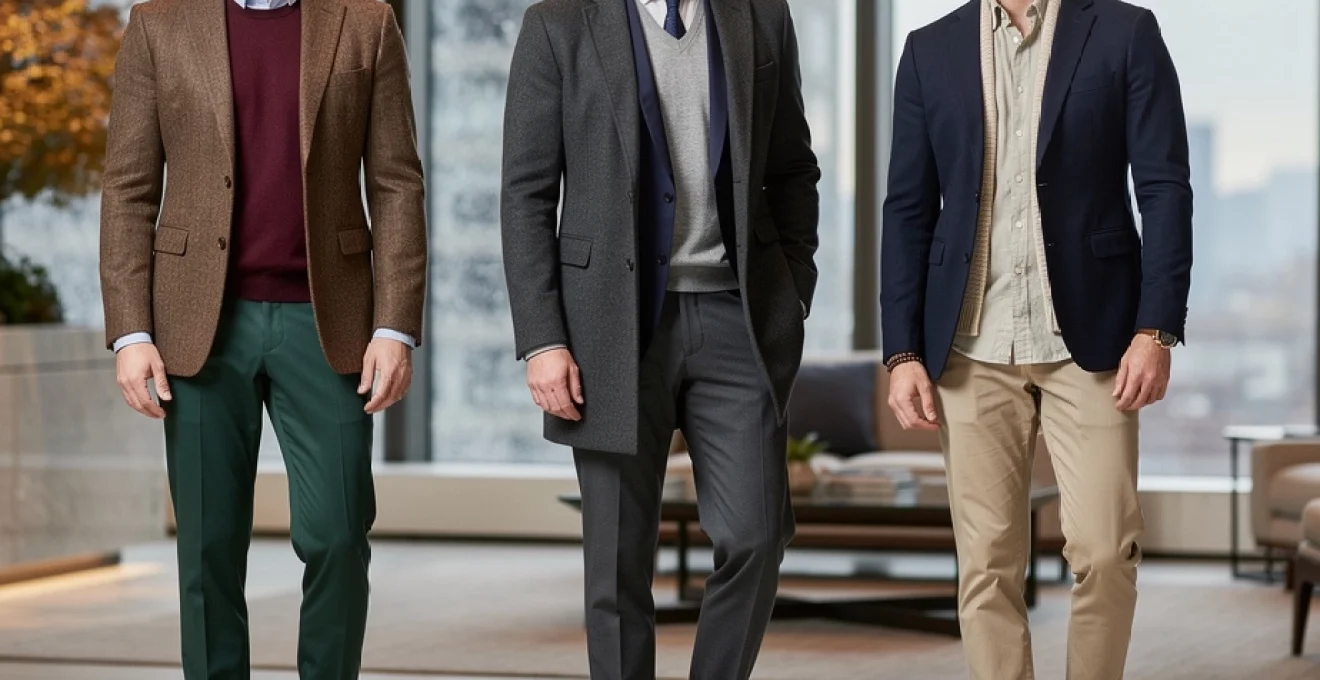
Mastering the art of seasonal layering transforms a basic wardrobe into a sophisticated arsenal of versatile, polished looks. Rather than simply adding more clothes for warmth, strategic layering creates depth, visual interest, and adaptability across changing temperatures and social contexts. The modern gentleman who understands layering principles can navigate seamlessly from crisp autumn mornings to heated indoor spaces, maintaining both comfort and refinement throughout the day.
The complexity of layering lies not in quantity but in the thoughtful selection and coordination of complementary pieces. Each layer serves a specific purpose: the base layer manages moisture and comfort against the skin, the mid-layer provides insulation and style definition, whilst the outer layer offers protection from elements and completes the silhouette. When executed properly, these elements work in harmony to create outfits that are both functionally superior and aesthetically compelling.
Foundational layering principles for contemporary menswear
Successful layering begins with understanding the fundamental relationship between garments in a multi-piece ensemble. The key principle involves creating a graduated system where each successive layer complements rather than competes with its companions. This requires careful attention to fabric weights, silhouettes, and proportional balance to avoid the bulky, overwhelmed appearance that characterises poorly executed attempts.
Base layer selection: merino wool vs cotton blend performance
The foundation of any layered look demands exceptional attention to base layer selection, as this piece directly influences comfort levels throughout the day. Merino wool stands as the premier choice for temperature regulation, offering superior moisture-wicking properties whilst maintaining odour resistance even during extended wear. Its natural elasticity ensures the garment moves with the body without restricting movement or creating unwanted bulk beneath subsequent layers.
Cotton blends, particularly those incorporating modal or bamboo fibres, provide an alternative approach that emphasises softness and affordability. These materials excel in moderate temperature conditions but may struggle with moisture management during more demanding situations. The choice between these options often depends on personal preference, budget considerations, and the specific demands of daily activities.
Mid-layer integration: cardigan and waistcoat styling techniques
The mid-layer represents the visual anchor of most layered outfits, commanding attention whilst providing essential warmth and structure. Cardigans offer exceptional versatility, functioning equally well in casual weekend contexts and business-casual environments. The key to cardigan success lies in selecting pieces with appropriate button stance and proportional fit that complement the wearer’s torso length and shoulder width.
Waistcoats, traditionally associated with formal three-piece suits, have evolved into standalone pieces that add sophistication to contemporary casual ensembles. When worn without a jacket, the waistcoat creates visual interest through its structured silhouette whilst maintaining the flexibility to layer beneath outerwear when conditions demand additional warmth. The choice between these mid-layer options depends largely on the desired formality level and personal style preferences.
Outer layer coordination: blazer and overcoat proportional balance
The outer layer serves as the visual conclusion of any layered ensemble, requiring careful consideration of proportional relationships with underlying pieces. Blazers demand sufficient room to accommodate mid-layers without creating tension across the chest or restricting arm movement. This necessitates selecting blazers with appropriate chest measurements and sleeve lengths that account for the additional bulk of underlying garments.
Overcoats present similar challenges whilst adding the complexity of weather protection requirements. The most successful overcoats feature relaxed silhouettes that drape naturally over complete outfits without appearing oversized when worn alone. Understanding these proportional relationships prevents the common mistake of selecting outerwear that fits perfectly over a shirt but becomes unwearable when layering demands additional space.
Fabric weight transition management throughout temperature changes
Effective layering requires understanding how different fabric weights interact across varying temperature conditions. The principle involves using lighter weights closest to the body and progressively heavier materials for outer layers, creating natural insulation pockets that trap warm air efficiently. This system allows for easy adaptation as environmental conditions change throughout the day.
However, modern fabric technology has introduced lightweight materials with exceptional warming properties, challenging traditional weight-based approaches. Contemporary merino wool knits
and advanced synthetic blends now allow for significant warmth with minimal thickness. This means you can maintain a sleek, masculine silhouette without sacrificing insulation. The crucial skill is learning to “scale” your fabrics across the day: a fine merino base and lightweight flannel mid-layer for chilly mornings, for instance, with the option to remove the flannel and rely on a breathable technical overcoat as temperatures rise.
Managing fabric transitions is less about reacting to the weather and more about anticipating it. You might begin with three layers on a frosty commute, then reduce to two once indoors, and rebuild the system for the evening. Think of your wardrobe as a modular toolkit: each piece should be thin enough to work under outerwear, substantial enough to stand alone, and cohesive in colour and texture so that any combination still looks intentional.
Autumn layering strategies: september to november wardrobe systems
Autumn is arguably the season where men’s layering comes into its own. Temperatures fluctuate dramatically from crisp mornings to mild afternoons, and the visual richness of the season rewards thoughtful use of texture, pattern, and deeper colour. Building an autumn wardrobe system means curating a small set of jackets, knitwear, shirts, and trousers that can be recombined into multiple polished, masculine outfits without feeling repetitive.
The objective from September to November is to embrace weight and warmth gradually. Early autumn may still accommodate unlined blazers and cotton chinos, while late November calls for heavier tweeds, flannels, and substantial knitwear. By structuring your wardrobe around a few key categories—sport coats, knitwear, casual trousers, and robust footwear—you can transition through the season without a complete overhaul.
Tweed sport coats with cashmere knitwear combinations
Tweed sport coats are autumn’s workhorses, offering both structure and rugged sophistication. Their naturally textured surface pairs beautifully with refined knitwear, particularly cashmere or fine-gauge merino, creating a layered look that is simultaneously tactile and elegant. A mid-weight tweed in brown, tobacco, or muted grey serves as an ideal outer layer over a slim crew neck or V-neck cashmere sweater.
When styling tweed with cashmere knitwear, pay close attention to thickness. A fine 12–14 gauge cashmere knit will slide cleanly under a structured jacket without distorting the shoulder line. You might, for example, wear a charcoal cashmere crew neck over a white Oxford shirt and top it with a mid-brown herringbone tweed sport coat. The result is a polished masculine outfit suitable for the office, dinner, or weekend social occasions, with each layer capable of standing alone if the temperature shifts.
Corduroy trouser integration with wool flannel shirting
Corduroy trousers come into their own in autumn, offering both warmth and a distinctive vertical texture that anchors layered outfits. Pairing corduroy with wool flannel shirting creates an effortless, understated combination that feels seasonal without tipping into costume. The key is to balance wale size and fabric weight so that your trousers feel substantial but not bulky when worn with heavier top layers.
For a smart-casual autumn look, consider olive or dark tobacco corduroy trousers combined with a mid-grey or blue wool flannel shirt. You can then add a lightweight quilted vest or a soft-shouldered sport coat as needed. This “cord plus flannel” system works particularly well when you need a business-casual outfit that feels considered yet comfortable—perfect for office environments that favour relaxed tailoring over strict suiting.
Chelsea boot and oxford brogue seasonal transitions
Footwear is often overlooked in discussions about layering, yet it plays a crucial role in completing a cohesive autumn wardrobe. Chelsea boots and Oxford brogues function as transitional anchors, bridging the gap between summer loafers and heavy winter boots. Both silhouettes complement layered outfits by adding structure and polish to otherwise relaxed combinations.
In early autumn, a brown suede Oxford brogue works well with chinos, lightweight wool trousers, and even dark denim. As the weather cools and outer layers become heavier, smooth leather Chelsea boots provide more coverage and a stronger visual base for coats and tweed jackets. You might pair dark brown Chelsea boots with slim charcoal flannel trousers, a merino roll-neck, and a checked sport coat for a confident, masculine silhouette that feels seasonally appropriate without being overdressed.
Burgundy and forest green colour palette implementation
Autumn layering is the ideal moment to experiment with richer, more saturated tones such as burgundy and forest green. These hues integrate seamlessly into a masculine wardrobe because they pair well with foundational neutrals like navy, grey, brown, and charcoal. Rather than overhauling your entire colour scheme, introduce these shades in one or two layers at a time—often in knitwear, accessories, or shirting.
A forest green lambswool crew neck over a white Oxford shirt, worn beneath a navy sport coat, introduces seasonal character without overwhelming the outfit. Likewise, a burgundy merino cardigan layered under a tan trench or camel overcoat adds depth and warmth to an otherwise conservative look. By restricting bolder colours to mid-layers, you can easily dial the formality up or down: remove the sweater and you are back to a classic, neutral base suitable for more formal settings.
Winter sophistication: december to february formal layering
Winter layering for men moves beyond simple practicality into the realm of tailored sophistication. From December to February, the challenge is to maintain a streamlined silhouette while incorporating enough insulation to withstand low temperatures, biting winds, and inclement weather. Formal layering in this period often revolves around suits, overcoats, and refined knitwear or waistcoats that complete a polished, masculine aesthetic.
A classic winter system might start with a high-quality base layer—such as a fine merino undershirt—beneath a crisp dress shirt and tailored suit. Over this, you could add a slim merino roll-neck in place of a traditional shirt and tie for a modern, minimalist approach, or insert a lightweight waistcoat for extra insulation without visual clutter. The final layer is typically a structured overcoat in wool or cashmere, cut generously enough to accommodate your inner layers yet precise enough to maintain a clean line when worn over a single layer for evening events.
Managing proportion is particularly important in winter. Heavy outer fabrics, chunky scarves, and lined leather gloves all add volume, so inner layers should be kept trim and finely knitted. Opt for suits in mid- to heavy-weight flannel, cavalry twill, or thornproof wool, which drape cleanly and hold their shape under coats. Deep navy, charcoal, and tobacco brown serve as reliable foundations, while accents such as a patterned wool tie or a subtle tonal pocket square introduce interest without undermining the formality of the look.
Spring transitional dressing: march to may smart-casual approaches
Spring offers an opportunity to lighten both fabric weight and colour palette while preserving the structural advantages of good layering. From March to May, temperatures can vary widely within a single day, so a smart-casual approach to men’s layering is especially effective. The aim is to replace heavy winter textures with breathable options while maintaining enough coverage for cool mornings and breezy evenings.
This transitional period rewards unstructured tailoring, lighter knitwear, and versatile trousers that bridge the gap between formal and casual. Think of spring layering as a process of subtraction and refinement: the overcoat is swapped for a lightweight blazer or field jacket, chunky sweaters are replaced by fine-gauge knits, and heavy boots give way to loafers or Derbies. The result is a polished masculine look that feels relaxed yet intentional.
Lightweight wool blazers with linen-cotton shirt combinations
Lightweight wool blazers—often in tropical or high-twist wool—are ideal spring outer layers. They provide structure and a professional appearance without the heat retention of heavier winter fabrics. Pairing these blazers with linen-cotton blend shirts creates a breathable, moisture-managing system that remains comfortable even when the sun appears unexpectedly.
For example, a navy high-twist wool blazer layered over a pale blue linen-cotton button-down offers a refined yet easy-going look suitable for the office, client meetings, or evening engagements. You can remove the blazer for a more relaxed atmosphere without sacrificing style, as the shirt itself has sufficient texture and visual interest. This combination is particularly effective for men who need a smart-casual outfit that transitions fluidly between formal and informal spaces throughout the day.
Chino integration with unstructured knitwear pieces
Chinos are a cornerstone of spring layering due to their versatility and lighter handle compared to winter wool trousers. When combined with unstructured knitwear—such as fine-gauge crew necks, lightweight cardigans, or cotton-silk blends—they form a balanced base that is both polished and relaxed. The absence of heavy internal canvassing or rigid construction in these knits allows them to sit comfortably under casual jackets or blazers.
A simple yet effective spring formula might involve stone or khaki chinos, a white or ecru T-shirt, and a lightweight navy cardigan. Add a cotton field jacket or unlined blazer when additional structure is required. Because each piece is relatively light, you can easily add or remove layers as the temperature fluctuates, maintaining a coherent, masculine silhouette rather than appearing over- or under-dressed.
Loafer and derby shoe seasonal styling protocols
As the weather transitions in spring, your footwear can shift from winter boots back to more refined, low-cut options such as loafers and Derby shoes. These styles pair naturally with layered smart-casual outfits, providing a visual lightness that echoes the move towards breezier fabrics. The question is often when to make the switch and how to style these shoes so they feel seasonally appropriate.
Generally, you can introduce loafers once temperatures are consistently mild and the pavements are dry. Penny or tassel loafers in brown suede or calf leather work particularly well with chinos, lightweight wool trousers, and even dark denim when anchored by a blazer or unstructured jacket. Derby shoes, slightly more substantial, are ideal for days when the weather is unpredictable but you still prefer a polished appearance. Worn with a high-twist wool suit or blazer-and-trouser combination, they complete a layered look that feels professional without the weight of winter footwear.
Navy and khaki foundation building for versatile wardrobes
Navy and khaki form one of the most reliable foundational pairings for a spring wardrobe. Navy provides depth and formality, while khaki introduces lightness and a casual undertone, making the combination ideal for modular layering. When you build your spring outfits around these two tones, almost any additional colour—white, light blue, olive, or soft pastels—slots in effortlessly.
A navy unstructured blazer and well-fitted khaki chinos, for example, can be layered over a white Oxford or a striped Breton knit for a clean, masculine look that suits both office and weekend settings. Swap the shirt for a navy polo or a light grey crew neck to adjust the formality without disrupting the overall palette. By treating navy and khaki as your “canvas,” you gain a high degree of flexibility in your layering choices while maintaining a coherent visual identity.
Texture mixing methodologies: fabric contrast and harmony
Effective texture mixing is one of the most sophisticated aspects of men’s layering, and it is central to creating a polished masculine look. Textures introduce depth and visual hierarchy, allowing even monochromatic outfits to feel rich and intentional. The core methodology involves pairing smooth, refined fabrics with more tactile surfaces so that each layer is clearly defined rather than blending into a flat, indistinct whole.
Think of your outfit as a three-dimensional composition: a crisp poplin shirt or smooth merino base layer, a mid-layer in brushed cotton, flannel, or lambswool, and an outer layer in tweed, suede, or densely woven cotton. This contrast in hand-feel prevents the eye from becoming bored and emphasises the structure of the garments. Much like combining different instruments in an orchestra, each fabric has its own “tone”; used together thoughtfully, they create harmony rather than noise.
At the same time, you must avoid overloading a single look with competing textures. Pairing corduroy trousers, a tweed jacket, and a chunky cable knit, for instance, risks feeling visually heavy, especially on smaller frames. Instead, choose one dominant textured piece—perhaps a tweed sport coat—and support it with smoother surfaces such as cotton chinos and a fine-gauge knit. This balance ensures that the texture reads as deliberate sophistication rather than clutter.
Professional layering standards: corporate and business-casual applications
Layering in professional settings demands a more disciplined approach than off-duty dressing. In corporate and business-casual environments, the objective is to project competence and authority while remaining comfortable across varying indoor and outdoor conditions. This means prioritising clean lines, muted colour palettes, and high-quality fabrics that age gracefully and resist creasing.
In a traditional corporate context, the classic three-layer system remains highly effective: a moisture-managing base layer, a dress shirt (with or without a fine-gauge knit), and a tailored suit topped by an overcoat when needed. Here, men’s layering should never obscure the overall sharpness of the suit. Stick to subtle patterns—micro-check shirts, discreet herringbone or birdseye weaves—and ensure that any knitwear is slim enough not to distort the jacket’s drape. A merino V-neck or sleeveless vest is often preferable to a bulky crew neck, as it accommodates a tie and maintains a clean chest line.
Business-casual environments offer more flexibility but still benefit from structure. You might, for example, combine an Oxford shirt, lightweight merino cardigan, and unstructured blazer with tailored chinos. Remove the blazer for a more relaxed meeting, or swap the cardigan for a gilet on cooler days. The guiding principle is that every visible layer should be office-appropriate on its own; if you would not wear a piece solo in front of a client, it should not be a prominent part of your professional layering system.
Accessories also contribute to professional layering standards. A well-chosen wool or cashmere scarf, leather belt, and understated watch can tie together a multi-layered outfit without adding visual noise. Keep hardware minimal, avoid overly casual items such as chunky outdoor backpacks with tailoring, and ensure your outerwear—whether a trench coat, mac, or overcoat—complements the formality of what lies beneath. By adhering to these guidelines, you create a wardrobe of layered looks that supports your professional identity while adapting gracefully to every season.