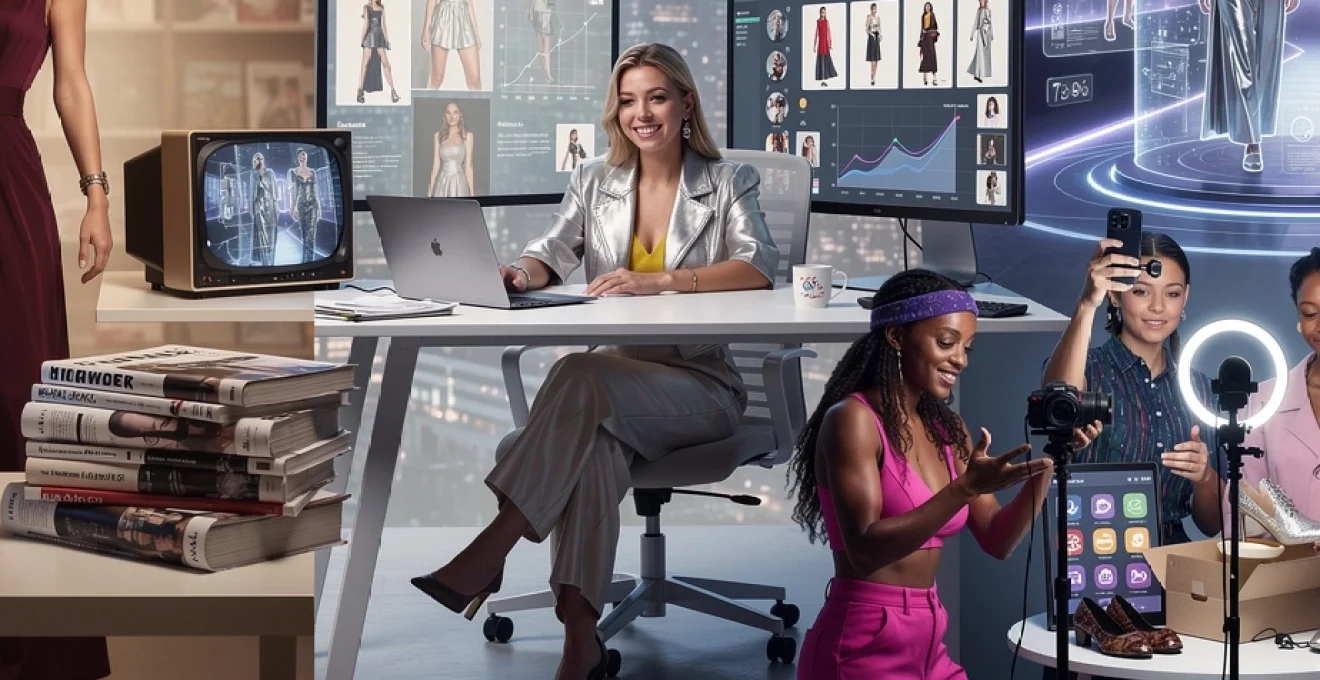
The fashion industry has undergone a seismic transformation over the past two decades, fundamentally altering how brands communicate with consumers and how audiences consume style-related content. Traditional gatekeepers like Vogue and Harper’s Bazaar once held absolute authority over fashion narratives, determining which trends would flourish and which would fade into obscurity. Today, a teenage TikTok creator can spark a global fashion movement from their bedroom, reaching millions of viewers within hours.
This digital revolution has democratised fashion media, breaking down the barriers between professional journalists and everyday style enthusiasts. Social media platforms have become the new runways, where micro-influencers command the same attention as seasoned fashion editors. The shift represents more than just technological advancement; it signifies a complete restructuring of power dynamics within the fashion ecosystem, where authenticity often trumps authority and engagement metrics can make or break a brand’s campaign.
Traditional fashion media landscape before digital transformation
The pre-digital fashion media landscape operated on a carefully orchestrated system of exclusivity and seasonal rhythms. Fashion houses would unveil their collections during specific weeks in Paris, Milan, London, and New York, with carefully selected journalists and editors granted access to these coveted shows. This traditional model created a clear hierarchy where established publications controlled the narrative flow from conception to consumer awareness.
Vogue and harper’s bazaar print circulation dominance
During the golden age of print media, Vogue and Harper’s Bazaar commanded unparalleled influence over global fashion discourse. Vogue’s circulation peaked at over 1.2 million copies monthly in the early 2000s, with international editions reaching an estimated 25 million readers worldwide. Harper’s Bazaar maintained a circulation of approximately 850,000 copies, positioning itself as a sophisticated alternative to Vogue’s mainstream appeal. These publications operated as cultural arbiters, with their editorial choices directly impacting designer sales and brand recognition.
The power of these magazines extended beyond mere trend reporting. A single feature in Vogue could transform an emerging designer into a household name, whilst a negative review might effectively end a career. Fashion editors like Anna Wintour and Glenda Bailey wielded influence comparable to film critics or political commentators, their opinions carrying substantial commercial weight throughout the industry supply chain.
Fashion week editorial coverage through established publishing houses
Fashion Week coverage represented the pinnacle of traditional fashion journalism, with major publishing houses investing substantial resources in comprehensive runway reporting. Teams of photographers, writers, and stylists would descend upon fashion capitals, producing elaborate spreads that captured not just the clothing but the entire atmosphere of each collection. This coverage followed established protocols, with front-row seating arrangements reflecting the strict hierarchy of fashion media influence.
The reporting process involved multiple stages of editorial review, ensuring that coverage aligned with each publication’s brand identity and advertiser relationships. Fashion critics would analyse collections through established frameworks of craftsmanship, innovation, and commercial viability, providing readers with expert interpretation of complex design concepts. This curated approach meant that consumers received filtered, contextualised information about emerging trends, though it also limited the diversity of voices and perspectives in fashion discourse.
Television fashion programming on networks like E! and MTV
Television emerged as a complementary medium to print publications, with networks like E! and MTV developing fashion-focused programming that brought runway shows and celebrity style into viewers’ living rooms. Shows like « Fashion Police » and « House of Style » created new formats for fashion commentary, blending entertainment with style education. These programmes reached different demographics than traditional print media, particularly younger audiences who were beginning to view fashion as accessible rather than exclusive.
Television fashion programming also introduced the concept of fashion personalities who existed outside the traditional magazine system. Hosts like Cindy Crawford and Rebecca Romijn brought celebrity glamour to fashion education, whilst critics like Joan Rivers pioneered the sharp-tongued commentary style that would later flourish on social media platforms. This period established precedents for personality-driven fashion content that would prove crucial in the digital transformation to come.
Advertising revenue models in Pre-Digital fashion publications
The economic foundation of traditional fashion media rested on advertising revenue from luxury brands and department stores. Full-page advertisements in Vogue could cost up
to hundreds of thousands of dollars, particularly in coveted issues like the September edition. Brands paid these premiums because print advertising delivered guaranteed reach and association with a prestigious editorial environment. Media buyers evaluated placements based on circulation numbers, reader demographics, and the perceived “halo effect” of appearing alongside influential fashion editorials.
This pre-digital revenue model relied heavily on long lead times and relatively limited performance data. Campaigns were planned months in advance, and success was measured through proxy metrics such as brand lift surveys and seasonal sales rather than real-time engagement. While this system favoured established players with large budgets, it also created a stable ecosystem where publishers could invest in high-quality photography, in-depth reporting, and ambitious fashion stories without constant pressure for instant, measurable returns.
Social media platforms reshaping fashion content distribution
The rise of social media platforms fundamentally reconfigured how fashion content is produced, distributed, and consumed. Instead of waiting for monthly issues or seasonal TV specials, audiences now receive a constant stream of style inspiration on their phones, 24/7. The power once concentrated in a few publishing houses is now dispersed across millions of user accounts, from global brands to niche creators. This shift has accelerated trend cycles, shortened feedback loops, and made data-driven decision-making central to fashion media strategy.
For brands and publishers, social platforms function as both distribution channels and real-time focus groups. Every like, share, and comment provides insight into consumer preferences, enabling rapid experimentation with new formats and messages. However, this abundance of content also creates intense competition for attention. To stand out, fashion media must tailor stories to each platform’s algorithms and user behaviour, adopting a native approach rather than simply repurposing print-era content.
Instagram’s visual-first algorithm impact on fashion brand visibility
Instagram’s visual-first design and algorithmic feed have turned it into the de facto shop window of contemporary fashion. High-resolution imagery, Reels, and Stories allow brands to present curated narratives that merge editorial aesthetics with commercial objectives. The platform’s algorithm prioritises content that generates strong engagement, meaning striking visuals and relatable storytelling can propel even small labels into mainstream visibility.
At the same time, Instagram’s pay-to-play dynamics have made organic reach more difficult to sustain. Many fashion brands now rely on a mix of influencer collaborations, paid ads, and shoppable posts to stay visible in crowded feeds. Features like product tagging and in-app checkout blur the line between inspiration and transaction, effectively turning editorial-style content into a direct sales channel. For fashion media professionals, mastering Instagram has become as essential as understanding traditional layout and typography once was.
Tiktok’s short-form video format transforming fashion trend cycles
TikTok’s short-form video format has compressed fashion trend cycles to unprecedented speeds. Where it once took months for runway ideas to filter into mainstream wardrobes, a viral TikTok sound or hashtag can popularise a micro-trend in days. Think of aesthetics like “cottagecore” or “blokecore,” which spread less through magazines and more through user-generated outfit videos, styling challenges, and thrift hauls.
This rapid-fire environment rewards experimentation and authenticity over polished perfection. Brands that embrace behind-the-scenes clips, lo-fi styling tips, and creator collaborations often outperform those clinging to traditional campaign aesthetics. For fashion media, TikTok demands a new editorial language: snappy storytelling, strong hooks in the first few seconds, and narratives that invite participation. In many ways, it functions like a real-time, crowd-sourced focus group, revealing what resonates with younger audiences before it appears on any catwalk.
Pinterest’s shopping integration for fashion discovery and purchase intent
Pinterest occupies a unique space in the fashion media ecosystem as a platform driven by discovery and long-term planning. Users often arrive with a specific intent—such as “summer capsule wardrobe ideas” or “wedding guest outfit inspiration”—making Pinterest a powerful tool for shaping purchase decisions. Rich Pins, catalog integrations, and visual search technologies allow brands to connect editorial-style inspiration directly to product pages.
Unlike the fleeting nature of Stories or short-form videos, Pins have a long shelf life and can drive traffic months or even years after publication. This makes Pinterest particularly valuable for evergreen fashion content, such as seasonal style guides or how-to-wear articles. For media teams, optimising images, keywords, and board structures becomes a form of SEO, ensuring that their fashion content surfaces when users are actively seeking ideas rather than passively scrolling.
Youtube fashion hauls and unboxing content monetisation strategies
YouTube has evolved into a long-form counterpart to the bite-sized content on other platforms, providing space for detailed fashion hauls, styling tutorials, and brand reviews. Creators can spend 15–30 minutes walking viewers through their latest purchases, giving context, fit notes, and honest opinions that feel more intimate than traditional advertorials. This depth of engagement builds trust, which in turn can drive significant influence over purchasing behaviour.
Monetisation strategies on YouTube typically combine AdSense revenue, affiliate links, and brand sponsorships. A single haul video might generate income from pre-roll ads, commission on linked items in the description box, and a flat fee from a partnering retailer. For fashion media professionals transitioning to video, understanding watch time, click-through rates, and audience retention becomes as important as page views once were. The most successful channels think like hybrid publishers and retailers, crafting content that entertains, informs, and converts in equal measure.
Influencer marketing ecosystem and fashion media convergence
As social platforms matured, the influencer marketing ecosystem emerged as a central pillar of fashion communication. Influencers effectively became mini media outlets, offering brands access to targeted communities built on personal trust rather than institutional authority. This convergence of media and marketing has redefined how fashion stories are told, measured, and monetised. Instead of relying solely on magazine placements, brands now orchestrate multi-layered campaigns that span micro-creators, celebrities, and publisher partnerships.
For traditional fashion media, this shift presents both a challenge and an opportunity. On one hand, influencers compete for advertising budgets that once went exclusively to magazines and TV. On the other, publishers can collaborate with creators, integrate influencer content into their digital properties, and build their own talent rosters. The boundaries between editor, creator, and marketer are increasingly fluid, requiring new ethical standards and transparent disclosures to maintain audience trust.
Micro-influencer partnerships with emerging fashion brands
Micro-influencers—typically defined as creators with between 10,000 and 100,000 followers—have become especially valuable in the fashion sector. Their smaller, more engaged audiences often see them as peers rather than distant celebrities, resulting in higher engagement rates and more authentic interactions. Emerging fashion brands, in particular, leverage micro-influencers to generate awareness within specific style communities, from sustainable fashion enthusiasts to streetwear aficionados.
These partnerships are often more cost-effective than high-profile endorsements and can be scaled across multiple creators to test messaging and product positioning. Successful collaborations tend to give influencers creative freedom, allowing them to integrate products into their own aesthetic instead of forcing rigid campaign guidelines. For readers considering influencer strategies, a useful analogy is grassroots marketing: micro-influencers act like local ambassadors who can seed trends organically, one community at a time.
Celebrity endorsements through digital channels like kylie jenner’s instagram
At the other end of the spectrum, celebrity endorsements on platforms like Instagram offer unparalleled reach and cultural impact. Figures such as Kylie Jenner, whose posts can reach hundreds of millions of followers, exemplify how a single image or Story can move markets, sell out products, and set global trends overnight. These digital endorsements extend the tradition of celebrity-fronted print campaigns into a more immediate, interactive format.
However, the stakes and expectations are higher in the digital age. Audiences now expect transparency around paid partnerships and increasingly scrutinise whether a celebrity actually aligns with a brand’s values. A misjudged collaboration can spark backlash just as quickly as a successful one can drive sales. To navigate this landscape, fashion marketers must balance star power with authenticity, ensuring that endorsements feel like credible recommendations rather than purely transactional promotions.
Fashion blogger monetisation through affiliate marketing and sponsored content
Fashion bloggers were among the first to bridge the gap between editorial content and commerce, pioneering monetisation models that are now standard across digital media. Through affiliate marketing programmes, bloggers earn a commission every time a reader clicks through a link and makes a purchase. This “performance-based” revenue stream incentivises creators to provide detailed reviews, styling ideas, and size guidance that help readers make confident buying decisions.
Sponsored content adds another layer, with brands paying for dedicated posts, lookbooks, or social campaigns that showcase specific products or collections. The most sustainable blogger businesses blend these revenue streams in ways that maintain editorial integrity—clearly labelling sponsored posts and balancing them with organic, unpaid recommendations. From a reader’s perspective, this convergence can be beneficial when handled responsibly, offering shoppable fashion media that remains informative and trustworthy.
Brand ambassador programmes on platforms like LTK and RewardStyle
Platforms such as LTK (formerly LikeToKnow.It) and RewardStyle formalised the relationship between fashion creators and retailers by introducing structured brand ambassador programmes. These platforms provide creators with unique, trackable links and user-friendly tools to build shoppable content across blogs, Instagram, and other social channels. In return, brands gain access to detailed performance data, including click-throughs, conversions, and average order values for each creator.
For fashion media professionals, these ambassador programmes illustrate how content, community, and commerce can be tightly integrated. Instead of treating editorial and e-commerce as separate entities, many creators now operate as “curators” whose recommendations are instantly actionable. It’s similar to having a personal shopper embedded within your favourite fashion feed: you see an outfit you love, tap to reveal the products, and complete your purchase without leaving the app.
Digital fashion publishing technologies and content management systems
Behind every successful digital fashion publication lies a robust technological infrastructure, with content management systems (CMS) at its core. Platforms like WordPress, Drupal, and bespoke enterprise solutions enable editorial teams to plan, create, and distribute articles, galleries, and videos at scale. Unlike the fixed layouts of print, digital CMS environments support rapid updates, A/B testing of headlines, and modular content blocks that can be repurposed across channels.
Modern fashion media workflows also integrate tools for image optimisation, SEO, social scheduling, and newsletter distribution. For instance, an editorial team might upload a runway review once, then automatically generate AMP pages, social teasers, and push notifications. This level of automation is crucial in an era where speed and multi-platform presence are non-negotiable. If print magazines were like finely crafted coffee table books, digital fashion publishing is more akin to a constantly updating news ticker, powered by APIs and analytics.
Headless CMS architectures are becoming increasingly popular among fashion brands and publishers seeking flexibility. In a headless setup, content is stored centrally and delivered via APIs to websites, apps, in-store screens, and even wearable devices. This approach allows fashion media to maintain consistent storytelling across touchpoints while tailoring design and interactivity to each device. As augmented reality try-ons and virtual showrooms gain traction, having a future-proof publishing stack becomes a strategic advantage.
Data analytics and consumer behaviour tracking in fashion media
Data analytics have transformed fashion media from an intuition-driven field into a discipline grounded in measurable audience insights. Tools like Google Analytics, social platform dashboards, and customer data platforms allow publishers and brands to track how users interact with content in real time. Metrics such as time on page, scroll depth, and video completion rates reveal which stories resonate and which formats fall flat.
This data-driven approach enables more precise segmentation and personalisation. For example, a user who frequently engages with sustainable fashion articles might be shown more content and products aligned with ethical brands. Similarly, geographic and device data help media teams optimise publishing times and creative formats for different markets. It’s a bit like moving from broadcasting on one static channel to tailoring a unique playlist for each viewer based on their tastes and behaviour.
However, consumer behaviour tracking also raises important questions about privacy and transparency. With regulations like GDPR and evolving platform policies, fashion media must balance the desire for granular insights with respect for user consent. Readers are increasingly aware of how their data is used, and they tend to reward brands and publishers that communicate clearly and offer meaningful value in exchange. For you as a consumer, this means your clicks and preferences are shaping the fashion media you see—sometimes more than the editors themselves.
Future technologies disrupting fashion media consumption patterns
Looking ahead, emerging technologies are poised to further disrupt how we experience fashion media. Augmented reality (AR) and virtual reality (VR) are already enabling virtual try-ons, immersive runway shows, and interactive editorial spreads. Instead of merely viewing a flat image of a dress, you might soon see how it drapes on a 3D avatar with your exact measurements, or walk through a digital recreation of a Paris runway from your living room.
Artificial intelligence (AI) is also reshaping content creation and curation. Recommendation engines suggest outfits based on your browsing history, while generative tools assist with everything from copywriting to mood board generation. At their best, these technologies act like intelligent assistants, freeing human editors and designers to focus on storytelling and creativity. Yet they also prompt important discussions about originality, authorship, and the value of human taste in an algorithm-driven world.
Web3 concepts, including digital ownership and NFTs, introduce new possibilities for fashion media monetisation. Imagine purchasing a limited-edition digital editorial cover or owning a collectible, animated lookbook from a major brand. As younger generations spend more time in virtual environments—from gaming platforms to metaverse spaces—fashion media must consider how to translate its narratives into purely digital contexts. Will the “front row” of the future be a virtual lobby accessed via headset rather than a physical seat in a show venue?
Ultimately, the evolution of fashion media in the digital age is an ongoing process rather than a finished story. Each technological wave—from print to social, from mobile to immersive—reshapes how we discover, discuss, and desire clothing. As consumers, we hold more power than ever to influence what succeeds, simply through the content we choose to watch, share, and shop from. The question is not whether fashion media will continue to change, but how we will participate in shaping its next chapter.