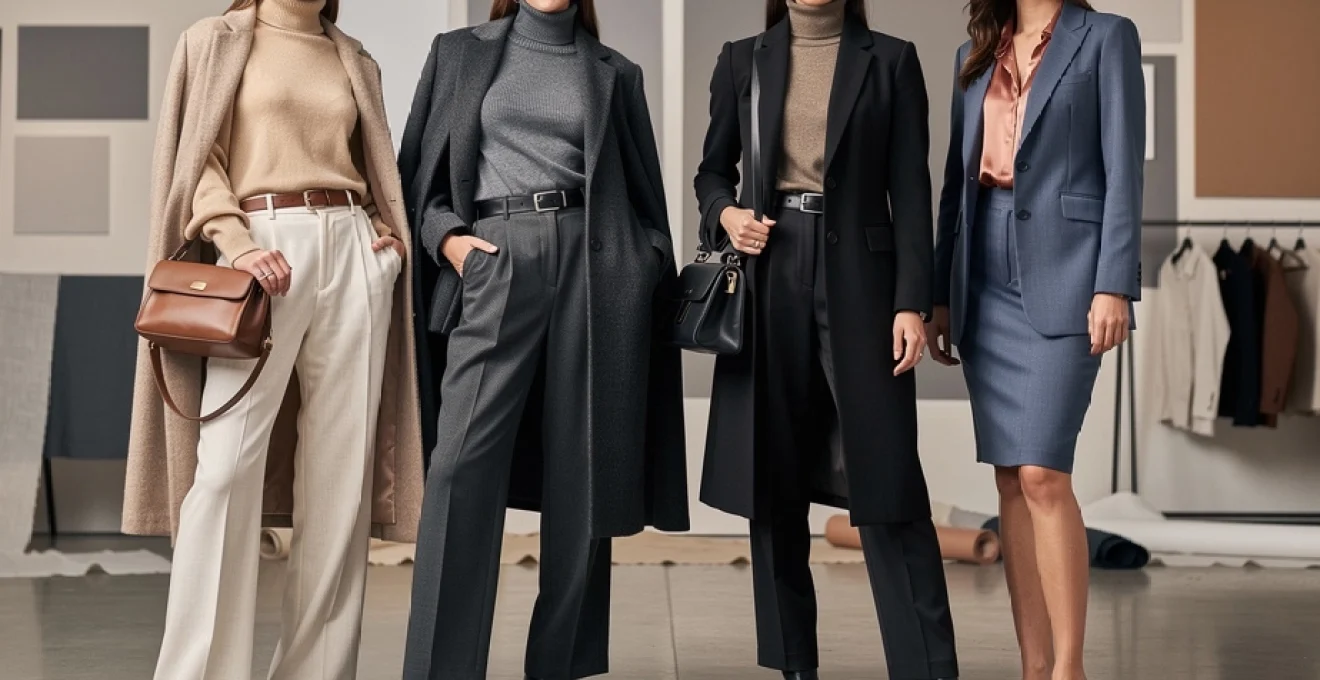
Monochrome dressing represents one of fashion’s most enduring and sophisticated approaches to personal style. This timeless aesthetic transcends seasonal trends and cultural boundaries, offering women a versatile foundation for creating elegant, cohesive wardrobes. The strategic use of single-colour palettes or achromatic combinations creates visual harmony while allowing the wearer’s silhouette, fabric choices, and styling prowess to take centre stage. Whether executed through classic black-and-white combinations or bold single-hue statements, monochromatic styling demonstrates that restraint in colour choice often yields maximum impact in overall presentation.
Monochrome colour theory foundations in contemporary fashion design
Achromatic colour palette psychology and visual perception
The psychological impact of achromatic colour schemes extends far beyond simple aesthetic preferences, influencing how others perceive the wearer’s professionalism, sophistication, and attention to detail. Research in colour psychology indicates that neutral palettes convey stability and reliability, making them particularly effective in professional environments. Black, white, and grey combinations create a sense of authority while allowing the wearer’s personality to emerge through styling choices rather than colour distractions.
The human eye processes achromatic combinations differently than chromatic palettes, creating a more streamlined visual experience that emphasises form over hue. This neurological response explains why monochromatic outfits often appear more expensive and thoughtfully curated than multi-coloured ensembles. The absence of competing colour elements allows viewers to focus on garment construction, fabric quality, and fit—all hallmarks of luxury fashion.
Tonal variation techniques through fabric texture and weave manipulation
Creating visual interest within monochromatic palettes requires sophisticated understanding of how different fabrics interact with light and shadow. Silk charmeuse reflects light dramatically differently than matte wool crepe, even when both garments share identical colour values. This principle allows stylists to construct dimensionally rich outfits using subtle tonal variations achieved through strategic fabric selection rather than colour contrast.
Professional stylists leverage fabric weight and weave density to create hierarchy within single-colour ensembles. Heavier fabrics naturally appear deeper in tone due to their light-absorbing properties, while lightweight materials seem brighter and more luminous. This natural variation eliminates the need for multiple colours while maintaining visual complexity and sophistication.
Light reflectance properties in black, white, and grey garment selection
Understanding light reflectance becomes crucial when constructing successful monochromatic wardrobes, particularly within achromatic colour schemes. Pure white garments reflect approximately 90% of incident light, creating dramatic contrast against darker skin tones and adding volume to the wearer’s silhouette. Conversely, true black absorbs most visible light, creating a streamlined, minimising effect that many women find flattering.
Grey tones occupy the middle ground of this reflectance spectrum, offering versatility for year-round wear while providing sophisticated neutrality. The key lies in selecting greys with appropriate undertones—cool greys complement silver jewellery and contemporary accessories, while warm greys pair beautifully with gold hardware and brass details. This understanding enables precise colour matching within seemingly simple neutral palettes.
Chromatic intensity control using Single-Hue colour blocking methods
When working with chromatic monochrome—single-colour palettes using blues, reds, or other hues—controlling intensity becomes paramount for achieving sophisticated results. Colour blocking within a single hue family requires balancing saturated pieces with muted variations to prevent overwhelming the viewer’s eye. Professional stylists often anchor bright monochromatic looks with one deeper, more saturated piece while keeping other elements lighter and more subdued.
The 70-30 rule applies effectively to chromatic monochrome styling: approximately 70% of the outfit should consist of the primary hue at medium saturation, while 30% comprises either deeper or lighter variations. This proportion creates visual balance while maintaining the cohesive single-colour effect. Mastering these intensity relationships transforms simple colour coordination into sophisticated tonal storytelling.
Essential monochrome wardrobe architecture and capsule construction
Foundation garment selection for tonal wardrobe building
Constructing a powerful monochrome wardrobe begins with identifying a small set of foundation garments that can be recombined in multiple ways. These core pieces should reflect the dominant colour stories of your lifestyle: many women choose black, white, navy, or camel as their primary base, then add one or two accent hues such as burgundy or forest green. When you limit your palette, you make it significantly easier to build outfits that feel intentional and cohesive, even on busy mornings.
Start with silhouettes you already reach for weekly: tailored trousers, a pencil or slip skirt, a blazer, a button-down shirt, a fine-knit sweater, a simple dress, and a versatile coat. Select each of these in your chosen monochrome tones, ensuring the undertones align across pieces. For instance, cool black jeans pair best with similarly cool black blazers and tops, while warm charcoal complements softer, brown-based blacks. By curating these foundational elements carefully, you create a wardrobe where most items can be worn together without colour conflict.
Fabric weight layering systems in monochromatic dressing
Successful monochrome outfits rely not only on colour harmony but also on a thoughtful layering system based on fabric weight. Think of your wardrobe in three tiers: light, medium, and heavy. Light layers include silk camisoles, cotton shirts, and fine turtlenecks that sit closest to the skin. Medium-weight layers encompass blazers, cardigans, and structured dresses, while heavy layers consist of outerwear, chunky knits, and technical pieces designed to protect against the elements.
When all three tiers exist within a single colour family, you gain enormous flexibility for year-round dressing. You can, for example, pair a lightweight ivory silk blouse with a mid-weight cream blazer and a heavy wool coat in the same tone during winter, then strip back to the blouse alone in summer. This approach keeps your look visually consistent throughout changing temperatures while allowing you to adjust comfort levels seamlessly. It also prevents the common issue of a beautiful monochrome base outfit being disrupted by a mismatched coat or jacket.
Silhouette proportioning techniques for single-colour ensembles
Because monochrome outfits remove colour contrast, proportion and silhouette become the primary tools for visual balance. A single-colour look will quickly reveal whether a blazer is too long, trousers are too tight, or a skirt cuts you at an unflattering point. To avoid this, apply a simple principle: combine one voluminous or relaxed piece with one fitted or streamlined piece. For instance, balance wide-leg trousers with a close-fitting turtleneck, or pair a boxy cropped jacket with a slim pencil skirt.
Vertical and horizontal lines also play a crucial role. High-rise trousers in the same colour as your top elongate the legs and create a near-continuous column of colour, which is especially effective for petites. Conversely, a cropped monochrome jacket can visually raise the waistline and emphasise an hourglass shape. When you fine-tune these proportions in a single-colour outfit, the result is a look that feels custom-tailored, even if every piece is off-the-rack.
Investment piece prioritisation in achromatic capsule wardrobes
In an achromatic capsule wardrobe—built primarily around black, white, and grey—certain pieces warrant higher investment because they anchor multiple outfits. Coats, blazers, tailored trousers, and leather shoes are at the top of this list. These items are highly visible, frequently worn, and immediately communicate quality through fabric, structure, and finish. Investing in a well-cut black blazer or a camel overcoat, for example, can elevate even the simplest white T-shirt and jeans combination into a polished monochrome look.
Focus on fabrics that drape elegantly and age well, such as wool, cashmere blends, high-quality cotton, and genuine leather. Since these neutral tones rarely fall out of favour, a premium black cashmere sweater or grey wool coat can remain relevant for a decade or more if properly cared for. Prioritising these investment pieces within your capsule allows you to purchase more affordable basics—like T-shirts and simple knitwear—without compromising the overall sophistication of your monochrome outfits.
Professional monochrome styling methodologies and technical applications
Within professional settings, monochrome outfits function almost like a visual uniform that signals competence and control. Corporate stylists and image consultants often recommend single-colour dressing for presentations, interviews, and high-stakes meetings because it reduces visual noise and projects focus. A navy column of colour, for instance, can appear just as authoritative as black while feeling slightly softer and more approachable. By adjusting fabric choice—matte wool for authority, subtle sheen for creativity—you can fine-tune the message your outfit sends.
Technical styling techniques further enhance these effects. Using tonal belts to define the waist in a long blazer-and-trouser combination preserves the lengthening benefits of monochrome while adding structure. Similarly, choosing footwear in a matching shade creates an uninterrupted line from shoulder to floor, which photographs particularly well in corporate headshots and speaking engagements. Even subtle details, such as matching the hardware of your bag and jewellery to the undertones of your outfit, help create a cohesive, high-level finish.
Iconic monochrome fashion moments from coco chanel to phoebe philo
Monochrome dressing has been championed by some of the most influential women in fashion history, offering a blueprint for modern wardrobes. Coco Chanel’s black-and-white aesthetic revolutionised early 20th-century style, proving that simplicity could be the ultimate luxury. Her preference for clean lines, restrained colour, and impeccable tailoring still resonates in contemporary office wear and evening dressing. The little black dress remains a classic example of how a single-colour garment can become a cultural icon.
Decades later, designers like Phoebe Philo at Céline (now Celine under Hedi Slimane) solidified the power of monochrome for the modern, working woman. Philo’s collections often showcased head-to-toe cream, camel, or black outfits that felt both minimal and deeply expressive. More recently, creative directors at houses such as The Row, Jil Sander, and Max Mara have continued this tradition, sending models down the runway in tonal looks that highlight cut, movement, and texture over print. When we reference these iconic moments in our own wardrobes, we tap into a lineage of women who use restraint as a statement of confidence.
Seasonal adaptation strategies for year-round monochrome wardrobes
Summer monochrome styling through linen and cotton fabrications
Warm-weather monochrome relies heavily on breathability and light reflectance. Linen and cotton are ideal for summer because they allow air to circulate while maintaining structure, preventing an outfit from appearing limp or overly casual. An all-white or all-beige linen look—think wide-leg trousers and a relaxed shirt—instantly communicates ease and quiet luxury. To avoid transparency issues, especially with white, choose mid-weight fabrics and look for pieces with partial lining in key areas.
Colour selection also plays a crucial role in summer. Soft neutrals such as ivory, sand, and pale grey reflect sunlight and keep you cooler, while still creating that elongated monochrome column. If you love brighter hues, consider a single-colour dress in cobalt, coral, or leaf green, then echo the shade in your sandals or handbag for a cohesive effect. The key is to let the colour and fabrication do the work so you can keep accessories minimal and still appear polished.
Winter tonal layering using wool, cashmere, and technical fabrics
In colder months, monochrome outfits become a powerful solution to bulk and heaviness. By layering wool, cashmere, and technical fabrics in a single colour family, you can add warmth without fragmenting your silhouette. Picture a charcoal turtleneck, mid-grey wool trousers, and a deep graphite coat: three distinct tones, all within the same spectrum, working together to create depth and refinement. This approach prevents winter outfits from feeling visually heavy, even when multiple layers are involved.
Technical fabrics like insulated parkas or weatherproof trench coats can also integrate seamlessly into a monochrome wardrobe when chosen in classic neutrals. If you live in a cold or rainy climate, investing in a black or navy technical coat allows you to wear practical outerwear without compromising your aesthetic. Complement these pieces with accessories in similar tones—cashmere scarves, leather gloves, and structured bags—to maintain continuity from outermost layer to base outfit.
Transitional season colour saturation adjustments
Transitional seasons—spring and autumn—offer an opportunity to experiment with saturation while maintaining a monochrome approach. As days lengthen and light changes, you can gradually shift from deep, saturated tones to softer, lighter versions of the same hue. For example, an all-burgundy winter outfit might evolve into a tonal wine-and-rose look in early spring, then into dusty pinks by high summer. This progression keeps your wardrobe feeling fresh without requiring a complete overhaul.
One effective method is to anchor your outfit with a mid-tone piece, such as a camel trench coat or navy blazer, then adjust the underlying layers according to the season. In autumn, pair that camel coat with caramel trousers and a chocolate knit; in spring, swap in a beige shirt and stone-coloured jeans. By controlling saturation rather than switching colour families entirely, you preserve the coherence of your monochrome wardrobe while still responding to seasonal mood shifts.
Contemporary monochrome trends in luxury and high-street fashion markets
Across both luxury and high-street markets, monochrome outfits continue to dominate collections because they align with a broader shift toward minimalism and sustainability. Luxury houses such as The Row, Bottega Veneta, and Loewe frequently present runway looks in uninterrupted columns of cream, chocolate, or black, emphasising craftsmanship and fabric innovation. At the same time, high-street brands mirror this by releasing coordinated sets—knitwear ensembles, tailored suits, and lounge sets—that make monochrome dressing accessible at a variety of price points.
Current trends highlight three key directions: tonal tailoring, textured neutrals, and saturated colour stories. Tonal tailoring focuses on suiting in soft hues like dove grey, oatmeal, or muted blue, often styled with matching tops and outerwear for a head-to-toe effect. Textured neutrals combine ribbed knits, bouclé, and brushed wool within a single shade to create interest without print, while saturated colour stories lean into bold head-to-toe red, cobalt, or emerald looks that photograph beautifully for social media. As consumers continue to value versatility and longevity, monochrome wardrobes are likely to remain a cornerstone of women’s style for years to come.