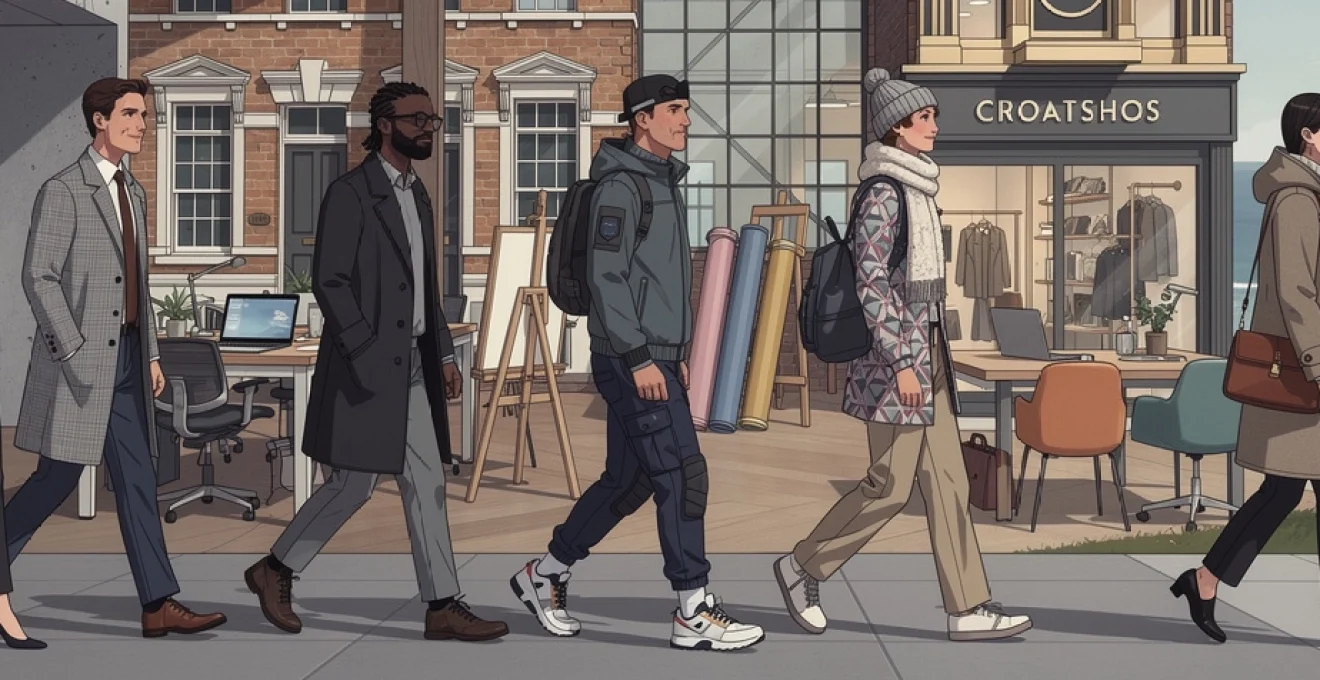
The spaces we inhabit daily exert a profound influence on our sartorial decisions, often in ways we barely recognise. From the stark lines of brutalist architecture to the warm timber of Scandinavian interiors, our physical surroundings continuously shape our aesthetic preferences and clothing choices. This environmental conditioning operates on both conscious and subconscious levels, creating a complex relationship between place and personal style that extends far beyond simple weather considerations.
Understanding how different environments impact fashion decisions has become increasingly relevant in our design-conscious era. Interior designers, architects, and fashion psychologists now recognise that spatial experiences directly correlate with style preferences, influencing everything from colour palettes to silhouette choices. This interconnection between environment and fashion represents a fascinating intersection of psychology, design theory, and personal expression that deserves closer examination.
Architectural elements and spatial psychology in fashion decision making
Architecture serves as one of the most powerful environmental influences on personal style, with different building styles encouraging distinct aesthetic responses. The psychological impact of architectural elements on fashion choices operates through visual conditioning, where repeated exposure to specific design languages gradually shapes our taste preferences and comfort zones. Research in environmental psychology suggests that people naturally gravitate towards clothing that harmonises with their most frequented spaces, creating an unconscious desire for aesthetic coherence.
The relationship between architectural exposure and fashion preferences manifests particularly strongly in urban environments, where residents develop style sensibilities that reflect their neighbourhood’s dominant architectural character. This phenomenon explains why certain districts develop distinctive fashion cultures that mirror their built environment, from the minimalist aesthetic of modern financial districts to the eclectic style mixing found in areas with diverse architectural periods.
Brutalist concrete structures influencing minimalist wardrobe curation
Brutalist architecture’s raw concrete surfaces and geometric severity have profoundly influenced contemporary minimalist fashion movements. The stark beauty of exposed concrete encourages clothing choices that emphasise clean lines and neutral palettes, with many individuals living or working in brutalist environments gravitating towards monochromatic wardrobes. This architectural influence manifests in preferences for structured silhouettes that echo the angular geometry of brutalist design, from sharp-shouldered blazers to precisely tailored trousers.
The material honesty inherent in brutalist design philosophy also translates into fashion choices that favour authentic textures and unembellished fabrics. People regularly exposed to brutalist environments often develop appreciation for clothing that showcases material quality rather than ornamental details, leading to wardrobes built around premium basics in concrete-inspired colour schemes.
Georgian terrace houses inspiring traditional british tailoring choices
The elegant proportions and classical details of Georgian architecture continue to influence British tailoring preferences, particularly in areas where these historic buildings dominate the streetscape. The symmetrical facades and refined detailing of Georgian terraces encourage appreciation for traditional craftsmanship and timeless elegance in clothing choices. Residents of Georgian areas often develop preferences for well-structured garments that reflect the architectural emphasis on proportion and quality construction.
The warm brick tones and heritage brass fittings common in Georgian buildings frequently inspire earth-toned wardrobes featuring rich browns, deep burgundies, and classic navy blues. This architectural influence extends to fabric choices, with many individuals drawn to traditional materials like wool tweed and cotton that echo the natural materials used in Georgian construction.
Industrial loft spaces driving utilitarian streetwear adoption
Converted industrial spaces with exposed brick walls, steel beams, and concrete floors create environments that naturally encourage utilitarian fashion choices. The raw, functional aesthetic of these spaces promotes appreciation for practical clothing with visible construction details, leading many loft dwellers to favour streetwear brands that emphasise functionality and durability. This environmental influence manifests in preferences for cargo pants, utility vests, and footwear that references industrial design.
The high ceilings and open layouts typical of industrial conversions also influence silhouette preferences, with residents often gravitating towards oversized garments that complement the spacious proportions of their environment. The neutral colour palette of exposed industrial materials encourages similar restraint in clothing choices, resulting in wardrobes dominated by blacks, greys, and muted earth tones.
Art deco buildings encouraging geometric pattern integration
The bold geometry and luxurious detailing of Art Deco facades often find direct translation in wardrobe choices. Repeated exposure to zigzags, sunbursts and stepped forms conditions the eye to appreciate graphic structure, nudging wearers towards garments with strong geometric prints and sharply defined cuts. People who live or work near Art Deco landmarks frequently gravitate to clothing that echoes these motifs, from chevron knitwear and contrast piping to colour-blocked dresses that mirror the era’s architectural rhythm.
Art Deco’s association with glamour and modernity also encourages more adventurous use of metallics and high-sheen fabrics in everyday outfits. Satin blouses, deco-inspired jewellery, and structured evening jackets feel at home against a backdrop of chrome window frames and polished stone. Over time, this architectural environment can normalise bolder style decisions, making geometric pattern integration and statement accessories feel like natural extensions of the surrounding built heritage rather than costume-like departures.
Scandinavian design principles shaping hygge-inspired clothing selection
Scandinavian interiors, defined by pale woods, soft textiles and generous natural light, cultivate a fashion mindset focused on comfort, tactility and quiet elegance. The same principles that govern Nordic interiors—simplicity, functionality and warmth—tend to guide clothing choices for people immersed in these spaces. As a result, hygge-inspired wardrobes prioritise soft knitwear, relaxed silhouettes and layered outfits in calming, low-contrast colour palettes.
The emphasis on natural materials in Scandinavian design also encourages consumers to favour wool, organic cotton and linen over synthetic-heavy fabrics. Living in a space where every object is carefully chosen for its feel and function subtly trains us to do the same with our clothes. You are more likely to invest in a single well-made wool coat or cashmere jumper that complements your light, pared-back home than in multiple trend-led pieces that visually clash with your environment.
Workplace environment typologies and professional dress code evolution
Shifts in workplace design over the past two decades have radically reshaped expectations around professional dress. As offices have moved from enclosed cubicles and private rooms towards collaborative, flexible layouts, dress codes have followed suit, relaxing from rigid formality to a spectrum of smart-casual interpretations. Environmental psychologists note that spatial openness typically correlates with behavioural informality, which includes how we dress, communicate and move through space.
Understanding how different office typologies influence style choices can help you build a work wardrobe that feels both appropriate and authentic. Instead of viewing “office wear” as a single category, it becomes more useful to read your architecture and interior design as cues: the amount of glass, the visibility of colleagues, and even the presence of sofas versus boardroom tables all send subtle messages about what kind of outfit will feel at home in that space.
Open-plan office layouts necessitating versatile capsule wardrobes
Open-plan offices prioritise visibility, movement and spontaneous interaction, which creates specific demands on workwear. Because you may move from desk to meeting area to informal breakout space in one morning, outfits need to be versatile, layered and polished from every angle. This is where capsule wardrobes excel: a tight, coordinated selection of garments that can be mixed and matched without sacrificing professionalism.
In such environments, many professionals lean towards neutral colour stories and streamlined silhouettes that won’t feel out of place in any setting within the office. A blazer that works with jeans and tailored trousers, knit tops that sit comfortably under a jacket, and shoes that are smart enough for client meetings yet comfortable enough for long days on your feet become everyday essentials. By designing your wardrobe like the office itself—modular, flexible and multifunctional—you reduce decision fatigue and avoid the temptation of constant shopping to “fix” outfit problems.
Creative studio atmospheres promoting artistic expression through apparel
Design studios, production houses and other creative workplaces typically feature moodboards, prototypes and artworks scattered across open tables and walls. This highly visual environment normalises experimentation and makes expressive dressing feel not only acceptable but expected. Employees in these spaces often treat clothing as an extension of their creative output, using bold colours, unusual silhouettes and statement accessories to mirror the energy of their projects.
Because creative studios frequently blur the line between work and play—late-night deadlines, gallery openings, client events—wardrobes tend to include pieces that transition seamlessly from daytime tasks to evening gatherings. Think wide-leg trousers in saturated hues, printed shirts, or unique jewellery sourced from independent designers. In this kind of environment, showing up in ultra-conservative attire can feel as out of place as hanging a blank canvas in the middle of a gallery wall.
Corporate boardroom settings maintaining traditional suiting standards
In contrast, workplaces centred around formal meeting rooms, mahogany panelling and hierarchical seating arrangements tend to preserve more traditional suiting expectations. Here, the architecture communicates stability, authority and continuity—values that classic tailoring expresses particularly well. Dark, structured suits, crisp shirts and understated accessories reinforce the message of reliability that these organisations want to project to clients and stakeholders.
Even as “business casual” spreads globally, boardroom-heavy environments often still rely on a subtle dress code hierarchy: more senior executives express authority through finer fabrics, precise tailoring and discreet luxury brands, while junior staff follow the same template with more accessible pieces. If your daily route includes glass-walled conference rooms and formal reception areas, investing in quality tailoring and well-maintained shoes is still one of the most effective ways to align your personal style with the space you operate in.
Co-working spaces facilitating smart-casual hybrid styling
Co-working hubs occupy a middle ground between traditional offices and informal coffee shops, and their fashion culture reflects this hybridity. Exposed brick, shared desks and communal kitchens invite casual behaviour, yet the presence of investors, clients and potential collaborators calls for professional signalling. The result is the rise of smart-casual hybrid styling: chinos with trainers and an oxford shirt, midi dresses with denim jackets, or elevated knitwear paired with tailored trousers.
Because co-working members often move between desk work, calls in phone booths and networking events in the same building, clothing must adapt quickly. Many professionals in these spaces develop a uniform that can be dialled up or down with minimal effort—adding a blazer for meetings, swapping a backpack for a structured tote, or keeping a pair of smarter shoes under the desk. If you work in a co-working environment, thinking in terms of “add-on” layers and accessories can help you stay comfortable without undercutting your professional image.
Natural landscape influences on textile choice and colour psychology
Beyond buildings and offices, the wider natural landscape plays a quiet yet powerful role in how we choose fabrics and colours. People living near coastlines, mountains or dense forests often absorb their surroundings into their wardrobes almost unconsciously, mirroring local palettes and textures. This is more than simple practicality—although climate certainly matters. It is also about emotional alignment: we tend to choose clothes that feel like they belong in the same visual world as the places we love most.
Coastal environments, for example, often encourage light, breathable textiles in shades of sand, sea and sky. Linen, chambray and open-weave knits not only perform well in salty air and variable breezes, they also echo the softness and fluidity of the shoreline. In contrast, mountainous regions with dramatic shifts in temperature tend to foster an appreciation for robust outerwear, layered knitwear and deep, saturated colours that mirror forests, rock faces and twilight skies.
Colour psychology research consistently shows that exposure to certain hues in the environment can influence our emotional state and subsequent colour preferences. If your daily commute takes you through a grey, overcast cityscape, you might find yourself seeking warmth through rust, camel or terracotta tones in your wardrobe as a counterbalance. Conversely, living in a bright, sun-drenched climate can make stark black outfits feel visually heavy, nudging you towards lighter neutrals and airy pastels that better reflect the ambient light.
Textile choice is equally shaped by landscape. Natural fibres like wool and shearling have strong cultural and practical roots in colder, rural areas, while technical waterproof fabrics gain prominence in regions with heavy rainfall. When we align our wardrobes with our local environment in this way, we reduce friction in daily life: clothes perform better, we feel more comfortable, and our visual presence feels in harmony with the landscapes we move through.
Retail environment design psychology and consumer purchasing behaviour
If home, work and landscape shape how we want to dress, retail environments profoundly influence what we actually buy. Store design is essentially a three-dimensional marketing tool, carefully calibrated to steer your attention, emotions and decisions. Everything from ceiling height and aisle width to soundtrack and scent forms part of an ecosystem designed to either speed up or slow down your decision-making.
Understanding the psychology behind retail spaces helps us recognise when we are genuinely expressing personal style and when we are being nudged into impulse purchases. Why do we leave some shops with long receipts and others with a single considered item—or nothing at all? Often, it has less to do with our willpower and more to do with how the environment has been engineered.
Zara’s fast fashion store layouts encouraging impulse buying patterns
Fast fashion chains like Zara deliberately design their stores to maximise exposure to newness and encourage rapid, low-deliberation purchasing. Collections turn over at high speed, and the layout pushes you along a defined path, placing trend-led pieces at eye level and near checkout areas. Narrow aisles and crowded racks create a subtle sense of urgency: if you don’t decide quickly, you may miss out.
Lighting and mirrors are optimised to flatter, shortening the gap between seeing an item and imagining it in your existing wardrobe. Research on impulse buying shows that time pressure and perceived scarcity both increase the likelihood of unplanned purchases—two dynamics that fast fashion environments consciously cultivate. If you want to build a more sustainable, personal style, one practical strategy is to pause before entering these stores with a specific list and budget in mind, rather than letting the layout dictate your route and your basket.
Selfridges visual merchandising strategies affecting brand perception
Department stores such as Selfridges operate on a different psychological plane, using scale, spectacle and artistry to reinforce perceptions of quality and desirability. High ceilings, wide walkways and curated installations create an atmosphere closer to a gallery than a simple shop floor. This framing encourages you to view garments as objects of design rather than disposable purchases, which can increase willingness to invest in higher-priced pieces.
Visual merchandising here is meticulous: mannequins styled in complete looks, carefully balanced colour stories, and thematic zones that group brands with compatible aesthetics. When you repeatedly encounter a label presented in this elevated context, your brain begins to associate it with sophistication and longevity. This is one reason many shoppers feel more comfortable committing to a “forever coat” or “investment bag” in such environments—the surroundings subtly validate the idea of buying fewer, better items aligned with a more intentional personal style.
Liberty london’s historical interiors inspiring print selection preferences
Liberty London offers a compelling example of how heritage interiors can shape specific style choices. Its timbered ceilings, period details and rich, patterned surfaces create an immersive historical atmosphere that almost invites you to explore prints and textures. Surrounded by archive fabrics and intricate wallpapers, bold florals and paisleys feel less intimidating and more like a natural continuation of the building’s visual language.
Shoppers who might typically default to plain basics often find themselves experimenting with patterned blouses, scarves or dresses in this context. The store layout encourages close, tactile engagement with fabric, reinforcing the value of craftsmanship and detail. Over time, regular visitors may develop a deeper comfort with print mixing and colour play, carrying that confidence into their everyday wardrobes long after they have left the shop floor.
Westfield shopping centre lighting systems influencing colour accuracy
Large malls such as Westfield highlight another crucial, often overlooked factor: lighting. The combination of skylights, LED panels and shop-specific spotlights can dramatically alter the appearance of colours and textures. Under cool, bright lighting, whites may look crisper and colours more saturated than they will in natural daylight or your home interior. This discrepancy is one of the main reasons garments sometimes feel “off” once you wear them outside the store.
Being aware of this environmental distortion allows you to make more accurate decisions. Whenever possible, move towards entrances or windows to check how a shade behaves in different light, or step into a neutral-toned fitting room rather than one with heavily coloured walls. Think of it as calibrating your personal “colour psychology” against a more honest baseline; by testing garments across multiple lighting conditions, you reduce returns, buyer’s remorse and the waste associated with poorly chosen items.
Cultural district aesthetics and subcultural style formation
Beyond individual shops, entire cultural districts act as incubators for distinctive subcultural styles. Neighbourhoods known for galleries, music venues or nightlife often develop visual identities that blend architecture, street art and signage into a recognisable aesthetic. These areas attract like-minded communities, and in turn, the clothing worn there feeds back into the district’s evolving character—a feedback loop between place and tribe.
Think of how quickly you can often guess a city district from a single outfit photo on social media. Oversized black outerwear, chunky boots and experimental silhouettes might signal a creative quarter in Berlin or East London. Pastel vintage dresses and handcrafted accessories, by contrast, might evoke a bohemian enclave in Paris or Los Angeles. In each case, the built environment—murals, shopfronts, public furniture—sets a visual tone that residents and visitors respond to, consciously or not.
Subcultural dress codes often arise as both alignment and resistance. Skaters, punks, goths or indie kids use clothing to claim space in districts that already feel marginal or alternative, amplifying the area’s identity. Over time, brands notice and begin designing into these aesthetics, selling them back to consumers worldwide. Yet the original relationship between outfit and environment remains hyper-local: ripped denim feels different on a graffiti-lined backstreet than in a polished suburban mall, even if the garment is identical.
For anyone trying to refine a personal style, paying attention to which districts you feel most at home in can be revealing. Do you gravitate towards historic quarters, glassy financial hubs, beach promenades or underground music streets? Each of these environments suggests not just different clothes, but different values and narratives. Aligning your wardrobe with the cultural landscapes that energise you can make style decisions feel less like copying trends and more like rooting yourself in a chosen community.
Domestic interior schemes and personal style identity development
Finally, the most intimate environment of all—your home—may exert the deepest, slowest influence on your style choices. Interior schemes function as a permanent moodboard: the colours on your walls, the textures of your sofa, even the way you store and display clothing all feed back into how you dress. A minimalist, monochrome apartment rarely belongs to someone with a riotously maximalist wardrobe, and if it does, there is usually a deliberate tension at play.
Design researchers increasingly view home and wardrobe as two halves of the same identity expression. If your living room centres around natural woods, soft neutrals and plants, you value calm, longevity and tactile comfort—values explored by lifestyle resources bridging interiors and fashion through breathable fabrics, colour palettes and unfussy silhouettes. Conversely, a home filled with bold artwork, eclectic furniture and vintage finds often belongs to someone comfortable with pattern mixing, statement pieces and narrative-driven garments.
The way you organise your space also shapes behaviour. Open clothing rails, neatly arranged shoe shelves and visible jewellery displays act like prompts, encouraging you to experiment and re-wear pieces you already own. Cramped wardrobes and cluttered drawers, by contrast, hide options from view, making it more likely you will default to the same few items (or feel you “have nothing to wear” and shop again). By designing your domestic environment to support the style habits you want—clear sightlines, thoughtful storage, a small area dedicated to outfit planning—you effectively make it easier to dress in alignment with your values every day.
In this sense, everyday environments don’t just inspire style choices; they quietly script them. When you become more conscious of these scripts—architectural, workplace, natural, retail, cultural and domestic—you gain the ability to edit them. Rather than letting spaces dictate your wardrobe by default, you can choose and adjust environments that reinforce the personal style story you actually want to tell.