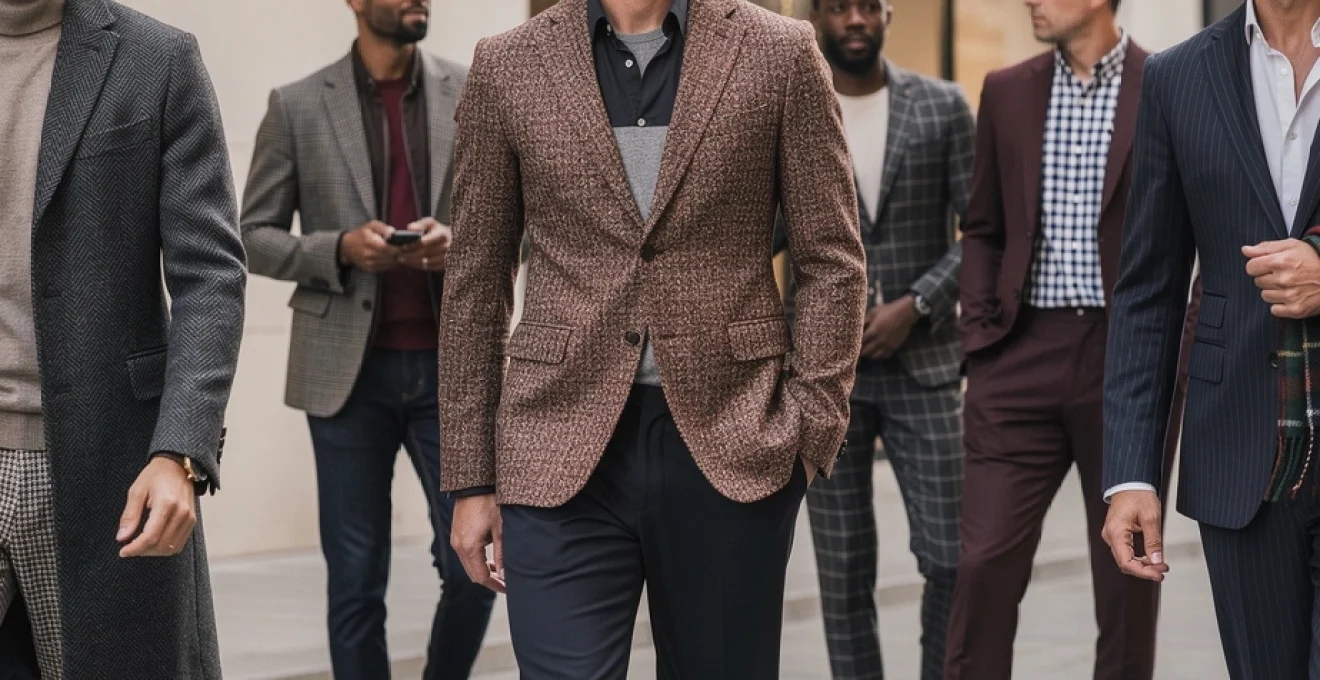
The resurgence of traditional menswear patterns represents more than just a fleeting fashion trend—it signals a fundamental shift in how modern men approach personal style. Classic patterns like herringbone, houndstooth, and pinstripe have transcended their historical origins to become essential elements in contemporary wardrobes. This revival speaks to a broader cultural movement that values craftsmanship, heritage, and timeless elegance over fast fashion’s disposable aesthetic. As consumers increasingly seek authenticity and quality in their clothing choices, these time-honoured patterns offer both sophistication and versatility that modern synthetic alternatives simply cannot match.
The integration of traditional patterns into contemporary menswear reflects our collective desire to connect with sartorial history whilst maintaining relevance in today’s fashion landscape. Fashion houses and independent designers alike are reimagining these classic motifs through innovative construction techniques, modern silhouettes, and technical fabric applications. This approach creates garments that honour traditional craftsmanship while addressing the practical needs of contemporary lifestyles.
Timeless herringbone and tweed patterns in modern tailoring
The herringbone pattern’s distinctive zigzag weave has become synonymous with refined menswear, offering visual interest whilst maintaining professional sophistication. Modern tailors are incorporating this classic pattern into everything from structured blazers to casual outerwear, demonstrating its remarkable versatility across different style contexts. The pattern’s inherent texture adds depth to garments without overwhelming the overall aesthetic, making it particularly suitable for men seeking subtle pattern integration in their wardrobes.
Contemporary designers are experimenting with scale variations of traditional herringbone patterns, creating micro-herringbone weaves for formal suiting and larger-scale interpretations for casual wear. This scalability allows the pattern to function effectively across various garment types whilst maintaining its distinctive character. The pattern’s geometric precision appeals to modern sensibilities whilst its historical provenance provides gravitas and authenticity.
Harris tweed integration in contemporary blazer construction
Harris Tweed’s protected designation status ensures authenticity in contemporary blazer construction, with modern tailors incorporating this legendary fabric into structured jackets that bridge formal and casual styling. The fabric’s distinctive texture and durability make it particularly suitable for unstructured blazers that can transition seamlessly from business casual to weekend wear. Contemporary cuts emphasise comfort whilst maintaining the fabric’s inherent sophistication.
Modern Harris Tweed blazers often feature updated details such as patch pockets, soft shoulders, and shorter lengths that reflect current style preferences whilst respecting traditional construction techniques. The fabric’s natural water resistance and temperature regulation properties make it exceptionally practical for contemporary urban lifestyles, particularly in unpredictable climates.
Herringbone weave techniques for Slim-Fit trouser design
Contemporary trouser construction utilises herringbone weaves to create texture without bulk, particularly important in slim-fit silhouettes where fabric weight significantly impacts the garment’s drape and comfort. Modern weaving techniques allow for lighter-weight herringbone fabrics that maintain pattern visibility whilst providing the sleek profile demanded by contemporary tailoring. These innovations address the traditional challenge of incorporating textured patterns into fitted garments.
The technical aspects of herringbone weaving have evolved to accommodate stretch fibres, enabling pattern retention whilst providing the mobility required for modern lifestyles. This technological advancement ensures that classic patterns can meet contemporary performance expectations without compromising their aesthetic integrity.
Donegal tweed applications in casual workwear styling
Donegal tweed’s characteristic flecked appearance translates beautifully into casual workwear pieces, offering visual interest through subtle colour variations rather than bold pattern statements. Contemporary applications include overshirts, casual blazers, and even knitwear that incorporates Donegal-inspired colour techniques. The fabric’s rugged heritage aligns perfectly with modern workwear aesthetics whilst providing superior durability.
Modern interpretations of Donegal tweed often feature updated colour palettes that reflect contemporary preferences whilst maintaining the fabric’s distinctive character. Designers are experimenting with unconventional colour combinations that honour traditional production methods whilst appealing to younger consumers seeking unique pattern expressions.
Cheviot wool herringbone in
Cheviot wool herringbone in structured overcoat manufacturing
Cheviot wool, known for its resilience and slightly coarse handle, lends itself exceptionally well to structured overcoat manufacturing. When woven in a herringbone pattern, Cheviot creates outerwear that holds a strong silhouette while still feeling inherently classic. Contemporary menswear brands are using this heritage fabric for clean, architecturally sharp coats that sit comfortably over both tailored suits and casual knitwear, offering a practical yet stylish solution for cold-weather dressing.
Modern structured overcoats in Cheviot herringbone often feature streamlined lapels, simplified pocket configurations, and slightly reduced lengths compared to their mid‑century predecessors. This refinement helps the coat integrate into today’s slimmer, more versatile wardrobes without losing its traditional gravitas. By combining robust Cheviot yarns with updated pattern cutting, designers achieve coats that feel reassuringly substantial yet align with modern expectations around comfort, mobility, and long-term wear.
Houndstooth and glen check revival in street style fashion
The resurgence of houndstooth and glen check in contemporary menswear is particularly visible in street style photography from fashion capitals around the world. Once confined primarily to formal tailoring and traditional country wear, these classic menswear patterns now appear on oversized coats, relaxed trousers, and even technical sneakers. This shift reflects a broader trend in which streetwear borrows from heritage tailoring to create looks that feel both familiar and refreshingly new.
What makes houndstooth and glen check so adaptable to street style is their graphic quality. The broken checks and layered grids read almost like analog pixels, providing a visual rhythm that pairs effortlessly with plain hoodies, minimal trainers, or bold outerwear. As a result, men can experiment with pattern mixing and layering in a way that feels intentional rather than costume‑like, even when combining pieces from very different style traditions.
Prince of wales check adaptations for urban casual wear
Prince of Wales check, historically associated with British aristocracy and refined suiting, has been recontextualised for urban casual wear. Designers are cutting this glen check variant into relaxed chore jackets, softly tailored overshirts, and drawstring trousers that sit comfortably alongside sneakers and baseball caps. The result is a pattern that maintains its air of sophistication while feeling entirely at home in a contemporary city wardrobe.
For men looking to incorporate classic menswear patterns into everyday outfits, a Prince of Wales check overshirt worn open over a T‑shirt and jeans offers an accessible starting point. The key is scale and colour: slightly enlarged checks and muted palettes—charcoal with soft camel, mid‑grey with dusty blue—keep the look modern rather than overly formal. In this way, you can enjoy the heritage associations of the pattern without feeling as though you are dressed for a boardroom or country estate.
Micro-houndstooth pattern scaling for contemporary shirt design
Houndstooth, when rendered at a large scale, can dominate an outfit; when scaled down to a micro pattern, it becomes a subtle texture suitable for contemporary shirt design. Many modern shirtmakers employ micro‑houndstooth weaves in cotton or cotton‑blend fabrics to create dress shirts that read almost as solid from a distance, yet reveal intricate detail up close. This approach is ideal for men who want to experiment with pattern while maintaining a professional appearance.
Micro‑houndstooth shirts pair particularly well with plain suits and knit ties, adding visual depth without clashing. The pattern’s tight repeat also works under casual pieces such as bomber jackets or denim truckers, giving a quiet nod to classic tailoring. Think of micro‑houndstooth as the audio “background score” of your outfit: always present, subtly shaping the mood, but never overpowering the main elements.
Windowpane check integration in modern suit separates
Windowpane checks—defined by their wide, evenly spaced lines—have become a cornerstone of modern suit separates. Their clean geometry sits comfortably within current minimalist sensibilities, especially when interpreted in restrained colour combinations like navy with soft grey, chocolate with tan, or charcoal with muted blue. Contemporary brands often cut windowpane fabrics into unstructured blazers and relaxed trousers that can be worn together or split into separate outfits.
In practice, a windowpane blazer can instantly elevate a simple jeans‑and‑T‑shirt combination, while windowpane trousers worn with a solid crew‑neck knit feel polished yet approachable. The key to making this pattern work in a contemporary context is proportion: slimmer but not tight fits, slightly lowered buttoning points, and softer shoulders keep the silhouette modern. By treating the windowpane suit as a modular system of separates, you unlock multiple outfit options from a single patterned investment.
Tattersall pattern applications in smart-casual shirting
Tattersall—a grid of fine, evenly spaced lines typically found on cotton or brushed flannel—has moved from the stables and countryside into smart‑casual city wardrobes. Contemporary menswear brands use tattersall for button‑down shirts that sit comfortably between formal officewear and off‑duty flannel. The pattern’s restrained scale makes it easy to combine with knitwear, chinos, or even tailored joggers for an elevated casual look.
For a modern approach to classic tattersall, look for shirts in slightly desaturated colour palettes or monochrome grids rather than high‑contrast primary colours. Worn tucked into pleated wool trousers with a slim leather belt, a tattersall shirt delivers a refined yet relaxed aesthetic that feels perfectly aligned with the ongoing return of classic menswear in contemporary outfits. It’s an ideal option when you want a bit more personality than a plain Oxford but less statement than bold checks or florals.
Pinstripe pattern evolution in contemporary suiting
Pinstripes have long been associated with finance, law, and the traditional power suit; however, contemporary designers are rewriting this narrative. Today’s pinstripe suits often feature softer shoulders, more generous trousers, and relaxed styling—think knitted polos, minimalist sneakers, or open‑necked shirts instead of rigid collars and shiny shoes. This evolution allows the pinstripe pattern to move from signifier of corporate hierarchy to tool of personal expression.
One of the most significant developments in modern pinstripe suiting is experimentation with stripe spacing and colour. Wider, chalk‑like lines on flannel suits create a vintage‑inspired yet wearable look, while tonal pinstripes in deep green, brown, or burgundy offer a subtle alternative to the traditional navy or charcoal. You might think of these updated pinstripes as a remix of a classic track: the core melody remains, but the tempo and instrumentation have been adjusted to suit today’s audience.
For men interested in integrating pinstripe suits into contemporary wardrobes, versatility is paramount. A three‑piece pinstripe suit can be broken up into separates: the waistcoat layered over a T‑shirt, the trousers paired with a plain bomber, the jacket thrown over dark denim. By treating each component as an independent piece, you transform what was once a strictly formal ensemble into a series of everyday options that still retain the polished feel of classic tailoring.
Tartan and plaid modernisation techniques
Tartan and plaid have perhaps undergone the most dramatic modernisation among classic menswear patterns. Historically linked to specific clans, regions, or subcultures—from Scottish highlands to 90s grunge—these patterns now appear in everything from luxury overcoats to technical outerwear. Designers achieve this modernization through considered scaling, colour rebalancing, and unexpected fabric choices, all while preserving the recognisable grid structures that define tartan and plaid.
Instead of relying solely on high‑contrast reds and greens, contemporary collections frequently explore monochrome tartans, muted earth‑tone plaids, and tone‑on‑tone variations that sit comfortably within minimalist wardrobes. The effect is rather like hearing a familiar song played on a different instrument: you recognise the tune, but the atmosphere feels entirely new. This approach makes tartan and plaid accessible to men who favour understated style yet still want the depth and heritage that classic patterns provide.
Royal stewart tartan reinterpretation in designer collections
Royal Stewart tartan, with its vivid red ground and multi‑colour overchecks, is one of the most instantly recognisable patterns in menswear. In recent seasons, designer collections have reinterpreted this bold tartan in unexpectedly refined ways. Rather than full suits or heavy kilts, we see Royal Stewart used as a lining in tailored overcoats, as a statement scarf, or as the focal point on a single piece such as a bomber jacket or cropped wool shirt.
By limiting the surface area of the pattern or muting its colour saturation, designers retain Royal Stewart’s iconic energy while making it easier to wear in contemporary outfits. For example, pairing a Royal Stewart overshirt with dark denim and a navy overcoat creates a sharp focal point without overwhelming the look. If you appreciate heritage tartan but worry about looking overly festive or costume‑like, these restrained reinterpretations provide a compelling entry point.
Buffalo check scaling for minimalist jacket design
Buffalo check—characterised by large, evenly sized squares, often in red and black—has shifted from rugged workwear staple to surprisingly minimalist design element. The key to this transformation lies in scale control and colour choice. While traditional buffalo check remains popular in outdoor jackets and overshirts, modern iterations use slightly reduced squares and monochrome or earth‑tone palettes to create cleaner, more urban‑friendly pieces.
Minimalist wool jackets in black and charcoal buffalo check, for instance, read as graphic yet understated, pairing easily with slim black trousers and leather boots. The strong geometry of the pattern gives structure to otherwise simple silhouettes, functioning almost like a logo without any actual branding. For men building a capsule wardrobe, a single buffalo check overshirt or jacket can serve as a reliable statement piece that coordinates with an array of neutral basics.
Blackwatch tartan integration in contemporary formalwear
Blackwatch tartan, with its deep green and navy palette, occupies a unique position in menswear as both formal and subtly expressive. Contemporary formalwear has embraced Blackwatch as an alternative to plain black eveningwear, especially for tuxedo jackets, dinner suits, and tailored trousers. The dark, harmonious colours photograph beautifully and feel distinctive without departing too far from classic black tie expectations.
Modern Blackwatch pieces often employ sleek, minimal detailing—shawl lapels, single‑button closures, side adjusters instead of belt loops—to keep the focus on the pattern. When styled with a crisp white shirt and black bow tie, a Blackwatch dinner jacket offers a refined way to stand out at formal events without appearing ostentatious. For less rigid occasions, pairing Blackwatch tartan trousers with a fine‑gauge roll‑neck or knitted polo provides an elegant yet relaxed spin on evening dressing.
Technical fabric innovation in classic pattern reproduction
One of the most exciting developments in the return of classic menswear patterns is their translation into technical fabrics. Advances in digital weaving and printing allow mills to reproduce herringbone, glen check, or tartan motifs on performance materials such as stretch nylon, recycled polyester, or breathable membrane laminates. This fusion of heritage pattern and modern fabric technology means you can now wear a water‑repellent houndstooth parka or a windproof pinstripe overshirt without sacrificing comfort or practicality.
From an industry perspective, this convergence responds directly to the needs of contemporary urban life. According to recent market analyses, the global menswear segment is projected to exceed $930 billion by 2033, with strong growth in categories that combine style and functionality. By placing classic menswear patterns onto technical shells, insulated liners, or hybrid knit‑woven constructions, brands cater to consumers who expect their clothing to perform across commuting, office, and leisure contexts.
For the individual wearer, these innovations open up new ways to integrate heritage style into active wardrobes. A soft‑shell jacket with a subtle glen check print can replace a plain black raincoat, while stretch wool‑blend trousers with an overdyed windowpane work seamlessly from bike commute to boardroom. If you have ever wished your favourite tweed sport coat could withstand a sudden downpour or your tartan overshirt had a bit more stretch for cycling, today’s technical pattern reproductions bring that wish closer to reality.
Designer brand interpretations of heritage pattern libraries
As classic menswear patterns return to prominence, designer brands are increasingly diving into archival “pattern libraries” for inspiration. Some collaborate directly with historic mills, reviving dormant designs and re‑colouring them for modern collections; others create original patterns that pay homage to traditional structures while subtly bending the rules. In both cases, the goal is to honour the lineage of menswear while articulating a distinct point of view.
Luxury houses might, for example, reinterpret a 1930s Prince of Wales check in unexpected pastel tones, or render a traditional herringbone in oversized scale across a fluid, unstructured coat. Contemporary tailoring labels often work the other way around, using very faithful reproductions of old patterns but combining them with progressive silhouettes, such as wide‑leg trousers, belted blazers, or cropped jackets. This interplay between authenticity and innovation is where much of today’s most interesting menswear design occurs.
For you as a wearer, understanding these designer interpretations can help you build a wardrobe that feels cohesive rather than trend‑driven. By recognising the underlying heritage patterns—whether in a Harris Tweed blazer, a technical houndstooth parka, or a Blackwatch dinner jacket—you can mix pieces from different brands and price points while maintaining a consistent visual language. In a landscape where nostalgia, technology, and personal style intersect, the thoughtful use of classic menswear patterns remains one of the most reliable ways to create contemporary outfits with depth, character, and longevity.