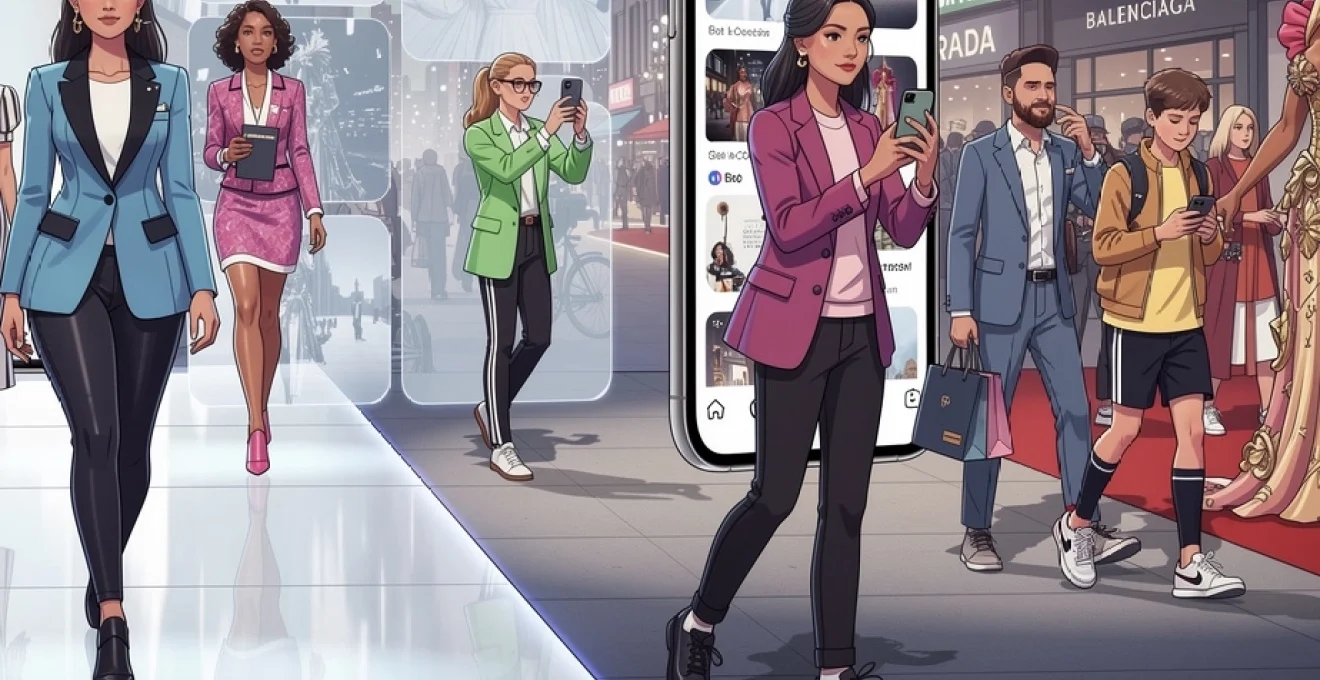
Fashion exists as a perpetual conversation between creative vision and practical reality. Every season, haute couture collections emerge from the world’s fashion capitals, showcasing extravagant silhouettes, experimental textiles, and boundary-pushing aesthetics that initially seem destined only for museum exhibitions or celebrity red carpets. Yet within months, elements of these same designs appear in high-street shops, department stores, and ultimately in wardrobes across the globe. This transformation from exclusive runway presentation to accessible everyday wear represents one of fashion’s most fascinating phenomena—a complex ecosystem where creativity meets commerce, aspiration encounters affordability, and artistic expression becomes democratized through various channels of influence and adaptation.
The relationship between haute couture and ready-to-wear fashion has evolved dramatically over recent decades. What once took years to trickle down through economic strata now happens within weeks, thanks to digital technology, fast fashion infrastructure, and social media amplification. Understanding this dynamic reveals not only how fashion trends develop but also how cultural values, technological innovation, and consumer behaviour intersect to shape what you ultimately choose to wear each morning.
Haute couture Trickle-Down theory: from parisian catwalks to high street collections
The traditional fashion hierarchy operated on a clear vertical structure. Parisian couture houses presented exclusive collections to elite clientele, fashion editors documented these presentations in glossy magazines with months of lead time, and gradually, simplified interpretations appeared in department stores for middle-class consumers. This classical trickle-down theory suggested that fashion influence flowed unidirectionally from wealthy tastemakers downward through economic classes. However, contemporary fashion operates through far more complex mechanisms, with multiple influence pathways working simultaneously.
Today’s fashion ecosystem features what scholars identify as trickle-across and trickle-up movements alongside traditional top-down patterns. Street style influences haute couture just as frequently as runway shows inspire everyday wear. Luxury brands now look to youth subcultures, music scenes, and urban aesthetics for inspiration, while simultaneously presenting collections that will eventually inform mass-market offerings. This bidirectional exchange creates a dynamic where inspiration flows freely across traditional boundaries, making fashion more democratic yet simultaneously more complex to navigate.
Chanel, dior and valentino: tracking Runway-to-Retail translation cycles
Examining specific luxury houses reveals distinct patterns in how runway concepts translate to broader markets. Chanel’s signature tweed jackets, originally crafted with complex construction techniques and premium materials, have inspired countless interpretations across price points. The house’s iconic elements—contrasting trim, gold-tone buttons, boxy silhouettes—appear each season in adapted forms at retailers worldwide. This translation process involves careful extraction of recognizable design DNA while substituting materials and construction methods that accommodate different price structures.
Dior’s approach to trend dissemination operates through both its ready-to-wear lines and strategic collaborations. When Maria Grazia Chiuri introduced feminist messaging and comfortable, movement-friendly silhouettes to Dior’s collections, these themes rapidly appeared throughout the fashion industry. The emphasis on practicality combined with elegance resonated with contemporary consumers seeking versatile pieces. Within two seasons, elements like cinched waists paired with flowing skirts, sporty dress silhouettes, and athletic-inspired details became ubiquitous across multiple retail segments.
Valentino’s mastery of colour presents another instructive case study. When the house launched its distinctive « Valentino Pink PP » (Pretty Pink), the shade became instantly recognizable and commercially valuable. This specific colour saturation appeared within months in various price segments, demonstrating how a single runway element can cascade through the entire fashion ecosystem. The timeline from haute couture presentation to high-street availability typically spans 4-6 months for colour trends, faster than virtually any other design element.
Fast fashion replication mechanisms at zara, H&M and ASOS
Fast fashion retailers have revolutionized the runway-to-retail pipeline through sophisticated supply chain management and trend analysis systems. Zara pioneered the model of rapid design-to-production cycles, reducing what historically took 6-12 months to merely 2-3 weeks. Design teams attend major fashion weeks, photograph key looks, and immediately begin creating <em
designs that capture the essence of these looks without directly copying them.
H&M operates on a similar model but often formalises the connection between runway and retail through high-profile collaborations. Collections with houses like Balmain, Versace, and Mugler have made couture aesthetics temporarily available at accessible price points, compressing the typical trickle-down timeline into a single launch event. ASOS, with its purely digital presence, leans heavily on data analytics, social listening, and real-time search behaviour to prioritise which runway-inspired styles to produce first. In all three cases, the goal is the same: transform fleeting runway moments into commercial products before consumer attention shifts to the next micro-trend.
This accelerated cycle has both benefits and drawbacks for everyday fashion consumers. On one hand, you gain rapid access to clothing that mirrors high-end runway styles, allowing you to experiment with bold silhouettes or statement prints without a luxury budget. On the other hand, the speed of replication fuels overconsumption and short product lifespans, raising significant sustainability concerns. As we navigate these realities, understanding how fast fashion mechanisms work can help you make more deliberate choices—investing in pieces that balance trend relevance with long-term wearability.
Seasonal trend forecasting: WGSN and pantone’s role in democratising runway aesthetics
Behind the scenes, global trend forecasting agencies such as WGSN and colour authorities like Pantone act as translators between runway experimentation and mass-market needs. Months before a collection walks the runway, these organisations analyse cultural shifts, consumer data, and macro trends—from climate anxiety to remote work habits—to predict what shapes, fabrics, and colours will resonate. Their reports influence everything from luxury design studios to supermarket clothing lines, creating a shared roadmap that makes fashion feel cohesive across price points.
Pantone’s Colour of the Year announcement is a vivid example of this democratising effect. When a shade such as Very Peri or Peach Fuzz is named, you will typically see it appear not only in runway collections but also in beauty products, home décor, packaging, and high-street fashion. WGSN’s forecasts go deeper, identifying long-tail fashion trends like « hyper-texture knitwear » or « modular outerwear » that inform design decisions at scale. As a result, the sweater you purchase from a mid-range retailer may indirectly be shaped by the same insight that guided a major couture house.
For everyday shoppers, this forecasting ecosystem means you do not have to follow fashion week coverage obsessively to stay current. If you pay attention to seasonal lookbooks, retailer newsletters, or even window displays, you are already seeing distilled versions of these expert predictions. The key is to treat forecasts as a buffet rather than a rulebook: which colours actually suit your skin tone, and which silhouettes align with your lifestyle? By selectively adopting these runway-informed directions, you can maintain a modern wardrobe without sacrificing personal authenticity.
Silhouette evolution: how alexander McQueen’s structured tailoring reshaped Mass-Market blazers
Silhouettes often change more slowly than colours or prints, but when they shift, the impact on everyday fashion is profound. Alexander McQueen’s legacy in structured tailoring offers a powerful case study. His sharply defined shoulders, nipped-in waists, and sculptural peplums reimagined the blazer not just as office attire but as an armour-like expression of power and individuality. Initially, these pieces existed in rarefied spaces—runways, editorials, and celebrity wardrobes.
Over time, high-street brands began integrating these cues into their own blazer offerings. We saw the emergence of more pronounced shoulder pads, contoured seams that accentuate the waist, and asymmetric hems that echo McQueen’s dramatic lines. Even budget retailers introduced « power blazers » with strong shoulders and precise darts, making this once avant-garde silhouette a staple for job interviews, date nights, and everyday office wear. The pattern here is clear: a radical runway idea gradually softens as it descends the price ladder, eventually becoming the new normal.
For you as a consumer, recognising the origin of these silhouette changes can be empowering. If you understand that a strong-shouldered blazer references a specific era of runway innovation, you can decide whether to lean into that energy or opt for a softer, more relaxed cut. Think of silhouettes like the architecture of your wardrobe: trends will add decorative elements, but the underlying structure determines how you feel and move each day.
Social media amplification: instagram and TikTok as runway trend accelerators
While couture houses, retailers, and forecasters shape the supply side of fashion, social media platforms determine how quickly and widely runway styles spread among consumers. Instagram and TikTok function as real-time feedback loops, where a single look worn by an influencer or captured at a fashion show can inspire thousands of reinterpretations within days. If the traditional fashion cycle resembled a slow-moving river, social media has turned it into a network of high-speed streams, constantly branching and rejoining.
This acceleration dramatically shortens the distance between runway and real life. You might watch a Jacquemus show on your phone in the afternoon and see similar cut-out dresses or micro-bags promoted by fast fashion brands by evening. At the same time, social media gives everyday users unprecedented power to decide which trends gain traction and which quietly fade. In this sense, Instagram and TikTok are less like passive billboards and more like bustling marketplaces of style ideas.
Influencer-driven adoption patterns: chiara ferragni and emma chamberlain’s impact on trend velocity
Influencers occupy a pivotal position in this ecosystem, acting as translators between rarefied runway aesthetics and relatable everyday outfits. Figures like Chiara Ferragni and Emma Chamberlain illustrate how personal styling choices can dramatically accelerate trend adoption. When Ferragni posts a look featuring a runway-fresh Prada coat or a Balenciaga sneaker, her millions of followers receive not just an image but an implicit styling tutorial. Retailers track this engagement carefully, using it as a signal to adjust buying decisions and marketing strategies.
Emma Chamberlain, whose style blends vintage finds with contemporary pieces, has become particularly influential among younger audiences. Her relaxed, slightly offbeat approach shows how you can integrate runway-inspired elements—like oversized blazers, low-rise trousers, or statement sunglasses—into a wardrobe that still feels comfortable and authentic. When she appears at fashion week in custom looks, clips and photos circulate widely, turning high-end outfits into templates that fast fashion brands quickly emulate. The result is a feedback loop where influencer content both reflects and shapes the direction of everyday fashion.
For those navigating their own style, it can be helpful to treat influencers as reference points rather than blueprints. Ask yourself: what exactly about this influencer outfit appeals to me—the colour palette, the silhouette, the mood? By isolating those elements, you can recreate the spirit of a look using pieces you already own or more sustainable purchases, rather than chasing every new drop.
Fashion week Live-Streaming: Real-Time consumer response to jacquemus and Off-White shows
The live-streaming of fashion week shows has dismantled many of the barriers that once kept runway presentations exclusive. Brands like Jacquemus and Off-White have embraced this shift, staging visually striking shows designed as much for smartphone screens as for in-person attendees. When you watch a runway show live on Instagram or YouTube, you are experiencing it alongside editors, buyers, and celebrities—turning what was once an insider-only moment into a shared global event.
Real-time comment sections and social media reactions function as instant market research. If a specific Jacquemus micro-bag or Off-White graphic hoodie triggers a flood of enthusiastic posts, both luxury and high-street brands take note. This immediate feedback can influence production decisions, capsule collections, and even re-stocks, reducing the risk traditionally associated with more experimental designs. It is similar to watching a trailer before a film: brands get an early sense of which looks will sell before they commit fully to large-scale manufacturing.
For viewers, live-streamed shows provide more than just passive entertainment. They offer styling ideas, colour combinations, and layering techniques that you can adapt instantly using your existing wardrobe. You might not own a Jacquemus dress, but you can experiment with similar cut-outs, asymmetry, or soft monochrome palettes using pieces you already have, proving that runway inspiration does not require runway budgets.
User-generated content cycles: #OOTD culture and runway interpretation
User-generated content—particularly the ubiquitous #OOTD (Outfit of the Day) posts—plays a crucial role in translating runway trends into real-life contexts. Every time someone tags an outfit, they contribute to a massive, searchable archive of styling ideas. Over time, clear patterns emerge: which runway-inspired trends are easy to wear, which require modification, and which never quite escape the editorial realm. You might notice, for example, that while sheer runway looks dominate magazine covers, most #OOTD posts incorporate sheerness more subtly through layered tops or panelled skirts.
This crowd-sourced adaptation process acts like a global styling laboratory. Thousands of people test how trends function in everyday situations—commuting, working, socialising—and share the results. Successful combinations spread quickly, often outperforming brand-created campaigns in terms of engagement and influence. For designers and retailers, this is invaluable insight; for you, it is a practical resource, offering endless ways to integrate current styles into your lifestyle and dress code.
In a sense, #OOTD culture has turned everyday people into micro-stylists. Even if you never post your outfits, scrolling through these feeds can sharpen your eye for proportion, colour mixing, and accessorising. The more you see how others interpret runway ideas, the easier it becomes to curate a wardrobe that feels both contemporary and personal.
Algorithm-driven fashion discovery: how platform analytics shape trend adoption rates
Behind the glossy surface of fashion content lies the invisible hand of algorithms. Platforms like Instagram, TikTok, and Pinterest use complex analytics to decide which images and videos you see first. These systems prioritise content that generates strong engagement—likes, comments, shares, and watch time—creating a self-reinforcing cycle where popular looks become even more visible. In practice, this means that certain runway-inspired trends can explode in popularity, while others quietly disappear, regardless of their actual presence on catwalks.
Consider how quickly trends like « blokette style, » « quiet luxury, » or « Barbiecore » saturated your feed. Each began as a cluster of visual references—some linked to specific shows or designer collections—that algorithms amplified based on user interaction. Retailers monitor these spikes closely, using them to forecast demand more accurately than traditional methods alone. As a result, algorithm-driven discovery can shorten the journey from runway experiment to mainstream wardrobe to just a few weeks.
From a consumer perspective, being aware of this mechanism is crucial. If your explore page feels like an echo chamber of the same blazer, sneaker, or handbag, remember that this is a curated illusion shaped by data, not an objective snapshot of global style. One useful strategy is to intentionally diversify the accounts you follow—include sustainable brands, independent designers, and people with different body types or aesthetics. By doing so, you can gently « train » the algorithm to expose you to a broader, more nuanced spectrum of runway-inspired fashion.
Textile innovation translation: technical fabrics moving from runway to Ready-to-Wear
While silhouettes and colours are immediately visible aspects of runway influence, fabric innovation often exerts a quieter but equally transformative impact on everyday fashion. Technical textiles that begin as experimental runway statements—water-repellent wools, recycled nylons, temperature-regulating blends—gradually migrate into mass-market collections as manufacturing costs decrease. The result is that your favourite parka or leggings may contain advanced material science first tested on a high-fashion catwalk.
This translation process mirrors the way new technology appears first in luxury cars or smartphones before becoming standard. High-end brands absorb the initial research and development costs, showcasing what is possible, while mid-range and budget labels adopt simplified or licensed versions later. As consumers increasingly prioritise comfort, performance, and sustainability, these textile innovations shape not only how clothing looks but how it feels and functions in everyday life.
Balenciaga’s neoprene experimentation and athleisure mainstreaming
Balenciaga’s exploration of neoprene-like materials and sculptural sportswear silhouettes helped redefine the boundary between athletic gear and street style. By using scuba-inspired fabrics in dresses, coats, and tailored separates, the brand highlighted neoprene’s unique qualities: structure, stretch, and a smooth, futuristic finish. Initially, these pieces read as daring and unconventional, more art object than everyday garment.
However, as neoprene and similar synthetics proved their versatility, athleisure brands and high-street retailers adopted them for more accessible items—hoodies, joggers, bodycon dresses, and sleek trainers. The idea that performance fabrics could be worn far beyond the gym gained cultural legitimacy, turning « leggings as pants » or sneakers with tailored coats into widely accepted looks. If you own a thick, stretchy sweatshirt that keeps its shape or a pair of fashion-forward running shoes, you are benefitting from this runway-to-street material migration.
Looking ahead, we can expect further blurring of lines between sportswear and everyday dressing. For you, the practical takeaway is to evaluate not just the appearance of a garment but its fibre composition. Technical blends inspired by brands like Balenciaga can offer improved durability, comfort, and weather resistance—qualities that matter long after a specific fashion trend fades.
Sustainable material adoption: stella McCartney’s vegan leather in high street applications
As sustainability moves from niche concern to mainstream priority, designers such as Stella McCartney have played a key role in popularising alternative materials. Her long-standing commitment to vegan leather, recycled polyester, and plant-based fibres demonstrates that eco-conscious textiles can appear in high-end collections without compromising aesthetics. Early iterations of these materials were sometimes criticised for lacking the tactile richness of traditional leather, but ongoing innovation has significantly narrowed that gap.
High-street brands have taken note, introducing their own versions of vegan leather jackets, handbags, and boots at scale. Some retailers now promote entire « conscious » or « eco » lines that highlight recycled or bio-based materials, a direct response to both runway leadership and consumer demand. While these offerings vary widely in quality and transparency, they signal a broader shift in how the industry thinks about material sourcing and lifecycle impact.
When you shop for runway-inspired pieces, checking labels for recycled content or certified vegan alternatives can be a simple yet impactful habit. It is worth asking: does this item merely imitate the look of sustainable fashion, or does it engage with its principles? By supporting better material choices, you help encourage continued innovation that will eventually make high-performance, eco-friendly fabrics the default rather than the exception.
Performance textiles: from prada’s technical nylon to everyday outerwear
Prada’s iconic use of industrial nylon in the 1990s—and its revival in recent years—demonstrates how a utilitarian textile can be elevated to luxury status and then normalised across the market. Originally chosen for its durability and water resistance, nylon became synonymous with sleek, minimalist sophistication in the form of backpacks, anoraks, and accessories. The success of these pieces challenged the assumption that luxury must always equate to natural fibres like silk or cashmere.
Today, you can find technical nylon and similar synthetics in everything from high-street puffer jackets to commuter-friendly trench coats. Many garments quietly incorporate performance features—waterproof membranes, breathable linings, heat-sealed seams—that originated in outdoor or runway contexts. It is no coincidence that modern outerwear often promises to be both stylish and storm-ready; this dual expectation is a direct result of performance textiles migrating into mainstream fashion.
For daily dressing, this evolution means you no longer have to choose between aesthetics and practicality. A well-cut nylon parka can complement tailored trousers as easily as it protects you from rain. As you evaluate outerwear, consider how the technical details—coatings, linings, fibre blends—will actually serve your lifestyle. In doing so, you are applying the same criteria that leading designers use, but with your own comfort and context at the centre.
Colour palette diffusion: runway colour blocking in consumer wardrobes
Colour is often the most immediately noticeable way runway styles influence everyday fashion. When a designer sends a series of bold, colour-blocked looks down the catwalk, it signals a shift in the season’s dominant palette. Within months, you start noticing similar combinations—cobalt with tangerine, fuchsia with rust, sage with chocolate—appearing in high-street collections and online lookbooks. This process illustrates how even subtle shifts in hue or pairing can refresh familiar silhouettes.
Runway colour blocking also encourages more adventurous styling at the consumer level. You might begin by purchasing a single statement piece in a trending shade—a Valentino-inspired pink blouse or a Bottega-green bag—and then experiment with bolder pairings as your confidence grows. Over time, what initially felt daring becomes part of your visual vocabulary, much like learning new words in a language. The beauty of colour trends is that they are relatively low-risk; you can participate through accessories, nail polish, or even makeup if a full garment feels like too big a leap.
At the same time, it is important to filter colour trends through your own lens. Not every runway shade will flatter every complexion or align with your environment. A useful analogy is interior design: just because deep teal is in vogue does not mean you must paint your walls with it; perhaps a cushion or artwork suffices. Similarly, you can integrate runway colour blocking into your wardrobe through strategic accents, ensuring that your clothes energise rather than overwhelm you.
Accessory trends migration: statement pieces from fashion week to mass consumption
Accessories function as the connective tissue between runway fantasy and everyday practicality. Statement belts, oversized earrings, micro-bags, and chunky loafers often gain mainstream traction faster than full outfits because they are easier to incorporate into existing wardrobes. When brands like Jacquemus introduce miniature bags or when Gucci popularises logo-heavy belts, high-street retailers quickly respond with their own interpretations, making these once-exclusive pieces broadly accessible.
This migration of accessory trends allows you to sample high-fashion aesthetics without overhauling your entire clothing collection. A single runway-inspired item—a bold hair ribbon echoing Chanel, a chain-link necklace reminiscent of Bottega Veneta, or a sculptural heel influenced by Amina Muaddi—can instantly update familiar jeans-and-tee combinations. Accessories act like punctuation marks in an outfit: small in scale but powerful in shaping tone and emphasis.
However, the rapid turnover of accessory trends also carries a risk of clutter and impulse buying. Because these items are often relatively affordable, it is tempting to accumulate them without a clear styling plan. One practical approach is to ask yourself two questions before purchasing: can I style this in at least three distinct outfits, and does it harmonise with pieces I already own? By treating accessory trends as tools rather than trophies, you can curate a collection that genuinely enhances your everyday fashion rather than overwhelming it.
Celebrity endorsement networks: red carpet amplification of runway trends
Finally, celebrity culture acts as a powerful amplifier in the journey from runway to real life. When actors, musicians, or athletes wear current-season runway looks on the red carpet or during press tours, they provide high-visibility case studies of how these garments function off the catwalk. A dramatic couture gown at the Met Gala may not directly translate into office attire, but its neckline, colour, or embellishment choices often reappear in more wearable forms—think sequinned midi dresses for party season or draped satin tops for evening events.
Celebrity-stylist relationships form intricate networks that connect designers, brands, and the public. Stylists attend shows, pull looks, and work closely with fashion houses to customise pieces, effectively acting as intermediaries who adapt runway visions to specific bodies, personalities, and occasions. When a look resonates—Zendaya in sculptural Valentino, Timothée Chalamet in harnessed Louis Vuitton, or Rihanna in anything from maternity wear to street style—images circulate across social media, sparking imitations at every price point.
For everyday fashion decisions, celebrity endorsements can be both inspiring and overwhelming. It is easy to forget that these looks are often meticulously tailored and supported by teams of professionals. Instead of striving to copy them exactly, consider them as mood boards. What feeling does this red carpet outfit evoke—confidence, playfulness, romance—and how might you translate that mood using pieces appropriate to your context and budget? By approaching celebrity-influenced trends with a critical but playful eye, you can enjoy the spectacle of fashion while still dressing in a way that feels grounded, sustainable, and true to yourself.