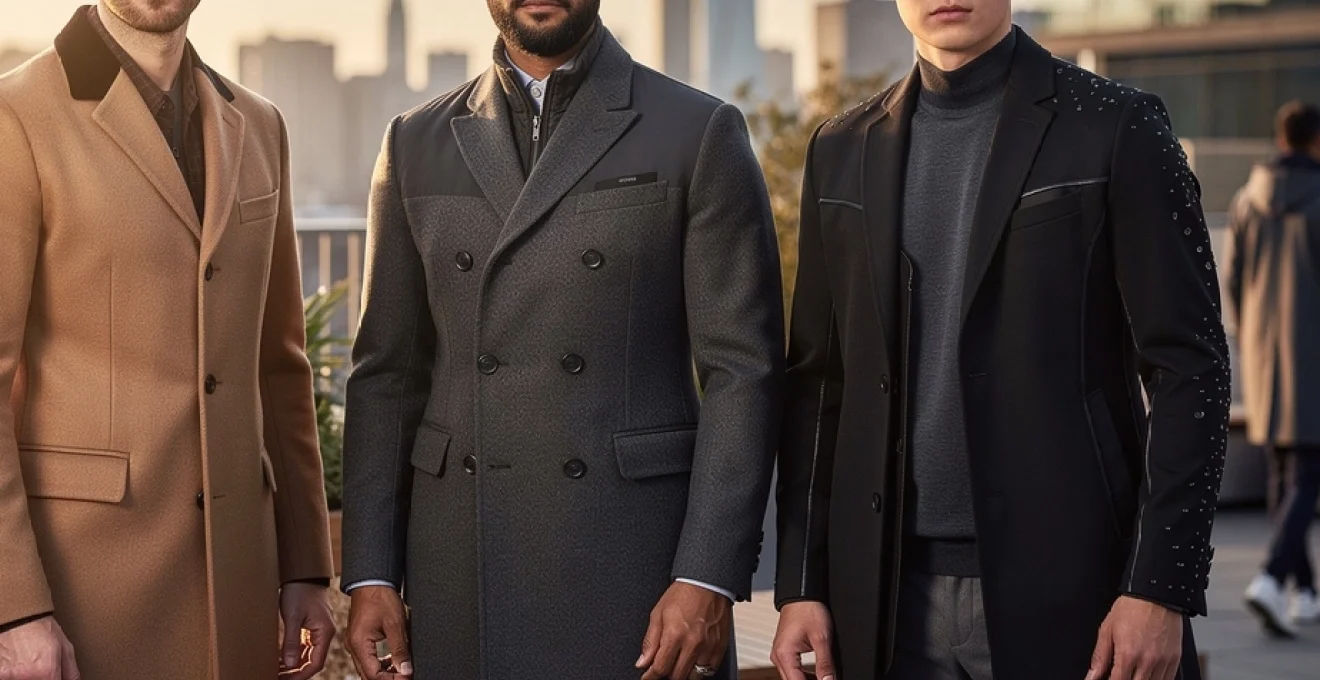
The contemporary menswear landscape has witnessed a remarkable transformation in outerwear design, where traditional craftsmanship meets cutting-edge technology to create garments that transcend seasonal limitations. Modern designers are reimagining classic silhouettes through innovative construction methods, advanced textile engineering, and sustainability-focused manufacturing processes. This evolution represents more than mere aesthetic updates; it reflects a fundamental shift towards versatile, performance-driven clothing that adapts to the demands of contemporary urban living whilst maintaining the timeless appeal of heritage tailoring.
From heritage-inspired overcoats enhanced with technical fabrics to minimalist designs that embrace architectural principles, today’s outerwear collections demonstrate how fashion continues to evolve without abandoning its foundational elements. The integration of Gore-Tex technology in formal overcoats, the development of thermo-regulating merino wool blends, and the emergence of modular construction systems have created possibilities that were unimaginable just a decade ago. These innovations address the modern gentleman’s need for multi-functional garments that perform across various climates and occasions.
Heritage-inspired topcoats: classic silhouettes meet contemporary construction
The revival of classic topcoat designs represents one of the most significant trends reshaping men’s outerwear. Traditional silhouettes are being reinterpreted through contemporary construction techniques that enhance both comfort and durability. These modern interpretations maintain the sophisticated elegance of their predecessors whilst incorporating advanced manufacturing methods that improve fit, function, and longevity.
Contemporary designers are drawing inspiration from archive pieces, studying the proportions and details that made classic coats timeless. However, they’re applying modern pattern-making techniques and construction methods to create garments that offer superior comfort and movement. The integration of ergonomic design principles with traditional tailoring has resulted in coats that look classically proportioned but feel remarkably contemporary when worn.
Chesterfield revival: peak lapel variations and velvet collar applications
The Chesterfield coat has experienced a remarkable renaissance, with designers exploring new interpretations of its signature peak lapel design. Contemporary versions feature varying peak angles and widths, creating subtle but significant changes to the garment’s visual impact. These modifications allow for greater versatility in styling whilst maintaining the coat’s inherent formal sophistication.
Velvet collar applications have become increasingly sophisticated, with manufacturers experimenting with different pile heights and textures. Modern velvet treatments offer improved durability and stain resistance compared to traditional versions, making these luxurious details more practical for everyday wear. The colour variations now extend beyond classic black to include deep navy, burgundy, and even subtle grey tones that complement contemporary wardrobes.
Ulster coat modernisation: storm shield integration and technical fabric upgrades
The Ulster coat’s traditional design has been enhanced through the integration of modern storm protection technology. Contemporary versions feature hidden storm shields that maintain the coat’s clean aesthetic whilst providing superior weather protection. These technical additions are seamlessly integrated into the traditional construction, creating garments that honour the original design whilst offering enhanced functionality.
Advanced fabric treatments have transformed the Ulster coat’s performance characteristics. Modern wool blends incorporate synthetic fibres that improve water resistance and reduce weight without compromising the luxurious hand-feel of traditional materials. These innovations allow the Ulster coat to function as both a formal overcoat and a practical weather-protective garment.
Crombie wool blends: traditional melton vs performance cashmere composites
The evolution of Crombie coat fabrics represents a fascinating intersection of tradition and innovation. Traditional melton cloth, with its dense, felted texture, remains popular for its classic appearance and excellent insulation properties. However, performance cashmere composites are gaining ground, offering superior softness and improved temperature regulation through advanced fibre technology.
Modern cashmere blends incorporate synthetic fibres that enhance durability whilst maintaining the luxurious feel of pure cashmere. These composites offer improved shape retention and easier care, addressing practical concerns that have historically limited cashmere’s appeal for outerwear applications. The result is a fabric that combines the ultimate luxury of cashmere with the practicality required for contemporary urban living.
Double-breasted architecture: button stance evolution and proportional adjustments
The double-breasted overcoat has undergone a quiet but important redesign, particularly in its button stance and overall architecture. Where traditional models often featured very high button placements and broad lapels, contemporary interpretations lower the fastening point slightly to elongate the torso and create a more relaxed visual line. This subtle shift makes the double-breasted silhouette easier to wear for a broader range of body types, reducing the boxy effect that once deterred many men.
Designers are also refining the relationship between lapel width, shoulder structure, and coat length. Slightly softer shoulders and gently suppressed waists help modern double-breasted coats drape more naturally over tailored jackets and knitwear. At the same time, careful proportional adjustments ensure that the coat maintains its authoritative presence without overwhelming the wearer. The result is a garment that feels as at home with casual denim as it does with formal suiting, redefining how men approach double-breasted outerwear for everyday use.
Technical performance outerwear: advanced textile innovation in luxury fashion
The line between technical outerwear and luxury fashion has never been thinner. High-end menswear labels are integrating advanced performance textiles into refined silhouettes, creating coats and jackets that perform in harsh conditions while looking entirely at ease in a boardroom or gallery. This new category of technical performance outerwear leverages innovations from the outdoor industry—membrane technologies, smart insulation, and hydrophobic treatments—without sacrificing the clean, tailored lines that define premium menswear.
For the modern consumer, the appeal lies in not having to compromise between function and form. You can commute through heavy rain, step into a client meeting, and attend an evening event in the same coat, all while maintaining a polished appearance. This convergence of performance and luxury reflects a broader shift in men’s seasonal fashion: outerwear is now expected to be adaptable, resilient, and aesthetically coherent across different environments.
Gore-tex integration in formal overcoats: breathability without aesthetic compromise
Gore-Tex integration in formal overcoats was once considered experimental; it is now becoming a benchmark for high-performance tailoring. By bonding breathable, waterproof membranes between outer fabrics and linings, manufacturers can deliver full weatherproof protection while preserving the refined look of wool, cashmere, or brushed cotton. Seam taping techniques are increasingly discreet, allowing lapel rolls, darts, and princess seams to remain visually clean and elegant.
The key innovation is in how these membranes are laminated and where they are placed. Strategic panel construction allows critical zones—shoulders, upper back, and sleeves—to benefit from Gore-Tex protection, while less exposed areas may use lighter linings to improve drape and breathability. This hybrid strategy means you no longer need a separate « rain coat » for downpours; instead, your main formal overcoat can deliver day-long comfort and protection in changeable climates without looking remotely technical.
Merino wool technology: thermo-regulating properties in contemporary tailoring
Merino wool technology has progressed far beyond traditional flannel and worsted cloth. Contemporary mills are producing high-twist, open-weave merino fabrics that harness the fibre’s natural thermo-regulating properties while dramatically improving breathability. These fabrics help stabilise body temperature across a wide range of conditions, making a single coat suitable for both cool mornings and milder afternoons.
In modern tailoring, merino is often blended with performance fibres such as nylon or elastane to enhance durability, crease resistance, and stretch. The result is outerwear that recovers its shape after travel, resists pilling, and offers greater freedom of movement around the shoulders and sleeves. For men seeking a season-spanning overcoat that works over knitwear in autumn and suiting in winter, these advanced merino blends provide a compelling balance of comfort and structure.
DWR treatment applications: water repellency in unstructured jacket design
Durable Water Repellent (DWR) treatments have become standard in performance shells, but their application in unstructured jackets marks a significant shift. Lightweight car coats, chore-style topcoats, and minimalist macs are now being finished with fluorocarbon-free DWR coatings that cause rain to bead and roll off the fabric surface. This keeps garments lighter in wet conditions and prevents saturation, without the plastic sheen once associated with technical finishes.
Because these unstructured jackets rely on drape rather than heavy canvassing, preserving the hand-feel of the fabric is critical. Modern DWR processes are designed to sit within the fibre rather than as a visible layer on top, so cotton gabardine, wool twill, and even linen retain their natural texture. For urban professionals who prefer a softer, more relaxed silhouette, DWR-treated jackets offer an ideal compromise between casual elegance and practical weather resistance.
Polartec alpha insulation: packable warmth solutions for urban commuting
Polartec Alpha insulation, originally developed for U.S. Special Forces, has become a game-changer for urban commuters seeking light, packable warmth. Unlike traditional down or synthetic puffs, Alpha is engineered for active insulation, allowing excess heat and moisture to escape even when you are on the move. This makes it particularly well-suited to city life, where you may transition quickly from cold streets to overheated trains and offices.
Designers are integrating thin Alpha quilts into liners, gilets, and mid-layer jackets that can be zipped into shells or worn alone. Because the insulation is highly compressible, these pieces can be folded into a bag or backpack without adding significant bulk. If you’ve ever arrived at a meeting overheated and burdened by a heavy coat, a Polartec Alpha mid-layer paired with a lightweight shell offers a smarter, more adaptable solution.
Contemporary silhouette revolution: minimalist design language and architectural cuts
The contemporary silhouette revolution in men’s outerwear is defined by a shift towards minimalist design and architectural cuts. Instead of relying on overt detailing or heavy branding, designers are focusing on line, volume, and proportion to create impact. Think clean fronts with concealed plackets, precisely placed darts that sculpt the body, and hemlines that play with length to reframe classic coat archetypes.
This minimalism is not about removing character; it’s about refining it. By stripping away unnecessary ornamentation, the eye is drawn to the quality of the fabric, the sharpness of the shoulder line, and the flow of the coat in motion. Architectural cuts—slightly dropped shoulders, cocoon shapes, or gently A-lined bodies—allow outerwear to interact with the body the way modern architecture interacts with light and space. As a result, even simple black and navy coats feel fresh, directional, and distinctly modern.
Transitional weather solutions: multi-climate adaptability through modular construction
Transitional weather has become one of the defining challenges for men’s seasonal fashion. With milder winters and unpredictable shoulder seasons, few men want a wardrobe full of single-purpose coats. Instead, brands are increasingly embracing modular construction to deliver multi-climate adaptability in a single garment. Think of it as a « system approach » to outerwear: one shell, multiple liners, and a range of ways to combine them.
This modular mindset allows you to reconfigure your outerwear according to temperature, activity level, and dress code. A lightweight shell might be worn alone on a breezy spring day, then combined with an insulated zip-out liner for winter commuting. The same architecture can also simplify travel wardrobes, since one intelligently designed coat can replace several traditional seasonal pieces.
Zip-out liner systems: convertible functionality in premium outerwear
Zip-out liner systems are at the heart of many modern modular coats. Unlike the bulky, ill-fitting liners of the past, today’s versions use low-profile zips, magnetic snaps, and anchor points that are almost invisible when not in use. Liner materials range from quilted synthetic fills and Polartec Alpha to merino-backed panels, each chosen for specific climate performance.
Premium outerwear labels now treat liners as standalone garments in their own right—stylish gilets or lightweight jackets that can be worn separately. This effectively gives you two or three jackets in one purchase, enhancing value and sustainability. If you are building a capsule outerwear wardrobe, investing in a well-designed coat with a removable insulated liner is one of the most strategic decisions you can make.
Layering architecture: base layer compatibility with structured jackets
Layering architecture refers to how a coat is cut and constructed to work harmoniously with the garments worn underneath. Designers pay close attention to armhole height, sleeve pitch, and shoulder shape to ensure that structured jackets can comfortably accommodate base layers, mid-layers, and even light down pieces. Done well, this means you can wear a fine merino roll-neck one day and a chunky cable-knit the next without the coat pulling or distorting.
For consumers, understanding layering architecture can be as simple as testing range of motion when trying on a coat. Can you comfortably cross your arms, reach forward, or sit at a desk without feeling constrained? If so, the pattern has likely been drafted with modern layering in mind. This thoughtful approach turns traditional topcoats and parkas into versatile shells that adapt to your chosen level of insulation, rather than dictating it.
Temperature range optimisation: season-spanning versatility in single garments
Temperature range optimisation is becoming a key metric in outerwear design. Rather than producing heavy coats only suitable for sub-zero conditions, many brands focus on garments that remain comfortable across a broad band of temperatures, for example from 0°C to 15°C (32°F to 59°F). This is achieved through a combination of breathable fabrics, venting options, and modular insulation components.
In practical terms, this means looking for coats with adjustable features: two-way zips for venting, under-arm eyelets, removable hoods, and cuffs that can be cinched or relaxed. These details allow you to fine-tune warmth and airflow, much like adjusting the thermostat in your home. If you are investing in just one all-season outerwear piece, prioritising a wide operational temperature range will yield far more real-world wear than a single-purpose extreme-weather coat.
Luxury streetwear convergence: high-fashion brands reimagining casual outerwear
The convergence of luxury and streetwear has had a profound impact on men’s outerwear. High-fashion houses now treat casual silhouettes—parkas, bombers, track jackets, and puffers—with the same level of craftsmanship once reserved for tailored overcoats. Premium fabrics, meticulous pattern cutting, and subtle branding elevate these everyday pieces into statement garments that anchor an entire look.
At the same time, details traditionally associated with technical or athletic wear—bungee cord adjustments, reflective piping, taped seams—are being incorporated in a refined, almost minimalist way. The result is outerwear that feels relaxed and street-ready but aligns with the expectations of luxury clientele. You might see a cropped bomber in butter-soft lambskin with rib-knit wool trims, or a down-filled parka rendered in matte Japanese nylon with a hidden cashmere storm collar. These hybrids reflect how men actually dress today: mixing sneakers with tailoring, hoodies with overcoats, and expecting their jackets to navigate both worlds effortlessly.
Sustainable manufacturing protocols: eco-conscious production methods in premium menswear
Sustainability has moved from a niche concern to a central pillar of premium menswear, and outerwear is at the forefront of this shift. Brands are reassessing every stage of the manufacturing process—from fibre sourcing and dyeing to pattern efficiency and end-of-life recyclability. For many consumers, the best men’s coat is now not only the most stylish and functional, but also the one produced with the lowest environmental impact.
Eco-conscious protocols include the use of certified organic cotton, mulesing-free merino, and recycled polyester made from post-consumer plastics. Water-saving dye technologies and closed-loop production systems are reducing resource consumption, while digital pattern grading helps minimise fabric waste. Some labels go further by offering repair services or take-back schemes, extending the lifespan of outerwear pieces and keeping them out of landfill. As you refine your seasonal wardrobe, considering how and where your coats are made is no longer optional; it is an integral part of defining a truly modern, responsible approach to men’s fashion.