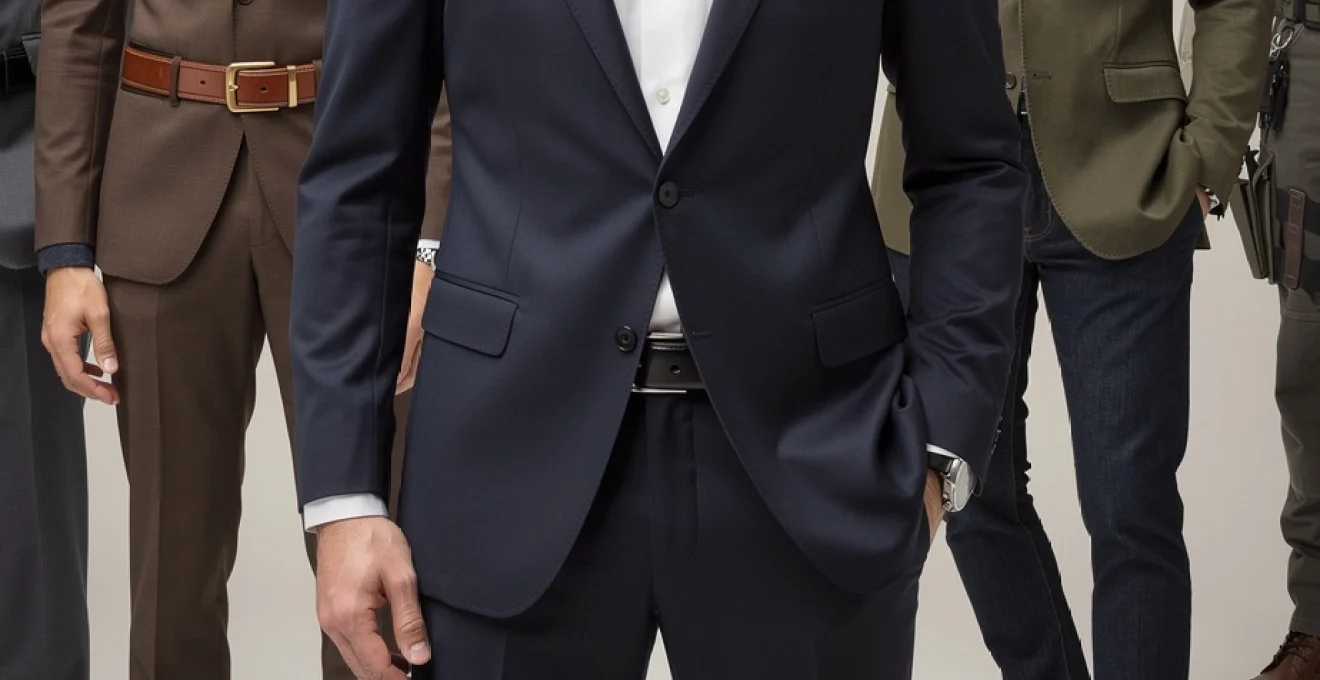
The belt occupies a unique position in contemporary wardrobing—simultaneously indispensable for its practical function yet remarkably expressive as a style device. While its primary purpose remains trouser support, modern belt design has evolved into a sophisticated interplay of engineering precision and aesthetic intentionality. From the boardroom to the building site, the belt you choose communicates volumes about your approach to both functionality and presentation. Understanding the technical foundations, material properties, and design principles behind quality belt construction allows you to make informed choices that serve both your practical needs and your personal style narrative. Whether you’re selecting a dress belt for formal occasions or a robust workwear option for demanding environments, the right belt represents an investment in both performance and appearance.
Material construction and durability engineering in contemporary belt design
The foundation of any quality belt lies in its material composition and construction methodology. Modern belt manufacturing draws upon centuries of leatherworking tradition while incorporating contemporary material science to create accessories that withstand daily wear whilst developing character over time. The choice between natural and synthetic materials represents more than aesthetic preference—it fundamentally determines how your belt will perform under stress, age with use, and integrate with your existing wardrobe. Understanding these material properties empowers you to select belts that align with your specific requirements, whether you prioritise formal elegance, casual versatility, or maximum durability in demanding conditions.
Full-grain leather vs. Top-Grain leather: structural integrity analysis
Full-grain leather represents the highest quality leather available for belt construction, utilising the complete thickness of the hide with all natural surface characteristics intact. This material retains the dense fibre structure that provides exceptional tensile strength and resistance to tearing, making it ideal for belts that must support weight or endure daily wear. The natural surface texture of full-grain leather develops a rich patina over time, with use marks and colour variation telling the story of the belt’s journey. You’ll find that full-grain belts maintain their structural integrity far longer than alternatives, often lasting decades with proper care.
Top-grain leather, whilst still high-quality, undergoes surface buffing to remove imperfections before receiving an artificial grain pattern. This process creates a more uniform appearance that appeals to those seeking consistency in finish, though it sacrifices some of the natural durability inherent in full-grain options. Top-grain belts resist staining more effectively due to their protective finish layer, making them practical choices for environments where the belt might encounter liquids or abrasive substances. The trade-off involves reduced breathability and a less distinctive ageing pattern compared to their full-grain counterparts.
Exotic skins: crocodile, python, and ostrich leather performance characteristics
Exotic leather belts occupy the premium segment of the market, offering distinctive visual textures alongside remarkable durability properties. Crocodile leather, particularly from the belly sections, provides exceptional resistance to water damage whilst developing a lustrous finish that intensifies with age. The natural scale pattern creates a three-dimensional surface texture that catches light dynamically, making these belts statement pieces even in conservative colour palettes. Crocodile hide’s density ensures these belts maintain their shape without the sagging that can affect lesser materials over extended periods.
Python and ostrich leathers present alternative exotic options with distinct performance profiles. Python skin’s flexibility allows for comfortable wear whilst its natural scale pattern provides grip that prevents slippage through belt loops. Ostrich leather, characterised by its quill follicle bumps, offers surprising softness combined with tensile strength that exceeds cowhide. These materials require specialised tanning processes that preserve their unique characteristics whilst ensuring longevity, making them investments that reward proper maintenance with decades of service.
Vegetable-tanned vs. Chrome-Tanned leather: longevity and patina development
Vegetable tanning represents the traditional leather treatment method, utilising natural tannins extracted from tree bark over a process lasting several weeks. This approach produces leather with a warm, natural tone that darkens gradually with exposure to light and oils from handling. Vegetable-tanned belts develop the most pronounced patina, transforming from lighter shades to rich, complex hues that reflect individual wear patterns. The rigidity of vegetable-tanned leather requires a break-in period but rewards patience with exceptional shape retention and a satisfying firmness at the wa
sist but rewards patience with exceptional shape retention and a satisfying firmness at the waist.
Chrome-tanned leather, by contrast, uses mineral salts to achieve results in days rather than weeks. This process yields a softer, more immediately pliable belt that feels comfortable from the first wear and often features more saturated colour options. While chrome-tanned belts do not develop the same dramatic patina as vegetable-tanned alternatives, they offer excellent resistance to moisture and colour fading, which is beneficial in humid climates or for belts worn in variable conditions. For many users, the choice comes down to whether they value rapid comfort and consistent appearance or are willing to embrace initial stiffness in exchange for long-term evolution in both colour and character.
Synthetic alternatives: nylon webbing and kevlar-reinforced belt construction
Not every high-performance belt relies on leather. Nylon webbing and technical synthetics have become mainstays in tactical belts, golf belts, and casual streetwear where adjustability, low weight, and weather resistance matter more than traditional patina. High-denier nylon offers impressive tensile strength while remaining flexible, making it ideal for belts that need to move with you during commuting, travel, or outdoor activity. Unlike leather, nylon webbing belts are largely unaffected by rain, sweat, or rapid temperature changes, and they dry quickly if soaked.
At the extreme end of durability engineering, Kevlar-reinforced belts and similar aramid-fibre constructions introduce aerospace-grade materials into everyday accessories. These belts are designed to resist stretching even under significant load, which is critical for tactical and EDC setups where pouches, holsters, or tool clips add weight. The trade-off is a more technical aesthetic and a stiffer hand feel that can take some getting used to. If you prioritise absolute reliability, minimal maintenance, and consistent fit in all conditions, a synthetic or hybrid belt can be a better long-term investment than an inexpensive leather belt that stretches or delaminates after a single season.
Hardware metallurgy: solid brass, nickel-plated, and titanium buckle systems
The buckle is the mechanical heart of any functional belt, and its metallurgy plays a decisive role in both performance and appearance. Solid brass remains the benchmark material in quality menswear belts, offering a balance of strength, corrosion resistance, and the ability to develop a subtle surface patina that complements ageing leather. Brass buckles can be polished to a high shine for formal dress belts or left with a brushed finish for understated smart casual combinations. Importantly, solid brass tends to deform rather than shatter under stress, which adds a safety margin in heavy-use environments.
Nickel-plated buckles, commonly seen on mid-market belts, provide a bright, highly reflective finish that pairs well with modern dress shoes and metal accessories. However, because the shiny surface is achieved via plating over a base metal, deep scratches can reveal the underlying alloy and compromise appearance over time. For those with nickel sensitivity, prolonged skin contact may also cause irritation. Titanium buckle systems occupy the technical premium niche, prized for their exceptional strength-to-weight ratio and outstanding corrosion resistance. A titanium buckle on a full-grain or Kevlar-reinforced belt is effectively a lifetime combination, particularly suited to frequent travellers and those who value performance gear that disappears in terms of weight but not in reliability.
Buckle mechanism typologies and their aesthetic applications
Beyond material choice, the way a belt fastens has profound implications for both usability and style. Buckle mechanisms affect how precisely you can adjust your belt, how it feels when you sit or bend, and how prominently it reads within an outfit. By understanding the main buckle typologies—from classic frame buckles to modern automatic ratchet systems—you can align mechanics with both your lifestyle and the formality level of your wardrobe. Are you seeking a belt you never think about during a twelve-hour workday, or a statement buckle that deliberately anchors your look? The answer will often start with buckle design.
Frame buckle architecture: single prong vs. double prong configuration
The traditional frame buckle with a single prong remains the most common system in contemporary belt design, especially within business and smart casual dress codes. Its mechanical simplicity—strap, frame, and tongue—means fewer failure points and straightforward operation. When paired with full-grain leather in the 30–35mm width range, the single-prong frame buckle delivers a refined, low-profile appearance that integrates cleanly with tailored trousers. The spacing of the holes determines fit granularity, so higher-end dress belts often feature more closely spaced perforations to allow finer adjustment.
Double prong configurations introduce a second tongue that engages with two parallel rows of holes, significantly increasing the belt’s resistance to stretching and hole deformation under load. This is useful in workwear and heritage-inspired styles where you may clip tools or carry heavier pocket content. A double prong buckle also adds a deliberate stylistic weight: it appears more substantial, slightly more rugged, and consequently reads better with denim, heavy chinos, and boots than with sleek Oxford shoes. If you appreciate the visual solidity of a work belt but still want measured style impact, a brushed double-prong buckle on a thick leather strap is a reliable choice.
Automatic ratchet systems: click-lock technology in dress belts
Automatic ratchet belts replace traditional holes with a hidden track of fine teeth on the underside of the strap, engaged by a spring-loaded mechanism in the buckle. This “click-lock” technology allows micro-adjustments in increments as small as 3–5mm, providing a level of fit precision that hole-and-prong systems simply cannot match. For office environments where you sit, stand, and walk throughout the day, this flexibility lets you loosen the belt subtly after lunch or tighten it slightly when standing for presentations without the visual interruption of visible hole changes.
From an aesthetic standpoint, ratchet belts have evolved significantly from their early, overtly technical designs. Many modern dress ratchet buckles now mimic classic frame silhouettes, with the mechanism hidden behind sleek, minimalist fronts in brushed steel, black PVD, or polished nickel. The result is a belt that looks entirely appropriate with a suit yet behaves like a performance accessory. The main considerations are mechanism quality and long-term wear: cheap ratchet systems can slip or fail under repeated stress, so it is worth investing in reputable brands if a “set-and-forget” dress belt is your priority.
Plate buckles and box-frame designs for formal menswear
Plate buckles and box-frame designs occupy a niche intersection of formal menswear and statement dressing. A plate buckle typically features a flat, sometimes engraved or enamelled front that covers the fastening mechanism, presenting a clean visual plane at the waist. In ceremonial uniforms and certain dress codes, such as black-tie with military or fraternal regalia, a plate buckle acts almost like jewellery—its presence is intentional, symbolic, and often codified by tradition. When used in civilian wardrobes, a slim, understated plate buckle on a narrow leather strap can add a subtle modernist note to a minimalist tailoring ensemble.
Box-frame buckles, where the strap feeds through a rectangular housing that grips via friction or a concealed clamp, offer a similarly smooth front profile but with more adjustability. These are frequently seen in higher-end designer belts and some reversible belt constructions, where the buckle can swivel or detach to accommodate different strap colours. While visually striking, both plate and box-frame buckles demand proportion control: oversized versions can dominate an outfit and clash with conservative office dress codes. If you are experimenting in this area, start with understated finishes and keep the rest of your accessories quiet to let the buckle stand as the focal point.
D-ring and o-ring closures in military-inspired belt styling
D-ring and O-ring systems rely on friction rather than holes, with the strap threaded through two metal loops and then back on itself to lock in place. This mechanism originated in utilitarian and military applications, where adjustability over layers and speed of fastening outweighed the need for formality. Today, you’ll most often encounter D-ring closures on canvas or nylon webbing belts, climbing-inspired styles, and minimalist Japanese workwear where a clean, hardware-light look is prized. Because there are no predetermined holes, D-ring belts offer infinite micro-adjustment, which is ideal for fluctuating waist sizes or wearing over outerwear.
From a styling perspective, D-ring and O-ring belts usually skew casual to smart casual. They work well with fatigues, carpenter trousers, relaxed chinos, and even tailored drawstring trousers where a conventional buckle would feel too formal. To keep the look intentional rather than improvised, pay attention to strap length and tail management: a neatly tucked or slightly draped tail can look considered, whereas an excessively long, flapping strap undermines the belt’s streamlined appeal. For those who favour understated, functional style, a matte-finish D-ring belt in navy, olive, or black can quietly become a daily staple.
Width, thickness, and proportion standards across dress codes
The physical proportions of a belt—its width, thickness, and even edge profile—play as much of a role in style coherence as the leather or buckle you choose. A belt that is too wide for refined trousers will bunch the waistband; one that is too narrow for rugged denim will look visually lost. Proportion standards exist for a reason: they help you maintain balance between garment weight, shoe style, and overall silhouette. Once you understand these benchmarks, you can decide where it makes sense to adhere to them and where you might bend the rules for specific aesthetic effects.
Formal business attire: 30–35mm belt width conventions
Within classic business dress, belts are treated as restrained finishing elements rather than focal points. The standard width for a formal dress belt sits between 30mm and 35mm (approximately 1.2 to 1.4 inches), matching the relatively narrow belt loops on suit trousers and dress chinos. At this scale, the belt supports the trousers without visually slicing the outfit in half or competing with the tie and shirt for attention. A slimmer belt also harmonises with the finer gauge of formal footwear such as Oxfords, Derbies, or wholecuts, whose delicate welt and sole profiles would be overwhelmed by a heavy strap.
Thickness should likewise be moderate. A dress belt typically uses a single piece of quality leather or a carefully constructed two-layer strap with stitched edges, resulting in a profile that slides smoothly under a tailored jacket without creating bulges. When you sit in a meeting or at a restaurant, a thin, supple belt is less likely to dig into your midsection. If you are ever unsure whether a belt is appropriate for business wear, a quick heuristic is to check whether the width roughly matches the frame of your watch strap and the fineness of your shoe laces; visual harmony between these elements usually indicates you are within formal convention.
Smart casual applications: 38–40mm belt specifications
Smart casual dress codes introduce more texture, colour, and relaxed silhouettes, which in turn allow for slightly broader belt dimensions. A width of 38–40mm (about 1.5 to 1.6 inches) works well with heavier chinos, selvedge denim, and casual tailoring where the belt becomes a more visible design element. At this scale, you have room for subtle stitching details, contrast edges, or more pronounced buckle shapes without tipping into overtly rugged territory. Think of a 38mm belt as the all-rounder in most men’s wardrobes: it can move from office Fridays to dinner dates to weekend outings with ease.
In terms of thickness, smart casual belts can be marginally more substantial than their dress counterparts, especially when built from vegetable-tanned leather that will break in and soften with time. This extra body helps the belt maintain clean lines across heavier fabrics and supports pocket loads such as keys or a smartphone without collapsing. If you frequently transition between tucked and untucked tops, choose a belt whose thickness doesn’t create a noticeable ridge under lightweight knits or shirts; you want presence when visible, invisibility when covered. A well-proportioned smart casual belt becomes the quiet workhorse around which you can rotate more experimental statement pieces.
Workwear and utility belts: 45–50mm heavy-duty proportions
Workwear, tactical, and heritage-inspired outfits call for belts that can handle real physical demands. Widths between 45mm and 50mm (roughly 1.75 to 2 inches) distribute pressure more evenly across the waist, which is crucial when you’re carrying tools, attaching pouches, or simply wearing heavy raw denim that resists drape. These substantial proportions also align visually with chunky work boots, carpenter pockets, and reinforced seams, ensuring that the belt feels like a piece of equipment rather than a decorative afterthought. In many industrial or outdoor contexts, a narrow belt would not only look out of place but also fail long before the trousers do.
Thickness here is intentionally robust, often achieved through a single, full-thickness strap of 4–5mm leather or heavy-duty webbing with additional internal stiffeners. The initial break-in period can be significant—you may feel the belt more acutely at first—but the payoff is long-term shape stability and reliable load-bearing capacity. If you are integrating a workwear-style belt into casual city outfits, consider balancing the visual weight elsewhere: cuffed denim, substantial soles, and outerwear with structured shoulders will ensure the belt doesn’t overpower the rest of your look.
Colour theory and patina evolution in belt wardrobing
Colour choice in belts does more than follow the simplistic “match your shoes” rule. It shapes how cohesive, elongated, or segmented your silhouette appears and influences the overall mood of an outfit. Dark, low-contrast belts can lengthen the torso and recede into the background, while high-contrast or brightly coloured belts deliberately cut the visual line and draw the eye to the waist. Over time, the patina that develops on quality leather adds further nuance: subtle tonal shifts, darkening at stress points, and burnishing along the edges all contribute to a unique visual signature.
When building a belt rotation, think of neutrals—black, various browns, navy, grey—as your foundation palette and treat more unusual tones (forest green, burgundy, cognac with heavy pull-up effect) as accent tools. Vegetably tanned leathers in lighter shades will show patina most dramatically, moving from pale tan to deep caramel as they absorb oils and light. Darker, chrome-tanned leathers may change more subtly but still benefit from regular conditioning to maintain depth and lustre. If you enjoy the idea of your accessories telling a story over time, prioritise belts whose colour and finish are designed to evolve rather than remain static.
Belt-to-shoe colour matching protocols in classical menswear
Classical menswear leans on a handful of simple rules that keep outfits looking coherent, and belt-to-shoe colour matching is one of the most widely cited. While modern dressers often bend those rules, understanding the underlying logic gives you the confidence to experiment without veering into visual discord. In formal contexts—job interviews, board meetings, weddings—the safest approach is still to match the colour family and approximate value (lightness or darkness) of your belt to your shoes. Beyond that baseline, you can use nuanced shades and textures to introduce personality.
The brown belt spectrum: tan, cognac, and oxblood coordination
Brown belts present the richest opportunities for subtle coordination because the brown spectrum is so wide. A light tan belt, particularly in vegetable-tanned leather, pairs beautifully with tan brogues, suede loafers, or desert boots, reinforcing a relaxed, sunlit aesthetic that works well with khaki, cream, and light denim. Cognac belts, with their warm reddish undertones, bridge effortlessly between mid-brown and burgundy footwear and look especially sharp against navy tailoring—a classic combination in European businesswear.
Oxblood and deep mahogany belts introduce more red and plum into the mix, allowing for refined pairings with cordovan shoes or dark brown footwear that features burnished toes. While you do not need an exact Pantone match between belt and shoe, keeping them within a similar warmth range prevents clashing: a cool, desaturated brown belt can jar against very warm, orange-leaning boots, for example. If you find yourself building outfits around multiple brown tones, a belt in a slightly darker shade than your shoes often grounds the look and keeps the eye moving upward.
Black belt formality hierarchy: patent, matte, and pebble-grain finishes
Black belts are straightforward in one sense—they are almost always paired with black shoes—but finish and texture introduce their own hierarchy of formality. At the top sits the patent leather belt, whose high-gloss surface is reserved for black-tie events with patent Oxfords or opera pumps. This finish is visually striking but unforgiving: scratches and creases show readily, and the belt can feel incongruous in anything less than evening wear. For most business and formal settings, a matte or lightly polished black calf belt offers a more versatile solution, matching standard black Oxfords, Derbies, or monk straps without overwhelming the outfit.
Pebble-grain or embossed black belts sit slightly down the formality ladder, ideal for business casual, travel, and smart evening occasions where a hint of texture adds interest. They pair well with grain-leather shoes, Chelsea boots, or sleek sneakers in monochrome palettes. If your wardrobe includes multiple black belts, consider deliberately varying the texture to align with shoe choice: smooth with smooth, grain with grain. This alignment is a quiet detail, but it signals that you understand how each component of your outfit relates to the others.
Burgundy and navy belts as transitional pieces in modern tailoring
As contemporary tailoring has relaxed, burgundy and navy belts have emerged as valuable transitional tools between strict formality and casual wear. A burgundy belt, especially in polished calf or cordovan, pairs well with brown, oxblood, and even some shades of black footwear, acting as a chromatic bridge between them. Worn with navy or charcoal suits, it introduces a subtle richness that reads more individual than default black without undermining professionalism. In smart casual contexts, the same belt can anchor dark denim and a sports jacket, making it a high-utility piece in a capsule wardrobe.
Navy belts occupy a quieter niche but are equally useful. They shine when paired with navy sneakers, loafers with blue accents, or suede shoes in midnight or ink tones. Because navy is close in value to black but gentler in contrast against lighter fabrics, a navy belt can visually soften white or pale-blue shirting and beige trousers combinations. If you are hesitant about venturing into statement colours but want something beyond black and brown, a well-made navy belt is an excellent starting point.
Suede and nubuck belt integration with casual footwear
Suede and nubuck belts add tactile depth to casual outfits, echoing the soft, matte textures of popular footwear styles such as desert boots, penny loafers, and minimalist sneakers. Matching a suede belt to suede shoes in a similar colour family instantly creates a coordinated, intentional impression, even when the rest of the outfit is as simple as jeans and a T-shirt. In transitional seasons, these materials also visually align with brushed wools, flannel trousers, and textured knitwear, amplifying a sense of comfort and approachability.
Because suede and nubuck are more vulnerable to stains and water spotting than smooth leather, some people hesitate to invest in them. A simple routine of protective spray before first wear and occasional brushing with a suede block or brass brush can dramatically extend their life. When choosing colours, remember that mid-tone suede (taupe, sand, tobacco) tends to show wear more gracefully than very pale or very dark shades. Used thoughtfully, a suede belt can become your go-to option for off-duty days when you still want a polished, coherent look.
Functional belt categories beyond traditional trouser support
While most belts are designed around the basic task of holding up trousers, many contemporary designs incorporate additional functions that respond to specific lifestyle needs. From tactical and EDC belts that behave almost like wearable tool platforms to travel belts with hidden compartments, these categories showcase how far belt engineering has evolved. Understanding these specialised designs helps you avoid forcing a dress belt into a role it was never built to perform—and instead select purpose-driven belts that excel in their intended context.
Tactical and EDC belts: rigger’s belt load-bearing capacity
Tactical and EDC (Everyday Carry) belts, often modelled on the classic rigger’s belt, prioritise load-bearing capacity, stiffness, and secure locking mechanisms. Typically constructed from heavy-duty nylon webbing with internal stiffeners and reinforced stitching, these belts are engineered to support holsters, magazine pouches, multitools, and other equipment without sagging or twisting. Quick-release buckles, sometimes using aviation-style or Cobra-style hardware, enable fast on/off while maintaining absolute security under tension. In this context, a belt is less an accessory and more an integral part of a modular system.
Even if you do not carry extensive gear, a tactical belt can still serve as a practical choice for hiking, range days, or physically demanding work where you frequently clip or unclip tools. The aesthetic skews undeniably utilitarian, so these belts pair best with cargo trousers, technical outerwear, and work boots rather than tailored jackets. If you are tempted to incorporate tactical elements into everyday style, opt for subdued colours (black, coyote, ranger green) and low-gloss hardware that reads as purposeful rather than theatrical.
Reversible belt engineering: dual-colour mechanisms and swivel buckles
Reversible belts address a perennial wardrobe challenge: how to travel light while maintaining coordination with multiple shoe colours. The core engineering principle is straightforward—a single strap with two differently coloured faces, anchored to a buckle that can swivel or detach and reattach in the opposite direction. High-quality reversible belts use a solid internal core and precise edge finishing so that both sides present as clean, standalone belts when worn. Poorly executed versions, by contrast, may delaminate or show glue lines along the edges, quickly revealing their compromise nature.
From a functional perspective, a black/brown reversible belt is ideal for business travellers or anyone building a minimalist capsule wardrobe. It allows you to shift seamlessly between black dress shoes and brown loafers without packing multiple belts. When evaluating reversible options, pay particular attention to buckle design: the pivot mechanism should feel tight and positive, with no wobble, and the overall size should sit comfortably within formal width conventions. Think of a well-made reversible belt as a pragmatic tool—less glamorous than a dedicated statement belt, but invaluable when luggage space or budget is limited.
Woven elasticated belts: stretch technology in golf and leisure wear
Woven elasticated belts have become increasingly popular in golf, leisure, and travel wardrobes thanks to their exceptional comfort and adaptability. Constructed from interlaced elastic fibres—often combined with cotton or viscose—these belts stretch and recover with movement, accommodating changes in posture, meals, and layering without the need for constant adjustment. Because the prong can be inserted anywhere between the woven strands, you effectively gain infinite micro-adjustment, which is particularly welcome on long days spent walking or sitting.
Stylistically, elasticated belts inhabit the casual to smart casual spectrum. They pair well with golf trousers, chinos, and even tailored shorts, offering a touch of visual texture without the maintenance demands of leather. Leather trim at the ends and buckle area helps them harmonise with shoes and other accessories, preventing the look from veering into purely sporty territory. If you prioritise comfort but still care about how your belt looks, a neutral-coloured elasticated belt can easily become your default choice for off-duty days and active weekends.
Money belts and hidden zipper compartments for travel security
For frequent travellers, security-focused belts with hidden compartments offer discreet peace of mind. Money belts incorporate a concealed zipper on the inner side of the strap, allowing you to store folded banknotes, backup credit cards, or even photocopies of key documents flat against your waist. Unlike traditional external pouches worn over clothing, these belts maintain the appearance of a normal accessory, reducing the likelihood of attracting attention. Many designs use synthetic straps to minimise bulk and ensure that the concealed pocket remains comfortable against the body.
While a money belt should not replace basic travel precautions, it can serve as a valuable final layer of protection. If you choose to incorporate one into your rotation, consider treating it as a specialised tool rather than your primary everyday belt. Reserve it for travel days, crowded urban environments, or situations where you may be separated from bags and jackets. As with all functional belts, the key is alignment between design and use: when your belt’s engineering matches your real-world demands, it moves from being a mere accessory to an essential piece of equipment with strong style impact.