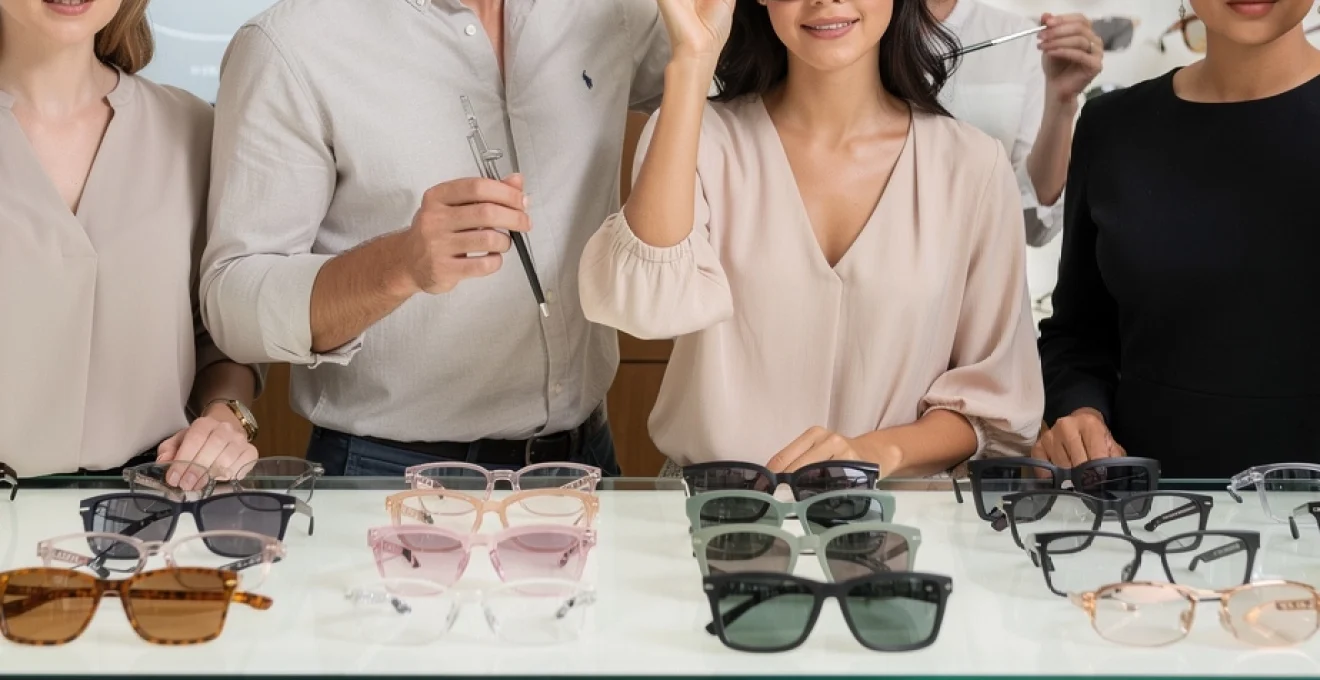
Finding the perfect pair of sunglasses represents far more than a simple fashion decision. The right frames can transform your appearance, protect your vision, and complement your personal style in ways that genuinely elevate your everyday look. Yet many people struggle to navigate the overwhelming array of options available, from frame shapes and lens technologies to materials and colour palettes. Understanding how facial geometry, skin undertones, and wardrobe choices intersect with technical considerations like UV protection and frame construction empowers you to make informed decisions that enhance both style and function. This comprehensive guide explores the science and artistry behind selecting sunglasses that truly work for you.
Face shape analysis and frame geometry matching
The relationship between facial structure and frame geometry has long been debated within the eyewear industry. Traditional guidance suggests that specific face shapes demand particular frame styles to create visual balance, yet this approach oversimplifies the complex interplay between personal features and aesthetic preferences. Rather than adhering rigidly to prescriptive rules, understanding your facial proportions provides a foundation for exploring frame options that genuinely complement your unique characteristics. The key lies in identifying which dimensions matter most for achieving both comfort and visual harmony.
Identifying oval face structures for aviator and wayfarer styles
Oval face structures possess naturally balanced proportions, with the face length measuring approximately one and a half times its width. The forehead typically appears slightly wider than the jawline, with gently rounded contours rather than sharp angles. This versatile facial geometry accommodates an exceptionally broad range of frame styles, making oval faces the most adaptable when selecting sunglasses. The balanced proportions mean you can experiment with both rounded and angular designs without overwhelming your features.
Aviator sunglasses, characterised by their teardrop-shaped lenses and thin metal frames, provide excellent coverage whilst maintaining visual lightness. The classic design, originally developed for pilots requiring maximum field of view, complements oval faces by following the natural curve of the brow line. Wayfarer styles, with their trapezoidal shape and bold acetate construction, add definition and structure without creating harsh contrasts. The slightly wider top frame balances the gentle tapering of oval facial structures, creating a harmonious aesthetic that works across professional and casual settings.
Square jawline proportions and round lens frame selection
Square facial structures display strong, angular features with a prominent jawline and broad forehead of similar width. The face length and width measurements typically align closely, creating a balanced yet defined appearance. Angular cheekbones and a straight jaw edge characterise this geometry, which benefits from frame selections that introduce softer, curved elements to counterbalance the natural sharpness of the facial structure.
Round and oval frame designs soften the angular qualities inherent in square faces. Circular lenses create visual contrast against the straight lines of the jaw and forehead, introducing flowing curves that complement rather than compete with your natural features. Aviator styles also work exceptionally well, as the curved bottom edge of the lenses provides gentle contrast whilst the wider top section maintains proportion with the broad forehead. Consider frames with slightly thicker temples or decorative details positioned higher on the frame to draw attention upward and elongate the perceived facial structure.
Heart-shaped face characteristics with Bottom-Heavy frame designs
Heart-shaped faces feature a wider forehead and cheekbone area that tapers to a narrow, delicate chin. This distinctive geometry creates a naturally balanced appearance that benefits from frame selections emphasising the lower portion of the face. The goal involves adding visual weight to the narrower chin region whilst avoiding designs that further broaden the already prominent forehead area.
Bottom-heavy frame designs, including cat-eye styles with pronounced lower rims or rectangular frames with substantial bottom sections, create equilibrium by drawing attention downward. Frames featuring decorative elements, colour accents, or increased thickness along the lower portion work particularly effectively. Rimless or semi-rimless designs with minimal upper frame structure also suit heart-shaped faces beautifully, as they reduce emphasis on the broader forehead whilst maintaining coverage and protection. Consider frames that extend slightly beyond your cheekbones but remain proportional to your chin width, typically falling within a moderate size range rather than oversized designs.
Round face countering through angular Cat-Eye and rectangular silhouettes
Round faces are characterised by soft curves, full cheeks, and a width that is close to the overall length of the face. To create definition and visual structure, angular frames become an effective design tool. Cat-eye silhouettes with a pronounced upsweep at the outer corners lift the eye line and break up horizontal fullness, while rectangular frames introduce straight lines that visually elongate the face. By combining sharper angles with a slightly wider frame width, you generate the impression of a more sculpted facial contour without sacrificing comfort.
When selecting sunglasses for a round face, prioritise frames where the lens height does not extend too far below the cheekbone line, as excessively deep lenses can exaggerate facial roundness. Instead, opt for styles where the upper edge follows or sits just below the natural brow line and the lower edge ends above the lower third of the nose. Subtle design details such as a bold top bar, a keyhole bridge, or contrasting colours on the upper rim can further enhance vertical emphasis. This deliberate use of angular cat-eye and rectangular silhouettes allows you to counter rounded features whilst maintaining a polished, contemporary look.
Lens technology and UV protection standards
Beyond aesthetics, the core function of sunglasses is to protect your eyes and the delicate skin surrounding them. Prolonged exposure to ultraviolet radiation has been linked to cataracts, macular degeneration, and photoageing, with the World Health Organization estimating that up to 20% of cataract cases may be caused or worsened by UV exposure. Modern lens technology offers a spectrum of solutions that manage glare, filter UV, and adapt to changing light conditions. Understanding the differences between polarised, standard tinted, photochromic, and mirror-coated lenses equips you to choose sunglasses that match both your lifestyle and safety requirements.
Polarised lenses versus standard tinted glass for glare reduction
Polarised lenses are engineered specifically to combat glare originating from reflective surfaces such as water, snow, and wet roads. They incorporate a special filter that blocks horizontally polarised light waves, which are primarily responsible for the intense, blinding reflections you experience when driving or spending time near water. By selectively filtering this light, polarised sunglasses enhance contrast, improve colour perception, and reduce eye strain, making them ideal for activities like sailing, skiing, and prolonged driving in bright conditions. You’ll often notice that fine surface details, such as ripples on water or irregularities on tarmac, become more visible through polarised lenses.
Standard tinted lenses, by contrast, simply reduce the overall brightness without differentiating between vertical and horizontal light waves. They can still provide full UV protection when manufactured to proper standards, but they do not offer the same level of glare reduction as polarised options. For casual city wear or low-glare environments, a high-quality tinted lens may be entirely adequate and sometimes preferable if you frequently use digital screens outdoors, as polarisation can occasionally interfere with LCD visibility. When deciding between polarised and non-polarised lenses, consider how often you drive long distances, spend time near reflective surfaces, or participate in outdoor sports where visual clarity and reduced fatigue are critical.
UV400 protection rating and european EN ISO 12312-1 compliance
The term UV400 indicates that a lens blocks ultraviolet radiation up to 400 nanometres, effectively covering both UVA and UVB wavelengths. This rating is considered the gold standard for everyday sun protection, as it filters out approximately 99–100% of harmful UV rays. It is important to remember that lens darkness does not equate to UV protection; a very dark lens without proper UV filtration can be more dangerous than a clear lens, because the pupil dilates in low light, allowing more unfiltered radiation to enter the eye. Therefore, always verify the UV rating on any sunglasses you consider, regardless of their tint intensity or colour.
In Europe, the EN ISO 12312-1 standard defines safety and performance requirements for sunglasses and related eye protection. Compliance with this standard ensures that the lenses have been tested for UV transmission, optical quality, and robustness. Products meeting EN ISO 12312-1 are typically marked with appropriate labelling or CE marking, indicating that they are safe for routine sun exposure. When shopping, especially online or while travelling, looking for the UV400 designation combined with EN ISO 12312-1 compliance gives you confidence that your sunglasses provide scientifically validated protection, not just a cosmetic tint.
Photochromic transition lens adaptation in variable light conditions
Photochromic lenses, often referred to as transition lenses (after a well-known brand), contain molecules that react to ultraviolet light by darkening in bright conditions and returning to a lighter state indoors. This adaptive behaviour makes them ideal for individuals who move frequently between interior and exterior environments and prefer not to swap between prescription glasses and sunglasses. Think of them as a “smart” filter that calibrates itself, much like auto-brightness on your smartphone screen. As UV intensity increases, the molecules change structure and absorb more light; as UV decreases, they revert and allow more light through.
However, photochromic lenses do have limitations that are important to understand. Their darkening response can be slower in very cold temperatures, and many car windscreens block a large portion of UV radiation, which can reduce the effectiveness of darkening while driving. If you spend significant time behind the wheel in bright conditions, you may still prefer dedicated driving sunglasses with fixed tints or polarisation. For everyday commuting, city walking, or light outdoor activities, photochromic lenses offer a highly convenient solution, especially when integrated into stylish frames that you are comfortable wearing all day.
Mirror coating reflectivity percentages and flash lens applications
Mirror-coated lenses add a reflective layer to the front surface of the lens, bouncing a portion of incoming light away before it even passes through the lens material. The degree of reflectivity, often between 10% and 60%, determines both functional performance and visual impact. High-reflectivity mirror lenses can significantly reduce perceived brightness in extreme conditions such as high-altitude mountaineering or open-water sailing, where light intensity and glare are exceptionally strong. Lower-reflectivity “flash” coatings, by contrast, provide a subtle mirrored effect that enhances aesthetics while only modestly reducing additional light.
From a style perspective, mirror coatings in colours like blue, silver, or copper can transform a classic frame into a bold statement piece that coordinates with activewear or streetwear outfits. Functionally, they work best when paired with UV400 base lenses and, if needed, polarisation for maximum glare management. If you primarily want sunglasses for urban wear or occasional holidays, a light flash coating offers a balance between everyday practicality and visual impact. For technical sports use, it is worth consulting product specifications to understand the exact reflectivity percentage and choosing a coating designed for your primary environment, whether that is snow, sand, or open water.
Frame materials and construction durability
The material composition and construction quality of your sunglasses frames determine not only durability but also comfort, weight, and long-term appearance. High-quality materials resist warping, discolouration, and mechanical stress, ensuring that your frames maintain their shape and fit even with daily wear. Just as you might consider the fabric and stitching of a tailored jacket, evaluating frame materials such as acetate, titanium, and memory metals helps you understand how your sunglasses will age. Investing in better construction upfront often results in fewer repairs, reduced waste, and a more sustainable approach to eyewear.
Acetate cellulose frames from mazzucchelli 1849 versus injection-moulded plastics
Cellulose acetate, particularly from renowned manufacturers like Mazzucchelli 1849 in Italy, is widely regarded as one of the premium materials for fashion-forward sunglasses. Derived from cotton and wood pulp, acetate offers rich, layered colour patterns, including sophisticated tortoiseshells, translucents, and gradients that are difficult to achieve with cheaper plastics. Because acetate sheets are cut and polished rather than injection-moulded, each frame can be hand-finished, resulting in smoother edges, better weight distribution, and a more luxurious tactile feel. Over time, acetate can also be reheated and adjusted by opticians, allowing you to fine-tune comfort around the nose and ears.
Injection-moulded plastic frames, often made from materials like polycarbonate or TR-90, are produced by injecting molten plastic into moulds. This process is highly efficient and cost-effective, making it popular for entry-level sunglasses and fashion chains. While these frames can be lightweight and reasonably durable, they typically do not offer the same depth of colour, polish, or adjustability as acetate. They may also be more prone to surface scratching or snapping under high stress. If you are looking for a long-lasting pair that can be periodically adjusted to maintain a precise fit, high-quality cellulose acetate is usually the superior choice, whereas injection-moulded plastics are suitable for budget-conscious or backup pairs.
Titanium alloy flex hinges and corrosion-resistant properties
Titanium and titanium alloys have become increasingly popular in premium eyewear due to their exceptional strength-to-weight ratio and resistance to corrosion. These materials are naturally hypoallergenic, making them ideal for individuals with sensitive skin or allergies to nickel. Titanium frames feel almost weightless on the face, yet they can withstand significant flex and everyday handling without deforming. This balance of lightness and robustness is particularly beneficial for all-day wear, where heavy frames may cause pressure points on the nose or behind the ears.
Many high-end sunglasses incorporate titanium components not only in the frame front but also in the hinges and temples. Flex hinges, often made from titanium alloy, allow the temples to open beyond 90 degrees, improving comfort and reducing the risk of breakage when putting the sunglasses on or taking them off with one hand. Because titanium is highly resistant to sweat, saltwater, and humidity, it performs well in coastal climates and active environments where standard metal frames might tarnish or corrode. When you are evaluating metal sunglasses for longevity, checking whether key structural elements are titanium-based is a reliable way to assess investment value.
Memory metal flexon technology in sport performance eyewear
Memory metals, such as Flexon, are engineered alloys that can bend, twist, and flex yet return to their original shape. In the context of sport performance eyewear, this shape memory capability is invaluable. Frames may be accidentally sat on, dropped, or knocked during high-intensity activities, and conventional metals might bend permanently or snap under such stresses. Memory metal temples and bridges absorb these impacts and rebound, maintaining structural integrity and fit. It is similar to how a spring can be compressed and released countless times while still returning to its original length.
For athletes and highly active individuals, Flexon or similar memory metal technologies offer peace of mind and extended product lifespan. These frames often combine a memory metal core with rubberised or textured temple tips for grip, ensuring the sunglasses remain stable even during rapid movement or perspiration. While memory metal designs can appear more minimalistic than fashion-first frames, they excel in functional environments such as cycling, running, or racquet sports. If you prioritise resilience and comfort over bold branding, sport-oriented memory metal frames are a smart, performance-driven choice.
Colour theory and seasonal wardrobe coordination
Colour selection plays a pivotal role in making sunglasses feel integrated with your overall style rather than an afterthought. The best frames do more than simply match a single outfit; they harmonise with the dominant tones in your wardrobe and complement your skin undertone across seasons. By applying basic colour theory principles—such as warm versus cool undertones, contrast levels, and seasonal palettes—you can select sunglasses that enhance your natural colouring and coordinate effortlessly with your clothes. Think of your eyewear as a recurring accessory that anchors your visual identity in photos, at events, and during everyday life.
Tortoiseshell patterns for autumn earth tone palettes
Tortoiseshell frames, with their flecks of amber, chocolate, and honey, are inherently versatile and particularly well-suited to autumn-inspired wardrobes rich in browns, olives, rusts, and camel tones. The marbled pattern introduces depth and variation, much like the grain in natural wood, which means tortoiseshell can pair effectively with both solid colours and subtle prints. For individuals with warm or neutral undertones, tortoiseshell sunglasses can echo the natural warmth in hair and eye colour, resulting in a cohesive, flattering look. They also offer a softer alternative to stark black, which can appear severe against lighter complexions.
When your wardrobe features trench coats, wool blazers, suede boots, and textured knits, tortoiseshell frames act as a unifying accessory that feels seasonally appropriate yet timeless. To avoid overly busy combinations, consider the scale of patterns in your clothing; if you frequently wear bold checks or florals, a more muted tortoiseshell pattern will keep the overall look balanced. For minimalist outfits in beige or tan, a bolder, high-contrast tortoiseshell can become a subtle focal point that adds interest without overwhelming your ensemble. This makes tortoiseshell a strong candidate for a “one pair fits most outfits” approach.
Metallic gold and rose gold frames with warm skin undertones
Metallic frames in gold and rose gold pair exceptionally well with warm skin undertones, where yellow, peach, or golden hues are naturally present. These metals reflect a soft, flattering light onto the face, similar to the effect of shooting portraits during golden hour. If you typically gravitate towards gold jewellery, tan leather accessories, and warm neutrals in your wardrobe, gold-toned sunglasses will feel like a natural extension of your existing style. Rose gold, with its hint of pink, can be particularly complementary for individuals whose complexion carries both warm and subtle rosy notes.
From a styling perspective, gold and rose gold frames work beautifully with resort wear, linen shirts, white dresses, and sun-kissed skin during summer months. They can also elevate simple basics, making a white T-shirt and denim combination appear more polished and intentional. If you are concerned about metallic frames feeling too flashy, look for brushed or satin finishes rather than high-polish surfaces. These diffused sheens reduce reflectivity and lend a more understated luxury, ensuring that your metallic sunglasses integrate seamlessly with both casual and semi-formal outfits.
Matte black and gunmetal finishes for minimalist capsule wardrobes
Matte black and gunmetal frames are ideal for those who favour a minimalist or monochrome capsule wardrobe. Their understated finishes provide structure and definition without drawing excessive attention, functioning almost like a well-cut blazer for your face. Because these colours are neutral and desaturated, they harmonise with a broad spectrum of clothing tones, from crisp white shirts to charcoal tailoring and dark denim. For cooler skin undertones, gunmetal can be particularly flattering, echoing the tones of silver jewellery and steel watch cases.
Matte surfaces have the additional advantage of hiding fingerprints and minor scratches better than glossy finishes, which helps maintain a clean, sharp appearance over time. If your personal style leans towards architectural silhouettes, minimal logos, and a limited colour palette, matte black or gunmetal sunglasses will reinforce that aesthetic. They also transition seamlessly between professional and casual contexts, making them an excellent choice if you prefer to own fewer, higher-quality accessories that perform multiple roles.
Translucent crystal frames in millennial pink and sage green
Translucent crystal frames in shades such as millennial pink and sage green bring a fresh, contemporary edge to your eyewear collection. Because these frames allow light to pass through rather than blocking it entirely, they create a softer, lighter impression on the face compared with opaque colours. Millennial pink offers a playful yet surprisingly versatile option, coordinating well with denim, neutrals, and pastel-heavy wardrobes. Sage green, by contrast, sits comfortably between a neutral and a colour, pairing easily with whites, creams, and earthy tones while still providing a subtle point of interest.
These crystal tones are particularly popular in spring and summer, where they complement lighter fabrics, breezy silhouettes, and relaxed dress codes. If you are experimenting with bolder eyewear for the first time, translucent frames offer a gentler entry point than solid brights because the underlying skin tone remains partially visible through the material. They can function as a style accent without overwhelming your other accessories. For those who enjoy rotating sunglasses to match specific looks, a crystal frame in pink or green can be an excellent secondary pair that injects personality into otherwise simple outfits.
Designer brand signatures and style archetypes
Iconic eyewear brands have developed distinctive design languages that signal particular style archetypes—from vintage intellectual to avant-garde streetwear. Recognising these signatures helps you align your sunglasses choices with the image you want to project, whether that’s classic, rebellious, refined, or experimental. Much like choosing between a tailored Italian suit and a relaxed Japanese workwear jacket, selecting frames from different designers allows you to tap into specific cultural and aesthetic narratives. Understanding a few hallmark models and construction details can guide you towards brands that resonate with your personal style story.
Ray-ban clubmaster browline construction for vintage aesthetic
The Ray-Ban Clubmaster is one of the most recognisable examples of browline sunglasses, a style that gained popularity in the 1950s and 1960s. Its defining characteristic is a bold upper frame—often in acetate—that mimics the shape of eyebrows, combined with a thinner metal rim along the lower half of the lens. This contrast creates a strong, structured line across the face, emphasising the eyes and upper facial features. For wearers seeking a vintage-inspired aesthetic with a hint of intellectual authority, the Clubmaster offers an immediate visual shorthand.
In practical terms, browline construction suits a wide range of face shapes because the pronounced upper frame adds definition without overwhelming the lower face. The design pairs well with tailored clothing, retro prints, and smart-casual outfits, making it a favourite among creatives, professionals, and anyone who appreciates mid-century style. Choosing a classic black or tortoiseshell Clubmaster leans into timelessness, while variations with coloured lenses or lighter acetates introduce a modern twist. If your style references jazz-era cool or old Hollywood, the Ray-Ban Clubmaster is a natural candidate.
Persol steve McQueen 714 folding mechanisms and meflecto temples
Persol’s 714 model, famously worn by Steve McQueen, is a benchmark for sophisticated Italian craftsmanship in sunglasses. Its most distinctive feature is the folding mechanism, which allows the temples and bridge to fold inward, reducing the frame to a compact size that fits easily into a pocket or small case. This engineering detail is not only practical for travel but also emblematic of Persol’s focus on functional elegance. The 714’s silhouette, with its gently squared lenses and keyhole bridge, exudes a vintage yet enduringly masculine charm.
Another hallmark of Persol design is the Meflecto temple system, consisting of small cylinders embedded in the temple arms to allow subtle flex and personalised adaptation to the shape of your head. This technology reduces pressure points and enhances long-term comfort, particularly for extended wear. The combination of folding mechanisms, Meflecto temples, and signature arrow hinges creates a distinctive look that is instantly recognisable to eyewear enthusiasts. If you aspire to a style narrative rooted in classic cinema, road trips, and Italian tailoring, the Persol Steve McQueen 714 encapsulates that archetype with technical credibility.
Oliver peoples gregory peck keyhole bridge for intellectual styling
The Oliver Peoples Gregory Peck model was inspired by the glasses worn by the actor in the film adaptation of “To Kill a Mockingbird.” Its roundish lenses and keyhole bridge evoke a scholarly, literary sensibility that appeals to those who favour understated refinement over loud branding. The keyhole bridge, so named because of its resemblance to an old-fashioned keyhole, distributes weight more evenly across the sides of the nose rather than directly on the top, enhancing comfort for many wearers. Visually, it adds a touch of vintage character while maintaining a clean, minimal profile.
These frames pair effortlessly with textured blazers, Oxford shirts, and knitwear, projecting an image of quiet confidence and thoughtful taste. Oliver Peoples often uses subtle colourways and translucent acetates in the Gregory Peck line, which amplify its intellectual charm without appearing costume-like. If you are drawn to bookish cafés, gallery openings, or academic environments, this style archetype aligns well with that lifestyle. The Gregory Peck model demonstrates how a considered bridge design and restrained branding can transform sunglasses into a sophisticated signature piece.
Gentle monster architectural korean design language in oversized frames
Gentle Monster has emerged as a leading name in contemporary eyewear, known for its bold, architectural designs that often feature oversized proportions and unconventional angles. The brand’s Korean design language embraces experimentation, merging fashion, art, and technology into frames that feel more like wearable sculptures than traditional sunglasses. Oversized lenses, thick temples, and unexpected silhouettes create a strong visual statement, appealing to individuals who treat eyewear as a central element of their outfit rather than a supporting accessory.
These designs pair well with streetwear, avant-garde fashion, and minimalist clothing that allows the sunglasses to take centre stage. For those who enjoy fashion-forward looks and are unafraid of attention, Gentle Monster offers a route to express personality and creative flair. Practical considerations such as lens coverage and UV protection remain present, but the brand’s main focus is on pushing aesthetic boundaries. If you’re drawn to runway-inspired styling, asymmetrical tailoring, or bold jewellery, Gentle Monster’s oversized frames can serve as the anchor piece that defines your overall visual identity.
Fit calibration and anthropometric measurements
Even the most advanced lenses and beautifully designed frames will underperform if the fit is not calibrated to your facial measurements. Proper sizing minimises slippage, pressure points, and visual distortion, ensuring that your sunglasses feel like a natural extension of your face. Eyewear sizing is based on anthropometric data—measurements of human facial dimensions—refined over decades of optical practice. By understanding key parameters such as temple length, bridge width, and lens height, you can interpret sizing codes printed inside frame temples and make more informed choices when shopping online or in-store.
Temple length adjustments between 135mm and 150mm standards
Temple length, typically ranging from 135mm to 150mm in adult sunglasses, refers to the measurement from the hinge to the end tip that rests behind your ear. This dimension plays a crucial role in stability and comfort; temples that are too short may dig into the sides of your head or pull the frame forward, while excessively long temples can cause the sunglasses to slide down your nose. Most brands design temple lengths based on average head widths, but individual variation means that you may need minor adjustments from an optician for an optimal fit.
If you frequently experience headaches or pressure behind the ears after wearing sunglasses, it is worth checking the temple length and curvature. Opticians can gently heat and reshape acetate temples or adjust metal cores to refine the bend over your ears, similar to tailoring a jacket sleeve to the correct length. When trying on new frames, pay attention to whether the temple tips rest comfortably behind your ears without exerting upward or downward force. A well-calibrated temple length should keep the frame stable during movement without requiring constant readjustment.
Bridge width compatibility with nasal root anatomy
Bridge width—the distance between the lenses at the nose—must align with your nasal root anatomy to ensure that sunglasses sit securely and distribute weight evenly. A bridge that is too wide will cause the frames to slide down, leading to frequent pushing up and potential distortion of how the lenses align with your eyes. Conversely, a bridge that is too narrow can pinch, leaving red marks and discomfort after short periods of wear. Because nose shapes vary widely, from high and narrow to low and wide, bridge design is as important as the numerical width measurement.
Different bridge constructions, such as keyhole bridges, saddle bridges, and adjustable nose pads, cater to these anatomical variations. For example, individuals with lower or wider noses often find that silicone nose pads on metal frames provide better grip and customisation than fixed acetate bridges. When you try on sunglasses, observe whether there is even contact along the bridge area and whether your pupils sit close to the optical centre of the lenses. If the frames tilt forward or backward significantly, the bridge fit may be incorrect, affecting both comfort and visual performance.
Lens height requirements for progressive and bifocal prescriptions
For wearers who require progressive or bifocal lenses, lens height—sometimes called lens depth—is a critical measurement that directly affects optical performance. Progressive lenses contain multiple focal zones (distance, intermediate, and near) that are vertically distributed within the lens. To accommodate these zones without compromising clarity, a minimum lens height is necessary, often in the range of 28–32mm or more, depending on the design. Frames with very shallow or narrow lens openings may not provide enough vertical space, limiting your ability to use progressives effectively.
When selecting sunglasses for progressive or bifocal prescriptions, it is advisable to consult your optician with specific frame candidates. They can measure the lens height and verify whether your prescription can be correctly positioned within the available space. As a rule of thumb, avoid ultra-slim, fashion-only silhouettes if you know you need multifocal functionality; instead, prioritise frames whose lens openings allow a comfortable transition between distance and near vision areas. This approach ensures that your sunglasses not only look tailored to your face and outfit but also deliver clear, seamless vision across all your daily activities.