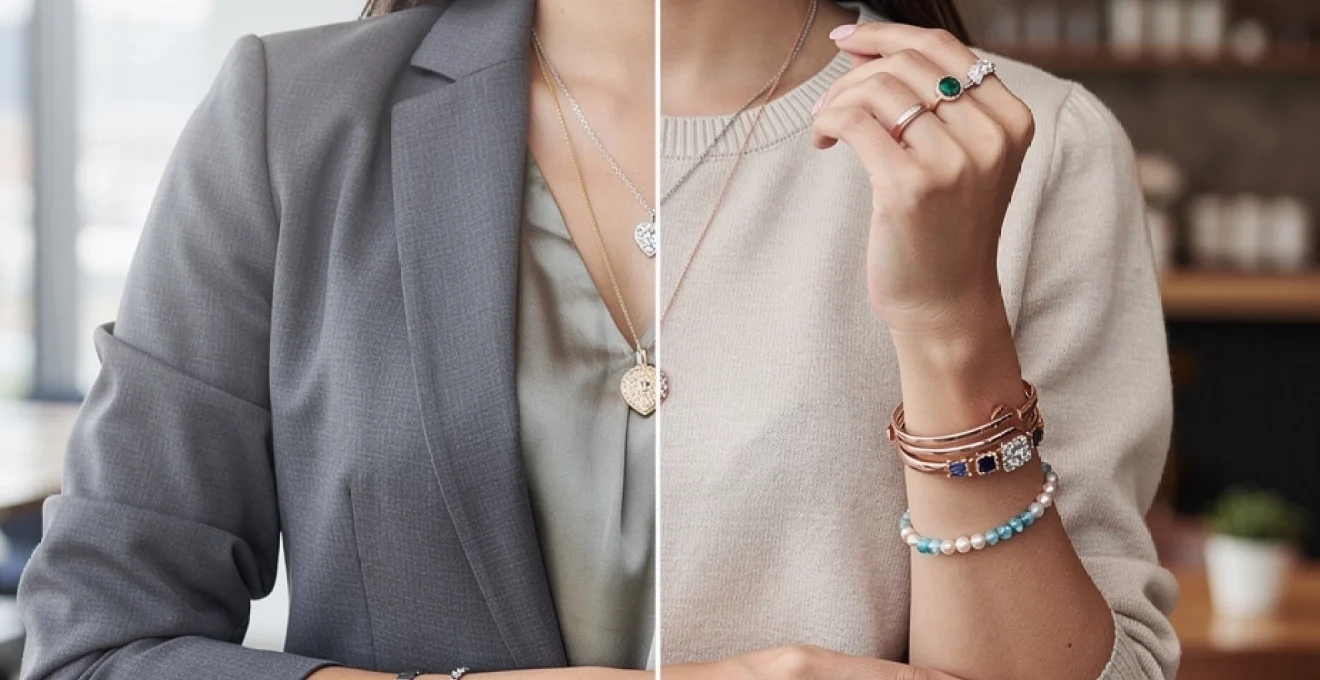
The art of jewellery coordination transcends traditional style boundaries, requiring a sophisticated understanding of how precious metals, gemstones, and design elements interact across diverse wardrobe contexts. Modern professionals and style enthusiasts face the challenge of maximising their jewellery investments whilst maintaining appropriate aesthetics for varying occasions. The key lies in selecting versatile pieces that seamlessly transition from boardroom presentations to weekend gatherings, eliminating the need for extensive collections whilst ensuring consistent elegance. This approach demands careful consideration of metal compatibility, gemstone versatility, and structural design elements that complement both structured formal wear and relaxed casual ensembles.
Contemporary jewellery styling emphasises functionality without compromising sophistication, particularly as workplace dress codes evolve and social occasions become increasingly diverse. Understanding the technical aspects of jewellery design—from chain mathematics to stone clarity grades—empowers you to make informed decisions that enhance your personal brand whilst respecting contextual appropriateness. The investment in quality, adaptable pieces ultimately proves more economical and stylistically coherent than accumulating situation-specific accessories that serve limited purposes.
Understanding jewellery metal compatibility across dress codes
Metal selection forms the foundation of successful cross-functional jewellery styling, with each precious metal offering distinct advantages for different professional and social contexts. The choice between yellow gold, sterling silver, rose gold, and platinum significantly impacts how jewellery integrates with both formal business attire and relaxed weekend wear. Understanding the inherent properties and visual impact of each metal enables strategic wardrobe coordination that maximises versatility whilst maintaining aesthetic consistency.
The growing trend towards mixed-metal styling has revolutionised traditional jewellery etiquette, allowing for more creative expression whilst requiring greater technical knowledge. Professional stylists increasingly recommend building collections around complementary metal combinations rather than strict single-metal adherence, providing flexibility for diverse styling scenarios. This approach proves particularly valuable for individuals who transition frequently between formal and casual environments throughout their daily routines.
Yellow gold versatility in business attire and weekend wear
Yellow gold demonstrates remarkable adaptability across professional and leisure contexts, particularly in higher karat weights that maintain lustrous appeal under varying lighting conditions. The warm undertones of 18-karat yellow gold complement both crisp white business shirts and relaxed linen weekend wear, creating visual harmony without appearing overly formal or inappropriately casual. Research indicates that yellow gold jewellery increases perceived professionalism by approximately 15% in corporate environments whilst maintaining approachability in social settings.
The durability characteristics of yellow gold make it ideal for daily wear, withstanding the rigours of frequent handling during business interactions whilst retaining its polished appearance for evening events. Quality yellow gold pieces require minimal maintenance between professional and casual styling sessions, making them practical investments for busy lifestyles. The metal’s historical associations with luxury and stability enhance personal branding in professional contexts without appearing ostentatious in relaxed social environments.
Sterling silver adaptability from boardroom to brunch
Sterling silver offers exceptional versatility for contemporary professionals seeking jewellery that transitions seamlessly between formal presentations and casual networking events. The cool, reflective properties of properly maintained sterling silver complement modern business wardrobes whilst providing sophisticated contrast against weekend neutrals and pastels. The understated elegance of sterling silver aligns with minimalist design principles increasingly favoured in professional environments whilst offering sufficient visual interest for social occasions.
The affordability of sterling silver relative to precious metals enables the creation of comprehensive jewellery wardrobes that support diverse styling requirements without significant financial investment. Quality sterling silver maintains its appearance across multiple styling contexts when properly cared for, making it suitable for daily wear scenarios. The metal’s compatibility with both gemstones and minimalist designs provides flexibility for varying personal style preferences and professional requirements.
Rose gold transitional properties in contemporary styling
Rose gold has emerged as a sophisticated choice for professionals seeking jewellery that bridges traditional formality with contemporary accessibility. The unique pink-copper alloy creates visual warmth that complements both structured business attire and flowing casual fabrics, offering versatility that appeals to diverse age demographics and style preferences. The romantic yet professional appearance of rose gold has gained particular favour among millennials and Gen Z professionals who value authenticity and personal expression in their styling choices.
The
the subtle blush tone also softens sharp tailoring and balances darker colour palettes, making it particularly effective with charcoal suits, navy dresses, and black knitwear. In casual contexts, slim rose gold bangles or a pared-back pendant introduce warmth to denim, cotton, and athleisure without feeling overdressed. From a styling perspective, rose gold functions almost like a cosmetic highlighter for your outfit: applied sparingly, it draws light to the face and hands, enhancing your overall presence in both formal meetings and relaxed social environments.
From a practical standpoint, rose gold’s copper content typically increases hardness compared to higher-karat yellow gold, which improves resistance to everyday knocks and abrasions. This makes rose gold engagement rings, slim stacking bands, and watches particularly suitable for those who move frequently between desk work, commuting, and after-hours events. When building a multi-occasion jewellery capsule, incorporating at least one rose gold anchor piece—a watch, bracelet, or signature ring—creates a subtle through-line that ties together both your professional wardrobe and your weekend outfits.
Platinum investment pieces for multi-occasion wardrobes
Platinum occupies a distinct position in cross-functional jewellery styling due to its inherent durability, natural whiteness, and prestige associations. Unlike white gold, platinum does not require rhodium plating to maintain its cool-toned lustre, which means it retains a refined appearance even with frequent wear across both corporate and casual settings. The density and strength of platinum make it particularly suitable for rings, bracelets, and watches that experience continuous contact and impact throughout the day.
From an investment perspective, platinum pieces serve as long-term anchors in a multi-occasion jewellery wardrobe. A simple platinum band or minimalist pendant can appear understated with a tailored suit yet read as effortlessly luxurious with a crisp T-shirt and denim at the weekend. Because platinum develops a subtle patina over time rather than visible wear, it communicates quiet confidence and longevity—qualities that align strongly with contemporary professional branding.
Strategically, we can think of platinum as the architectural steel of your jewellery collection: it supports structure and security for key stones and designs while visually integrating with both sterling silver and white gold when you mix metals. For individuals who prefer a streamlined selection of high-quality pieces over a wide variety of costume jewellery, prioritising one or two platinum items—such as an engagement ring, wedding band, or everyday bracelet—ensures consistent elegance across formal meetings, client dinners, and informal gatherings.
Gemstone selection strategies for cross-functional styling
While metal choice sets the framework of your jewellery, gemstone selection determines how easily those pieces transition between dress codes. Factors such as clarity, cut, colour intensity, and setting style directly impact whether a stone feels boardroom-appropriate, cocktail-ready, or weekend-relaxed. By understanding how different gemstones interact with both neutral and bold wardrobe palettes, you can curate pieces that deliver maximum wear without appearing either underwhelming or excessive.
In practice, versatile gemstone jewellery behaves like a well-tailored blazer: it adapts to the context you place it in. You might wear the same diamond studs to a quarterly review and to a Sunday brunch, with the difference lying in how you style surrounding pieces. Likewise, coloured stones, pearls, and semi-precious gems can all be leveraged strategically to support a cohesive look from early-morning meetings to late-evening social events.
Diamond clarity grades and setting styles for day-to-evening transitions
Diamond jewellery remains a cornerstone of both formal and casual styling, but its success across contexts depends heavily on clarity grades and setting choices. For daily wear that moves from office to evening, diamonds in the VS to SI1 clarity range typically offer an optimal balance between visual brilliance and budget, as minor inclusions are not visible to the naked eye. Brilliant-cut diamonds in refined settings provide enough sparkle for evening occasions while remaining understated enough for conservative workplaces.
Setting style functions as a dial you can turn up or down on formality. Channel, bezel, and pavé settings generally read as more streamlined and suitable for business environments, as they sit closer to the metal and reduce the visual volume of the stone. In contrast, high-prong or halo settings increase perceived size and light return, making them ideal for dedicated evening or event pieces. If you want a diamond ring or pendant to work effortlessly from 9 a.m. to 9 p.m., choose a mid-size stone (0.25–0.75 carat for rings, 0.10–0.35 carat for studs) in a low-profile setting that does not snag on clothing or draw disproportionate attention in professional contexts.
Think of diamond versatility like adjustable lighting in a room: the same fixture can feel bright and festive or soft and functional depending on intensity. By keeping clarity and cut quality high while choosing moderate carat weights and restrained metalwork, you ensure that your diamond jewellery can be “dimmed” for the office and “brightened” for social events simply by changing complementary pieces, such as adding a bolder necklace or bracelet after hours.
Coloured gemstone intensity matching with neutral and bold palettes
Coloured gemstones introduce personality and visual interest into both formal and casual outfits, but their intensity and saturation must harmonise with your clothing palette. Highly saturated stones such as emerald, sapphire, and ruby create strong focal points that pair best with neutral clothing—black, navy, white, and beige—where they can function as intentional statement accents. Softer pastel stones like morganite, aquamarine, or pale amethyst, on the other hand, blend seamlessly with lighter business separates and informal weekend wear.
When matching gemstone intensity to outfit colour, a useful guideline is to treat gemstones as you would lipstick shades. Deep, rich hues can be the hero element of an otherwise restrained look, whereas muted tones support an overall soft aesthetic. For example, a navy sheath dress with minimal detailing pairs elegantly with a single sapphire pendant and matching studs, while a patterned blouse might be better complemented by understated citrine or smoky quartz in small, geometric settings.
To ensure cross-functional wear, aim for coloured gemstone pieces that feature clean lines and balanced metal-to-stone ratios. A slim gold band with small channel-set garnets will integrate more easily into officewear than an oversized cabochon ring, yet the same band can be stacked or paired with bolder pieces for evening. By curating a spectrum of gemstone intensities—from barely-there to high-contrast—you can quickly adjust your jewellery’s visual impact to suit everything from investor meetings to rooftop gatherings.
Pearl lustre classifications for professional and social settings
Pearls remain one of the most adaptable materials for bridging formal and casual dress codes, largely due to variations in size, lustre, and surface quality. High-lustre pearls with clean surfaces and strong reflections—often found in Akoya and fine freshwater strands—convey a polished, professional aesthetic that aligns seamlessly with suits, shifts, and structured blouses. Soft-lustre or baroque pearls, with their organic shapes and gentler glow, tend to feel more relaxed and artistic, making them particularly suitable for creative workplaces and social engagements.
Lustre classification directly influences how “dressy” a pearl appears. High-lustre pieces behave almost like subtle mirrors, catching light in controlled environments such as conference rooms and evening venues, whereas lower-lustre pearls diffuse light softly, blending more readily into textured knits and weekend linen. For cross-functional wear, many stylists recommend mid-sized pearls (6–8 mm) with good but not excessively formal lustre, set as studs or simple pendants that can be layered or worn alone.
If you think of pearls as the “tailored shirt” of your jewellery collection, lustre is equivalent to fabric quality. A crisp, finely woven cotton dress shirt works for both board meetings and dinners; likewise, a pair of medium-lustre pearl studs will support both professional credibility and social ease. Larger or more dramatic pearl pieces—including opera-length strands and oversized baroque pendants—can then be reserved for occasions where a more expressive style is appropriate.
Semi-precious stone combinations in layered jewellery systems
Semi-precious stones such as citrine, peridot, topaz, onyx, and labradorite offer cost-effective ways to build layered jewellery systems that function across formal and casual environments. Their comparatively accessible price points mean you can experiment with colour pairings and stacking without compromising quality or longevity. Layering semi-precious stones in coordinated colour families—cool blues and greens, or warm ambers and reds—creates visual depth that can be edited down for the office and expanded for evening or weekend wear.
For cross-functional styling, consider designing a “modular” jewellery set: a delicate chain with a single semi-precious pendant for daytime, accompanied by matching or complementary stone bracelets and rings that can be added or removed depending on context. For instance, a slender labradorite pendant worn with a blazer reads understated and professional, while the addition of a coordinating bracelet stack and cocktail ring transforms the same base piece into a striking evening ensemble.
Approach semi-precious stones as you would capsule wardrobe accessories—scarves or belts that can shift the tone of a simple dress or trousers. By keeping metalwork consistent (all yellow gold or all silver) and varying only the stone combinations, you maintain a cohesive overall aesthetic. This strategy allows you to respond quickly when dress codes shift during the day, such as moving from client presentations to informal team drinks, without needing to completely change your jewellery.
Chain length mathematics and neckline compatibility
Chain length plays a pivotal role in whether jewellery enhances or conflicts with different necklines across formal and casual outfits. Rather than relying on guesswork, understanding standard chain measurements—typically 14, 16, 18, 20, 24, and 30 inches—helps you select lengths that sit at precise visual points on the body. These points of intersection between jewellery and clothing lines influence how streamlined or segmented your silhouette appears, which can affect perceptions of professionalism and poise.
For structured business shirts and high crew necks, 16–18 inch chains that sit just above or at the collarbone usually provide the most polished outcome, as they create a defined frame without interfering with buttons or lapels. V-neck tops and wrap dresses pair best with pendants that mirror the shape of the neckline, often on 18–20 inch chains that end within the V rather than below it. In casual contexts, longer chains—24 inches and beyond—can be layered over knitwear and T-shirts to elongate the torso and add relaxed movement.
Mathematically, you can think of chain length in relation to your vertical proportions: dividing your torso visually into thirds tends to create the most balanced effect. Necklaces that terminate at the upper third emphasise the face and décolletage, ideal for formal presentations and video calls, while mid-torso lengths can feel more laid-back and artistic. To build a versatile necklace wardrobe, many stylists recommend investing in three key lengths—one short (14–16″), one mid (18–20″), and one long (24–30″)—which can be worn individually for clean professional lines or combined for layered weekend styling.
Earring silhouette engineering for face shape and collar styles
Earrings often represent the most visible jewellery element in both formal and casual contexts, especially in digital settings where the upper body is framed on screen. Selecting silhouettes that complement your face shape and collar style ensures that earrings enhance rather than distract from your overall look. From a design engineering perspective, we can view earrings as vertical or horizontal lines that either elongate, balance, or soften facial proportions.
For round or shorter face shapes, elongated drop earrings and slim vertical designs can create an impression of length, particularly when paired with open necklines or V-neck blouses. Angular or square faces benefit from softer curves—hoops, teardrops, and organic shapes—that offset sharp jawlines and pair well with structured collars in business attire. Those with oval face shapes can generally wear most silhouettes, making it easier to switch between minimal studs for the office and more dramatic chandeliers or climbers for evening engagements.
Collar styles further refine earring choices. High-neck tops, turtlenecks, and formal shirts often look best with compact studs or small hoops that keep the focus near the face without competing with fabric volume. In contrast, boat necks, off-the-shoulder styles, and simple crew neck T-shirts provide the visual space for medium to large hoops or drops, particularly in casual or semi-formal settings. Ask yourself: does the combination of collar and earring feel balanced, or does one element overpower the other? Adjusting earring length or width by even a centimetre or two can significantly improve overall harmony.
Bracelet stacking techniques across professional and leisure contexts
Bracelets and watches sit at the intersection of functionality and decoration, making them ideal vehicles for expressing personal style across different dress codes. However, excessive wrist adornment can hinder typing, note-taking, or handshakes in professional settings, while too little interest may underrepresent your aesthetic preferences in social environments. Effective bracelet stacking therefore requires thoughtful calibration of quantity, width, and movement according to context.
In business formal situations, most professionals achieve optimal balance with a single timepiece and one complementary bracelet, typically a slim bangle or delicate chain. This configuration communicates attention to detail without introducing distracting noise during meetings or presentations. For weekends or evenings, you can expand the stack by adding textured bangles, charm bracelets, or bead strands, using your watch or a single metal cuff as the structural anchor around which more playful elements revolve.
Tennis bracelet proportions with business formal requirements
The classic tennis bracelet—characterised by a continuous line of individually set stones—offers exceptional flexibility when sized and styled correctly. In corporate environments, narrower versions (2–3 mm in width, with modest carat total weight) present a refined glimmer that reads as professional rather than ostentatious. Bracelet length should be tailored so that the piece sits close to the wrist bone with minimal rotation, reducing visual distraction and preventing interference with keyboards or notepads.
For day-to-evening transitions, a well-proportioned tennis bracelet can shift from subtle accent under a blazer cuff to a focal point when the jacket is removed. If you’re considering a tennis bracelet as a multi-occasion investment, prioritise uniform stone size, secure clasps with safety features, and metals that match your primary watch or ring. Think of it as the “dress shirt cuff” of your jewellery: always appropriate, effortlessly elevated, and easy to integrate into existing outfits.
Charm bracelet customisation for personal brand expression
Charm bracelets provide a uniquely narrative form of wristwear, enabling you to layer personal milestones, interests, and symbolic motifs into a single piece. In professional contexts, the key to making charm bracelets work lies in controlling both the number and size of charms to avoid excessive noise and visual clutter. A curated selection of slim, coordinated charms—perhaps one representing your field, one travel memory, and one personal value—can communicate individuality while remaining workplace-appropriate.
Outside formal environments, you can expand your charm collection more liberally, allowing the bracelet to become a conversation starter at social events or casual gatherings. A useful strategy is to maintain one “office edit” of charms that live permanently on the bracelet and a supplementary set that you clip on for weekends or holidays. This approach transforms your charm bracelet into a flexible branding tool: understated when necessary, expressive when desired, and always anchored by a consistent metal and chain style.
Bangle diameter calculations for layered sleeve compatibility
Bangle diameter and thickness determine not only comfort but also how successfully bracelets interact with shirt cuffs, blazer sleeves, and knitwear. An internal diameter that is too large will cause bangles to slide excessively, hitting keyboards and desks, while one that is too small may restrict circulation or prove difficult to remove. A practical sizing method is to measure the widest part of your hand with fingers pressed together and thumb tucked in, then divide by 3.14 (π) to approximate ideal internal diameter in centimetres.
For layered sleeves—such as long-sleeve blouses under blazers—slimmer bangles with a close but comfortable fit minimise bulk and allow fabric to drape cleanly. In casual contexts with rolled sleeves or bare arms, you can increase both the number and width of bangles for a more bohemian or statement effect. As with chain lengths and necklaces, consider visual proportion: two or three bangles of varying textures in the same metal often look more intentional than a large number of identical pieces.
Ring stacking architecture for functional hand movement
Ring stacking allows you to maximise the wearability of multiple pieces while expressing your aesthetic in a concentrated area—the hands. However, because hands are constantly in motion for typing, gesturing, and practical tasks, ring architecture must prioritise comfort, dexterity, and professional appropriateness. Efficient stacking relies on distributing volume across fingers and phalanges without impeding joint movement or creating pressure points.
A simple framework is to treat each hand as a mini skyline: vary ring heights and profiles so that no two highly raised settings sit adjacent on neighbouring fingers. In formal settings, many professionals limit themselves to one or two significant rings on the dominant hand—often an engagement ring and wedding band—and possibly a slim band or signet on the opposite hand. For casual or creative environments, you can expand your stack with midi rings, textured bands, or coloured stone accents, ensuring that the total effect still allows you to comfortably grip bags, hold pens, and perform daily tasks.
Engagement ring settings compatible with active lifestyles
For those who wear engagement rings daily in both formal and casual contexts, setting choice has substantial implications for practicality. High-prong or cathedral settings showcase the stone but can catch on pockets, knitwear, and hair, particularly in active roles or during commuting. Lower-profile designs such as bezel, half-bezel, and flush settings sit closer to the finger, reducing snagging risk while providing a sleek, modern look that transitions smoothly from office to weekend activities.
If your lifestyle involves frequent hands-on work—whether in healthcare, design, hospitality, or parenting—consider stone size and orientation as well. A well-cut diamond or gemstone around 0.5–1 carat in a low-profile setting often offers more functional elegance than a larger stone that must be removed regularly for safety. You can think of this as similar to choosing everyday footwear: a beautifully made, supportive pair that suits most situations will bring more value than impractically high heels reserved for rare occasions.
Cocktail ring proportions for statement styling balance
Cocktail rings are designed to draw attention, making them ideal for social events, evening functions, and creative workplaces where expressive style is welcomed. The challenge lies in ensuring that their proportions do not overwhelm your hand or compete with other jewellery when you also need to maintain a polished image. As a guideline, larger statement rings generally sit most harmoniously on the index or middle finger of your non-dominant hand, where they interfere less with writing and everyday tasks.
Balance is achieved by editing surrounding pieces: when wearing a sizeable cocktail ring, reduce the number of additional rings and keep bracelets relatively minimal, especially in formal settings. For day-to-night wear, you might keep the ring in your bag and add it after work to instantly elevate a simple business dress or blouse-and-trouser combination. In this way, your cocktail ring functions like a tailored evening jacket—easy to add when the occasion shifts, instantly altering the mood of your base outfit.
Wedding band width specifications for daily wear comfort
Wedding bands are among the most consistently worn jewellery items, making width and internal profile critical for all-day comfort across both formal and casual scenarios. Narrow bands (1.5–2 mm) offer a delicate, barely-there feel that layers seamlessly with engagement rings and other stacking bands, while medium widths (2.5–4 mm) provide a more substantial presence without compromising dexterity. The internal shape—standard flat versus comfort fit (slightly domed inside)—also affects how the band feels during prolonged wear, especially when hands swell slightly throughout the day.
Professionals who type extensively or work with their hands may find that excessively wide bands (above 5 mm) restrict flexion or feel bulky under gloves, making them less suitable for multi-occasion lifestyles. When selecting a band intended for constant wear, test how it feels when gripping objects, shaking hands, and performing routine tasks. The ideal wedding band should almost disappear from conscious awareness during the workday, yet remain visually aligned with your broader jewellery style when paired with weekend stacks or more decorative pieces.
Pinky ring positioning in professional handshake protocols
Pinky rings—whether signets, minimalist bands, or gemstone pieces—have re-emerged as subtle tools for personal branding, particularly in creative and entrepreneurial circles. Their placement on the outermost finger ensures high visibility without interfering significantly with typing or manual tasks. However, handshake dynamics should still be considered, as oversized or sharply edged pinky rings on the dominant hand can feel uncomfortable or distracting during introductions and networking.
For professional environments, choose pinky rings with low to medium profiles and smooth edges, ideally in widths that do not extend beyond the sides of the finger when viewed from above. Classic signet shapes engraved with initials, symbols, or minimalist designs can convey heritage and identity while remaining tasteful in conservative settings. In casual or evening contexts, you can experiment with bolder stones or more sculptural silhouettes, ensuring that overall proportion still harmonises with your other rings, watch, and bracelets.
If we view the pinky ring as the “punctuation mark” of your hand styling, its role is to underscore your aesthetic rather than rewrite the entire sentence. By calibrating size, metal, and design for both comfort and context, you can integrate this distinctive accessory into a jewellery wardrobe that moves effortlessly between formal obligations and relaxed social occasions.