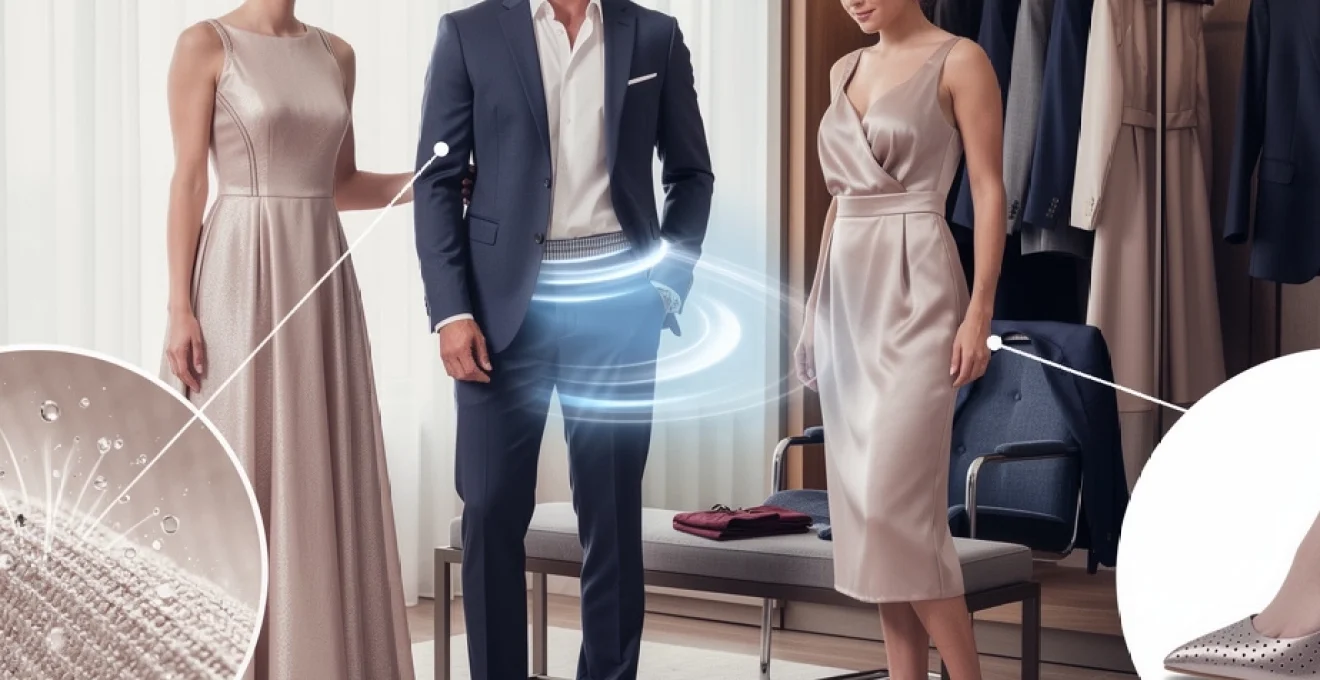
The modern approach to special occasion dressing has undergone a revolutionary transformation, moving beyond the traditional notion that elegance requires enduring discomfort. Today’s discerning individuals recognise that true sophistication lies in achieving both impeccable style and all-day wearability. This evolution reflects a deeper understanding of how advanced textile technologies, innovative construction techniques, and ergonomic design principles can work together to create garments that perform beautifully throughout extended events.
Contemporary formalwear has embraced the principle that comfort enhances confidence, allowing wearers to focus on the occasion itself rather than adjusting uncomfortable clothing. The integration of technical innovations traditionally reserved for athletic wear into luxury formal garments represents a significant advancement in the fashion industry. From moisture-wicking fabrics to strategically placed stretch panels, these developments ensure that special occasion attire supports natural movement whilst maintaining its elegant appearance.
The challenge of balancing aesthetic appeal with practical functionality has driven remarkable innovations across every aspect of formal garment construction. Modern designers understand that the most memorable occasions often involve extended periods of standing, socialising, and movement, requiring clothing that adapts seamlessly to these demands. This comprehensive approach to comfort-focused formal dressing addresses everything from fabric selection to undergarment technology, creating a holistic system that supports confident, comfortable elegance.
Technical fabric selection for special occasion comfort
The foundation of comfortable formal wear begins with intelligent fabric selection, where cutting-edge textile technologies meet luxury aesthetics. Modern technical fabrics have revolutionised the formal wear landscape, offering properties that were once considered impossible to achieve in elegant garments. These innovations allow designers to create pieces that look traditionally luxurious whilst incorporating performance features that enhance wearability throughout extended events.
Moisture-wicking performance textiles for extended wear
Advanced moisture-wicking technologies have transformed how formal fabrics manage perspiration and temperature regulation. Contemporary moisture-wicking textiles utilise engineered fibre structures that draw moisture away from the skin through capillary action, transporting it to the fabric’s outer surface where it can evaporate quickly. This process maintains skin dryness and prevents the uncomfortable sensation of fabric clinging to the body during warm reception halls or outdoor ceremonies.
The latest generation of moisture-wicking formal fabrics incorporates micro-encapsulated cooling agents that activate when body temperature rises. These textiles often feature a dual-layer construction, with an inner surface designed for moisture management and an outer layer that maintains the fabric’s formal appearance. Premium silk blends now incorporate synthetic moisture-wicking fibres that preserve the natural elegance of silk whilst adding performance functionality that keeps wearers comfortable during lengthy celebrations.
Four-way stretch fabric technologies in formal wear
Four-way stretch technology represents a significant advancement in formal fabric engineering, providing flexibility in both horizontal and vertical directions. This technology utilises specialised yarn constructions and weaving techniques that allow fabrics to stretch up to 15-20% in all directions whilst maintaining their original shape and appearance. The integration of elastane or spandex fibres creates this stretch capability without compromising the fabric’s formal aesthetic or drape characteristics.
Modern four-way stretch formal fabrics often incorporate memory properties that enable garments to return to their original shape after stretching. This technology proves particularly valuable in fitted formal wear such as tailored jackets, form-fitting dresses, and structured trousers. The stretch capability allows for natural movement during activities such as dancing, reaching, or prolonged sitting, whilst the memory function ensures that garments maintain their crisp appearance throughout the event.
Breathable weave structures in luxury garments
Innovative weave structures have revolutionised air circulation in formal fabrics, creating luxury textiles that allow optimal airflow whilst maintaining their elegant appearance. Advanced weaving technologies create micro-perforations and open structures that facilitate air movement without compromising the fabric’s opacity or formal aesthetic. These breathable weaves often utilise varying yarn tensions and density patterns to create zones of enhanced ventilation in areas where heat accumulation typically occurs.
Contemporary breathable luxury fabrics frequently incorporate natural fibres such as merino wool, linen, and bamboo, which possess inherent moisture-wicking and temperature-regulating properties. The integration of these natural fibres
continues to enhance the overall comfort profile, particularly in climates where temperature and humidity fluctuate throughout an event.
For warm-weather weddings or crowded indoor receptions, look for garments described as having an « open weave, » « cool wool, » or « aerated crepe. » These breathable weave structures permit heat to dissipate from the body rather than trapping it beneath the fabric. In practice, this means less overheating under stage lights, during speeches, or on a busy dance floor, whilst the garment still appears refined and polished in photographs and in person.
Anti-wrinkle treatment applications for travel-friendly formalwear
Anti-wrinkle technologies are particularly valuable when special occasions involve travel, whether by car, train, or plane. Modern anti-crease finishes use resin-based or cross-linking treatments that help fibres spring back to their original configuration after compression. Unlike older, stiff finishes, current-generation treatments are designed to preserve the drape, softness, and lustre of luxury fabrics while significantly reducing visible creasing across high-movement areas.
For the wearer, the benefits are clear: garments emerge from a suitcase or garment bag looking presentation-ready, with minimal need for steaming or pressing. This is especially important for destination weddings, business award ceremonies abroad, or events that require quick changes between travel and attendance. Choosing formalwear labelled as « wrinkle-resistant, » « easy-care, » or « travel suiting » can help ensure that you remain polished from arrival to the final toast without feeling constrained by heavy, over-stabilised cloth.
Strategic garment construction techniques for all-day wearability
Beyond fabric choice, the way a garment is constructed plays a critical role in how it feels over the course of a long event. Tailoring that appears sculpted yet permits natural movement relies on deliberate pattern cutting, ergonomic seam placement, and supportive internal structures. When these elements are thoughtfully engineered, you experience the look of traditional formalwear with the ease of your most comfortable everyday clothing.
Construction details can be subtle and often go unnoticed at first glance, but you will feel the difference after several hours of standing, sitting, and socialising. Features such as contour seaming, integrated stretch panels, and adjustable closure systems allow the garment to adapt to your body, rather than requiring you to adjust to the garment. In effect, the piece works with you throughout the event, maintaining both comfort and a refined silhouette.
Ergonomic seam placement in tailored silhouettes
Ergonomic seam placement refers to positioning seams where they align with the body’s natural lines of movement and areas of lower friction. In tailored jackets, for example, forward-rotated shoulder seams and curved side panels allow greater range of motion through the arms and upper back. This means you can raise a glass for a toast, dance, or reach across a table without feeling the fabric pull uncomfortably across your shoulders.
Similarly, in formal dresses and occasion jumpsuits, princess seams and contoured panels can create shaping without relying solely on restrictive darts or tight waistlines. When seams follow the body’s anatomy, pressure is distributed more evenly, minimising hotspots and chafing. As you evaluate formal garments for comfort, paying attention to seam lines—particularly around the underarm, waist, and inner thigh—can provide important clues about how wearable the piece will be over many hours.
Graduated compression integration in formal hosiery
Graduated compression technology, long used in medical and athletic contexts, now appears in formal hosiery designed for extended wear. These garments apply the greatest pressure at the ankle, gradually decreasing up the leg to support circulation and reduce swelling. For events that involve prolonged standing or dancing, such as evening receptions or awards ceremonies, this can significantly improve leg comfort and reduce fatigue.
Modern compression hosiery is available in sheer, matte, and semi-opaque finishes that blend seamlessly with traditional formalwear. Many premium options feature flat seams, reinforced toes, and moisture-wicking yarns, ensuring that the tights or stockings feel as considered as the dress or suit itself. If you anticipate hours on your feet, integrating graduated compression hosiery into your formal outfit can be a discreet yet transformative comfort upgrade.
Hidden elastic waistband technologies in dress trousers
Hidden elastic waistbands have evolved far beyond the obvious gathered styles associated with casual wear. Contemporary tailoring incorporates stretch panels within the waistband itself, often concealed beneath belt loops or facing fabrics, to allow subtle expansion and contraction as you move or sit. This means your dress trousers or formal skirts can adapt to changes in posture, meal timing, and natural body fluctuations without leaving marks on the skin or creating visible gaping.
Some designs utilise « comfort waist » technologies that provide several centimetres of temporary give, particularly useful during multi-course dinners or long ceremonies followed by receptions. Because the stretch elements are integrated behind the outer waistband, the garment maintains a clean line when viewed from the outside. When trying on formal trousers, test the waistband by sitting and bending—if the waistband moves with you rather than digging in, you are likely experiencing this hidden comfort engineering.
Reinforced stress point engineering in structured bodices
Structured bodices, whether in evening gowns, cocktail dresses, or tailored jumpsuits, traditionally rely on boning and firm linings to maintain shape. Modern engineering, however, reinforces stress points—such as the underbust, side seams, and zip insertion areas—using flexible interfacings, stabiliser tapes, and stretch mesh. This approach spreads tension across a wider area, reducing the likelihood of pinching, strap slippage, or pressure at a single point.
By combining strategic reinforcement with small amounts of stretch, designers can create bodices that hold their line while allowing you to breathe deeply, sit comfortably, and move naturally. Think of it as the difference between a rigid corset and a well-designed sports bra under a tailored shell: the latter supports without restricting. When you try on a structured dress, notice whether you can comfortably raise your arms and take a full breath—well-engineered stress points should make this feel natural.
Adjustable closure systems for dynamic fit customisation
Adjustable closure systems, such as multi-position hook-and-eye bands, lacing panels, and concealed elastic inserts, give you the power to fine-tune fit as the day progresses. These technologies are particularly valuable for long events that transition from seated ceremonies to active dance floors. Instead of choosing between « perfect at 3 p.m. » and « comfortable at midnight, » you can make micro-adjustments throughout the occasion.
Examples include waist tabs on tailored jackets, removable or repositionable straps on evening gowns, and side lacing that can be discreetly loosened. Invisible zips paired with internal modesty hooks offer additional security, ensuring garments stay in place even if you ease the fit slightly. If you value both precision tailoring and adaptable comfort, look for formalwear that highlights « adjustable fit » or « multi-way » construction as a design feature.
Footwear engineering solutions for extended event attendance
Footwear often determines how enjoyable an event feels by the end of the night. Even the most technically advanced dress or suit cannot compensate for shoes that cause pain after an hour of standing. Fortunately, formal footwear has benefited from the same performance-driven innovations seen in athletic shoes, integrating cushioning, support, and breathable materials into designs that still look appropriate for black-tie and special occasions.
By seeking out dress shoes with engineered insoles, structured arch support, and thoughtful upper construction, you can significantly extend your comfortable wear time. The aim is not to abandon elegant silhouettes but to choose versions that have been refined from the inside out. When you understand the underlying technologies, you can make informed choices that align with both your aesthetic preferences and your comfort priorities.
Memory foam insole technology in formal shoes
Memory foam insoles, once associated mainly with trainers and casual footwear, now appear in many formal shoe designs. This viscoelastic material responds to body heat and pressure, moulding to the unique contours of your foot and distributing weight more evenly across the sole. The result is reduced pressure on high-impact areas such as the ball of the foot and heel, which are often responsible for discomfort during long events.
In formal heels, loafers, and dress sandals, memory foam is frequently layered with firmer support materials to balance cushioning with stability. Too much softness can lead to fatigue, so the most effective designs combine a memory foam top layer with a supportive midsole. When evaluating special occasion footwear, press your thumb into the insole—if it slowly rebounds rather than springing back immediately, you are likely feeling memory foam technology at work.
Arch support integration in designer heels
Integrated arch support addresses one of the most common sources of discomfort in formal shoes: the collapse of the arch under prolonged load. High-quality heels and dress shoes now incorporate contoured footbeds that follow the natural curve of the foot, helping to maintain alignment and reduce strain on the plantar fascia and lower back. This is especially important for events where you may stand or walk for several hours.
Some designer brands collaborate with podiatrists or biomechanical experts to refine their arch profiles, blending medical insight with fashion-led design. Whilst the exterior may appear identical to traditional stilettos or pumps, the internal architecture provides a markedly different experience. If you often remove your shoes halfway through an event, upgrading to styles with documented arch support can be a game-changer, allowing you to remain engaged and mobile without distraction.
Gel cushioning systems for standing receptions
Gel cushioning systems are particularly effective for standing receptions, networking events, and cocktail parties where you spend significant time in one place. These systems use silicone or polymer gel pads positioned strategically under the ball of the foot, heel, or both. The gel behaves somewhat like a fluid and a solid simultaneously, absorbing shock and redistributing pressure across a wider surface area.
Some formal shoes integrate gel pads directly into the insole, while others are designed to accommodate removable gel inserts without altering the fit. If you already own favourite occasion shoes that lack modern cushioning, aftermarket gel insoles can extend their comfortable life. Think of gel cushioning as adding a discreet shock absorber to each step, softening the impact of hard floors in banquet halls, galleries, or historic venues with stone surfaces.
Breathable lining materials in closed-toe formal footwear
Closed-toe formal footwear, while often the most appropriate choice for black-tie or colder seasons, can trap heat and moisture without properly engineered linings. Contemporary designs address this by using breathable, moisture-wicking materials such as perforated leather, technical mesh, or microfibre linings that draw perspiration away from the skin. This reduces the risk of blisters, odour, and general discomfort during extended wear.
Some performance-focused dress shoes also feature ventilation channels within the sole or small, discreet perforations in non-visible areas of the upper. These details allow warm air to escape and cooler air to circulate, much like the breathable weave structures in luxury garments. When selecting special occasion footwear, check product descriptions for terms like « breathable lining, » « climate control, » or « moisture-wicking interior » to ensure that comfort is considered as carefully as appearance.
Layering systems for temperature regulation at special events
Temperature regulation is one of the most overlooked aspects of dressing for special occasions, yet it profoundly affects comfort. Events often span multiple environments—outdoor ceremonies, air-conditioned ballrooms, crowded dance floors—each with different thermal demands. A strategic layering system allows you to adapt seamlessly, preventing both overheating and chills without compromising the formality of your look.
Effective special occasion layering begins with a breathable, moisture-managing base, followed by an insulating yet lightweight mid-layer if needed, and a polished outer layer appropriate for the event’s dress code. The goal is to create a modular approach: you can remove or add layers as conditions change, whilst each element still looks intentional if worn on its own. Ask yourself: could you comfortably be photographed in any single layer? If the answer is yes, your layering system is likely both functional and visually cohesive.
For example, under a tuxedo or tailored suit, a fine-gauge merino or technical base layer can provide warmth without bulk, particularly valuable for winter weddings or evening galas. Over dresses, consider elegant wraps, shrugs, or tailored blazers cut from breathable but insulating fabrics like wool crepe or cashmere blends. Choosing outer layers with smooth linings ensures they glide over your primary garment, preventing friction and preserving the drape of the dress or suit beneath.
Accessories can also play a significant role in temperature control. Silk scarves, lightweight shawls, and even evening gloves add a layer of warmth while reinforcing the formal aesthetic. In warmer climates, the emphasis shifts to sun protection and airflow: lightweight, unlined jackets, sheer overlays, and open-weave wraps allow coverage without trapping heat. By planning your layering system with the same attention you give to your main garment, you create a versatile, comfort-focused ensemble ready for any microclimate an event presents.
Undergarment technology for seamless comfort in formal attire
Undergarments form the hidden infrastructure of special occasion dressing, directly influencing both comfort and the final silhouette. The right foundation pieces can smooth lines, provide targeted support, and reduce friction, allowing your dress or suit to perform as intended. Modern undergarment technology borrows from sportswear, lingerie design, and medical textiles to deliver support that feels almost invisible in wear.
One of the most important developments is the use of high-performance, four-way stretch fabrics in shapewear and base layers. These materials offer compression where needed, yet remain breathable and flexible, avoiding the rigid, restrictive feel associated with older control garments. Seamless knitting technologies further enhance comfort, creating tubular garments with minimal or no side seams, which means fewer potential pressure points under close-fitting occasion wear.
Supportive undergarments are now engineered with zoned compression, providing structured support at the bust, waist, or hips while leaving other areas with lighter shaping or simple coverage. This zoning allows you to maintain natural movement and comfortable breathing, crucial for events involving speeches, dancing, or extended dining. It also helps avoid the « armour-like » sensation that can accompany traditional shapewear, replacing it with a more refined, second-skin feel.
Bra technology has also advanced significantly, with multiway and convertible designs that support a wide range of necklines and back details. Innovations such as wide, cushioned straps, flexible underwires, and bonded rather than stitched edges reduce digging and visible lines. For backless or low-back gowns, engineered adhesive bras and bodysuits use medical-grade, breathable adhesives designed for all-day wear, providing lift and shaping without visible hardware. As with any technical product, testing for comfort at home before the event is essential.
Finally, anti-chafing solutions and performance hosiery round out the comfort toolkit for formal dressing. Lightweight, moisture-wicking shorts or bands worn under dresses can prevent thigh chafing during warm-weather events or active celebrations. In addition, hosiery made with cool-touch yarns, flat seams, and reinforced yet flexible waistbands offers both a refined appearance and practical comfort. By viewing undergarments as integral components of your special occasion outfit rather than afterthoughts, you create a cohesive, engineered system that supports you—literally and figuratively—from the first photograph to the last dance.