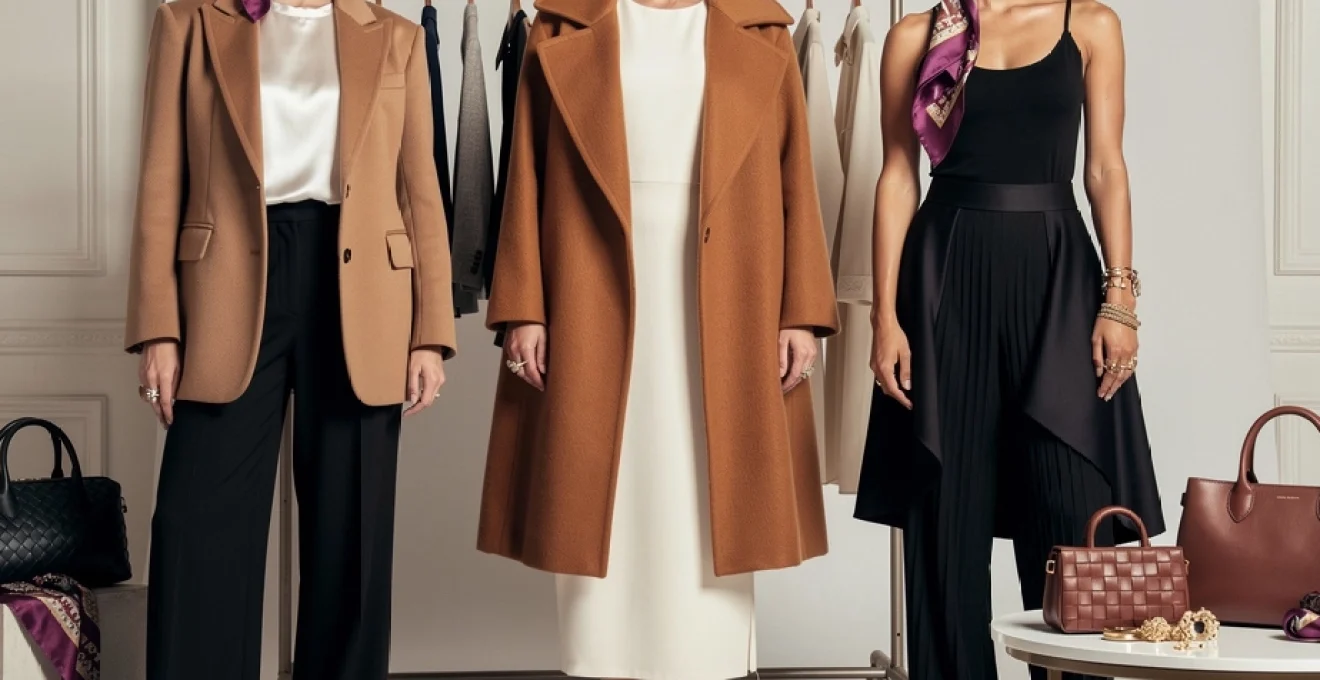
The art of transforming a minimalist wardrobe lies not in acquiring countless pieces, but in carefully selecting a few extraordinary items that fundamentally shift the aesthetic landscape of your closet. Statement pieces serve as the architectural elements that elevate basic foundations into sophisticated, memorable ensembles. These investments transcend seasonal trends, creating a wardrobe philosophy that balances restraint with impact.
Modern luxury consumption has evolved beyond conspicuous display towards intelligent curation. The contemporary approach to statement dressing emphasises quality craftsmanship, innovative design, and timeless appeal over fleeting fashion moments. This shift reflects a deeper understanding of how individual pieces can multiply styling possibilities whilst maintaining the clean lines and functional elegance that define capsule wardrobes.
The strategic integration of carefully chosen statement pieces transforms the relationship between wearer and wardrobe. Rather than relying on volume to create variety, this approach leverages the transformative power of exceptional design, superior materials, and architectural silhouettes. The result is a collection that feels both considered and effortless, sophisticated yet approachable.
Investment piece selection strategies for capsule wardrobe transformation
The foundation of successful statement piece acquisition rests on understanding the fundamental difference between purchasing and investing. Investment pieces demonstrate exceptional longevity across multiple dimensions: physical durability, aesthetic relevance, and styling versatility. These garments typically feature construction techniques that ensure decades of wear, materials that improve with age, and designs that transcend temporal fashion cycles.
Successful investment strategies begin with comprehensive lifestyle analysis. Consider the occasions that comprise your regular schedule, the climate demands of your location, and the aesthetic preferences that have remained consistent over time. This analysis prevents the acquisition of beautiful but impractical pieces that ultimately contribute to wardrobe dysfunction rather than enhancement.
Quality fabric analysis: wool, cashmere, and silk investment guidelines
Premium natural fibres represent the cornerstone of investment dressing, offering unparalleled performance characteristics that synthetic alternatives cannot replicate. Wool’s inherent properties include natural temperature regulation, odour resistance, and remarkable resilience to wrinkles. The finest investment-grade wool originates from specific regions known for exceptional fleece quality, with Super 120s to Super 150s providing the optimal balance between luxury feel and practical durability.
Cashmere evaluation requires understanding the relationship between origin, processing, and final product quality. Mongolian cashmere typically offers superior softness and durability compared to alternatives, whilst the number of plies significantly affects longevity. Two-ply cashmere provides exceptional strength without sacrificing the characteristic lightweight warmth that makes this fibre so desirable for statement knitwear pieces.
Silk investment focuses on weight, weave, and origin characteristics. Mulberry silk represents the gold standard, offering exceptional strength and lustrous appearance. The momme weight measurement indicates density and durability, with 16-25 momme providing ideal characteristics for investment blouses and dresses. Understanding these technical specifications enables informed decisions that justify the premium pricing associated with luxury statement pieces.
Cost-per-wear calculations for High-Impact garments
The mathematics of investment dressing reveals why premium statement pieces often represent superior value compared to frequent purchases of lower-quality alternatives. Cost-per-wear calculations illuminate the true expense of ownership by dividing the initial purchase price by the anticipated number of wearing occasions over the item’s lifespan.
A £800 statement coat worn twice monthly for five years accumulates 120 wearing occasions, resulting in a cost-per-wear of approximately £6.67. This figure compares favourably to purchasing multiple seasonal coats at £150 each that require replacement every two years. The calculation becomes even more compelling when factoring in the superior construction, materials, and aesthetic satisfaction provided by investment pieces.
Beyond pure financial considerations, cost-per-wear analysis must include intangible benefits such as confidence enhancement, styling versatility, and the satisfaction derived from owning exceptional craftsmanship. These psychological and practical dividends significantly increase the value proposition of carefully selected statement pieces within a curated wardrobe context.
Seasonal versatility metrics in statement piece acquisition
Effective statement pieces demonstrate remarkable adaptability across seasonal variations through thoughtful design and material selection. This versatility multiplies
their impact on a capsule wardrobe, allowing a single garment to perform across multiple contexts. When assessing seasonal versatility, consider three core metrics: compatibility with layered styling, fabric weight adaptability, and colour relevance across your primary wardrobe palette. A mid-weight wool coat in a neutral camel tone, for example, can layer over fine-gauge knitwear in winter yet remain appropriate over a silk dress on cool spring evenings, dramatically increasing its cost-per-wear.
Trans-seasonal fabrics such as merino wool, tightly woven cotton, silk twill, and technical blends with breathable membranes offer the most flexibility. Construction details also influence versatility: removable linings, bracelet-length sleeves that welcome gloves or stacked bracelets, and generous armholes that accommodate blazers beneath all extend the wearing window. When you evaluate a potential statement piece, ask yourself whether it can function in at least two seasons and be styled in three distinct ways; if the answer is yes, it is far more likely to become a wardrobe cornerstone rather than a single-season indulgence.
Brand heritage assessment: hermès, chanel, and contemporary alternatives
Heritage brands play a significant role in statement dressing because their designs often become cultural touchpoints as well as wardrobe investments. Houses such as Hermès and Chanel have cultivated decades-long reputations for exceptional leatherwork, meticulous tailoring, and rigorous quality control. A classic Hermès silk carré or Chanel tweed jacket carries with it not only superior craftsmanship but also an embedded design language that rarely feels outdated, even as trends shift around it.
However, heritage logos alone do not guarantee value. Contemporary labels with strong design integrity and transparent production practices can deliver comparable impact at more accessible price points. Brands such as Totême, The Row, and Khaite demonstrate how modern minimalism can coexist with architectural silhouettes and premium fabrication, while mid-range designers and selected high-street collaborations increasingly offer refined reinterpretations of luxury tropes. The key is to evaluate brand heritage through three lenses: consistency of quality, coherence of aesthetic vision, and proven longevity of signature pieces in real wardrobes over time.
For many wardrobes, an optimal strategy involves blending one or two iconic heritage investments with a considered edit of contemporary alternatives. A vintage Hermès scarf, for instance, can coexist with a Polène handbag and a Totême coat, creating a layered narrative of old and new luxury. This hybrid approach allows you to harness the status and resale stability of heritage houses while supporting innovative designers whose silhouettes and proportions may feel more aligned with current lifestyles and body diversity.
Architectural silhouettes that elevate minimalist foundations
Once the fabric and brand foundations are in place, silhouette becomes the defining tool for transforming a minimalist wardrobe into something visually compelling. Architectural silhouettes function much like sculptural furniture in a pared-back interior: they introduce tension, volume, and movement without overwhelming the overall calm. In the context of capsule dressing, one sharply designed blazer, an impeccably cut coat, or a pair of precision-pleated trousers can recast the simplest T-shirt-and-denim combination into an intentional, editorial-level look.
These structural pieces work best when they are grounded in neutral colour palettes and high-quality fabrics, allowing their shape to take centre stage. The objective is not to add complexity for its own sake, but to use proportion, volume, and line to draw the eye in specific ways. By understanding how different silhouettes interact with your body and your existing basics, you can create a small repertoire of high-impact outfits that feel distinctive yet endlessly repeatable.
Oversized blazer construction: armani and totême design principles
The oversized blazer has become a defining statement piece for modern minimalist wardrobes, and its effectiveness lies in precise construction rather than mere size. Pioneers such as Giorgio Armani redefined tailoring in the 1980s by softening traditional structure, introducing fluid canvassing, and allowing the jacket to skim rather than constrict the body. Contemporary labels like Totême have evolved this language with sharp shoulders, elongated lines, and minimalist detailing that maintains structure while preserving ease.
When selecting an oversized blazer, examine the internal architecture as carefully as the external silhouette. High armholes, subtle shoulder padding, and a balanced lapel width help ensure that increased volume reads as intentional rather than sloppy. The blazer should fall cleanly from the shoulder, creating a vertical line that elongates the body even as it introduces width. A slightly longer length that grazes the mid-thigh often offers the most versatility, pairing equally well with straight-leg denim, tailored trousers, and mid-length dresses.
Fit adjustments by a skilled tailor can transform a good blazer into a truly exceptional one. Shortening sleeves to reveal the wrist bone, narrowing the waist just enough to suggest shape without compromising the relaxed cut, or refining button placement can all dramatically enhance the garment’s presence. Worn over a ribbed tank and jeans, or layered over a slip dress, a well-constructed oversized blazer instantly communicates a refined, directional sensibility within a capsule wardrobe framework.
Sculptural coat designs: max mara icon coat analysis
If one garment encapsulates the power of sculptural outerwear, it is the Max Mara Icon coat. Frequently cited as the benchmark for investment coats, its enduring appeal lies in a combination of fabric excellence, architectural cut, and restrained detailing. Crafted predominantly in cashmere or cashmere-wool blends, the coat’s double-faced construction allows for clean, unlined interiors and fluid drape, while still retaining enough structure to hold its cocoon-like shape.
The Icon coat’s slightly dropped shoulders, generous yet controlled volume, and wrap-belt closure create a silhouette that flatters multiple body types and accommodates layered knitwear without feeling bulky. Its knee-to-mid-calf length offers optimal versatility, working harmoniously with tailored trousers, midi skirts, and denim alike. Importantly for capsule wardrobes, the coat’s minimal hardware and classic colour offerings—camel, navy, black—ensure that it does not visually compete with other statement pieces, even as it anchors an outfit.
For those seeking similar sculptural impact at different price points, focus on three design cues: a strong yet softened shoulder line, a belt or closure that allows you to adjust volume, and a hem length that feels proportionate to your height. Whether you opt for Max Mara itself or a contemporary alternative, a sculptural coat worn over otherwise simple separates has the power to redefine your winter wardrobe for a decade or more.
Structured trouser innovations: wide-leg and pleated variations
Structured trousers have quietly become one of the most effective statement tools within minimalist wardrobes, particularly in wide-leg and pleated iterations. Unlike traditional skinny or slim cuts, these silhouettes introduce architectural volume from the waist down, creating a sense of movement and elongation that can make even a basic vest or T-shirt feel deliberate. The key is precision at the waist and hips, allowing the fabric to fall cleanly from the highest point without clinging or collapsing.
High-waisted, double-pleated trousers in wool twill or heavy crepe exemplify this effect. The pleats act as soft architectural lines, guiding the eye vertically and providing ease through the hip while maintaining a sharp front crease. When paired with a tucked-in knit or a cropped jacket, they create a long-leg proportion that flatters a wide range of figures. Wide-leg trousers in fluid fabrics such as heavy silk or technical blends offer a different kind of drama, swaying with each step and turning everyday movement into a subtle performance.
To integrate these structured trousers into a capsule wardrobe, consider a restrained palette—black, charcoal, navy, or stone—so that their shape, rather than colour, delivers the statement. Pay close attention to hem length: the fabric should either just skim the top of a polished trainer or graze the vamp of a heeled boot, depending on your preferred footwear foundation. Once properly tailored, a single pair of wide-leg or pleated trousers can anchor countless combinations of basics, providing a reliable shortcut to elevated dressing.
Asymmetrical dress cuts: issey miyake and comme des garçons influences
Asymmetry offers one of the most efficient ways to introduce avant-garde energy into an otherwise simple wardrobe. Designers such as Issey Miyake and Comme des Garçons have long explored irregular hemlines, unexpected draping, and off-centre seams as tools for reimagining the relationship between fabric and body. Translated into capsule wardrobe terms, an asymmetrical dress can function as both a standalone statement and a versatile layering base.
Look for pieces where the asymmetry is structural rather than solely decorative. An uneven hemline that reveals the ankle on one side, a diagonally draped bodice, or a single sculpted sleeve can all create visual interest without relying on bold prints or colours. In pleated technical fabrics inspired by Miyake’s Pleats Please, these dresses can be rolled for travel yet emerge crease-free, making them ideal for low-maintenance statement dressing. Worn with simple leather sandals in summer or layered over fine-knit polo necks and under long coats in cooler months, they deliver high-impact outfits with minimal effort.
For those wary of committing to more experimental silhouettes, mid-length styles in solid, neutral tones offer an approachable entry point. The eye-catching lines and angles do the work of a print while remaining easy to integrate with existing minimalist accessories. Over time, you may find that this single asymmetrical dress becomes the piece you reach for whenever you want to feel distinctive without appearing overdressed—a hallmark of a truly successful statement investment.
Colour psychology and tonal sophistication in statement dressing
While silhouette and fabric provide the structural framework of a statement wardrobe, colour controls its emotional temperature. Understanding colour psychology allows you to deploy statement pieces strategically, aligning your visual presence with the message you wish to convey. Deep navy and charcoal project authority and composure, making them ideal for investment blazers and coats, whereas rich jewel tones such as emerald, sapphire, or burgundy introduce controlled drama without sacrificing elegance.
In the context of a minimalist wardrobe, tonal sophistication often arises from subtle variations within a narrow palette rather than from high-contrast combinations. A head-to-toe ensemble in layered camel, for example, can feel as impactful as a brightly coloured outfit, thanks to the interplay of shades and textures. This approach also increases mix-and-match potential: by anchoring your wardrobe in two or three core neutrals and introducing one or two accent tones that complement your complexion, you create a cohesive ecosystem where each statement piece naturally harmonises with your basics.
Strategic use of colour can also transform how often you wear a statement garment. A red coat, while beautiful, may feel too distinctive for frequent rotation in a small wardrobe, leading to self-consciousness about repetition. By contrast, a deep rust or oxblood may deliver similar warmth and personality while remaining easier to circulate through weekly outfits. When evaluating a colourful statement piece, ask whether it flatters your skin tone in multiple lighting conditions, sits comfortably within your existing palette, and feels appropriate for both day and evening contexts; if it satisfies these criteria, it is likely to transcend novelty and become a truly versatile asset.
Texture layering techniques for visual interest creation
Texture represents a powerful yet often underutilised dimension of minimalist statement dressing. In a wardrobe dominated by clean lines and solid colours, the introduction of contrasting surfaces—matte and gloss, smooth and nubby, crisp and fluid—can generate depth and sophistication without resorting to prints or embellishment. Think of texture as the wardrobe equivalent of lighting in interior design: largely invisible when handled well, yet transformative in shaping how we experience a space or an outfit.
Effective texture layering begins with identifying the dominant fabric characteristics in your existing basics. If your capsule relies heavily on cotton and smooth wool, for instance, integrating a handful of textured statement pieces—bouclé jackets, boiled wool coats, suede boots, or ribbed cashmere knits—will create instant visual interest. The key is contrast: pairing a sleek silk slip dress with an oversized fisherman-knit cardigan, or grounding a crisp poplin shirt with brushed flannel trousers, ensures that each material enhances the other rather than competing for attention.
In practical terms, adopting a simple hierarchy can guide your layering decisions. Place the smoothest, lightest fabrics closest to the body for comfort, then build outward with increasingly textured pieces. This approach not only feels pleasant to wear but also ensures that the most tactile, sculptural garments remain visible rather than buried. When you next assemble an outfit, consider whether you can vary at least two of the following elements—sheen, weight, and weave. Over time, you will find that even a monochrome look can feel richly dimensional, reinforcing the power of thoughtful statement pieces in a simple wardrobe.
Accessories as wardrobe transformation catalysts
Accessories offer perhaps the most accessible route to introducing statement energy into a minimalist wardrobe without compromising its streamlined functionality. Because they sit at the periphery of the outfit rather than forming its structural core, they can be rotated frequently and scaled up or down according to context. A sculptural earring, directional handbag, or graphic silk scarf has the power to transform a familiar jeans-and-shirt combination into something noteworthy, often at a lower cost-per-wear than more substantial garments.
For capsule wardrobes, the most effective accessory strategy combines one or two high-impact investment pieces with a small rotation of versatile, mid-range options. This balance allows you to enjoy the satisfaction and longevity of exceptional craftsmanship while experimenting with seasonal trends in a controlled way. The objective is not to accumulate volume, but to identify a concise selection of accessories that consistently make your simplest outfits feel complete.
Investment handbag selection: bottega veneta and polène portfolio building
Handbags occupy a unique position within statement dressing because they are both highly visible and intensely functional. Brands such as Bottega Veneta have built their reputations on quiet, logo-free luxury, relying on distinctive weaving techniques, sculptural shapes, and supple leathers rather than overt branding. The now-iconic Pouch and Cassette styles demonstrate how an exaggerated silhouette or texture can become instantly recognisable while still aligning with minimalist aesthetics.
At a more accessible price point, Parisian label Polène offers a compelling case study in contemporary investment design. Its structured yet organic forms, such as the Numéro Un and Numéro Neuf, feature architectural lines that complement streamlined wardrobes without overwhelming them. The brand’s focus on neutral palettes and subtle hardware ensures high integration with capsule collections, while its pricing makes building a small portfolio of bags for different use-cases—work, weekend, evening—more attainable.
When curating your own investment handbag selection, prioritise three criteria: proportion relative to your frame, capacity aligned with your daily needs, and aesthetic synergy with your existing coats and shoes. A single medium-sized leather tote in a neutral shade, a compact crossbody for hands-free days, and a structured evening bag or clutch can collectively cover the majority of lifestyle scenarios. By choosing designs with distinctive yet understated signatures, you ensure that these pieces add character to simple outfits for years rather than seasons.
Statement jewellery integration: mejuri and monica vinader stacking methods
Statement jewellery has evolved from occasional event-wear into an everyday dressing tool, particularly as brands like Mejuri and Monica Vinader have popularised fine yet accessible pieces designed for stacking and layering. Rather than relying on one dramatic necklace or oversized cuff, the modern approach involves building a curated set of delicate chains, rings, and bracelets that can be combined in multiple configurations. This modularity delivers a subtle form of statement dressing that feels appropriate for both office environments and informal settings.
Stacking methods hinge on variation and repetition. Mixing different chain weights around a shared metal tone, for instance, creates visual interest without appearing chaotic. A slim signet ring paired with two fine bands and one gemstone piece can transform an otherwise bare hand into a focal point, especially when contrasted against minimalist clothing. Brands such as Mejuri offer cohesive collections specifically designed to be worn together, while Monica Vinader’s customisable charms and engraved pieces allow you to introduce a personal narrative into your jewellery edit.
For capsule wardrobes, a considered jewellery capsule might include a pair of everyday hoops, a set of fine stacking rings, one statement ring or cuff, and two or three necklaces of varying lengths. By keeping metals consistent and avoiding overly intricate motifs, you ensure that these pieces integrate seamlessly with both sharp tailoring and casual knitwear. Over time, this daily repetition becomes part of your visual identity, reinforcing the sense that even your simplest outfits are intentionally composed.
Footwear foundation: gianvito rossi and common projects styling applications
Footwear anchors the silhouette and often determines whether an outfit reads as casual, professional, or evening-ready. Designers such as Gianvito Rossi specialise in refined heels and boots that elongate the leg through precise pitch and minimal detailing, while brands like Common Projects have elevated the low-profile trainer into a modern classic. Both approaches are invaluable for minimalist wardrobes, as they offer clean lines and premium materials that complement rather than compete with statement garments.
A pair of Gianvito Rossi pointed-toe pumps in black or nude suede, for example, can instantly formalise wide-leg trousers or an architectural midi dress without drawing attention away from the garment’s cut. Conversely, the Original Achilles sneaker by Common Projects delivers a sleek, unbranded profile that pairs as naturally with tailored coats and pleated skirts as it does with denim. The shared thread is restraint: subtle branding, harmonious proportions, and a focus on silhouette over embellishment.
Building a footwear foundation for a simple yet elevated wardrobe typically requires no more than three or four key pairs: a polished trainer, a low-to-mid heel pump or sandal, an ankle boot, and optionally a flat loafer or ballet. Within this concise selection, investing in quality pays disproportionate dividends, as shoes endure significant wear and act as the visual punctuation mark of each look. By aligning heel height and toe shape across your core pairs, you also simplify alterations and ensure that trouser hems and skirt lengths work harmoniously with multiple footwear options.
Scarf styling methodologies: hermès twilly and square silk arrangements
Silk scarves offer one of the most cost-effective ways to introduce iconic design into a capsule wardrobe, and Hermès remains the benchmark for both print sophistication and fabric quality. While the classic 90cm carré is the most recognisable format, the slimmer Twilly has emerged as a particularly versatile tool for subtle statement dressing. Worn as a necktie, wrapped around a ponytail, threaded through belt loops, or tied around a handbag handle, it injects colour and pattern into outfits without overwhelming minimalist lines.
Mastering a handful of scarf arrangements can dramatically increase the styling possibilities of even a single piece. A square silk scarf folded into a long rectangle and knotted at the throat brings Old World polish to a simple white shirt, while a loose, bias-folded wrap around the shoulders softens the sharpness of a tailored blazer. For cooler seasons, layering a silk scarf beneath a wool coat collar adds both warmth and a flash of colour close to the face, drawing attention upwards during conversations.
If Hermès pricing lies beyond your current investment scope, numerous contemporary brands now offer high-quality silk and silk-blend scarves with graphic prints and considered palettes. Whichever route you choose, prioritise designs that incorporate your core wardrobe colours alongside one or two accent tones. This ensures maximum integration and minimises the risk of a beautiful scarf languishing unworn. With practice, you may find that this small square of fabric becomes one of the most frequently deployed statement pieces in your entire minimalist wardrobe.