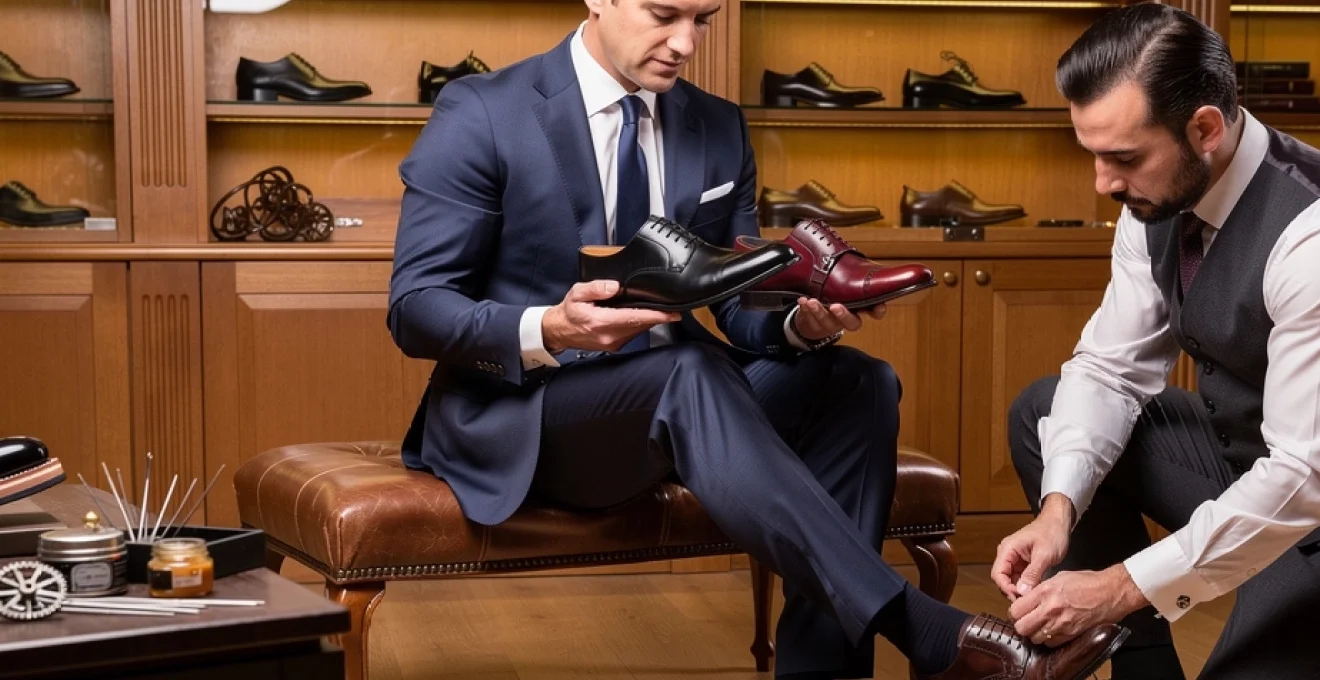
Selecting the right pair of formal shoes is a decision that extends far beyond simple aesthetics. The shoes you wear to a formal occasion communicate volumes about your attention to detail, your understanding of dress codes, and your appreciation for quality craftsmanship. Whether you’re attending a black-tie gala, a business conference, or a wedding ceremony, your footwear serves as the foundation upon which your entire ensemble rests. Yet with countless styles, construction methods, and materials available, navigating the world of formal footwear can feel overwhelming. Understanding the nuances of shoe construction, recognising appropriate styles for different dress codes, and appreciating the qualities that distinguish exceptional footwear from mediocre alternatives will empower you to make informed decisions that elevate your appearance and serve you well for years to come.
Understanding goodyear welt construction and blake stitch manufacturing techniques
The construction method employed in creating a formal shoe fundamentally determines its durability, comfort, and potential longevity. Unlike casual footwear, which often prioritises immediate comfort over long-term investment value, formal shoes are typically built using time-honoured techniques that have proven their worth over centuries. The manner in which the upper leather is attached to the sole creates a shoe’s essential character and establishes its capacity for repair and restoration. Understanding these construction methods allows you to make educated purchasing decisions that align with your expectations for performance and value.
Goodyear welt construction for superior durability and resoling capabilities
Goodyear welt construction represents the gold standard in formal shoe manufacturing, offering unparalleled durability and the ability to resole shoes multiple times throughout their lifetime. This method involves stitching a leather strip—the welt—to both the upper and a rib attached to the insole, then stitching the outsole to the welt. This double-stitched approach creates a robust connection that withstands years of wear whilst allowing cobblers to replace worn soles without compromising the upper leather. The slight cavity created between the insole and outsole provides exceptional comfort as it conforms to your foot shape over time. Shoes constructed using the Goodyear welt method typically require a breaking-in period of several weeks, but once fully moulded to your feet, they offer remarkable comfort that improves with age rather than deteriorates.
Blake stitch method: lighter weight dress shoe architecture
The Blake stitch construction offers a sleeker, more refined silhouette compared to Goodyear welted shoes, making it particularly popular for Italian-style formal footwear. This method involves stitching the sole directly to the upper and insole in a single seam that runs through the interior of the shoe. The result is a lighter, more flexible shoe with minimal break-in time and a closer-to-the-ground feel that many wearers find appealing. Blake stitched shoes tend to be more water-permeable than their Goodyear welted counterparts due to the stitching that penetrates through to the shoe’s interior. Whilst these shoes can be resoled, the process is more complex and typically cannot be repeated as many times as with Goodyear construction. The elegant proportions and immediate comfort of Blake stitched shoes make them ideal for those who prioritise aesthetics and don’t anticipate wearing their formal shoes in challenging weather conditions.
Norwegian welt and veldtschoen construction for weather resistance
Norwegian welt construction features a distinctive visible stitch running along the exterior of the shoe where the welt meets the upper, creating a robust and highly water-resistant structure. This method was originally developed for outdoor footwear but has found applications in certain formal shoe styles, particularly those designed for inclement weather. The welt is stitched to the upper from the outside, creating a raised seam that effectively channels water away from the interior. Veldtschoen construction employs a similar principle, with the upper leather turned outward and stitched to the sole, creating an even more pronounced weather seal. These construction methods sacrifice some aesthetic refinement in favour of practical performance, making them suitable for formal occasions where weather protection takes precedence over absolute elegance. You’ll find these techniques employed in certain country-inspired formal shoes and dress boots designed for outdoor events.
Hand-wel
Hand-welted bespoke techniques from savile row and northampton shoemakers
Hand-welted construction represents the pinnacle of traditional shoemaking and is still practised by elite workshops in Northampton and around Savile Row. Instead of relying on machines, the welt is sewn to the insole by hand using awls and boar bristles, a laborious process that can take several hours per pair. This technique allows the shoemaker to fine-tune the fit, adjust the tension of each stitch, and shape the shoe more precisely to the last, which is particularly valuable in bespoke work where every millimetre matters.
The practical benefit for you, beyond the romance of craftsmanship, is a combination of durability, comfort, and repairability that few other formal shoes can match. Hand-welted shoes can be resoled many times, and the uppers are often cut from the finest full-grain calf or cordovan, chosen specifically for your foot shape and lifestyle. For men who wear formal shoes daily or who have unusual sizing requirements, investing in a hand-welted bespoke pair can be likened to commissioning a tailored suit: the upfront cost is high, but the long-term satisfaction and performance can be exceptional.
Oxford, derby, and monk strap styles: matching silhouettes to dress codes
Once you understand how a formal shoe is built, the next question is: which silhouette is appropriate for a given occasion? Oxford, Derby, and monk strap styles each project a different level of formality, much like the difference between a dinner jacket, a business suit, and a sports coat. By matching the right style to the event, you ensure your formal shoes never look underdressed or overdone. Thinking in terms of dress codes—white-tie, black-tie, business formal, and smart-casual—will help you make confident choices.
Oxford shoes, with their closed lacing and sleek lines, sit at the top of the formality scale and are indispensable for traditional evening wear. Derbies, which feature open lacing, offer a slightly more relaxed appearance that works perfectly for business settings and daytime formal occasions. Monk strap shoes occupy an interesting middle ground, combining formal structure with a contemporary flair that suits modern offices and upscale social events. Let’s explore how each of these silhouettes supports different formal wardrobes.
Whole-cut oxfords and cap-toe oxfords for white-tie and black-tie events
For the most formal occasions—white-tie and black-tie events—a pair of well-made Oxford shoes is effectively non-negotiable. Whole-cut Oxfords, crafted from a single piece of leather with minimal seams, offer the cleanest and most elegant profile available. Their uninterrupted surface pairs beautifully with a tuxedo or tailcoat, creating a streamlined look that does not compete with satin lapels, bow ties, or decorative studs. In a high-shine black calf or patent leather, they become the default choice for modern evening wear.
Cap-toe Oxfords, defined by a stitched piece of leather across the toe box, are marginally less formal but remain entirely appropriate for black-tie optional events, business formal dinners, and conservative office environments. In many wardrobes, a black cap-toe Oxford is the single most versatile formal shoe, working with everything from dark business suits to funeral attire. If you attend only a few very formal events each year, investing in a high-quality cap-toe Oxford in black might be more practical than owning multiple specialised pairs.
Plain-toe derby shoes and wingtip brogues for business formal settings
Derby shoes, with their open lacing system, are slightly less formal than Oxfords but often more comfortable, especially for men with high insteps or wider feet. A plain-toe Derby in black or dark brown calfskin is ideal for business formal dress codes, where you want to project authority without appearing overdressed. The slightly more relaxed silhouette works well with modern, softer-structured suits and can transition seamlessly from the boardroom to a dinner reservation.
Wingtip brogues, with their decorative perforations and W-shaped toe cap, sit at the lower end of the business formal spectrum and move easily into business-casual territory. In darker colours and with moderate broguing, they still look polished enough for most offices while adding visual interest and personality. Think of a wingtip brogue as the equivalent of a patterned tie: still appropriate, but more expressive. If your professional environment leans traditional but not austere, brogues can be an excellent way to introduce subtle character into your formal shoe rotation.
Double monk straps and single monk straps for smart-casual occasions
Monk strap shoes replace laces with one or two buckled straps, creating a distinctive look that sits between classic formality and contemporary style. Single monk straps are typically cleaner and more understated, making them suitable for offices with a relaxed formal dress code or for semi-formal social events. In black or deep brown calfskin with a slim last, they can even stand in for Oxfords with many business suits, especially in creative industries.
Double monk straps, with their twin buckles and slightly more assertive appearance, excel in smart-casual contexts. Paired with tailored trousers, a crisp shirt, and perhaps a blazer, they project confidence and fashion awareness without sliding into ostentation. Because the buckles become a focal point, many men find that double monks can act almost like a piece of jewellery—an intentional accent that says you understand the rules of formal footwear but are comfortable bending them to suit your personal style.
Wholecut derby variations and adelaide oxfords for contemporary formal wear
As formal dress codes evolve, newer hybrids such as wholecut Derbies and Adelaide Oxfords have emerged to bridge the gap between tradition and modernity. A wholecut Derby combines the sleek, seam-free upper of a wholecut Oxford with the more forgiving open lacing of a Derby. The result is a refined yet comfortable formal shoe that pairs well with slim-cut suits and minimalist tailoring. If you appreciate a clean aesthetic but need extra room over the instep, this style can be an excellent solution.
Adelaide Oxfords feature a distinctive U-shaped cut-out around the lacing area, often combined with a subtle cap toe. This design adds visual interest while retaining the closed lacing that keeps the shoe firmly within the formal category. In subtle colours and high-quality calfskin, Adelaide Oxfords feel contemporary yet appropriate in conservative environments. They particularly suit men who want something more distinctive than a plain cap-toe Oxford but still require a shoe that aligns with strict corporate or ceremonial dress codes.
Premium leather selection: Full-Grain calfskin versus patent leather finishes
The type of leather used in your formal shoes has as much impact on their appearance and longevity as the construction method or silhouette. Full-grain calfskin, shell cordovan, patent leather, suede, and nubuck all bring different strengths and limitations. Choosing wisely ensures your shoes not only look correct for the occasion but also age gracefully with regular wear. High-quality leather develops character over time, acquiring a patina that reflects both the craftsmanship behind the shoe and the life you live in it.
When you invest in premium leathers, you are effectively choosing how your shoes will look five or ten years from now, not just on the day you buy them. A pair of full-grain calfskin Oxfords can be resoled and re-polished repeatedly, gradually moulding to your foot and becoming more comfortable with age. Patent leather, by contrast, will always appear much the same—brilliantly glossy but relatively rigid—making it a specialised choice best reserved for evening wear. Understanding the strengths of each material helps you build a formal shoe wardrobe that is both beautiful and practical.
Aniline-dyed calfskin from french and italian tanneries
Full-grain calfskin, particularly when sourced from renowned French and Italian tanneries, is widely considered the benchmark material for high-end formal shoes. Aniline-dyed calfskin is coloured through with transparent dyes that allow the natural grain and slight variations of the leather to remain visible. This creates a rich, nuanced finish that can be polished to a deep shine while still looking organic and sophisticated. Over time, the leather develops a patina that reflects how and where you wear your shoes, similar to the way a fine leather briefcase or watch strap ages.
From a practical standpoint, aniline-dyed calfskin balances durability with suppleness, making it both resilient and comfortable. Because the leather is not heavily corrected or coated, it remains breathable and conformable to the shape of your foot. If you are investing in your first serious pair of formal shoes, a black or dark brown aniline calfskin Oxford or Derby from a reputable maker is almost always the best starting point. You gain both immediate elegance and long-term value, as the leather responds well to conditioning, polishing, and occasional professional refurbishment.
Cordovan shell leather from horween and shinki hikaku for longevity
Shell cordovan is a unique equine leather prized for its density, natural sheen, and exceptional longevity. Unlike calfskin, which is cut from the hide, cordovan is derived from a fibrous membrane in the rump of the horse, producing small, oval-shaped pieces that are painstakingly tanned over many months. Historic tanneries such as Horween in Chicago and Shinki Hikaku in Japan are renowned for their shell cordovan, which is used in limited runs by high-end shoemakers worldwide. The result is a leather that resists creasing, develops a mirror-like glow, and can last for decades with proper care.
For formal occasions, cordovan shines—literally and figuratively—in deep shades of burgundy, oxblood, and dark brown. Imagine a pair of burgundy cordovan longwing brogues or plain-toe Derbies that grow more handsome each year: this is the appeal of shell cordovan as a long-term investment. However, it is worth noting that cordovan is heavier and less breathable than calfskin, and it commands a significant price premium. For men who already own a basic wardrobe of calfskin formal shoes and want something special that will likely outlive several pairs of ordinary footwear, cordovan is a compelling choice.
Patent leather specifications for evening wear and tuxedo pairings
Patent leather occupies a specialised but important niche in the world of formal shoes. Characterised by its high-gloss finish, achieved through a lacquer or polyurethane coating over the base leather, patent is traditionally reserved for black-tie and white-tie dress codes. A pair of black patent leather Oxfords or opera pumps will reflect light in a way that harmonises with satin lapels, silk bow ties, and cufflinks, creating a cohesive, evening-appropriate ensemble. In these contexts, matte or heavily grained leathers can look out of place or underdressed.
The trade-off for this mirror-like shine is that patent leather is less breathable and less forgiving than full-grain calfskin. It does not develop a patina in the same way and can show cracks or scuffs if not handled carefully. For that reason, it is wise to reserve patent shoes for occasional wear rather than everyday office use. If you attend formal events only a few times per year, one well-made pair of patent Oxfords is usually sufficient. Treat them like a tuxedo: carefully stored, brought out for special occasions, and meticulously maintained.
Suede and nubuck considerations for daytime formal functions
Suede and nubuck sit at the softer, more tactile end of the leather spectrum and can be very effective in certain formal contexts, particularly during the day. Both materials are created by buffing the grain or flesh side of the hide to produce a fine nap, resulting in a velvet-like surface that absorbs light rather than reflecting it. In muted shades such as tobacco, chocolate, or navy, suede Oxfords, Derbies, or loafers can pair beautifully with flannel suits, cotton chinos, and tailored separates. They are especially appropriate for garden parties, daytime weddings, and smart-casual business events.
However, suede and nubuck require more attentive care and are less forgiving in wet or muddy conditions. If you live in a rainy climate or attend many outdoor events, you will want to treat these shoes with a protective spray and rotate them with more weather-resistant options. Think of suede formal shoes as you would a cashmere blazer: luxurious and refined, but best enjoyed when conditions allow. Used strategically, they can add texture and visual warmth to your formal wardrobe, especially in cooler seasons.
Last shape engineering and anatomical fit considerations
Even the finest leather and construction mean little if the underlying last—the three-dimensional mould around which the shoe is built—does not suit your foot. Last shape dictates not only the shoe’s overall silhouette but also how it distributes pressure across your toes, instep, and heel. A sleek, elongated last may look elegant with a dinner suit, but if it compresses your toes or causes friction at the heel, you will find yourself distracted and uncomfortable throughout the event. Conversely, a well-chosen last can make a formal shoe feel almost like a tailored glove for your foot.
When trying on formal shoes, pay attention to three key areas: width at the ball of the foot, volume over the instep, and heel grip. You should feel securely held without pinching, with minimal slipping at the heel and enough room to wiggle your toes. Many traditional English makers offer multiple width fittings and different last shapes to accommodate narrower or wider feet—options that fast-fashion brands rarely provide. If you have struggled to find comfortable formal shoes in the past, seeking out brands that publish last information and, where possible, trying several lasts in person can be transformative.
Colour theory applications: black, oxblood, and chestnut brown for formal wardrobes
Colour choice in formal shoes is not just a matter of taste; it also signals how strictly you are adhering to traditional dress codes. Black remains the most formal and versatile option for evening wear, funerals, and conservative business environments. A polished black Oxford will work with almost any dark suit and is unlikely ever to look out of place. For many men, this is the first and most essential formal shoe in their wardrobe. But as your shoe collection grows, introducing deeper, more nuanced colours such as oxblood and chestnut brown can dramatically expand your styling possibilities.
Oxblood—a deep red-brown with subtle burgundy undertones—pairs exceptionally well with navy, charcoal, and mid-grey suits, offering a sophisticated alternative to black that still feels formal. Chestnut brown, sitting lighter on the spectrum, complements blue, tan, and lighter grey tailoring, making it ideal for daytime events, business meetings, and weddings. By thinking of black as your “formal anchor” and oxblood and chestnut as “elevated neutrals,” you can build a concise formal shoe rotation that covers almost every situation without redundancy. Ask yourself before each purchase: which suits do I wear most often, and which shoe colour will multiply my existing options?
Evaluating church’s, crockett & jones, and edward green against contemporary brands
With so many brands competing for your attention, how do you decide where to invest when buying formal shoes? Heritage makers such as Church’s, Crockett & Jones, and Edward Green have built reputations over decades—or even centuries—for consistent quality and traditional craftsmanship. Their Goodyear welt construction, carefully selected leathers, and well-developed last libraries make them reliable choices for men seeking long-lasting formal footwear. In many cases, you are paying not just for the shoes themselves but for the accumulated expertise that informs every design decision, from stitch density to sole thickness.
Contemporary brands and newer direct-to-consumer labels, on the other hand, often compete on price and styling, offering sleeker designs and modern colours at a lower cost. Some provide impressive value by using high-quality materials and construction while maintaining leaner business models. Others prioritise aesthetics over durability, focusing on immediate visual appeal rather than multi-decade longevity. When evaluating these options, consider objective factors such as construction method, leather type, and resoling options alongside subjective preferences like last shape and design language. Ultimately, the perfect pair of formal shoes for you will be the one that balances heritage, quality, comfort, and budget in a way that aligns with how often you dress formally and how long you expect your shoes to serve you.