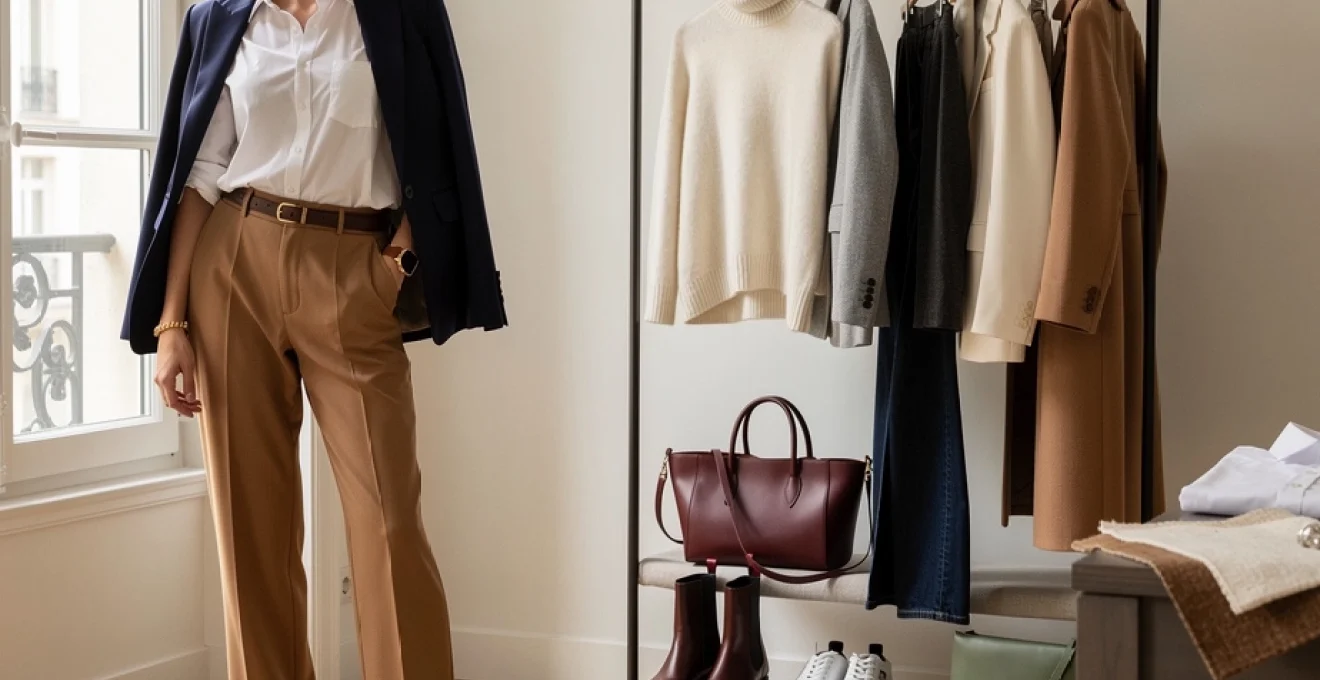
# Mastering Understated Elegance in Everyday Outfits
The concept of understated elegance has transformed from a niche aesthetic into a defining principle of contemporary fashion. As consumers increasingly reject logo-driven consumption and trend-chasing, a sophisticated approach to dressing has emerged—one that prioritizes quality, craftsmanship, and timeless design over fleeting statements. This shift reflects a deeper cultural movement towards intentional living, where every garment in your wardrobe serves a purpose and withstands the test of time. The art of dressing with restraint demands expertise in fabric selection, proportional balance, and tonal harmony, creating outfits that communicate confidence without announcing wealth.
Understanding how to achieve this refined simplicity requires knowledge of foundational pieces, colour theory, and styling techniques that professional stylists have perfected over decades. The women who master this aesthetic—from Kendall Jenner’s effortless street style to Sofia Richie’s pared-back sophistication—demonstrate that true luxury lies in the details: the weight of a silk blouse, the construction of a tailored blazer, the subtle sheen of full-grain leather. This approach to fashion transcends age and occasion, offering versatility that adapts seamlessly from professional environments to weekend gatherings.
Defining understated elegance: the philosophy of quiet luxury and timeless minimalism
Understated elegance represents far more than simply wearing neutral colours or avoiding logos. It embodies a complete philosophy of consumption that values craftsmanship, longevity, and intentional design choices. This aesthetic rejects the notion that fashion must be loud to be noticed, instead embracing the confidence that comes from wearing impeccably made garments that speak through their construction rather than their branding. The movement gained significant momentum in 2023, with searches for « quiet luxury » increasing by 214% year-over-year, reflecting a broader cultural shift towards sustainability and mindful consumption.
At its core, this philosophy prioritizes investment over accumulation. Rather than purchasing multiple trend-driven pieces each season, the understated approach advocates for acquiring fewer, superior garments that transcend temporary fashion cycles. Designer Phoebe Philo pioneered this aesthetic during her tenure at Céline, creating collections that celebrated architectural silhouettes, sumptuous fabrics, and meticulous tailoring without relying on obvious branding. Her influence continues to shape contemporary fashion, proving that simplicity executed with precision creates more lasting impact than elaborate ornamentation.
The true luxury lies not in what you can immediately see, but in what you can feel, touch, and experience over years of wear—the hand-stitched seam that never puckers, the cashmere that softens with each wash, the leather that develops a distinguished patina.
This approach also embraces versatility as a cornerstone principle. A well-constructed piece should adapt to multiple contexts, transforming from office-appropriate to evening-ready through simple styling adjustments. This functionality doesn’t diminish elegance; rather, it enhances the value proposition of each garment. The ability to wear the same tailored trousers three times in a single week without appearing repetitive demonstrates the power of understated design—the garment becomes a canvas upon which you build varied looks through thoughtful accessorizing and layering.
The movement towards understated elegance also represents an environmental imperative. The fashion industry accounts for approximately 10% of global carbon emissions, with fast fashion contributing significantly to this figure. By investing in durable, timeless pieces, you participate in a more sustainable model of consumption that reduces waste and extends garment lifecycles. Brands like The Row and Lemaire have built entire business models around this philosophy, producing limited quantities of exceptional pieces that customers treasure for decades rather than seasons.
Foundational wardrobe architecture: essential pieces for effortless sophistication
Building a wardrobe centred on understated elegance requires strategic thinking about foundational garments. These essential pieces form the backbone of your style repertoire, providing endless combination possibilities while maintaining cohesive aesthetics. Unlike trend-focused wardrobes that become obsolete within months, a properly constructed foundation evolves gradually, with new additions complementing rather than replacing existing pieces. Professional stylists recommend that approximately 70% of your wardrobe should
consist of high-quality essentials in timeless cuts and colours, with the remaining 30% reserved for seasonal updates and personal style flourishes. By prioritising this wardrobe architecture, you ensure that getting dressed becomes an intuitive process rather than a daily puzzle. Every new purchase must earn its place by pairing with at least three existing items, reinforcing coherence and preventing clutter. From this perspective, understated elegance is less about individual hero pieces and more about how each garment supports the whole.
The perfect white shirt: fabric weight, collar styles, and fit principles
The white shirt is the cornerstone of an understated wardrobe, yet not all white shirts are created equal. The key variables—fabric weight, collar style, and overall fit—determine whether a shirt feels crisp and elevated or flimsy and forgettable. For everyday elegance, look for mid-weight cotton poplin or cotton-silk blends that hold their structure without feeling stiff; fabrics around 100–120 gsm typically provide the right balance between opacity and drape. Sheer, tissue-thin cotton may photograph well but often undermines the polished effect you are aiming for in real life.
Collar choice subtly shifts the formality of your outfit. A classic point collar works beautifully under blazers and knitwear, maintaining a neat line at the neckline, while a soft spread collar feels more relaxed for off-duty outfits with denim or tailored shorts. If you prefer a modern minimalistic look, consider a band collar or mandarin collar; these styles sit close to the neck and pair effortlessly with structured jackets without adding bulk. Avoid heavily fused collars with excessive stiffness—understated elegance relies on ease and comfort as much as structure.
Fit is where most white shirts fail. Aim for a silhouette that follows your frame without pulling across the bust or ballooning at the back. You should be able to move freely, sit, and raise your arms without gaping buttons or strained seams. A curved hem that hits around mid-hip offers maximum versatility, allowing you to wear the shirt tucked, half-tucked, or loose over slim trousers. If you are between sizes, size up and enlist a tailor to refine the shoulders and sleeve length; a perfectly fitted white shirt instantly elevates even the simplest jeans-and-loafers combination.
Tailored trousers and wide-leg silhouettes: proportion mastery
Understated elegance thrives on immaculate tailoring, and nowhere is this more evident than in your choice of trousers. Tailored trousers act as the quiet backbone of countless outfits, from office ensembles to elevated weekend looks. Focus on mid- to high-rise cuts that sit comfortably at your natural waist, as this proportion visually lengthens the leg line and creates balance when paired with both cropped knits and longer coats. A gently tapered leg or straight cut is the most versatile, skimming over the hips and falling cleanly to the ankle or top of the shoe.
Wide-leg silhouettes, when executed correctly, embody modern minimalism and quiet luxury. The secret is in proportion mastery: a wide leg needs structure at the waist and hips to avoid appearing overwhelming. Look for designs with a defined waistband, darts, or subtle pleats that shape the torso before flaring out. The hem should almost graze the top of your shoe without pooling on the floor; think of the fabric as a column that lengthens the body rather than a puddle that drags it down. If you are petite, a slightly shorter inseam that reveals the ankle can provide the same elongated effect without excess volume.
Balancing tops with tailored or wide-leg trousers is much like composing a piece of music—each element must harmonise without competing for attention. When you wear a flowing wide-leg style, pair it with a more fitted top or a shirt tucked neatly into the waistband to define your shape. Conversely, straight-leg trousers welcome softer, slightly oversized knits for a relaxed yet polished finish. By mastering these proportions, you create outfits that feel intentional and flattering from every angle, embodying understated elegance in your everyday dressing.
Cashmere and merino wool knits: investment layering fundamentals
Knitwear is where quiet luxury becomes tangible. The softness of cashmere and the resilience of fine merino wool offer both comfort and refinement, turning simple outfits into quietly sophisticated ensembles. When considering investment knits, focus on mid-weight pieces that can be layered throughout multiple seasons—too heavy and you limit versatility, too light and they fail to provide structure. A classic crewneck, a V-neck, and a turtleneck in neutral shades such as oatmeal, navy, or charcoal form a reliable rotation that can be styled over shirts, under blazers, or alone with tailored trousers.
High-quality cashmere and merino have a smooth, even surface with minimal pilling, a soft hand-feel, and good recovery when gently stretched. While pure cashmere remains the gold standard of quiet luxury, fine merino is often more durable for everyday wear and typically more accessible in price. Blends that combine these fibres with a small percentage of silk or cotton can improve breathability and sheen without compromising longevity. Think of these knits as the architectural layers of your wardrobe: they create dimension, warmth, and texture without drawing attention through overt branding or embellishment.
Care is integral to maintaining the understated elegance of your knitwear. Hand-washing or using a delicate machine cycle with a specialised wool detergent preserves the fibres, while flat drying prevents stretching. A fabric comb gently removes light pilling, restoring a smooth surface that looks as considered as the day you bought it. When you treat your knitwear as long-term companions rather than seasonal disposables, you reinforce the quiet luxury philosophy—fewer, better pieces that age gracefully alongside you.
The structured blazer: single-breasted versus double-breasted construction
No garment communicates understated sophistication as instantly as a well-cut blazer. The choice between single-breasted and double-breasted construction shapes the visual language of your outfit. Single-breasted blazers, with one row of buttons and a narrower overlap, offer maximum versatility and tend to flatter a wide range of body types. They layer easily over shirts, knits, and dresses, functioning as the default option for office wear and smart-casual settings. A subtle nip at the waist and lightly padded shoulders create a clean, elongated line without veering into corporate rigidity.
Double-breasted blazers, by contrast, project a more pronounced architectural presence. Their overlapping fronts and wider lapels create a strong vertical line, which can appear strikingly refined when styled correctly. For everyday understated elegance, select a double-breasted blazer in a soft, neutral tone and slightly relaxed cut; you want the structure without the severity. Wearing it open over a monochrome base—such as a black turtleneck and tailored trousers—softens the formality while preserving the sculptural effect.
Construction details are where quiet luxury truly reveals itself. Look for blazers with canvassed or half-canvassed interiors rather than fully fused fronts; this allows the garment to mould to your body over time while maintaining its shape. High armholes improve range of movement and create a neater silhouette, while functioning sleeve buttons and neatly finished interiors signal quality craftsmanship. Whether you gravitate towards single-breasted or double-breasted designs, a blazer that fits across the shoulders and can be comfortably buttoned without strain will serve as a long-term cornerstone of your wardrobe.
Premium denim selection: raw selvage and dark wash versatility
Premium denim may seem at odds with the idea of quiet luxury, yet the right pair of jeans can be as refined as tailored trousers. The focus should be on dark washes, minimal distressing, and high-quality construction. Raw selvage denim, woven on traditional shuttle looms, offers exceptional durability and a clean edge finish that resists fraying; over time, it moulds to your body, developing subtle fades unique to your lifestyle. While raw denim requires a short break-in period, the resulting fit and character align perfectly with the ethos of investment dressing.
If raw denim feels too rigid for your daily routine, opt for dark-wash jeans with a small percentage of elastane (usually 1–2%) blended into high-quality cotton. This composition preserves structure while allowing for comfortable movement, ideal for days that transition from desk to dinner. Straight-leg, slim-straight, or gently tapered silhouettes tend to be the most versatile, pairing well with loafers, ankle boots, and minimalist trainers. Avoid excessive whiskering, rips, or logos—the goal is to choose denim that behaves like a tailored neutral, not a statement piece.
Think of premium denim as the bridge between polished tailoring and everyday practicality. A dark, clean pair of jeans can anchor a white shirt and blazer for business-casual settings or ground a cashmere sweater and trench coat for weekend city dressing. When you treat denim with the same discernment you apply to suiting—evaluating fabric weight, stitching, and hardware—you unlock its potential as a core component of an understated, elegant wardrobe.
Colour theory and tonal dressing techniques for refined aesthetics
Colour is one of the most powerful yet underestimated tools in achieving understated elegance in everyday outfits. While quiet luxury often leans towards neutrals, the magic lies not only in the shades themselves but in how you combine and layer them. Tonal dressing—building outfits around a single colour family—creates visual harmony that feels intentional without appearing contrived. Much like interior design, where a cohesive palette instantly calms a room, considered colour choices in your wardrobe produce an effortless sense of refinement.
Understanding basic colour theory helps you move beyond simple « black goes with everything » thinking. Neutrals such as camel, navy, ivory, and charcoal function as your foundation, while muted accent tones like sage or terracotta add nuance. By paying attention to undertones—whether a colour skews warm or cool—you can curate a palette that flatters your skin and integrates smoothly across seasons. The result is a wardrobe where pieces naturally complement one another, making outfit-building both faster and more sophisticated.
Monochromatic layering: creating depth through texture variation
Monochromatic dressing—wearing a single hue from head to toe—can be one of the most impactful expressions of understated elegance. The key to avoiding a flat or uniform appearance lies in texture variation. Imagine an all-ivory outfit composed of silk, cashmere, and soft leather; though the colour remains consistent, the interplay of sheen, weight, and weave creates rich visual depth. This textural layering functions much like a symphony, where different instruments play the same melody but bring distinct tonal qualities.
To create a monochromatic look that feels intentional rather than accidental, work within a narrow tonal range instead of an exact colour match. For example, pair stone trousers with an ecru knit and an off-white trench, or combine charcoal denim with a soft grey shirt and a deep slate coat. These subtle shifts in shade maintain cohesion while preventing the outfit from appearing overly uniform. Accessories in the same colour family—a taupe belt with beige trousers, a chocolate bag with a camel coat—reinforce the effect without introducing visual noise.
If you are new to tonal dressing, start with colours that already dominate your wardrobe, such as black, navy, or beige. Experiment by swapping out a contrasting top for a similar-toned option and notice how the outfit suddenly feels more curated. Over time, you will develop an instinct for which textures to combine—matte with glossy, smooth with nubby—to achieve depth. Monochromatic layering becomes a reliable method for creating refined outfits that require minimal decision-making yet deliver maximum polish.
Neutral palette mastery: camel, navy, ivory, and charcoal combinations
Neutrals are the building blocks of an elegant, versatile wardrobe, and mastering their combinations is like learning a visual language. Camel, navy, ivory, and charcoal sit at the heart of this palette, each bringing a distinct mood. Camel conveys warmth and classic sophistication, navy offers depth and quiet authority, ivory introduces lightness, and charcoal provides a softer alternative to black. When used together, these shades create outfits that feel balanced, modern, and effortlessly chic.
Consider camel and navy: this pairing is the sartorial equivalent of a trusted conversation between two old friends. A navy cashmere sweater under a camel coat, grounded with dark denim or charcoal trousers, delivers a look that works from weekday meetings to weekend brunch. Ivory, when layered thoughtfully, lifts these darker tones, preventing the outfit from feeling heavy. An ivory silk blouse under a charcoal blazer or an off-white knit with navy tailored trousers introduces brightness without sacrificing subtlety.
Charcoal often functions as the unsung hero in an understated wardrobe. It softens the severity of black while retaining its slimming and grounding qualities. When combined with camel or ivory, it creates a modern contrast that feels less predictable than black-and-white pairings. By intentionally rotating these core neutrals—sometimes emphasising warmth with camel and ivory, other times leaning into cool sophistication with navy and charcoal—you can generate a wide spectrum of refined outfits from a compact selection of pieces.
Subtle accent integration: muted terracotta, sage, and burgundy applications
While neutral palettes define quiet luxury, carefully chosen accent colours prevent your wardrobe from feeling sterile or repetitive. Muted shades like terracotta, sage, and burgundy introduce personality while maintaining the restraint essential to understated elegance. These hues echo natural elements—earth, foliage, wine—and therefore mix harmoniously with camel, navy, ivory, and charcoal. Think of them as the spices in a minimalist kitchen; used sparingly, they transform familiar ingredients into something memorable.
Sage, a soft green with grey undertones, pairs beautifully with stone, ivory, and light camel, bringing a sense of calm freshness to your outfits. A sage knit worn with white denim and tan sandals feels quietly elevated for spring, while a sage scarf softens a navy coat in cooler months. Muted terracotta, on the other hand, adds warmth and depth. A terracotta silk blouse under a camel blazer or a rust-toned belt with charcoal trousers provides visual interest without shouting for attention.
Burgundy serves as an elegant alternative to classic red, particularly in autumn and winter. It complements navy, charcoal, and black with ease, appearing rich yet refined. Rather than committing to large garments in these accent hues, you can start with accessories: a burgundy crossbody bag, sage suede loafers, or a terracotta-toned silk scarf. Over time, as you become more confident in your palette, you may introduce a statement piece—a sage overcoat or a terracotta midi skirt—that still aligns with the quiet luxury ethos.
Seasonal colour transitions: winter whites to summer stone progressions
Mastering understated elegance also involves understanding how your colour palette evolves with the seasons. Instead of overhauling your wardrobe every few months, you can create smooth transitions by adjusting tones and textures. Winter whites, for instance, lean towards cream, bone, and soft ecru in heavier fabrics like wool and cashmere. Paired with charcoal or deep navy, they deliver a crisp, luxurious contrast that feels appropriate for colder light and layered silhouettes.
As temperatures rise, those same whites lighten and soften into stone, sand, and pale taupe. Fabrics shift from dense knits and flannel to linen, cotton poplin, and lightweight wool. The underlying palette remains consistent, but the visual temperature of your outfits warms or cools with the season, much like adjusting the dimmer switch in a room rather than flipping it on and off. This continuity means your core pieces—blazers, trousers, premium denim—work year-round, simply styled with different supporting acts.
You might, for example, wear an ivory cashmere turtleneck with charcoal wool trousers and a navy coat in winter, then transition to a stone linen shirt with the same trousers and loafers in spring. In summer, that linen shirt pairs with white denim and tan sandals, while autumn sees the reintroduction of burgundy and terracotta accents. By seeing your wardrobe as a living, evolving system rather than a series of disconnected seasonal capsules, you make more intentional decisions and reinforce the timelessness at the heart of understated elegance.
Fabric selection and textile quality: natural fibres for elevated simplicity
Fabric quality is the foundation on which understated elegance is built. Even the most considered silhouettes lose impact when rendered in flimsy, synthetic materials that cling, pill, or fade quickly. Natural fibres such as cotton, wool, silk, and linen bring inherent texture, breathability, and drape that instantly signal refinement. They age more gracefully than most synthetics, developing character rather than simply wearing out. When you prioritise these textiles, you elevate everyday outfits without needing overt design flourishes.
Cotton and linen excel in warmer months, offering airflow and a relaxed ease that aligns with quiet minimalism. High-twist cotton poplin maintains a crisp appearance for shirts and shirtdresses, while washed linen suits and trousers embody laid-back sophistication. Wool and cashmere dominate in cooler seasons, providing insulation without bulk. Fine merino wool works particularly well for base layers and lightweight knits, as it regulates temperature and resists odour—ideal for busy days that stretch into evening engagements.
Silk occupies a special place in the quiet luxury wardrobe, functioning as both a tactile pleasure and a visual highlight. Its natural sheen catches the light softly rather than glaringly, making silk blouses, slip skirts, and scarves perfect for adding subtle glamour to everyday outfits. Blends that incorporate silk with cotton or wool can improve durability and make the fabric easier to care for. As you evaluate garments, pay attention to fabric density, hand-feel, and recovery: does the textile spring back when lightly squeezed, or does it remain creased and limp? These clues often reveal more about long-term performance than a brand label.
While synthetic fibres can have a place—particularly in performance wear or when a touch of elastane improves comfort—the principle of understated elegance encourages you to treat them as supporting players rather than leads. A pair of tailored trousers with 2% elastane retains shape through a long workday, but the remaining 98% should ideally be a natural fibre. By making these discerning choices, you not only enhance the look and feel of your outfits but also contribute to a more sustainable fashion ecosystem that values longevity over disposability.
Accessory curation: strategic minimalism and investment pieces
Accessories are where many outfits tip from elegant to overworked. In the realm of understated style, we approach accessories as punctuation marks rather than exclamation points—they clarify, refine, and complete a look without overshadowing it. Strategic minimalism means selecting fewer, better pieces that align with your overall aesthetic and work seamlessly across multiple outfits. Instead of rotating through dozens of trend-driven items, you rely on a concise set of investment accessories that quietly signal quality through material, construction, and proportion.
Think of your accessory wardrobe in tiers: everyday anchors, such as a leather tote or classic watch; character pieces, like a sculptural gold earring or textured belt; and seasonal accents, such as a cashmere scarf or straw bag. Each item should earn its place by functioning in at least two contexts—work and weekend, day and evening, city and travel. When you adopt this mindset, you free yourself from the urge to constantly add more, focusing instead on curating items that truly enhance your understated outfits.
Leather goods hierarchy: full-grain tote bags and structured crossbody selections
High-quality leather goods are among the most visible expressions of quiet luxury because they accompany you daily and visibly bear the marks of use. Full-grain leather—the highest grade, taken from the outermost layer of the hide—develops a rich patina over time, rather than cracking or peeling. A full-grain tote in a neutral shade such as black, chocolate, or cognac acts as a functional workhorse, carrying your essentials while complementing both tailored and casual ensembles. Its design should be simple, with discreet hardware and minimal branding, allowing the material and craftsmanship to speak for themselves.
Structured crossbody bags serve as the refined counterpart to the tote, ideal for weekends, travel, and evenings when you need only the essentials. Look for clean lines, an adjustable strap, and enough internal organisation to keep your phone, cardholder, and keys accessible. Sizes that sit neatly against the torso feel more elegant than oversized silhouettes that overwhelm your frame. By choosing one or two well-crafted styles rather than numerous novelty bags, you reinforce a consistent visual language in your wardrobe—one that prioritises durability, practicality, and subtlety.
Colour plays an important role in your leather hierarchy. Black or deep espresso reads formal and sharp, ideal for urban environments and office settings, while tan and cognac feel softer and more relaxed. If you introduce a single accent bag—perhaps in burgundy or forest green—ensure it still harmonises with your core palette. In this way, your leather goods become long-term companions that ground your looks, rather than impulse purchases that clutter your closet.
Footwear foundations: loafers, chelsea boots, and white trainers
Footwear can transform the mood of an outfit more dramatically than almost any other element. For an understated, everyday wardrobe, a small but well-chosen selection covers most scenarios without sacrificing comfort or polish. Loafers, Chelsea boots, and minimalist white trainers form a powerful trio that adapts to changing seasons and dress codes. Each style carries a distinct character, yet all share a common thread of clean lines and quality materials.
Loafers—whether penny, horsebit, or unadorned—anchor outfits with a sense of effortless sophistication. In polished leather or softly structured suede, they pair seamlessly with tailored trousers, dark denim, and even midi skirts. Chelsea boots offer a sleek, ankle-hugging profile that works with both slim and wide-leg silhouettes, protecting you from the elements while maintaining a refined silhouette. Choose versions with sturdy yet streamlined soles, avoiding overly thick platforms that can undermine the subtlety of your look.
Minimalist white trainers bring an element of modern ease to the quiet luxury wardrobe. The key is to select designs with pared-back detailing—no oversized logos, contrasting panels, or chunky soles. When kept clean and in good condition, they provide a fresh counterpoint to sharp tailoring and can make a blazer-and-trouser combination feel approachable and contemporary. By rotating these three footwear foundations and maintaining them with regular cleaning and polishing, you ensure that even your most casual outfits reflect the intentionality at the heart of understated elegance.
Jewellery restraint: gold vermeil, sterling silver, and single statement pieces
In understated dressing, jewellery is less about adornment and more about emphasis. Restraint is your most powerful tool. Instead of layering multiple bold pieces, you choose one or two elements that quietly enhance your features or outfit lines. Materials like gold vermeil—thick gold plated over sterling silver—and solid sterling silver deliver a luxurious look and feel at a more accessible price point than solid gold, making them ideal for everyday wear. Their subtle shine complements neutral palettes without tipping into overt glamour.
A refined jewellery wardrobe might include small hoop or stud earrings, a delicate chain necklace, a slim bracelet or bangle, and a single statement ring. On most days, you wear just one or two of these, allowing them to become part of your visual signature rather than an afterthought. When you do introduce a bolder piece—perhaps a sculptural cuff or oversized earring—keep the rest of your jewellery minimal so that the overall effect remains balanced. Think of it like editing a sentence: one well-chosen adjective has more impact than a string of superlatives.
Jewellery should also harmonise with your wardrobe’s metal tones. If your handbags and shoes often feature gold hardware, leaning towards gold vermeil creates cohesion; if your palette skews cooler with charcoal and navy, sterling silver or white gold may feel more aligned. By making these considered choices, you avoid the visual noise that comes from disparate, trend-driven pieces and instead build a jewellery collection that enhances your understated outfits with subtle, enduring elegance.
Watch selection: classic dress watches and minimalist dial aesthetics
A watch remains one of the most functional and symbolic accessories in the quiet luxury toolkit. It communicates respect for time—both yours and others’—while offering an opportunity to express personal style in a restrained way. Classic dress watches with slim profiles, clean dials, and leather straps sit comfortably under shirt cuffs and blazer sleeves, integrating seamlessly into professional and social settings. Look for simple indices, minimal complications, and case sizes proportionate to your wrist; oversized watches can disrupt the balance of an otherwise elegant outfit.
Minimalist dial aesthetics mirror the broader philosophy of understated elegance. Plain white, cream, or black faces with subtle branding and no excessive embellishment feel timeless and sophisticated. A stainless-steel bracelet watch can provide a slightly more casual, modern edge while still aligning with quiet luxury, particularly when paired with monochrome or tonal outfits. If you enjoy variety, consider owning one leather-strap watch and one metal-bracelet design, allowing you to shift between softer and sharper moods as needed.
Beyond aesthetics, the way you care for your watch—regular servicing, gentle cleaning, and appropriate storage—reflects the same intentionality you bring to your wardrobe. In a world where many rely solely on phones to tell time, choosing to wear a considered, well-maintained watch becomes a subtle statement about values: an appreciation for craftsmanship, longevity, and the quiet satisfaction of well-made objects.
Styling techniques: proportional balance and visual harmony principles
Even with the finest fabrics and most carefully curated pieces, understated elegance ultimately depends on how you style your outfits. Proportional balance and visual harmony are the invisible frameworks that make a look feel « right » at a glance, even if the viewer cannot explain why. Much like composing a photograph, you are constantly making decisions about where to place volume, how to direct the eye, and which elements should take centre stage. When you understand these principles, you can adjust an outfit with small tweaks—a half-tuck here, a cuffed sleeve there—to transform it from ordinary to exceptional.
Proportion often begins with the relationship between your top and bottom halves. A useful guideline is contrast: pair voluminous pieces with slimmer counterparts and vice versa. Wide-leg trousers work best with more fitted tops or neatly tucked shirts, while slim jeans welcome slightly oversized knits or longer blazers. Hemlines also play a crucial role; showing a sliver of ankle between trouser and shoe, or a glimpse of wrist between sleeve and bracelet, introduces lightness and prevents heavier fabrics from overwhelming your frame.
Visual harmony involves managing focal points so that no single element dominates unnecessarily. Ask yourself: where do I want the eye to land first? If your answer is the sharp line of a blazer, keep your accessories minimal and your colour palette restrained. If you are wearing a statement coat in a rich camel or textured boucle, let it lead by pairing it with simple denim and a white tee. This principle mirrors interior design, where a room might feature one standout piece of furniture while the rest of the decor quietly supports it.
Colour and texture also contribute to harmony. Repeating a colour or material at least twice in an outfit—for example, black loafers and a black belt, or a silk blouse and silk scarf—creates cohesion and makes the look appear intentional. Similarly, echoing textures, such as pairing a nubby wool coat with a softly textured knit, feels more resolved than mixing too many unrelated surfaces. Over time, these styling habits become instinctive, allowing you to assemble outfits quickly that still communicate the calm, considered elegance you value.
Inspiration from contemporary icons: analysing phoebe philo, the row, and lemaire aesthetics
Translating theory into practice becomes easier when you study those who embody understated elegance at the highest level. Contemporary icons such as Phoebe Philo, and brands like The Row and Lemaire, provide living blueprints for how quiet luxury and minimalism function in real wardrobes. Rather than copying their looks outright, we can analyse the recurring principles they rely on—silhouette, palette, fabric, and attitude—and adapt these to our own lives and budgets.
Phoebe Philo’s work, particularly during her tenure at Céline, redefined modern minimalism for a generation. Her designs prioritised clean lines, architectural shapes, and rich, tactile fabrics, often executed in restricted colour palettes of black, cream, navy, and camel. The women she dressed looked intelligent, grounded, and subtly powerful, never over-styled. Notice how her outfits frequently balance structure with ease: a sharply tailored coat draped over wide trousers, or a fluid silk blouse tucked into a sculpted skirt. The message is clear—understated elegance is as much about how clothing moves with the body as how it looks on a hanger.
The Row, founded by Mary-Kate and Ashley Olsen, takes this philosophy even further into the realm of quiet luxury. Their collections showcase elongated proportions, sumptuous yet discreet fabrics, and a near-monastic approach to branding. A typical Row look might consist of wide ivory trousers, a tonal knit, and an overcoat that pools slightly at the wrist and hem, creating a sense of languid refinement. The emphasis is on cut and fabric above all else: seams lie perfectly flat, shoulders sit just so, and nothing feels extraneous. For everyday dressing, we can borrow their commitment to quality basics and their preference for head-to-toe tonal outfits.
Lemaire, led by Christophe Lemaire and Sarah-Linh Tran, offers a slightly different, more utilitarian interpretation of understated style. Their pieces often feature relaxed tailoring, wrap closures, and workwear-inspired details, executed in earthy, desaturated tones—think clay, moss, and stone. There is a sense of ease and quiet functionality in their clothes; pockets are practical, silhouettes allow for movement, and fabrics like cotton twill and wool gabardine lend durability. Observing Lemaire’s styling teaches us how to integrate practicality into elegance, proving that everyday clothes can be both comfortable and visually refined.
What unites these icons is not a single « look » but a shared philosophy: an insistence on quality, a restrained approach to colour, and a belief that true style does not need to shout. By internalising these principles—editing rather than adding, prioritising fabric and fit, embracing tonal palettes—you can build a wardrobe that reflects the same quiet confidence, tailored to your own life. Ultimately, mastering understated elegance in everyday outfits is less about acquiring more and more about seeing clearly: recognising which pieces truly serve you, and letting them speak softly, but with unmistakable authority.