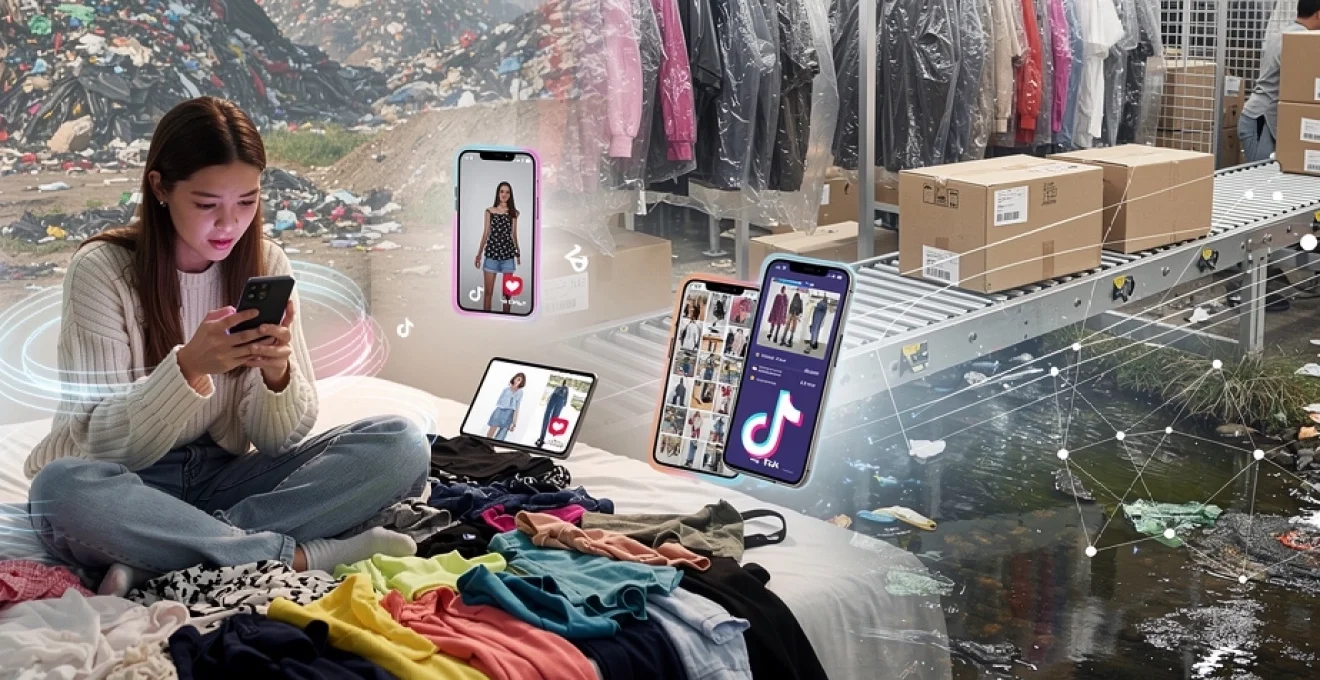
The fashion industry has entered an unprecedented era of rapid transformation, where trends that once dominated entire decades now barely survive a single season. The rise of social media platforms, particularly TikTok, has fundamentally altered how aesthetic movements emerge, spread, and ultimately fade into obsolescence. What we’re witnessing isn’t simply an acceleration of existing fashion cycles—it’s a complete restructuring of how society relates to clothing, identity, and consumption. From ‘cottagecore’ to ‘mob wife’ aesthetics, from ‘clean girl’ minimalism to ‘coastal grandmother’ styling, contemporary fashion has fragmented into countless micro-movements that flicker across our screens with dizzying speed. This phenomenon raises critical questions about sustainability, personal identity, and the very nature of style in an algorithm-driven world.
The implications extend far beyond wardrobes and shopping habits. These accelerated cycles are reshaping manufacturing processes, environmental footprints, labour practices, and even how individuals construct their sense of self. As fashion journalist Ashantéa Austin observes, we’ve transitioned from a world of trends to one of vibes—a shift that demands closer examination.
The TikTok-Driven acceleration of fashion lifecycle: from virality to obsolescence
The traditional fashion calendar, which once governed the industry through predictable spring/summer and autumn/winter collections, has been fundamentally disrupted by social media’s relentless pace. Where trends historically evolved over years or even decades, today’s micro-trends emerge, peak, and disappear within weeks. This compression of the fashion lifecycle represents one of the most significant transformations in consumer culture since the advent of ready-to-wear clothing.
How Algorithm-Based discovery platforms compress trend cycles to 3-6 week windows
TikTok’s algorithm operates on principles of viral amplification that favour novelty above all else. When a particular aesthetic or styling approach begins gaining traction, the platform’s recommendation system rapidly distributes it to millions of users within days. This creates an artificial sense of ubiquity—suddenly, everyone appears to be adopting the same look simultaneously. Research indicates that the average micro-trend now has a lifecycle of just three to six weeks, compared to the five to ten years that characterised fashion movements in the pre-digital era.
The platform’s « For You » page serves as a powerful trend accelerator, exposing users to aesthetic movements they might never have encountered through traditional fashion media. However, this same mechanism that spreads trends so efficiently also ensures their rapid demise. As soon as a critical mass of adoption is reached, the algorithm begins prioritising the next emerging aesthetic, leaving the previous one to fade into irrelevance. You might discover a compelling new style one week, only to find it labelled « so last month » before you’ve even managed to incorporate it into your wardrobe.
The Cottage-Core to coastal granddaughter pipeline: rapid aesthetic succession on social media
The progression from one micro-trend to the next has become almost ritualistic on platforms like TikTok and Instagram. ‘Cottagecore’, which romanticised rural life with flowing dresses and floral prints, dominated early pandemic discourse before giving way to ‘dark academia’, then ‘light academia’, followed by ‘coastal grandmother’, and countless iterations in between. Each aesthetic arrives with its own visual language, cultural references, and product recommendations, creating what some commentators have termed « aesthetic whiplash ».
This rapid succession creates a peculiar phenomenon where consumers feel simultaneously overwhelmed by options and constrained by the pressure to participate. The ‘Brat summer’ movement of 2024 exemplified this tension—while ostensibly celebrating a carefree, anti-consumerist attitude, it nevertheless generated specific product associations and purchasing behaviours. The movement’s power lay in its broader cultural resonance, yet it still sparked identifiable consumption patterns around particular items and colour palettes.
Fast fashion’s production velocity: shein and zara’s response to Micro-Trend demands
Ultra-fast fashion retailers have evolved their production systems to capitalise on these compressed trend cycles. Shein, in particular, has pioneered a model that can take a garment from design to market
in as little as 10 days. Zara, long known for fast turnaround, has pushed its design-to-shelf pipeline to a matter of weeks, releasing thousands of new SKUs each year to track with every micro-trend cresting on social feeds. Instead of betting on a few seasonal stories, these brands now run countless low-quantity tests, rapidly scaling whatever resonates on TikTok or Instagram. When a new silhouette, colourway, or “it” item goes viral, copycat versions can appear online before the original creator has finished capitalising on the moment.
This speed comes at a structural cost. To sustain ultra-responsive production, brands rely on flexible, often opaque supply chains that can be dialled up or down at a moment’s notice, with pressure pushed onto factories and workers. Design itself becomes reactive rather than visionary, with trend teams mining social media data, competitor sites, and marketplace feedback in near real time. The result is an endless stream of near-identical garments optimised for a 3–6 week window of relevance, rather than for durability, craftsmanship, or emotional attachment.
Consumer fatigue and the psychology of FOMO-driven purchasing patterns
For consumers, this hyper-speed cycle translates into a constant low-level anxiety: if everything is moving this fast, how do you ever feel “done” building your wardrobe? Social feeds bombard users with outfit-of-the-day videos, unboxings, and “what I ordered vs. what I got” hauls, all framed as casual entertainment but functioning as relentless sales prompts. Each new aesthetic promises a fresh start—a cleaner, cooler, more current version of yourself—creating a powerful feedback loop between perceived social validation and clicking “add to cart”.
Psychologically, micro-trends tap into classic FOMO dynamics. The fear is not just of missing out on a product, but on a shared cultural moment that appears to define what it means to be stylish right now. Because TikTok compresses discovery into a few viral days, people feel they must act instantly or risk being left behind. Yet, as many young shoppers now admit, the thrill of the purchase fades quickly; garments bought for one hyper-specific aesthetic can feel costume-like or “cringe” just months later. Over time, this disconnect between spending and satisfaction breeds fatigue, cynicism, and a sense that personal style is slipping out of reach.
Digital fashion forecasting: data analytics and predictive algorithms in Micro-Trend identification
Behind the apparent chaos of micro-trends lies an increasingly sophisticated infrastructure of digital fashion forecasting. Where trend prediction once relied on runway analysis, street style photography, and qualitative cultural research, today’s leading agencies and platforms deploy machine learning, image recognition, and big data techniques. Fashion forecasting has become less about intuition and more about interpreting vast streams of visual and behavioural signals to predict what will spike next on TikTok, Instagram, or Pinterest.
This data-first approach has a double edge. On one hand, it can help brands reduce risk, anticipate demand, and design collections that better match what people actually want to wear. On the other, it can accelerate the very micro-trend churn that many consumers now find exhausting, because it optimises for short-term engagement over long-term relevance. Understanding how these systems work is key to understanding why micro-trends appear to come out of nowhere—and why they vanish just as quickly.
WGSN and heuritech’s machine learning models for real-time trend detection
Agencies like WGSN and tech companies like Heuritech sit at the forefront of this shift. WGSN, once best known for its seasonal macro-trend reports, now offers clients real-time dashboards analysing everything from colour upticks to silhouette shifts across global markets. Heuritech uses computer vision to scan millions of social media images, automatically tagging garments and accessories to quantify how often specific styles appear, who is wearing them, and in what context. Their algorithms then extrapolate adoption curves—estimating whether an aesthetic is about to peak or is already in decline.
In practice, this means brands can see, for example, that a particular ballet flat shape or cargo skirt length is gaining traction among influential early adopters in Seoul or Paris weeks before the mainstream notices. These tools essentially turn social media into an enormous, continuous focus group. For micro-trends, the impact is profound: as soon as a new look begins to surface organically, it can be captured, named, and monetised at scale. If traditional forecasting was like reading the weather by feeling the wind, today’s machine learning systems are like hyper-local radar maps—faster, finer-grained, and far more relentless.
Instagram engagement metrics as early warning signals for emerging aesthetics
Beyond specialised platforms, everyday social media metrics have become de facto early warning systems for brands and creators. Saves, shares, and comment sentiment on Instagram are watched as closely as likes, because they signal deeper interest and intent. A carousel featuring a certain colour combination or styling trick might quietly outperform other posts, prompting creators and brands to repeat and refine that idea. Within weeks, entire feeds can coalesce around a new aesthetic without anyone ever formally declaring it a “trend”.
For smaller labels and independent designers, this kind of feedback can be invaluable. They can test micro-collections through lookbook posts or Reels, then iterate based on what garners the strongest response. But there is a trade-off: when every creative decision is run through the filter of engagement metrics, risk-taking becomes harder. The safest path is to follow what the algorithm already favours, which often means doubling down on aesthetics that are visually legible in a split second—bold colour blocking, exaggerated silhouettes, or instantly recognisable “core” signifiers. Nuanced, slow-burn styles struggle to compete in such an environment.
Google trends and search volume analysis in fashion product development
Search data adds another layer to the forecasting stack. Google Trends, as well as internal search bars on e-commerce platforms, reveal what people are actively looking for—“red mesh going out top”, “coastal cowgirl boots”, or “quiet luxury blazer”, for instance. Product teams mine these queries to identify gaps in their assortments and spot rising micro-trends before they saturate social feeds. A sudden spike in searches for a specific fabric, neckline, or colour can trigger rapid design briefs and buying decisions.
For retailers, this is akin to listening in on millions of fitting-room conversations at once. However, it also incentivises a reactive mindset. Instead of setting the agenda, brands chase whatever search volume suggests is hot, leading to a flood of near-duplicate products optimised for SEO rather than originality. For consumers, this can feel like walking into ten different stores and seeing the same “viral” dress, styled slightly differently. The illusion of choice grows, but the underlying diversity of fashion options shrinks.
The role of fashion TikTok subcultures in grassroots trend origination
Despite the increasing dominance of data-driven forecasting, many micro-trends still originate at the grassroots level within TikTok subcultures. Niche communities—whether centred on bookish “dark academia”, hyper-feminine coquette styling, or DIY upcycling—experiment with aesthetics long before they hit the mainstream. Their creators often blend clothing, music, interiors, and lifestyle content into cohesive worlds, making the aesthetic feel like a lived reality rather than just a lookbook.
These subcultures function as incubators. A specific way of layering cardigans, a preferred sneaker-and-dress combo, or even a recurring colour palette might slowly gain traction within a tight-knit community. Once a few of these videos cross over into the wider “For You” page, brands and forecasting tools quickly take note. The challenge is that when subcultural aesthetics are extracted and repackaged as commercial micro-trends, they frequently lose their original context and values. What began as a meaningful expression of identity can end up diluted into a handful of shoppable items in a “Get the look” carousel.
Environmental ramifications of accelerated consumption cycles
The environmental consequences of micro-trends are substantial and increasingly difficult to ignore. When the average garment is worn only seven to ten times before being discarded, according to various industry estimates, the volume of textile waste grows at a pace that traditional recycling and donation systems cannot absorb. Micro-trends don’t just change what we buy; they change how quickly we stop valuing those purchases, turning clothing into a short-term commodity rather than a long-term resource.
At a systemic level, the fashion industry already accounts for an estimated 8–10% of global carbon emissions and significant water usage. Accelerated consumption cycles magnify these impacts by driving higher production volumes and shorter product lifespans. Even if individual micro-trend purchases feel small—a £15 top here, a £20 dress there—the cumulative effect across millions of consumers is vast, with consequences that stretch far beyond our wardrobes and into landfills, waterways, and supply-chain communities.
Textile waste statistics: the growing landfill crisis from disposable trend participation
Textile waste has surged in parallel with the rise of fast and ultra-fast fashion. The Ellen MacArthur Foundation estimates that a truckload of clothing is landfilled or incinerated every second worldwide. Markets in the Global South, such as Kantamanto in Accra, Ghana, now receive hundreds of tonnes of second-hand and unsold clothing each week, much of it in such poor condition that an estimated 40% goes straight to waste. Micro-trends compound this issue by encouraging the purchase of highly specific, low-quality items that are difficult to resell or restyle once their brief moment has passed.
From a consumer perspective, it’s easy to assume that donating unwanted clothing is an ethical exit route. Yet the sheer volume of garments entering second-hand systems far exceeds what local markets can meaningfully reuse. Many items bought for a single aesthetic—be it “Tomato Girl Summer” or “Mob Wife” glamour—are made from synthetic blends that resist recycling and degrade poorly. When multiplied across entire populations, these disposable trend cycles contribute directly to overflowing landfills and unmanageable waste streams in regions least responsible for creating the demand in the first place.
Carbon footprint analysis of ultra-fast fashion supply chains
Every micro-trend garment carries a hidden carbon cost that extends from fibre production to final delivery. Polyester, now the most widely used textile fibre, is derived from fossil fuels and has a carbon footprint nearly three times that of cotton per kilogram produced. Ultra-fast fashion brands rely heavily on such synthetics because they are cheap, versatile, and quick to turn into finished garments. When a trend spikes on TikTok, factories ramp up production, often running extended hours to meet tight deadlines and shipping goods via air freight to get them online as quickly as possible.
This rapid-response model concentrates emissions into short, intense bursts. Instead of steady, seasonal production, brands cycle through continuous micro-collections, each demanding fresh rounds of raw materials, energy, and logistics. For shoppers, the environmental impact of a single top or dress may seem negligible. Yet, when millions of people buy similar items in response to the same viral aesthetic, the cumulative emissions rival those of entire industries. Without systemic changes—such as investing in cleaner energy, slowing production volume, and designing for longevity—micro-trends risk locking fashion into a high-carbon future at the very moment climate targets demand the opposite.
Polyester microplastic pollution from short-lived garment lifecycles
Beyond carbon, synthetic microfibres present another under-discussed consequence of micro-trend fashion. Each time polyester, acrylic, or nylon garments are washed, they shed tiny plastic particles that escape many wastewater treatment systems and end up in rivers and oceans. The shorter a garment’s lifecycle, the more likely it is to be produced, worn a handful of times, and then discarded—yet those microfibres persist in the environment for decades or centuries.
Studies have found microplastics in Arctic ice, deep-sea sediments, and even human blood and lung tissue. Fast fashion’s reliance on cheap synthetics ensures that every wave of micro-trends leaves a lasting trace in ecosystems far removed from the platforms where the trends first appeared. While innovations such as washing machine filters and fibre-capture technologies are emerging, they cannot fully offset the impact of ever-growing volumes of synthetic garments. The most effective intervention remains the simplest: buying fewer, better-made items and wearing them for far longer, regardless of algorithmic fashion cycles.
Creator economy and influencer marketing’s role in Micro-Trend proliferation
The creator economy has transformed fashion influencers from taste-makers on the sidelines into central players in how trends emerge and spread. On TikTok, Instagram, and YouTube, creators build personal brands around specific aesthetics—off-duty model, Scandi minimalist, “downtown cool girl”—and monetise their influence through sponsorships, affiliate links, and their own product lines. Micro-trends are the currency of this ecosystem: each new aesthetic offers fresh content angles, new partnerships, and another reason for audiences to watch, like, and shop.
For followers, this can be both inspiring and overwhelming. Influencers often bridge the gap between high-fashion imagery and everyday wardrobes, demonstrating how to style pieces in accessible ways. Yet they also operate within algorithms and commercial structures that reward constant novelty. The more often they can convince you to tweak your look—to buy a different cut of jean, a new shade of “it” bag, or the latest viral sneaker—the more sustainable their own income becomes, even if your wardrobe and bank balance tell a different story.
Emma chamberlain and matilda djerf’s impact on niche aesthetic monetisation
Two of the most cited examples of this dynamic are Emma Chamberlain and Matilda Djerf. Chamberlain’s eclectic, thrift-inspired style helped popularise “endearingly chaotic” dressing among Gen Z, blending vintage finds with high-end pieces in a way that felt approachable. Her influence extended far beyond YouTube; coffee brands, fashion houses, and lifestyle companies all sought to tap into the “Emma” aesthetic. Meanwhile, Matilda Djerf converted her soft, voluminous, Scandi-chic look into a full-fledged brand, Djerf Avenue, effectively monetising a specific vibe through tightly curated collections of blazers, trousers, and blowout-ready tops.
Both illustrate how personal style can evolve into a commercial micro-trend. Fans don’t just follow their content; they buy into the wardrobes, routines, and broader lifestyles they project. This blurs the line between authenticity and advertising. When your favourite creator’s “outfit of the day” doubles as a shoppable campaign, it becomes harder to distinguish genuine recommendations from strategic product pushes. Nonetheless, their success has inspired thousands of smaller creators to niche down into aesthetics they can own, further fragmenting the fashion landscape into monetisable micro-scenes.
Tiktok shop integration and seamless purchase pathways from discovery to checkout
The integration of commerce tools directly into social platforms has supercharged the micro-trend machine. TikTok Shop, Instagram Shopping, and similar features reduce friction between seeing and buying to almost zero. You can watch a 15-second styling video, tap to reveal product tags, and check out without ever leaving the app. For brands and creators, this “discovery to purchase” pipeline is a dream. For consumers, it can feel like a constant test of willpower.
Because the same algorithm that surfaces content also surfaces products, the line between entertainment and advertising disappears. You might open TikTok for a quick scroll and, within minutes, find yourself watching a creator rave about the “must-have” shrug cardigan defining this month’s aesthetic. With a single tap, you can own it. This convenience is not neutral; it is designed to capitalise on impulse, emotion, and that familiar sense of “if I don’t buy it now, I’ll miss the moment”. In a world where micro-trends move at breakneck speed, delayed gratification becomes not just difficult, but actively discouraged by the interface itself.
Affiliate marketing structures incentivising rapid trend turnover
Underpinning much of this activity are affiliate marketing programs, which reward creators with a commission every time a viewer purchases through their unique link. From Amazon storefronts to LTK (LikeToKnow.It) and brand-specific schemes, these networks turn every product mention into a potential revenue stream. The more items a creator can convincingly recommend—and the more often they can refresh their “favourites”—the more they stand to earn.
This creates a structural incentive for rapid trend turnover. A capsule wardrobe video that encourages viewers to buy five high-quality pieces and stop shopping may be valuable, but a weekly “haul” featuring 30 affordable items is far more lucrative in the short term. Many creators are candid about this tension, openly acknowledging brand partnerships and sponsored posts. Still, the net effect is clear: the economics of influence reward constant consumption. For audiences seeking to build a sustainable, long-term sense of style, learning to recognise these incentives—and to pause before clicking—becomes an essential skill.
Counter-movements: capsule wardrobes and the slow fashion resistance
In response to the churn of micro-trends, a growing number of consumers, creators, and brands are embracing slower, more intentional approaches to style. Capsule wardrobes, investment dressing, and second-hand shopping have surged in popularity, particularly among those disillusioned with perpetual hauls and fleeting aesthetics. These counter-movements don’t reject fashion or self-expression; instead, they reframe clothing as a long-term relationship rather than a series of disposable flings.
Crucially, this shift is no longer confined to niche sustainability circles. Mainstream media, luxury houses, and even some high-street retailers are beginning to champion concepts such as cost-per-wear, repair services, and seasonless design. While there is always a risk of greenwashing, the underlying message resonates: in an era of algorithmic dressing, opting out—at least partially—can feel like a radical act of self-definition.
Vogue business and the financial times’ coverage of anti-trend investment dressing
Publications like Vogue Business and the Financial Times have tracked the rise of “anti-trend” dressing and the renewed appeal of minimalism. Coverage often highlights a pivot away from overt “quiet luxury” branding towards something more grounded: well-cut trousers, quality knitwear, and tailored outerwear that outlast any single aesthetic wave. Analysts point to consumers re-evaluating their wardrobes post-pandemic, asking not “Is this on trend?” but “Will I still want to wear this in five years?”
This narrative is reinforced by designers and brands that lean into heritage, craftsmanship, and subtle design cues instead of loud logos or gimmicky silhouettes. As trend forecasters note, the word “basic” is being reclaimed as a compliment rather than an insult. For shoppers exhausted by micro-trend churn, this framing offers relief: you don’t need to reinvent yourself every quarter; you can build a reliable foundation and let small, thoughtful updates keep things feeling fresh.
Resale platforms like vinted and depop as alternative consumption models
Resale and peer-to-peer platforms such as Vinted, Depop, Poshmark, and Vestiaire Collective have emerged as important pressure valves within the micro-trend ecosystem. On one level, they enable people to offload impulse purchases that no longer fit their style, keeping garments in circulation rather than sending them straight to landfill. On another, they offer a way to experiment with aesthetics at a lower environmental and financial cost, by buying second-hand rather than new.
However, these platforms are not a panacea. If used simply as a way to justify continued overconsumption—buying endless fast-fashion pieces with the assumption they can always be resold—the underlying problem remains. The most sustainable use of resale is as part of a broader shift towards slower fashion: seeking out quality pieces with a long life ahead of them, repairing and cherishing what you own, and rotating items thoughtfully rather than constantly “flipping” entire wardrobes. When approached this way, second-hand marketplaces can help decouple style exploration from the high environmental cost of constant new production.
Quality over quantity: premium heritage brands’ strategic positioning against micro-trends
Many premium and heritage brands are actively positioning themselves as antidotes to micro-trend ephemerality. Rather than chasing every viral aesthetic, they emphasise timeless design, durable materials, and services such as repairs and alterations. Brands with decades or even centuries of history underline their longevity in marketing campaigns, subtly contrasting their enduring appeal with the short lifespan of ultra-fast fashion pieces.
From an economic standpoint, this strategy seeks to justify higher price points through the promise of long-term value. From a cultural standpoint, it reframes “being stylish” as a matter of consistency and discernment rather than constant reinvention. For consumers, the key is to look beyond the rhetoric and assess whether a brand’s practices align with its messaging: Are garments built to last? Are supply chains transparent? Do collections evolve slowly, or do they still mirror the frantic cadence of micro-trends? When the answers are positive, investing in fewer, better pieces can become a powerful form of resistance to the disposable fashion norm.
Future projections: AI-Personalisation and the fragmentation of fashion consumption
Looking ahead, artificial intelligence and advanced personalisation tools are set to deepen both the opportunities and challenges within micro-trend culture. Recommendation engines are already powerful, but as they integrate more data—body measurements, purchase history, browsing patterns, even mood signals from social media—they will be able to suggest highly tailored outfits and shopping lists. In theory, this could support more sustainable behaviour: imagine an app that helps you style what you already own in new ways, reducing the urge to buy something new each time a vibe shifts.
At the same time, hyper-personalised feeds may fragment the fashion landscape even further. Instead of a handful of dominant aesthetics, we could see thousands of micro-communities, each with its own AI-curated style language. In such a world, the idea of a single “trend” may lose meaning altogether; what matters will be how well your digital stylist understands your preferences and how resistant you are to its gentle nudges toward yet another purchase. As with all technologies, the outcomes will depend on how we choose to use them—and how brands choose to design them.
For individuals, the most empowering path lies in reclaiming agency. That might mean setting personal rules around shopping—such as a waiting period before buying, or a commitment to second-hand first. It might mean curating a small, coherent wardrobe that reflects your real life rather than your algorithm. It might simply mean asking, before you click “buy now”: Will this still feel like me when the internet moves on? In a fashion ecosystem increasingly shaped by micro-trends and machine logic, those small acts of reflection can be surprisingly radical.