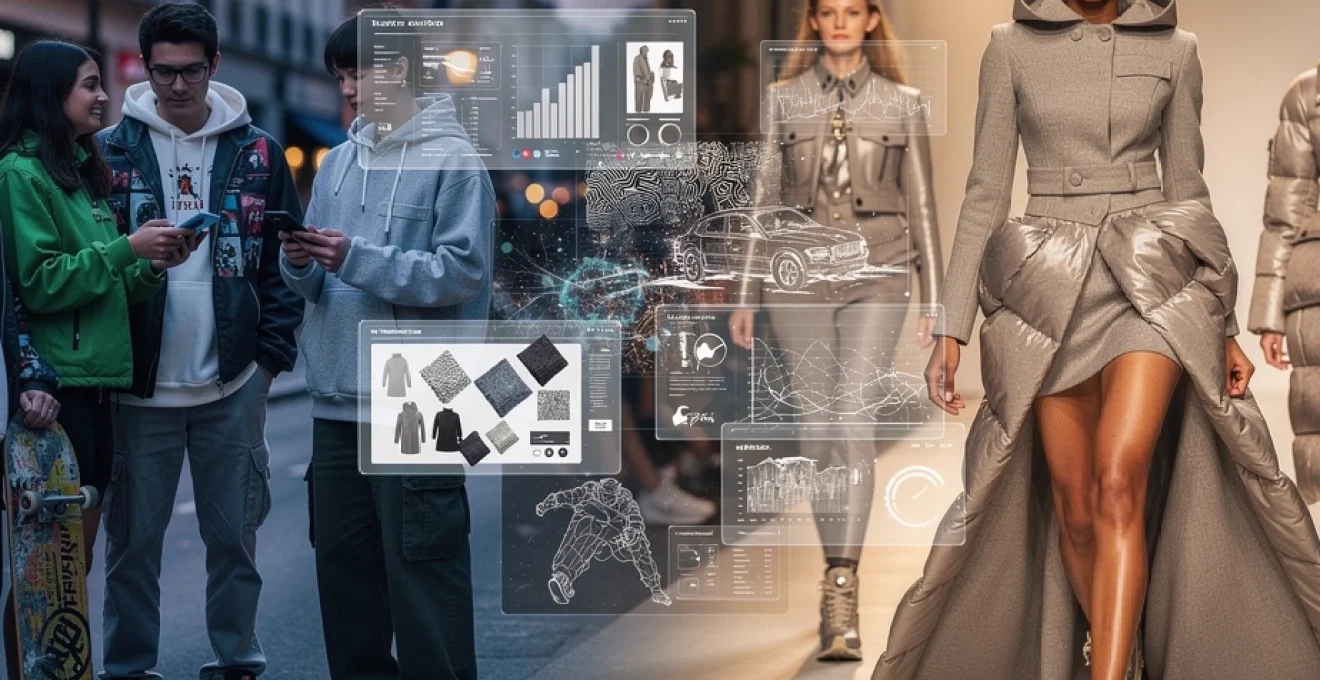
The fashion landscape has witnessed a remarkable transformation over the past two decades, fundamentally altering how we perceive luxury, authenticity, and cultural influence. What once existed as distinct, seemingly incompatible worlds—the gritty authenticity of street culture and the rarefied elegance of haute couture—have merged into a dynamic ecosystem where trends flow bidirectionally with unprecedented velocity. This convergence has redefined not only what we wear but how fashion houses operate, market their products, and connect with consumers across diverse demographics.
The migration of aesthetic elements between streetwear and luxury fashion represents more than a simple trend cycle; it reflects broader shifts in cultural values, consumer behaviour, and the democratisation of style through digital platforms. From Supreme’s limited drops commanding luxury prices to Virgil Abloh’s groundbreaking appointment at Louis Vuitton, the boundaries between high and low fashion continue to blur in ways that would have been unimaginable just a generation ago.
Aesthetic migration theory: decoding fashion’s Cross-Cultural transmission mechanisms
The movement of design elements, cultural signifiers, and aesthetic philosophies between different fashion spheres operates through complex transmission mechanisms that sociologists and fashion theorists have attempted to codify. Unlike traditional models of fashion diffusion, contemporary aesthetic migration occurs through multiple channels simultaneously, creating a web of interconnected influences that defy simple categorisation. Digital platforms accelerate these exchanges, while globalisation enables real-time cultural transmission across geographical boundaries.
Trickle-up vs Trickle-Down fashion diffusion models in contemporary design
The classical trickle-down theory, which suggested that fashion trends originated from elite society and gradually filtered to lower socioeconomic groups, has been fundamentally disrupted by the emergence of streetwear culture. Contemporary fashion increasingly demonstrates trickle-up patterns, where street-level innovations and subcultural aesthetics are adopted and reinterpreted by luxury fashion houses. This reversal has profound implications for how brands develop their creative strategies and engage with diverse consumer segments.
Major luxury conglomerates now maintain dedicated street-casting teams and cultural intelligence units to identify emerging trends from grassroots movements. The appointment of streetwear designers to prestigious positions—such as Matthew Williams at Givenchy and Virgil Abloh at Louis Vuitton—exemplifies this strategic pivot towards bottom-up innovation sourcing. These appointments signal recognition that authenticity and cultural relevance increasingly originate from street-level creativity rather than traditional design houses.
Cultural appropriation vs appreciation dynamics in luxury fashion houses
The integration of streetwear elements into luxury fashion raises complex questions about cultural appropriation versus appreciation. Many streetwear aesthetics originated from marginalised communities—particularly African American and Hispanic cultures in urban environments—yet their commercialisation often benefits luxury brands rather than originating communities. This dynamic creates tension between creative inspiration and cultural exploitation that brands must navigate carefully.
Successful brands demonstrate cultural appreciation through collaboration rather than appropriation, partnering with original creators and communities while providing attribution and economic benefits. Authentic engagement requires understanding the historical context and cultural significance of borrowed elements, moving beyond superficial aesthetic adoption to meaningful cultural dialogue and partnership.
Social media amplification effects on trend velocity acceleration
Digital platforms have fundamentally altered the speed and scale of trend transmission between fashion worlds. Instagram, TikTok, and Pinterest create visual feedback loops that can elevate underground styles to mainstream visibility within days rather than seasons. This acceleration challenges traditional fashion calendars and forces brands to develop more agile design and production processes to remain relevant.
The phenomenon of « micro-trends » emerges from this digital acceleration, where highly specific aesthetic elements can achieve global recognition and adoption before traditional fashion media even acknowledges their existence. Brands must balance rapid trend adoption with maintaining their core aesthetic identity and production capabilities, creating new challenges for creative directors and marketing teams.
Subculture-to-mainstream translation frameworks in fashion forecasting
Fashion forecasting agencies have developed sophisticated frameworks for identifying and translating subcultural innovations into mainstream commercial opportunities. These systems combine ethnographic research, social media analytics, and cultural anthropology to predict which underground movements possess mainstream potential. The accuracy of these predictions directly impacts brand positioning and product development strategies.
Key to this translation process is the ability to distinguish between transient style quirks and deeper, value-driven shifts. Forecasters increasingly map subculture aesthetics against broader social drivers—such as sustainability, gender fluidity, or digital identity—to evaluate whether a look is merely novel or genuinely transformative. In practice, this means that a graffiti-inspired graphic or a skate silhouette is rarely lifted wholesale; instead, it is abstracted, refined, and aligned with a brand’s DNA so that the resulting product feels both commercially viable and culturally rooted rather than opportunistic.
Urban streetwear genesis: analysing hip-hop, skateboarding and graffiti aesthetic origins
To understand how trends travel from streetwear to haute couture, we first need to examine the origins of urban streetwear itself. Streetwear emerged at the intersection of hip-hop, skateboarding, and graffiti cultures in the late 20th century, where clothing functioned as both practical gear and a visual manifesto. Oversized silhouettes allowed freedom of movement for dancers and skaters, while bold logos and graphics echoed the visual impact of tags and murals in the urban environment. This hybrid aesthetic laid the groundwork for what would later become a global fashion language.
Unlike traditional fashion systems driven by seasonal collections, early streetwear brands operated on a more fluid, community-centric model. Designs were often informed by local crews, record releases, or underground events rather than runway shows or editorial calendars. What united these scenes was a shared emphasis on authenticity, DIY creativity, and resistance to mainstream norms—values that continue to underpin modern streetwear even as it enters luxury spaces.
Supreme’s limited drop strategy and artificial scarcity marketing psychology
Supreme is perhaps the most cited example when discussing how streetwear shaped modern luxury marketing. Its limited drop strategy—weekly releases of tightly controlled quantities—created an artificial scarcity that radically reconfigured consumer expectations around casual clothing. By releasing small runs and never reissuing most pieces, Supreme transformed hoodies and caps into collectible objects, driving both emotional attachment and resale value.
This approach taps directly into behavioural psychology. Scarcity increases perceived value, while uncertainty around product availability triggers fear of missing out (FOMO), encouraging impulse purchases. Lines outside Supreme stores, and now digital queues online, function as social proof: if others are willing to wait, the product must be desirable. Luxury brands observed this phenomenon and began experimenting with similar tactics, from capsule collections to “drop” formats that blend streetwear hype with haute couture pricing.
Off-white’s deconstructionist approach to luxury streetwear hybridisation
Off-White, founded by Virgil Abloh, exemplifies the hybridisation of luxury and streetwear through a deconstructionist lens. Rather than merely adding logos to traditional garments, Abloh dissected the codes of both worlds—using quotation marks, industrial straps, and diagonal stripes to draw attention to the construction and context of clothing. This self-referential design language turned garments into commentary on fashion itself, blurring lines between product and concept.
Off-White’s success lies in its ability to speak fluently to both sneakerheads and couture clients. High-quality materials and Italian manufacturing standards satisfy luxury expectations, while recognisable streetwear motifs maintain cultural relevance. This dual positioning—luxury streetwear that critiques and celebrates fashion simultaneously—made Off-White a crucial bridge brand, easing consumers into the idea that a hoodie could legitimately occupy the same price bracket as a tailored jacket.
Palace skateboards’ british subcultural identity preservation tactics
While many streetwear labels globalised their aesthetic early, Palace Skateboards built its identity around a distinctly British subcultural lens. Drawing on UK skate culture, football terraces, and rave graphics, Palace’s visual language is steeped in local slang, humour, and references that resonate strongly with its core audience. Rather than diluting this identity for international appeal, the brand doubled down on its specific point of view, allowing global consumers to “buy into” an authentic British narrative.
This strategy of identity preservation is instructive for high fashion houses attempting to integrate streetwear without erasing its roots. Palace demonstrates that specificity can be a competitive advantage: the more clearly a brand articulates its cultural origins, the more compelling it becomes in a crowded market. Collaborations with Adidas and Ralph Lauren further illustrate how subcultural integrity can coexist with global distribution when both partners respect and foreground the source culture.
Fear of god’s minimalist streetwear architecture and celebrity endorsement networks
Fear of God, founded by Jerry Lorenzo, represents another strand of streetwear evolution: minimalist, architectural silhouettes grounded in American sports and religious iconography. The brand’s elongated proportions, muted palettes, and premium fabrics reframe casual garments—such as hoodies, track pants, and flannel shirts—through a lens of quiet luxury. This restrained approach appeals to consumers seeking elevated basics that still signal affiliation with street-driven aesthetics.
Celebrity endorsement has been central to Fear of God’s ascent. Early adoption by athletes and musicians, notably in the hip-hop and NBA communities, created a halo effect that reinforced the brand’s aspirational positioning. These organic networks amplify the brand’s visibility far beyond traditional advertising, turning tunnel walks and concert appearances into de facto runways. For luxury fashion houses, Fear of God’s trajectory underscores the importance of credible cultural ambassadors who genuinely inhabit the brand’s world rather than simply fronting campaigns.
Haute couture appropriation mechanisms: designer interpretations of street aesthetics
As streetwear matured into a global force, haute couture and luxury ready-to-wear began to absorb its visual and cultural vocabulary. This process is not a simple matter of adding sneakers to a runway look; it involves complex negotiation between heritage craftsmanship, brand identity, and contemporary relevance. Designers must interpret street aesthetics in ways that feel authentic to their maison while acknowledging the cultures from which these styles originate.
In many cases, this has led to a redefinition of what couture can look like. Joggers cut in silk duchesse, hoodies embroidered with thousands of beads, or puffer jackets crafted from technically advanced textiles all testify to a new paradigm where comfort and opulence coexist. The following designer case studies illustrate different methodologies for integrating streetwear into high fashion without entirely abandoning couture’s traditional emphasis on technique and storytelling.
Virgil abloh’s louis vuitton men’s directorship and streetwear integration methodology
Virgil Abloh’s appointment as artistic director of Louis Vuitton menswear in 2018 marked a pivotal moment in fashion history. As a designer whose career was rooted in DJ culture, architecture, and streetwear, Abloh brought a new set of references to one of the most established luxury houses. His methodology for integrating streetwear into Vuitton revolved around three key principles: narrative remixing, technical elevation, and inclusive casting.
Abloh frequently referred to his process as “sampling,” borrowing a term from music to describe how he reworked Vuitton’s archival codes alongside streetwear tropes. Classic monograms appeared on sneakers and utility vests, while workwear silhouettes were reinterpreted in premium leathers and jacquards. At the same time, he invested heavily in storytelling around diversity and representation, using shows and campaigns to foreground Black creativity and global youth culture. The result was a menswear line that felt both unmistakably Vuitton and deeply connected to the communities that had shaped streetwear from the beginning.
Balenciaga’s demna gvasalia era: Post-Soviet streetwear references in luxury context
At Balenciaga, Demna Gvasalia developed a radically different but equally influential approach to streetwear integration. Drawing on his experiences in post-Soviet Georgia, Gvasalia infused the brand with references to Eastern European street style, including oversized outerwear, normcore sportswear, and utilitarian accessories. These elements were often presented with an intentionally awkward, exaggerated fit that challenged conventional ideas of elegance.
By transplanting these everyday garments into a luxury setting, Gvasalia created a powerful tension between the banal and the extravagant. Logo-laden hoodies and chunky sneakers, once symbols of mass-market fashion, were recoded as high-status items through context, craftsmanship, and pricing. This strategy highlighted a critical dimension of the streetwear-to-haute-couture journey: value is not inherent in the garment type but constructed through narrative, scarcity, and brand equity.
Vetements’ anti-fashion philosophy and DHL collaboration commercial subversion
Before his tenure at Balenciaga, Gvasalia co-founded Vetements, a brand built on an explicit rejection of traditional fashion hierarchies. Vetements’ anti-fashion philosophy embraced the aesthetic of uniforms, corporate logos, and everyday workwear, most famously exemplified by its collaboration with DHL. The now-iconic yellow DHL T-shirt—priced at luxury levels—sparked debates about irony, authenticity, and the commodification of the ordinary.
This collaboration functioned as both commercial product and conceptual critique. On one hand, it capitalised on streetwear’s fascination with logos and scarcity; on the other, it highlighted how branding and context can transform a low-cost object into a luxury statement. For observers trying to decode how trends move between streetwear and haute couture, Vetements offered a clear lesson: subversion itself can be a marketable aesthetic, and questioning the rules of fashion can become one of the industry’s most powerful marketing tools.
Gucci’s alessandro michele vision: maximalist streetwear elements in italian craftsmanship
Under Alessandro Michele, Gucci embarked on a maximalist reinvention that fused Italian craftsmanship with street-level exuberance. Tracksuits in jewel-toned velour, logo-splashed sneakers, and oversized graphic hoodies appeared alongside embellished gowns and tailored suits, creating a visual universe where “high” and “low” references collided without hierarchy. Michele treated streetwear motifs—like patches, slogans, and vintage sportswear—as ingredients in an eclectic narrative rather than as standalone trends.
This approach resonated strongly with a generation accustomed to remix culture and personal styling over strict dress codes. By offering luxury streetwear pieces that could be mixed with archival-inspired tailoring, Gucci encouraged consumers to construct their own fashion identities. At the same time, meticulous embroidery, hand-finishing, and heritage leatherwork ensured that these pieces met the technical standards expected of a historic Italian house. The message was clear: you could wear a hoodie and still participate fully in the world of luxury, provided that hoodie embodied the brand’s craftsmanship and storytelling.
Digital fashion forecasting platforms: WGSN, trendalytics and predictive analytics systems
Behind the visible exchange of ideas between streetwear and haute couture lies a sophisticated layer of data-driven forecasting. Platforms such as WGSN, Trendalytics, and Edited aggregate vast amounts of information—from search trends and social media mentions to retail sell-through rates—to predict which aesthetics are likely to gain traction. These systems function as early-warning radars, spotting the rise of a niche sneaker silhouette or a specific graphic motif months before it surfaces on mainstream runways.
For brands navigating the crossover between streetwear and luxury, predictive analytics can help distinguish between a fleeting TikTok moment and a sustained cultural shift. However, the most effective use of these tools combines quantitative data with qualitative insight. While dashboards can show that searches for “oversized varsity jacket” or “Y2K cargo pants” are spiking, it still requires human interpretation to understand why these items resonate—whether they signal nostalgia, rebellion, comfort, or a desire for digital-era self-branding. The brands that thrive are those that treat analytics as a conversation starter rather than a script.
Collaborative design paradigms: high-low fashion partnership case studies
One of the most visible manifestations of trends travelling between streetwear and haute couture is the proliferation of high-low collaborations. These partnerships—between luxury designers and mass-market retailers, or between heritage houses and street labels—serve as laboratories where new aesthetics, pricing strategies, and distribution models can be tested. They also play a crucial role in democratising access to design, allowing wider audiences to experience elevated fashion without the full luxury price tag.
From a strategic perspective, collaborations offer mutual benefits. Mass retailers gain cultural cachet and press attention, while luxury brands access new customer segments and experiment with more casual product categories. For consumers, these collections often function as entry points into the world of designer fashion, providing a tangible connection to brands they may previously have only encountered through runway coverage or social media.
H&M designer collaborations: democratising luxury through mass market distribution
H&M’s designer collaborations, launched in 2004 with Karl Lagerfeld, pioneered the concept of bringing high fashion to the high street. Subsequent partnerships—with Balmain, Maison Margiela, and Versace, among others—turned drop days into global events, with lines forming outside stores and websites crashing under demand. These capsules distilled key elements of a designer’s aesthetic into more affordable, ready-to-wear pieces, effectively translating runway codes into accessible street uniforms.
From a trend migration standpoint, these collaborations accelerated the diffusion of luxury aesthetics into everyday wardrobes. Iconic details—such as Balmain’s military embellishments or Margiela’s deconstructed silhouettes—spread far beyond the traditional luxury clientele. At the same time, the scarcity of these collections echoed streetwear’s drop culture, reinforcing the idea that limited availability could exist at multiple price points. For emerging designers and established maisons alike, H&M’s model illustrated how controlled mass-market exposure could enhance, rather than dilute, brand desirability when executed thoughtfully.
Uniqlo’s +J series with jil sander: minimalist luxury at accessible price points
Uniqlo’s +J collaboration with Jil Sander took a different approach, focusing on quiet refinement rather than spectacle. Instead of logo-driven statement pieces, +J offered meticulously cut coats, crisp shirts, and streamlined knitwear that embodied Sander’s minimalist philosophy. The collections demonstrated that “luxury” could be communicated through proportion, fabric choice, and construction quality rather than overt branding.
For consumers navigating the blurred line between streetwear and haute couture, +J provided a blueprint for building a versatile, elevated wardrobe grounded in essentials. In many ways, it anticipated the current emphasis on “elevated basics” that sit comfortably between a premium hoodie and a bespoke blazer. The success of the series also underscored a key lesson for collaborations: when the designer’s ethos aligns with the retailer’s core strengths—in this case, Uniqlo’s focus on everyday functionality—the result can feel timeless rather than trend-chasing.
Target’s designer partnerships: missoni, versace and luxury brand accessibility strategies
In the United States, Target’s designer partnerships further normalised the idea that high fashion could coexist with mass retail. Collections with Missoni, Versace, and Rodarte brought distinctive patterns, colour palettes, and silhouettes to suburban shoppers who might never step into a flagship boutique. The Missoni x Target launch in 2011, for instance, sold out within hours and temporarily crashed the retailer’s website, illustrating the scale of demand for accessible luxury-inspired design.
These collaborations highlighted another dimension of trend travel: geographical reach. By placing designer-influenced pieces in thousands of stores across the country, Target helped diffuse runway aesthetics into regions far from traditional fashion capitals. At the same time, capsule collection formats preserved a sense of exclusivity, echoing both streetwear drops and limited couture runs. For luxury brands, these partnerships offered a controlled way to experiment with broader exposure without permanently altering their core pricing or distribution structures.
Fashion week influence networks: paris, milan, london and new york trend dissemination
Even as digital platforms and street-level scenes shape fashion more than ever, the four major fashion weeks—Paris, Milan, London, and New York—remain crucial nodes in the global influence network. These cities act as amplifiers and arbiters, where the dialogue between streetwear and haute couture is staged, debated, and broadcast worldwide. Runway shows, presentations, and off-schedule events create a dense ecosystem in which designers, buyers, editors, and influencers collectively decide which trends will be amplified in the coming seasons.
Paris, with its concentration of heritage maisons, often crystallises how luxury interprets street aesthetics at the highest level—from Louis Vuitton’s hybrid collections to Balenciaga’s avant-garde street tailoring. Milan foregrounds craftsmanship and fabrication, showing how Italian houses integrate sportswear and casual elements into long-standing artisanal traditions. London, known for its experimental spirit, frequently incubates boundary-pushing designers who treat streetwear and couture as equal tools in their creative arsenal. New York, rooted in sportswear and commercial pragmatism, showcases how trends are adapted for real-world wearability and mass-market appeal.
Crucially, fashion weeks now extend far beyond the physical front row. Street-style photography, live-streamed shows, and instant social media reactions turn city streets into parallel runways where the interplay between streetwear and high fashion is on full display. We see editors in couture gowns paired with chunky sneakers, buyers in tailored coats layered over graphic hoodies, and influencers in archive designer pieces styled with current street drops. In this constantly evolving feedback loop, trends no longer travel in a single direction—from runway to street or vice versa—but circulate continuously, reshaping both worlds in the process.