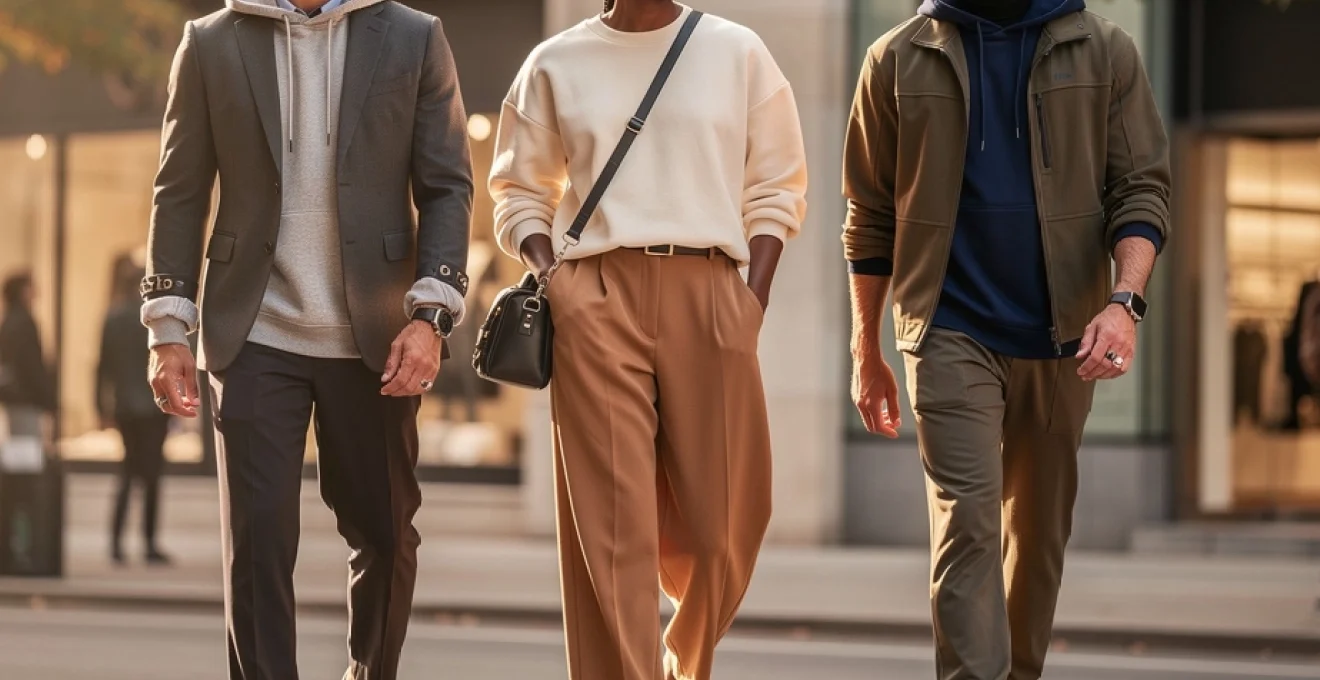
The evolution of sweatwear from gymnasium staples to high-fashion essentials represents one of fashion’s most significant transformations in recent decades. Modern styling approaches have elevated hoodies and sweatshirts beyond their athletic origins, creating sophisticated looks that seamlessly blend comfort with contemporary aesthetics. Today’s fashion-conscious individuals understand that achieving a polished appearance doesn’t require sacrificing comfort, particularly when mastering the art of strategic layering and intentional styling choices.
Contemporary sweatwear styling demands a nuanced understanding of proportion, fabric selection, and contextual appropriateness. The key lies in treating these pieces as foundational garments rather than afterthoughts, allowing for creative expression whilst maintaining visual sophistication. Whether navigating professional casual environments or curating weekend ensembles, the modern approach to hoodie styling emphasises intentional coordination over casual indifference.
Contemporary layering techniques for elevated sweatshirt styling
Mastering the art of layering transforms basic sweatwear into sophisticated ensembles that rival traditional tailored pieces. The strategic placement of complementary garments creates visual depth whilst addressing practical concerns such as temperature regulation and professional appropriateness. Modern layering techniques prioritise purposeful construction over haphazard accumulation, ensuring each element contributes meaningfully to the overall aesthetic.
Structured blazer integration with oversized hoodies
The juxtaposition of structured blazers with oversized hoodies creates compelling visual tension that epitomises contemporary fashion’s embrace of high-low mixing. This combination requires careful attention to proportion balance, ensuring the blazer’s shoulders align naturally with the hoodie’s relaxed silhouette. The hoodie should extend approximately 2-3 inches beyond the blazer’s hem, creating intentional layering reveals that appear deliberate rather than accidental.
Colour coordination plays a crucial role in this styling approach, with tonal harmonies often proving more sophisticated than stark contrasts. A charcoal blazer paired with a heather grey hoodie creates subtle depth, whilst maintaining professional sensibilities. The blazer’s lapels should remain unbuttoned to showcase the hoodie’s neckline, creating a relaxed formality that speaks to modern workplace evolution.
Turtleneck underlayering for sophisticated athleisure aesthetics
Incorporating fitted turtlenecks beneath hoodies introduces refined textures whilst addressing potential modesty concerns in professional environments. This technique works particularly well with crew-neck sweatshirts, where the turtleneck’s collar creates elegant framing around the face. The contrast between the turtleneck’s sleek silhouette and the sweatshirt’s relaxed drape produces visually appealing proportional balance.
Fabric selection becomes paramount when employing this technique, as bulky materials can create unflattering volume accumulation. Lightweight merino wool or cotton-blend turtlenecks provide necessary structure without compromising the sweatshirt’s intended comfort. The turtleneck should extend slightly beyond the sweatshirt’s cuffs, creating intentional layering details that demonstrate considered styling choices.
Cropped jacket combinations with Standard-Fit crewnecks
Cropped jackets paired with standard-fit crewneck sweatshirts create modern proportional relationships that flatter diverse body types. This combination works particularly well with high-waisted bottoms, as the cropped jacket’s hemline creates natural waist definition whilst the crewneck provides comfortable coverage. The key lies in selecting jackets that hit precisely at the natural waistline, avoiding awkward mid-torso termination points.
Texture variations enhance this styling approach significantly. A wool cropped blazer over a cotton-fleece crewneck creates tactile interest whilst maintaining seasonal appropriateness. The jacket should remain open to showcase the sweatshirt’s clean lines, with colour choices reflecting either complementary or monochromatic schemes depending on desired visual impact.
Tailored outerwear pairing with premium cotton blends
High-quality tailored outerwear elevates premium cotton blend hoodies into sophisticated ens
embles that register as considered, not casual. When working with premium cotton blends, look for hoodies and sweatshirts with dense yet soft fabrication, as these materials hold their shape beneath structured coats and trench silhouettes. Tailored outerwear such as classic camel coats, double-breasted overcoats, or streamlined parkas should skim cleanly over the sweatshirt without pulling across the shoulders or chest.
For a modern look, aim for streamlined colour palettes and minimal branding, allowing the cut and texture of both pieces to take precedence. A navy wool overcoat layered over an ecru loopback hoodie, styled with tapered trousers and leather sneakers, creates an elevated streetwear outfit suitable for creative offices or evening engagements. Pay attention to hardware details—refined zips, tonal drawcords, and subtle logo placements ensure that even the most relaxed hoodie harmonises with precision-cut outerwear.
Fabric technology and material selection for urban streetwear
The foundation of a truly modern hoodie outfit lies in informed fabric selection. Contemporary sweatwear has evolved far beyond basic cotton, incorporating advanced textiles that enhance comfort, drape, and durability. Understanding how different materials behave on the body allows you to choose hoodies and sweatshirts that not only look current but also perform across varied climates and wear conditions.
From French terry and brushed fleece to organic cotton blends and technical performance fabrics, each textile offers distinct benefits for streetwear styling. When you recognise these characteristics, you can align your sweatwear choices with your lifestyle—whether that means lightweight layers for commuting, insulating hoodies for winter, or moisture-wicking options for all-day wear. Think of fabric knowledge as your hidden styling tool, quietly shaping how polished your hoodie streetwear outfit appears.
French terry weight classifications and styling applications
French terry remains a cornerstone of modern sweatwear due to its breathable, looped interior and smooth exterior. Weight classification, usually measured in grams per square metre (GSM), determines how a French terry hoodie will sit on the body and which styling scenarios it suits best. Lighter weights (around 250–300 GSM) drape more fluidly, making them ideal for layered outfits under blazers, leather jackets, or trench coats where excess bulk would be distracting.
Mid-weight French terry (approximately 320–360 GSM) strikes a balance between structure and comfort, perfect for standalone hoodies styled with denim, cargos, or tailored joggers. Heavier French terry weights, which can exceed 380 GSM, create a more sculptural silhouette that holds its shape, lending themselves to minimalist outfits where the hoodie becomes the focal point. When you are planning how to style sweatwear for a modern look, selecting the appropriate French terry weight ensures that your outfit reads intentional rather than improvised.
Brushed fleece interior construction for luxury comfort
Brushed fleece sweatshirts and hoodies feature a raised, plush interior created by mechanically brushing the fabric’s underside. This process traps more air within the fibres, enhancing thermal retention and delivering the soft, cocoon-like feel associated with luxury loungewear. While brushed fleece can skew casual, pairing it with more structured or refined pieces immediately elevates the overall impression.
For cold-weather urban streetwear, a brushed fleece hoodie layered beneath a sharp overcoat or technical parka offers both warmth and a sophisticated textural contrast. Because brushed fleece tends to be thicker, opt for clean, relatively minimal silhouettes elsewhere in your look—think slim wool trousers, leather Chelsea boots, or sleek sneakers. This approach keeps your hoodie outfit from feeling bulky while still prioritising comfort during long city days.
Organic cotton blend compositions and drape characteristics
As sustainability becomes an increasingly central concern in fashion, organic cotton blends have moved from niche to mainstream within modern sweatwear design. Organic cotton often appears alongside modal, recycled polyester, or elastane, each fibre subtly influencing drape, stretch, and resilience. Higher cotton content typically yields a matte finish and natural feel, while the addition of synthetic fibres can enhance recovery and reduce wrinkling.
For a refined, contemporary hoodie streetwear outfit, look for organic cotton blends with a smooth face and moderate weight. These fabrics skim the body rather than cling, creating clean lines that work well with tailored pieces like pleated trousers or streamlined midi skirts. If you value fluid movement, consider blends with modal or TENCEL, which introduce a silkier hand-feel and slightly more drape—ideal for minimalist monochrome looks where fabric quality does most of the visual work.
Technical performance fabrics in contemporary hoodie design
Technical hoodies initially developed for athletic performance have been seamlessly absorbed into urban streetwear. Fabrics featuring moisture-wicking properties, four-way stretch, and quick-dry capabilities now appear in silhouettes refined enough for travel days, hybrid work environments, and off-duty city exploration. These textiles often include nylon, polyester, or proprietary blends that resist creasing and maintain their shape over time.
When styling performance hoodies for a modern look, lean into their functional aesthetic by pairing them with equally streamlined pieces—think tapered technical joggers, cargo trousers with subtle pocketing, or minimalist sneakers. Details such as bonded seams, matte zips, and laser-cut ventilation can become subtle design features that differentiate your hoodie from basic loungewear. Used thoughtfully, technical sweatwear bridges the gap between utility and style, allowing you to move effortlessly between gym, commute, and social settings.
Silhouette engineering and proportional balance strategies
Modern hoodie styling is as much about silhouette engineering as it is about colour and fabric. Because sweatwear naturally leans relaxed, the challenge lies in shaping proportions so the overall outfit appears deliberate. By manipulating hood size, body length, sleeve finish, and shoulder construction, you can guide the eye and highlight your preferred features.
Think of your hoodie or sweatshirt as an architectural element within your outfit. Adjusting its lines—where it starts, ends, and gathers—changes how tall you appear, where your waist seems to sit, and how dynamic or minimal the look feels. Understanding these proportional strategies gives you precise control over how to style sweatwear for a modern look that suits your body and your daily context.
Oversized hood proportions with tapered bottom hemlines
Oversized hoods impart a sense of anonymity and drama that aligns perfectly with contemporary streetwear aesthetics. Yet, without counterbalance, they can overwhelm the frame, particularly on more petite wearers. Pairing an exaggerated hood with a tapered hemline—either via elasticated waistband, ribbed cuff, or subtle drawcord—creates visual anchoring, ensuring the garment reads as intentional design rather than ill-fitting sportswear.
To maintain proportional harmony, style these hoodies with streamlined bottoms such as slim joggers, cigarette trousers, or straight-leg denim cropped just above the ankle. This combination echoes the silhouette of a sculptural top over a tailored base, keeping the focus on the hood while preserving a clean vertical line. If you are experimenting with a streetwear black hoodie featuring an oversized hood, this tapered approach at the hem is especially effective in achieving a sharp, modern profile.
Cropped length calculations for High-Waisted trouser pairings
Cropped hoodies and sweatshirts have become central to contemporary styling, particularly when paired with high-waisted trousers, skirts, or wide-leg jeans. The key lies in precise length calculation: ideally, the hem of the sweatshirt should finish either at or just above the top of your waistband. This alignment creates a flattering visual breakpoint, accentuating the narrowest part of your torso without exposing more midriff than you intend.
As a rule of thumb, a cropped sweatshirt that ends 1–2 inches below your natural waist suits most body types when balanced with voluminous or structured bottoms. This proportion works especially well for those looking to elongate the leg line, as the elevated waistband gives the illusion of extra height. When you are planning how to style a hoodie with wide-leg or barrel-leg silhouettes, this strategic crop maintains shape and avoids the “boxy on boxy” effect that can sometimes result from mismatched lengths.
Sleeve length adjustments for layered cuff reveals
Sleeve length often goes overlooked, yet it can dramatically influence how finished a hoodie outfit appears. Intentionally shortened or slightly pushed-up sleeves create room for layered cuff reveals—a classic shirt cuff, a ribbed knit, or even a slim technical base layer. This detail, while subtle, instantly suggests thoughtful styling and adds a sense of depth to otherwise minimal looks.
For a modern, polished effect, aim for your hoodie’s sleeve to break just at the wrist bone when worn alone, allowing 0.5–1 inch of underlayer cuff to peek out when styling multiple pieces. This principle applies whether you are wearing a hoodie under a blazer, beneath a coat, or over a shirt. Like a well-composed photograph, the small frame of fabric at the wrist draws the eye and provides a visual echo of any layering at the neckline or hem.
Dropped shoulder construction and torso elongation effects
Dropped shoulder construction—a seam that sits below the natural shoulder line—has become synonymous with relaxed, contemporary cuts. While this detail contributes to a laid-back, streetwear-inspired mood, it also subtly affects how the torso is perceived. Because the shoulder line visually widens, the body of the hoodie can appear shorter, and the torso slightly elongated, especially when styled with higher-waisted bottoms.
To harness this effect, pair dropped-shoulder hoodies with streamlined, vertically oriented pieces such as straight-leg trousers, tailored track pants, or column skirts. Avoid excessive bulk at the hip, which can disrupt the elongated impression and make the overall silhouette feel bottom-heavy. For those who prefer a cleaner shoulder, consider hoodies with a mild drop rather than extreme slouch—this preserves comfort while maintaining structure suitable for smart-casual environments.
Seasonal transitional styling with Climate-Adaptive approaches
One of the greatest strengths of modern sweatwear lies in its versatility across seasons. Thoughtful layering and fabric selection enable hoodies and sweatshirts to transition effortlessly from late summer evenings to deep winter commutes. The aim is to adapt your hoodie streetwear outfit to shifting temperatures without sacrificing the streamlined aesthetic you have curated.
In transitional months such as early spring and autumn, consider mid-weight French terry or organic cotton blends that breathe well yet provide moderate warmth. Layer these with lightweight outerwear—unlined trench coats, nylon anoraks, or denim jackets—for coverage that you can easily remove as the day warms. During winter, step up to brushed fleece or heavier French terry, using your hoodie as an insulating mid-layer beneath wool coats or technical shells, and rely on accessories like beanies, scarves, and gloves to fine-tune thermal comfort.
Accessory integration and hardware enhancement techniques
Accessories and hardware details offer powerful opportunities to refine your hoodie styling without adding complexity. Because sweatwear inherently leans minimal, each additional element—whether a metal zip, a polished chain, or a structured bag—registers strongly within the outfit. The goal is to use these components to signal intentionality and cohesion.
Start with the hardware built into your hoodie itself. Matte-tone eyelets, metal-tipped drawcords, and two-way zips in gunmetal or brushed silver can elevate even a simple black hoodie into something that feels considered and premium. From there, you can echo these finishes with jewellery and accessories: a slim watch with a metal bracelet, a single chain resting over the hoodie, or a discreet signet ring. Bags also play a defining role in modern streetwear looks—crossbody bags, sleek backpacks, or minimal totes bring both function and form, neatly completing the silhouette.
Occasion-specific sweatwear coordination and dress code navigation
Navigating different dress codes in a hoodie or sweatshirt is entirely possible when you apply the principles of proportion, fabric, and styling discussed above. For business-casual or smart-casual contexts, opt for premium cotton blends or fine French terry in subdued, neutral tones. Pair a standard-fit hoodie under a structured blazer or tailored coat, add pressed trousers and leather sneakers or loafers, and keep accessories understated to signal professionalism.
For social occasions—weekend gatherings, gallery visits, or informal dinners—you can lean more heavily into streetwear aesthetics. Graphic hoodies styled with dark denim, cargo trousers, or statement sneakers create a confident yet relaxed impression. If you are dressing for travel or all-day city wear, technical performance hoodies combined with functional outerwear and comfortable footwear offer a polished take on athleisure that still looks sharp in transit photos and evening meetups alike. By adjusting fabric, fit, and coordinating pieces, you can integrate sweatwear into nearly any modern setting while maintaining a cohesive, contemporary look.