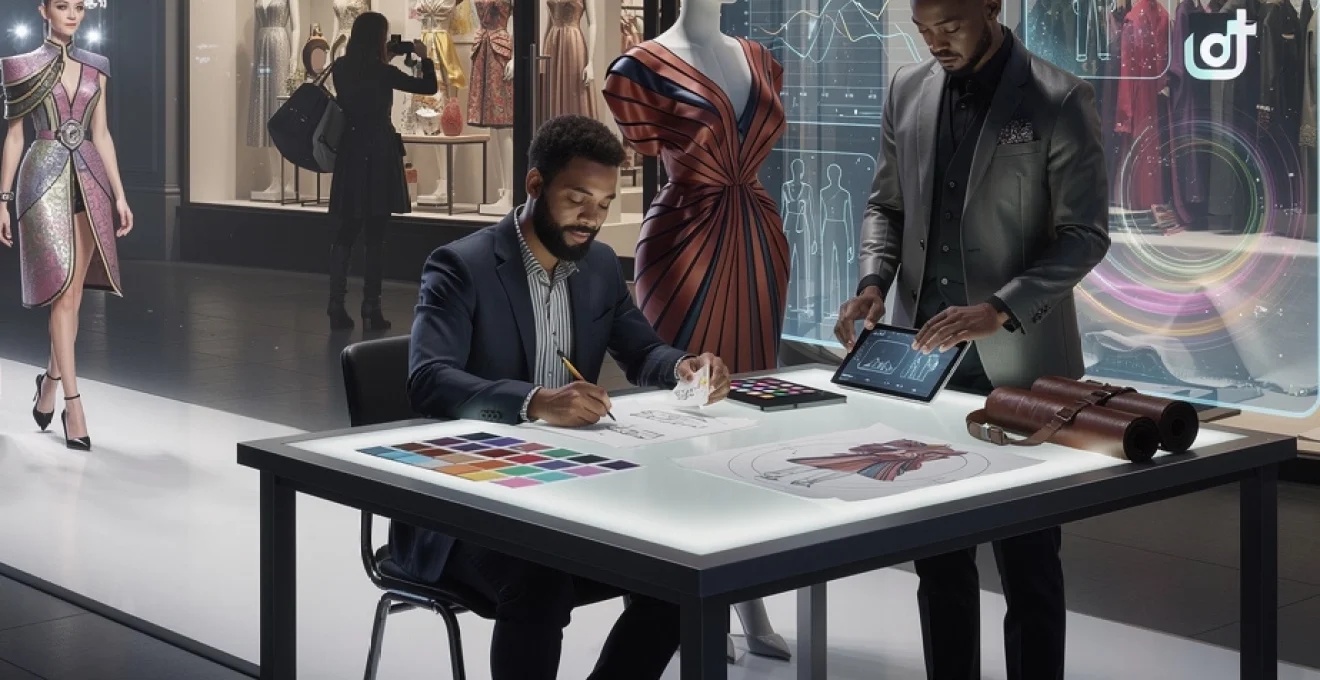
Fashion designers occupy a pivotal position in the global style ecosystem, wielding unprecedented influence over what millions of people wear each day. Through sophisticated design processes, strategic timing, and deep cultural awareness, these creative professionals orchestrate the complex dance between artistic vision and commercial viability that defines contemporary fashion. The modern fashion landscape operates through intricate networks of inspiration, forecasting, and rapid adaptation, where a single designer’s vision can spark movements that ripple across continents within weeks.
The relationship between designers and trend creation has evolved dramatically in the digital age, moving beyond traditional seasonal shows to encompass real-time social media engagement, data-driven decision making, and collaborative partnerships across industries. Understanding how designers shape trends requires examining both the creative processes behind collection development and the sophisticated marketing machinery that transforms runway concepts into mainstream fashion phenomena.
Fashion design innovation cycles and seasonal collection development
The foundation of trend creation lies within the carefully orchestrated innovation cycles that govern fashion design. Modern designers operate on multiple timelines simultaneously, developing concepts for collections that may not reach consumers for 12 to 18 months. This extended development period allows for extensive research, sampling, and refinement, but also requires designers to possess an almost prophetic understanding of future cultural moods and consumer desires.
Seasonal collection development follows a sophisticated methodology that combines artistic vision with market analysis. Designers begin each collection by identifying cultural signals, from political movements to technological advances, that might influence consumer behaviour. These signals inform colour palettes, silhouettes, and material choices that will eventually define seasonal trends. The most successful designers excel at translating abstract cultural concepts into tangible, wearable pieces that resonate with their target audience while maintaining commercial viability.
Pre-a-porter versus haute couture trend origination mechanisms
The distinction between ready-to-wear and haute couture represents two fundamentally different approaches to trend creation. Haute couture, with its emphasis on craftsmanship and artistic expression, often serves as the conceptual laboratory where designers explore radical ideas without commercial constraints. These experimental pieces frequently introduce innovative construction techniques, unusual material combinations, or avant-garde silhouettes that gradually filter down into ready-to-wear collections.
Ready-to-wear collections, conversely, must balance creative vision with practical considerations such as production costs, retail price points, and broad market appeal. This commercial imperative often leads to more refined, accessible interpretations of haute couture concepts. The relationship between these two segments creates a trend acceleration mechanism where couture provides inspiration and ready-to-wear provides mass adoption pathways.
Fashion week runway shows as trend dissemination platforms
Fashion Week events in Paris, Milan, New York, and London function as crucial trend dissemination platforms, where designers present their latest creations to a global audience of buyers, journalists, and influencers. These shows serve multiple purposes beyond simple product presentation, acting as cultural statements, brand positioning exercises, and trend-setting spectacles that capture media attention worldwide.
The modern Fashion Week format has evolved to maximise trend impact through strategic timing, social media integration, and celebrity attendance. Designers carefully choreograph every aspect of their presentations, from music selection to styling choices, to create memorable moments that photograph well and generate social media buzz. The immediate global reach of these events means that runway trends can begin influencing street style and retail buying decisions within hours of presentation.
Fast fashion adaptation timelines from designer concept to high street
The speed at which designer concepts translate into high street fashion has accelerated dramatically in recent years, with some fast fashion retailers now capable of producing runway-inspired pieces within weeks of major fashion shows. This rapid adaptation process relies on sophisticated supply chain management, design simplification techniques, and global manufacturing networks that prioritise speed over traditional quality metrics.
However, this acceleration has also created tension within the fashion industry, as original designers find their concepts replicated at dramatically lower price points before their own products reach retail. The fast fashion adaptation timeline demonstrates how trend democratisation can both expand fashion accessibility and undermine the economic model that supports original design innovation.
Capsule collection strategies and limited edition release impact
Capsule collections and limited edition releases have emerged as powerful trend
Capsule collections and limited edition releases have emerged as powerful trend accelerators and demand generators. By tightly curating a small number of pieces around a clear narrative, designers create a sense of urgency and scarcity that pushes consumers to buy quickly rather than wait for markdowns. These drops often test bolder silhouettes, experimental fabrics, or niche aesthetics that might feel risky in a mainline collection but can become breakout fashion trends if they resonate with early adopters.
From a strategic perspective, capsule collections function as live laboratories for trend validation. Designers and merchandisers track sell-through rates, waitlists, and social media buzz to identify which ideas have the strongest pull. When a limited-edition sneaker collaboration or micro‑collection sells out in hours, brands have concrete data to scale that design language into broader ready‑to‑wear lines. In this way, limited releases not only shape hype cycles but also inform the long-term direction of modern clothing trends.
Digital fashion forecasting and consumer behaviour analytics
Behind the creative theatre of fashion, a sophisticated layer of digital forecasting and analytics quietly guides many design decisions. Today’s fashion designers no longer rely solely on intuition; they collaborate with data scientists, trend forecasters, and digital product teams to understand how styles will perform across regions and customer segments. Real-time data from e‑commerce platforms, social media, and search engines helps designers gauge which colours, cuts, and categories are gaining traction long before a season launches.
This data-driven approach does not replace creativity; it acts more like a compass than a blueprint. By combining qualitative insight with quantitative evidence, brands can avoid overproducing fleeting fads while backing trends that show genuine, sustained momentum. For anyone working in fashion design, learning to read and translate this information has become as essential as sketching or draping.
WGSN and peclers paris trend prediction methodologies
Specialist agencies such as WGSN and Peclers Paris sit at the heart of digital fashion forecasting. Their teams monitor everything from runway shows and music videos to macroeconomic indicators and climate reports, then synthesise this into long-range trend forecasts. Typically, these firms work on a 18‑ to 24‑month horizon, giving designers enough time to integrate predicted trends into research, development, and production calendars.
WGSN, for instance, blends AI-driven data modelling with an international network of human experts who “ground-truth” what the numbers suggest. They examine signals across society, technology, environment, politics, and culture to determine whether a recurring motif is a true trend or just a coincidence. Peclers Paris, meanwhile, is known for rich, narrative-led trend books that translate social shifts into colour ranges, material directions, and lifestyle attitudes. Designers use these resources as starting points for mood boards, fabric sourcing, and silhouette planning, adapting the overarching vision to their own brand DNA.
Social media sentiment analysis through instagram and TikTok data mining
While traditional forecasting looks far ahead, social media sentiment analysis offers a near real-time snapshot of what people are actually wearing, sharing, and searching. By mining Instagram hashtags, TikTok sounds, and user-generated outfit posts, brands can detect micro-trends as they form. A spike in content tagged with a niche aesthetic—say, “blokecore” or “mob wife style”—can signal that a grassroots movement is ready to be translated into commercial product.
Advanced analytics tools classify posts by garment type, colour, and styling combinations, then map engagement metrics such as likes, comments, and saves. Designers gain insight into not just what looks popular, but why it resonates: is it nostalgia, practicality, status signalling, or escapism? Much like listening in on a global focus group, this social listening allows you to understand the emotional drivers behind a trend. The challenge is to respond quickly without chasing every viral moment, which can dilute a brand’s identity.
Ai-powered style recognition and purchase pattern algorithms
Artificial intelligence now plays a central role in connecting what people browse with what they ultimately buy. Computer vision models scan millions of images—from runways to street style feeds—to recognise recurring shapes, lengths, and styling cues. These systems can identify, for example, that “slouchy low-rise denim with puddling hems” is gaining ground over cropped, rigid silhouettes across multiple markets.
When combined with purchase history and search data, AI helps designers and merchandisers spot gaps and opportunities. If you see growing interest in vegan leather trench coats but limited supply in mid-tier price ranges, that insight can directly shape the next season’s product brief. Some brands even feed AI-generated trend scores into line planning tools, weighting investment toward items with higher predicted sell-through. Used thoughtfully, these algorithms act like a second pair of eyes, flagging patterns that the human brain might miss amidst the flood of information.
Pantone colour institute seasonal palette influence on designer collections
Colour is often the first thing we register in a garment, and few institutions influence colour direction as strongly as the Pantone Colour Institute. Each year, Pantone’s Colour of the Year and its seasonal fashion palettes signal which hues will feel “of the moment” across apparel, interiors, graphics, and beyond. When Pantone selected Mocha Mousse for 2025, for example, it immediately sparked conversations about warm neutrals, tactility, and comfort-driven luxury.
Designers integrate these palettes in nuanced ways, from anchor coats and knitwear to linings and accessories. Rather than copying Pantone swatches outright, they often tweak saturation and undertones to match their brand’s identity and target market. For you as a designer or product developer, aligning with Pantone’s direction can create a sense of visual coherence across an entire collection—and even across industries. It also helps ensure that when consumers mix pieces from different brands in their wardrobe, the colours harmonise, reinforcing the broader trend.
Celebrity styling partnerships and brand ambassador collaborations
In the era of hyper-visual media, celebrities and their stylists have become powerful co-authors of fashion trends. A single red carpet look, tour costume, or paparazzi snap can launch a new silhouette into the mainstream overnight. Designers actively cultivate these moments through formal brand ambassador deals, capsule collaborations, and close partnerships with stylists who shape the image of stars across film, music, and sports.
These collaborations work on several levels. At the top of the pyramid, couture gowns and custom stage outfits create powerful images that circulate via press coverage and fan accounts. Further down, designers translate those aesthetics into commercial lines—think tour merchandise, high-street collaborations, or diffusion labels—that allow fans to buy into the look at more accessible price points. When Beyoncé reintroduced the cowboy aesthetic with Cowboy Carter, for instance, designers from luxury to fast fashion seized on rhinestone hats, denim-on-denim, and embellished boots, turning a performance concept into a broader Western-inspired fashion trend.
Celebrity partnerships also allow designers to tap into specific communities and narratives. A collaboration with a Gen Z pop star may push experimental streetwear shapes, while an athlete ambassador can spotlight technical fabrics and performance-focused design. The key is authenticity: audiences can quickly sense when a celebrity capsule feels forced or disconnected from their real-life style. Successful partnerships create a feedback loop where the celebrity’s personal wardrobe, the designer’s vision, and fan interpretations continually influence one another.
Sustainable fashion design principles reshaping industry standards
As consumers become more conscious of fashion’s environmental and social impact, designers are rethinking how trends are created in the first place. Sustainability is no longer a niche selling point; it is rapidly becoming an industry standard driven by emerging cultural and societal shifts that shapes everything from material selection to end-of-life planning. Instead of designing trends that burn bright and disappear, forward-thinking designers aim to create styles that can live through multiple cycles, be repaired, or be remade into something new.
This shift changes what “modern clothing trends” look like. We see more timeless silhouettes, modular garments, and neutral colour stories that work across seasons. Yet sustainability also fuels innovation: bio-based textiles, recycled fibres, and traceable supply chains open up fresh aesthetic possibilities. For designers, the challenge is to balance the excitement of the new with the responsibility of long-term durability, asking not only “Will this look good next season?” but also “What happens to this piece in five or ten years?”
Circular design methodology and zero-waste pattern making techniques
Circular design starts with the end in mind. Instead of treating garments as disposable, designers plan for multiple lifecycles—through repair, resale, upcycling, or fibre-to-fibre recycling. Practically, this can mean choosing mono-material constructions that are easier to recycle, using detachable components, or avoiding unnecessary trims that complicate disassembly. You can think of it as designing clothing like a building that will one day be renovated rather than demolished.
Zero-waste pattern making takes this philosophy to the cutting table. Traditional pattern layouts can waste 10–20% of fabric; zero-waste techniques aim to use every centimetre by cleverly tessellating pattern pieces or designing garments that are cut from a single, continuous piece of cloth. This often results in unexpected seams and silhouettes, which can in turn inspire new aesthetics. What begins as a sustainability constraint becomes a creative catalyst, pushing designers to experiment with drape, proportion, and construction in ways they might not have considered otherwise.
Stella McCartney’s vegan leather innovation and material science advancement
Stella McCartney is frequently cited as a benchmark for how sustainable values can define, rather than limit, a luxury brand. Her refusal to use animal leather has driven significant investment into alternatives, from plant-based “leathers” made with mycelium or cactus to recycled synthetic composites. These materials do more than reduce environmental impact; they introduce new surface textures, weights, and finishes that influence the look and feel of contemporary fashion.
Material science collaborations—between designers, biotech startups, and textile mills—are now key engines of trend creation. When a breakthrough fabric hits the market, it often brings its own aesthetic with it: softer structures, matte finishes, or futuristic sheens. As more high-profile designers champion vegan materials on runways and red carpets, they normalise these innovations and create demand further down the value chain. Over time, what started as an ethical stance becomes a mainstream style language that shapes handbags, outerwear, and footwear across price points.
Cradle-to-cradle certification requirements in contemporary fashion design
Cradle-to-cradle (C2C) certification formalises many of these sustainability ambitions into a rigorous framework. To achieve certification, products must meet strict criteria across material health, product circularity, clean air and climate protection, water stewardship, and social fairness. For fashion designers, working toward C2C standards influences decisions at every stage: fibre selection, dye chemistry, component choice, and even packaging.
Designing with C2C in mind can be compared to writing a recipe where every ingredient must be both delicious and nutritionally sound. You cannot simply add decorative elements for effect if they compromise recyclability or introduce harmful substances. This discipline often leads to purer material stories—like undyed organic cotton, non-toxic dyes, or metal-free leather alternatives—that in turn influence trend narratives around “clean,” “pure,” and “natural” aesthetics. As more brands highlight C2C and similar certifications, these visual codes of responsibility become embedded in how we read and desire clothing.
Fashion designer influence through cross-industry collaborations
Modern fashion designers rarely work in isolation. Increasingly, they collaborate with artists, furniture makers, car manufacturers, gaming companies, and tech brands to explore new contexts for their aesthetics. These cross-industry collaborations do more than produce limited-edition products; they circulate fashion ideas into everyday life, from sneaker designs inspired by architecture to couture gowns reimagined as digital skins in video games.
When a luxury house partners with a sportswear giant, for example, it can fuse performance technologies with couture-level detailing, redefining what “everyday” clothing looks like. Similarly, collaborations with streaming platforms or film studios often result in costume-led trends that filter down to streetwear—think of how a hit series can spark sudden demand for a specific coat or uniform-inspired look. By stepping outside traditional fashion channels, designers gain access to new audiences and usage scenarios, which in turn shape the direction of modern clothing trends.
Digital fashion is a particularly fast-growing frontier. Designers now create virtual garments for avatars, AR filters, and metaverse platforms, experimenting with physics-defying silhouettes and materials that would be impossible in the real world. These experiments frequently loop back into physical collections, influencing colour choices, prints, and proportions. In this way, a pixel-perfect dress worn in a game today can inspire a real-world eveningwear trend tomorrow.
Street style documentation and bottom-up trend emergence patterns
While much attention is paid to top-down influence from runways and celebrities, many of the most enduring trends emerge from the street. Everyday people—students, subcultures, local scenes—constantly remix high fashion with vintage, athletic wear, and thrifted pieces to create new style languages. Designers and stylists watch these developments closely, both in person and through the lens of street style photographers and content creators.
Street style documentation acts like an open-source archive of how clothing is actually worn, rather than how it was styled in lookbooks. You can see how people layer pieces for real weather, adapt trends to different body types, or customise garments with DIY alterations. Over time, patterns emerge: a particular way of tucking track pants into socks, a preference for oversized blazers with micro shorts, or a collective shift toward certain colour combinations. When these patterns appear in multiple cities and demographics, designers start to fold them back into formal collections.
This bottom-up influence is especially visible in the rise of niche aesthetics such as blokecore, gorpcore, or brat-inspired party wear. What begins as an inside joke or a micro‑community mood can become a global talking point once documented on TikTok and Instagram. Designers who pay attention to these early signals can refine and elevate them—upgrading fabrics, balancing proportions, and smoothing rough edges—so that a raw street experiment evolves into a fully fledged modern clothing trend. In the end, the dialogue between designers and the street is less a one-way broadcast and more an ongoing conversation, constantly reshaping what we wear and why we wear it.