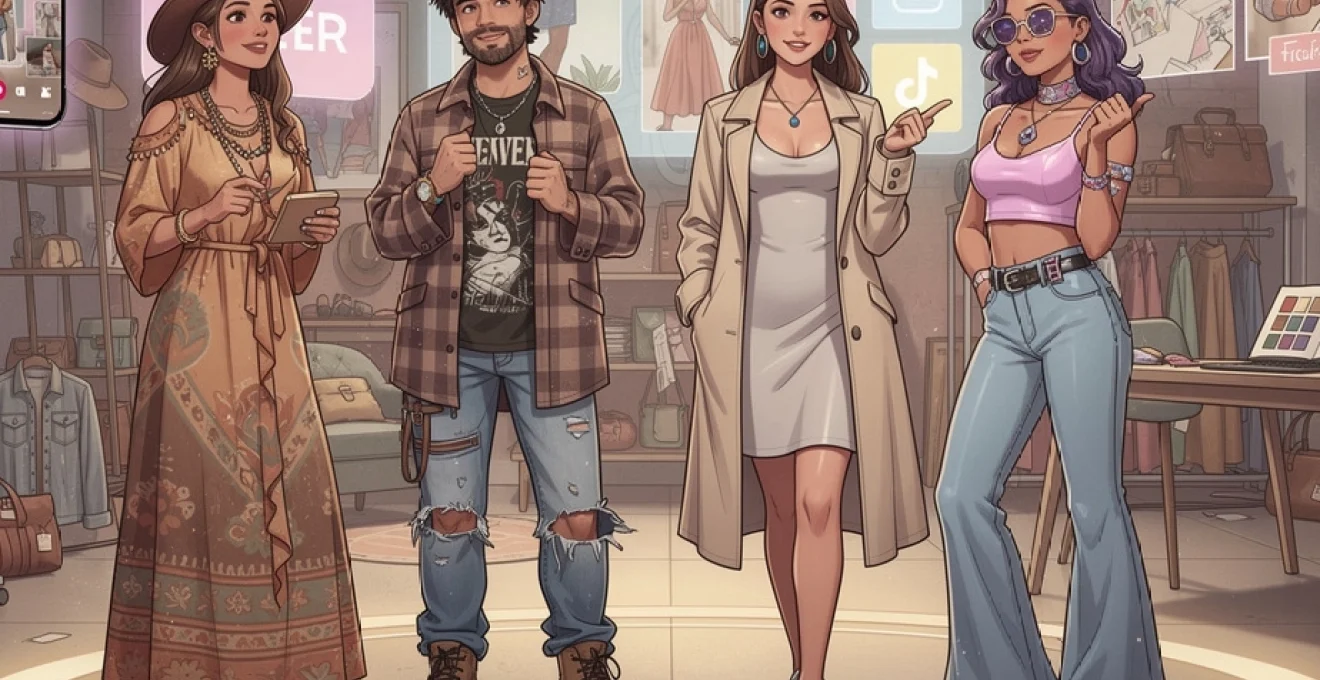
Fashion operates on a perpetual carousel of revival, where yesterday’s cast-offs become tomorrow’s coveted pieces. This phenomenon extends far beyond simple nostalgia, encompassing complex psychological, economic, and cultural forces that drive our collective desire to revisit and reinterpret past aesthetics. The resurgence of vintage fashion trends represents a fascinating intersection of human psychology, digital culture, and industry strategy that continues to reshape contemporary style landscapes.
From the grunge revival of the 2010s to the current Y2K obsession dominating Gen Z wardrobes, vintage fashion trends demonstrate remarkable resilience and adaptability. This cyclical nature reflects deeper societal needs for authenticity, sustainability, and identity formation in an increasingly fast-paced world. Understanding why these trends persistently return requires examining the intricate mechanisms that govern fashion cycles and the psychological drivers behind our attraction to historical styles.
Cyclical fashion theory and the 20-year revival pattern in contemporary style
Fashion theorists have long observed the cyclical nature of style evolution, with the most prominent being the 20-year revival pattern that sees trends from two decades prior resurface with renewed vigour. This phenomenon operates like clockwork, with remarkable precision that suggests deeper cultural and generational forces at play. The mechanism behind this timing relates directly to generational turnover and the nostalgic tendencies that emerge when individuals reach positions of creative and economic influence.
Polhemus and procter’s fashion cycle analysis in modern context
Ted Polhemus and Lynn Procter’s seminal work on fashion cycles identified five distinct stages: introduction, rise, peak, decline, and obsolescence. However, modern digital culture has significantly compressed these timelines whilst simultaneously extending the revival phase. What once required decades to complete now unfolds in mere years, yet the fundamental psychological drivers remain unchanged. The acceleration doesn’t diminish the power of the 20-year cycle; rather, it creates multiple concurrent revival streams that overlap and interact in complex ways.
Contemporary fashion cycles demonstrate increased volatility, with micro-trends lasting months rather than seasons. Yet macro-trends, particularly those rooted in specific decades, maintain their traditional 20-year rhythm. This duality creates a fashion landscape where rapid surface changes occur against a backdrop of predictable long-term revival patterns.
Generation z’s reinterpretation of 1990s grunge and minimalism
Generation Z’s embrace of 1990s aesthetics perfectly illustrates the 20-year cycle in action. Born in the late 1990s and early 2000s, this generation encountered grunge and minimalist styles during their formative years, creating subconscious associations that later manifested as conscious style choices. Their reinterpretation demonstrates how cultural memory operates across generational boundaries, with individuals drawn to styles that predate their active fashion awareness yet feel inherently familiar.
The current grunge revival differs markedly from its original incarnation, incorporating sustainable practices and digital-native distribution methods. Where 1990s grunge emerged from Seattle’s music scene and anti-establishment sentiment, contemporary grunge revival stems from aesthetic appreciation and sustainable fashion consciousness. This evolution shows how revival trends adapt to current cultural contexts whilst maintaining core visual elements.
Fast fashion acceleration of vintage revival timelines
Fast fashion has fundamentally altered vintage revival timelines by enabling rapid production and distribution of retro-inspired pieces. Brands can now capitalise on emerging vintage trends within months of their digital emergence, compared to the years required in pre-digital eras. This acceleration creates a feedback loop where revival trends gain momentum more quickly but also face faster obsolescence cycles.
The democratisation of vintage-inspired fashion through fast fashion channels has made previously niche trends accessible to broader audiences. However, this accessibility comes at the cost of authenticity and sustainability, creating tension between trend participation and ethical consumption. The result is a complex ecosystem where authentic vintage pieces coexist with mass-produced interpretations, each serving different market segments with varying priorities.
Social media algorithm influence on nostalgic fashion trends
Social media algorithms play an increasingly crucial role in vintage trend propagation by creating echo chambers that amplify nostalgic content. Platforms like TikTok and Instagram use
algorithms to prioritise posts with high engagement, regardless of when the original style peaked. When a nostalgic outfit, sound, or filter starts gaining traction, the algorithm shows it to more users who have interacted with similar content, creating a rapid cascade effect. In practice, this means a single viral video featuring a 1990s slip dress or 1980s blazer can trigger thousands of recreations within days, transforming a niche reference into a mainstream vintage fashion trend.
This algorithmic amplification also compresses the time it takes for micro-eras to resurface. Instead of waiting for a full decade to cycle back, we now see highly specific sub-trends such as “indie sleaze,” “dark academia,” or “soft grunge” re-emerge almost on demand. For consumers, the feed becomes a curated time capsule of revived looks, blending aesthetics from multiple decades into a constantly refreshing mood board. For brands, tracking which nostalgic outfits the algorithm favours has become a crucial part of trend forecasting and product development.
Psychological drivers behind nostalgic fashion consumption patterns
Beyond algorithms and industry strategy, the most powerful engine behind vintage fashion revivals remains psychological. Our attraction to retro clothing is deeply tied to how we construct memory, identity, and emotional security in uncertain times. Vintage fashion functions as a wearable archive, allowing us to carry fragments of the past into the present while negotiating who we are and who we want to be. Understanding these psychological drivers helps explain why certain retro looks resonate so strongly, even with people who never lived through the original era.
Collective memory theory and fashion identity formation
Collective memory theory suggests that societies remember the past not as a fixed record, but as a shared story constantly reshaped by present needs. Vintage fashion trends tap into this process by offering visual shortcuts to specific narratives: 1970s boho dresses evoke freedom and counterculture, 1950s silhouettes suggest stability and glamour, 1990s minimalism signals cool detachment. When we choose a decade-inspired outfit, we are often choosing the story we want to be associated with, whether consciously or subconsciously.
Personal style becomes a negotiation between individual biography and cultural memory. A person might adopt 1980s power dressing not because they experienced that decade, but because the aesthetic symbolises ambition and confidence they want to project today. In this sense, vintage clothing functions like a costume in an ongoing performance of self, helping us test different identities with relatively low risk. The more saturated our environment becomes with digital images and fleeting trends, the more grounding it can feel to anchor our style in recognisable historical references.
Escapism through vintage aesthetics during economic uncertainty
Economic and social uncertainty consistently correlate with spikes in nostalgic consumption, and clothing is no exception. During periods of inflation, political tension, or global crisis, many people gravitate towards vintage-inspired looks that recall perceived “simpler times.” This doesn’t necessarily mean the past was objectively better; rather, retro aesthetics allow us to escape, at least visually, from present-day anxiety. Putting on a 1940s tea dress or a 1990s oversized sweater can feel like stepping into a parallel timeline where current pressures momentarily recede.
Psychologically, this form of escapism operates much like rewatching a favourite childhood film or listening to old playlists. Familiar silhouettes, fabrics, and colour palettes trigger comforting associations, even if we did not personally live through the era. During the 2020–2022 period, for example, search interest for “Y2K outfits” and “vintage loungewear” surged as people sought both comfort and playfulness while stuck at home. Retro fashion thus becomes a low-stakes coping mechanism—an everyday ritual that offers emotional relief without requiring major life changes.
Intergenerational style transmission in digital communities
Historically, style transmission happened within families or local communities: you might inherit a parent’s jacket or learn how to style a scarf from a grandparent. Today, that intergenerational exchange increasingly occurs online, with digital communities acting as extended families of taste. Older users share archival photos, styling tips, and garment care knowledge, while younger users remix these references with contemporary pieces and post tutorials. Together, they create a living archive that keeps vintage fashion circulating far beyond its original lifespan.
Platforms like TikTok and Instagram are full of creators proudly wearing their parents’ or grandparents’ clothes and narrating the stories behind them. These narratives transform garments into heirlooms, reinforcing the idea that fashion carries emotional and historical value. As you watch a creator style their mother’s 1980s blazer with modern sneakers, you’re not just learning how to wear vintage—you’re witnessing how style can bridge generational gaps. This shared learning process helps demystify second-hand shopping and encourages more people to experiment with retro pieces in their everyday wardrobe.
Cultural authenticity seeking through retro fashion choices
In an era of mass production and hyper-curated online personas, many consumers turn to vintage fashion as a way to feel more “real.” Retro pieces often show signs of wear, unique construction details, and labels from long-gone brands, all of which signal authenticity in contrast to the uniformity of fast fashion. Choosing a 1970s suede jacket or a 1960s mod dress can feel like opting into a more tangible, less disposable relationship with clothing.
This search for authenticity is also cultural. For some, vintage fashion is a path to reconnecting with specific heritages and subcultures—whether it’s Chicano lowrider style, 1980s ballroom culture, or 1990s hip-hop streetwear. Wearing these looks becomes a way to honour the communities that created them, rather than only consuming watered-down versions in mainstream retailers. When we ask why vintage fashion trends keep coming back, part of the answer lies here: retro style offers a rare combination of individuality, history, and perceived honesty in a fashion landscape that can otherwise feel anonymous.
Digital amplification mechanisms driving vintage trend resurgence
The digital ecosystem doesn’t just reflect vintage fashion trends; it actively shapes and accelerates them. Algorithms, creator culture, and peer-to-peer marketplaces work together to turn isolated retro references into global movements in record time. Understanding how specific platforms operate helps explain why some decades suddenly dominate our feeds while others remain quietly in the background.
Tiktok’s algorithm-driven Y2K fashion revival movement
TikTok has been one of the most powerful engines behind the Y2K fashion revival, turning low-rise jeans, baby tees, and rhinestone accessories into viral must-haves. Its For You Page algorithm is optimised to surface content that keeps users scrolling, which often means eye-catching transformations and strong aesthetics. A single “glow-up” video featuring a full 2000s-inspired outfit can quickly attract millions of views, prompting other users to recreate and remix the look with their own wardrobes.
Because TikTok trends often cluster around specific sounds and hashtags, Y2K fashion has been bundled with early-2000s music, filter effects, and pop culture clips. This multimodal nostalgia intensifies the emotional pull of the style: you’re not just seeing a pair of cargo pants, you’re hearing the songs and catchphrases that defined the era. For brands, tracking TikTok micro-trends has become crucial to deciding which retro silhouettes to reissue and how to market them to a generation discovering them for the first time.
Instagram influencer curation of 1970s boho chic aesthetics
While TikTok thrives on rapid-fire trend explosions, Instagram remains a hub for slow-burn aesthetic curation. Influencers and stylists have played a significant role in reviving 1970s boho chic, using carefully composed grids and Stories to showcase wide-leg jeans, crochet tops, clogs, and floaty maxi dresses. The platform’s emphasis on visual coherence encourages creators to develop recognisable “feeds” that lean into a specific decade-inspired palette and silhouette.
For followers, this curated approach offers a practical blueprint for building a vintage-inspired wardrobe that still feels modern. Influencers often mix genuine 1970s pieces with current brands, tagging items and sharing shopping links or thrift tips. Over time, these repeated references normalise retro details—like high waists, earth tones, or fringe—so that they start to feel less like costume and more like a viable everyday option. In this way, Instagram acts as both a lookbook and a styling guide for anyone curious about incorporating 1970s boho style into their personal fashion.
Pinterest mood board creation and vintage style discovery
Pinterest functions as the research library of the digital fashion ecosystem, where users quietly collect and organise visual references before acting on them. When you search for “vintage outfit ideas” or “retro capsule wardrobe,” Pinterest responds with tens of thousands of pins spanning decades and subcultures. Users then cluster these images into mood boards, gradually refining their taste and identifying recurring elements they’re drawn to, such as 1980s blazers, 1960s mini skirts, or classic 1990s denim.
This private, exploratory environment makes Pinterest particularly powerful at shaping long-term style preferences rather than short-lived fads. Many people use their boards as a planning tool before going thrifting, shopping second-hand online, or investing in key retro-inspired pieces. For designers and brands, analysing popular boards and search terms provides insight into which vintage aesthetics are quietly gaining momentum beneath the surface of louder social media trends.
Depop and vinted’s role in authentic vintage piece circulation
Peer-to-peer resale platforms like Depop and Vinted have transformed how authentic vintage pieces circulate globally. Instead of relying on local thrift stores or specialist boutiques, consumers can now browse thousands of curated listings from individual sellers who often function as micro-stylists. Many of these sellers specialise in particular eras or aesthetics—such as 1990s sportswear, 1980s prom dresses, or 1970s leather jackets—making it far easier to find specific vintage items that match your reference images.
These platforms also serve as educational spaces, as sellers describe fabrics, sizing quirks, and styling ideas in their listings. Over time, buyers learn how to identify quality construction, decode older sizing systems, and care for delicate garments, all of which supports a more sustainable, long-term relationship with clothing. As a result, Depop and Vinted don’t just enable the resale of old trends; they actively sustain the ecosystem that allows vintage fashion trends to keep coming back into style with greater accessibility and knowledge.
Industry economics and production strategies for retro-inspired collections
From the industry side, reviving vintage fashion trends is not only culturally attractive but also economically strategic. When brands mine their archives or reference well-known decades, they reduce creative risk: customers are more likely to respond to silhouettes and motifs they already recognise. This is why we regularly see capsule collections titled with explicit decade nods—“90s edit,” “70s remix,” or “Y2K drop”—especially during key shopping seasons when competition for attention is intense.
Reissuing archive designs or retro-inspired pieces also leverages existing intellectual property. Luxury houses, for instance, can revive historic logos, monograms, or handbag shapes with minimal design investment, then market them as both heritage-rich and on-trend. High-street brands, meanwhile, analyse sales data to determine which retro cuts (wide-leg denim, slip dresses, bomber jackets) consistently perform well and build seasonal lines around these proven winners. The economic incentive is clear: vintage-inspired fashion offers a reliable formula in a volatile market.
At the same time, manufacturers have adapted their production strategies to respond quickly to digital signals of emerging nostalgia. Shorter lead times and smaller test runs allow brands to experiment with micro-revivals—such as 1980s shoulder pads or 1950s circle skirts—without overcommitting. If a style takes off on social media, they can scale it rapidly; if not, they can pivot to the next retro reference with minimal loss. This flexible approach helps explain why we often see multiple decade influences coexisting on the same shop floor.
Cultural zeitgeist factors influencing specific decade revivals
Not all decades return with equal force, and timing matters. Specific era revivals tend to align with contemporary cultural needs and desires, as societies selectively remember the aspects of a period that resonate with current conditions. For example, the recent enthusiasm for 1970s aesthetics—flares, earthy palettes, and artisanal details—aligns with renewed interest in environmentalism, craft, and a slower pace of life. The decade’s association with counterculture and social movements feels particularly relevant in times of political activism.
Conversely, the 2000s Y2K revival taps into a different mood: playful maximalism, digital optimism, and the early internet era’s sense of novelty. For younger consumers who grew up in an always-online world, referencing the clunky tech and kitschy glamour of early-2000s pop culture provides both humour and relief from today’s hyper-optimised platforms. Meanwhile, 1990s minimalism often resurfaces when there is a backlash against excess, offering a clean, streamlined antidote to visual overload.
These shifting revivals show how vintage fashion trends operate like cultural mirrors, reflecting what we collectively miss, crave, or hope to correct. When we see a particular decade suddenly everywhere—from runways to street style—it often signals that its core values or aesthetics speak to unresolved tensions in the present. In this way, choosing a retro-inspired outfit becomes a subtle way of participating in broader conversations about where we have been and where we are going.
Sustainability narratives and circular fashion economy adoption through vintage trends
As awareness of fashion’s environmental impact grows, vintage clothing has moved from niche interest to central pillar in conversations about sustainability. Buying second-hand or investing in well-made retro pieces directly supports a more circular fashion economy, in which garments stay in use for longer instead of quickly becoming waste. This practical benefit dovetails with the emotional appeal of vintage, making it easier for consumers to align their values with their wardrobes without feeling deprived of style.
Many younger shoppers now view thrifting, upcycling, and swapping clothes as both ethical choices and creative challenges. How can you recreate a runway look using only second-hand items? How might you tailor a 1980s blazer to fit a contemporary silhouette? These questions turn sustainable fashion into an engaging puzzle rather than a restrictive rulebook. Brands have taken note, partnering with resale platforms, launching take-back schemes, or releasing “archive” collections that celebrate longevity rather than constant novelty.
Of course, there are tensions and trade-offs. Not every second-hand purchase is automatically sustainable, especially when overconsumption simply shifts from fast fashion to bulk vintage hauls. However, the broader narrative is moving in a promising direction: celebrating garments with history, prioritising durability, and questioning the idea that style must always mean “new.” Vintage fashion trends keep coming back not only because they look good, but because they offer a compelling framework for dressing in ways that honour the past, express the present, and protect the future.