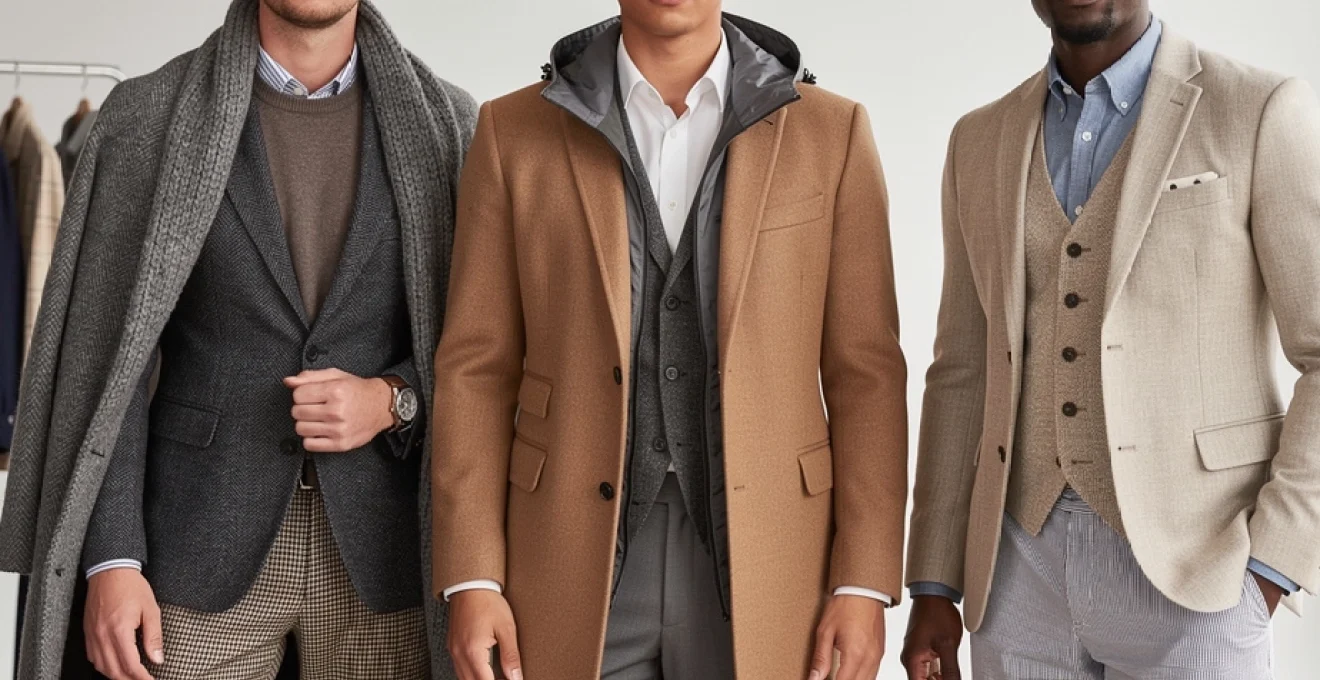
Texture represents one of menswear’s most underutilised yet powerful styling tools, offering gentlemen the opportunity to create sophisticated, multi-dimensional outfits that transcend basic colour coordination. While many men focus exclusively on pattern matching and colour theory, the strategic incorporation of varied textures can transform even the most fundamental wardrobe pieces into compelling, visually engaging ensembles. From the rough, rustic appeal of Harris tweed to the silky smoothness of Egyptian cotton, texture adds tactile interest and visual depth that elevates everyday clothing into something extraordinary.
Understanding texture’s role in menswear requires recognising how different materials interact with light, shadow, and the human eye. Surface variations create subtle contrasts that catch attention without overwhelming the overall aesthetic. Professional stylists and fashion experts increasingly emphasise texture’s importance in modern menswear, particularly as contemporary fashion moves towards more nuanced, sophisticated approaches to masculine dressing.
Fabric weight gradation techniques in contemporary menswear styling
Mastering fabric weight gradation represents a fundamental skill in contemporary menswear styling, allowing sophisticated gentlemen to create visually balanced outfits across all seasons. The principle involves strategically layering garments of varying weights to achieve both functional comfort and aesthetic appeal. This technique requires understanding how different fabric weights interact visually and physically, creating harmonious compositions that feel natural yet deliberately crafted.
Contemporary menswear increasingly embraces this nuanced approach to dressing, moving away from rigid seasonal rules towards more flexible, year-round styling strategies. The key lies in understanding how fabric weight affects drape, structure, and overall silhouette. Heavier fabrics naturally create more structured lines, while lighter materials tend to flow and conform to the body’s natural shape.
Layering heavy wool tweeds with lightweight cotton poplin
The juxtaposition of heavy wool tweeds against lightweight cotton poplin creates one of menswear’s most compelling textural contrasts. This combination works particularly well during transitional seasons when temperature fluctuations demand versatile layering options. The substantial weight and rough texture of tweed provides visual anchor points, whilst the crisp, smooth finish of cotton poplin offers clean, refined contrast.
When executing this pairing, consider the proportional balance between the two materials. A heavyweight tweed blazer pairs beautifully with a fine cotton poplin shirt, creating layers that feel both substantial and breathable. The key is ensuring the poplin’s crispness isn’t overwhelmed by the tweed’s robust character, whilst simultaneously allowing each fabric’s unique properties to complement rather than compete.
Cashmere-silk blend integration for transitional seasonal wardrobes
Cashmere-silk blends represent the pinnacle of luxury fabric combinations, offering unparalleled softness combined with subtle lustre. These materials work exceptionally well during spring and autumn months when temperatures require adaptable layering solutions. The natural temperature-regulating properties of both fibres create comfortable wearing experiences across varying conditions.
Integration techniques focus on allowing the blend’s inherent drape and flow to dictate silhouette choices. Cashmere-silk combinations work particularly well in knitwear applications, where the blend’s natural elasticity and recovery properties ensure garments maintain their shape throughout extended wear. Consider pairing these luxury blends with more structured materials to create compelling textural dialogues.
Linen-viscose combinations for structured summer silhouettes
Linen-viscose combinations solve many of summer dressing’s inherent challenges, providing breathability whilst maintaining structure and reducing excessive wrinkling. Pure linen, whilst wonderfully cooling, often lacks the drape and recovery properties needed for formal summer wear. Viscose addition improves these characteristics without compromising the natural cooling properties that make linen indispensable during warmer months.
These blends work particularly well in tailored applications where structure is paramount. Summer suits constructed from linen-viscose blends maintain their shape throughout long days whilst providing the breathability essential for warm weather comfort. The combination also accepts colour beautifully, allowing for richer, more saturated tones than pure linen typically achieves.
Merino wool
Merino wool base layer coordination with technical outerwear
Merino wool base layers offer an exceptional foundation for textured outfits, particularly when coordinated with contemporary technical outerwear. Fine-gauge merino delivers warmth, moisture management, and odour resistance in a fabric that feels almost weightless against the skin. When paired with matte-finished shell jackets or sleek performance parkas, this subtle knit texture introduces depth without unnecessary bulk.
For modern menswear styling, aim to treat merino as your invisible infrastructure. Lightweight merino crew necks and roll necks sit cleanly beneath structured blazers, field jackets, and waterproof shells, allowing outer textures to take visual precedence. The contrast between a soft, finely knitted base and a slightly crisper, technical exterior creates a sophisticated, functional layering system that works from weekday commuting to weekend travel.
Colour plays a strategic role here too. Neutral merino tones such as charcoal, navy, and camel pair effortlessly with both muted and high-performance outerwear palettes. By keeping the base layer refined and minimal, you allow technical fabrics—ripstop nylon, bonded cotton, or softshell materials—to supply the visual interest through their distinctive finishes and subtle sheen. This approach ensures your textured outfit remains cohesive rather than chaotic.
Surface texture manipulation through weave pattern selection
Beyond fabric choice and weight, weave patterns provide another powerful lever for introducing texture into men’s fashion. Subtle variations in weave determine how a garment reflects light, how it drapes, and how it reads from a distance. By consciously selecting herringbone, birdseye, or basketweave fabrics rather than defaulting to plain weaves, you can create menswear outfits that feel richer and more considered while still remaining understated.
Think of weave patterns as the architectural framework of your clothing. Just as a building’s façade can be smooth, ribbed, or intricately detailed, a blazer or pair of trousers can rely on weave to communicate character. Choosing the right weave pattern for tailored garments allows you to manipulate formality, perceived weight, and visual depth, often without changing the base colour at all. This makes weave an ideal tool for men who prefer neutral palettes yet want their outfits to feel textured and modern.
Herringbone pattern applications in tailored blazer construction
Herringbone is one of the most versatile weave patterns in contemporary menswear, particularly in tailored blazer construction. Its characteristic V-shaped chevrons introduce a directional texture that elongates the torso and adds subtle movement to otherwise solid fabrics. In practice, a mid-weight herringbone blazer in grey, navy, or tobacco brown can function as a wardrobe workhorse, bridging the gap between business tailoring and relaxed smart-casual outfits.
When styling a herringbone blazer, you benefit from its ability to behave like a solid at a distance while revealing interest up close. This dual nature makes it ideal for men’s office wear where dress codes are softening but polish is still expected. Pairing a herringbone jacket with a smooth cotton poplin shirt and flat-finish wool trousers creates a refined hierarchy of textures: the blazer leads visually, while the simpler underlayers keep the overall look coherent.
Scale and fibre choice are crucial. Fine herringbone in worsted wool appears sleek and appropriate for corporate environments, whereas a chunkier herringbone in lambswool or tweed reads more rustic and casual. If you already own a plain navy blazer, consider your next addition in a subtle herringbone; you’ll retain the versatility of a classic jacket while gaining the depth that textured menswear provides.
Cable knit integration for smart-casual jumper layering
Cable knit jumpers introduce a three-dimensional texture that can instantly transform simple outfits. The raised patterns catch light and cast tiny shadows, making even monochrome ensembles feel dynamic. Used thoughtfully, cable knits for smart-casual occasions can bridge the divide between rugged heritage wear and contemporary city dressing.
To keep a cable knit sweater from feeling bulky or overly rustic, focus on refined yarns and controlled proportions. Mid-gauge merino or cashmere blends in navy, oatmeal, or forest green pair cleanly with tailored chinos, flannel trousers, or dark denim. Layered beneath an unstructured blazer or over an Oxford shirt, the cables provide textural contrast against smoother shirt fabrics and jacket weaves without disrupting clean lines.
Fit matters more than ever with highly textured knitwear. A slightly trimmer silhouette through the body and sleeves prevents the jumper from overwhelming tailored pieces. Ask yourself: does the sweater support the outfit’s structure or swamp it? When the answer is the former, cable knits become a powerful textural tool for creating depth in men’s fashion without sacrificing sophistication.
Houndstooth micro-pattern scaling for trouser-jacket coordination
Houndstooth is traditionally associated with bold, high-contrast outerwear, but modern menswear increasingly favours micro-scale versions of this pattern for subtle texture. Micro houndstooth trousers and blazers read as near-solid from a distance, yet up close reveal a refined broken check that adds interest to tailored outfits. This makes them ideal for men who want to experiment with pattern without committing to louder checks or plaids.
When coordinating houndstooth pieces, scale management is essential. Micro houndstooth trousers pair beautifully with plain flannel or twill blazers, as the tiny pattern provides a gentle base that supports more expressive textures above. Conversely, a micro houndstooth jacket works well with solid worsted or flannel trousers and a simple shirt, allowing the jacket’s pattern to act as the outfit’s focal point.
Avoid pairing large-scale houndstooth with equally bold patterns, as the competing visual rhythms can become distracting. Instead, treat micro houndstooth as your textured anchor and surround it with smoother, lower-contrast elements. This approach maintains the clean lines expected from tailored menswear while subtly enriching the overall visual complexity.
Birdseye weave utilisation in premium suiting fabrics
Birdseye weave, with its fine, dotted texture, offers one of the most elegant ways to introduce texture into premium suits. At arm’s length, a birdseye suit presents as a rich, even colour; only up close do the tiny contrasting threads reveal themselves. This quality makes birdseye particularly well-suited to business environments where conservative dress codes persist but the wearer still wants to stand out discreetly.
From a practical perspective, birdseye wool fabrics often possess excellent resilience and drape, making them ideal for everyday office suits. The minute pattern helps mask creasing and minor wear, which is especially useful for men who travel frequently or spend long days in tailoring. Opt for navy, charcoal, or deep blue-grey birdseye when you’re investing in a versatile, textured suit that can rotate seamlessly with plain worsteds.
Styling birdseye suiting is refreshingly straightforward. Because the pattern is so small, you can happily pair it with striped shirts, printed ties, or textured knitwear, provided you maintain a clear contrast in scale. Imagine a navy birdseye suit with a pale blue twill shirt and a grenadine tie: three distinct textures working together to create a sophisticated yet understated menswear ensemble.
Basketweave texture implementation for contemporary waistcoat design
Basketweave fabrics, with their distinctive over-under structure, bring a strong graphic quality to contemporary waistcoat design. The pattern introduces a grid-like texture that feels modern yet rooted in traditional weaving techniques. When used for waistcoats, basketweave adds visual interest to the torso without overwhelming the entire outfit, making it ideal for men easing into textured tailoring.
A basketweave waistcoat in mid-grey, deep olive, or navy can sit under a smooth worsted suit jacket or even beneath a casual chore coat. The contrast between the waistcoat’s tactile surface and a cleaner outer layer creates a focal point at the body’s centre, subtly drawing the eye toward the narrowest part of your frame. This can be particularly flattering for men seeking to create a more sculpted silhouette.
To keep the look cohesive, balance the basketweave’s texture with simpler shirt and tie choices. Plain poplin or fine Oxford shirts, coupled with silk or knit ties in solid or gently patterned designs, allow the waistcoat to carry the textural conversation. Used this way, a single basketweave piece demonstrates how targeted texture can elevate men’s fashion without requiring a complete wardrobe overhaul.
Tactile contrast creation using natural and synthetic fibre blends
Modern menswear increasingly relies on intelligent blends of natural and synthetic fibres to achieve both performance and aesthetic goals. Wool-nylon, cotton-polyamide, and silk-elastane combinations harness the comfort and refinement of traditional fabrics while adding durability, stretch, and weather resistance. For style-conscious men, these blends offer new opportunities to create tactile contrast in outfits that also meet contemporary demands for practicality.
Consider the interaction between a brushed cotton shirt and a smooth, slightly technical blazer in a wool-nylon mix. The shirt’s soft, almost suede-like surface plays against the jacket’s crisp, clean finish, creating a nuanced tension between comfort and precision. Similarly, pairing matte cotton chinos with a slight-sheen synthetic parka or a bonded cotton raincoat produces a deliberate contrast that signals modern, functional menswear.
When you’re working with natural-synthetic blends, pay attention to how each fabric feels and sounds as much as how it looks. Does the outer shell have a subtle rustle and a technical appearance? Then ground it with knitwear or denim that reads warmer and more organic. This balance—like mixing concrete and timber in architecture—creates a harmonious interplay between innovation and tradition, ensuring your textured clothing feels both current and timeless.
Seasonal texture transition strategies for year-round wardrobe cohesion
Successfully incorporating texture into men’s fashion requires thinking beyond individual outfits and considering how your wardrobe functions across the entire year. Seasonal texture transitions help you move smoothly from lightweight summer fabrics to winter’s heavier weaves without your style feeling disjointed. The goal is to build a continuum of textures and fabric weights so that each season evolves naturally from the last.
One effective approach is to anchor your wardrobe with a core of trans-seasonal pieces—mid-weight denim, twill chinos, unstructured blazers in textured wool blends—and then adjust supporting garments as temperatures change. By doing so, you maintain a consistent visual language of texture while fine-tuning warmth and weight. Ask yourself: how can this textured garment perform in both early autumn and late spring with minimal adjustments? That kind of thinking leads to more sustainable, coherent menswear choices.
Autumn-winter corduroy and flannel pairing methodologies
As temperatures drop, corduroy and flannel become indispensable tools for building warm, textured outfits. Corduroy’s ribbed wales and flannel’s brushed surface both trap air, enhancing insulation while also delivering rich visual depth. When combined thoughtfully, corduroy and flannel for men’s winter outfits can create ensembles that feel luxurious rather than heavy-handed.
A classic methodology involves pairing corduroy trousers with a flannel shirt and a smoother wool blazer. Here, the strongest textures are concentrated in the mid and lower body, while the jacket provides structure and polish. Alternatively, flannel tailoring—whether in a soft grey suit or a casual sports coat—works beautifully with a fine-wale corduroy shirt or overshirt, particularly in earthy tones like rust, olive, or chocolate.
To prevent these inherently cosy fabrics from appearing too rustic for city environments, focus on cut and colour. Slimmer silhouettes, minimal detailing, and sophisticated palettes (charcoal, deep navy, moss green) elevate corduroy and flannel beyond countryside clichés. Think of them as your winter equivalents of denim and Oxford cloth: versatile, dependable, and endlessly remixable.
Spring-summer seersucker and chambray coordination techniques
In warmer months, seersucker and chambray take on the role that corduroy and flannel play in winter, offering lightweight texture that keeps outfits visually interesting. Seersucker’s puckered stripe and chambray’s cross-dyed, slightly slubby surface introduce depth without adding heat, making them ideal for textured summer menswear looks that still feel sharp.
One effective coordination technique is to treat seersucker as your tailoring element and chambray as your casual anchor. A navy-and-white seersucker blazer worn over a light blue chambray shirt and crisp chinos delivers a refined yet relaxed ensemble suitable for garden parties, business-casual offices, or city breaks. The subtle difference in textures—puckered versus softly woven—ensures a layered feel even in simple two- or three-piece looks.
To avoid visual overload, moderate pattern intensity and colour contrast. If your seersucker is strongly striped, keep your chambray plain and your trousers neutral. Conversely, a solid seersucker suit in pale grey or stone can handle a slightly more textured chambray shirt or even a linen blend. The aim is always the same: light, breathable fabrics that use texture, not heavy pattern, to create interest.
Cross-season denim weight variation for versatile styling
Denim remains one of the most democratic textured fabrics in men’s fashion, and varying its weight is key to year-round versatility. Heavy selvedge denim in the 13–16oz range offers structure and durability for cooler months, while lighter 9–11oz weaves deliver comfort and breathability in spring and summer. By keeping washes relatively classic—mid to dark indigo—you ensure that the fabric’s texture, rather than bold colour, drives the visual story.
In autumn and winter, heavier denim pairs effortlessly with flannel shirts, chunky knits, and substantial outerwear such as pea coats and parkas. The sturdy texture anchors bulkier layers above, preventing outfits from feeling top-heavy. In contrast, lightweight denim works well with linen shirts, cotton tees, and unlined blazers, maintaining the same rugged character while adapting to the season’s climate.
Consider also expanding beyond jeans into denim overshirts and chore jackets. These pieces act as mid-layers that can be introduced or removed as temperatures shift, offering yet another way to play with denim texture across seasons. The guiding principle is simple: adjust weight, maintain character. That way, denim remains a consistent, textural thread running through your wardrobe all year long.
Mohair-wool blend applications for transitional period dressing
Mohair-wool blends occupy a unique space in men’s tailoring, offering crisp handle, excellent crease resistance, and a subtle sheen ideal for transitional periods. Because mohair fibres are naturally springy and breathable, fabrics woven with a mohair component perform exceptionally well in late spring and early autumn, when temperatures can swing between cool and warm within a single day.
In suiting, mohair-wool blends create a sharp, architectural silhouette that holds its shape from morning to evening. This makes them a favourite for formal events and business settings where you need your outfit to remain immaculate. Texturally, the fabric appears smoother than flannel but more characterful than flat worsted, sitting in a sweet spot that communicates refinement without sterility.
Styling these blends requires a careful eye for balance. Because mohair can reflect light, it pairs best with more matte textures: cotton poplin shirts, grenadine or knit ties, and calf leather shoes. Used this way, mohair-wool suits and jackets become powerful tools for transitional dressing—cool enough for unexpected warmth, structured enough for formality, and textured enough to hold visual interest in any light.
Luxury material juxtaposition in high-end menswear assemblies
At the upper end of men’s fashion, texture becomes a language for expressing sophistication and personality through material choice. Luxury garments increasingly juxtapose cashmere, silk, fine worsted wool, and exotic leathers to create ensembles that feel layered even when they appear minimal. The success of these looks lies less in overt branding and more in the quiet dialogue between textures: matte against lustrous, smooth against softly brushed, structured against fluid.
Consider a simple outfit built from elevated fabrics: a navy high-twist wool suit, a white cotton-poplin shirt, a matte cashmere tie, and suede loafers. On paper, it’s a classic combination; in practice, the interplay of textures makes it feel unmistakably modern and luxurious. The crispness of the suit contrasts with the tie’s soft pile, while the suede shoes lend a relaxed richness that polished calfskin would not. You could think of this as the sartorial equivalent of pairing fine porcelain with hand-thrown ceramics at a well-set table.
Another effective strategy is to deploy one overtly luxurious texture against a backdrop of restraint. A cashmere overcoat worn over denim and a simple merino roll neck, or a silk-satin scarf draped over a rugged tweed jacket, instantly signals refinement without shouting. In these high-end menswear assemblies, the key question becomes: which single piece will carry the textural spotlight today? By answering it thoughtfully, you ensure your use of luxury materials feels intentional rather than excessive.
Technical fabric integration for modern functional menswear
The rise of technical fabrics has fundamentally reshaped modern functional menswear, creating new possibilities for combining performance with texture. Softshells, ripstop nylons, bonded cottons, and 3-layer membranes all bring distinct tactile and visual qualities to the wardrobe. When integrated thoughtfully with traditional textiles like wool, denim, and cotton twill, these advanced materials can produce outfits that feel both cutting-edge and grounded.
A practical example might pair a smooth, water-repellent technical parka with flannel trousers and a brushed cotton sweatshirt. Here, the sleek, almost aerodynamic surface of the outerwear contrasts with the softer, more familiar textures beneath it. The result is an outfit ready for sudden showers and urban commutes that still feels warm and approachable. This kind of hybrid styling reflects a broader trend in menswear: garments that perform like outdoor gear but integrate seamlessly into city life.
To make technical fabrics work in a textured wardrobe, focus on simplicity of design and restraint in sheen. Matte-finish shells, minimal branding, and clean lines prevent performance pieces from feeling overly “gear-like”. Then, surround them with natural textures—wool beanies, leather boots, cotton chinos—that soften and humanise the overall look. In doing so, you harness the best of both worlds: the innovation of modern fabric technology and the timeless appeal of tactile, well-chosen textures.