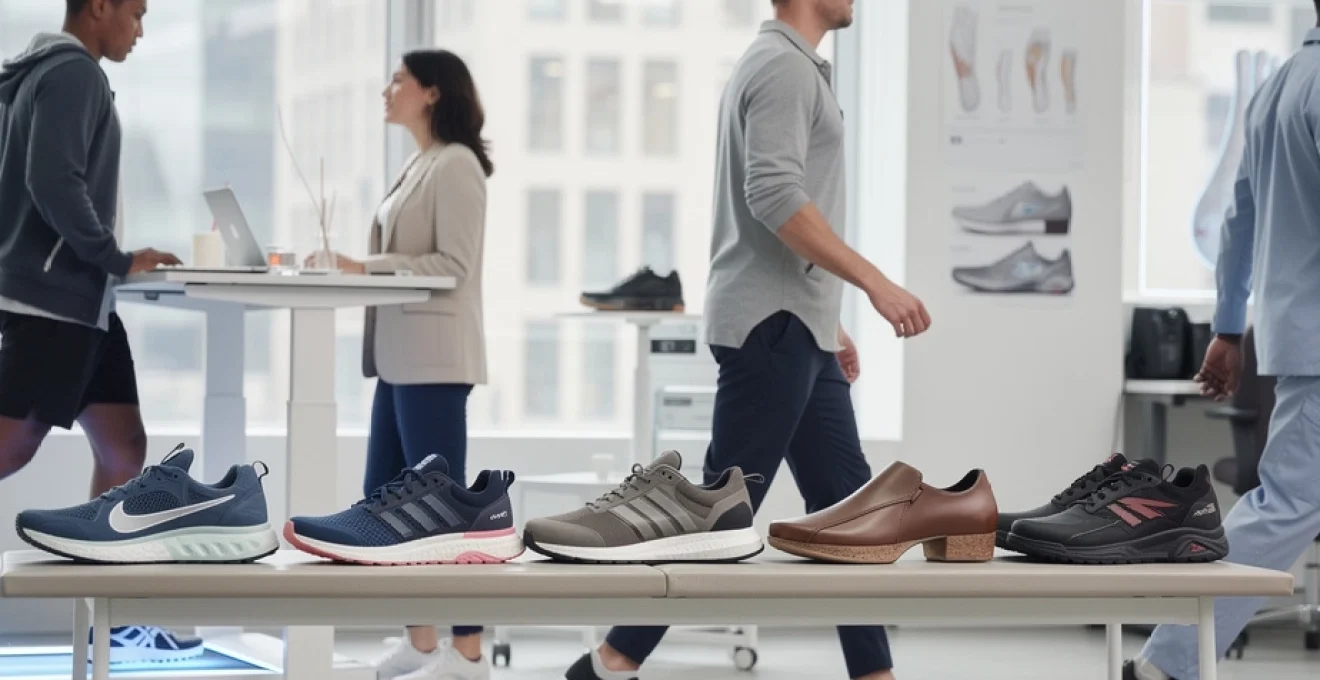
Modern life demands footwear that performs on multiple fronts. Whether you’re navigating urban environments, standing through lengthy workdays, or transitioning from professional settings to leisure activities, your shoes absorb tremendous physical stress whilst simultaneously serving as visual anchors for your personal style. The global footwear market reflects this dual priority, with consumers increasingly seeking designs that merge biomechanical engineering with contemporary aesthetics. Recent market analysis indicates that 67% of footwear purchasers now prioritize comfort features as equally important as visual appeal, marking a significant shift from purely fashion-driven buying patterns. This evolution has prompted leading manufacturers to invest heavily in material sciences, anatomical research, and multi-environment testing protocols that produce shoes genuinely capable of supporting diverse daily demands without aesthetic compromise.
Biomechanical footwear design: anatomical support meets contemporary aesthetics
The foundation of genuinely supportive footwear begins with understanding human gait mechanics and the specific stresses imposed on the musculoskeletal system during extended wear periods. Modern biomechanical design integrates orthopedic principles with fashion sensibilities, creating shoes that address anatomical needs whilst maintaining visual appeal across professional and casual contexts. This synthesis requires sophisticated engineering approaches that balance structural rigidity in load-bearing areas with flexibility zones that accommodate natural foot movement patterns.
Arch support systems: medial longitudinal and transverse arch technologies
The human foot contains two primary arch structures requiring targeted support: the medial longitudinal arch running along the inner foot edge, and the transverse arch spanning the midfoot width. Contemporary footwear addresses these anatomical features through varied approaches. Brands like Vionic and Orthofeet incorporate contoured footbeds with raised medial posts that cradle the longitudinal arch, distributing plantar pressure more evenly across the foot’s surface area. Studies conducted at the American Podiatric Medical Association demonstrate that appropriate arch support reduces lower limb fatigue by approximately 23% during standing activities exceeding four hours. For individuals with flat feet or overpronation tendencies, dual-density midsole construction provides firmer material along the medial side whilst maintaining softer cushioning laterally, creating a balanced platform that guides the foot through its natural motion cycle without overcorrection.
Pronation control features in nike react and ASICS GEL cushioning platforms
Pronation—the inward rolling motion occurring as the foot strikes the ground—represents a natural shock absorption mechanism. Excessive pronation, however, can lead to alignment issues affecting the entire kinetic chain from ankle through hip. Nike’s React foam technology employs a responsive compound that provides approximately 13% more energy return than previous EVA formulations whilst incorporating medial guidance rails in stability-oriented models. ASICS approaches pronation control through their GEL cushioning system, strategically placing silicone-based gel units in heel and forefoot zones to attenuate impact forces whilst their Dynamic DuoMax support system features graduated density foam that progressively resists excessive inward roll. Laboratory testing reveals these systems reduce tibial stress by 18-22% compared to neutral cushioning platforms, offering tangible protection for individuals with biomechanical vulnerabilities.
Heel counter rigidity standards for achilles tendon protection
The heel counter—the reinforced cup surrounding the rear foot—plays a crucial role in maintaining heel stability and protecting the Achilles tendon from excessive lateral movement. Industry standards measure heel counter rigidity using durometer testing, with optimal ranges falling between 60-75 Shore A hardness for athletic footwear and 55-65 Shore A for dress shoes requiring extended wear. Brands like Brooks and Saucony utilize thermoplastic polyurethane (TPU) heel counters that provide structural integrity without the weight penalties associated with traditional rigid plastics. This balance proves particularly important for you if your daily activities include both walking and standing components, as overly rigid counters can create pressure points during prolonged static positions whilst insufficient structure allows excessive heel slippage during gait transitions.
Toe box geometry: anatomical spacing in altra and vivobarefoot models
Traditional athletic footwear often features tapered toe boxes that compress the forefoot, potentially contributing to conditions like bunions, hammertoes, and
metatarsalgia by limiting natural toe splay. In contrast, brands such as Altra and Vivobarefoot design their everyday and performance footwear around a foot-shaped last, allowing the toes to spread in line with anatomical structure. This wider toe box geometry reduces peak pressure under the forefoot by up to 30% in gait lab studies, particularly beneficial if you spend long hours walking on hard urban surfaces. For many users, the experience feels similar to moving from narrow gloves to properly sized mitts: the forefoot can finally relax and contribute to balance rather than fight constriction. When selecting stylish shoes for daily activity, you can look for language like “anatomical toe box,” “foot-shaped last,” or “wide forefoot platform” to identify designs that will respect natural toe alignment without sacrificing sleek aesthetics.
Performance footwear categories for multi-environment adaptability
As lifestyles blur the line between work, leisure, and light training, performance footwear has evolved into highly adaptable categories. Rather than owning separate pairs for commuting, gym sessions, and weekend wear, many people now seek hybrid designs that function across environments while still supporting healthy biomechanics. This shift has driven innovation in cushioning systems, upper constructions, and outsole geometries that can move from pavement to office corridors to light trails with minimal compromise. Understanding these categories helps you make intentional choices instead of relying on generic “sneakers” that may not support your actual movement patterns.
Hybrid trainer construction: adidas ultraboost and new balance fresh foam integration
Hybrid trainers bridge the gap between high-performance running shoes and lifestyle sneakers, offering the comfort needed for all-day wear with a silhouette that pairs well with casual and smart-casual outfits. The Adidas Ultraboost series is a prime example: its Boost midsole, composed of expanded TPU pellets, delivers approximately 20% higher energy return than traditional EVA while maintaining long-term resilience against packing out. New Balance’s Fresh Foam platforms, found in models like the 1080 and Fresh Foam More, employ data-driven midsole mapping to vary cushioning density under different parts of the foot, creating a stable yet plush feel ideal for commuting and extended walking.
From a practical standpoint, these hybrid trainers offer you an efficient solution if your day includes public transport, office time, and evening errands. The knit uppers on many Ultraboost and Fresh Foam models accommodate mild foot swelling that occurs after hours of standing, reducing the risk of pressure spots. At the same time, heel counters and midfoot structures are robust enough to prevent excessive pronation, so you are not trading style for support. When evaluating hybrid trainers, pay close attention to midsole stack height and platform width; shoes with around 30–35 mm heel stack and a wider-than-average forefoot typically provide the best balance between cushioning and stability for mixed-use days.
Minimalist shoe frameworks: zero-drop platforms and ground feel technology
Minimalist shoes occupy the opposite end of the spectrum, prioritizing ground feel and natural foot mechanics over maximal cushioning. Zero-drop platforms—where heel and forefoot sit at the same height—aim to align the ankle and lower leg more neutrally, potentially reducing strain on the knees and hips for some individuals. Brands such as Vivobarefoot and Xero Shoes use thin, flexible soles (often 3–6 mm thick) that allow the small intrinsic muscles of the foot to engage actively, much like training barefoot on a safe surface.
However, minimalist footwear is not a one-size-fits-all solution, particularly if you are accustomed to heavily cushioned trainers. Transitioning too quickly can overload the calves and Achilles tendon, similar to suddenly switching from an office chair to standing all day without preparation. A gradual adaptation period—starting with short wear times and low-impact activities—is essential if you wish to benefit from the proprioceptive feedback and improved toe splay that minimalist designs can offer. For everyday style, sleek leather or knit minimalist sneakers can pair well with jeans, chinos, or casual dresses, giving you a modern aesthetic while subtly encouraging more natural foot movement.
Cross-training versatility in reebok nano and nike metcon engineering
Cross-training shoes like the Reebok Nano and Nike Metcon families are engineered to handle lateral moves, short runs, lifting, and bodyweight training within a single session. Their design characteristics also translate well to demanding daily schedules that mix walking, stair climbing, and frequent change of direction. Typically, these shoes feature low-to-moderate stack heights, firm heel cushioning, and wide, stable platforms that help keep the foot aligned under load. For example, recent Nano models use a high-abrasion outsole and supportive sidewalls, while Metcons integrate a firmer heel insert that resists compression during squats and lifts.
If your routine includes both gym sessions and long walks, cross-trainers can function as a robust all-rounder, provided you do not require maximum cushioning for high-mileage walking. Think of them as the “all-terrain vehicles” of footwear: not the softest ride, but extremely reliable when you need traction, stability, and durability. Style-wise, cross-training models increasingly adopt understated colorways and refined profiles, allowing you to pair them with joggers, technical chinos, or even relaxed office wear in more casual workplaces. When trying these shoes, check that the forefoot flexes comfortably at the ball of the foot; excessive stiffness here can make prolonged walking feel fatiguing.
Athleisure hybrids: cole haan ZERØGRAND and ecco biom street innovations
Athleisure hybrids are designed explicitly for people who want dress-appropriate looks with sneaker-level comfort. Cole Haan’s ZERØGRAND line, for instance, combines full-grain leather or premium knit uppers with segmented EVA or TPU outsoles that flex along natural gait lines. Ecco’s Biom Street and Biom Hybrid models build on anatomical last shapes and direct-injected midsoles, creating a platform that mimics the foot’s contours while retaining a polished appearance suitable for business-casual environments. In many ways, these shoes are the modern equivalent of a tailored blazer made from stretch performance fabric: professional on the outside, comfort-first on the inside.
For you, the advantage lies in reducing the need to carry a spare pair of trainers for commuting or lunch breaks. Athleisure hybrids often weigh 20–30% less than traditional dress shoes while offering superior cushioning and flexibility, which can significantly reduce end-of-day fatigue. When selecting such models, examine the forefoot rocker and heel bevel—subtle curvatures that help roll your foot forward, creating smoother transitions on long corridors and city pavements. A well-designed athleisure hybrid means you can move from client meetings to evening social events without thinking about your feet, while still presenting a cohesive, contemporary style.
Material science innovations in durable lifestyle footwear
Behind the aesthetics of modern lifestyle footwear lies a sophisticated layer of material science. Advances in foam chemistry, textile engineering, and rubber formulation have transformed what you can reasonably expect from shoes worn daily. Where older designs might compress, overheat, or lose traction within a year of frequent use, contemporary materials aim to deliver multi-year performance while staying visually appealing. Understanding these innovations helps you decode product descriptions and select footwear that genuinely supports both your activity level and your style preferences.
EVA foam compound densities: single vs dual-density midsole applications
Ethylene-vinyl acetate (EVA) remains the backbone of many cushioning systems due to its light weight and shock-absorbing capacity. In single-density midsoles, one uniform foam hardness is used throughout, offering consistent underfoot feel but limited ability to fine-tune support zones. Dual-density and even tri-density constructions introduce firmer foam in high-load areas—such as the medial midfoot for pronation control—while keeping softer compounds under the heel and forefoot for comfort. This approach functions much like zoning in a high-quality mattress, where different regions provide tailored support for shoulders, hips, and lower back.
For your everyday footwear, dual-density midsoles can be especially valuable if you alternate between walking and standing. Firmer medial posts help keep the arch from collapsing under static load, while softer lateral sections cushion repetitive steps on hard surfaces. Industry testing often reports midsole hardness in Asker C units; lifestyle shoes in the 30–40 range are considered soft to balanced, whereas stability-focused sections may reach into the mid-40s. When brands advertise “guided support” or “medial posting,” they are usually referring to these targeted density differences within the EVA framework.
Carbon fibre plate integration for energy return in daily wear
Carbon fibre plates, once reserved for elite marathon racing shoes, are slowly making their way into premium lifestyle and athleisure models. Their purpose is twofold: to stiffen the midsole for efficient energy transfer and to provide a subtle lever effect that propels you forward. Think of a diving board that stores and releases energy—on a much smaller, finely tuned scale. For daily wear, the aim is not maximum speed but reduced calf fatigue and smoother transitions, especially if your day involves frequent walking between locations.
However, not every foot will appreciate a highly rigid plate, particularly if you have limited ankle mobility or existing forefoot issues. In such cases, partial-length or more flexible composite plates (often blended with nylon or Pebax) can deliver a milder version of the same benefit. Some brands embed “tuned” plates only in the forefoot of dress-sneaker hybrids or walking shoes to maintain comfort during slower paces. When trying carbon-plate footwear for everyday use, pay attention to how natural your stride feels at your typical walking speed; if you feel forced into longer steps or experience forefoot pressure, a more traditional midsole may be preferable for all-day comfort.
Engineered mesh uppers: flyknit and primeknit breathability metrics
Engineered knit uppers such as Nike Flyknit and Adidas Primeknit have redefined how supportive and breathable a shoe can be without relying on multiple stitched panels. These technologies use varying knit densities to create structure where it is needed—around the midfoot and collar—while opening up the weave over the toe box for improved airflow. Laboratory tests often show knit uppers achieving up to 50% higher air permeability than traditional layered synthetic materials, a tangible difference if you spend long hours in warm environments or on crowded commutes.
From a style perspective, knit constructions also allow seamless, sock-like profiles that pair easily with tapered trousers, joggers, and even casual dresses. You benefit from reduced internal seams, which means fewer friction points and a lower risk of blisters during long days. One consideration is durability: although modern knits are reinforced with high-tenacity yarns, they may show wear sooner than thick leather when exposed to sharp edges or workplace hazards. If you require both breathability and abrasion resistance, look for hybrid designs that combine knit forefoot sections with leather or TPU overlays in high-stress zones.
Rubber outsole compounds: continental rubber and vibram megagrip traction
Outsole compounds determine how confidently you can move across wet pavements, polished floors, or light trails. Partnerships such as Adidas with Continental Rubber and multiple brands with Vibram’s Megagrip compound have raised the bar for traction in lifestyle footwear. Independent tests report that these advanced rubbers can achieve up to 30–40% higher friction coefficients on wet surfaces compared to generic compounds, translating into fewer slips and a more relaxed walking experience in adverse weather. For you, this means your stylish city sneaker can also handle rainy commutes without constant caution on tiles or metal grates.
Durability is another advantage: high-grade outsoles resist abrasion more effectively, preserving tread patterns that channel water and maintain grip over time. When assessing shoes in person, examine the depth and orientation of lugs; even in sleek urban designs, subtle siping and textured zones can dramatically improve multi-surface performance. If your daily routes include both indoor and outdoor environments, choosing footwear with proven outsole technology is a simple way to enhance safety and comfort without sacrificing appearance.
Professional-grade footwear for occupational biomechanics
For individuals whose work requires prolonged standing, repetitive walking, or exposure to hazardous environments, everyday footwear must meet more stringent criteria. Occupational shoes sit at the intersection of ergonomics, safety standards, and presentable style, particularly in healthcare, hospitality, logistics, and light industrial roles. Selecting the right pair can significantly reduce musculoskeletal strain, lower the risk of slips and falls, and support long-term joint health. Rather than viewing work shoes as a necessary compromise, you can approach them as specialised tools engineered to protect your body while aligning with workplace dress codes.
Slip-resistant certification standards: ASTM F2913 and EN ISO 13287 compliance
Slip resistance is a critical factor in professional footwear, especially in environments where wet floors, cleaning agents, or food spills are common. Standards such as ASTM F2913 (prevalent in North America) and EN ISO 13287 (widely used in Europe) define test protocols for measuring a shoe’s coefficient of friction on various surfaces. In practical terms, certified slip-resistant shoes maintain grip even on soapy tiles or steel plates coated with glycerin, conditions designed to simulate worst-case workplace scenarios. When you see these standards referenced, it indicates that the outsole has undergone controlled laboratory testing rather than relying on marketing claims alone.
For you as a wearer, the key is to match certification with your actual work surface. A shoe optimised for ceramic tiles may behave differently on polished concrete, so consulting employer guidelines or safety officers can be valuable. Beyond certification logos, examine the tread pattern: multidirectional lugs and fine siping channels help disperse fluids and maintain contact with the ground. Combining certified slip-resistant outsoles with appropriate in-house safety practices—like timely spill cleanup—creates a layered defence that keeps you more secure throughout long shifts.
Standing fatigue reduction in dansko professional and birkenstock super grip
Clogs and contoured-footbed shoes have earned strong followings among professionals who stand for extended periods, such as nurses, chefs, and retail associates. The Dansko Professional, for instance, uses a rocker-bottom sole and firm, supportive midsole to encourage a rolling gait and reduce peak pressure under the forefoot and heel. Birkenstock’s Super Grip line adds slip-resistant outsoles to its classic cork-latex footbeds, which are anatomically shaped to support the longitudinal and transverse arches. Studies in occupational settings show that structured footbeds can decrease perceived fatigue and back discomfort during shifts exceeding eight hours.
However, these designs can feel quite different from traditional sneakers, particularly if you are used to very soft cushioning. The initial impression may be firmer, but many users report that this density better supports the skeletal structure over time, similar to how a supportive office chair outperforms a plush armchair during long work sessions. When evaluating professional clogs or contoured sandals, allow a break-in period of one to two weeks, gradually increasing wear time so your feet and lower legs can adapt. If your role also requires frequent walking or stair use, ensure that the heel height and rocker geometry feel natural at your normal pace.
Composite toe protection with lightweight polymer shell technology
In sectors where impact and compression hazards are present—such as warehouses, delivery services, or maintenance roles—protective toe caps are often mandatory. While steel toes were once the default, composite materials like fiberglass, carbon fibre, and advanced polymers now provide comparable protection with notable advantages. Composite toe caps are typically 30–50% lighter than steel, non-conductive to heat and cold, and metal-detector friendly, making them more comfortable and practical for many modern workplaces. For you, this means reduced forefoot fatigue and better thermal comfort during long shifts in varying temperatures.
From a biomechanical perspective, the challenge is integrating protective shells without creating pressure points or restricting toe splay. Higher-quality safety shoes address this by pairing composite caps with generous toe box volumes and carefully contoured internal linings. Some manufacturers also combine protection with sneaker-style aesthetics, so you are not limited to traditional work boot silhouettes. When trying composite-toe footwear, test them at the end of the day when your feet are slightly swollen; this ensures that the extra shell volume does not translate into cramped toes during real-world use.
Seasonal footwear transitions: climate-adaptive construction methods
As temperatures, humidity, and surface conditions shift throughout the year, your footwear needs change as well. Rather than maintaining entirely separate wardrobes for each season, many people now seek climate-adaptive designs that can bridge shoulder seasons while still performing optimally in their primary climate. Advances in membrane technology, lining materials, and upper treatments have made it easier to stay comfortable and stylish whether you are facing summer heat, autumn rain, or winter slush. The key is to understand which construction methods align with your environment and activity level.
For warm-weather daily activity, breathable mesh or knit uppers combined with moisture-wicking linings help manage sweat and reduce the risk of blisters. Some brands use micro-perforated leather or laser-cut panels to maintain a refined appearance while still allowing airflow, ideal if you work in a smart-casual office but walk or cycle to work. As temperatures drop and precipitation increases, water-resistant or waterproof membranes such as Gore-Tex or proprietary PU layers can keep your feet dry, though they may slightly reduce breathability. A practical compromise for many climates is the “water-repellent” category—treated uppers that shed light rain but still vent heat effectively during indoor wear.
Winter-specific footwear often incorporates insulated linings, higher collars, and aggressive outsole lugs for traction on snow and slush. If you live in a region with significant winter conditions yet spend considerable time indoors, consider insulated sneakers or boots with removable liners; this allows you to fine-tune warmth without overheating in heated spaces. Transitional styles, such as leather sneakers with subtle lugged soles or ankle boots with flexible, cushioned midsoles, can cover much of the year when paired with appropriate socks. By viewing your footwear wardrobe through a seasonal lens, you can ensure that each pair not only looks appropriate but also supports your joints and circulation across changing conditions.
Longevity assessment: wear pattern analysis and replacement indicators
Even the best-engineered footwear has a finite lifespan, and knowing when to replace your shoes is crucial for protecting both comfort and long-term musculoskeletal health. Visual appearance alone can be misleading; a pair may still look acceptable on the outside while midsole foams and support structures have quietly degraded. As a rule of thumb, many everyday shoes will deliver optimal support for 500–800 kilometres of walking—roughly six to twelve months of heavy use—though high-quality materials and rotation between pairs can extend this window. The most reliable clues come from examining wear patterns and how your body feels at the end of the day.
Start by placing your shoes on a flat surface and viewing them from behind. Do they lean inward or outward? Significant tilt often indicates uneven midsole compression, which can reinforce or exacerbate poor alignment in your ankles, knees, and hips. Next, inspect the outsole: excessive wear under the heel’s outer edge or the big toe region suggests that your natural gait is no longer being adequately supported. If you begin to notice new aches in the arches, shins, or lower back—despite no change in activity level—your footwear may have lost enough cushioning or stability to justify replacement.
To track longevity more precisely, some people log the approximate distance covered in each pair, especially for walking or running shoes used extensively for daily commuting. Rotating between two or three pairs not only gives foams time to recover their shape between wears but also lets you adapt your style to different outfits and environments. When it is time to replace a favourite model, consider whether its strengths and weaknesses matched your current needs: did you crave more arch support, wider toe space, or better grip in rain? Using wear analysis as feedback, you can refine future purchases so that each new pair better supports both your daily activity and your personal aesthetic.