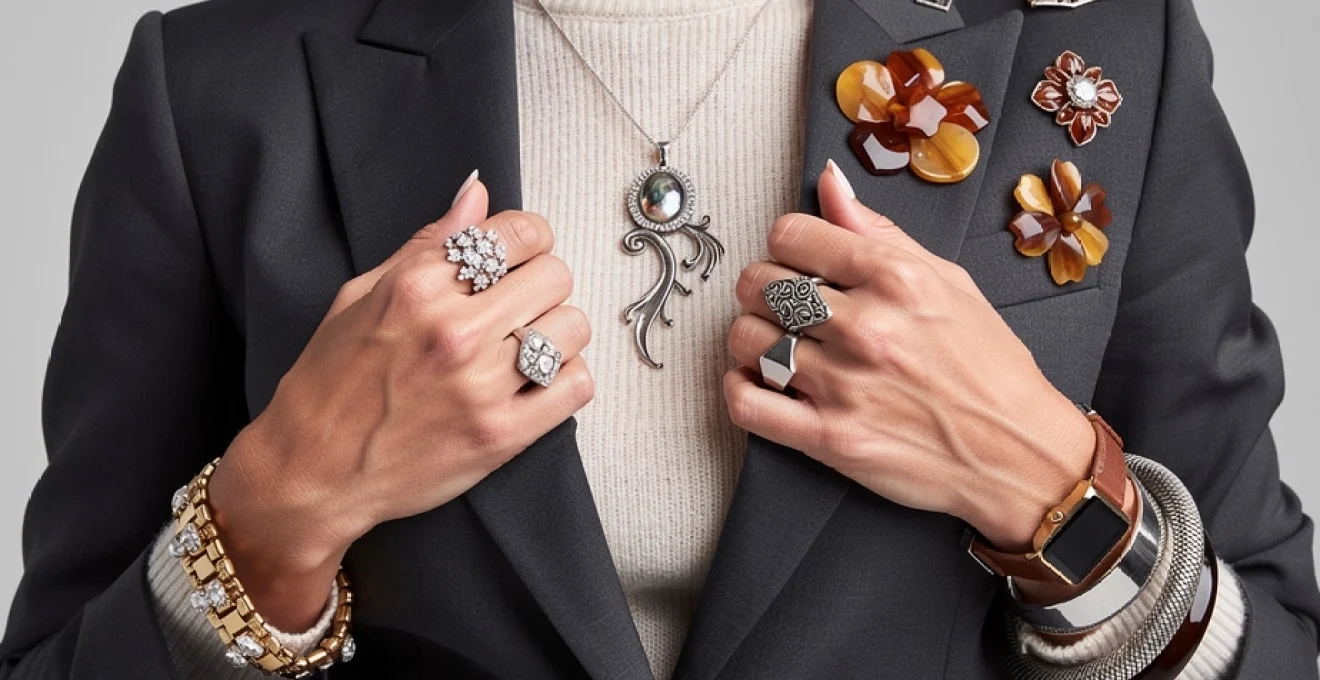
The fashion landscape has witnessed a remarkable resurgence of vintage jewellery, transforming how style-conscious individuals approach contemporary dressing. From Victorian mourning brooches to Art Deco cocktail rings, these historical pieces offer an authenticity and craftsmanship increasingly difficult to find in modern mass-produced accessories. Vintage jewellery doesn’t simply complement an outfit—it transforms it, adding layers of narrative, texture, and visual interest that speak to both personal style and appreciation for enduring design. Whether you’re drawn to the romantic filigree of Edwardian pieces or the bold geometric lines of mid-century modernism, incorporating vintage jewellery into your wardrobe creates a distinctive aesthetic that defies fleeting trends whilst celebrating timeless elegance.
Defining vintage jewellery: art deco, retro, and Mid-Century modern aesthetics
Understanding the distinct periods of vintage jewellery enables you to make informed styling choices that honour each era’s unique characteristics. Art Deco jewellery, spanning roughly from 1920 to 1939, epitomises geometric precision, bold colour contrasts, and streamlined sophistication. This period celebrated industrial progress through clean lines, symmetrical patterns, and striking combinations of materials—think onyx paired with diamonds, or carved jade set alongside platinum. The movement drew inspiration from ancient Egyptian motifs following Tutankhamun’s tomb discovery in 1922, whilst simultaneously embracing the machine age’s angular forms.
The Retro period, emerging during the 1940s, responded to wartime material shortages with creative ingenuity. Yellow and rose gold dominated this era, as platinum was reserved for military applications. Retro jewellery features voluminous, three-dimensional designs with sculptural qualities—think oversized bows, theatrical scrollwork, and tank-track bracelets that conveyed strength and femininity simultaneously. Synthetic rubies and aquamarines provided affordable colour, whilst designers experimented with innovative settings that maximised visual impact despite resource constraints.
Mid-Century Modern jewellery from the 1950s and 1960s reflected post-war optimism through playful experimentation with new materials and unconventional forms. Designers like Scandinavian silversmiths embraced organic modernism, creating flowing, biomorphic shapes that echoed nature’s curves. Simultaneously, space-age aesthetics introduced atomic motifs, starburst patterns, and futuristic materials like Lucite and acrylic. This period’s jewellery demonstrates remarkable diversity—from delicate filigree work to bold statement pieces that challenged conventional notions of adornment.
Layering vintage brooches on tailored blazers and minimalist knitwear
Brooches represent perhaps the most versatile vintage jewellery category, yet many contemporary wardrobes overlook their transformative potential. The key to successfully incorporating brooches into modern styling lies in unexpected placement and confident presentation. Rather than defaulting to traditional lapel positioning, consider clustering multiple smaller brooches asymmetrically across a blazer’s chest panel, or securing a substantial piece at the shoulder seam where structured tailoring meets sleeve construction.
Positioning bakelite and celluloid brooches on lapels and asymmetric necklines
Bakelite and celluloid brooches from the 1930s and 1940s offer extraordinary colour saturation and sculptural dimension that contemporary costume jewellery rarely achieves. These early plastics enabled mass production of whimsical designs—fruit baskets, nautical anchors, playful animals—that inject personality into minimalist contemporary wardrobes. When styling these pieces on asymmetric necklines, position the brooch to emphasise rather than compete with the garment’s structural lines. A carved Bakelite floral brooch placed at the terminus of an asymmetric wrap dress neckline creates visual balance whilst drawing attention to the face.
For tailored blazers, consider the weight and scale of your Bakelite piece carefully. Larger, heavier brooches require secure pinning through both the outer fabric and inner lining to prevent drooping or fabric damage. The vibrant hues characteristic of Ba
strong primary colours characteristic of Bakelite pair particularly well with neutral tailoring palettes—navy, charcoal, camel—as they read as deliberate, graphic accents rather than nostalgic costume.
Celluloid brooches, often lighter and more intricate, work beautifully on softer fabrics and more delicate lapels. Their featherweight construction makes them ideal for silk blouses, fine merino cardigans, and asymmetric knitwear that might sag under heavier pieces. When working with asymmetric necklines, experiment in front of a mirror: shift the brooch a few centimetres at a time until it echoes the garment’s diagonal line instead of cutting across it abruptly. This small adjustment can be the difference between a cohesive, contemporary look and a clash of eras.
Combining victorian mourning brooches with monochrome contemporary suiting
Victorian mourning brooches, typically fashioned from jet, vulcanite, onyx, or enamelled gold, bring a subtle drama to modern tailoring. Their dark palettes and symbolic motifs—forget-me-nots, weeping willows, woven hair—offer a striking contrast when placed against sharp, monochrome contemporary suits. To avoid appearing overly theatrical, anchor these brooches on simple, structured pieces: a black double-breasted blazer, an ivory trouser suit, or a charcoal tuxedo jacket with clean lines.
Position the brooch high on the lapel or at the edge of a blazer’s pocket flap to keep the look intentional and graphic. If you’re working with an all-black ensemble, a mourning brooch with gold or seed-pearl detailing introduces just enough light to break up the silhouette without diluting its impact. Because these pieces often carry emotional history, they also function as discreet conversation starters—ideal when you want your vintage jewellery to add character to a contemporary outfit in a quietly powerful way.
Securing vintage scatter pins on oversized blazers and structured outerwear
Scatter pins—small, individually pinned motifs sold as sets—were immensely popular from the 1930s through the 1950s. In a modern wardrobe, they’re an excellent tool for customising oversized blazers and structured outerwear. Rather than wearing them in straight, regimented lines, try arranging them in loose constellations across one shoulder or diagonally from lapel to bust. This creates a dynamic, editorial effect that feels more street style than heritage costume.
Because contemporary coats and jackets often use dense fabrics such as wool, bouclé, or technical blends, pay attention to pin construction. Vintage scatter pins usually have short, sharp pins designed for lighter textiles; forcing them through heavy fabrics can bend the metal or distort the garment. A simple workaround is to clip a thin piece of felt or ribbon to the inside of the coat and pin through both layers, distributing tension and protecting the lining. This approach allows you to enjoy intricate vintage jewellery styling even on your most practical winter outerwear.
Pairing 1950s lucite brooches with cashmere jumpers and turtlenecks
Lucite brooches from the 1950s, often featuring reverse-carved florals or embedded glitter, feel surprisingly modern thanks to their clean transparency and graphic motifs. When paired with fine-gauge cashmere jumpers and slim turtlenecks, they lend a subtle mid-century modern glamour to otherwise minimal outfits. Think of them as wearable spotlights: a single piece placed just off-centre on the chest of a cream roll-neck instantly becomes the focal point of your look.
Because Lucite catches and refracts light, it works particularly well in soft, diffused daylight and office environments. Choose knitwear in matte fibres—cashmere, merino, or high-quality cotton—to let the brooch’s gloss stand out. If you’re wary of snagging delicate knits, pin the brooch through a narrow ribbon or strip of tulle on the underside of the jumper; this spreads the weight and reduces friction on the yarn. With this small styling trick, you can integrate vintage jewellery into everyday outfits without compromising comfort or garment longevity.
Stacking vintage rings across multiple fingers for eclectic styling
While brooches transform outer layers, vintage rings offer an intimate way to weave history into your everyday style. The trend for ring stacking across multiple fingers aligns perfectly with the varied profiles of vintage jewellery—from low-set Georgian bands to exuberant mid-century cocktail rings. By mixing pieces from different eras, you can create what is essentially a curated “mini museum” across your hands, each ring contributing its own narrative thread while still supporting a cohesive, contemporary look.
The key to successful stacking lies in balancing height, scale, and metal tones. A hand full of towering cocktail rings can feel overwhelming, but combining one statement piece with several low-profile antique bands achieves an eclectic yet wearable composition. Ask yourself: which ring is the protagonist today, and which ones are the supporting cast? This simple question helps you avoid visual clutter and ensures that each piece of vintage jewellery has room to shine.
Mixing georgian rose-cut diamonds with modern signet rings
Georgian rose-cut diamond rings, typically set in silver-topped gold with closed backs, have a soft, candlelit sparkle that contrasts beautifully with the bold flat surfaces of modern signet rings. To integrate these into a contemporary wardrobe, place the signet on your index or middle finger, where its graphic silhouette feels assertive and modern, then position the Georgian piece on the ring finger for a whisper of antiquity. The interplay between diffused sparkle and solid metal creates a sophisticated tension that feels current rather than costume-like.
Because many Georgian pieces are delicate and often bear signs of hand-cut stones and historic wear, it’s worth reserving them for days when your hands won’t be exposed to heavy manual tasks. You might also consider pairing rose-cut diamonds with brushed or matte signet finishes: the subtle texture reduces glare, allowing the antique stones to maintain visual prominence. Over time, the patina that develops on both pieces will only deepen their dialogue between past and present.
Combining edwardian filigree bands with contemporary stack rings
Edwardian filigree bands, with their lace-like platinum or white gold work, are natural partners for slim contemporary stack rings. Their intricate openwork allows skin to show through, lightening the visual weight of a ring stack and preventing it from feeling too dense. Start with one filigree band as your anchor on the ring finger, then flank it with two or three ultra-thin modern bands—perhaps one in rose gold and one in yellow gold—to introduce subtle colour-blocking while keeping the overall profile refined.
For those building a capsule jewellery wardrobe, this combination offers exceptional versatility. The Edwardian band can be worn alone for understated elegance or reintroduced into a fuller stack for special occasions. Think of the filigree as the “lace collar” to your otherwise minimalist tailoring: it softens strict lines without undermining their precision. If you’re concerned about durability, especially with antique platinum, consult a trusted jeweller about prong integrity and potential reinforcement before committing the piece to regular stacking.
Balancing chunky retro cocktail rings with delicate midi rings
Retro-era cocktail rings, often oversized and set with synthetic rubies, citrines, or aquamarines, are made for centre-stage moments. In a contemporary context, they look particularly striking when contrasted with barely-there midi rings worn higher on the fingers. This contrast creates a visual “crescendo” from light to heavy, echoing how stylists layer clothing from fine base layers to structured outerwear. Place the cocktail ring on your dominant hand’s ring or middle finger, then distribute two or three ultra-slim midi rings across both hands to frame, rather than compete with, the statement piece.
Because these Retro designs can be tall and ornate, they pair best with streamlined clothing silhouettes—tailored trousers, column dresses, and crisp shirts. If you work at a keyboard, consider reserving your most architectural pieces for events rather than daily office wear, and choose slightly lower-profile designs for workdays. This way, you can enjoy dramatic vintage jewellery styling without sacrificing practicality or comfort.
Incorporating art nouveau pendants into minimalist neckline designs
Art Nouveau pendants, with their sinuous lines, natural motifs, and frequent use of enamel and semi-precious stones, offer a romantic counterpoint to today’s clean, minimalist necklines. When placed against a simple crew neck, V-neck, or square neckline, their organic forms read almost like wearable illustrations. Because these pendants often feature asymmetrical designs—flowing hair, twisting vines, winged figures—it’s worth giving them space by pairing them with plain fabrics in solid colours rather than busy prints.
To integrate Art Nouveau pendants into a modern wardrobe, experiment with chain length. A long pendant worn over a monochrome column dress can elongate the silhouette, while a shorter chain sitting just below the collarbone complements a minimalist blouse or knit. If your pendant is particularly ornate, treat it as the sole focal point around the neckline: skip additional chains and keep earrings understated, opting for simple studs or small hoops. This restraint lets the vintage jewellery speak for itself, ensuring the look feels curated rather than cluttered.
Layering can work, but with intention. One effective approach is to pair an Art Nouveau pendant on a fine chain with a single, slightly shorter modern geometric necklace—perhaps a simple bar or circle. The contrast between flowing, decorative lines and stark geometry highlights both pieces, much like hanging a period painting on a white gallery wall. As always, consider fabric: smoother textiles such as silk, viscose, or tightly woven cotton provide the best backdrop for these intricate designs, preventing snagging and allowing the pendant to lie flat.
Styling vintage charm bracelets and cuff bangles with contemporary wristwear
Wrists are prime real estate for mixing vintage jewellery with contemporary accessories. The rise of smartwatches and minimalist timepieces might suggest a shift away from ornate wristwear, but in reality, they provide an ideal foil for vintage charm bracelets and sculptural cuff bangles. By thoughtfully combining textures—metal links with leather straps, carved Bakelite with polished steel—you can create a layered wrist story that feels intentionally eclectic rather than haphazard.
As with ring stacking, proportion is critical. A single wide cuff can dominate the wrist, so it often looks best worn alone or paired with only one slim bracelet. In contrast, lighter charm bracelets can be layered alongside watches and fine bangles without overwhelming the hand. Ask yourself what role each piece plays: is it the anchor, the accent, or the rhythm between other elements? Answering this will guide how you position and pair your vintage jewellery.
Layering 1940s gold-filled charm bracelets with leather watch straps
1940s gold-filled charm bracelets, often laden with engraved discs and three-dimensional miniatures, carry a delightful sense of nostalgia. When worn next to a contemporary leather-strap watch, they bridge the gap between analogue history and modern function. To prevent scratching the watch face, position the bracelet slightly higher up the wrist, letting it sit closer to the hand while the watch anchors nearer the forearm. This small spacing adjustment preserves both pieces and gives each its own visual territory.
Because many vintage charms commemorate life events—travel, graduations, anniversaries—they are natural conversation pieces. In a corporate or creative workplace, pairing such a bracelet with a clean, minimal watch allows you to maintain a professional aesthetic while signalling individuality. Choose a leather strap in a neutral tone (black, tan, or deep brown) to keep the focus on the warm glow of the gold-filled links and charms, ensuring your vintage jewellery remains the star.
Contrasting victorian snake bracelets against modern cuff designs
Victorian snake bracelets, symbolising eternity and renewal, wrap gracefully around the wrist with articulated scales and gemstone-set heads. When styled alongside modern cuffs—think smooth, architectural bands in silver, steel, or lacquered metal—they create a striking juxtaposition between historical symbolism and contemporary minimalism. The organic curves of the snake amplify the linear rigidity of a modern cuff, much like ivy climbing a concrete building.
For balance, wear the snake bracelet closest to the hand, where its movement can catch the eye, and place a single modern cuff slightly higher on the same arm or on the opposite wrist. This avoids the crowded look that can occur when two rigid pieces sit flush against each other. Because antique snake bracelets can be delicate, particularly at hinge points, it’s wise to reserve them for days when your activities are relatively gentle—desk work, social events, or evening outings—rather than high-impact or hands-on tasks.
Mixing bakelite bangles with sleek metal contemporary bracelets
Bakelite bangles from the 1930s and 1940s are a dream for colour enthusiasts, available in marbled greens, rich ambers, and vibrant primaries. Their smooth, tactile surfaces contrast beautifully with the cool sheen of contemporary metal bracelets. For a modern take, stack two or three Bakelite bangles in related tones—say, ochre, tortoiseshell, and deep brown—then add one slim silver or gold-toned bangle to punctuate the stack. This combination reads as deliberate and design-led, rather than as a jumble of inherited pieces.
If you wear a smartwatch or fitness tracker, Bakelite offers a playful counterpoint to the device’s sleek technology. Position the plastic bangles on the opposite wrist or, if you prefer symmetry, wear a single bangle next to the watch, ensuring it is slim enough not to obstruct the screen. As Bakelite is rigid and can crack if dropped, always slide bangles over the narrowest part of your hand with care, avoiding excessive flexing. With mindful handling, these pieces can bring decades of joyful colour into your daily outfits.
Authenticating and sourcing vintage pieces from estate sales and specialist dealers
Incorporating vintage jewellery into contemporary outfits is as much about where you source pieces as how you style them. With global interest in vintage and antique jewellery steadily rising—online searches for “vintage jewellery” have grown significantly over the past few years—authenticity and provenance have become critical considerations. Estate sales, auctions, and specialist dealers offer rich opportunities to discover unique items, but they also require a basic understanding of hallmarks, materials, and period styles to ensure you’re investing wisely.
When shopping at estate sales or local markets, start by examining construction details. Genuine vintage jewellery often shows signs of handwork: slightly irregular prongs, hand-engraved patterns, or old-style clasps such as box-and-tongue or trombone fastenings. Hallmarks can provide clues to metal purity and origin, but they vary by country and era, so it’s worth familiarising yourself with common marks in your region. If a deal feels too good to be true—say, a “solid gold” piece at costume jewellery prices—it may well be gold-plated or a later reproduction.
Specialist dealers and reputable online platforms typically provide more detailed descriptions, including approximate dating, metal content, and stone identification. Don’t hesitate to ask for additional photographs of hallmarks, clasps, and side views, especially when purchasing higher-value items. Reputable sellers will also be transparent about repairs or alterations, which can affect both value and how a piece wears. For example, a resized ring may have a thinner shank at the back, impacting durability if you plan to stack it regularly.
If you’re new to collecting, consider starting with categories that are easier to authenticate and style, such as signed mid-century costume jewellery or well-documented Art Deco pieces from known makers. Over time, your eye for patina, craftsmanship, and design language will sharpen, making it easier to distinguish genuine period pieces from modern imitations. Think of this process as training your “style historian” instincts: each new acquisition not only enhances your wardrobe but also deepens your understanding of design evolution.
Finally, remember that the most successful vintage jewellery collections align with your personal aesthetic and lifestyle. It’s tempting to chase rare hallmarks or high-carat stones, but if a piece doesn’t feel comfortable or consistent with how you dress, it is unlikely to see regular wear. Focus instead on items that spark an emotional response and that you can envision pairing with multiple contemporary outfits. In doing so, you build a collection that is not only historically rich but also alive in the present—allowing vintage jewellery to add character, story, and nuance to every look you create.