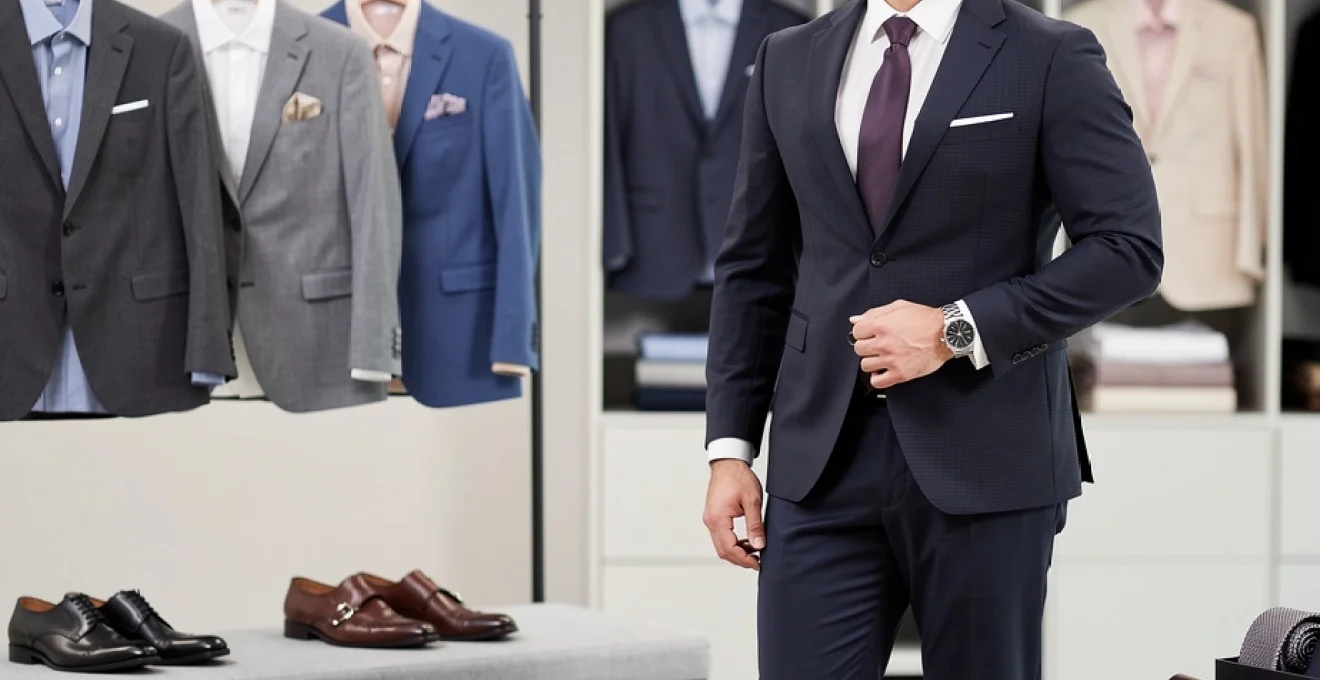
The modern professional wardrobe represents far more than mere compliance with corporate dress codes. In today’s dynamic business environment, where personal branding and executive presence carry unprecedented weight, mastering the art of stylish business attire has become essential for career advancement. The challenge lies not in choosing between style and professionalism, but in seamlessly integrating contemporary fashion sensibilities within established business frameworks.
Professional styling has evolved significantly beyond the restrictive suit-and-tie mandates of previous decades. Today’s successful executives understand that strategic sartorial choices communicate competence, creativity, and cultural awareness whilst maintaining the gravitas required in boardrooms and client meetings. The key to achieving this balance rests in understanding the fundamental principles of garment construction, colour theory, and personal styling within professional contexts.
Consider the modern business wardrobe as an investment portfolio—each piece should serve multiple purposes, coordinate effortlessly with other garments, and maintain its integrity through extensive wear. This approach transforms the daily challenge of dressing professionally into an opportunity for authentic self-expression whilst projecting executive authority.
Wardrobe foundation engineering: essential garment categories for professional excellence
Building a stylish business wardrobe begins with understanding the fundamental categories that form the backbone of professional dressing. The concept of wardrobe architecture involves selecting pieces that function as building blocks, allowing for maximum versatility whilst maintaining consistent aesthetic standards. This systematic approach ensures that every garment serves multiple styling purposes whilst contributing to an overall cohesive professional image.
Tailored suit construction and fabric selection strategies
The foundation of stylish business attire rests upon expertly constructed tailored suits. Modern suit construction emphasises structured silhouettes that accommodate contemporary body types whilst maintaining classical proportions. The choice between canvas construction and fused interfacing significantly impacts both comfort and longevity, with canvas construction offering superior drape and durability for frequent wear.
Fabric selection directly influences both style and functionality. Wool remains the gold standard for business suiting, with Super 120s to Super 150s wool providing the optimal balance between durability and refinement. Seasonal fabric considerations include lightweight wool blends for summer months and heavier worsteds for autumn and winter wear. Contemporary professionals increasingly favour four-season fabrics that maintain their appearance across varying climates.
Premium shirt architecture: oxford, poplin, and herringbone weave analysis
Dress shirt construction forms the canvas upon which professional styling builds. Oxford cloth shirts provide durability and texture, making them ideal for business casual environments. Poplin weaves offer crisp definition essential for formal business settings, whilst herringbone patterns introduce subtle visual interest without compromising professional appropriateness.
Modern shirt styling incorporates refined details such as mother-of-pearl buttons, French seams, and hand-sewn buttonholes. These elements distinguish premium shirts whilst maintaining understated elegance. Contemporary fits range from slim to classic cuts, allowing professionals to select silhouettes that complement their body type whilst adhering to current style standards.
Footwear investment portfolio: goodyear welted and blake stitched options
Professional footwear represents one of the most significant investments in business attire, with construction methods directly impacting longevity and comfort. Goodyear welted shoes offer superior durability and the ability to be resoled multiple times, making them ideal for professionals who require extensive walking or standing. Blake stitched construction provides greater flexibility and lighter weight whilst maintaining professional appearance standards.
Classic styles including Oxford, Derby, and monk strap designs form the foundation of professional footwear collections. Modern interpretations incorporate contemporary details such as burnished finishes, subtle broguing, or contrasting sole colours whilst maintaining traditional silhouettes that ensure long-term style relevance.
Accessory integration systems: ties, pocket squares, and timepiece coordination
Strategic accessory selection provides the primary vehicle for introducing personal style within business attire constraints. Systematic accessory coordination involves understanding how different elements interact to create cohesive ensembles. Ties
continues
Ties should harmonise with your shirt and suit rather than match them exactly. As a guideline, anchor your look with a solid or subtly patterned tie in muted tones—navy, burgundy, forest green or charcoal—then introduce personality through texture, such as grenadine, knitted silk or a fine wool blend. Pocket squares function as a visual accent: they should pick up one secondary colour from your shirt or tie rather than mirror them precisely, creating deliberate contrast. A refined timepiece completes the system, acting as both a practical tool and a discreet indicator of taste; opt for classic designs with clean dials and leather or steel bracelets that complement, not compete with, the rest of your accessories.
To keep accessories stylish yet professional, think in terms of coordination zones: metals, leathers and colours. Your belt, watch strap and shoes should share a similar leather tone, while metal finishes on your watch, belt buckle and cufflinks should align (all silver or all gold). This simple rule instantly elevates even modest business attire by suggesting intentionality. When in doubt, remove one accessory rather than add another—minimalism almost always reads as more modern and authoritative in business settings.
Colour theory application in corporate dress codes
Mastering colour is one of the most effective ways to stay stylish in business attire without breaching professional boundaries. Rather than thinking of colour as “allowed” or “forbidden”, it is more helpful to view it as a tool for shaping perception—calm, authority, creativity or approachability—depending on what your day demands. By applying basic colour theory principles, you can build business outfits that feel cohesive, contemporary and intentional, even when you are working within a conservative dress code.
Monochromatic palette development for executive presence
A monochromatic palette uses varying shades, tints and tones of a single colour to create a sleek, elongated silhouette. In business attire, this might mean combining a navy suit with a light blue shirt and a deep indigo tie, or pairing charcoal trousers with a soft grey knit and a near-black blazer. Because there is minimal contrast, the eye perceives a continuous line, which subconsciously communicates stability and authority—ideal when you want to project executive presence in high-stakes meetings or presentations.
To keep monochromatic business outfits from feeling flat, introduce subtle textural contrast rather than additional colours. For example, a smooth worsted wool suit can be offset with a slightly napped flannel tie, a fine-gauge merino knit, or a crisp poplin shirt. This is similar to designing a well-lit office: you do not change the wall colour, you layer different light sources to add depth. Monochrome also simplifies your morning decisions, making it easier to dress stylishly under time pressure whilst remaining firmly within corporate norms.
Complementary colour schemes using itten’s colour wheel principles
For professionals seeking a little more visual impact, complementary colour schemes—pairs of colours opposite each other on Itten’s colour wheel—offer a structured way to introduce contrast. In business attire, pure opposites like bright blue and orange can be too bold; instead, we typically use muted complements, such as navy with burnt orange, forest green with burgundy, or deep plum with soft olive. These combinations feel dynamic yet sophisticated, especially when one colour clearly dominates and the other appears only in smaller accessories.
Think of your suit and shirt as the “background” and your tie, pocket square or jewellery as the “accent stroke” on a canvas. You might wear a dark blue suit and white shirt, then add a tie with a subtle rust stripe, echoing that tone in a small pocket square detail. Because complementary colours intensify each other, they draw the eye towards your face and upper torso, which is exactly where you want attention during a pitch or negotiation. When working in very conservative offices, keep complements very low-saturation—closer to smoke, wine or moss than to neon or pastel.
Seasonal colour analysis: autumn/winter versus spring/summer coordination
Stylish business attire also responds to the seasons. Autumn and winter call for richer, deeper tones and slightly heavier textures that visually match shorter days and heavier outerwear. Think navy, charcoal, chocolate brown, burgundy and forest green in flannel, tweed, or heavier worsted wool. In these months, a deep burgundy tie against a mid-grey suit can look powerful without feeling overpowering, while dark leather footwear grounds the look.
In spring and summer, lighter, airier colour palettes read as more appropriate and modern. Mid-blue, light grey, stone, soft camel and muted pastels in lightweight wool, cotton or blends help you stay cool while still looking polished. A stone-coloured chino with a sky-blue shirt and navy blazer, for example, feels business-appropriate but seasonally aware. Just as you would not wear a heavy overcoat in August, dense winter colours in hot weather can subconsciously signal discomfort; aligning your palette with the season keeps your style fresh and intentional.
Industry-specific colour psychology in banking, law, and technology sectors
Colour expectations shift significantly between industries, and being stylish in business attire means calibrating your palette to your environment. In banking and traditional finance, darker neutrals—navy, charcoal, black and deep burgundy—dominate, projecting stability and risk-aversion. Law firms often favour similar palettes, with occasional use of dark greens or muted blues to signal trustworthiness and calm. In these contexts, subtlety is key; micro-patterned ties and fine-textured shirts provide style without appearing flamboyant.
Technology sectors and creative agencies, by contrast, often welcome more colour experimentation within business casual or smart casual dress codes. Here, a teal knit under a grey blazer or a pair of dark, coloured chinos can read as innovative rather than inappropriate. However, even in relaxed industries, high-contrast or overly bright combinations can distract. Ask yourself: does the colour help emphasise your message, or is it competing with it? Matching your palette to both your company culture and your role—client-facing versus back-office—keeps you stylish, credible and context-aware.
Garment fit optimisation and tailoring techniques
Regardless of how refined your fabrics or colour choices are, poorly fitting garments will undermine your professional image. In business attire, fit is style: a modest off-the-rack suit, correctly tailored, will look far more expensive than a designer piece worn straight from the hanger. Working with a competent alterations tailor allows you to fine-tune silhouettes so they flatter your body type while staying within conservative office norms.
Jacket silhouette adjustments: suppression and shoulder line modifications
The jacket is arguably the most critical element of business attire, as it frames your torso and shoulders—the areas most visible in meetings and on video calls. Two key adjustments dramatically influence style: waist suppression and shoulder line. Gentle waist suppression shapes the jacket slightly inward at the midsection, creating a V-shaped silhouette that suggests athleticism and confidence without appearing tight. Too much suppression, however, can pull at the buttons and look fashion-forward rather than professional, so aim for subtlety.
Shoulder modifications are more complex and best handled by experienced tailors, but understanding the basics helps you choose better off-the-rack pieces. A clean shoulder follows your natural line without extending beyond it or collapsing at the seam; there should be no divots where the sleeve meets the shoulder. Think of the jacket shoulder as the frame of a painting: if the frame is warped, the entire picture appears off. When trying on business jackets, prioritise shoulder fit first—almost everything else can be adjusted more easily and affordably.
Trouser break configuration: quarter, half, and full break applications
Trouser length, or “break”, is another small detail that strongly affects the overall polish of your business attire. A quarter break means the trouser just kisses the top of the shoe, creating a sharp, modern line ideal for slimmer cuts and contemporary offices. A half break results in a moderate fold of fabric at the front, offering a classic, versatile look that works for most body types and environments. A full break, where the fabric pools more noticeably, can appear dated or sloppy unless deliberately paired with wider-leg tailoring and heavier fabrics.
Which trouser break should you choose for a stylish yet professional appearance? In most corporate contexts, a quarter to half break is optimal, balancing modernity with tradition. This is particularly important for those who commute or sit frequently, as excessive fabric bunching at the ankle quickly looks untidy. When visiting your tailor, wear the shoes you most often pair with your business attire and request your ideal break length while standing naturally—this small adjustment immediately tidies your overall line.
Shirt collar engineering: spread, point, and cutaway collar selection
Collar shape subtly but powerfully influences how your face and neck are perceived in business settings. A point collar, with closer-set tips, visually elongates the face and works well for rounder or wider face shapes. A spread collar, where the tips sit further apart, balances narrow faces and accommodates wider tie knots such as the Windsor. The more dramatic cutaway collar feels distinctly modern and suits slimmer suits and bolder ties, but can appear too fashion-forward in conservative industries.
Choosing the right collar is like selecting the right frame for your profile picture—it directs where attention falls. For video-heavy roles, a spread collar paired with a medium-width tie knot often looks most balanced on camera. Whatever style you choose, ensure the collar band sits comfortably against your neck without gaping or strangling, and that collar points sit neatly under your jacket lapels instead of riding up. Proper collar fit keeps business attire looking sharp from the first meeting to the last.
Waistcoat integration for three-piece ensemble balance
A waistcoat (vest) offers an elegant way to elevate business attire while maintaining formality. In a three-piece suit, the waistcoat creates a continuous line from shoulder to hip, visually slimming the torso and keeping your shirt front neat even when you remove your jacket. This can be especially helpful for professionals who present frequently or move between meeting rooms and more casual spaces throughout the day. The goal is balance: the waistcoat should be close-fitting but not pulling at the buttons, with the bottom button traditionally left undone.
For maximum versatility, choose waistcoats in the same fabric as your suit or in a closely related tone, such as a charcoal waistcoat worn under a mid-grey suit. Contrast waistcoats—say, a subtle check under a solid suit—can be stylish in less conservative offices but risk looking dandyish in traditional sectors. Think of the waistcoat as a structural support in your wardrobe architecture: it helps everything sit smoothly, adds warmth in cooler seasons, and signals extra attention to detail without shouting for attention.
Contemporary style integration within traditional business framework
Staying stylish in business attire today often means blending contemporary elements with classic foundations rather than replacing them. The aim is to signal that you are current and aware of modern aesthetics, yet still respectful of established corporate standards. This balance can be achieved by updating silhouettes, introducing subtle pattern play, or incorporating modern fabrics and footwear—all while keeping the overall impression polished and professional.
One practical strategy is to view your traditional suit as “hardware” and your contemporary touches as “software updates”. For example, you might pair a classic navy suit with a fine-gauge turtleneck in winter instead of a shirt and tie, if your office dress code allows smart casual variations. Alternatively, you could introduce modern elements through discreetly patterned socks, a textured tie, or sleek, minimal leather sneakers on designated business casual days. The key question to ask yourself is: would this outfit still look appropriate if I had an unexpected meeting with a senior client? If the answer is yes, your contemporary integrations are likely well calibrated.
Fabric care protocols and garment longevity management
Investing in high-quality business attire only pays off if you maintain it correctly. Proper care extends garment life, preserves colour and structure, and ensures you always look polished with minimal last-minute effort. Over-cleaning can be just as damaging as under-cleaning, particularly for wool suits and delicate shirting fabrics, so it is crucial to follow a deliberate maintenance protocol rather than relying on reactive emergency dry-cleaning.
As a rule of thumb, rotate your suits so each has at least a day of rest between wears, allowing fibres to recover and moisture to evaporate. Use wooden hangers with broad shoulders for jackets to preserve shape, and brush wool pieces with a clothes brush to remove surface dust instead of sending them straight to the cleaners. Shirts benefit from prompt laundering and air-drying on hangers to minimise wrinkles and extend fabric life. In many cases, a handheld steamer can refresh garments between wears, much like a quick system reboot, avoiding the harsher “full reset” of frequent dry cleaning.
Personal branding through sartorial signature elements
The most stylish professionals are often remembered for one or two consistent, subtle style signatures that reinforce their personal brand. This might be a preference for navy suits with texture, a recurring colour accent such as deep green, a distinctive yet understated eyewear shape, or a reliably minimalist timepiece. These elements become visual shorthand for your presence in the organisation—recognisable without being loud, distinctive without undermining professionalism.
To define your own sartorial signature, start by asking: what do I want colleagues and clients to feel when I enter a room—calm, energised, reassured, inspired? Then choose one or two clothing or accessory cues that support that message and repeat them consistently. For example, if you want to be seen as precise and dependable, a clean, monochrome palette with sharp tailoring reinforces that impression. If your role demands creativity within boundaries, a classic suit paired with an interesting tie texture or a subtly patterned shirt can become your hallmark. Over time, these consistent style choices turn your business attire into a powerful, quiet extension of your professional identity.