The fashion industry has long operated on established hierarchies, seasonal cycles, and carefully guarded gatekeeping mechanisms. Yet today’s landscape reveals a profound transformation as emerging designers systematically challenge and redefine these conventions. Through innovative design philosophies, technology-driven distribution models, and culturally conscious approaches, a new generation of creative voices is reshaping how fashion trends emerge, circulate, and gain legitimacy in global markets.
This disruption extends far beyond aesthetics. Emerging designers are fundamentally altering production methods, questioning sustainability practices, democratizing luxury, and interrogating whose cultural narratives deserve visibility on fashion’s global stage. Their influence represents more than cyclical trend changes—it signals structural shifts in how the industry operates, who holds power, and what values drive consumer engagement. Understanding these disruption mechanisms reveals not just fashion’s present state but its evolutionary trajectory.
Subversive design languages: deconstructivism and Anti-Fashion aesthetics in contemporary collections
The most visible form of disruption manifests through radical design languages that deliberately challenge conventional beauty standards and garment construction principles. Emerging designers increasingly embrace deconstructivism—an aesthetic philosophy that exposes construction techniques, celebrates imperfection, and questions the very purpose of clothing. This approach represents a philosophical stance as much as a stylistic choice, positioning fashion as conceptual art rather than mere commercial product.
Contemporary collections featuring raw seams, asymmetrical cuts, and deliberately unfinished hems communicate a rejection of polish and perfection that dominated fashion for decades. These designers understand that modern consumers, particularly younger demographics, increasingly value authenticity and transparency over aspirational glamour. The aesthetic disruption creates space for conversations about labour, manufacturing processes, and the constructed nature of fashion itself.
Demna gvasalia’s balenciaga: proportional distortion and ironic luxury codes
Demna Gvasalia’s work at Balenciaga exemplifies how emerging designers can infiltrate established luxury houses and transform them from within. His approach to proportional distortion—oversized silhouettes, exaggerated shoulders, and garments that deliberately dwarf the wearer—challenges century-old conventions about flattering the body. This represents a fundamental questioning: should fashion enhance natural proportions or create entirely new forms?
Gvasalia’s ironic treatment of luxury codes proves equally disruptive. By elevating mundane objects like shopping bags and DHL packaging to luxury status through meticulous craftsmanship and premium pricing, he exposes the arbitrary nature of value in fashion. A Balenciaga tote resembling an IKEA bag sells for thousands, forcing consumers to confront what they’re actually purchasing when they buy luxury goods—the object itself or its cultural signification.
Rei kawakubo’s comme des garçons: sculptural silhouettes challenging western beauty standards
Though Rei Kawakubo emerged decades ago, her influence on contemporary designers remains profound, establishing a blueprint for disruption that today’s emerging talents continue to follow. Kawakubo’s sculptural approach transforms garments into three-dimensional artworks that prioritize conceptual expression over wearability. Her collections featuring bumps, lumps, and asymmetrical padding fundamentally reject Western ideals of the sexualized, curve-enhancing silhouette.
This philosophical stance has inspired countless emerging designers to question whose bodies fashion serves and what assumptions underpin « flattering » design. Kawakubo demonstrated that commercial success and radical aesthetics aren’t mutually exclusive—Comme des Garçons operates as a profitable global brand while maintaining uncompromising creative vision. Her model proves that fashion can simultaneously function as art, philosophy, and business.
Martin margiela’s legacy: anonymity, upcycling, and conceptual garment construction
Martin Margiela’s anonymity-focused practice established another disruption template that resonates powerfully with emerging designers today. By refusing personal celebrity and eschewing traditional marketing, Margiela positioned the work itself as protagonist, challenging fashion’s cult of personality. His blank label with four stitches became instantly recognizable precisely because it rejected ostentation.
<p
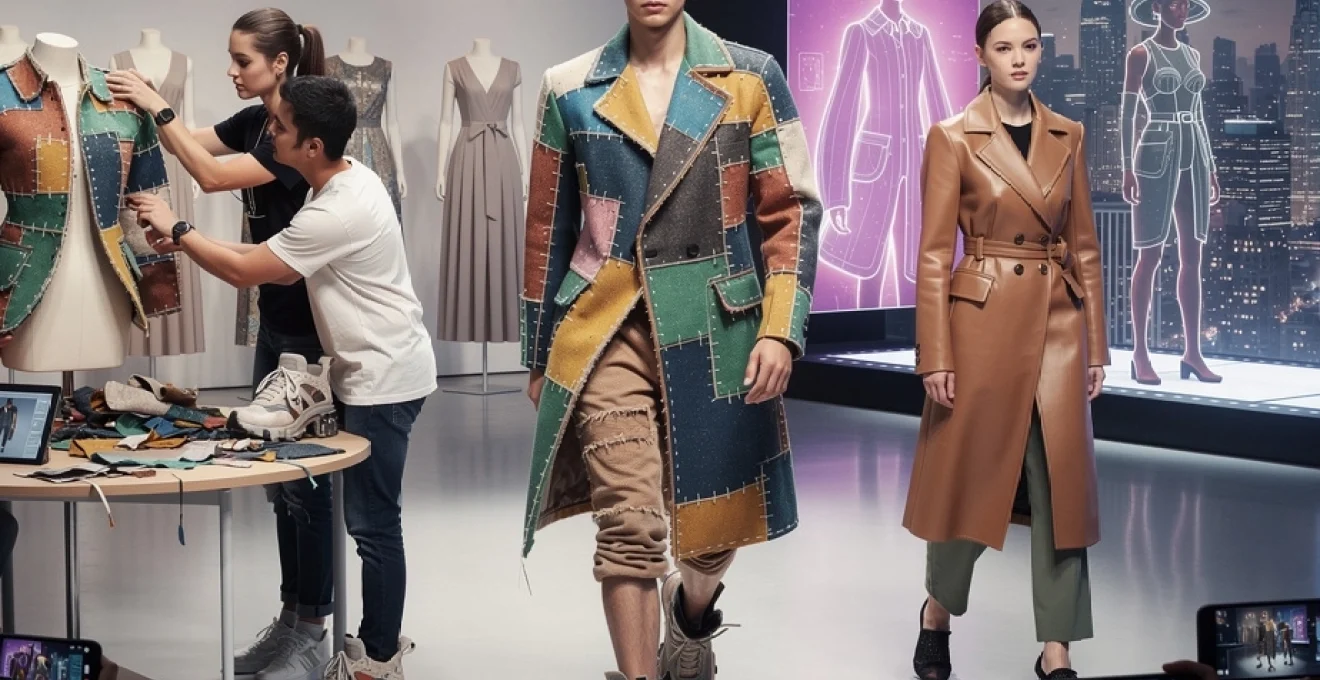
Equally influential is Margiela’s commitment to upcycling and unconventional garment construction. He pioneered techniques such as dismantling vintage garments, repurposing deadstock materials, and revealing linings, seams, and tags as intentional design elements. Many emerging designers adopt this conceptual approach, using reconstructed denim, patched outerwear, and visibly mended pieces to critique overconsumption and fast fashion’s waste. By turning so-called « flaws » into focal points, they transform sustainability from a marketing slogan into a visible design language that disrupts expectations of pristine, disposable clothing.
Telfar clemens’ democratic luxury: accessible price points disrupting exclusivity models
Telfar Clemens offers a radically different but equally disruptive template: redefining what « luxury » means in contemporary fashion. Rather than relying on scarcity, high price points, and exclusionary branding, Telfar’s philosophy is encapsulated in the slogan, « Not for you — for everyone. » The brand’s iconic Shopping Bag, often dubbed the « Bushwick Birkin, » is intentionally priced within reach of wider audiences while maintaining elevated design and quality. This approach challenges the long-held assumption that luxury must be inaccessible to preserve its desirability.
By centering accessibility, Telfar destabilizes the traditional fashion hierarchy that separates aspirational consumers from elite clientele. The brand’s pre-order « Bag Security Program » allowed anyone to reserve a bag without competing with bots or resellers, flipping the script on artificial scarcity. Emerging designers take note: building a cult following no longer requires gatekept exclusivity; it can also be achieved by aligning with values of fairness, inclusivity, and community. In this way, democratic luxury directly disrupts established fashion trends rooted in elitism and status display.
Digital-first distribution strategies bypassing traditional fashion week systems
Beyond aesthetics, emerging designers are also disrupting fashion trends by rethinking how collections are distributed and experienced. The traditional fashion week system—anchored in physical shows, wholesale buyers, and long lead times—no longer serves agile, digital-native brands targeting global audiences. Instead, many emerging labels adopt digital-first distribution strategies that privilege direct communication with consumers and real-time feedback loops. This shift reduces dependency on industry gatekeepers and accelerates the speed at which new fashion trends can surface and scale.
Digital channels enable designers to test ideas, build communities, and sell collections without costly runway shows or showroom appointments. In an era where Gen-Z consumers discover brands through Instagram Reels and TikTok feeds, a viral post can have more impact than a front-row celebrity at a traditional show. As we examine specific digital-first models—from radical transparency in e-commerce to metaverse garments—we see how these strategies structurally rewire the fashion value chain.
Direct-to-consumer e-commerce platforms: everlane’s radical transparency model
While not « emerging » in the chronological sense, Everlane’s direct-to-consumer (DTC) framework has become a blueprint for younger brands seeking to disrupt established fashion trends. Everlane’s model of radical transparency—publishing factory locations, cost breakdowns, and markup structures—reshapes consumer expectations around pricing and ethics. By bypassing traditional wholesale intermediaries, Everlane retains more control over storytelling and margin, while offering premium basics at competitive prices.
For emerging designers, the DTC e-commerce approach offers several advantages: immediate access to customer data, greater control over inventory, and the ability to test limited runs before scaling. Instead of waiting for buyer appointments during fashion week, designers can launch capsules directly on their own platforms and gauge demand in real time. This direct feedback loop accelerates innovation and allows new fashion trends—especially those rooted in sustainability or niche aesthetics—to gain traction without institutional validation.
Instagram and TikTok as primary runway alternatives for Gen-Z brands
For many Gen-Z-focused labels, Instagram and TikTok have effectively replaced the runway as primary stages for debuting new collections. Short-form video, behind-the-scenes content, and user-generated styling clips create a dynamic, participatory environment where fashion trends evolve in public view. Instead of a twice-yearly show, designers can drip-feed looks, tease prototypes, and respond to comments within hours. A single viral TikTok—featuring an unusual silhouette or clever styling hack—can catapult an emerging designer into global visibility overnight.
This social-first approach also shifts power from editors and buyers to communities and creators. Influencers, micro-creators, and everyday consumers become co-authors of a collection’s narrative by remixing, styling, and sharing looks in their own contexts. We might ask: is a look truly « in trend » today if it hasn’t circulated on social media? For many younger audiences, algorithmic visibility now carries as much weight as critical acclaim, making these platforms essential tools for disrupting established fashion cycles.
NFT fashion drops and metaverse garments: the fabricant’s digital-only collections
The rise of digital fashion adds another layer to this disruption, as designers experiment with garments that exist only in virtual spaces. The Fabricant, a pioneering digital fashion house, creates digital-only collections and NFT-based fashion drops that can be worn in gaming environments, social media filters, and metaverse platforms. By decoupling design from physical production, these virtual garments sidestep material constraints, size limitations, and inventory risk. This opens up radical possibilities for silhouette, texture, and color that would be impossible or prohibitively expensive in physical form.
For emerging designers, participating in NFT fashion and metaverse collaborations offers both creative freedom and new revenue streams. It also challenges the definition of a fashion trend: can a digital garment that never touches a human body still influence real-world aesthetics? Increasingly, the answer is yes, as we see pixel-born styles—neon gradients, glitch textures, exaggerated proportions—migrating from virtual wardrobes to physical collections. In this sense, digital fashion acts like a conceptual laboratory, seeding ideas that later manifest in tangible apparel.
Pre-order manufacturing systems eliminating wholesale intermediaries
Pre-order and made-to-order systems have become critical tools for emerging designers seeking to balance creativity with financial sustainability. Instead of producing large quantities upfront and hoping retailers will buy in, designers showcase digital lookbooks or samples, then manufacture only what customers have already ordered. This approach reduces overproduction, minimizes unsold inventory, and aligns with growing consumer interest in slower, more intentional consumption habits. It also allows designers to maintain tighter control over pricing and brand positioning.
From a disruption standpoint, pre-order models undermine the power of traditional wholesale buyers and department stores that historically dictated which trends reached mainstream audiences. When designers can sell directly to niche communities—whether via their own sites, crowdfunding platforms, or social media drops—they no longer need mass retail validation to survive. Much like a chef taking reservations before sourcing ingredients, this approach transforms fashion production into a demand-led system rather than a speculative gamble.
Sustainable material innovation challenging fast fashion production cycles
As concerns about climate change and overproduction intensify, emerging designers are leading a paradigm shift away from fast fashion’s linear « take-make-waste » model. Instead, they adopt sustainable material innovation as both a design philosophy and a competitive differentiator. By experimenting with biomaterials, regenerated fibers, and zero-waste approaches, these designers not only reduce environmental impact but also challenge what consumers expect clothing to look and feel like.
In practice, this means that fabric choice becomes a core narrative element rather than a backstage technicality. Biodegradable textiles, plant-based leathers, and recycled synthetics are highlighted in lookbooks and product descriptions, educating consumers about their impact. The result is a new kind of fashion trend where material composition—mycelium leather sneakers, regenerated nylon outerwear—becomes as aspirational as logos or cuts. This materials-first mindset directly confronts the disposable logic of fast fashion.
Mycelium leather and lab-grown textiles: stella mccartney’s biomaterial partnerships
Stella McCartney has long championed cruelty-free and sustainable design, and her recent partnerships with biomaterial innovators provide a roadmap for emerging designers. Collaborations with companies developing mycelium-based leather alternatives and lab-grown textiles demonstrate how science-led materials can integrate seamlessly into high-fashion collections. These materials offer comparable durability and aesthetics to animal leather or petroleum-based synthetics, but with significantly reduced environmental footprints.
For younger brands, aligning with biomaterial startups can serve as a powerful differentiator in a crowded market. Imagine marketing a bag not just for its shape or color, but as an exemplar of « next-generation mycelium leather » or « lab-grown silk with minimal water usage. » Such positioning resonates strongly with eco-conscious consumers who scrutinize fiber content labels and supply chain transparency. Over time, widespread adoption of these materials could make conventional leather and polyester feel outdated, much like how plastic straws quickly became symbols of environmental neglect.
Circular economy models: marine serre’s regenerated fabric sourcing
Marine Serre has become synonymous with regenerated fashion, constructing garments from deadstock fabrics, vintage textiles, and post-consumer waste. Her collections often feature visible evidence of their previous lives—towel textures, quilted blankets, or sportswear remnants—recontextualized into sharply tailored pieces. This approach exemplifies circular economy models, where materials are kept in use for as long as possible, then remade into new forms rather than discarded.
By foregrounding regenerated sourcing, Serre and similarly minded designers disrupt the assumption that « new » must mean « newly produced. » They demonstrate that circular fashion can be both avant-garde and commercially compelling, challenging fast fashion’s emphasis on endless novelty. For emerging designers with limited budgets, sourcing deadstock and surplus textiles can also be practical: it lowers material costs while offering a unique aesthetic rooted in contrast and collage. In effect, each collection becomes a curated archive of previous fashion cycles, stitched into something distinctly contemporary.
Zero-waste pattern cutting techniques in emerging designer collections
Zero-waste pattern cutting represents another technical yet transformative strategy used by sustainability-driven designers. Traditional pattern layouts often result in 10–20% of fabric being discarded as offcuts; zero-waste techniques treat the entire fabric width as a puzzle to be fully utilized. This can lead to unconventional seams, modular components, and geometric silhouettes that stand apart from mainstream styles. Here, sustainability and aesthetics are deeply intertwined: the constraint of using every centimeter of cloth becomes a creative catalyst.
Emerging designers adopting these methods often share pattern diagrams and process videos, educating their audiences about the logic behind unusual lines or volumes. For consumers, understanding that a dramatic sleeve or asymmetrical panel exists because it saves fabric adds narrative depth to the garment. Much like an architect showcasing structural beams as part of a building’s beauty, zero-waste designers reveal the « engineering » of clothing as a core part of its appeal. This transparency challenges the fast fashion norm of invisible, resource-intensive production.
Cultural appropriation versus authentic representation in global fashion narratives
As fashion becomes increasingly globalized, questions of cultural appropriation versus authentic representation have moved to the forefront of industry debate. Emerging designers from historically marginalized communities are using their platforms to reclaim narratives, correct stereotypes, and insist on more equitable forms of cultural exchange. Instead of treating non-Western motifs, textiles, and techniques as exotic mood-board material, they center lived experience, community collaboration, and ethical crediting.
This shift disrupts established fashion trends that have long drawn superficially from global cultures without meaningful engagement. It also challenges major houses to reconsider their design processes: Who is in the room when cultural references are chosen? Who benefits financially from their use? By foregrounding authenticity and accountability, emerging designers expand fashion’s storytelling capacity while exposing systemic inequities that once went unquestioned.
Indigenous craftsmanship collaborations: bethany yellowtail’s native american design integration
Designer Bethany Yellowtail, a citizen of the Northern Cheyenne Nation and descendant of the Crow Nation, exemplifies how Indigenous creators are reclaiming space in contemporary fashion. Through her label and collective initiatives, she integrates Native American design elements with full acknowledgment of their origins, meanings, and communities. Rather than extracting motifs, Yellowtail collaborates directly with artisans and tribal partners, ensuring that economic and cultural benefits flow back to the source.
Her work illustrates a key distinction between cultural appropriation and respectful collaboration: consent, context, and compensation. When emerging designers follow this model—co-designing with artisans, citing tribal or regional origins, and sharing profits—they help build new norms for global fashion narratives. This approach not only preserves cultural integrity but also introduces audiences to techniques and stories that go far deeper than trend-driven surface aesthetics.
Afrocentric aesthetics in mainstream markets: wales bonner’s diasporic references
Grace Wales Bonner’s work operates at the intersection of fashion, history, and cultural theory, bringing Afrocentric aesthetics into dialogue with European tailoring traditions. Her collections draw from the African diaspora’s music, literature, and spiritual practices, translating these references into refined silhouettes and intricate textile choices. Rather than treating Afrocentric elements as momentary « inspiration, » Wales Bonner constructs entire visual worlds anchored in research and cultural lineage.
This diasporic perspective disrupts Western-centric fashion narratives that have long positioned European aesthetics as the default standard of sophistication. By winning major awards and collaborating with global brands, Wales Bonner demonstrates that deeply contextual, academically informed design can resonate with mainstream markets. Emerging designers from Black and brown communities take note, recognizing that their own cultural archives can be sources of both innovation and commercial strength—provided they are approached with rigor and care.
Asian designer voices redefining western-centric runway standards
Across East, South, and Southeast Asia, a new wave of designers is reshaping global fashion dialogue by centering regional perspectives rather than treating them as peripheral. From Shanghai and Seoul to Mumbai and Manila, labels are drawing on local craft traditions, street cultures, and social realities to construct distinct identities. When these designers present in Paris or New York, they often resist expectations to conform to Western minimalism or familiar « Orientalist » tropes, opting instead to foreground hybrid, unapologetically local narratives.
This assertive stance challenges runway standards that have historically pigeonholed Asian creatives into narrow categories. It also complicates the idea of a single, homogeneous « Asian aesthetic, » highlighting the vast diversity within and across regions. As these voices gain visibility, they disrupt established fashion trends by introducing silhouettes, color palettes, and styling codes that reflect different climate realities, body ideals, and cultural logics. The result is a richer, more pluralistic global fashion ecosystem where influence is genuinely multidirectional.
Gender-fluid design philosophy eroding binary fashion categories
Another major axis of disruption comes from designers who reject rigid binary categories in favor of gender-fluid fashion. Instead of designing separate menswear and womenswear lines, these labels create collections that prioritize silhouette, comfort, and self-expression over gendered marketing. Oversized tailoring, adaptable closures, and neutral or unexpected color palettes invite wearers to interpret garments according to their own identities. The rise of non-binary and queer designers has been crucial in this movement, as they often design from lived experience rather than theoretical inclusivity.
Retail structures are slowly responding, with some boutiques and e-commerce platforms rethinking gendered navigation and fitting room policies. Yet it is emerging designers who push the conversation forward by casting diverse models, rejecting gendered garment names, and challenging assumptions about who « should » wear what. In doing so, they not only disrupt established fashion trends but also question the marketing logic that links specific silhouettes to binary identities. Much like shifting pronoun usage in language, these design choices gradually rewire how we think about clothing and selfhood.
Collaborative disruption: streetwear-luxury hybridisation and unexpected brand partnerships
Collaborations between streetwear labels and luxury houses have become a defining feature of contemporary fashion, but emerging designers continue to evolve this formula in surprising ways. By merging grassroots credibility with institutional resources, these partnerships blur the boundaries between « high » and « low, » « niche » and « mainstream. » The result is a hybrid landscape where a limited-edition sneaker drop can carry as much cultural weight as a couture gown, and where logo placement becomes a form of dialogue between distinct communities.
For young designers, strategic collaborations offer access to manufacturing capacity, distribution networks, and marketing channels that would otherwise be out of reach. For established brands, partnering with disruptive voices injects relevance and authenticity into their storytelling. When executed thoughtfully, these collaborations don’t just create hype; they permanently alter consumer expectations about who gets to participate in luxury and how trends are born.
Virgil abloh’s off-white × nike: deconstructed sneaker culture elevation
Virgil Abloh’s « The Ten » collaboration between Off-White and Nike marked a turning point in how the industry views sneaker culture. By deconstructing iconic Nike silhouettes—exposing foam tongues, re-labeling components, and adding industrial-style zip ties—Abloh treated mass-market products as canvases for conceptual design. This approach elevated sneakers from everyday objects to collectible art pieces, while still keeping them rooted in streetwear authenticity.
The success of this collaboration demonstrated that consumers were eager for products that combined recognizable heritage with disruptive reimagining. Emerging designers took note: they could challenge established fashion trends not only through entirely new forms, but by interrogating and reconfiguring existing ones. Abloh’s work also underscored the importance of narrative—each design came with a story about process and intent, inviting wearers to see themselves as part of an ongoing cultural experiment.
Supreme’s strategic collaborations legitimising street labels in high fashion
Supreme’s long history of collaborations—with partners ranging from Louis Vuitton to Comme des Garçons—has played a central role in legitimizing streetwear within the high fashion ecosystem. What began as a skate shop in downtown New York evolved into a global cultural force precisely because it treated collaboration as a core creative practice rather than an occasional marketing play. Each drop, whether a simple logo tee or a co-branded trunk, positioned Supreme as an equal partner to legacy institutions.
This strategy disrupted hierarchical assumptions about which brands held « real » luxury status. When consumers saw Supreme’s box logo sharing space with storied maisons, the boundaries between subculture and establishment blurred. For emerging designers, this case study reinforces the idea that credibility can flow both ways: a small, culturally influential label can enhance the desirability of a heritage house just as much as the reverse. Strategic alignment—shared values, complementary audiences—matters more than relative size.
Jacquemus × nike: independent designer access to athletic giant distribution
The Jacquemus × Nike collaboration offers a more recent example of how independent designers can leverage partnerships to scale their impact. Known for sun-drenched minimalism and micro-bag virality, Jacquemus brought a distinctly sensual, Southern French perspective to Nike’s performance-driven universe. The resulting collection fused technical sportswear with fashion-forward cuts and earthy palettes, appealing to both fitness enthusiasts and fashion devotees.
For Jacquemus, the collaboration provided access to Nike’s advanced fabrication, global distribution, and massive marketing engine—all while maintaining the brand’s signature aesthetic language. For Nike, it injected fresh desirability into womenswear and lifestyle categories. Emerging designers can see in this partnership a powerful template: aligning with a larger brand doesn’t have to dilute creative identity if the collaboration is grounded in mutual respect and clear design vision. In fact, such alliances can become key mechanisms through which new voices disrupt established fashion trends on a truly global scale.