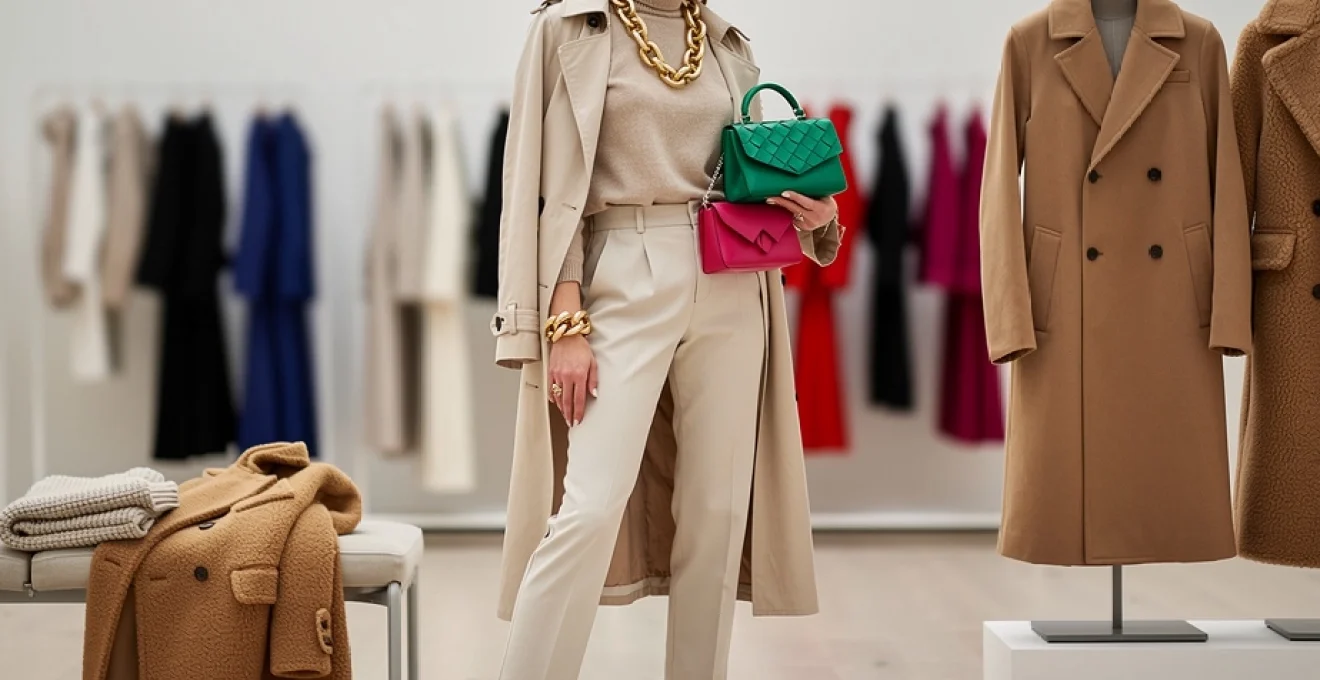
# Statement pieces: why bold items are taking over minimalist outfits
The fashion landscape is undergoing a fascinating transformation. For over a decade, minimalism reigned supreme—think capsule wardrobes, neutral palettes, and the « less is more » philosophy that dominated Instagram feeds and high-street collections alike. Yet something unexpected is happening: bold, attention-grabbing statement pieces are infiltrating even the most pared-back wardrobes. This isn’t a complete abandonment of minimalist principles, but rather an evolution—a sophisticated fusion where restraint meets drama, creating a visual language that’s both intentional and impactful. The rise of statement pieces within minimalist frameworks reflects our collective desire for individuality in an increasingly homogeneous fashion world, proving that you can embrace simplicity whilst still making a memorable impression.
The aesthetic shift: from scandinavian minimalism to maximalist expression
The minimalist movement, which peaked around 2015-2020, was heavily influenced by Scandinavian design principles and the Marie Kondo decluttering phenomenon. Wardrobes became exercises in restraint, with capsule collections of 30-40 pieces becoming aspirational. However, fashion fatigue began setting in as Instagram feeds became seas of beige, grey, and white. The pandemic accelerated this shift—after months of lockdown, consumers craved visual stimulation and emotional connection through clothing. According to retail analytics from 2023, sales of statement accessories increased by 34% year-on-year, whilst basic neutral pieces saw only 12% growth. This suggests a fundamental change in how consumers approach their wardrobes.
Phoebe philo’s the row versus schiaparelli’s surrealist revival
The tension between minimalism and maximalism is perhaps best illustrated by examining two influential fashion houses. The Row, co-founded by Mary-Kate and Ashley Olsen, represents the apotheosis of quiet luxury—impeccable tailoring, luxurious fabrics, and an almost monastic colour palette. Yet even The Row has begun introducing sculptural elements and architectural silhouettes that serve as focal points within otherwise understated collections. Meanwhile, Schiaparelli’s recent revival under Daniel Roseberry has brought surrealist statement pieces—oversized gold jewellery, trompe-l’oeil embellishments, and sculptural brooches—back into fashion consciousness. What’s remarkable is how these seemingly opposite approaches are converging: minimalists are adding one Schiaparelli-inspired statement piece to their Row-esque wardrobes, creating a hybrid aesthetic that’s both refined and memorable.
Colour theory: monochromatic palettes meeting saturated statement hues
Colour psychology plays a crucial role in this evolution. Traditional minimalist wardrobes relied on a foundation of black, white, navy, grey, and beige—colours chosen for their versatility and timelessness. However, neuroscience research published in the Journal of Fashion Marketing and Management found that our brains process and remember outfits with a single bold colour accent 67% more effectively than entirely monochromatic ensembles. This explains why styling formulas featuring one saturated statement hue against a neutral base have gained such traction. Think of a cobalt blue Bottega Veneta clutch against an all-black outfit, or vermillion red Gianvito Rossi heels completing a cream ensemble. The contrast creates visual interest without overwhelming the composition, satisfying both our desire for simplicity and our need for chromatic stimulation.
Silhouette evolution: clean lines interrupted by architectural volume
The silhouette revolution represents another dimension of this aesthetic shift. Minimalist fashion traditionally favoured streamlined, body-conscious shapes or relaxed, fluid draping. Statement pieces have introduced unexpected volumes and architectural proportions into these frameworks. Oversized padded shoulders, exaggerated sleeve volumes, and sculptural hemlines now punctuate otherwise simple garments. Fashion analytics firm Edited reported that searches for « oversized blazer » increased 156% between 2021 and 2023, whilst « sculptural coat » saw a 203% rise. These pieces work precisely because they’re paired with fitted trousers or simple slip dresses—the
volume becomes the narrative. A single exaggerated element against an otherwise minimal silhouette works like a spotlight on a dark stage: your eye goes exactly where the designer intends. This is why pairing wide-leg architectural trousers with a fitted ribbed tank, or a voluminous cocoon coat over cigarette pants, feels modern rather than overwhelming. The minimalist outfit acts as a stabilising frame, allowing the statement silhouette to read as intentional design rather than costume. For everyday minimalists exploring bolder shapes, starting with one architectural item at a time keeps proportions balanced and wearable.
Texture contrast: cashmere basics paired with embellished focal points
Texture has become the quiet disruptor of minimalist outfits. Instead of relying solely on colour or silhouette, designers are using tactile contrast to introduce statement fashion into otherwise simple looks. Think of a plain cashmere turtleneck styled with a heavily embellished skirt, or a ribbed cotton tank under a sequinned blazer. The interplay between matte and shine, smooth and rough, creates depth in the same way a well-designed interior combines linen sofas with metallic lamps and wool rugs. Your eye reads the look as cohesive, but it lingers on the textural focal point.
This approach also aligns with the sustainability-driven shift towards owning fewer but better pieces. A handful of high-impact, textured statement items can re-energise a rail of tried-and-tested basics. For example, a crystal-encrusted belt can instantly transform a minimalist black slip dress, while a feathered clutch adds drama to a classic trench and tailored trousers. As consumers become more conscious of cost-per-wear, texture-rich accessories offer a clever route to “newness” without constant buying. You keep your minimalist wardrobe intact, but the addition of one embellished focal point gives the impression of an entirely updated style story.
Signature statement categories dominating contemporary fashion
Within this broader shift, several categories of statement pieces have emerged as clear favourites for elevating minimalist outfits. These items function almost like punctuation marks in a sentence: they don’t rewrite the whole paragraph, but they dramatically change its impact. Oversized jewellery, sculptural bags, directional footwear and dramatic outerwear now sit alongside core basics in modern wardrobes. For many style-conscious consumers, the question is no longer “Should I wear a statement piece?” but rather “Which statement category will I lean on today?” Understanding how each of these bold items interacts with minimalist fashion helps you build a wardrobe that feels intentional, expressive and future-proof.
Oversized jewellery: chunky gold chains and sculptural ear cuffs
Oversized jewellery has become one of the most accessible ways to introduce boldness into minimalist outfits. Chunky gold chains, sculptural ear cuffs and oversized hoops can transform a simple white T-shirt and tailored trousers into a runway-ready look. Market data from Lyst showed a 53% increase in searches for “chunky chain necklace” between 2022 and 2024, indicating that consumers are actively seeking jewellery that makes a visual statement. Because these pieces are not size-dependent and can be worn across multiple seasons, they offer a high return on investment for anyone experimenting with statement fashion.
The appeal of sculptural jewellery lies in its ability to frame the face and upper body, which makes it particularly powerful in a digital-first world of Zoom calls and social content. A single ear cuff or architectural choker can act like a built-in filter, drawing attention upwards and adding structure to even the most pared-back silhouettes. When you anchor these bold pieces with a minimalist base—think black turtleneck, sleek bun, no-print tailoring—they read as sophisticated rather than flashy. In practice, adopting an “ear or neck, not both” rule helps keep proportions clean and the overall outfit in harmony.
Designer handbags: bottega veneta’s jodie versus jacquemus le chiquito
Designer handbags have long been status symbols, but their role within minimalist outfits has shifted from discreet luxury to deliberate focal point. On one end of the spectrum sits Bottega Veneta’s Jodie: softly structured, woven leather, and instantly recognisable yet devoid of overt logos. On the other lies Jacquemus’s Le Chiquito, a micro-bag whose exaggerated proportions and playful scale practically demand to be photographed. Both function as statement pieces, yet they speak very different visual languages to the same minimalist wardrobe staples.
When paired with streamlined outfits—an oversized white shirt, straight-leg jeans, a camel coat—these bags become the hero element, much like a bold painting in a neutral gallery. The Jodie adds tactile richness and quiet prestige, ideal for those who want their statement fashion to whisper rather than shout. Le Chiquito, by contrast, brings humour and a sense of fashion-savvy irony, perfect for minimalist dressers who still want to signal trend awareness. Investing in a single distinctive bag can completely change how your existing basics read, offering countless ways to refresh your look without overhauling your entire wardrobe.
Footwear as art: rick owens platform boots and maison margiela tabi splits
Footwear has evolved from supporting act to leading role, particularly within minimalist wardrobes. Rick Owens platform boots and Maison Margiela Tabi shoes are prime examples of “wearable art” that intentionally disrupts clean lines. Their striking silhouettes and divisive designs turn even the simplest outfit—say, black trousers and a grey knit—into a conversation starter. According to a 2024 StockX report, resale searches for both brands’ signature styles have risen steadily, suggesting that these pieces are viewed as collectible fashion objects as much as functional shoes.
Part of their power lies in the tension they create. A pair of Tabi split-toe boots under a classic trench coat reads like a subtle rebellion against traditional elegance, while Rick Owens platforms with a streamlined blazer and leggings turn a basic uniform into a sculptural statement. For minimalist dressers, this “footwear as art” approach provides a safe place to experiment: your core garments can stay understated while your shoes carry the creative risk. It’s a bit like hanging an avant-garde artwork in a calm living room; the contrast amplifies both elements.
Outerwear drama: toteme trench coats meet oversized teddy bear coats
Outerwear might be the most impactful category for statement dressing, simply because coats and jackets dominate what the world actually sees. The Toteme trench coat, with its precise cut and subtle logo detailing, epitomises elevated minimalism—it’s a quiet, architectural layer that instantly sharpens jeans and a tee. On the other end of the spectrum, oversized teddy bear coats from labels like Max Mara or Stand Studio bring volume, texture and a sense of playful excess to otherwise streamlined looks. Both options can coexist in a minimalist wardrobe, offering different degrees of drama depending on mood and occasion.
Data from several European retailers show that “hero outerwear” consistently outperforms other categories during autumn-winter, with statement coats often selling out first despite higher price points. The reason is simple: a coat has an unparalleled cost-per-wear advantage and can completely shift the narrative of an outfit. Throw a cocooning teddy coat over a monochrome knit set, and you get cosy maximalism; switch to a sharply cut Toteme-style trench, and the same base reads as urban minimalism. In practice, investing in one dramatic coat and one streamlined option gives you maximum styling flexibility with minimal wardrobe bulk.
Social media algorithms rewarding visual disruption
The rise of statement pieces within minimalist outfits isn’t driven by aesthetic preference alone; it’s also a direct response to how social media platforms reward visual disruption. In feeds saturated with similar images—neutral loungewear, mirror selfies, beige living rooms—content that introduces a bold focal point tends to capture attention more effectively. Algorithms on Instagram, TikTok and Pinterest prioritise engagement signals such as saves, shares and watch time, all of which increase when an image or video contains something surprising. Statement fashion, when anchored by a clean minimalist base, hits the sweet spot between relatability and visual intrigue.
For creators, stylists and even casual users, this dynamic subtly reshapes how outfits are built. You may not consciously think, “I need an algorithm-friendly look today,” but you do notice which posts earn more likes and comments. Over time, a pattern emerges: the outfits where a single bold necklace, saturated bag or sculptural coat interrupts minimalism tend to perform best. As a result, the “one statement piece” formula becomes not just an aesthetic choice but a smart content strategy in a crowded digital landscape.
Instagram’s feed aesthetics: breaking the grid with bold focal points
On Instagram, cohesion has long been king. Curated grids featuring consistent colour palettes, soft filters and minimalist outfits once dominated the platform. But as user fatigue set in, accounts that introduced occasional bold focal points began to stand out. A brightly coloured bag against an otherwise neutral feed, an exaggerated earring paired with a black turtleneck, or a surrealist heel shot in close-up can act like a visual exclamation mark. These posts break the rhythm of sameness just enough to make users pause, tap and engage.
Creators have learned to use minimalist outfits as canvases for these focal points, ensuring that the statement piece reads clearly even on small screens. A simple rule emerges: keep 80% of the frame calm so the remaining 20% can pop. This is why you’ll often see influencers in head-to-toe beige or black, punctuated by one cobalt coat or acid-green bag. The minimalist backdrop ensures that the bold item is instantly legible in the grid, reinforcing brand identity while still delivering the “scroll-stopping” moment the algorithm favours.
Tiktok virality: the « one statement piece » styling formula
TikTok, with its short-form video format, has accelerated the popularity of the “one statement piece” styling formula. Outfit transition videos, “get ready with me” clips and styling tutorials often follow a repeatable pattern: start with a simple base—jeans and a vest, a black slip dress, tailored trousers and a tee—then add a single dramatic item on camera. The reveal of a bold shoe, oversized blazer or sculptural bag functions as the narrative payoff, prompting viewers to rewatch or pause to examine details. Longer watch times and higher interaction rates, in turn, signal to the algorithm that the content is valuable.
What makes this formula so effective is its accessibility. You don’t need a wardrobe full of designer pieces to participate; one thrifted statement coat or vintage belt over your existing minimalist staples can create the same impact. TikTok stylists often emphasise this point, encouraging followers to invest in one standout item that can be re-styled in multiple ways. In doing so, they reinforce a more sustainable approach to trend adoption while also tapping into TikTok’s love of transformation and before-and-after narratives.
Pinterest analytics: high engagement rates for contrast-heavy outfits
Pinterest, often used as a visual search engine for outfit inspiration, provides another lens on the rise of statement pieces. Internal reports and third-party analytics consistently show that pins featuring high-contrast outfits—neutral bases punctuated by one bold colour, strong texture or directional accessory—receive more saves and close-ups than uniformly minimalist looks. Users are drawn to images that feel achievable yet slightly elevated, and the minimalist-plus-statement formula delivers exactly that balance.
For brands and creators, this has practical implications. Curating Pinterest boards around “minimalist outfits with a pop of colour” or “statement jewellery styling” helps capture search intent from users looking to update their style without starting from scratch. As you scroll, you’ll notice a clear pattern: trench coats with neon trainers, all-black looks with metallic bags, beige tailoring with oversized earrings. These combinations are easy to reverse engineer in your own wardrobe, which increases the likelihood that you’ll save, share, and ultimately shop similar pieces.
Investment dressing: cost-per-wear economics of statement purchases
Behind the aesthetic appeal of statement pieces lies a more pragmatic consideration: investment dressing. As consumers become more mindful of both budgets and environmental impact, the question shifts from “How much does this cost?” to “How often will I wear it, and in how many ways?” This is where the cost-per-wear economics of statement purchases becomes crucial. A bold bag or sculptural blazer might have a higher upfront price, but if it can be styled with countless minimalist outfits over several years, its cost-per-wear can undercut cheaper, trend-led items that date quickly.
Statement pieces that integrate well into a minimalist wardrobe often have three things in common: quality construction, distinctive yet versatile design, and the ability to work across seasons. A pair of sculptural gold earrings, for example, can elevate a summer linen dress, a winter turtleneck, and even a simple T-shirt-and-jeans combination. When you calculate cost-per-wear over hundreds of uses, the initial investment starts to look far more rational. Thinking this way also curbs impulse shopping; instead of buying multiple “almost right” items, you wait for the one statement piece that genuinely transforms your existing basics.
Styling techniques: balancing proportion and visual weight
Successfully integrating bold items into minimalist outfits is less about following strict rules and more about understanding proportion and visual weight. Minimalism provides the framework—clean lines, limited colour palette, streamlined silhouettes—while statement fashion adds the focal points. When you learn to balance these elements, you can experiment freely without feeling overdone. It’s similar to graphic design: too many heavy elements compete for attention, but one strong focal point supported by negative space feels intentional and impactful.
Thinking in terms of visual weight helps you decide where to place your statement piece. Is the drama concentrated at the top (bold shoulders, statement earrings), in the middle (belt, bag), or at the bottom (shoes)? Once you’ve chosen the focal area, the rest of the outfit should step back, offering balance rather than competition. This approach not only makes outfits more harmonious; it also makes getting dressed faster because you know which category—top, accessory, or shoe—will carry the visual load that day.
The 80/20 rule: neutral base garments to statement item ratio
A helpful guideline for minimalist dressers experimenting with statement pieces is the 80/20 rule. Aim for roughly 80% of your outfit to consist of neutral, timeless garments and 20% to be bold, eye-catching elements. This ratio keeps the overall look grounded while still delivering the excitement of statement fashion. For example, you might pair a black turtleneck, tailored trousers and a camel coat (the 80%) with neon heels or a sculptural necklace (the 20%). The minimalist majority stabilises the look so the statement minority can shine.
Applied to wardrobe building, the same principle suggests that most of your budget should still go towards high-quality basics, with a smaller but considered portion spent on standout items. This mirrors how many successful stylists work: they rely on a tight edit of repeatable core pieces and rotate in bold accessories or hero garments to keep content fresh. If you ever feel your outfit tipping into costume territory, it’s often because the ratio has flipped—too many competing statements, not enough calm. Scaling back to one or two bold elements usually restores balance.
Focal point theory: drawing eye attention through strategic placement
Focal point theory, borrowed from visual arts, is a powerful tool for styling statement pieces. The idea is simple: every composition benefits from a clear point of emphasis that draws the eye first. In outfits, that focal point might be a pair of electric-blue boots, a dramatic shoulder line, or an intricate necklace. Minimalist garments serve as the background, or “negative space,” allowing that single element to command attention. Without this hierarchy, the eye darts around restlessly, and the outfit can feel chaotic rather than chic.
In practical terms, you can ask yourself a quick question before leaving the house: “Where do I want people to look first?” If the answer is your face, concentrate drama near the neckline or ears and keep everything below clean. If it’s your shoes or bag, tone down jewellery and upper-body detailing. This intentional placement can also be strategically used to highlight features you love or to shift attention away from areas you feel less confident about. Over time, playing with focal points becomes second nature, turning statement styling into an intuitive part of your minimalist routine.
Layering dynamics: COS basics underneath balmain structured blazers
Layering is where minimalist basics and bold tailoring truly come alive together. Brands like COS excel at providing clean, well-cut foundations—slim merino knits, crisp shirts, simple tanks—that sit invisibly under more dramatic layers. When you place a Balmain-style structured blazer, with its strong shoulders and cinched waist, over these understated pieces, the result is a high-impact silhouette that still feels wearable. The inner layers keep the look from feeling heavy or overcomplicated, while the outer layer delivers the visual punch.
This dynamic is especially useful for office-to-evening dressing. You might spend the workday in a neutral knit and tailored trousers, then add a statement blazer and bold earrings for after-hours events without changing your entire outfit. Because the minimalist base is comfortable and versatile, you can rotate different statement jackets—tweed, satin, embellished—over the same core pieces. The effect is akin to changing the frame around a painting: the artwork (your silhouette) stays the same, but the mood shifts dramatically.
Colour blocking method: zara neutrals anchoring versace bold accessories
Colour blocking offers another route to combining minimalism with boldness, particularly when you use high-street neutrals as anchors. Affordable retailers like Zara specialise in accessible basics—stone trousers, black blazers, white shirts—that can quietly support more extravagant designer accessories. Pairing these understated garments with a vivid Versace belt, patterned scarf or logo-driven bag creates a clear colour-block effect: calm base, explosive highlight. The contrast feels deliberate, not accidental, because the neutral pieces act as visual reset buttons.
This method is especially useful if you’re experimenting with louder colour stories for the first time. Rather than investing in a full head-to-toe printed look, you can introduce one boldly coloured accessory against a monochrome or tonal outfit. Imagine an all-cream Zara ensemble punctuated by a fuchsia Versace crossbody, or black wide-leg trousers and a white shirt with a lime-green silk scarf. The overall effect is polished yet playful, proving that you don’t need a designer budget across your entire wardrobe to participate in statement fashion trends.
Retail data: sales performance of statement pieces versus core collections
Retail performance over the past few seasons confirms what we’re seeing on streets and screens: statement pieces are punching above their weight, even as core collections remain essential. Many multi-brand retailers report that while basics still make up the bulk of units sold, it’s the bold items—neon knits, sculptural jewellery, standout coats—that drive traffic, press coverage and social engagement. A 2023 McKinsey report on the State of Fashion noted that “hero products” with strong visual identities disproportionately influence brand perception and customer acquisition, even when they represent a smaller share of total volume.
Interestingly, retailers are responding by tightening their core ranges and investing more heavily in differentiated, statement-led capsules. Instead of offering endless variations of the same black trouser, they maintain a concise edit of proven fits and direct creative energy toward limited-edition accessories, colour stories and collaborations. For consumers, this means greater choice in how to personalise minimalist wardrobes without sacrificing quality or cohesion. The data suggests a symbiotic future: core collections provide stability and repeat purchases, while statement pieces deliver excitement, storytelling and the reason you fall in love with an outfit in the first place.